
The Prayer That Delivered Jonah
By Jonah
Jonah Knew God
He knew God’s power to control the seas. He knew his own guilt. He told the sailors to throw him overboard because he knew the storm had come on his account.
Jonah also knew God’s mercy. He tells us so:
“For I knew that thou art a gracious God, and merciful, slow to anger, and of great kindness…” —Jonah 4:2
He knew God would be merciful to Nineveh if its people repented. That was why he fled.
But did Jonah expect God to be merciful toward him?
I wonder whether Jonah thought the sea would be the end of his story. He knew he had disobeyed. He accepted responsibility. Perhaps he could imagine mercy for Nineveh more easily than he could imagine mercy for himself. Jonah knew God’s character, but he didn’t know God’s plan.
God Had a Plan
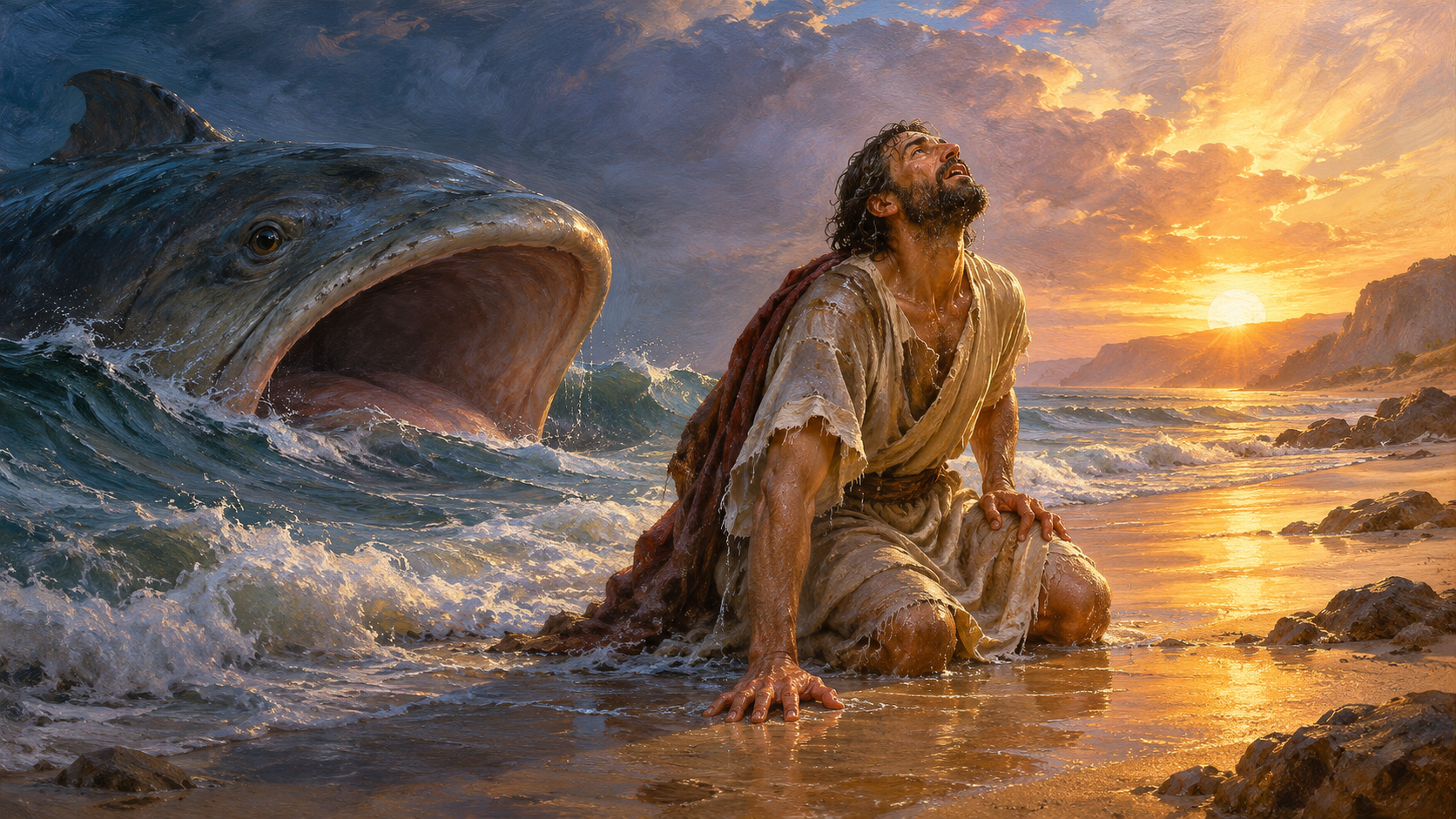
Waiting in the water was a great fish—a dag gadol. What looked like the end became the place where Jonah prayed.
And his prayer brings me back to Hannah.
Hannah had prayed:
“The LORD killeth, and maketh alive: he bringeth down to the grave, and bringeth up.” —1 Samuel 2:6
Generations later, Jonah cried:
“Out of the belly of hell cried I, and thou heardest my voice.” —Jonah 2:2
The Hebrew word translated here as “hell” is Sheol.
Then Jonah declared:
“Yet hast thou brought up my life from corruption, O LORD my God.” —Jonah 2:6
The God who brings down also brings up. The God who hears a woman in her anguish hears a man beneath the sea. No depth places us beyond his hearing.
That speaks to me. We can know we are guilty. We can understand how we arrived in the depths. Yet we can still miss that God has mercy waiting for us there.
Jonah Missed It
In the fish, Jonah prayed. God revealed:
“They that observe lying vanities forsake their own mercy.” —Jonah 2:8
Those who cling to worthless idols forsake the mercy that could be theirs.
As I sit with these words, I hear God giving Jonah a revelation. I believe Jonah heard it with Nineveh in mind. These people would cling to their idols. They would forsake their own mercy.
But Nineveh Repented
Jonah knew what God would do if they repented. Did he expect them to do it? Or had he already decided who they were and what they would choose?
I recognize that in myself. We can know something true about God and still think we know how someone else’s story will end.
God was sending Jonah with a message whose reach Jonah did not understand.
In this meditation, I see Jonah as Israel. I also see each of us in Jonah. We receive mercy while struggling to understand its reach. We hear God’s words through our own expectations. We know the assignment in front of us without knowing everything God intends to accomplish through it.
Jonah went to Nineveh carrying more than a warning. He carried the testimony of a man God had brought up from the depths.
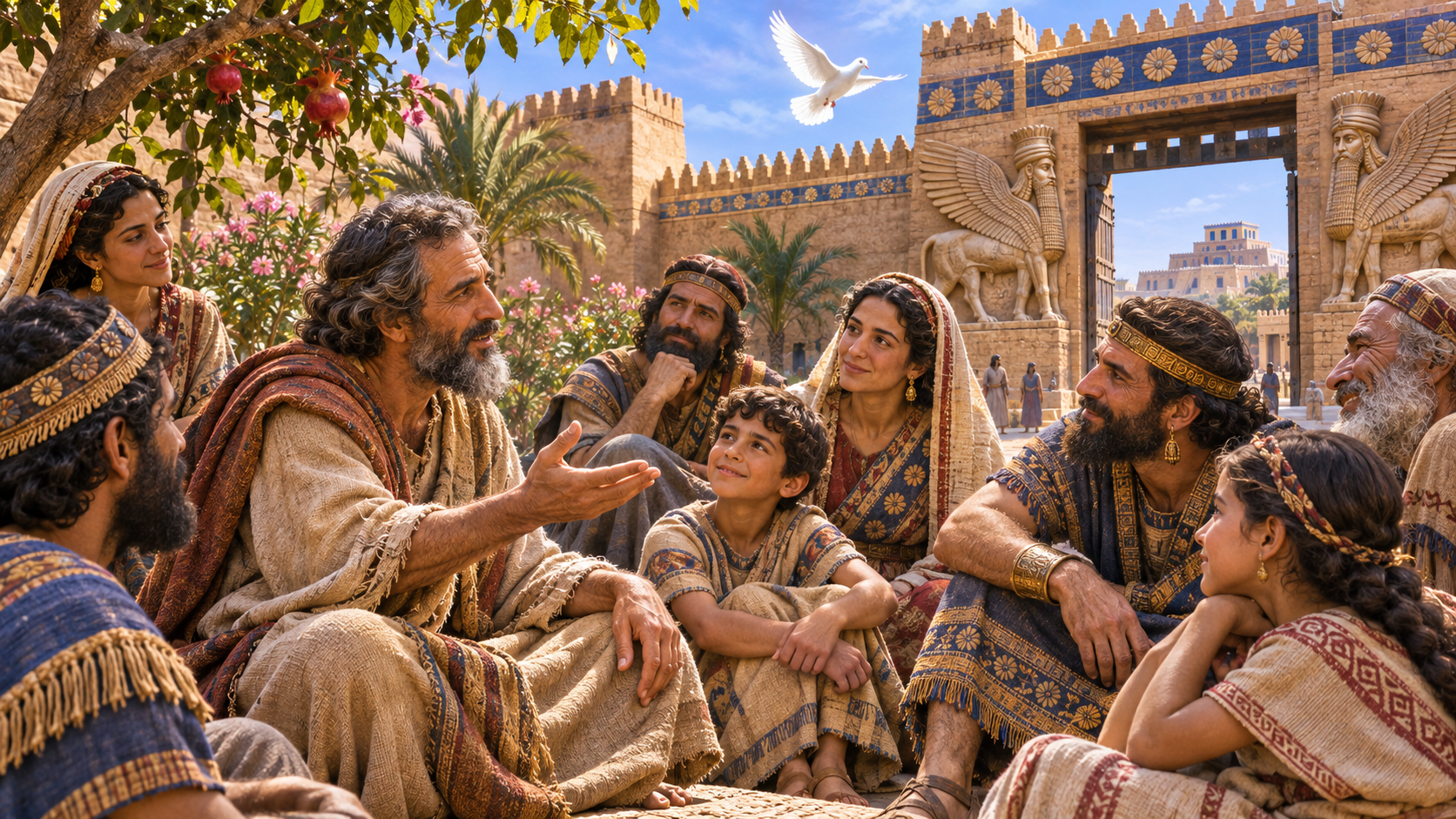
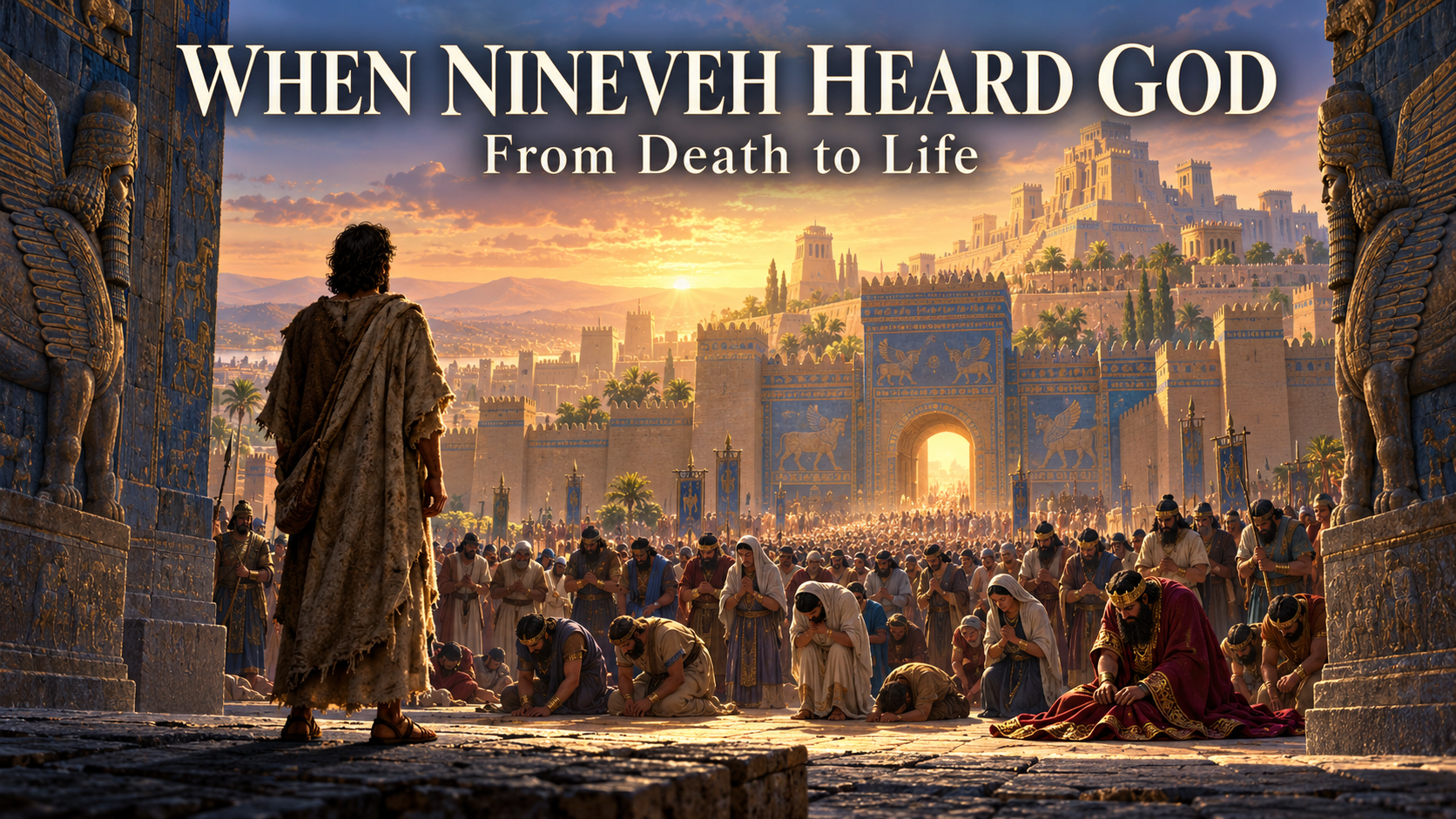
I see the power of God working through his mouth—the divine power the New Testament calls dunamis. The people believed God. When the report reached the king, he rose from his throne, laid aside his robe, covered himself with sackcloth, and sat in ashes.
A King Humbled Himself. A City Turned.
This power works through human weakness and suffering to bring spiritual transformation and hope. It is a power we all long to know.
Jonah had experienced it but he still did not know God’s plan.
Nearly eight hundred years before the crucifixion and resurrection of Yeshua, God was preparing a sign whose meaning would reach far beyond Nineveh. (Matthew 12:40)
God Had a Purpose for Assyria
Within a few decades of Jonah’s journey, Assyria would overthrow the northern kingdom of Israel. Samaria fell in 722 BC, and Israelites were carried into exile. The nation that had received a warning through Jonah became an instrument of warning and judgment against Israel.
Through Isaiah, God would call Assyria “the rod of mine anger” (Isaiah 10:5).
Assyria did not understand the fullness of God’s purpose either.
Twenty-one years after Samaria fell, Sennacherib invaded Judah. His account boasts of conquering forty-six fortified cities. Jerusalem faced the threat of the same empire that had devastated the northern kingdom.
Jerusalem Survived
Hezekiah tore his clothes, put on sackcloth, and went into the house of the LORD. I see a parallel to the King in the book of Jonah.
He sent messengers to Isaiah asking for prayer. Later, he spread Sennacherib’s threatening letter before God.
I picture that letter lying open before the LORD.
Here is the threat. Here is what I cannot overcome. Here is what I am placing in your hands.
Hezekiah prayed for deliverance so that the kingdoms of the earth would know that the LORD alone is God.
God Answered
Isaiah declared that the Assyrian king would not enter the city, shoot an arrow there, or build a siege ramp against it. The biblical account tells us that the angel of the LORD struck down 185,000 in the Assyrian camp.
Sennacherib withdrew and returned to Nineveh. (2 Kings 19:14–19, 32–36.)
Nineveh had experienced God’s mercy. Now its king returned home after experiencing God’s judgment. Israel had been brought low. Jerusalem had been preserved.
Hannah’s prayer echoes through it all:
“He bringeth down to the grave, and bringeth up.”
Jonah could not have seen all of this from inside the fish. He could not have known how his life would speak to Israel, to Assyria, or to generations yet unborn. He could not have known that Yeshua would one day point to him as a sign, connecting Jonah’s three days in the fish with his own death and resurrection. God knew.
That brings me back to Jonah’s prayer. How much do we need to understand before we call out to God? Must we know how he will deliver us? Must we know what he will do with our suffering, failures, or obedience?
Jonah prayed from a place where he could see almost nothing. God heard him there.
The prayer that delivered Jonah ends with words that place the power where it belongs:
“Salvation is of the LORD.” —Jonah 2:9
Jonah did not know the fullness of God’s plan. Neither do I. But the God who heard Jonah in the depths can hear us where we are.
A Thread of Humility
I see a thread of humility running through these prayers. Jonah acknowledged his guilt and cried out from the depths. The king of Nineveh stepped down from his throne, put on sackcloth, and called his people to turn from evil. Hezekiah humbled himself and spread before God what he could not overcome. Then I look to Yeshua, King of Kings, who “humbled himself, and became obedient unto death, even the death of the cross” (Philippians 2:8). He had no sin of his own to repent of, yet he humbled himself for us. Those who needed mercy bowed before God. Yeshua bowed in obedience to bring us mercy.
Where am I still standing in my own strength when I need to humble myself before God?