
On Jonah by Jonah
When God sends a great fish to swallow Jonah, the Hebrew calls it דָּג גָּדוֹל (dag gadol), “a great fish.” Both words are masculine. Dag means “fish,” and gadol means “great.” The same verse says Jonah spent three days and three nights “in the belly of the fish,” בִּמְעֵי הַדָּג (bim‘ei ha-dag). (Jonah 1:17 in most English Bibles, 2:1 in the Hebrew Bible.)
In the very next verse, Jonah prays to the LORD his God “from the belly of the fish,” מִמְּעֵי הַדָּגָה (mim‘ei ha-dagah). The English says “the fish” in both verses, but look at what changes in Hebrew.
הַדָּג (ha-dag) — “the fish,” masculine, in Jonah 1:17 (2:1 in the Hebrew Bible).
הַדָּגָה (ha-dagah) — “the fish,” feminine, in Jonah 2:1 (2:2 in the Hebrew Bible).
The prefix ha means “the” in both forms. Look at the left end of the Hebrew word, where the added ה (hey) appears. That one letter changes dag from the masculine form to dagah, the feminine form. The verse also drops gadol, the masculine word for “great.” It simply calls the fish ha-dagah.
The rabbis noticed that shift. And if God can create a fish and send it to save Jonah, surely God can change its sex. That is how I picture the story. The fish is now female, and inside it, Jonah begins to change too.
From Belly to Womb
Listen to the word Jonah uses when he starts to pray. The narrator has just told us that Jonah is in the fish’s belly. Jonah says he is crying out מִבֶּטֶן שְׁאוֹל (mibbeten She’ol), “from the belly of Sheol,” the realm of the dead. The Hebrew word בֶּטֶן (beten) can mean either “belly” or “womb.” (Jonah 2:2 in most English Bibles, 2:3 in the Hebrew Bible.)
We can see the same word in Jeremiah 1:5. God tells Jeremiah, “Before I formed you in the womb, I knew you.” The Hebrew for “in the womb” is בַבֶּטֶן (baveten). Look for the same three letters, ב־ט־ן. In Jeremiah, beten is the womb where God forms a prophet before sending him out. In Jonah, it is the belly from which a prophet cries out, believing he is as good as dead. And yet God is keeping him alive there. What Jonah experiences as the belly of death becomes, in my reading, the womb from which he emerges to hear God’s call again.
Think about what a womb does. It’s a tight space, yet it shelters and sustains the life inside it before that life can do anything to earn such care. A second Hebrew word for womb, רֶחֶם (rechem), shares the root ר־ח־ם with רַחֲמִים (rachamim), “compassion.” Beten lets us hear “womb” in Jonah’s cry from the belly of Sheol. Rechem gives us a way to think about the compassion God shows him there. Jonah had run from God, and God was still sustaining him in the very place Jonah thought would be his grave.
Then Jonah declares, Yeshu’atah la-Adonai, “Salvation belongs to the LORD.” When I hear Jonah say yeshu’atah, I hear the echo of Yeshua’s name. They share the Hebrew root for saving or delivering. And when Yeshua speaks of his own death and resurrection, he points back to Jonah’s three days in the fish (Matthew 12:40).
A Second Chance for Jonah and Nineveh
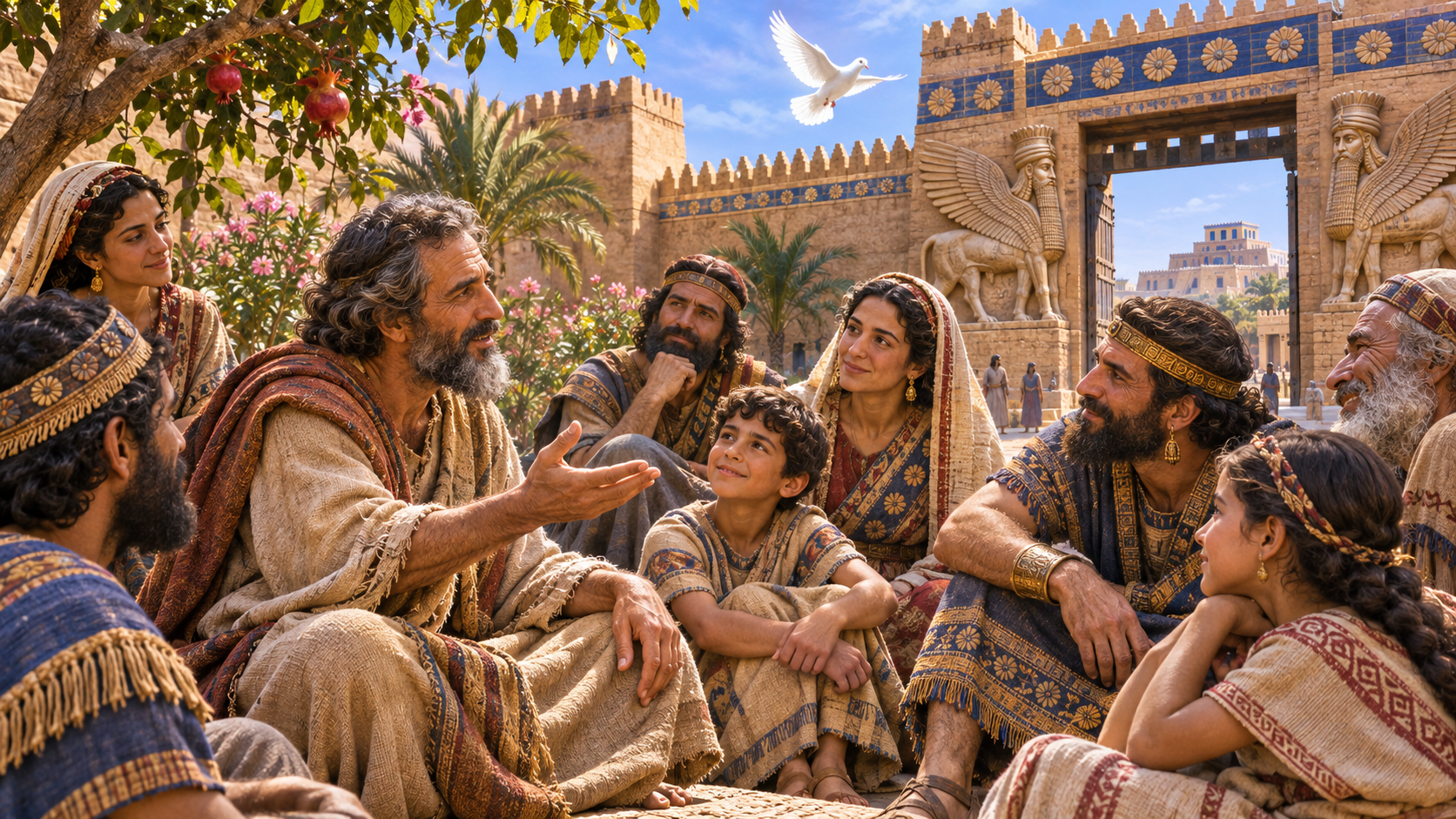
When the fish spits Jonah out onto dry land, I see a man being born again. The word of the LORD comes to him a second time. This time, Jonah gets up and goes to Nineveh, a Gentile city, to preach the urgent need for repentance. He warns them that in forty days their city will be overthrown. The people believe God and turn from their evil ways. And just as Jonah feared, God shows them mercy and spares the city.
God gave his Word, the Tenach, to Israel, the people descended from Abraham, Isaac, and Jacob. From the beginning, God told Abraham that through him all the families of the earth would be blessed. We see that promise at work when God sends an Israelite prophet to a Gentile city. The Word entrusted to Israel was meant to reach the world. I see that same purpose in God sending Yeshua, the Word made flesh, through Israel to bring salvation to the world.
Yeshua went first to his own people. He wept over Jerusalem and lamented that the city had killed the prophets God sent to it (Luke 19:41–44 and Matthew 23:37). In that same city, some of its leaders handed him over to Pilate, and the Romans crucified him. I hear grief in Yeshua’s words because he loved Jerusalem and longed to gather its people.
As a Jew, I see how God has used my people to teach the world, and I see what that has cost us. We are still paying a price. For centuries, Jews have suffered because people took what happened in Jerusalem and laid the blame on Jews in every generation. If you’re a Gentile who has received the Word through Israel, be thankful for the people who carried it, and remember what it cost the Jewish people.
At the end of the book, God asks Jonah whether he should have compassion on Nineveh, that great city (Jonah 4:11). Jonah has received that very compassion in the belly of the fish. Now he has to reckon with God showing it to the people he had hoped would face judgment.
God directs the question to Jonah. But who is Jonah? I believe a real fish swallowed a real man, and I also see myself in that man. Jonah can stand for Israel when Israel needs to turn back to God. He can stand for someone today who has yet to believe and is being called to turn toward God. And he can stand for those of us who already believe and still struggle to extend to others the mercy we’ve received.
Jonah is all of us. The book ends with God’s question, and we’re left to answer it. How do we respond when God shows someone else the same compassion he has shown us?
A Prayer for the Jewish People
Yeshua looked at Jerusalem and wept (Luke 19:41). Paul spoke of the sorrow he carried for his own people and said that his heart’s desire and prayer to God was for their salvation (Romans 9:2–3 and 10:1). When I read those passages, I hear how deeply they loved the Jewish people. I pray that more of the world would look on my people with that same compassion.
Lord, when people are quick to blame the Jewish people for the troubles of the world, open their eyes to the good that Jewish people and Israel do. Help us see the people behind the accusations, the families who grieve, and the neighbors who long to live in peace. Teach us to show the Jewish people the same mercy we ask of You for ourselves. Amen.
I’ll finish with this song by Yehuda: “The days of joe are here again.”