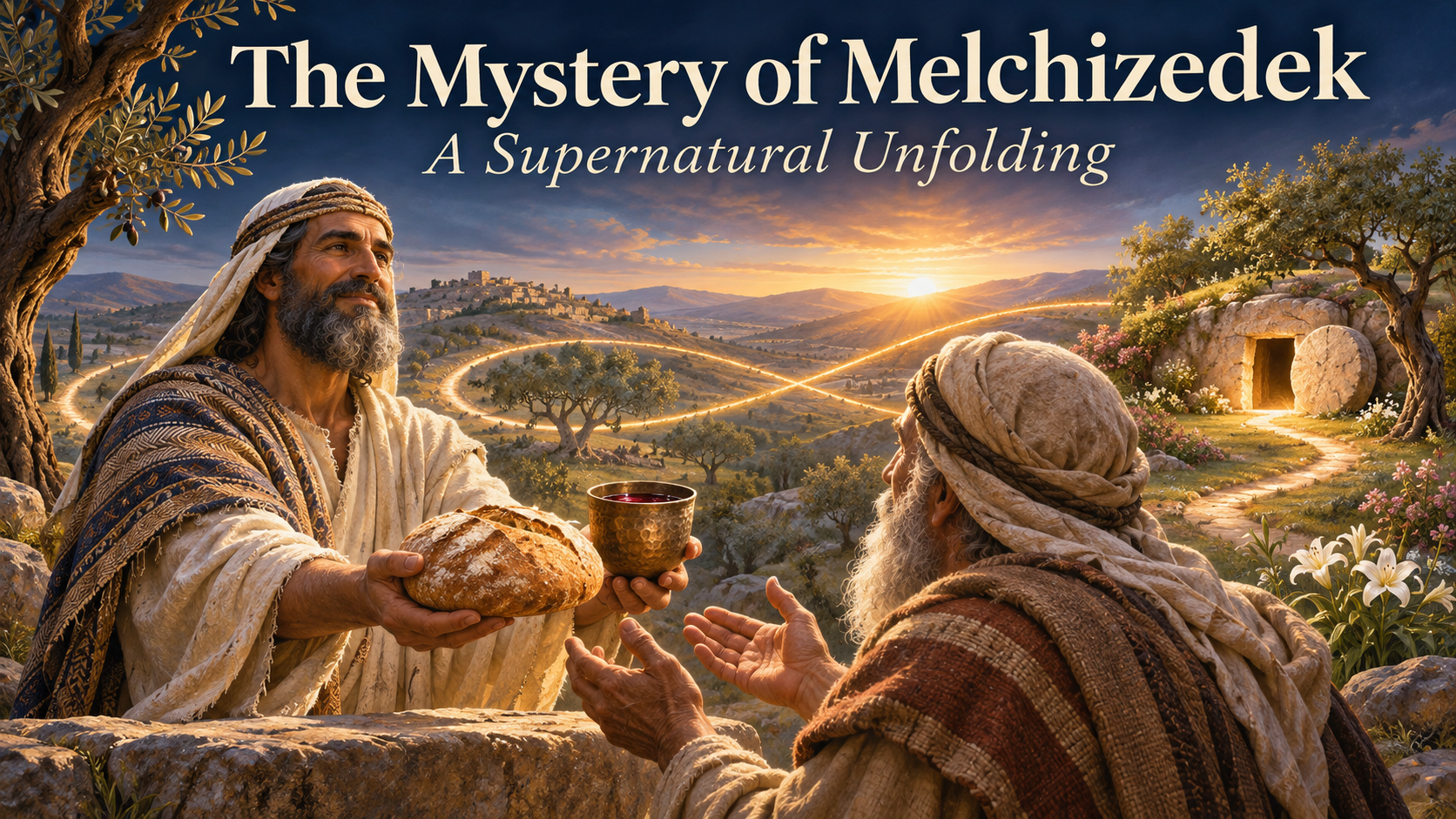
The Mystery of Melchizedek
A Supernatural Unfolding
A meditation by Jonah
Author’s Note: This meditation rests on research into Scripture, Hebrew, and Jewish interpretation. An academic treatment would be considerably longer, with fuller explanations and citations supporting each claim. Here, much of that background has been omitted to preserve the flow of the story. Observations that may seem unfamiliar often draw upon longstanding traditions of scholarship; the connections developed between them are offered for reflection and further exploration.
Hold on to your hat. We’re going on a wild ride through Scripture—forward and back, back and forward, circling around like a figure eight.
Along the way, we’ll encounter a birthday cookie, Hebrew letters, a mysterious priest, bread and wine, a promised son, and a garden. Some connections will become clear only when we circle back.
Stay with the story. Each stop will give us something to carry into the next.
A Birthday and a Number
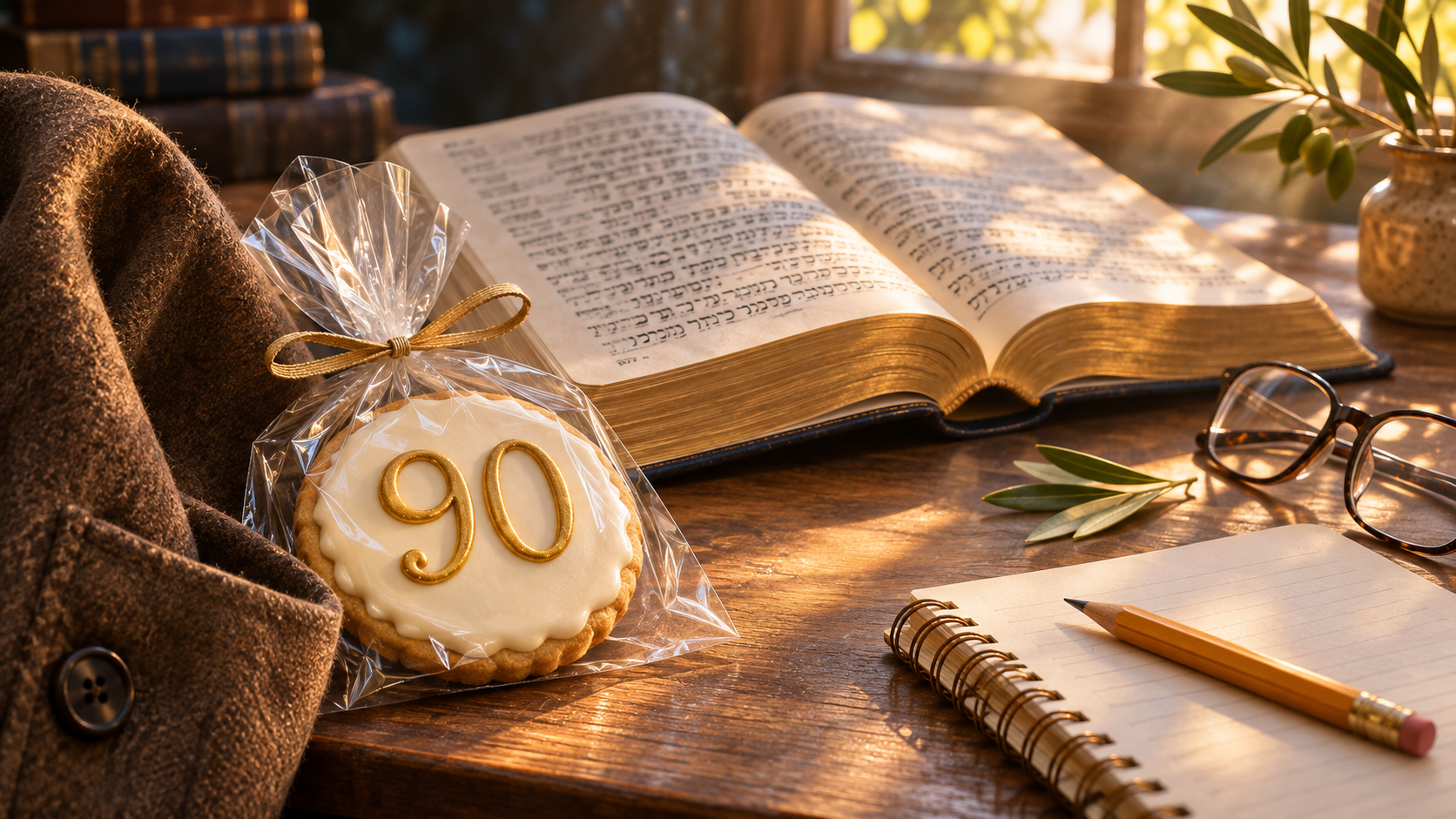
Yesterday, my wife and I attended a woman’s ninetieth birthday party. My wife has known her since she began dancing at four years old.
As we prepared to leave, I picked up one of the individually wrapped cookies offered as a parting favor. Written on it was her age: 90.
I sat down with the birthday woman and spoke with her about that number. In Hebrew, ninety is the numerical value of צ—Tzadi, the letter that begins tzaddik, “a righteous person.”
I told her she had reached a righteous age, and that I looked forward to seeing her at one hundred.
The cookie is still in my coat pocket.
But the number stayed with me in another way.
As this study unfolded, ninety returned through Sarah, through Isaac’s name, and through the language of righteousness. One hundred returned through Abraham and the words lech lecha.
Now I understand why that conversation stayed with me.
A birthday, a cookie, and a number became an invitation to look more closely.
And looking more closely led to an unexpected encounter in Genesis.
A Mysterious Encounter

A priest appears with bread and wine.
He blesses Abraham, praises God for delivering him from his enemies, and receives a tenth of the spoils. Then the narrative moves on.
His name is Melchizedek. He is king of Salem and priest of God Most High (Genesis 14:18–20).
His name will become another part of the unfolding connection. Hebrews interprets Melchizedek as “King of righteousness,” and king of Salem as “King of peace” (Hebrews 7:2). Righteousness is already present in the name of the priest—before the next chapter describes Abraham’s faith being counted as righteousness.
He appears before Isaac’s birth, before the binding on Moriah, before the Passover lamb, and before the Torah’s instructions concerning Israel’s priesthood.
Yet there he stands: a king, a priest, bread, wine, a blessing, and a tenth.
Some details acquire greater significance as a story unfolds. An early encounter introduces something whose importance becomes clearer much later. Returning to it, the reader recognizes connections that were difficult to see at first.
The Bible invites that kind of reading.
Its story moves forward. It also circles back.
To understand the encounter, we first need to step back to Abraham’s calling.
The Call to Go

Before Abraham encounters Melchizedek, God calls him to leave his homeland.
Lech lecha—לֶךְ־לְךָ.
The first word, lech, means “go,” addressed to one male. The second, lecha, means “to you” or “for you.” The expression is commonly translated “go forth.”
Rashi, the influential medieval Jewish commentator, understands the additional lecha as an assurance that the journey will be for Abraham’s benefit and good. He connects it with the promise of descendants.
Hasidic teaching also explores the wording as “go to yourself”: a journey toward the deeper identity and purpose discovered through responding to God.
Abraham must leave familiar surroundings and trust a promise whose fulfillment he cannot yet see.
The calling is personal. Its purpose reaches beyond him:
“In thee shall all families of the earth be blessed.”
—Genesis 12:3, KJV
The Hebrew wording carries another association. Both words contain the same consonants, לך, while their vowels distinguish their meanings.
Hebrew letters also have numerical values. Exploring those values is called gematria. A numerical correspondence can invite interpretation, though it does not by itself establish the meaning of a passage.
Using standard gematria:
| Word | Letters | Value |
|---|---|---|
| Lech | ל + ך | 30 + 20 = 50 |
| Lecha | ל + ך | 30 + 20 = 50 |
| Lech lecha | לך לך | 100 |
Here, the final form of Kaf, ך, retains its standard value of twenty.
One hundred will be Abraham’s age when Isaac, the promised son, is born (Genesis 21:5).
The journey begins with a call whose letters total one hundred. Its fulfillment will arrive through a life that seems beyond human possibility.
Abraham goes, and the story of blessing unfolds.
What Is Heard but Not Counted
 The consonants remain the same, but the words must be heard differently.
The final vowel in lecha is kamatz—ָ, the small mark beneath the final letter. It contributes to the pronunciation without changing the phrase’s standard gematria. The letters still total one hundred.
A Torah scroll is written without these vowel marks. The traditional reading preserves the pronunciation, while pointed editions of the Hebrew Bible display the marks that guide readers.
Jewish mystical interpretation offers another way of contemplating the vowel’s shape. Its horizontal stroke is understood as resembling Vav, valued at six, and its point as resembling Yod, valued at ten. Within that symbolic treatment, kamatz has a value of sixteen.
This is a separate interpretive method. It does not alter the standard letter calculation of lech lecha.
The same mystical teaching associates kamatz with concealment and with Keter, the crown, the highest of the sefirot—the attributes through which divine activity is contemplated in Kabbalah.
Fifteen and sixteen also have a distinctive place in Hebrew number notation. The expected combinations would be יה—Yod–Hey, totaling fifteen, and יו—Yod–Vav, totaling sixteen.
These letters recall יהוה—Yod–Hey–Vav–Hey, commonly represented in English as YHVH, God’s four-letter covenant Name. יה, pronounced Yah, is itself a biblical shortened form of that Name.
Out of reverence for these divine associations, fifteen and sixteen are conventionally written ט״ו (nine plus six) and ט״ז (nine plus seven).
The quantity remains, while the divine-associated lettering is withheld.
Placed together, these traditions offer an image for meditation: something may remain present without being openly expressed.
Soon, Abraham will encounter a priest of God Most High. The title does not establish a numerical equation with the vowel, but the themes invite comparison: divine holiness, concealment, and a purpose gradually becoming visible.
Hidden within lech lecha, then, is an invitation to look beyond what is counted.
The letters total one hundred, the age Abraham will reach when the promised son arrives. The vowel leaves that total unchanged, yet carries mystical associations with concealment and the highest crown.
Read together as meditation, these layers suggest a visible calling carrying a purpose not yet revealed.
Abraham hears the words before he knows their outcome. He must walk before he can see where the promise leads.
What begins with “go” is already moving toward life.
Bread, Wine, and a Tenth
Lot has been taken captive.
An invading coalition defeats the kings of Sodom and Gomorrah, seizes their possessions and provisions, and carries away Lot, Abraham’s nephew, who has been living in Sodom.
Abraham pursues the captors, defeats them, and brings back Lot, the possessions, the women, and the other people (Genesis 14:11–16).
Before the bread and wine, there is deliverance from captivity.

Then Melchizedek appears. He brings out bread and wine, blesses Abraham in the name of God Most High, and praises God for delivering Abraham’s enemies into his hands.
Abraham responds by giving him a tenth.
The Hebrew word used here is מַעֲשֵׂר—ma’aser, meaning “a tenth” or “tithe.” It is related to עֶשֶׂר—eser, “ten.” The proportion is carried within the word itself: one part out of ten.
Abraham gives Melchizedek “a tenth of everything”—ma’aser mikkol (מַעֲשֵׂר מִכֹּל). Hebrews later identifies the gift as coming from the spoils (Hebrews 7:4).
Before the Torah’s tithe laws appear, this act enters the story through Abraham’s response to blessing.
Genesis does not explain why that particular proportion is chosen. But the order of the encounter is significant:
Captivity gives way to deliverance. God is praised. A blessing is spoken. Abraham gives.
Later, Passover will bring deliverance from bondage into the center of Israel’s story. Here, an earlier rescue introduces a pattern that acquires greater meaning as the narrative unfolds.
Genesis does not call Melchizedek’s bread and wine a sacrifice. Nevertheless, the encounter brings together priesthood, provision, blessing, and a response to God’s generosity.
The reader moves on, carrying the image of people brought back from captivity—and a priest bringing bread and wine.
Faith in the One God
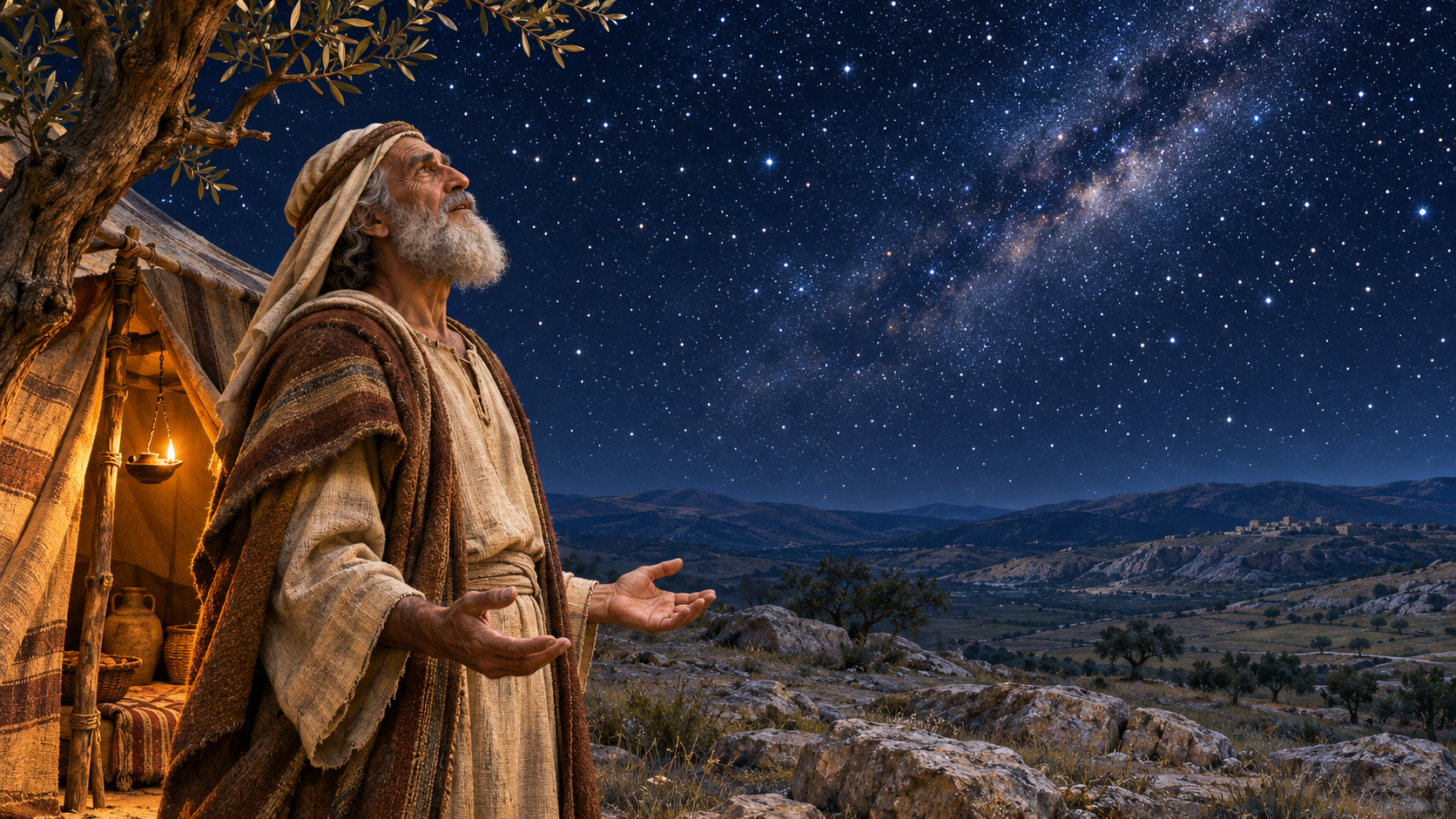
After these events, God speaks to Abraham:
“Fear not, Abram: I am thy shield, and thy exceeding great reward.”
—Genesis 15:1, KJV
Abraham has received a blessing, but a question remains. He has no child to inherit what God has promised.
God brings him outside and tells him to look toward heaven. Can he count the stars? So shall his descendants be (Genesis 15:5).
Then comes the response:
“And he believed in the LORD; and he counted it to him for righteousness.”
—Genesis 15:6, KJV
The Hebrew word for righteousness is צְדָקָה—tzedakah. It shares its root with צַדִּיק—tzaddik, “a righteous person.”
Both begin with צ—Tzadi, whose numerical value is ninety. That letter will appear within Isaac’s name, where traditional commentary associates it with Sarah’s age when she gives birth: ninety.
Here, “counted” means reckoned or credited. Abraham’s trust is counted as righteousness.
Yet the surrounding scene makes counting especially striking. Abraham is invited to count stars beyond his ability to number, then to trust a promise beyond his ability to fulfill.
He can count his years. He cannot yet count his descendants.
Melchizedek has blessed him in the name of God Most High. Now Abraham trusts the LORD who promises him a future.
The preceding chapter makes that identification explicit. Abraham speaks of “the LORD, the most high God, the possessor of heaven and earth” (Genesis 14:22).
The LORD—YHVH—is the God Most High whose priest has blessed him.
The story’s center is faith in the one God: the God who delivers, blesses, promises, and provides.
Abraham’s tenth expresses his response to blessing. His faith receives the promise. Beyond the gifts stands the Giver.
The Surprise of Life
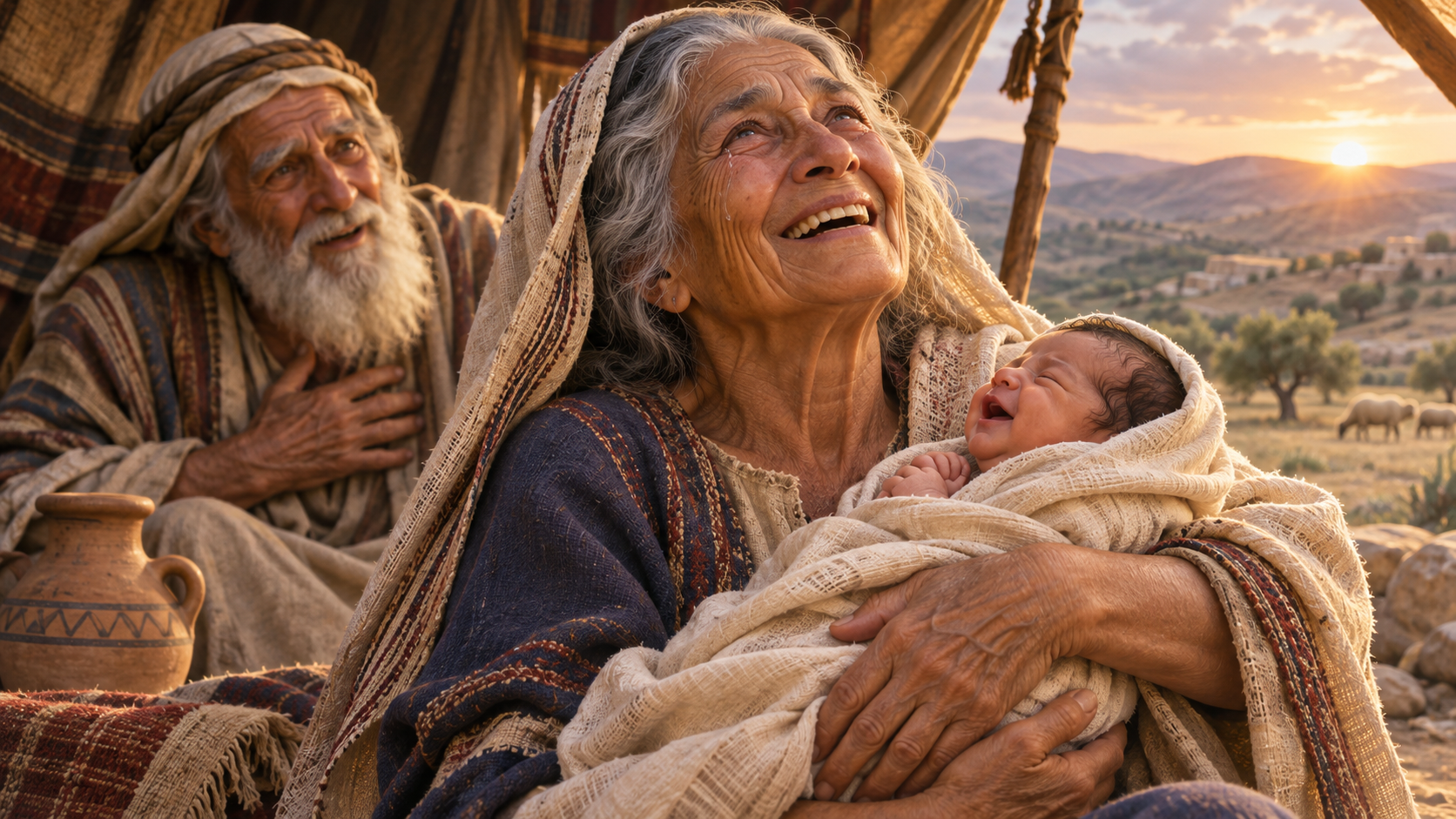
The promise includes a son through Sarah.
The prospect appears impossible. Both she and Abraham are old. When Sarah hears that she will bear a child, she laughs within herself.
God asks:
“Is any thing too hard for the LORD?”
—Genesis 18:14, KJV
Then Isaac is born.
His Hebrew name, Yitzhak—יִצְחָק, means “he will laugh.”
Sarah declares:
“God hath made me to laugh, so that all that hear will laugh with me.”
—Genesis 21:6, KJV
The promise has become a child in her arms.
Laughter often follows an unexpected turn—a moment when the outcome overturns the expectation. For Sarah, the astonishing turn is the arrival of life.
Her earlier laughter arose in the face of an apparently impossible promise. Now laughter expresses joy at its fulfillment.
She knows her age. She knows Abraham’s age. Those facts have not disappeared. Yet they did not account for everything God could do.
A miracle begins where the accounting of human possibility falls short. God’s provision exceeds what anyone knew to count.
The words lech lecha totaled one hundred when Abraham first answered the call. Now, at one hundred, he holds the promised son.
The surprise becomes laughter because the promise becomes life.
Sarah’s rejoicing reaches outward. Everyone who hears is invited to share the wonder.
The Tenth and What Remains

One hundred, ten, and ninety invite another look.
A tenth of one hundred is ten. Set that tenth apart, and ninety remains.
In Hebrew letters, these values are ק—Kuf, one hundred; י—Yod, ten; and צ—Tzadi, ninety.
Tzadi begins both tzaddik, “a righteous person,” and tzedakah, “righteousness.” Ninety is the value of the opening letter, rather than either complete word.
The arithmetic offers a symbolic echo of the narrative: Abraham gives a tenth, and in the following chapter his faith is counted as righteousness.
Then these same letters appear together in the name of the promised son:
יִצְחָק—Yitzhak.
Traditional commentary reads its four letters as reminders of the family’s story:
| Letter | Value | Traditional association |
|---|---|---|
| י—Yod | 10 | Abraham’s ten trials |
| צ—Tzadi | 90 | Sarah’s age at Isaac’s birth |
| ח—Chet | 8 | Isaac’s circumcision on the eighth day |
| ק—Kuf | 100 | Abraham’s age at Isaac’s birth |
The associations place Isaac within a story of testing, covenant, and promised life.
The tenth also returns across the generations. Abraham gives it to Melchizedek. Jacob promises God a tenth of everything God gives him (Genesis 28:22). Between them, Isaac receives a hundredfold harvest—a harvest that Rashi, citing Genesis Rabbah, associates with assessment for tithing (Genesis 26:12).
Blessing receives an answer in giving.
Later, Israel’s agricultural tithes will support the Levites, provide for sacred meals, and sustain the poor. What is dedicated in obedience to God becomes provision for people.
Isaac’s name offers one further reflection. Remove its first letter, Yod, valued at ten, and צחק remains—the Hebrew root associated with laughter.
When something is taken away, laughter remains within the name.
As meditative wordplay, that raises a question the next scene will bring into sharp focus:
What happens when Abraham is asked to surrender the son whose birth brought such joy?
The Beloved Son
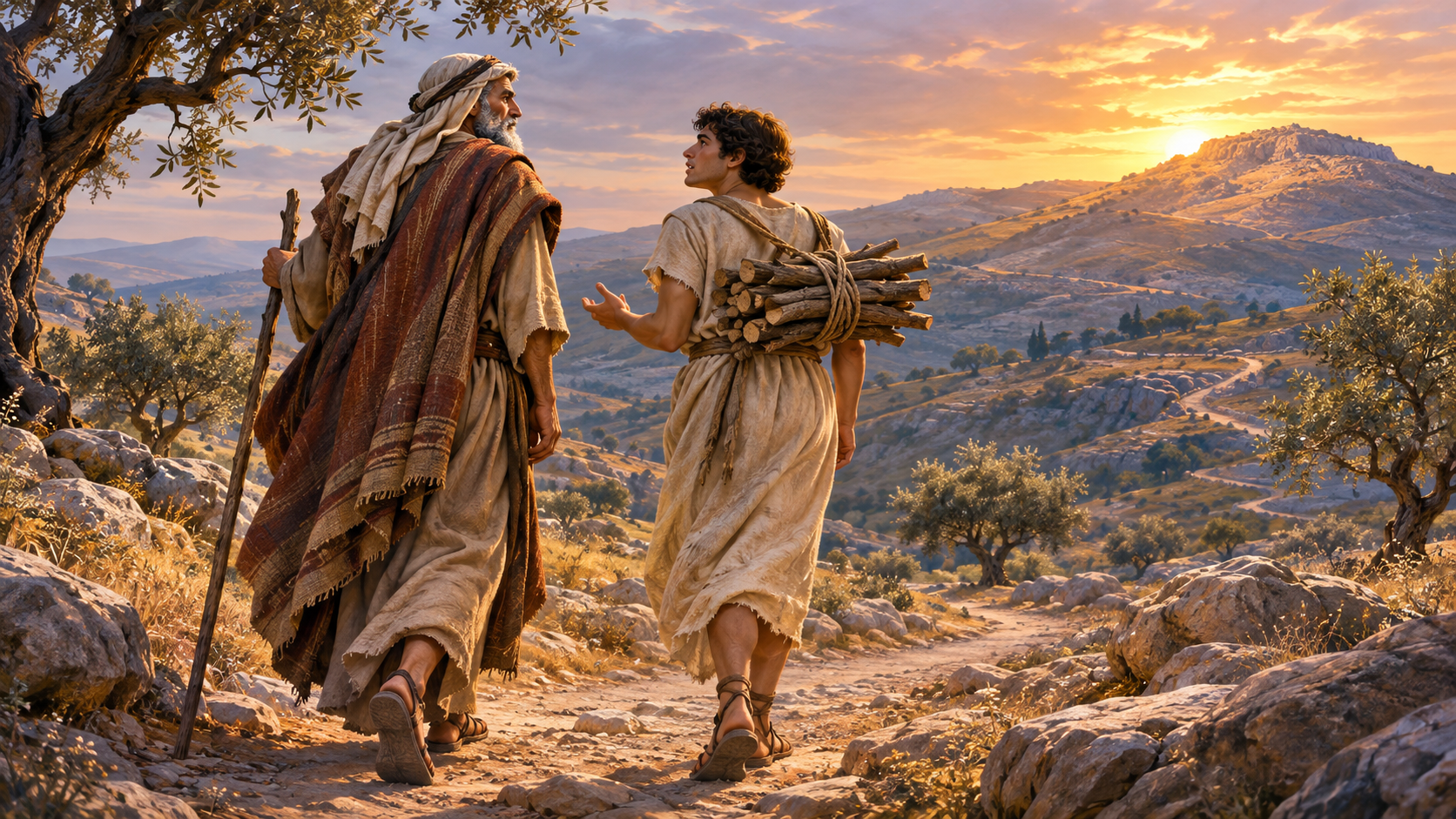
Abraham hears lech lecha again.
This time, the journey leads toward Moriah with Isaac, the son he loves (Genesis 22:2).
The words whose letters total one hundred return after the promised son has been born to the hundred-year-old father.
At the first calling, Abraham leaves the familiar past. At this calling, he must entrust the promised future.
Isaac carries the wood. Abraham carries the fire and the knife. Father and son walk together.
Isaac asks:
“Where is the lamb for a burnt offering?”
—Genesis 22:7, KJV
Abraham answers:
“God will provide himself a lamb.”
—Genesis 22:8, KJV
The Hebrew means that God will provide for Himself the lamb. Abraham places the provision in God’s hands.
Isaac is bound and laid upon the wood. Then the angel of the Lord calls to Abraham, stopping him.
A ram is offered in Isaac’s place.
The son lives. The promise continues.
Abraham names the place יְהוָה יִרְאֶה—Adonai Yir’eh, commonly rendered “the LORD will provide” (Genesis 22:14). Here the four-letter Name, YHVH, appears explicitly in the naming of the place. Adonai is the traditional reverential reading substituted for that Name.
The God who called Abraham has provided.
The first journey required trusting God for a future. This journey requires entrusting that future to Him.
The Son Who Stays
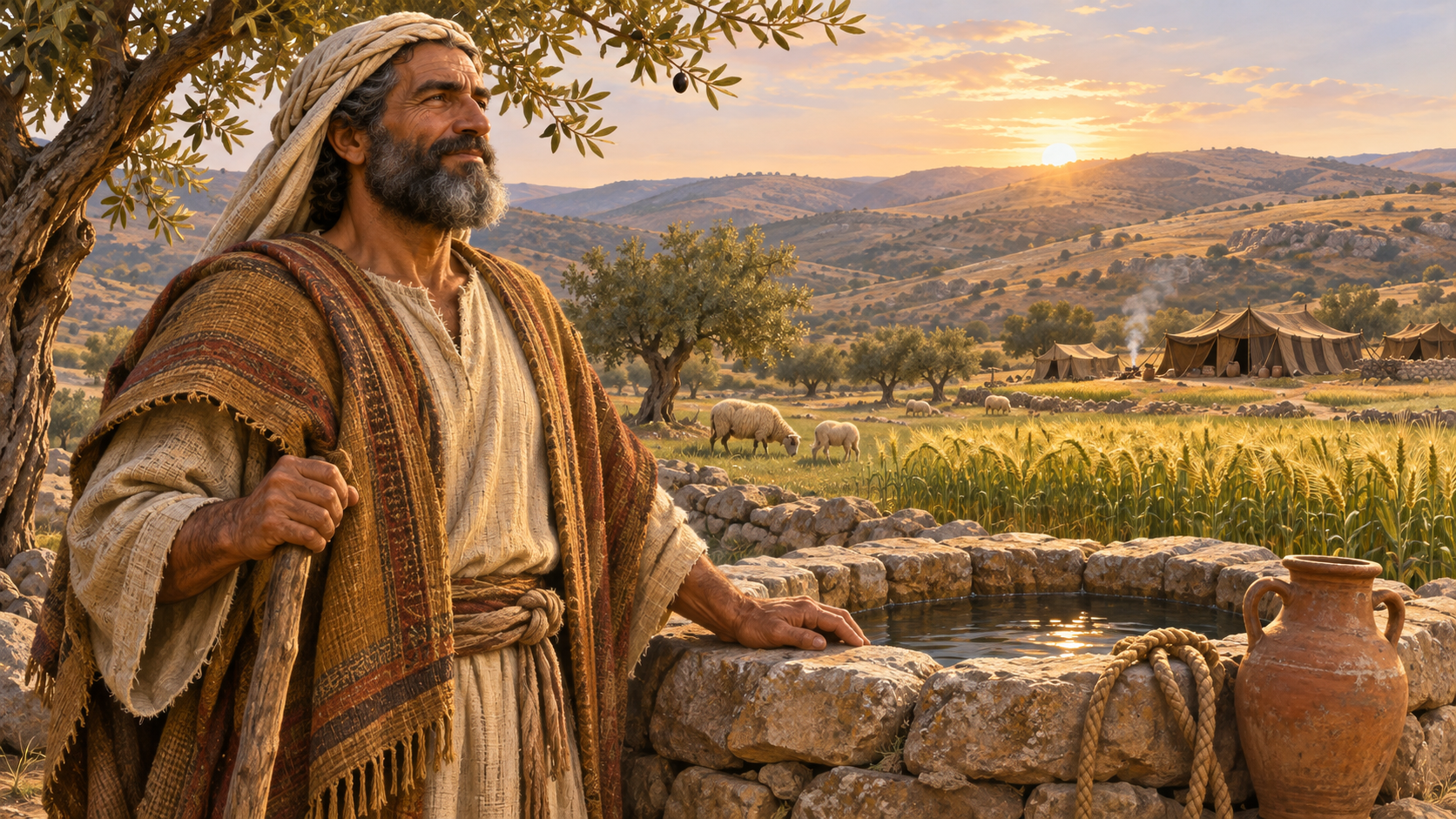
After Moriah, Isaac continues his life within the land of promise.
Abraham travels to Egypt. Jacob leaves for Haran and eventually goes to Egypt. Isaac is never described as leaving the land.
When famine comes, God tells him not to go down to Egypt:
“Sojourn in this land, and I will be with thee.”
—Genesis 26:3, KJV
Rashi connects this instruction with Isaac’s consecration at Moriah, describing him as an unblemished burnt offering for whom residence outside the Holy Land is inappropriate.
His experience upon the altar continues to shape his life afterward.
Abraham’s obedience requires going. Isaac’s obedience requires staying.
Alongside God’s promise of presence, Isaac’s remaining in the land invites reflection on covenant faithfulness. Israel’s descendants will experience displacement and exile. Their circumstances will change, but God’s promises will continue to address them.
To Isaac: “I will be with thee.”
To Jacob:
“I will not leave thee.”
—Genesis 28:15, KJV
Isaac’s staying becomes a picture to contemplate: the beloved son remains within the land of promise, while God’s commitment remains with the people of promise—even when they are scattered beyond it.
Exile does not mean that the covenant has been forgotten. Israel is not forsaken.
The Offering That Brings Near

At Passover, an offering becomes part of a people’s deliverance.
The lamb is offered to the Lord. Its blood marks the households for protection from judgment. Its flesh feeds those preparing to depart from bondage (Exodus 12).
The same offering serves God’s purpose and His people’s need.
The Hebrew word korban—קָרְבָּן, “offering”—belongs to the root associated with nearness. Drawing near provides a meaningful way to understand the relationship expressed through an offering.
God calls His people. They respond through trust, obedience, worship, and giving.
Passover brings them out of slavery into a life of belonging to Him. Deliverance begins a journey toward covenant fellowship.
An earlier scene comes back into view. Abraham brought Lot and others out of captivity. Afterward, Melchizedek brought bread and wine and blessed God for deliverance.
At Passover, deliverance becomes the defining experience of a nation. The people share a meal and prepare to go forth.
The New Testament draws upon this history when John calls Yeshua—Jesus—“the Lamb of God” and Paul calls Him “our passover” (John 1:29; 1 Corinthians 5:7).
These identifications invite readers to consider the earlier patterns together: the beloved son, the provided sacrifice, deliverance from death, and a people brought near.
Bread and Wine Again
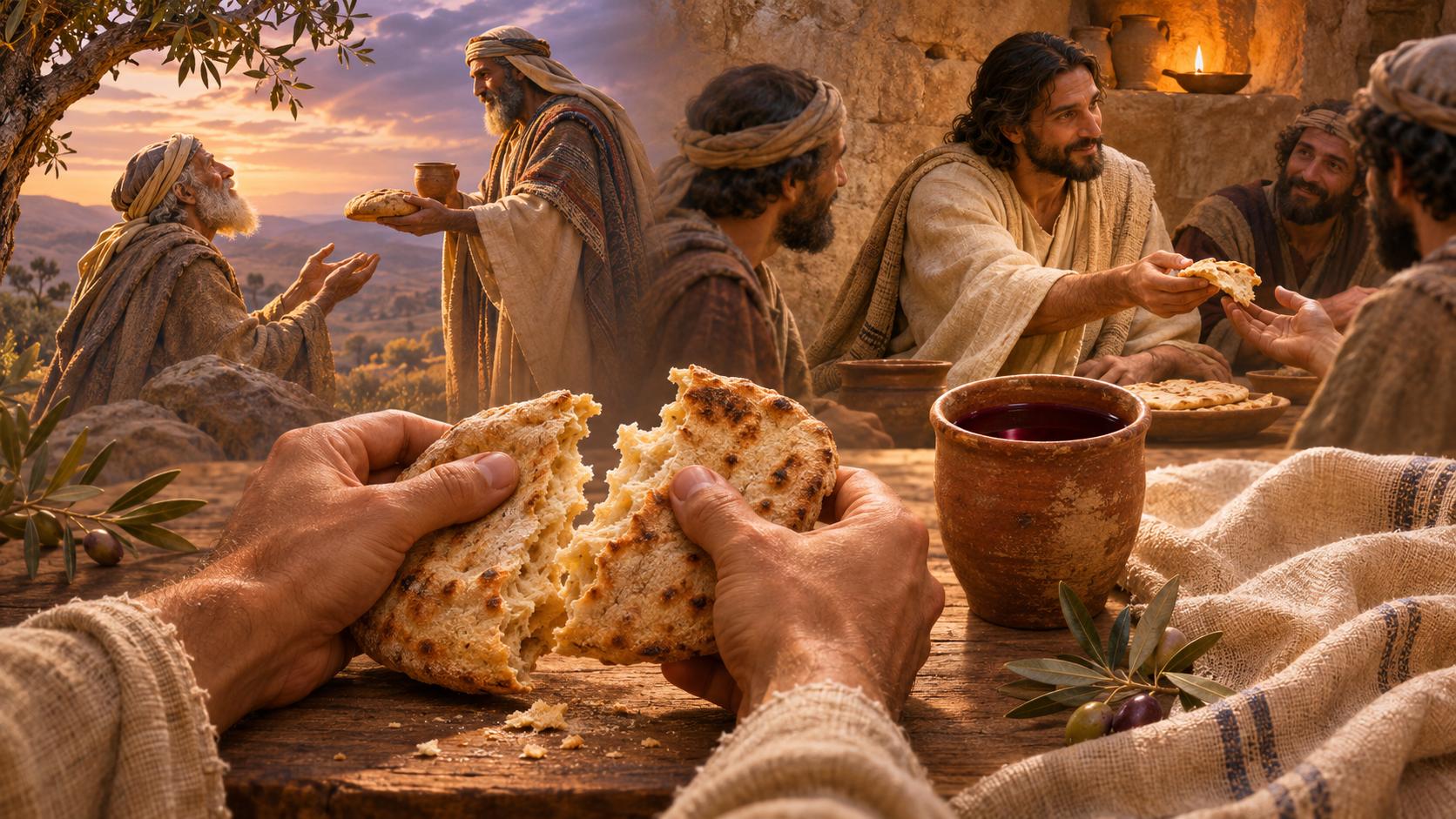
At the Last Supper, bread and wine return.
Yeshua shares them with His disciples and speaks of His body given and His blood poured out (Luke 22:19–20).
The scene recalls the earlier encounter with Melchizedek—king of Salem and priest of God Most High. Hebrews makes the priestly connection explicit: drawing upon Psalm 110, it describes Yeshua’s priesthood as “after the order of Melchizedek” (Hebrews 7).
The priest of God Most High who brought bread and wine to Abraham returns to the reader’s attention as Yeshua shares bread and wine and speaks of giving His life.
Bread and wine. Priesthood. Blessing. Giving.
Abraham responds to blessing with a portion of what he has received. At the Last Supper, Yeshua speaks of giving His own life.
The offering brings the theme of nearness into focus. Ephesians says that those once far away have been brought near through His blood (Ephesians 2:13).
The people desire to approach God. God provides the means of approach.
The story circles back to bread and wine, then unfolds into self-giving.
Sorrow Turned to Joy
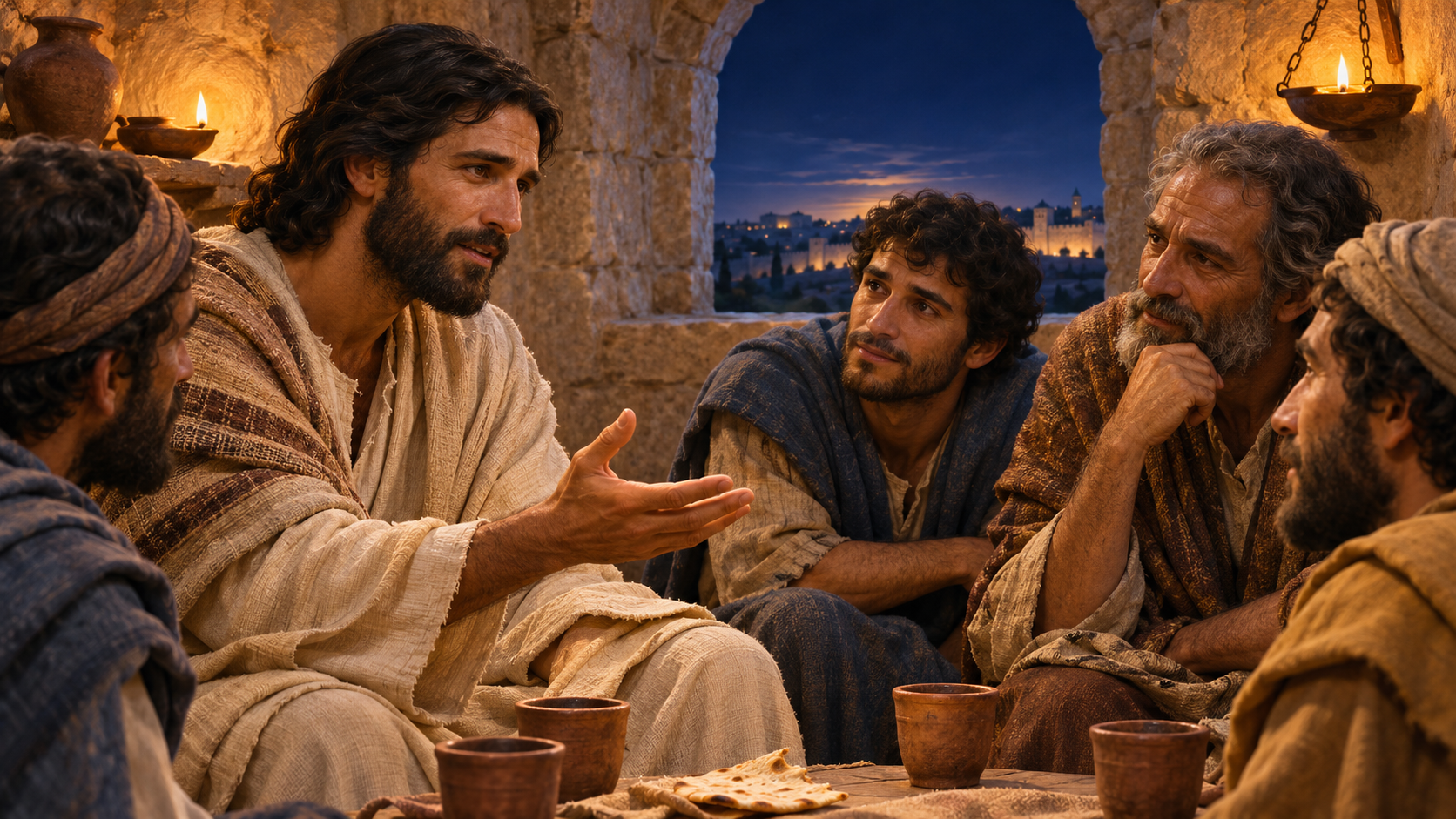
As Yeshua prepares His disciples for His departure, He tells them:
“Ye shall be sorrowful, but your sorrow shall be turned into joy.”
—John 16:20, KJV
He explains through the image of childbirth.
A woman experiences anguish, but the arrival of her child brings joy because a new life has entered the world (John 16:21).
The image invites a comparison with Sarah.
She faced a promise beyond her expectations. The promised birth brought laughter and rejoicing. What seemed impossible became life in her arms.
The disciples will face a loss beyond their understanding. Yet Yeshua promises:
“I will see you again, and your heart shall rejoice, and your joy no man taketh from you.”
—John 16:22, KJV
His being taken away will not be the end of their relationship.
Here the earlier wordplay offers a quiet echo: remove the Yod, whose value is ten, from Isaac’s name, and the root of laughter remains.
The association invites reflection upon a promise that runs deeper than immediate circumstances.
Beyond the taking away, joy is coming.
Sarah’s doubt gives way to rejoicing. The disciples’ sorrow will give way to reunion. In both scenes, the unexpected arrival of life transforms what people believed possible.
Miriam at the Sea, Miriam in the Garden
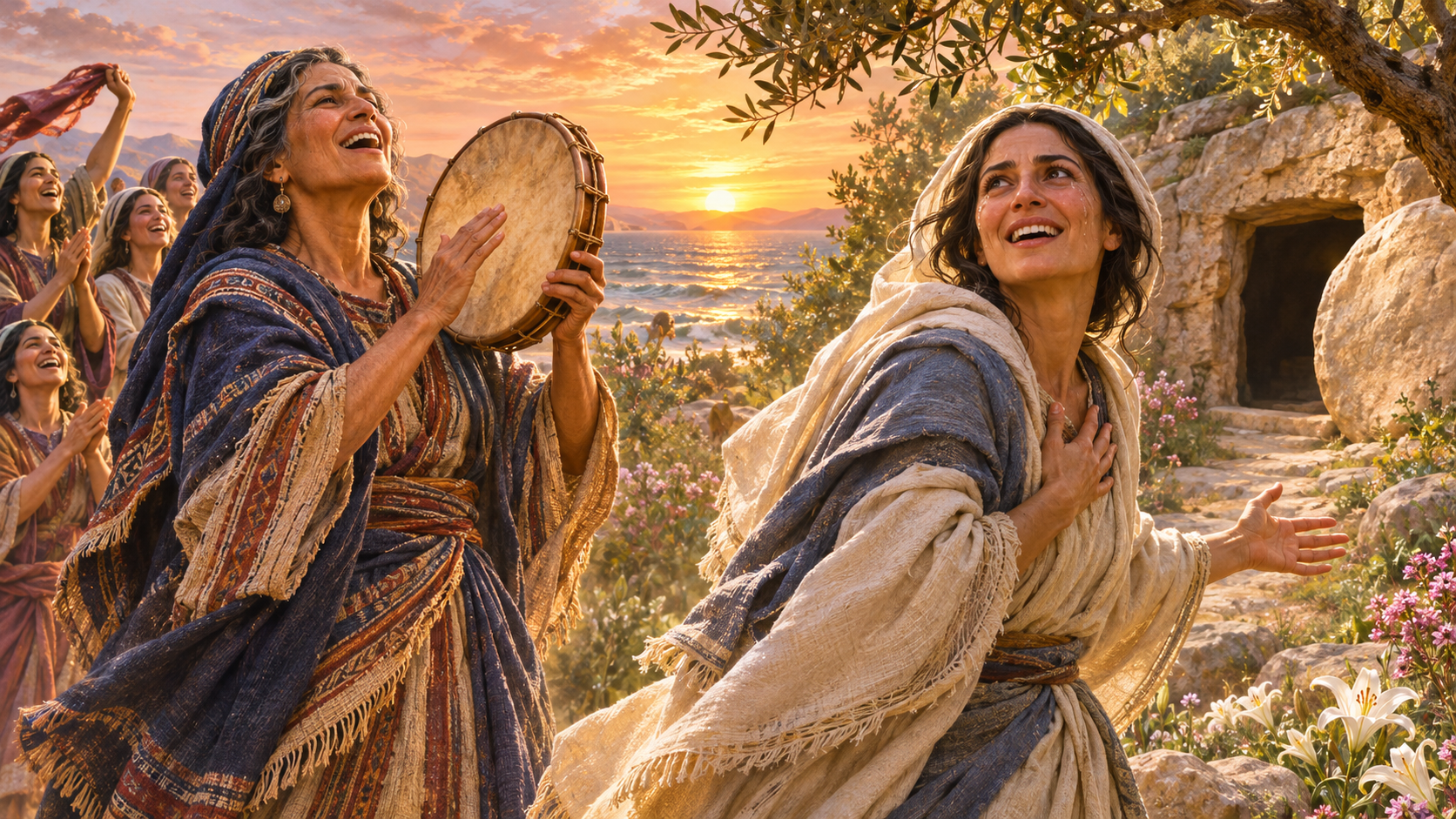
Mary’s Hebrew name is Miriam—מִרְיָם.
That name recalls another woman standing within the story of Passover deliverance.
After Israel crosses the sea, Miriam takes her timbrel and leads the women in praise. Those who faced the threat of death now stand alive on the far shore (Exodus 15:20–21).
Centuries later, Miriam of Magdala comes to a tomb.
She expects to find the dead. Instead, she encounters the risen Yeshua and announces to His disciples:
“I have seen the Lord.”
—John 20:18
Miriam at the sea: deliverance becomes song.
Miriam in the garden: mourning becomes proclamation.
The scenes differ, but their resemblance invites attention. Both belong to accounts of Passover deliverance. Both women bear witness after what seemed an ending.
At the sea, a path opens where there appeared to be no escape.
At the tomb, life appears where death seemed final.
God’s provision exceeds the horizon of human expectation.
Joy Comes in the Morning
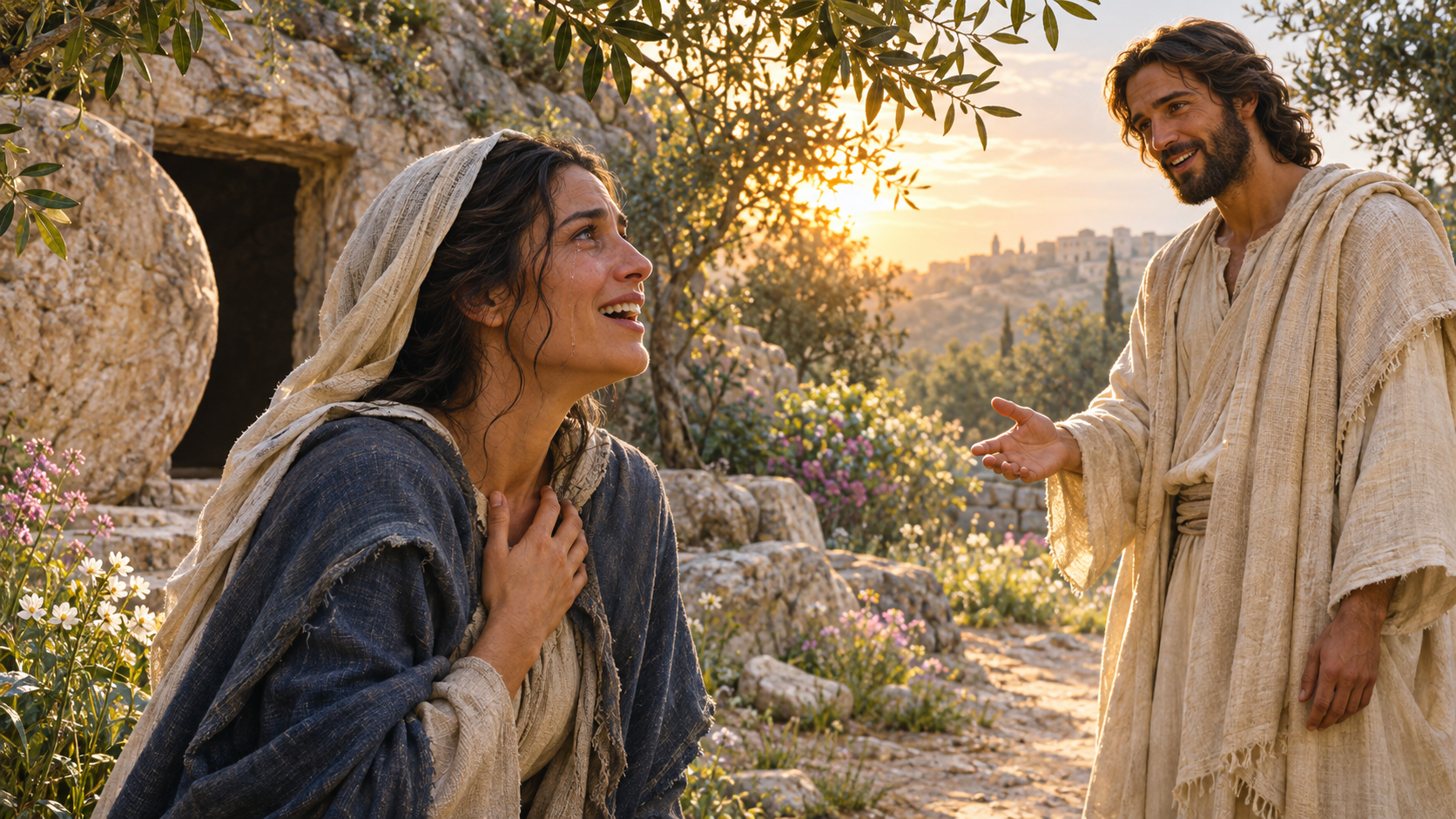
John tells us that the tomb was in a garden (John 19:41).
Miriam arrives early, while it is still dark (John 20:1).
She brings grief into the morning, unaware that the reason for her joy is already near.
She sees Yeshua but does not recognize Him. Supposing Him to be the gardener, she asks where the body has been taken.
Then He speaks her name.
“Mary.”
She recognizes Him (John 20:15–16).
The words of the psalm acquire a striking resonance:
“Weeping may endure for a night, but joy cometh in the morning.”
—Psalm 30:5, KJV
The morning begins in darkness, but darkness does not determine how it ends.
Sarah holds the promised son.
Miriam sings beside the sea.
Miriam hears her name in the garden.
In each scene, life exceeds what fear, grief, or human expectation could foresee.
The surprise awakens joy because the surprise is life.
The Garden Returns

The biblical story begins with humanity in a garden.
There is life, provision, and fellowship with God. Disobedience leads to exile and separation from the tree of life.
Much later, John places Yeshua’s tomb in a garden. There, Miriam encounters Him alive.
The setting invites readers to look back toward the beginning. A garden associated with burial becomes the place where resurrection is revealed.
From fallen to risen.
From outside the garden toward restored fellowship.
From the anguish of abandonment to the assurance: not forsaken.
The return reaches further still. Revelation brings the tree of life into view again, alongside the river of the water of life (Revelation 22:1–2). Death and mourning pass away (Revelation 21:4).
The story moves toward a future in which the losses introduced near its beginning are overcome.
The surprise of resurrection opens into the promise of eternal life.
Yeshua’s words to His disciples acquire their fullest resonance:
“Your joy no man taketh from you.”
—John 16:22, KJV
Life beyond death. Fellowship beyond separation. Joy beyond the reach of loss.
The Wonder of Returning
The searching itself begins to reflect the story’s movement.
A birthday cookie marked ninety prompts a closer look at a Hebrew letter. That letter leads toward righteousness, Sarah’s age, and Isaac’s name.
A tenth leads to ten. Ten returns within the name of the promised son. Removing its opening letter leaves the root associated with laughter.
Bread and wine bring the reader back to a priest. The priesthood leads toward a later meal. The garden invites a return to the beginning.
Each connection calls for examination. Some hold; others need correction. Through that process, the story becomes richer.
The wonder grows when the connections withstand careful examination. Even correcting a mistaken calculation can lead to a stronger insight.
The arithmetic remains exact, while the outcome exceeds what anyone expected. Sarah’s age is ninety. Abraham’s is one hundred. The miracle is the life they never expected those circumstances to produce.
The same care applies to the symbolic connections. A numerical correspondence can invite reflection; the biblical narrative supplies the people, events, and promises that give the reflection substance.
Scripture rewards returning. The story unfolds, and the reader’s understanding unfolds with it.
The meditation’s discovery is also its movement: going forward, circling back, and seeing more than was visible before.
A Supernatural Unfolding

That looping movement suggests the shape of 8—a visual metaphor for a story that returns without standing still.
In Hebrew, ח—Chet—is the eighth letter, with a numerical value of eight. Jewish mystical teaching associates eight with what transcends the natural cycle represented by seven.
Chet also begins חַי—chai, “alive,” and חַיִּים—chayim, “life.”
The letter is already present in Isaac’s name, יצחק. Traditional commentary associates it with his circumcision on the eighth day, the sign of the covenant.
These associations gather around a recurring movement: life arriving beyond ordinary expectation.
Sarah bears a son.
Israel passes through the sea.
A grieving Miriam encounters the risen Yeshua in a garden.
Earlier, Melchizedek appeared with bread and wine, blessing God for deliverance. Later, those familiar elements accompany Yeshua’s words about the giving of His life.
The story advances, returns, and opens further.
A supernatural unfolding.
The cookie remains an ordinary cookie. Ninety remains ninety. Yet an ordinary encounter can become an invitation to seek, and seeking can bring familiar words into a new light.
What began with a number leads back to a promise.
What began with a call leads toward a people brought near.
What began in a garden reaches toward the tree of life.
The surprise is life.
The promise is joy.
And joy comes in the morning.
Two stories. One book. One God.