Adonai Is My Strength
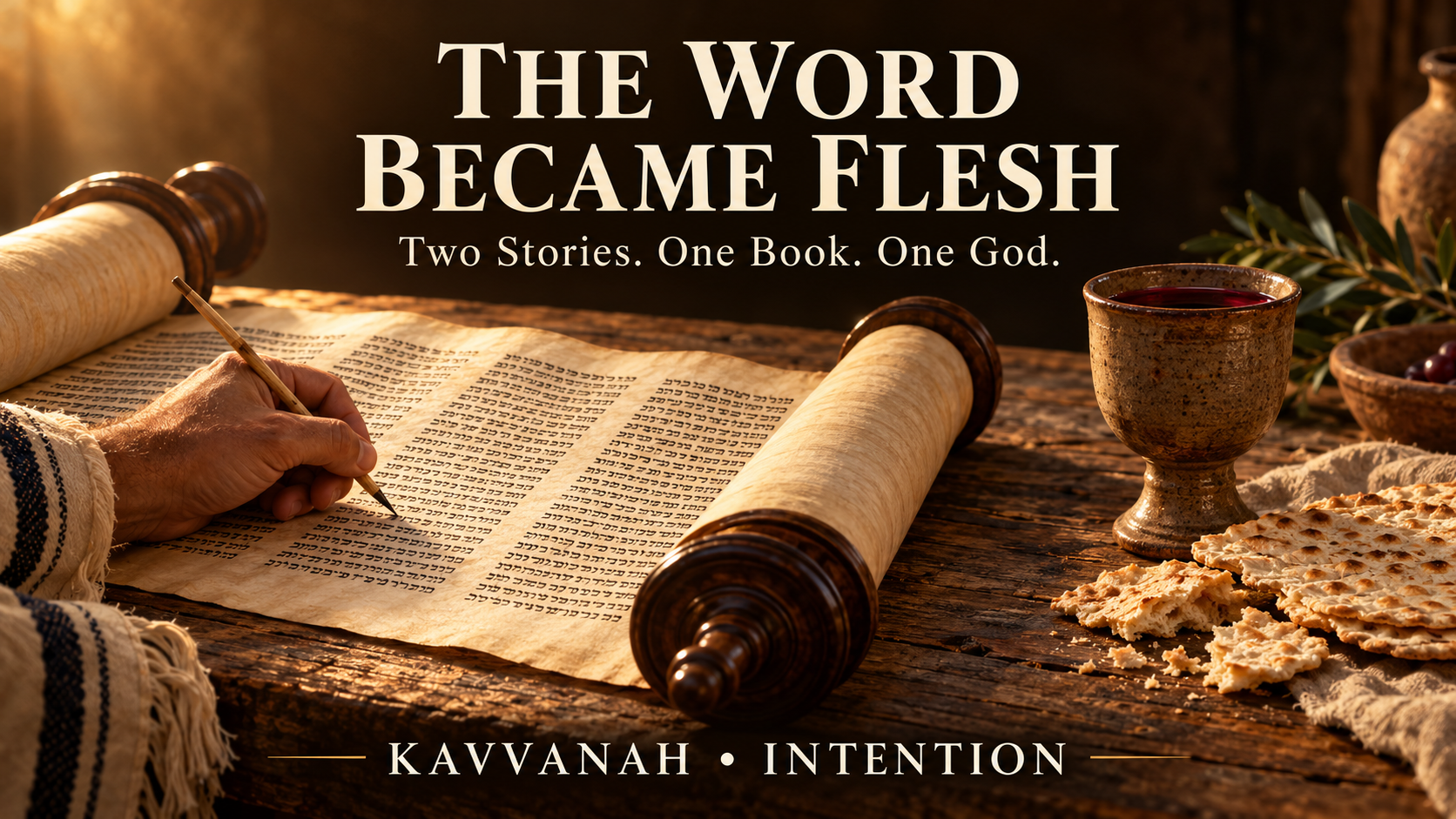
Two Stories. One Book. One God.
A study by Jonah
“This day will the LORD deliver thee into mine hand; and I will smite thee, and take thine head from thee; and I will give the carcases of the host of the Philistines this day unto the fowls of the air, and to the wild beasts of the earth; that all the earth may know that there is a God in Israel.”
—David to Goliath, 1 Samuel 17:46, KJV
God is always present. In the New Testament, He took on flesh.
The New Testament is concealed in the Old, and the Old Testament is revealed in the New. These two stories give us a way to explore that relationship. We begin with David and the five smooth stones. We follow one stone from the brook into battle. Then we turn to Saul of Tarsus, the man who opposed Yeshua and was chosen to carry His name.
Choosing runs through both stories. So does the strength of the Lord.
Part 1 — God Chooses the Shepherd
 What God is looking for
Before David chooses the stones, God chooses David.
The LORD sends Samuel to Jesse’s house to anoint a king. When Samuel sees Eliab, he thinks he is looking at the LORD’s anointed. But God tells him:
“Look not on his countenance, or on the height of his stature; because I have refused him: for the LORD seeth not as man seeth; for man looketh on the outward appearance, but the LORD looketh on the heart.”
—1 Samuel 16:7
Seven of Jesse’s sons pass before Samuel. The LORD has chosen none of them. Samuel asks whether there is another son.
The youngest is still out keeping the sheep.
David is brought in, and the LORD tells Samuel to anoint him. The Spirit of the LORD comes upon David. —1 Samuel 16:10–13
God sees what Samuel cannot determine from appearance. The shepherd comes into the picture because God is looking at the heart.
A heart for His sheep
Psalm 78 tells us what God takes David from—and what He chooses him to do:
“He chose David also his servant, and took him from the sheepfolds.”
—Psalm 78:70
The following verses describe David being brought from tending sheep to shepherding Jacob, God’s people, and Israel, His inheritance. David feeds them with integrity of heart and guides them with skillful hands. —Psalm 78:71–72
God chooses a shepherd to care for His people.
David’s calling grows out of work that already requires care, attention, responsibility, and courage. Protecting the sheep sometimes means facing what threatens them.
Preparation before the battle
When David offers to face Goliath, Saul sees a youth facing an experienced warrior. David remembers the lion and the bear that threatened his father’s flock. He went after them and rescued the sheep.
The LORD who delivered him then, David tells Saul, will deliver him from the Philistine. —1 Samuel 17:33–37
Saul puts his armor on David: a bronze helmet, a coat of mail, and a sword. David tries them and takes them off. He has not tested them. He goes forward with the equipment he knows from his work as a shepherd.
God has chosen David. His work has prepared him. Now David makes his own choices.
Part 2 — The Shepherd Chooses the Stones
 The same word for choosing
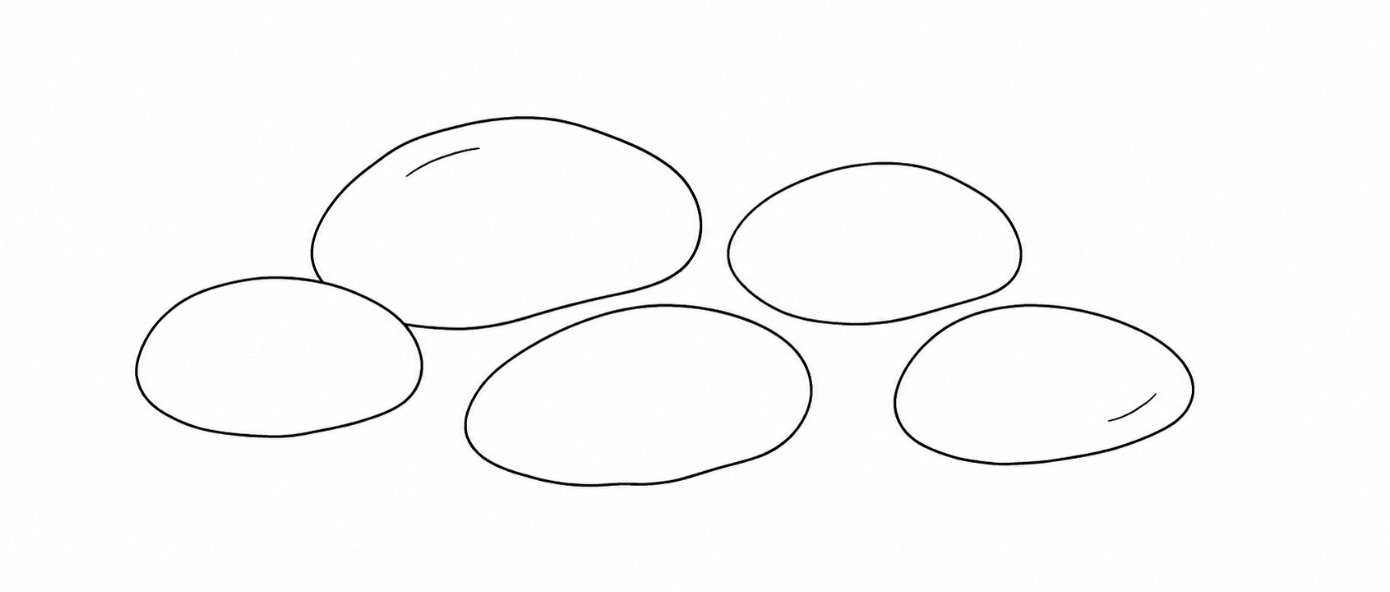
David chooses five smooth stones from the brook. The Hebrew is vayyivḥar (ויבחר), “and he chose,” from the root baḥar (בחר).
Psalm 78:70 uses that same word when God chooses David.
God chooses the shepherd. The shepherd chooses the stones.
Smooth stones from the brook
The battle takes place in the Valley of Elah. David takes his stones from hannaḥal (הנחל), “the brook.” The noun naḥal (נחל) describes a stream, a seasonal watercourse, or its channel. “Wadi” is an Arabic term commonly used for this kind of landscape. The verse gives the brook no separate proper name. —1 Samuel 17:2, 40
The stones are smooth. Flowing water and sediment wear rough surfaces down over time. David chooses stones from a place where that preparation has already been taking place.
God has prepared the shepherd. The water has prepared the stones.
Isaiah 57:6 also brings smooth stones and a brook together, but there the people make offerings to them. David carries stones while placing his trust in the LORD. The material can become an object of misplaced trust—or be used in service to God.
The LORD will fight
The Hebrew noun naḥal (נחל), “brook,” totals 88: Nun (50) + Chet (8) + Lamed (30).
In Exodus 14:14, Moses tells Israel:
“The LORD shall fight for you, and ye shall hold your peace.”
The word yillaḥem (ילחם), “He will fight,” also totals 88: Yod (10) + Lamed (30) + Chet (8) + Mem (40).
These are different words with the same value. Their shared message gives the number a reason to matter: God’s people face an overwhelming enemy, and the LORD brings deliverance.
With the definite article, hannaḥal (הנחל), “the brook,” totals 93. The word magen (מגן), “shield,” also totals 93: Mem (40) + Gimel (3) + Nun (50). David later calls the LORD his strength and his shield in Psalm 28:7.
The brook, the promise to fight, and the shield bring us back to the One David trusts.
Five stones and one purpose
David chooses five stones. Five is the value of the Hebrew letter Hey, associated in symbolic readings with beholding and revelation. That gives us a way to reflect on the number. David himself plainly states what the victory will reveal:
“That all the earth may know that there is a God in Israel.”
—1 Samuel 17:46
The number draws our attention. David’s words tell us the purpose.
Jonathan had already expressed the same confidence. In 1 Samuel 14:6, he tells his armor-bearer that the LORD can save by many or by few. The two men go forward, and verse 23 credits the LORD with saving Israel.
David also steps forward in faith. Before he releases a stone, he has placed his confidence in the outcome:
“The battle is the LORD’s.”
—1 Samuel 17:47
The battle was already won in David’s confidence in the LORD. He stepped out in faith. Goliath never stood a chance against the God David trusted.
David carries five stones. He will take one. Now we follow its path.
Part 3 — The Path of the Stone
 From the brook into the bag
David puts the stones into his shepherd’s bag. Verse 40 uses keli (כלי), a word for a vessel, container, or implement, and yalqut (ילקוט), a pouch or bag.
The chosen stones are carried in readiness. David approaches Goliath with his staff, his bag, and his sling.
Goliath sees the young shepherd and despises him. He asks whether he is a dog, that David comes to him with sticks. He curses David by his gods. —1 Samuel 17:42–43
Goliath judges what he sees. God has already looked at David’s heart.
Goliath mocks the shepherd’s equipment. David trusts the Shepherd’s protection.
His hand takes one stone
David runs toward the battle line, reaches into his bag, and takes a stone. —1 Samuel 17:48–49
David himself reaches for what he and God have prepared.
The Hebrew word is yado (ידו), “his hand.” The final Vav supplies “his.” This is David putting his preparation into action.
The verb now describes taking rather than choosing. David chose five stones at the brook. He takes one from the bag.
Five are carried. One is selected and released.
Psalm 78:72 has already joined David’s shepherding with the skill of his hands. Psalm 144:1 gives the source of that preparation:
“Blessed be the LORD my strength, which teacheth my hands to war, and my fingers to fight.”
Held and released
David slings the stone. The Hebrew word for sling is qelaʿ (קלע), and the verb vayqallaʿ (ויקלע), “he slung it,” uses the same root.
The bag carries the stones. The sling holds one for release.
The hollow that receives a stone in the sling is called kaf haqqelaʿ (כף הקלע) in 1 Samuel 25:29. Kaf means a palm or hollow. It names the sling’s stone-holding part, rather than David’s carrying bag.
And the smooth stone flew true, hitting its mark.
Judges 20:16 describes skilled slingers who could strike a hair and “not miss.” Its verb comes from ḥataʾ (חטא), a root also used for sin. In that passage it means missing a target. The shared language gives us an image of missing the mark—and of a stone that reaches it.
Following the LORD
Abigail later uses the sling as an image of God’s protection. She speaks of David’s life being kept with the LORD while his enemies are slung away. In the preceding verse, she says David fights the LORD’s battles. —1 Samuel 25:28–29
Later Jewish teaching applies this image to the righteous and the wicked: the righteous are kept in the bundle of life, while the souls of the wicked are pictured as slung away. —Shabbat 152b
Abigail also urges David to avoid bloodguilt and personal revenge. Following the LORD includes knowing when to stop. The same David who faces Goliath must also listen when he is being kept from sin.
The stone strikes
The stone strikes Goliath’s forehead and sinks into it. The Hebrew root for sinking is tavaʿ (טבע). That same root appears in Exodus 15:4, describing Pharaoh’s officers sinking in the sea. The next verse says they went down like a stone.
Again, the LORD delivers His people from an enemy who appears stronger.
Goliath falls on his face to the earth. —1 Samuel 17:49
Earlier in Samuel, the Philistine god Dagon falls facedown before the ark of the LORD. The next morning, Dagon is down again, with his head and hands severed. —1 Samuel 5:3–4
The Hebrew accounts share the root nafal (נפל), “fall,” and the language of face and ground. The Philistine champion falls like the Philistine idol. Both lose their heads.
The sword changes hands
David had set aside Saul’s sword. Now he takes Goliath’s own sword and cuts off his head. The weapon Goliath carried becomes the instrument completing his defeat. When the Philistines see their champion is dead, they flee. —1 Samuel 17:50–51
David’s confidence was never in the superiority of his equipment. He had already said that the LORD saves without dependence on sword or spear.
Another stone in Samuel gives us words for that help. After the LORD delivers Israel from the Philistines, Samuel sets up a stone and calls it Eben-ezer, “stone of help.” Even (אבן) is the same Hebrew word used for David’s stone.
“Hitherto hath the LORD helped us.”
—1 Samuel 7:12
The stone is chosen, carried, taken in hand, and released. David acts. The LORD delivers.
We have followed a shepherd and his equipment. Now the carpenter brings choosing and building into view.
Part 4 — From the Shepherd to the Carpenter
 The second story comes into view
We began with two stories, one book, and one God. As we move toward the second story, our hero—the Shepherd—is introduced as a carpenter.
Mark 6:3 identifies Yeshua as a tektōn, traditionally translated “carpenter.” The word can describe a craftsman or builder. In John 10:11, He identifies Himself as the Good Shepherd.
A shepherd protects the flock. A carpenter builds.
Both kinds of work involve choosing, preparing, and knowing what is needed.
Chosen to build
God calls Bezalel by name and fills him with His Spirit, giving him wisdom, understanding, and skill to work with wood, stone, and precious metals for the Tabernacle. —Exodus 31:1–5
Later, David tells Solomon:
“The LORD hath chosen thee to build a house for the sanctuary: be strong, and do it.”
—1 Chronicles 28:10
The word translated “chosen” comes from baḥar (בחר), the same Hebrew root we followed through David’s story.
God chooses David to shepherd His people. He chooses Solomon to build His Holy Temple.
Choosing servants—and a people
Before David chooses the stones, God chooses David. Psalm 78:70 says God “chose David his servant.” First Samuel 17:40 then describes David choosing five smooth stones from the brook. Both passages use vayyivḥar (ויבחר), “and he chose.” Its letters total 226: Vav (6) + Yod (10) + Bet (2) + Chet (8) + Resh (200).
That choosing also brings God’s people into the story:
“For the LORD hath chosen Jacob unto himself, and Israel for his peculiar treasure.”
—Psalm 135:4
Here, baḥar (בחר) is the same root for choosing. Jacob’s name becomes Israel, and his descendants become the people David is chosen to shepherd.
Psalm 106:23 calls Moses “His chosen one”—beḥiro (בחירו). Its letters also total 226: Bet (2) + Chet (8) + Yod (10) + Resh (200) + Vav (6).
Moses stands in the breach before God on behalf of His people. David shepherds and defends them. God chooses servants to serve His purposes and care for His people.
Who prepares the stones?
First Kings 6:7 describes the Temple stones being prepared before they are brought to the building. No hammer, axe, or iron tool is heard while the house is being built.
Those stones are shaped by craftsmen. David’s stones come from the brook—hannaḥal (הנחל). Flowing water has worn them smooth over time. David chooses what God has prepared.
The craftsmen shape their stones. David chooses stones God has already smoothed.
In both cases, the stones are prepared before they are put to use. But builders can reject the very stone God chooses.
The stone the builders rejected
“The stone which the builders refused is become the head stone of the corner.”
—Psalm 118:22
The Hebrew word is even (אבן), the same word used for David’s stone.
First Peter 2:4–7 applies this passage to Yeshua: rejected by people, but chosen and precious to God. Those who come to Him are described as living stones being built into a spiritual house.
The carpenter, the builders, the stones, and the choosing come together.
What people reject may be what God chooses to use.
Two stories in one book
The familiar saying describes the New Testament as concealed in the Old and the Old Testament as revealed in the New. These stories give us a way to consider that relationship.
- Goliath rejected David. He did not see him as a worthy adversary.
- King Saul rejected David and wanted to kill him.
- Saul of Tarsus rejected Yeshua and wanted to destroy His flock.
- David struck Goliath with a stone, then cut off his head with Goliath’s own sword.
- King Saul died on his own sword.
Saul of Tarsus fell to the ground and heard Yeshua speak. Here we can consider the image of “the sword of the Spirit, which is the word of God.” The Lord’s words confronted the man who was persecuting His people. —1 Samuel 17:49–51; 31:4; Acts 9:3–5; Ephesians 6:17
But Saul of Tarsus was spared. God showed him mercy, changed his direction, and chose him to carry the name he had opposed.
The Lord can defeat an opponent. He can also turn one into a servant.
Our second story begins with that reversal.
God chooses, and He calls. But He also gives us the freedom to choose how we respond. David steps forward in faith. Jonah tries to flee. King Saul seeks to destroy David. Saul of Tarsus turns toward the One he opposed.
Those who oppose God may receive judgment, mercy, and sometimes grace too—as Paul did:
“Who was before a blasphemer, and a persecutor, and injurious: but I obtained mercy, because I did it ignorantly in unbelief. And the grace of our Lord was exceeding abundant with faith and love which is in Christ Jesus.”
—1 Timothy 1:13–14
Part 5 — The Man God Turns
 The Shepherd confronts the threat
5 stones …. 5 parts. The last part is about Saul of Tarsus.
Goliath mocked the shepherd’s equipment. David trusted the Shepherd’s protection. Now we see the Shepherd confront another man threatening His flock.
Saul is heading toward Damascus with authority to arrest followers of Yeshua. He believes he is serving God while threatening the people who belong to Him.
A light from heaven surrounds him. He falls to the ground and hears:
“Saul, Saul, why persecutest thou me?”
—Acts 9:4
Goliath fell and died. Saul falls and lives. The Lord stops him, speaks to him, and gives him instructions.
A chosen vessel
The Lord sends Ananias to Saul. Ananias knows Saul’s reputation and voices his concern. But the Lord tells him:
“Go thy way: for he is a chosen vessel unto me, to bear my name before the Gentiles, and kings, and the children of Israel.”
—Acts 9:15
The Greek expression is skeuos eklogēs, “a vessel of choice.” The word skeuos can describe a vessel, container, or instrument.
David’s shepherd’s bag was called a keli (כלי), a Hebrew word that also means a vessel, container, or implement.
David places the chosen stones in a vessel. The Lord makes Saul a chosen vessel to carry His name.
The man who tried to silence Yeshua’s followers will now carry His name before Gentiles, kings, and the people of Israel.
The persecutor becomes a servant.
Vessels and light
The menorah brings another vessel into view.
God’s instructions describe three almond-shaped cups on each of its six branches and four on the central shaft—twenty-two cups altogether. These decorative cups are distinct from the seven lamps. —Exodus 25:33–37
Rabbeinu Bahya connects those twenty-two cups with the twenty-two Hebrew letters. He describes the cup as a vessel that receives and distributes.
Each Hebrew letter has a story to tell. Twenty-two letters. Twenty-two stories. With those letters, God’s words are written in the Tanakh.
God designed the lamp. Jewish commentary finds the letters reflected in its cups. Together, they give us an image of His Word and His light going out from the Temple to the world.
Moses’ face shines after speaking with God. At the Transfiguration, Yeshua’s face shines like the sun. On the Damascus road, Saul encounters the risen Yeshua and loses his sight because of “the glory of that light.” By grace, his sight is restored through Ananias. —Exodus 34:29; Matthew 17:2; Acts 9:17–18; 22:11
The man stopped by the light is chosen to carry His name.
Paul later brings light and vessels together himself. He describes God shining in our hearts, giving “the light of the knowledge of the glory of God in the face of Jesus Christ.” Then he says:
“But we have this treasure in earthen vessels, that the excellency of the power may be of God, and not of us.”
—2 Corinthians 4:6–7
The vessel carries the treasure. The power belongs to God.
Three days
For three days, Saul cannot see. He neither eats nor drinks. When the Lord speaks to Ananias about him, He says, “Behold, he prayeth.” —Acts 9:9–11
Jonah also spends three days in darkness, confined within the fish. He prays, is delivered, and receives the Lord’s commission again.
God confines them. Both pray, both are delivered, and both are sent to serve His purpose.
Jonah had tried to avoid going to the people God sent him to warn. Saul had been pursuing the people he would soon join.
God interrupts their direction and sends them where He wants them to go.
“Brother Saul”
Ananias enters the house, places his hands on Saul, and addresses him:
“Brother Saul, the Lord, even Jesus, that appeared unto thee in the way as thou camest, hath sent me, that thou mightest receive thy sight, and be filled with the Holy Ghost.”
—Acts 9:17
Brother Saul.
The man who came to arrest believers is welcomed by one.
The name Ananias comes from the Hebrew Ḥananyah (חנניה), meaning “Adonai has been gracious.” The man bearing that name brings a message of restoration.
Saul receives his sight, rises, and is baptized. He eats and regains his strength. Soon he is proclaiming the One whose followers he had persecuted. —Acts 9:18–22
Mercy and grace
Paul later describes what he received:
“But I obtained mercy, because I did it ignorantly in unbelief. And the grace of our Lord was exceeding abundant with faith and love which is in Christ Jesus.”
—1 Timothy 1:13–14
He is spared. He is also restored and entrusted with service.
Paul does not forget what he did. He calls himself unworthy to be called an apostle because he persecuted God’s assembly. Then he says:
“But by the grace of God I am what I am: and his grace which was bestowed upon me was not in vain.”
—1 Corinthians 15:10
Grace bears fruit in what he does next.
Strength for the work
Being chosen does not make Paul independent of God. When he asks for his thorn in the flesh to be removed, the Lord answers:
“My grace is sufficient for thee: for my strength is made perfect in weakness.”
—2 Corinthians 12:9
David went forward trusting the Lord’s strength. Paul learns to serve in that same dependence.
The man who once used force against believers later writes:
“For the weapons of our warfare are not carnal, but mighty through God to the pulling down of strong holds.”
—2 Corinthians 10:4
The following verse speaks of bringing thoughts into obedience to Messiah. Paul’s work now calls people toward the One he once opposed.
God chooses him. Mercy spares him. Grace equips him. His strength comes from the Lord.
Adonai Is My Strength
David was better equipped. His confidence rested in the LORD’s faithfulness. The stones, the bag, and the sling belonged to his work as a shepherd. The victory belonged to God.
Saul of Tarsus had authority to arrest believers. Then the risen Yeshua stopped him. The man who threatened the flock received mercy and became a chosen vessel to carry the Lord’s name.
God chooses, prepares, and calls. David steps forward in faith. Paul rises to serve. Both depend on strength beyond their own.
As I explored these passages, a song came on the radio: “Adonai Is My Strength.” Its words brought me back to David’s own declaration:
“The LORD is my strength and my shield; my heart trusted in him, and I am helped.”
—Psalm 28:7
David’s prayer then turns toward God’s people:
“Save thy people, and bless thine inheritance: feed them also, and lift them up for ever.”
—Psalm 28:9
The shepherd’s concern for the flock is still there. And God’s choosing reaches beyond the individual servant:
“For the LORD hath chosen Zion; he hath desired it for his habitation.”
—Psalm 132:13
Through Zechariah, He promises to defend Jerusalem—and brings David into the promise:
“In that day shall the LORD defend the inhabitants of Jerusalem; and he that is feeble among them at that day shall be as David.”
—Zechariah 12:8
The strength that delivered David becomes the picture of strength God promises to those He defends. Even the feeble will be like David. Their deliverance rests in the Lord.
God chose Abraham with a promise that all the families of the earth would be blessed through him. He chose Israel, David, and Jerusalem. He chose Saul to carry His name before the nations and the children of Israel. His choosing serves His purpose of salvation for the world. For God so loved the world.
“Salvation is of the LORD.” —Jonah 2:9
Two stories. One book. One God.
Adonai is my strength.
Sources for Continued Study
Scripture quotations are from the King James Version. Hebrew words use standard gematria; final letters retain their ordinary values, and vowel marks are not counted. The article’s symbolic comparisons are reflections on the passages.
David’s calling and battle: 1 Samuel 16–17; Psalm 78:70–72. Hebrew and English: https://mechon-mamre.org/p/pt/pt08a16.htm and https://mechon-mamre.org/p/pt/pt08a17.htm
Choosing and God’s people: Psalm 135:4; Psalm 106:23; 1 Chronicles 28:10. Hebrew and English: https://mechon-mamre.org/p/pt/pt26d5.htm and https://mechon-mamre.org/p/pt/pt26a6.htm
The brook, sling, and shepherd’s equipment: 1 Samuel 17:40, 49; 25:28–29; Judges 20:16; Psalm 144:1. Vocabulary notes: https://classic.net.bible.org/verse.php?book=1Sa&chapter=17&verse=40
The bundle of life and the sling in later Jewish teaching: Babylonian Talmud, Shabbat 152b. https://www.sefaria.org/Shabbat.152b
Deliverance and falling: Exodus 14:14; 15:2–5; 1 Samuel 5:3–6; 7:12; 31:4. Smooth stones and misplaced worship: Isaiah 57:6.
Craftsmanship, the Temple, and the rejected stone: Exodus 31:1–5; 1 Kings 6:7; Psalm 118:22; Mark 6:3; John 10:11; 1 Peter 2:4–7.
The menorah’s cups and the Hebrew letters: Exodus 25:31–37; Rabbeinu Bahya on Exodus 25:31, section 2. https://www.sefaria.org/Rabbeinu_Bahya%2C_Shemot.25.31.2
Light and vessels: Exodus 34:29; Matthew 17:2; Acts 9:1–22; 22:11; 2 Corinthians 4:6–7. Saul’s three days and Jonah: Acts 9:9–11; Jonah 1:17–3:3.
Ananias and the Hebrew name Hananiah: Greek name entry G367. https://www.blueletterbible.org/lexicon/g367/kjv/tr/0-1/
Mercy, grace, and strength: 1 Timothy 1:12–16; 1 Corinthians 15:9–10; 2 Corinthians 12:7–10; 10:4–5; Ephesians 6:17.
God’s people, Jerusalem, and salvation: Psalm 28:7–9; 132:13; Zechariah 12:8; Genesis 12:1–3; John 3:16; Jonah 2:9.
The Old and New Testaments saying is traditionally attributed to Augustine, Questions on the Heptateuch 2.73; see Catechism of the Catholic Church, paragraph 129. https://www.vatican.va/archive/ENG0015/__PQ.HTM