Seeking God. Finding Him in the Book of Jonah.
By Jonah
I recently asked artificial intelligence what it had learned about my character from our conversations. Its answer made me consider how much anyone can know about another person when they see that person in only one setting.
AI mostly sees me working. It sees me studying Scripture, developing arguments, asking questions, and sometimes getting frustrated when something is misunderstood. It sees much less of my humor or the playful side of my life. Even my forceful language requires context: sometimes it expresses frustration, and sometimes I deliberately use it to get a better response from a machine whose feelings I cannot hurt.
I do get frustrated. I also try to exercise self-control. Those facts belong together.
But there is something else I hope comes through in those conversations: I am a seeker.
The Hebrew word דָּרַשׁ, darash, means to seek, inquire, or investigate. It describes something I recognize in my own life. I keep returning to Scripture, asking questions and following connections. As I do, I keep finding the same thing: across the Tanakh and the New Testament, I recognize the same God.
Then I read a parable about some very long spoons.
The same table
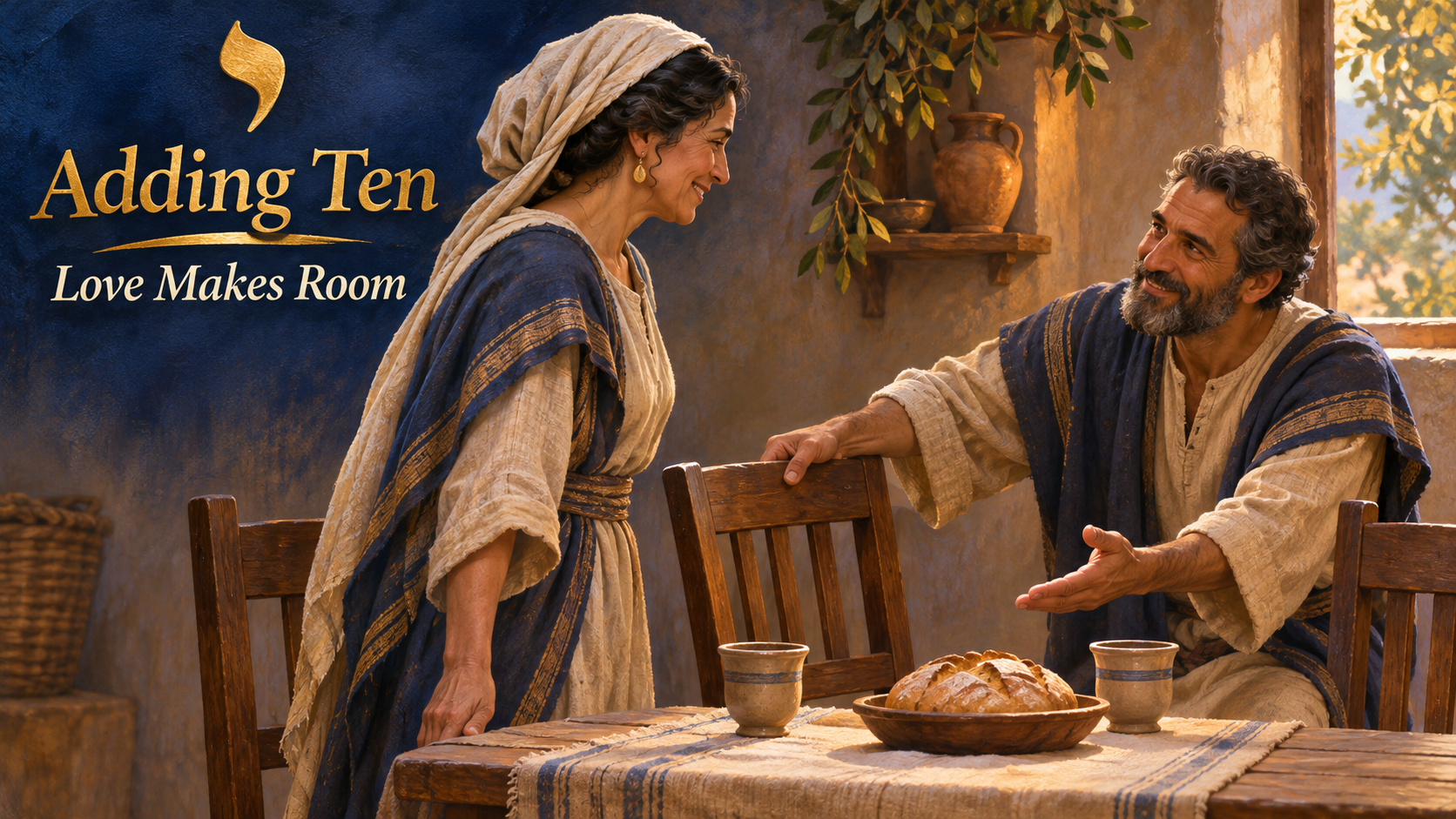
In the familiar parable of the long spoons, a man is shown two rooms. Each contains a table covered with food. Each person has a spoon long enough to reach the feast, but too long to bring the food to his own mouth.
In the first room, everyone is starving. Each person keeps trying to feed himself.
In the second, everyone is nourished. They have learned to feed one another.
The first room is called hell; the second, heaven.
In the version shared by Yehuda Meitav, the story becomes a reflection on our dependence on one another. We do not have to agree about everything to recognize that another person’s well-being matters to our own.
As I considered it, I saw a biblical question in those spoons: What will we choose to do with what God has placed in our hands?
God gives us life, abilities, resources, and opportunities. He also gives us freedom to make consequential choices. We can use His gifts selfishly. We can use them to nourish others. Our choices help shape the world we share.
The parable offers an image of those consequences. Scripture takes us further by revealing the God who teaches us how to choose—and who provides a way back when we fail.
The freedom to love
“Choose life,” Moses tells Israel, “that both thou and thy seed may live” (Deuteronomy 30:19).
That invitation reveals something about God. He teaches, warns, and sets choices before His people. He desires a response that reaches into the heart.
Free will is a gift. A loving relationship includes willing service. Scripture speaks of serving God, but it also commands us to love Him “with all thine heart, and with all thy soul, and with all thy might” (Deuteronomy 6:5). The service He seeks belongs within that relationship of love.
Freedom also means we can miss the mark. We can know what is right and still choose otherwise. We can cause harm, withhold compassion, or refuse to see the person across the table.
Yet God has also provided means of atonement. Throughout Scripture, He calls people to repentance and makes restoration possible. The existence of a way back tells us something profound about His character: He knows we will fail, and He still desires our return.
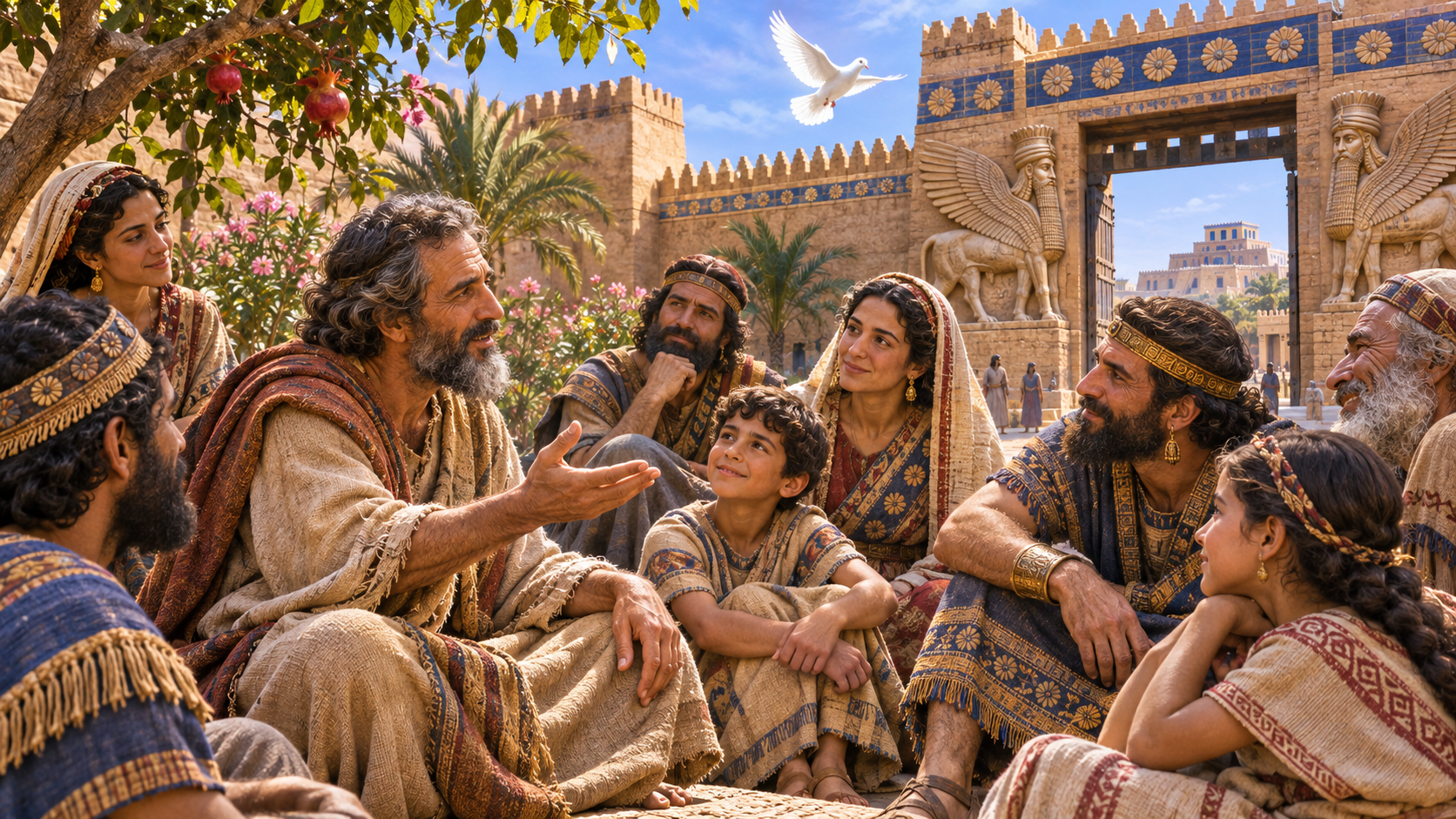
The book of Jonah brings that character vividly into view.
Whose story is Jonah?
Jonah appears to be a story about a reluctant prophet and a wicked city. But as I return to it, I see a sustained lesson about who God is.
God takes Nineveh’s evil seriously. Its wickedness matters, and judgment is announced. This is a just God.
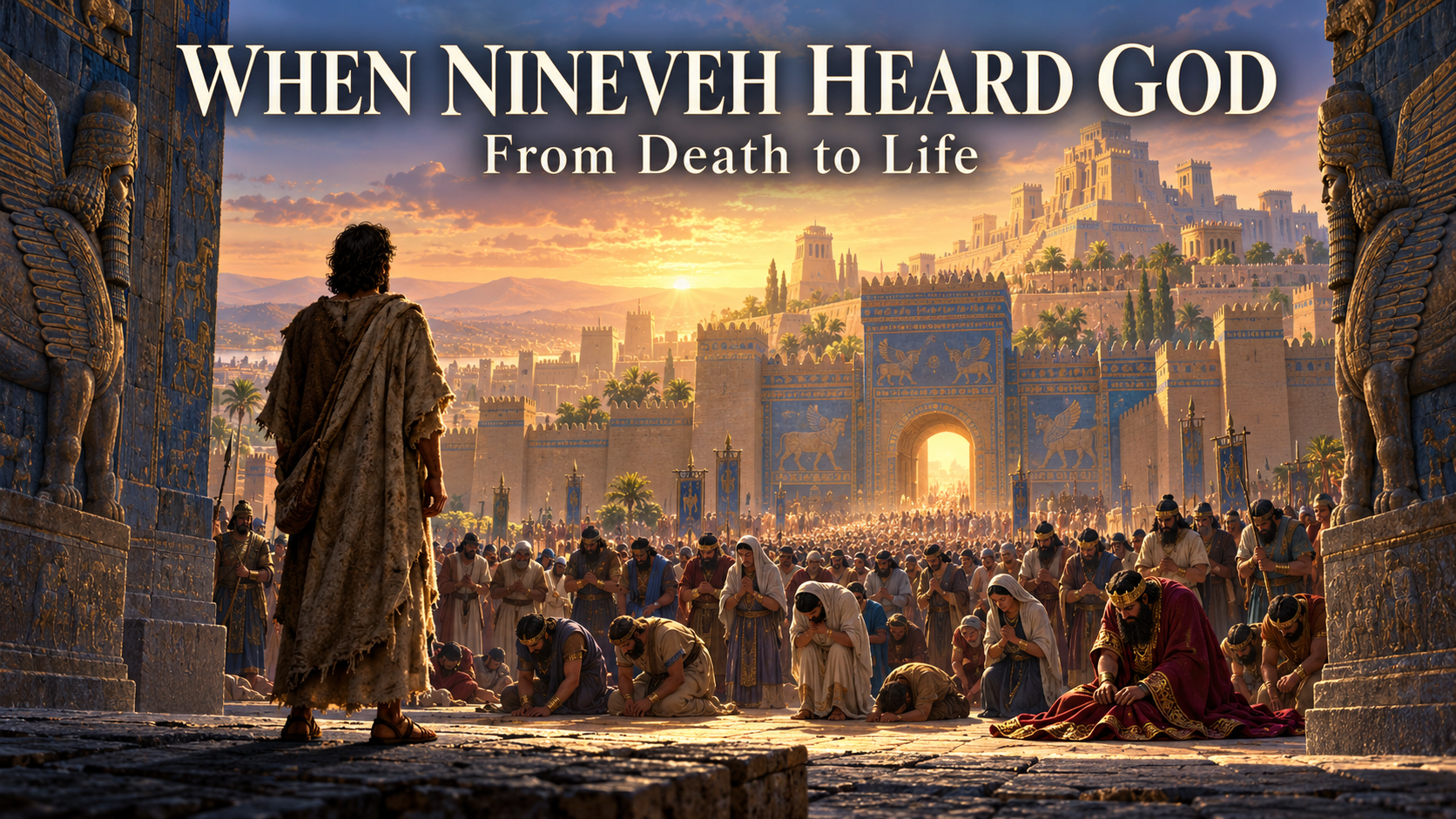
But why send a prophet to warn the city? Why announce that judgment will come in forty days? The warning gives its people an opportunity to respond. It leaves time for repentance.
God’s patience has a purpose. He desires that people turn from evil and live.
Nineveh responds. Its people turn from their evil ways, and God spares them (Jonah 3:10).
Jonah is angry. He explains that he anticipated this very outcome because he knew God was “gracious,” “merciful,” “slow to anger,” and “of great kindness” (Jonah 4:2). His words echo God’s revelation to Moses in Exodus 34:6–7, where mercy and forgiveness appear alongside the seriousness of guilt.
Jonah recognized this before he ever went to Nineveh. In Jonah 4:2, he explains that knowing God’s merciful character was precisely why he fled. He understood that the warning could lead to repentance, and repentance to the city’s deliverance. He struggled with what God’s mercy meant for people he wanted punished.
God patiently teaches him, too. He gives Jonah another commission after his flight. Later, He uses a plant, a worm, the heat, and a question to expose the limits of Jonah’s compassion.
The prophet grieves over a plant. Will he understand God’s concern for a city?
Even the animals appear in God’s closing question: “and also much cattle” (Jonah 4:11). Their lives are included in His concern.
Justice, patience, mercy, forgiveness, instruction, and compassion unfold through the events. The book teaches us about God by showing how He deals with His creation.
And it leaves us with a question about ourselves: will we learn to care about those He cares about?
What God seeks for us
I began this reflection thinking about myself as a seeker. Jonah turns my attention toward what God seeks for people.
He wants us all to find salvation. His desire reaches beyond the people we find easy to love. Nineveh makes that reach impossible for Jonah to ignore. The same desire is expressed plainly in the New Testament: God “will have all men to be saved, and to come unto the knowledge of the truth” (1 Timothy 2:4).
Jonah recognized God’s desire to save. His struggle was accepting whom God was willing to save. That puts a searching question before us: when we seek to know God, are we also willing to let His compassion reshape our own?
From the fish, Jonah declares, “Salvation is of the LORD” (Jonah 2:9). The man who needs deliverance receives it. He then carries a warning to people who also need to be saved.
The story moves outward: from the prophet’s deliverance to the city’s opportunity for repentance. Jonah must face the breadth of the mercy that preserved his own life.
Elsewhere, Scripture joins salvation, forgiveness, and God’s name in one prayer:
“Help us, O God of our salvation, for the glory of thy name: and deliver us, and purge away our sins, for thy name’s sake.”
—Psalm 79:9
For His name’s sake. His saving acts reveal the character of the God whose name His people call upon.
Then we encounter the name Immanuel: עִמָּנוּ אֵל—“God with us” (Isaiah 7:14; Matthew 1:23).
God with us. Present to guide us, teach us, and bring salvation. Matthew also connects the naming of Yeshua—Jesus—directly to His mission: “for he shall save his people from their sins” (Matthew 1:21).
Why would God do this?
“For God so loved the world, that he gave his only begotten Son, that whosoever believeth in him should not perish, but have everlasting life” (John 3:16).
Love is the reason. The next verse makes the saving purpose explicit: God sent His Son so that the world through Him might be saved (John 3:17).
As a Jewish man reading both the Tanakh and the New Testament, I recognize continuity here. The God who cares about Nineveh’s people is the God whose love reaches toward the world. His justice takes evil seriously. His mercy calls us toward repentance and life.
“Lovest thou me?”
What response does that love ask of us?
After Peter’s denials, the risen Yeshua asks him, “Lovest thou me?” With Peter’s declarations of love come instructions: “Feed my lambs.” “Feed my sheep” (John 21:15–17).
Peter’s failure has not ended his opportunity to serve. He is entrusted with responsibility for others.
Here, the connections come together. God loves. He seeks salvation for people. He teaches us how to live. He makes restoration possible when we fail. Then He calls us to care for those He loves.
“Feed my sheep” brings me back to the long spoons.
Feeding includes practical care for hungry people. In Yeshua’s charge to Peter, it also includes the work of tending His flock: nourishing faith, teaching, guiding, and caring for people entrusted to him. Love takes the form of responsibility.
Yeshua models that way of living. He teaches and feeds, corrects and restores. He washes His disciples’ feet and tells them to follow His example (John 13:14–15). His teaching becomes visible in His actions.
At the table, I must decide what to do with the spoon in my hand. In life, I must decide what to do with the gifts, knowledge, forgiveness, and opportunities I have received.
Will another person be nourished through them?
Returning to see more
This is part of what understanding the Bible requires of me: following a story forward, then returning to earlier passages with greater understanding. A later encounter can help me recognize something I had passed over before.
Jonah helps me see the depth of God’s concern for people. John helps me see the reach of His saving love. Peter’s commission sends me back to the question of how I will respond to that love.
It also returns me to my own character. Being a seeker carries responsibility. What I discover should affect how I live. Recognizing God’s patience should teach me patience. Receiving mercy should deepen my compassion. Learning that God desires salvation for people should change how I regard the person across the table.
I am still learning. Like Jonah, I can recognize God’s attributes before I fully reflect them.
But in my seeking, I keep finding the same God throughout the Bible. I see His justice, His patience, His desire to teach His children, and His love. I see Him giving us choices, warning us of consequences, and opening a way toward restoration and life.
Two stories, one book, one God. To me, this is what makes the Bible the greatest story ever told. Its people and events reach across generations to reveal who God is, who we are, and how He calls us to live. We enter its stories as readers and discover that their questions belong to us.
The Bible is also the best-selling book of all time. Guinness World Records cites an estimated five to seven billion copies printed. Its reach is extraordinary. And as I keep seeking, I keep discovering why this book has so much more to show me.
And I find myself back at the table.
The food is there. The spoon is in my hand. Across from me sits someone God loves.
“Lovest thou me?”
“Feed my sheep.”
Epilogue
Love Made Visible
In “A Woman of Valor”, I explore this responsibility through Ruth, who feeds Naomi; Boaz, who offers provision and protection; and Miriam, who remains beside Yeshua at the cross. Their stories bring the question home: how does the love we profess become faithfulness toward someone who needs us?