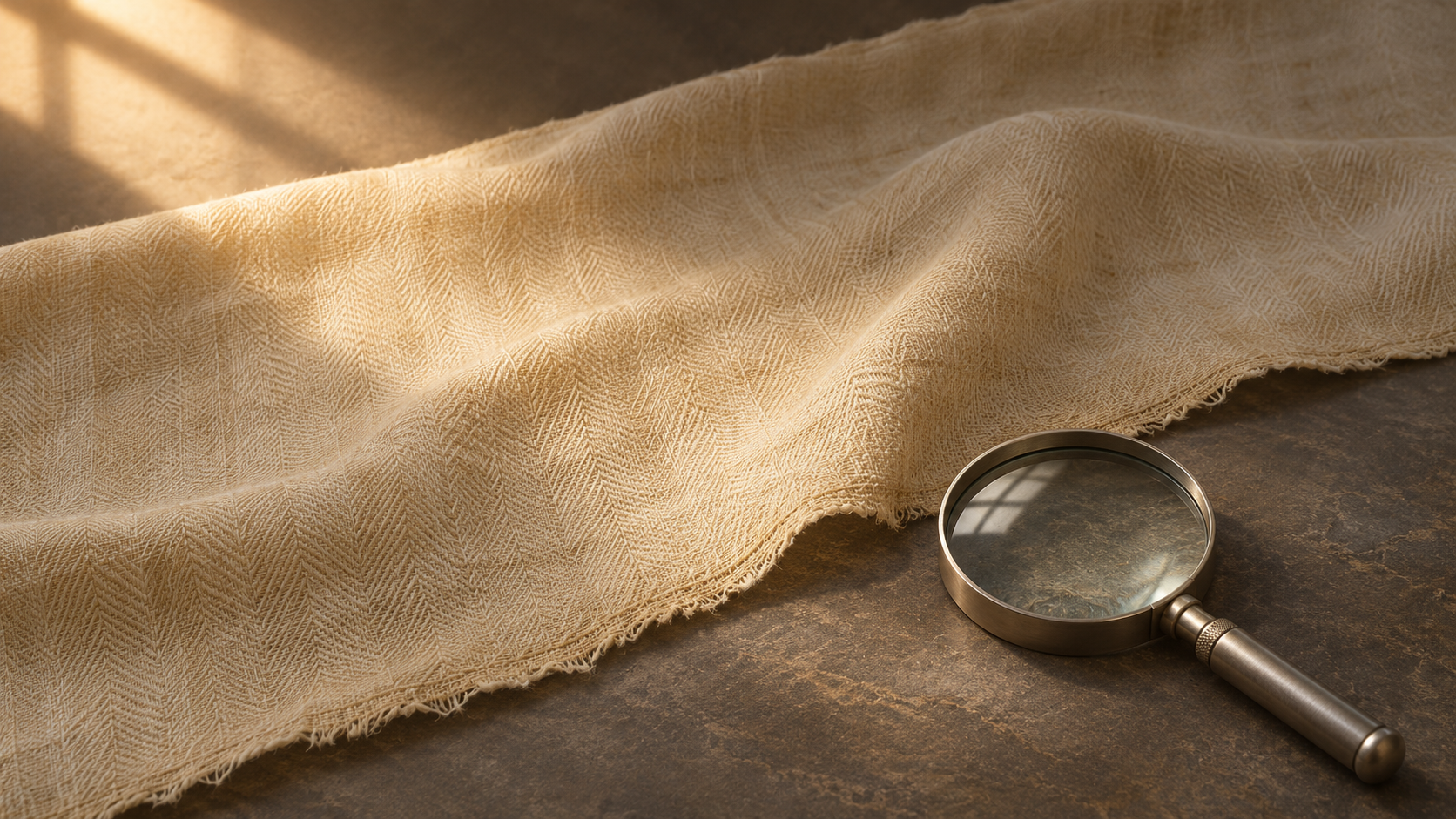
The Shroud Deserves Another Examination
A case for scientific access and institutional accountability
By Jonah
This article examines the Shroud’s research history, the case for renewed scientific access, and the spiritual questions its possible authenticity raises.
What if the Shroud of Turin is a love letter from Yeshua, written in his own blood?
In my earlier article, A Love Letter from Yeshua, I explored that possibility: a record of his suffering left on linen, inviting the world to consider his death and resurrection. If that is what this cloth represents, the question of its authenticity reaches far beyond the age of a textile. [24]
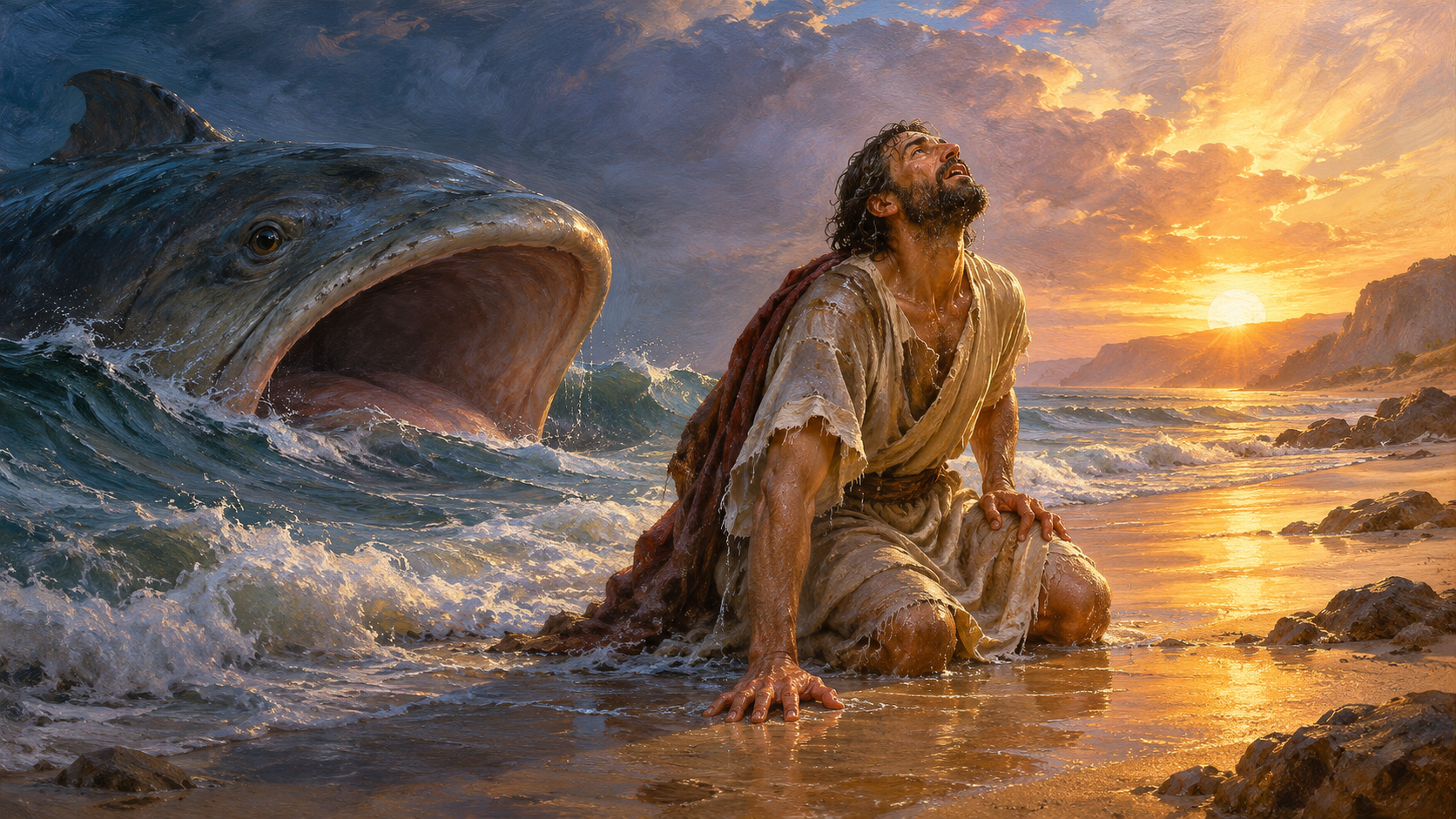
Yeshua said that no sign would be given to that generation except “the sign of the prophet Jonah,” connecting Jonah’s three days in the great fish with his own burial (Matthew 12:39–40). What if the Shroud is a gift preserved for later generations—a lasting physical witness to that sign? A love letter written in his own blood, inviting us to look, consider, and believe.
The stakes reach beyond the cloth itself: what people might come to believe, what institutions might have to reconsider, and what spiritual deception would stand to lose.
Nearly half a century has passed since the Shroud of Turin Research Project, known as STURP, comprehensively examined the cloth in 1978. Technology has advanced enormously. Important questions remain. Qualified researchers have asked to return. The Catholic Church, which acquired ownership in 1983, has not provided another publicly documented investigation comparable in breadth to STURP.
The Shroud deserves that examination. Its custodians should explain what it will take to make one possible. Preserving the cloth should include preserving the information within it, and seeking that information should be treated as a serious responsibility.
What The History Establishes
The generally accepted historical record of the cloth now in Turin begins with the de Charny family in mid-fourteenth-century France. Earlier accounts describe an image on cloth in Edessa and a shroud displayed in Constantinople. Those accounts are significant leads, but they do not provide an established chain of custody connecting those objects to Turin. That unfinished history is itself a reason to continue investigating. [1]
In 1453 the Shroud passed to the House of Savoy. It was transferred to Turin in 1578. The Savoy family still owned it when STURP conducted its direct examination in October 1978. Ownership passed to the Holy See through Umberto II’s will in 1983. Church authorities had already been involved in its custody and had authorized the 1978 examination. [1, 2]
In 1988, five years after that transfer of ownership, samples were taken for radiocarbon dating. The results placed the sampled linen in the medieval period. The sequence matters because the Church became both the owner of the object and the authority deciding whether researchers could return to examine the questions that followed.
The Timeline That Matters
Mid-1350s — The cloth enters its generally accepted historical record with the de Charny family at Lirey, France.
1453 — The House of Savoy acquires the Shroud.
1578 — The Shroud is transferred to Turin.
October 1978 — STURP conducts its comprehensive direct examination.
1983 — Ownership passes to the Holy See.
April 21, 1988 — A strip is removed for radiocarbon dating by laboratories at Arizona, Oxford, and Zurich.
October 13, 1988 — The medieval dating result is publicly announced.
February 16, 1989 — The radiocarbon paper is published in Nature.
1992 — Textile specialists directly examine the cloth for conservation purposes.
June and July 2002 — An authorized conservation intervention includes direct examination of the fabric.
January 20, 2005 — Raymond Rogers publishes his challenge to the representativeness of the radiocarbon sample.
March 22, 2019 — A published reanalysis raises statistical questions about the original radiocarbon data.
April 18, 2026 — Examination of retained Arizona fragments reports evidence against the repair or contamination explanation for those fragments. [1–7]
Credibility Built And Credibility Damaged
The contrast between the public impact of STURP and the radiocarbon announcement deserves attention. STURP’s examination gave the Shroud a serious scientific foundation for further inquiry. Its summary rejected an explanation of the body image as simply the product of applied pigments and left the mechanism of image formation unresolved. The work did not establish the cloth’s age, but it strengthened the case that the image required a substantial scientific explanation. [16]
The 1988 dating announcement changed the public conversation. A medieval date could be communicated as a simple verdict: the cloth could not be Yeshua’s burial shroud. The careful distinctions among the image, the sampled linen, and the representativeness of one location were far harder to communicate than that headline. In my view, the announcement substantially damaged the credibility the earlier investigation had helped establish.
The sequence warrants scrutiny. The broad examination took place while the Savoys owned the cloth. Five years after ownership passed to the Holy See, the Church authorized the test that produced the medieval date. Qualified researchers subsequently challenged the sampling and sought further investigation. A transparent response would give those questions a clearly defined path to resolution.
The Measurement And The Sample

The distinction between a measurement and a sample is fundamental. A laboratory can accurately measure the age of the material it receives while leaving unresolved whether that material represents the entire object.
In 1988, the three laboratories received portions of one strip taken from one location. The original paper states that the strip came from the main cloth, away from visible patches and charred areas. Textile specialists participated, and the laboratories used microscopic examination and cleaning procedures. [3]
The central limitation remains: three laboratories tested one sampling location. Their independent measurements did not provide an independent comparison of different regions of the Shroud. Given the cloth’s history of fire, handling, and repair, the representativeness of that location is a legitimate scientific question.
In 2005, STURP chemist Raymond Rogers argued that the sampled region differed chemically from the main cloth and could not reliably establish the age of the entire Shroud. In 2019, researchers challenged aspects of the original statistical analysis. Later work on retained Arizona fragments has argued against the repair explanation. These competing findings make a well-designed comparative investigation especially valuable. [5–7]
The next investigation should directly address the disagreement. Investigators could map and characterize potential sampling sites, distinguish repairs and foreign material, and compare carefully documented locations through independently reviewed methods. The objective would be to determine whether the same age and composition are found across the original fabric.
Scientists Have Asked To Return
The absence of another STURP-scale investigation cannot simply be explained by a lack of scientific interest.
STURP photographer Barrie Schwortz reported that the team submitted a renewed testing plan in 1985 and subsequently updated it, but permission to carry it out was not forthcoming. He also reported a later policy limiting further testing to conservation and preservation. The archive contains the research proposals and accounts of the team’s unsuccessful efforts to return. [8]
On December 11, 2002, Rogers wrote directly to Pope John Paul II. He complained about failures of scientific communication with foreign researchers and unanswered questions concerning the location and condition of previously collected samples. He also warned that the restoration had compromised opportunities for future chemical investigation. These were specific criticisms from a scientist who had directly studied the cloth. [9]
Other researchers criticized the lack of international consultation before the 2002 intervention. Their concerns included access to evidence, preservation of information, and the concentration of decision-making authority. [10]
These records establish a substantial basis for demanding an explanation. Qualified investigators wanted to pursue further work. Some believed that decisions made by the custodians impeded it. Their complaints deserve an answer on the merits.
What The Public Was Invited To See
The Shroud’s religious history did not begin when the Holy See acquired legal ownership in 1983. Long before that transfer, its exhibitions, images, and devotional use involved clergy and Christian communities.
The medieval Lirey pilgrim badge preserves an early representation of its display. Giovanni Testa’s 1578 engraving commemorates its exhibition in Turin, with bishops holding the cloth. Antonio Tempesta’s 1613 engraving records another public showing. The Metropolitan Museum of Art also holds an engraving associated with Archbishop Alfonso Paleotti’s 1598 book about the sacred linen. These objects belong to a substantial visual history of public religious engagement with the Shroud. [13–15]
The significance of these records goes beyond the artwork or the crowds. Generations of people were invited to look upon a cloth presented in connection with Yeshua’s suffering, burial, and resurrection. The displays offered a visible encounter with something believed to bear witness to the Gospel.
That opportunity matters for faith. It also represents only a fraction of what modern instruments could reveal. Public exhibitions record an enduring religious interest; comprehensive testing could investigate the physical evidence behind it. The Church’s long participation in presenting the cloth gives it ample reason to support that investigation.
He Saw And Believed
John 20 places the burial cloths within the account of recognition and belief. Peter enters the tomb and examines the linen cloths and the separate head cloth. Then the other disciple, traditionally understood as John, enters. The Gospel says, “he saw, and believed” (John 20:8, KJV).
The passage does not expressly describe a body image on the linen. Its force for this argument does not depend on adding one. The cloths are part of the physical scene the disciples examine, and the narrative connects seeing with believing. They are not incidental to the account.
This is why I regard the Shroud question as a matter with consequences for faith. Determining the age of a textile is a scientific task. Asking what evidence associated with Yeshua could mean for belief is a religious question. John 20 brings physical observation and faith into the same account.
Recognizing that the Church has not defined the Turin cloth as an article of faith should not diminish the reason to investigate it. The possibility that an object could illuminate the burial and resurrection account gives believers a substantial interest in knowing what it is.
Why Control Of Access Deserves Scrutiny
An institution can have interests beyond answering a scientific question. It can seek to protect its authority, its reputation, its advisers, or decisions already made in its name.
If renewed testing exposed a weakness in the 1988 sampling, it could reopen questions about who approved the procedure. If it showed that conservation work had damaged evidence, it could raise questions about stewardship. If an outside team reached conclusions that local advisers had resisted, it could challenge the judgment of the people controlling access.
These are possible motives for institutional defensiveness. They deserve investigation through proposals, correspondence, meeting records, and written decisions. The documented tensions between researchers and authorities make those records relevant.
Preservation is a serious obligation. It should also be an explanation that can withstand independent examination.
What Recognition Could Change
Imagine that a new investigation established beyond reasonable doubt that the Shroud bears witness to Yeshua’s crucifixion and resurrection as described in the New Testament. That is the hypothetical I want readers to consider, rather than a result I claim a laboratory has already established.
The implications would reach far beyond an archaeological debate. Jewish people would confront evidence with direct relevance to the identity of a Jewish Yeshua. For some, it could reopen the possibility that recognizing him means recognizing Israel’s Messiah within their own Jewish story.
I know what it means to understand oneself as a Jew who follows Yeshua. Such recognition need not be experienced as abandoning Jewish identity or transferring allegiance to a particular Christian institution. That distinction matters when considering the interests of institutions that claim authority over religious belonging.
Secular people, Buddhists, atheists, agnostics, and people of other faiths would also have extraordinary evidence to consider. Individuals would respond differently, but the question would reach into their understanding of death, God, and the nature of reality.
Everyone would have something at stake. Some might surrender lifelong convictions. Religious and secular institutions could face challenges to their authority. Even born-again Christians would be confronted by the demands of the Gospel they proclaim. There could be much to surrender and, if the Gospel is true, everything to gain.
Catholic institutions would have their own questions to face. Some people drawn toward Yeshua might examine the authority claimed by the Church and the priest’s role in confession and absolution. Authenticating a cloth would not itself decide those doctrines. But a recognition that strengthens faith in Yeshua could encourage people to ask whether institutional teachings faithfully express his Gospel.
That is the institutional possibility I am raising: evidence can strengthen faith while unsettling authority. Religious organizations that disagree with one another can still have an interest in controlling how their communities encounter and interpret challenging evidence.
These stakes give the investigation human significance. They also explain why institutional independence and transparent access matter so much. The evidence should be available for scrutiny regardless of whose position it might strengthen or disturb.
Turin Has More Than An Occult Reputation
When I visited Turin in 2025, I visited the Shroud Museum and the cathedral where the Shroud is kept. Walking through the city, I was struck by how commonplace palm readers, fortune tellers, astrologers, and tarot card readers appeared to be. These practices were openly visible, giving Turin’s occult reputation a tangible presence beyond its legends and historic architecture. For me, the contrast was striking: a city preserving a possible witness to Yeshua’s death and resurrection also offered ready access to practices that Scripture warns against.
The setting adds a striking dimension to this discussion. Turin’s tourism authority describes a city situated, in esoteric folklore, at the meeting point of white and black magic. But the researchable evidence extends beyond legends, architecture, and guided tours. [17]
Esotericamente, a Turin business operating since 2002, openly advertises supplies for ritual and ceremonial magic, divination, witchcraft, and other esoteric traditions. Its own website offers Baphomet figures and Ouija boards alongside ritual materials. These are identifiable commercial activities serving an interest in occult practice. [18]
The city’s official tourism authority also lists a Museum of Witchcraft with courses, an esoteric shop, consultations, altars, and ritual instruments. An article in GNOSIS, the Italian intelligence journal, describes small organized Satanist groups in Turin, distinguishing an occultist current from a rationalist one. Its account concerns groups numbering in the dozens. It should not be converted into a claim that Turin’s population is predominantly Satanist or that its historical membership estimates describe the present. [19, 20]
Church sources themselves address experiences interpreted as spiritual evil. In an autobiography published on the Archdiocese of Turin’s website, Father Giacomo Quaglia describes his appointment as an exorcist in 1994 and experiences he understood as encounters with Satanic influence. A 2017 interview with a regional Church delegate described four active Turin exorcists and concerns about occult involvement and séances. The priest also described psychiatric consultation as part of discernment. These are attributed accounts of religious practice and testimony, rather than laboratory determinations of supernatural causation. [21, 22]
This matters to the perspective I am presenting. A cloth associated with Yeshua’s victory over death is preserved in a city with a documented occult presence and a long fascination with esoteric practice. For a believer considering spiritual conflict, that juxtaposition deserves more than a passing reference to tourist folklore.
If the Shroud is authentic, it could be a powerful witness to Yeshua. Within that theological possibility, one can ask whether spiritual opposition would seek to obscure, discredit, or destroy its testimony. The expression “keep your enemies close” captures the paradox as a metaphor: a possible witness to resurrection existing alongside practices that many Christians understand as spiritually opposed to their faith.
That is the spiritual question I am raising. The documented practices establish the setting. They do not identify who, if anyone, has interfered with research on the Shroud. The way to investigate institutional decisions remains the examination of evidence, testimony, and records.
A Testimony Written In Blood

Most importantly, within the theological possibility I am describing, the Shroud would be Satan’s problem.
If the cloth is Yeshua’s testimony written in his own blood, and if understanding it draws people toward him, then the stakes are spiritual. Christian Scripture portrays Satan as a deceiver. A witness that helps people recognize Yeshua would work against deception.
From that perspective, there would be a spiritual reason to obscure the testimony, encourage doubt, or prevent people from considering it seriously. One would not need to destroy the cloth to weaken its influence. A message can be rendered ineffective when people are persuaded that it has nothing credible to say.
This gives the contrast between STURP’s findings and the radiocarbon headlines particular force in my reflection. A serious scientific investigation increased interest in the cloth. A later result supplied a widely repeated reason to dismiss it. The continuing dispute deserves resolution through the strongest investigation now available.
Spiritual opposition need not appear in an obviously supernatural form. Pride, fear, rivalry, and the desire for control can obstruct the pursuit of truth within religious institutions as readily as elsewhere. That is a theological interpretation of how resistance could operate, not evidence identifying a particular person as knowingly serving an evil agenda.
In A Love Letter from Yeshua, I asked what it would mean if he left a testimony for the world to read. That question remains central here. If the Shroud carries his testimony, allowing its evidence to be examined would be an opportunity to bring that testimony into the light. [24]
This also raises an end-times question. In 2 Thessalonians 2:3–4, Paul describes the man of lawlessness exalting himself and claiming divine status; verses 9–10 associate his coming with Satan’s activity and deceptive signs. Paul distinguishes this figure from Satan while connecting his activity to Satanic deception.
Could a powerful public recognition of evidence associated with Yeshua provoke an intensified counterfeit claim to divine authority? I raise that as a theological possibility. The passage does not name the Shroud or identify its authentication as a trigger. The connection I see is thematic: a witness to truth could be met by an attempt to redirect recognition and worship through deception.
Preserving The Information Within The Cloth
Preservation must include the information within the Shroud as well as the fabric itself. Keeping the object intact while leaving its recoverable evidence inadequately documented is an incomplete understanding of stewardship.
Modern science could record details that public viewing cannot reveal. High-resolution photography, microscopic examination, spectral imaging, and chemical mapping could create a substantially richer archive of its condition, composition, and image. Carefully justified sampling could address questions that imaging alone cannot settle. The resulting record would remain available even if the object later changed or was lost.
Archaeology and conservation science offer a useful comparison. Investigators document fragile evidence because context and physical detail can disappear. They weigh the information a procedure could recover against the damage it might cause. The Shroud deserves a similarly explicit assessment, with qualified independent review of both risks and benefits.
This is where I see a contradiction in invoking preservation as a general reason to restrict investigation. If a proposed procedure can safely preserve information that is otherwise vulnerable to loss, explaining its refusal requires more than repeating the duty to protect the cloth. The custodian should identify the risk, consider less invasive alternatives, and explain what would make responsible research possible.
The Opportunity Can Be Lost

The Shroud suffered fire damage in 1532. In 1997, another major fire threatened it, and firefighters removed it from danger. Its survival has already depended on circumstances and human intervention. [11]
Deliberate attack must also be taken seriously. European churches have been targets of extremist violence. Three people were killed in the 2020 attack at Notre-Dame Basilica in Nice; the perpetrator subsequently received a terrorism-related life sentence. That attack concerned people rather than the destruction of a relic, but it establishes that prominent Christian places of worship can be targeted. [23]
An object associated with Yeshua has extraordinary symbolic significance. A destructive attack, serious fire, or accident could eliminate opportunities that exist today. Physical protection and scientific documentation should therefore reinforce one another. Security can reduce the chance of loss; documentation can preserve knowledge against the consequences of loss.
Turin’s occult history supplies a separate context for spiritual reflection. The concrete case for protection rests on the Shroud’s irreplaceability and the real consequences of damage. It does not require identifying an imminent attacker.
There is another form of evidence that time can erase: human testimony. People involved in selecting the 1988 samples may have died, or may eventually die, without leaving a complete public account of the instructions they received and the deliberations they witnessed.
Who proposed the location? What alternatives were considered? Who approved the final decision? Were concerns raised, and how were they answered? Relevant correspondence, notes, recordings, and interviews should be located and preserved while that remains possible. The question of whether undocumented instructions existed should be investigated through those records.
Waiting is a decision with consequences. The cloth can change. Records can disappear. Witnesses can die. A responsible investigation should preserve all three forms of evidence: the object, its documented contents, and the history of decisions made about it.
What The Church Should Do
The Holy See should invite a new international investigation involving qualified researchers with differing interpretations of the existing evidence. The process should:
- Publish a research plan with independent scientific review and conservation oversight.
- Document sampling decisions before removing material.
- Have laboratories work independently.
- Make the data, images, methods, and limitations available for scrutiny.
- Disclose earlier research proposals and the reasons they were declined wherever possible.
In 1998, Pope John Paul II encouraged scientific investigation without predetermined conclusions. That principle provides a foundation for renewed access. [12]
The Church need not promise a particular outcome. It should provide a credible process by which the questions can be investigated.
The Shroud has survived centuries. Scientific instruments have improved. Researchers have asked to return. Important disagreements remain unresolved.
John entered the tomb, saw, and believed. Today we have instruments capable of examining far more than the unaided eye can see. We should use them responsibly, document what they reveal, and make the evidence available.
If this cloth is a love letter from Yeshua, its custodians have a responsibility to give the world the best possible opportunity to read it.
One In The Messiah
Who stands to lose? We should also ask who stands to gain—and what could bring us together.
Yeshua was Jewish. His apostles were Jewish. The Gospel emerged within the story of Israel, grounded in Israel’s Scriptures and messianic promises. He said he came not to abolish the Torah or the Prophets, but to fulfill them (Matthew 5:17). If his resurrection were established, the question for Jews would not simply be whether to embrace another religion. It would be whether to recognize their own Messiah.
Christians would also have something to reconsider: how faithfully their traditions have represented the Jewish Messiah they proclaim. Recognizing Yeshua’s Jewish identity means more than acknowledging his ancestry. It means taking seriously the people, covenant, and Scriptures within which his life and teachings belong.
Perhaps the greatest possibility is reconciliation. Jews could recognize their Messiah, while Christians could more fully recognize the Jewish roots of their faith. The movement could be toward one another—without requiring either to erase their identity.
Paul describes Messiah as making the two one and breaking down the dividing wall of hostility (Ephesians 2:14). That gives this possibility a biblical horizon: Jews and Gentiles reconciled to God and to one another through the Messiah.
If the Shroud bears witness to his death and resurrection, its significance could reach beyond what institutions might lose. Consider what people might gain: renewed faith, restored relationships, and a shared recognition of the Jewish Messiah and the God of Israel.
The stakes run in both directions. If renewed examination established that the Shroud was a later fabrication, it could deepen skepticism, damage the credibility of its advocates, and unsettle those whose faith has become closely tied to it. That possibility makes a transparent investigation consequential for everyone—including those who believe the cloth is authentic.
Two stories. One Book. One God. The story of Israel and the testimony of Yeshua meet in the Jewish Messiah. What has so often divided Jews and Christians could become the ground on which we recognize one another—and discover what it means to be one in him.
Explore the Research: For an extensive collection of scientific studies, historical documents, photographs, and original STURP research papers, visit The Shroud of Turin Website.
Sources
- Official Shroud website, Historical Outline. https://sindone.org/en/home-english/the-shroud/historical-outline/
- Official Shroud website, The Custodian of the Shroud. https://sindone.org/en/home-english/life-of-faith/the-custodian-of-the-shroud/
- Damon et al., Radiocarbon dating of the Shroud of Turin, Nature 337 (1989), 611–615. https://doi.org/10.1038/337611a0
- Vatican newspaper, account of the 2002 conservation intervention. https://www.vatican.va/news_services/or/or_quo/cultura/2010/007q04a1.html ; Official Shroud website, The Restoration. https://sindone.org/en/home-english/the-shroud/the-fire/the-restoration/
- Raymond N. Rogers, Studies on the radiocarbon sample from the shroud of turin, Thermochimica Acta 425 (2005), 189–194. https://doi.org/10.1016/j.tca.2004.09.029
- Casabianca et al., Radiocarbon Dating of the Turin Shroud New Evidence from Raw Data, Archaeometry 61 (2019), 1223–1231. https://doi.org/10.1111/arcm.12467
- Rachel Freer-Waters and A. J. Timothy Jull, Analysis of textile fragments from the 1988 radiocarbon samples of the Turin Shroud, npj Heritage Science 14 (2026), article 263. https://doi.org/10.1038/s40494-026-02530-7
- Barrie Schwortz, Comments From Previous Years, account of STURP follow-up proposals. https://www.shroud.com/comment2.htm ; archived proposal links: https://shroud.com/78papers.htm
- Raymond N. Rogers, letter to Pope John Paul II, December 11, 2002, reproduced from the STERA archives by Joseph G. Marino. https://www.academia.edu/122611855/
- Comments on the Restoration, collected statements by researchers. These are attributed assessments, not a single consensus report. https://www.shroud.com/restored.htm
- Official Shroud website, The Fire. https://sindone.org/la-sindone/lincendio/
- John Paul II, Address at the Cathedral of Turin before the Shroud, May 24, 1998. https://www.vatican.va/content/john-paul-ii/en/travels/1998/documents/hf_jp-ii_spe_24051998_sindone.html
- French Ministry of Culture, Lirey pilgrimage badge, Musée de Cluny collection. https://pop.culture.gouv.fr/notice/joconde/50030001918
- Richard Orareo Collection, Giovanni Testa 1578 and Antonio Tempesta 1613 exhibition engravings. https://shroudstudiesproject.org/richard-orareo-collection/
- Metropolitan Museum of Art, Francesco Brizio, Alfonso Paleotti Worshipping Christ’s Shroud, associated with the 1598 book. https://www.metmuseum.org/art/collection/search/692584
Biblical passage: John 20:3–9. https://www.esv.org/Jn20.5/
- STURP summary of conclusions and published research bibliography. https://www.shroud.com/78conclu.htm ; https://shroud.com/78papers.htm
- Turismo Torino e Provincia, Turin Magic Tour. https://turismotorino.org/en/visit/plan-your-trip/tourist-packages-and-services/turin-magic-tour
- Esotericamente, business website and description of its ritual supplies. https://esotericamente.it/
- Turismo Torino e Provincia, Museum of Witchcraft. https://turismotorino.org/it/visita/cosa-fare-e-vedere/musei-e-cultura/museo-della-stregoneria/
- GNOSIS, Italian intelligence journal, Sette sataniche tra ritualità e crimini. Historical analysis; its membership figures are not a current census. https://gnosis.aisi.gov.it/Gnosis/Rivista16.nsf/servnavig/13
- Giacomo Quaglia, autobiographical account, section 1994 esorcista, hosted by the Archdiocese of Turin. https://www.diocesi.torino.it/wp-content/uploads/2024/11/Giacomo_Quaglia_breve_autobiografia.pdf
- Maria Teresa Martinengo, interview concerning exorcism and occult practices, La Stampa, March 17, 2017; clipping hosted by the Archdiocese of Turin. https://www.diocesi.torino.it/wp-content/uploads/2017/03/17-marzo-2017.pdf
- Associated Press, A Tunisian extremist is imprisoned for life for killing 3 people in a French basilica in 2020. https://apnews.com/article/761f0e8237296ff08e7a2b501e4f8a30
- Jonah, A Love Letter from Yeshua, I Jew Believe, June 20, 2024. Theological reflection referenced by the author. https://ijewbelieve.com/a-love-letter-from-yeshua/