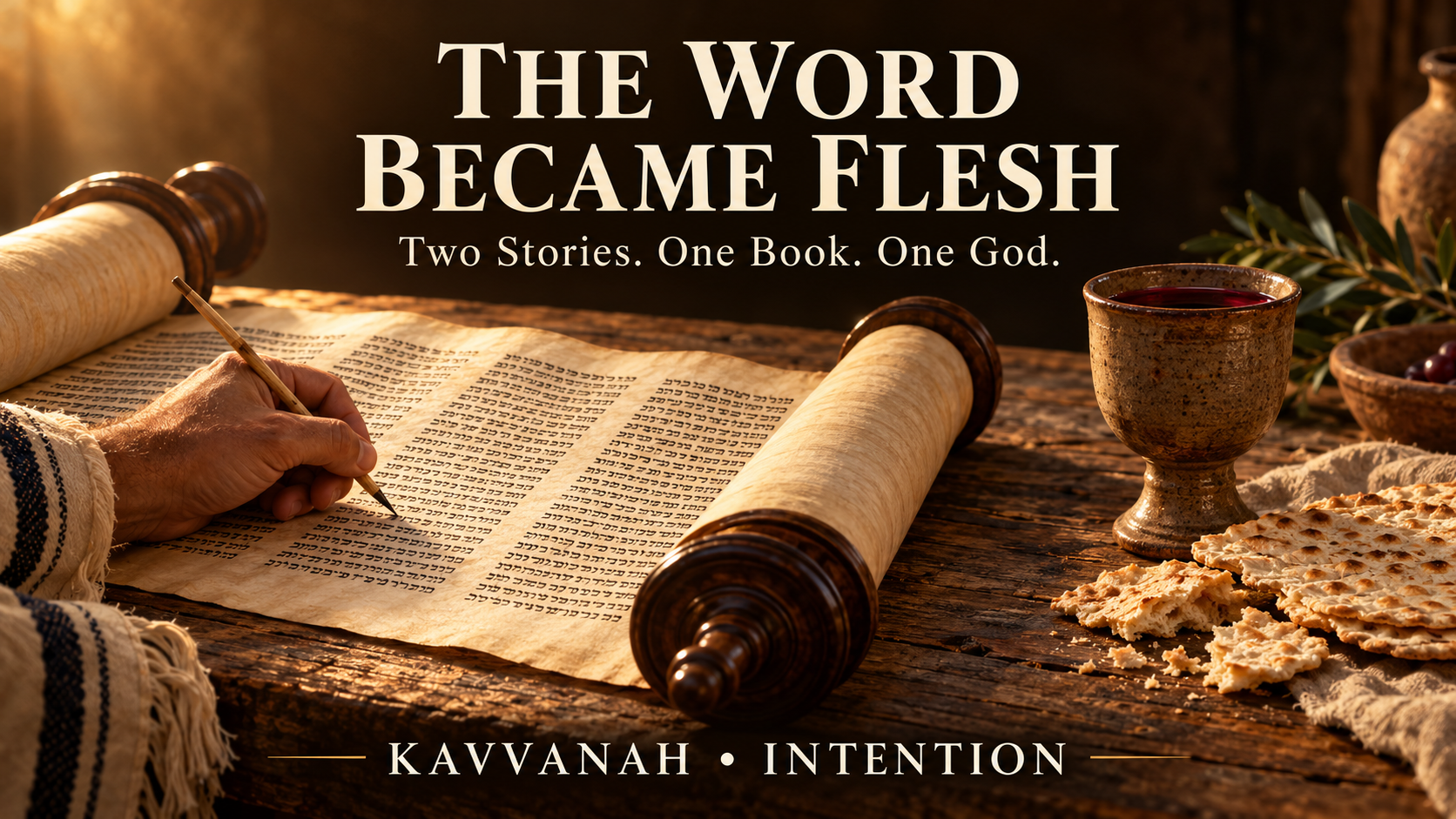
THE WORD BECAME FLESH
(A word study on intention—pun intended.)
Two Stories. One Book. One God.
A reflection by Jonah
Consider the Hebrew word kavvanah (כַּוָּנָה). It means intention. In prayer and religious practice, it describes directing our mind and heart toward what we are doing, and toward God.
But how far can that intention reach?
Consider the people who preserve the words of the Torah. A Torah scribe is called a sofer. The plural is soferim. Through their hands, the words are copied onto parchment and passed from one generation to another.
Their task requires more than good handwriting. In Jewish law, a Torah scroll must be written with sacred intent. Particular intention is required when writing the name of God. The scribe is conscious of whose words he is preserving and the holiness of his work.
The mind directs the hand. The hand forms the letters. The intention becomes an action.
Preserving the Word—and Living It.
The history of the written Torah and the preservation of the Oral Torah are distinct, but both raise the same concern: how do we keep what we have received from being lost? Words must be preserved, taught, remembered, and carried forward by people.
Yet preserving the words raises another question. What are we supposed to do with them?
We can carefully copy a teaching. We can memorize it. We can repeat it.
Can we also live it?
Judaism teaches that intention can reach into everything we do. Cleaning our home. Raising our children. Earning a living. Preparing a meal. Caring for someone who needs us.
Rabbi Yose expressed it this way:
“Let all your deeds be for the sake of Heaven.” —Pirkei Avot 2:12
That leaves very little outside the reach of sacred intention.
A clean home can be an expression of care for the people who live there. Our daily work can provide for our family and help others. Raising a child can become a responsibility we consciously undertake before God.
The action may look ordinary. The purpose we bring to it gives it another dimension.

This helps explain the place of blessings in Jewish life. An observant Jew says a berakhah, a blessing, before drinking a glass of water. After using the bathroom, Asher Yatzar acknowledges the extraordinary gift of a functioning body.
Even these familiar moments become opportunities to remember God.
Everything comes from God. Through our intention, everything can be directed back toward God.

Consider the blessings Jewish people say over wine and bread. Both begin by acknowledging the Lord our God as King of the universe.
Over wine, we bless Him as the One “who creates the fruit of the vine.” Over bread, we bless Him as the One “who brings forth bread from the earth.”
Before we take a drink or a bite, we pause to acknowledge the source of what sustains us. The vine and the grain come from His creation. We receive them with gratitude.
The blessing brings our attention to God. The ordinary act of eating becomes an opportunity for kavvanah.
So how does this relate to the teachings of Yeshua?
In Matthew 6:33, he tells his listeners to seek first God’s kingdom and righteousness. Paul later writes:
“Set your affection on things above, not on things on the earth.” —Colossians 3:2, KJV
The preceding verse directs attention to where Messiah sits at the right hand of God. Later in that same chapter, Paul brings this heavenly focus into daily work:
“And whatsoever ye do, do it heartily, as to the Lord, and not unto men.” —Colossians 3:23, KJV
These words echo a familiar Jewish teaching: bring God into the purpose of what you do.
Bring kavvanah.
Consider, then, the Last Supper.
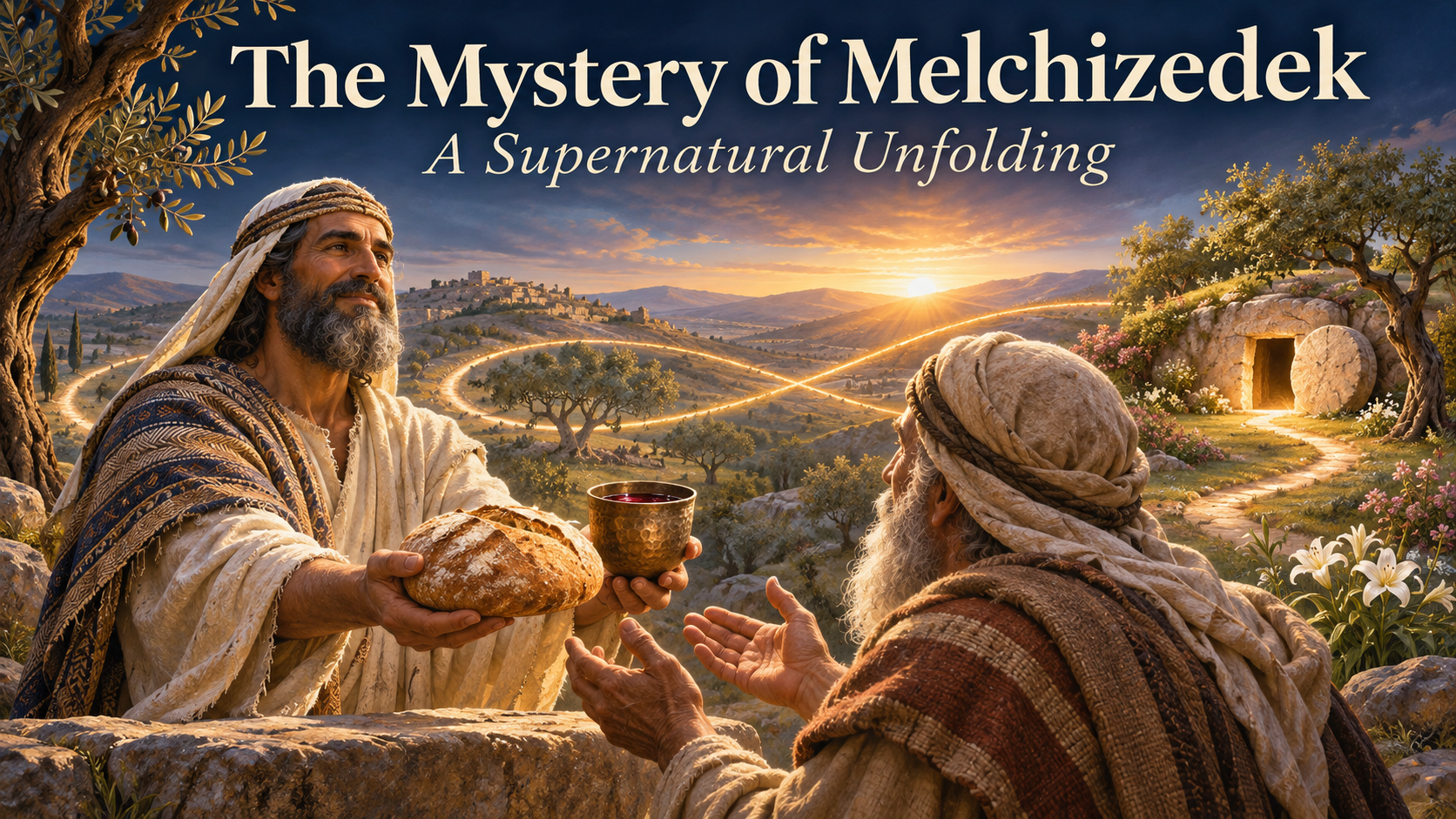
Yeshua sat with his Jewish disciples. He took bread, gave thanks, and broke it. He took the cup. He connected these familiar elements with his body and blood and told his disciples to remember him (Luke 22:19–20).
The bread and wine did not enter the story without meaning. They belonged to a Jewish life of blessings, gratitude, and acknowledgment of God. The Gospel tells us Yeshua gave thanks; it does not record the exact wording of those blessings. The connection to Jewish thanksgiving over bread and wine deserves consideration.
The gifts of God’s creation became part of a ceremony of remembrance and communion with him.
Consider what he was asking them to do.
Look at the bread. Look at the cup. Remember him. Receive them with an awareness of the life he was giving.
Paul would describe the cup and bread as communion—a participation in Messiah’s blood and body (1 Corinthians 10:16).
This may be one of the deepest expressions of intention in a religious ceremony.
A person holds a piece of bread and a cup of wine or grape juice. For the participant, the ceremony joins remembrance, sacred intention, and physical action in an expression of communion with him.
To someone unfamiliar with the ceremony, the connection may seem difficult to understand. Familiarity can also make it easy to overlook the depth of intention it invites.
But even someone who does not believe Yeshua is the Messiah can pause and appreciate the concept: a teacher asking his followers to remember him through an act that involves their bodies as well as their minds.
The remembrance is something they physically receive.
That brings us to the words that give this reflection its title:
“And the Word was made flesh, and dwelt among us.” —John 1:14, KJV
John’s “Word” means more than a written collection of books. His opening reaches back to creation itself, to the Word who was with God in the beginning. One way to approach that statement is through the Scriptures Yeshua and his disciples knew: the Tanakh—the Torah, the Prophets, and the Writings.
These Scriptures speak of God’s instruction, His promises, His judgment, and His mercy.
Christian belief understands Yeshua as the Word made flesh. Viewed through the Jewish concept of kavvanah, this raises a question worth considering: how does God’s teaching become visible in a human life?
Communion points back to that belief in the incarnation while asking something of the person who participates.
Will what we receive become part of how we live?
The ceremony gives physical expression to remembrance. Its implications reach beyond the table: will the teaching received there shape the participant’s choices, actions, and treatment of other people?
The sofer directs his intention toward God as his hand forms the words on parchment.
That same conscious devotion can extend to the life those words are meant to shape.
When we clean our homes, raise our children, do our work, or sit at a table with bread and a cup, where are our minds? What purpose is guiding our hands?
That brings this word study back to kavvanah—intention. The scribe brings it to the words he writes. A blessing brings it to the food we receive. Communion brings it to remembrance. In each case, the mind and heart give purpose to a physical act.
Two stories. One book. One God.

Whether our starting point is the Torah or the teachings of the one who laid down his life, there is a shared call to live for a higher purpose: to love our fellow. Yeshua said he came not to abolish the Torah but to fulfill it (Matthew 5:17). He taught from the Tanakh and gave living expression to its instruction. His example brings us back to kavvanah: keeping God’s teaching in mind and intentionally putting it into practice.
Kavvanah asks us to keep that purpose in mind and bring it into everything we do. Through intention, the words we receive become the life we live.