
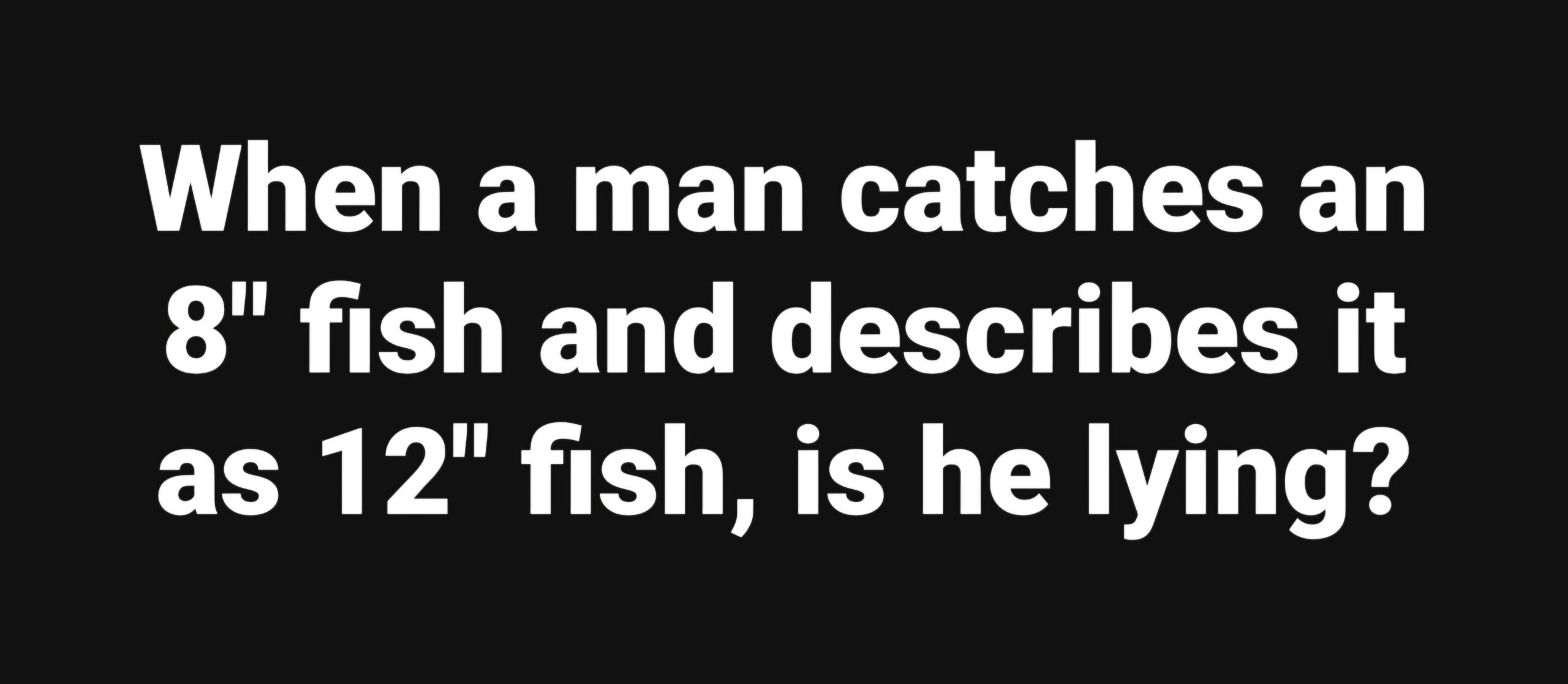
The difference between an exaggeration and a lie lies in the intent and the degree of truth distortion. An exaggeration involves stretching or embellishing facts, often to emphasize a point or make a story more interesting, while still being based on some truth. On the other hand, a lie is a deliberate statement that is entirely false, intended to deceive others.
While some view exaggeration as a form of lying because it can mislead, others see it as a stylistic device that, unlike lying, retains a core of truth.
WHO DECIDES WHETHER THE FISHERMAN IS LYING OR EXAGGERATING?
Hatred or negative feelings toward the person exaggerating can strongly influence reactions. When someone dislikes the exaggerator, they may interpret the exaggeration as manipulative, attention-seeking, or even offensive, which can amplify their anger or frustration. Conversely, if someone has a positive view of the exaggerator, they may be more likely to find the exaggeration humorous or entertaining, perceiving it as harmless hyperbole rather than an attempt to mislead. Personal biases and emotional connections significantly shape these responses.
Donald J. Trump exaggerates … Biden lied!