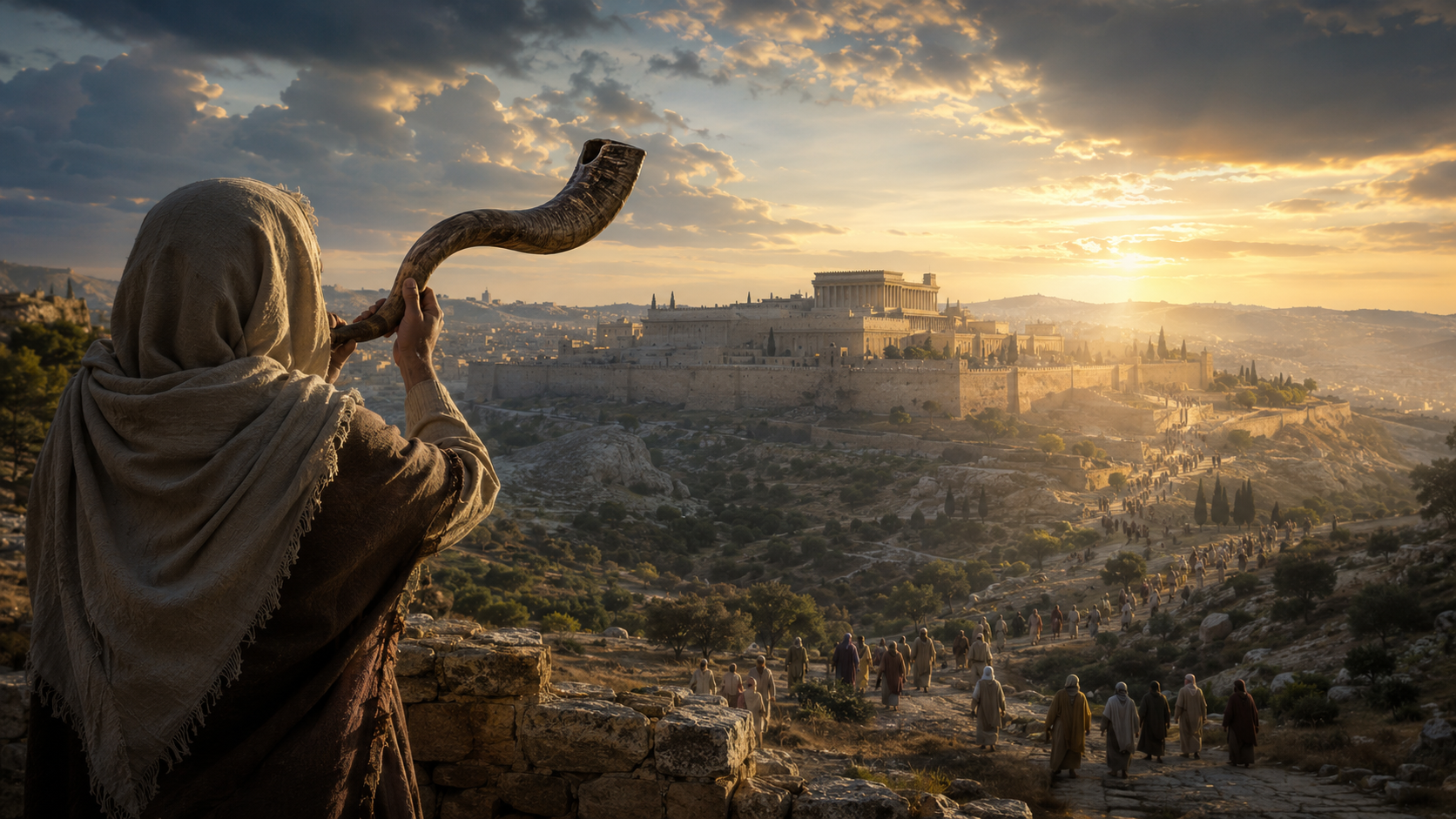
The Year Is Heard
A meditation by Jonah
A friend asked me whether I had ever written about the trumpet in the Old Testament. I have touched on the subject in several articles, but I decided to take a more exhaustive look. This essay is the result.
By the same token, I encourage my reader to check this article “Let’s Hear It For The Shofar” for some interesting insights into the shofar that are not covered in here.
This Yom Teruah—the biblical name for the day most people know as Rosh Hashanah—I will hear the shofar call in the Hebrew calendar year 5787 at Congregation Mickve Israel in Savannah, Georgia. Founded in 1733, nearly 300 years ago, it is the third-oldest Jewish congregation in America. I was president of the NY congregation I grew up in that was founded in 1848. 1733 or 1848 are both only a small fraction of the time my people have been hearing the shofar.
The Torah never actually calls the day Rosh Hashanah. Yom Teruah—יוֹם תְּרוּעָה means “Day of Blasting.” It is “a memorial of teruah” in Leviticus and “a day of teruah” in Numbers. Rosh Hashanah, meaning “the head of the year,” became the familiar Jewish name.
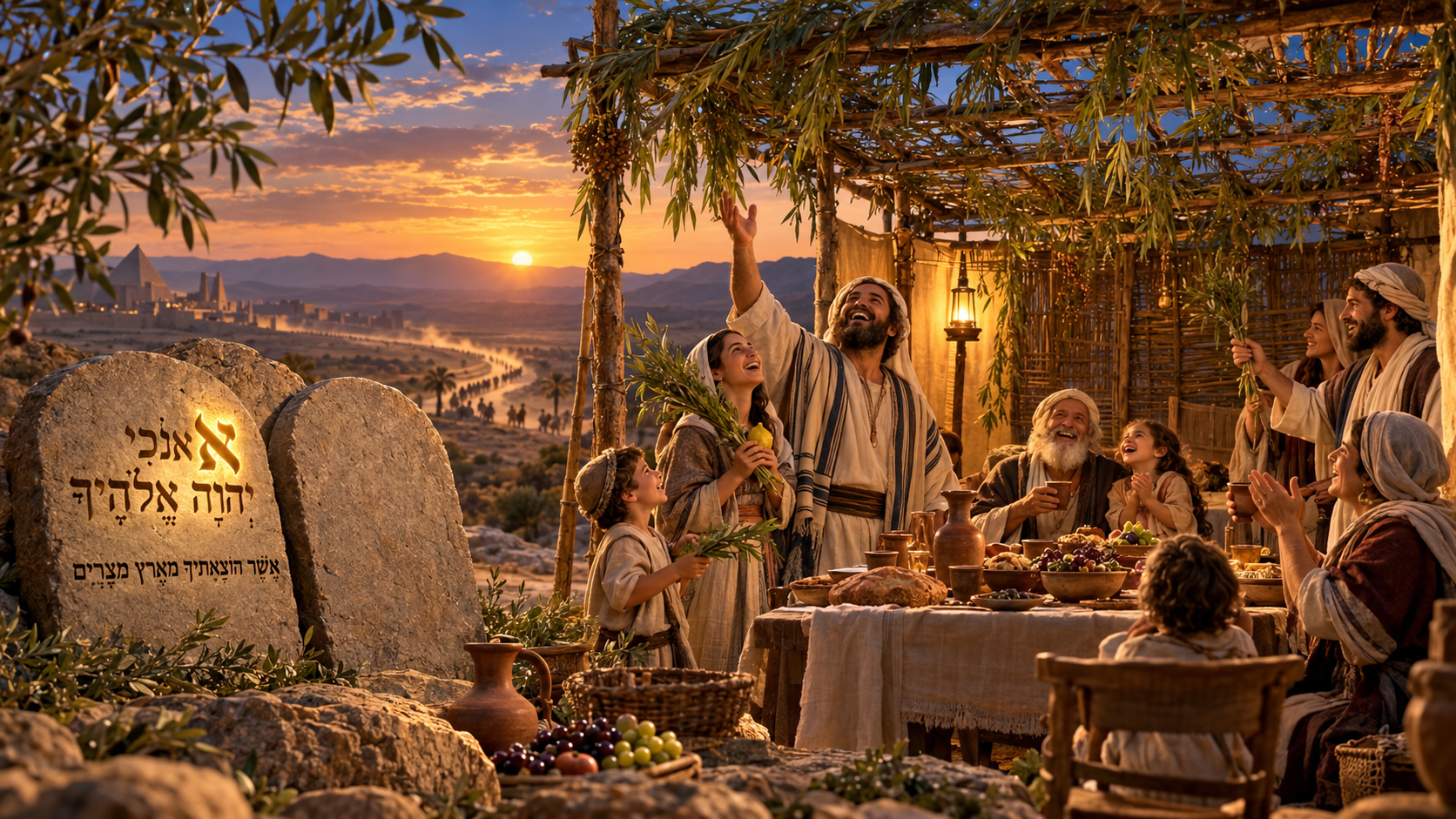
Yom Teruah tells us what we are commanded to hear on Rosh Hashanah. Our ancestors heard the shofar’s voice at Sinai.
“And the sound of the shofar was exceedingly strong.” — Exodus 19:16
“The sound of the shofar grew increasingly stronger; Moses would speak and God would answer him with a voice.” — Exodus 19:19
At Sinai, Israel heard the sound of the shofar growing exceedingly strong.
“The sound of the shofar grew increasingly stronger.” — Exodus 20:18
We carried the sound through the wilderness, around the walls of Jericho and eventually into Jerusalem. It announced kings, warned of judgment and proclaimed liberty. Generation after generation, the Jewish people have continued to hear its echo on Yom Teruah.
This year, as I listen inside one of America’s oldest congregations, I want to follow that sound back through Scripture. What was the shofar and trumpet announcing? Why did God choose this sound to gather His people, warn them, move them and call them home? And what does it have to do with the final trumpet call?
The Year Is Heard
The shofar—שׁוֹפָר—gives the call; shema—שְׁמַע—is the response: to hear, heed and act. It is the first word of Israel’s great declaration:
“Hear, O Israel: the LORD our God, the LORD is one.” —Deuteronomy 6:4,
There is something so familiar that I nearly passed over it. The Jewish year is marked by the sound of the shofar we are commanded to hear. The year is heard. God is heard.
The Torah places Yom Teruah on the first day of the seventh month:
“Speak to the children of Israel, saying: In the seventh month, on the first of the month, it shall be a Sabbath for you, a remembrance of [Israel through] the shofar blast a holy occasion.”
—Leviticus 23:24
Number 29.1 tells us:
יוֹם תְּרוּעָה יִהְיֶה לָכֶם
Yom teruah yihyeh lachem
“It shall be a day of teruah (blasting) for you.”
Nisan, the first month in which we remember the Passover, remains the first month in the Torah’s ordering of the months. But the first of Tishrei, Rosh Hashanah, is the new year for counting years, including the cycles of Shemittah and Yovel (Jubilee).
We count years with numbers, but we enter them with a sound. Hearing is the emphasis.
That gives the shofar another purpose in this study. It does not only gather people or warn of danger. The blast marks a boundary in time. One year has ended and another has begun.
The same pattern appears on a larger scale with Jubilee. Israel counts seven cycles of seven years. After forty-nine years, the Yovel shofar sounds on the Day of Atonement and announces the fiftieth year. Once again, a period of time is completed, a trumpet is heard, and a new condition begins. Servants are released, families return and inheritances are restored.
- Rosh Hashanah: boundary between years
- Yovel: boundary between conditions or ages
- Final trumpet: boundary between this age and the next
The Jewish people have carried the sound of the shofar through the years. Every Rosh Hashanah, the shofar marks the turning of a year. At Yovel, the shofar marks the turning of an age within Israel’s life. At the final trumpet, the same pattern reaches its greatest dimension: one age gives way to another, the dead are raised, the scattered are gathered and the King’s reign is announced.
Not Every Trumpet Is the Same
 Our English Bibles often use the word “trumpet” for several Hebrew words, but they are not all describing the same thing.
The first is the shofar—שופר. A shofar is a natural animal horn, most commonly associated with a ram. Its sound is simple and difficult to ignore. It appears at moments of revelation, warning, battle, kingship and return.
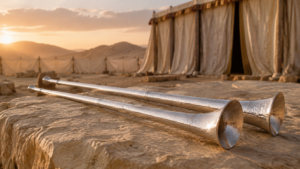
The second is the chatzotzerah—חצצרה, the silver trumpet. God instructed Moses to make two of them from hammered silver:
“Make thee two trumpets of silver; of a whole piece shalt thou make them.”
—Numbers 10:2
Unlike the natural shofar, these were manufactured instruments placed in the hands of the priests. They gathered the congregation, directed the movement of the camps, sounded in battle and accompanied Israel’s offerings and appointed times.
The third word is Yovel—יובל. It can refer to a ram’s horn, but it also became the name of the Jubilee year. The Yovel sounded at Sinai, and seven Yovel horns were carried around Jericho. In Leviticus, the Jubilee shofar proclaimed liberty and told every Israelite to return to his family and inheritance.
There is also keren—קרן, the ordinary Hebrew word for a horn. Genesis uses this word when it describes the ram caught by its horns at Moriah. The text does not call those horns shofars, and it never says they were sounded. Still, this is the first place where we see the kind of horn from which a shofar could be made.
Finally, there is teruah—תרועה. Teruah is not an instrument. It is the blast itself—a trumpet blast, alarm, battle cry or shout. That is why the Torah calls the first day of the seventh month Yom Teruah, the Day of Blasting:
“It is a day of blowing the trumpets unto you.”
—Numbers 29:1
The English translation supplies “trumpets.” The Hebrew simply says יוֹם תְּרוּעָה—Yom Teruah. The Torah names the sound before it names the instrument used in later Jewish practice.
The instruments are different, but at the center is the blast. Something is about to change when the teruah is heard.
The Blasts Have Names
On Yom Teruah, the shofar is not sounded with one repeated note. We hear several different blasts, each with its own character.
Tekiah—תקיעה is one long, clear and unbroken note. In the Torah, the related verb taqa means to sound or blow an instrument. Numbers 10 distinguishes the ordinary sounding of the silver trumpets, which gathered the congregation, from the alarm that moved the camps. The tekiah gets our attention. It is also traditionally associated with assembly, kingship and a call to listen.
Shevarim—שברים means “broken pieces.” It consists of three broken notes, often compared to sighing or groaning. The word comes from the Hebrew root shavar, to break. Shevarim sounds like something whole that has been interrupted.
Teruah—תרועה is a series of at least nine short, rapid notes. In the Tanakh, teruah can describe a trumpet alarm, a battle cry or a joyful shout. It is the sound at the center of Yom Teruah—the sound that warns, awakens and announces that something is changing.
The sages debated exactly what the Torah meant by teruah. Was it a series of deeper broken sighs, what we now call shevarim? Was it a rapid cry, what we now call teruah? Or did it contain both? To preserve each possibility, the traditional service includes all three patterns:
- Tekiah–Shevarim–Teruah–Tekiah
- Tekiah–Shevarim–Tekiah
- Tekiah–Teruah–Tekiah
Each broken or trembling sound is held between two clear blasts. We begin with the whole note, pass through the broken notes, and return to the whole note. That meaning is not explicitly stated in the Torah, but it is difficult not to hear the pattern: wholeness, brokenness and wholeness again.
The final sound is often the Tekiah Gedolah—תקיעה גדולה, the “great tekiah.” It is not a separate kind of biblical blast, but an extended tekiah held much longer than the others. After the sighs, cries and alarms, the service ends with one long, unbroken sound.
Perhaps that is why the commandment is not simply to blow the shofar, but to hear it. Each sound says something different, and together they tell a story.
The First Horn Is Silent
The first explicit sound of a shofar occurs at Sinai, but the first ram’s horn may be present earlier at Moriah.
Abraham raises the knife over Isaac, but God stops him. Then Abraham sees something behind him:
“Behold behind him a ram caught in a thicket by his horns.”
—Genesis 22:13
Genesis uses the word keren, not shofar. No trumpet is sounded. I do not want to make the text say more than it says. Yet before a ram’s horn is heard in Scripture, it appears in the scene where Isaac is spared and God provides an offering in his place.
The Bible’s trumpet story may begin not with alarm or warfare, but with mercy.
The Voice at Sinai
The word Yovel first appears before the Jubilee year is commanded. Israel is standing at Sinai, before a boundary they have been warned not to cross. Then God says:
“When the trumpet soundeth long, they shall come up to the mount.”
—Exodus 19:13
The Hebrew says, “When the Yovel sounds long.” A few verses later, it is called the voice of the shofar:
“And the voice of the trumpet sounded long, and waxed louder and louder.”
—Exodus 19:19
God descends. The shofar grows louder. Moses speaks, and God answers him by a voice.
This is the first explicit shofar sound in the Torah, and it is not produced by an army or a musician. It accompanies the presence and voice of God. The people hear the sound before they hear the commandments.
The shofar is therefore connected from the beginning with hearing. Our ancestors heard it at Sinai. Generation after generation, we continue to hear its echo on Yom Teruah.
God Delivers the Victory
The shofar also sounds in the Valley of Jezreel. Gideon places one in the hand of each of his three hundred men, along with a concealed torch and an empty vessel. At his signal, the vessels are broken, the light is revealed and the shofars sound together. Israel does not win by its numbers. The blast announces that God has entered the battle. darkness, revealed light, the blast, and deliverance. Once again, the shofar is heard at the moment everything changes.
The Silver Trumpets
At Sinai, the shofar announces God’s presence. In Numbers 10, God gives Israel two silver trumpets to order the life of the nation.
The purposes are clearly stated. They call the congregation and the tribal leaders. They tell the camps when to move. They sound over offerings and appointed times. They also sound when Israel goes to war:
“Ye shall blow an alarm with the trumpets; and ye shall be remembered before the LORD your God, and ye shall be saved from your enemies.”
—Numbers 10:9
The silver trumpet is connected with gathering, remembrance and salvation.
The biblical spelling חצצרה—chatzotzerah found in Hosea 5:8 has a numerical value of 393:
[ ח(8)+צ(90)+צ(90)+ר(200)+ה(5)=393 ]
Two other biblical forms carry the same value:
[ חפשה—\text{freedom}=393 ]
[ בישועה—\text{in salvation}=393 ]
Gematria does not establish the meaning of a word, but this connection follows what Numbers has already told us. The trumpet sounds, Israel is remembered, and Israel is saved.
There is also an ordinal connection. When the letters are counted by their positions in the Hebrew alphabet, חצצרה—trumpet and תרועה—blast both total 69. The instrument and its blast meet at the same number. I find that interesting, but the stronger connection remains in the text itself.
The Yovel Opens the Way
The Yovel is heard again when Israel enters the Promised Land. God tells Joshua:
“Seven priests shall bear before the ark seven trumpets of rams’ horns.”
—Joshua 6:4
The Hebrew is שִׁבְעָה שׁוֹפְרוֹת הַיּוֹבְלִים—seven shofarot ha-yovelim.
Seven priests carry seven Yovel shofars before the Ark. For six days they circle Jericho once. On the seventh day they circle it seven times. Then the priests sound the horns and Joshua tells the people to raise a great teruah.
“When ye hear the sound of the trumpet, all the people shall shout with a great shout; and the wall of the city shall fall down flat.”
—Joshua 6:5
At Sinai, the Yovel sounds at the boundary of the mountain. At Jericho, it sounds at the boundary of the inheritance. In both scenes, the people wait for the prolonged sound. When it comes, a closed boundary becomes an opening.
Joshua’s Hebrew name is Yehoshua—יהושע, meaning “YHWH saves.” An exact biblical form, ביהושע—“in Joshua,” also equals 393. The number again joins the trumpet with salvation, but the scene makes the point even without the number. Israel does not enter by strength alone. The priests carry the Yovel horns before the Ark, and God opens the way.
The instrument changes as the story moves forward. At Moriah, the ram’s horn is present but silent. At Sinai, the Yovel is heard as God descends and speaks. In the wilderness, the silver trumpets gather and move Israel. At Jericho, seven Yovel horns sound before the Ark and the closed boundary opens.
But Yovel will become more than the name of a horn. It will become the name of a year—and eventually a prophecy of liberty, return and restoration.
The Oldest Sound Becomes the Last Sound
The shofar belongs to a family of instruments that may be older than recorded history. The Torah does not explain it or tell Israel how to make one. It assumes that Israel already knows its sound. Yet God takes that ancient blast and carries it through the whole biblical story. It sounds when God descends at Sinai, when the year turns, when liberty is proclaimed and when the scattered are gathered.
For believers in Yeshua, the same sound waits at the end of the story. The trumpet sounds, the dead are raised, the people are gathered and the King returns. What began before recorded history becomes the sound that closes history.
Perhaps that is why the shofar reaches so deeply into us. The sound is ancient, but its promise is still ahead. We have heard its echo for thousands of years. One day, we will hear the blast of the final trumpet call.
The bible is two stories in one book about one God.
That is where Part Two begins.
Source notes
Congregation Mickve Israel, “About Us”: https://www.mickveisrael.org/about-us
Genesis 22:13; Exodus 19:13, 19; Leviticus 23:24; Numbers 10:1–10; 29:1; Joshua 6; Hosea 5:8.
Mishnah Rosh Hashanah 1:1 and 4:9; Babylonian Talmud, Rosh Hashanah 33b–34a, for the traditional shofar sequences.