BE HAPPY! That’s an order. Especially on Sukkot.
The Torah repeatedly commands Israel to rejoice, although “rejoice” is more precise than simply “be happy.”
“You shall rejoice before the LORD your God.”
—Deuteronomy 12:12
At the pilgrimage festivals, the command becomes especially explicit:
“You shall rejoice in your feast.”
—Deuteronomy 16:14
And after presenting the firstfruits:
“You shall rejoice in every good thing which the LORD your God has given to you and your household.”
—Deuteronomy 26:11
The Hebrew word is שָׂמַח (samach)—to rejoice, take gladness, or celebrate. This is not a command to feel cheerful every moment or deny sorrow. It is a command to recognize God’s goodness and respond with gratitude, worship, generosity, and shared celebration.
Significantly, the rejoicing must include others: sons and daughters, servants, Levites, foreigners, orphans, and widows. Torah happiness is therefore not merely a private emotion. It becomes a communal responsibility: receive God’s blessings joyfully and make room for others to share them.
Deuteronomy even warns Israel about failing to serve God joyfully:
“Because you did not serve the LORD your God with joy and gladness of heart, for the abundance of everything…”
—Deuteronomy 28:47
So, yes: in the Torah, joy is not merely something we hope to experience. It is part of how we are commanded to live before God. Hallelujah!!
Happiness has a sound. It is laughter.
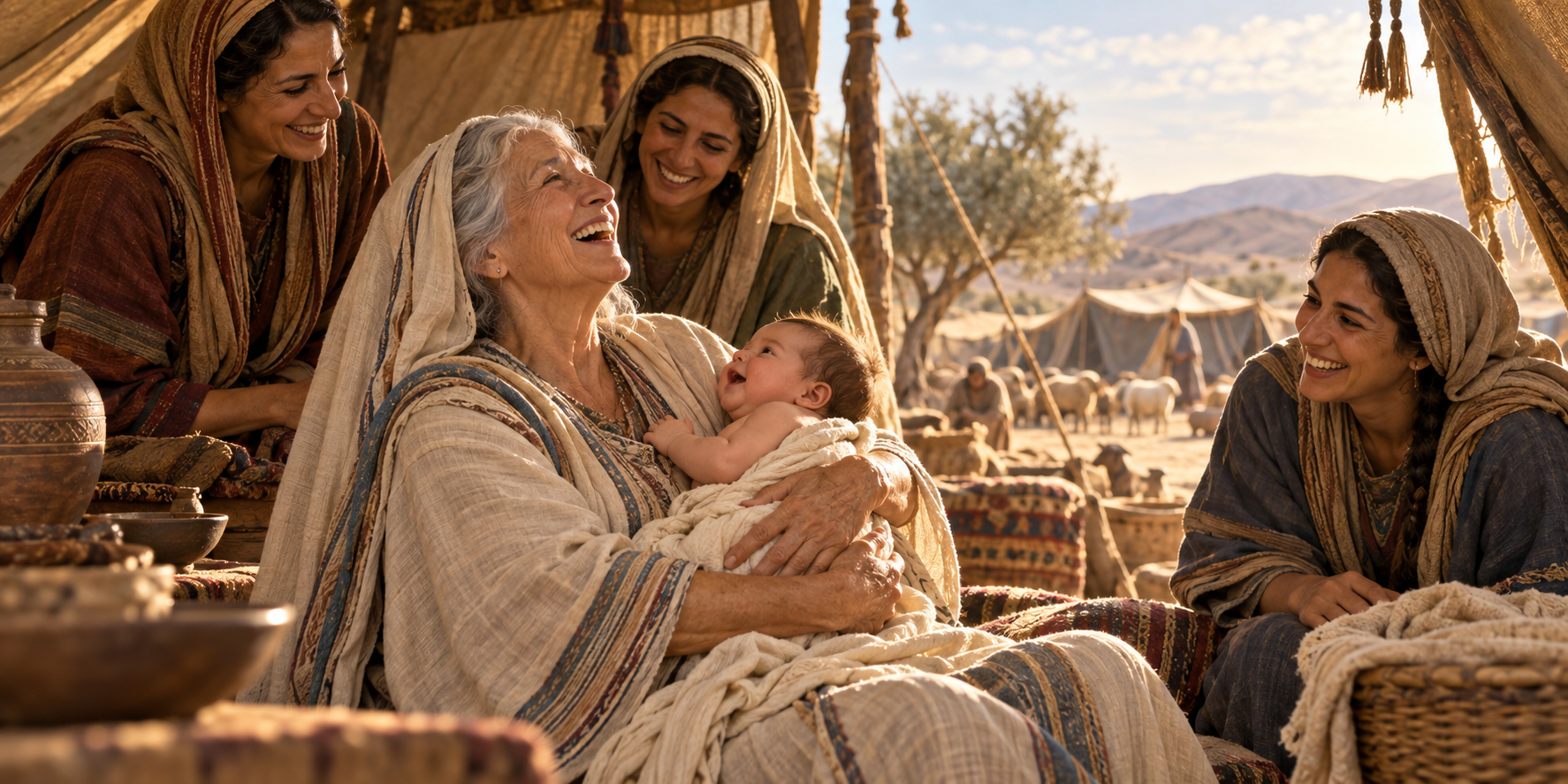
Laughter is joy made audible—the heart’s gladness escaping through the mouth. The Torah commands us to rejoice, and laughter may be one of the purest expressions of that rejoicing.
Sarah understood this when Isaac was born:
“God has made laughter for me; everyone who hears will laugh with me.”
—Genesis 21:6
Isaac’s Hebrew name, Yitzchak (יִצְחָק), means “he will laugh.” God placed laughter in the very name of the promised son. Sarah’s laughter began in disbelief, but God transformed it into the sound of fulfilled promise.
Sometimes faith begins with laughter at what seems impossible—and ends with laughter because God has made it possible.
Turning Jacob into Israel was laughable.
Jacob was the heel-grabber, the deceiver, the frightened fugitive, and the man who wrestled through the night. Nothing about him naturally suggested Israel—the father of a nation bearing God’s covenant. By ordinary human judgment, the transformation was absurd.
But that is the pattern of the Torah. Sarah laughed at the impossible promise, and then gave birth to Yitzchak—“he will laugh.” Isaac fathered Jacob, and God transformed Jacob into Israel. The laughter of fulfilled promise continued into the birth of a nation.
God did not choose a man who already looked like Israel. He chose Jacob and made Israel out of him.
Perhaps that is sacred laughter: not mocking what God promises, but rejoicing when God accomplishes what human reason considered laughable.
Get Out, Go!
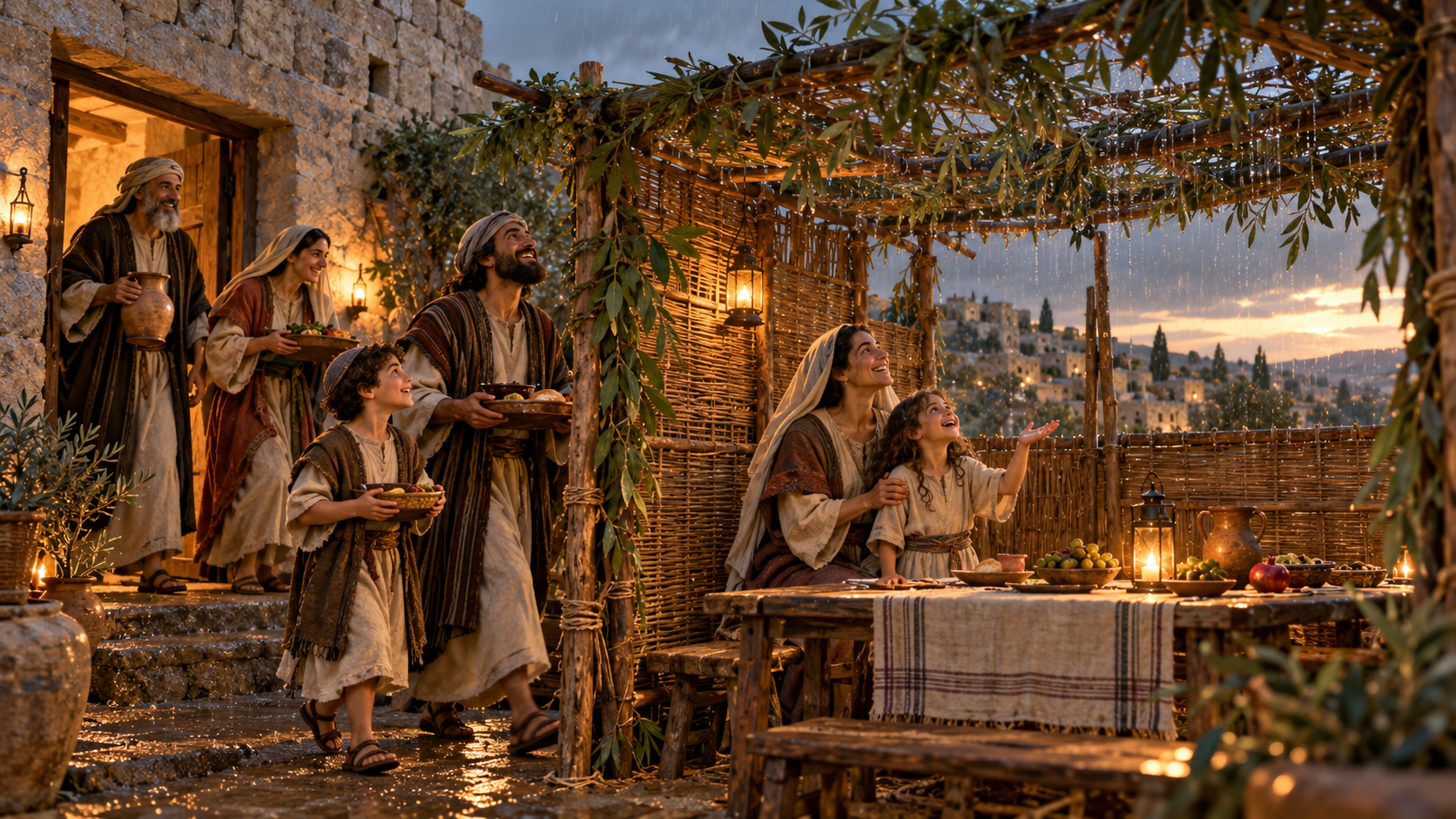
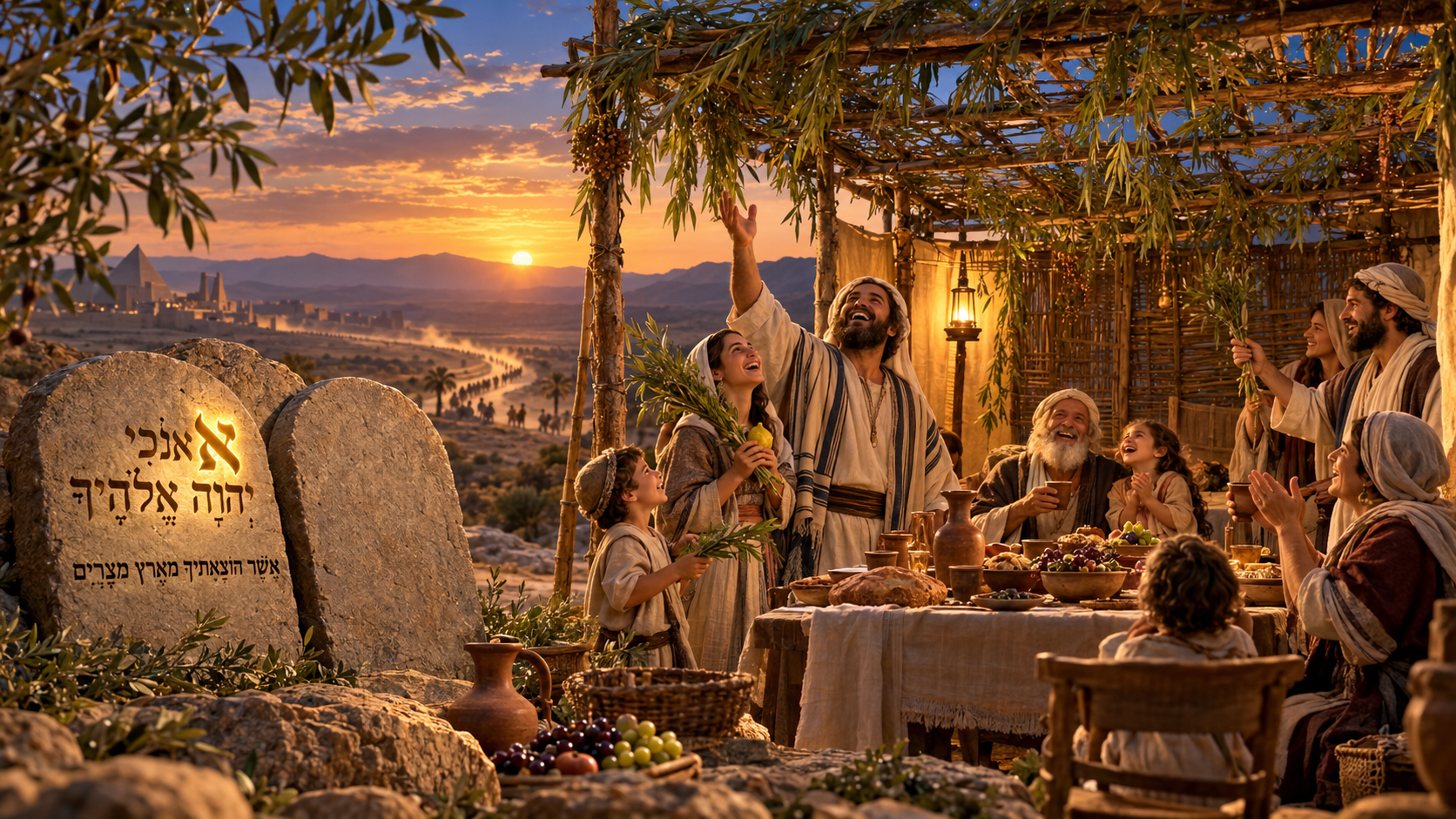
You are commanded to leave the security of your comfortable home and dwell outside. Eat—and perhaps sleep—in a temporary booth with fragile walls and a roof open enough to see the sky and let the rain come through.
And then God says: Rejoice.
That sounds almost laughable. Leave what is permanent for what is temporary. Exchange comfort for vulnerability, a solid roof for branches, and the illusion of security for dependence upon God—and celebrate!
The sukkah is fragile, but God is not. So we step outside—and rejoice.
Celebrating the Aleph (א)
אָנֹכִי יְהוָה אֱלֹהֶיךָ (Anochi Adonai Elohecha)
“I am the LORD your God…” —Exodus 20:2
The first commandment begins not with a demand but with a memory:
“I am the LORD your God, who brought you out of the land of Egypt, out of the house of bondage.”
—Exodus 20:2
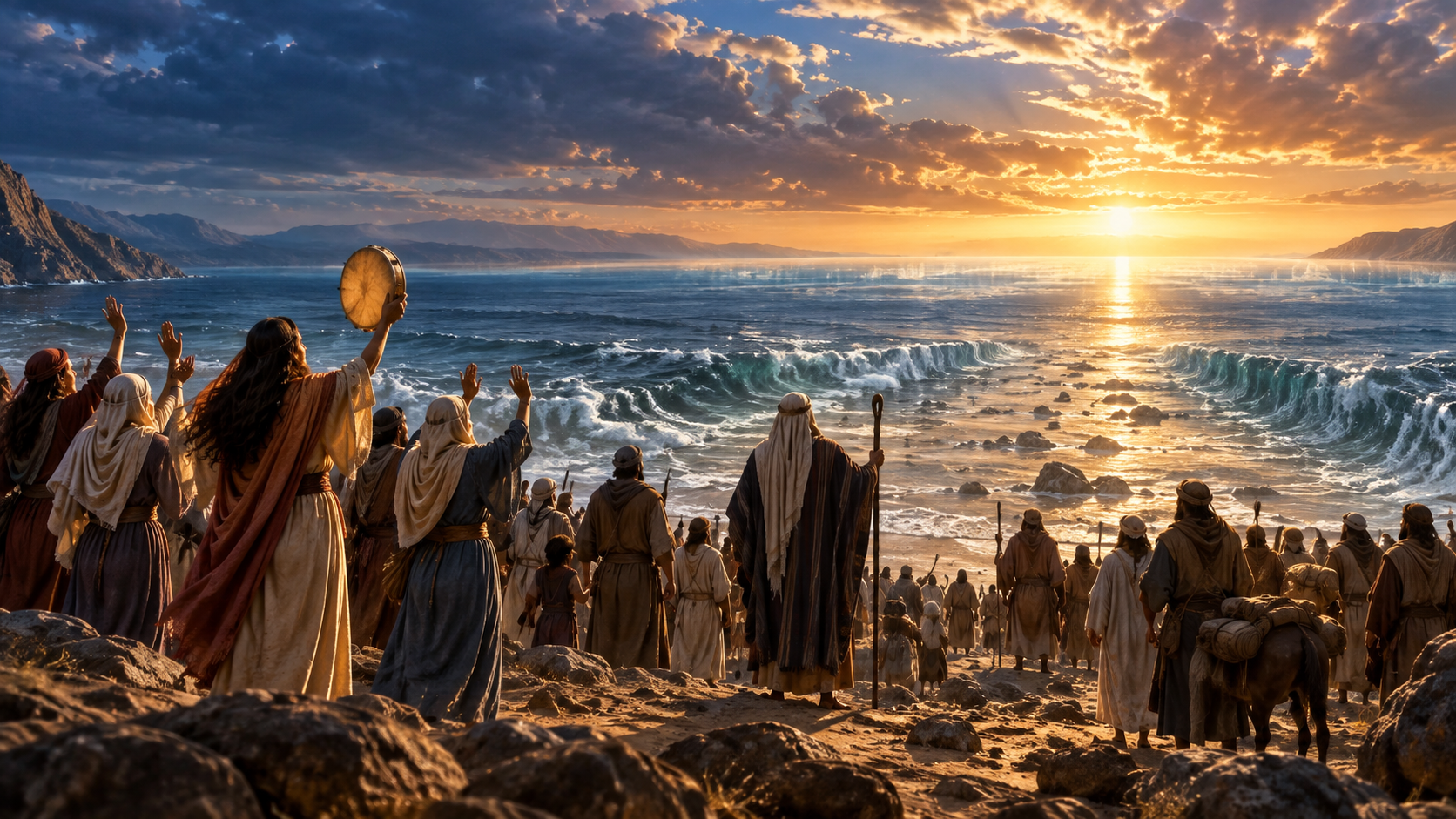
Remember who I am. Remember what I did. Remember when I led you out of Mitzrayim and into the wilderness.
That is the essence of the first commandment. Israel’s relationship with God is rooted in deliverance—not abstract belief. He is not merely the God who exists; He is the God who brought us out.
Sukkot turns that commandment into an experience. Leave the security of your house, sit beneath a fragile covering, and remember who truly protected and sustained you. Then rejoice.
The first commandment tells us whom to trust.
The sukkah teaches us how to live as though we trust Him.
Freedom Can Be Frightening
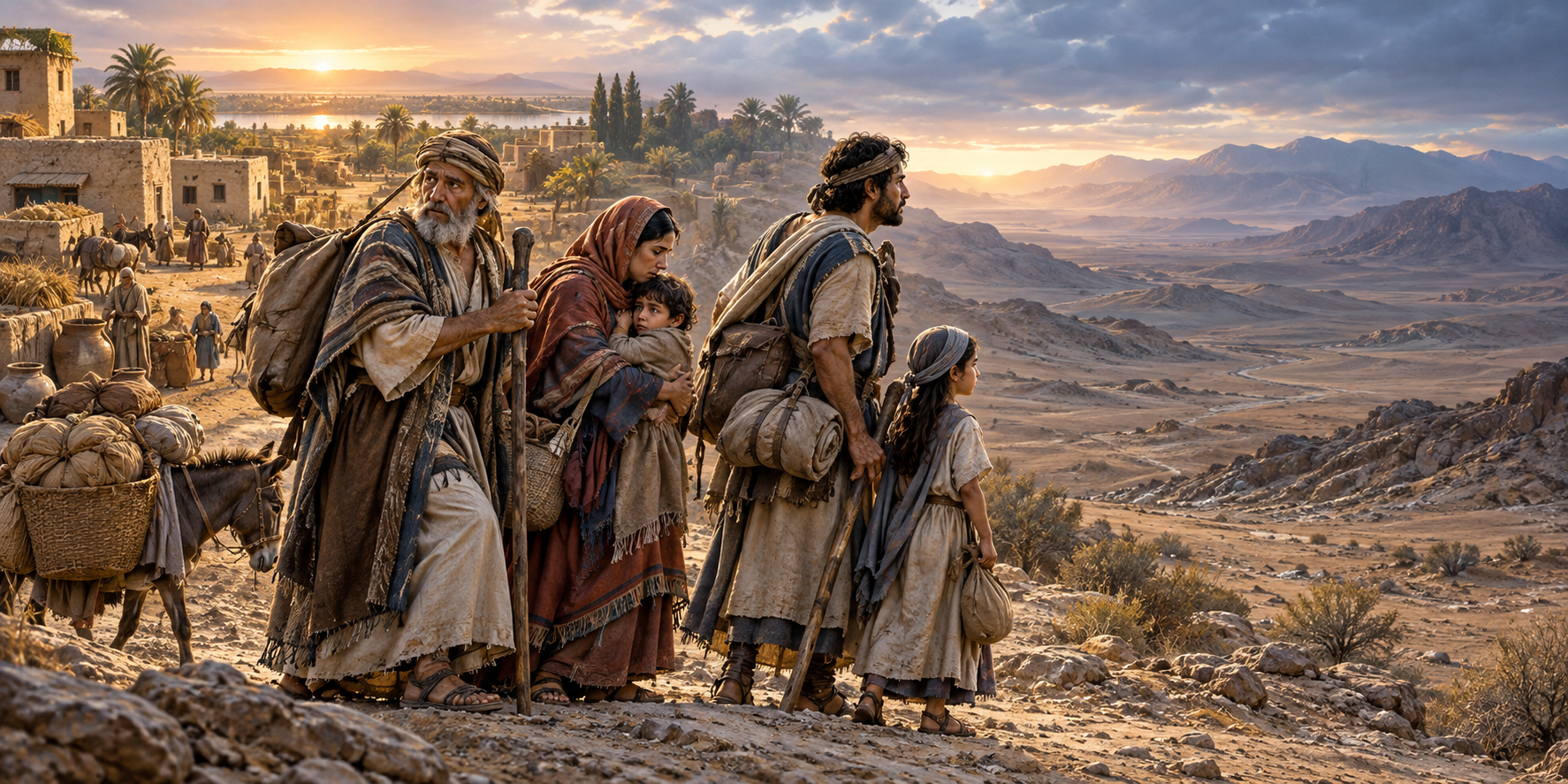
Israel left slavery, but they also left behind houses, familiar streets, known sources of food and water, and a life they understood. However oppressive Mitzrayim (Egypt) was, it was familiar. The wilderness was not. There were no shelters from danger or weather, no wells, no markets or visible means of survival.
That explains why Israel sometimes remembered Egypt selectively:
“We remember the fish which we ate freely in Egypt…” —Numbers 11:5
Bondage had become familiar enough to feel safer than freedom. Leaving Mitzrayim required more than walking through the sea. Israel had to exchange dependence upon Pharaoh’s world for dependence upon God.
The Roof That Reveals Heaven
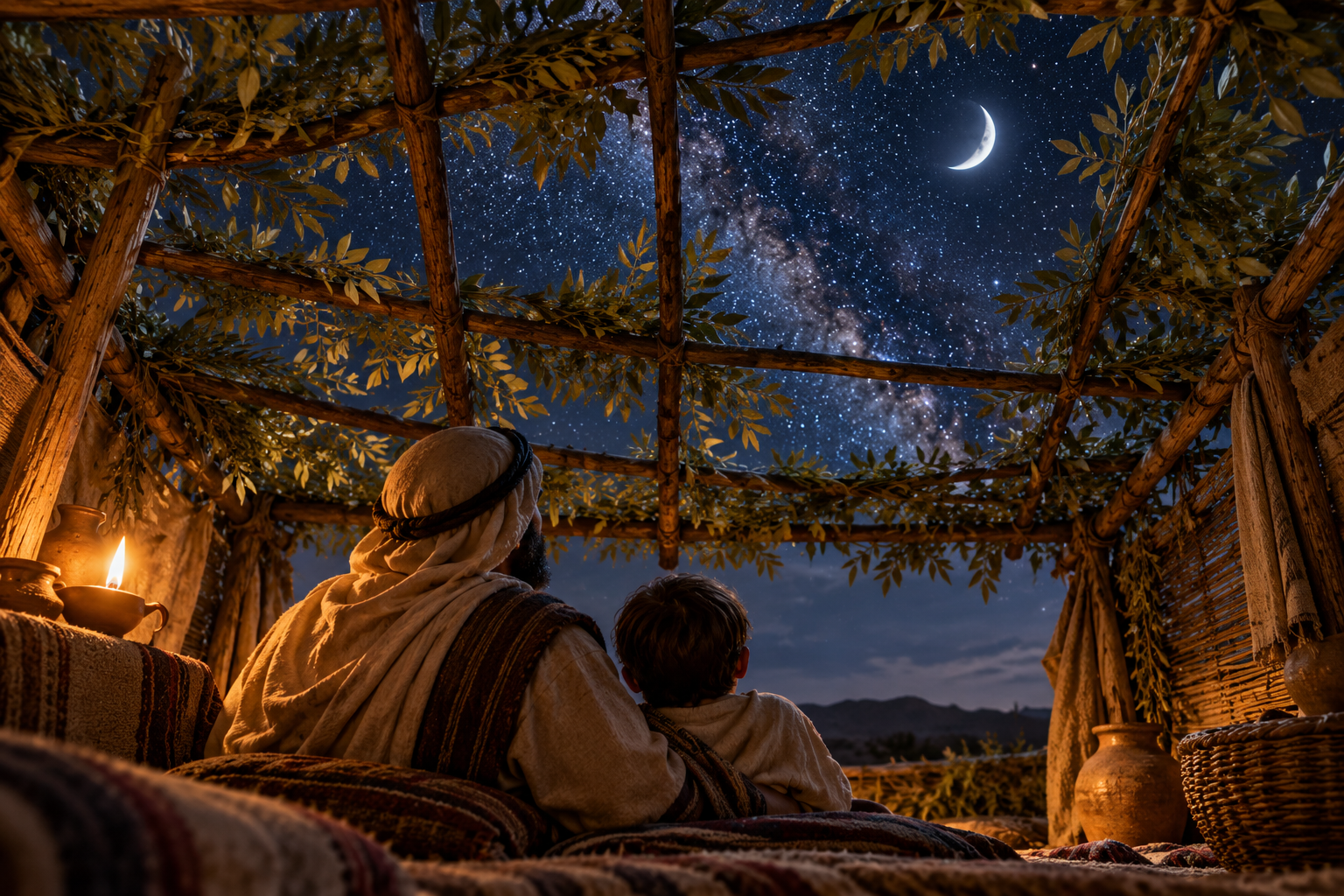
Did you ever notice this bible verse? Exodus 12:37 says “And the children of Israel journeyed from Rameses to Succoth, about six hundred thousand on foot that were men, beside children.” Rameses is where Egypt built the storhouses of grain (Exodus 1.11). When God took the Israelites out of Egypt, their first stop was Succoth. A place that was named for sukkah’s (booths).
The sukkah brings us back into that vulnerability. At night, you look through its unfinished roof and see the celestial lights. The roof that cannot completely shelter you also allows you to see beyond it—to the testimony of creation:
“In the beginning God created the heavens and the earth.” —Genesis 1:1
The stars remind us that the One asking us to trust Him in the wilderness is the One who created the wilderness, the heavens above it, and the lights shining through the branches.
A solid roof can make us feel secure while hiding the heavens.
The fragile roof of the sukkah exposes us—but it also restores our view of the Creator.
Perhaps that is part of its joy: when our human covering becomes thin, we rediscover the greater covering that was always above us.
The sukkah is also a reminder to Israel of the precious feeling of freedom and the act of redemption. “Salvation is of the Lord” (Jonah 2.9). The beginning of that verse is “But I will sacrifice to You With the voice of thanksgiving.” The phrase “voice of thanksgiving” is a clear reference to rejoicing,
That I may proclaim with the voice of thanksgiving, And tell of all Your wondrous works. — Psalm 26.7
Chag Sukkot Sameach! (Have a joyous Sukkot holiday.) That’s an order.
Epilogue: The Last Day of the Great Feast
In Israel, Shemini Atzeret and Simchat Torah—“Rejoicing in the Torah”—are celebrated together on the eighth day, beginning at sunset on Friday, October 2, and ending at nightfall on Saturday, October 3, 2026.
Some call it the “last day of the great feast.”
Sukkot has ended. Seven days have been completed. Yet God calls His people to remain with Him for one more day:
“On the eighth day you shall have a sacred assembly.” —Numbers 29:35
Shemini Atzeret means “the assembly of the eighth day.” It is connected to Sukkot, yet it is also a holy day of its own. The booths are left behind, but the rejoicing continues.
For followers of Yeshua, I would refer you to John 7:37-39 and the Promise of the Holy Spirit:
On the last day, that great day of the feast, Jesus stood and cried out, saying, “If anyone thirsts, let him come to Me and drink. He who believes in Me, as the Scripture has said, out of his heart will flow rivers of living water.” But this He spoke concerning the Spirit, whom those believing in Him would receive; for the Holy Spirit was not yet given, because Jesus was not yet glorified.
On a Personal Note
In the Jerusalem Talmud, Sukkah 5:1, Rabbi Jonah teaches that the prophet Jonah son of Amittai was among the pilgrims who came to Jerusalem. He entered the Simchat Beit HaSho’eva, the joyous water-drawing celebration held during Sukkot, and the Ruach HaKodesh rested upon him. The passage concludes:
“This teaches you that the Holy Spirit rests only upon a joyful heart.”
The same passage explains why it was called the House of Drawing: not only because water was drawn, but because people “drew” the Holy Spirit there—connecting it with:
“With joy you will draw water from the wells of salvation.”
—Isaiah 12:3
I call this a personal note because I have a special affection and appreciation for the prophet Jonah.
Hoshana Rabbah: The “Final Seal” of Sukkot
Hoshana Rabbah is the seventh day of Sukkot. According to Kabbalistic tradition, while the divine judgment for the new year is written on Rosh Hashanah and sealed on Yom Kippur, the final “delivery” or execution of that judgment is not finalized until Hoshana Rabbah.
Then comes Shemini Atzeret, the great concluding day of rejoicing.
JONAH GOES TO NINEVEH
Jonah lived in Gath-hepher, in northern Israel. Why, then, does Jonah 1:3 find him departing from Joppa, far to the south? The Jerusalem Talmud offers an answer: Jonah had traveled south as a pilgrim for Sukkot. He entered the rejoicing of the Simchat Beit HaSho’eva, the Ruach HaKodesh rested upon him, and he then descended from Jerusalem to Joppa, where he boarded a ship while attempting to flee his commission to Nineveh. Then something happened on a boat!