What Moses Leaves, and Who Stands Beside Him
A follow-up to “Ha’azinu: Listen to the Song. Let the Rock Speak”.
In my reflection on Ha’azinu (Deuteronomy 32), I was listening for the Song and the Rock. Afterward, I found myself looking back one chapter. Why did God give Moses a song at precisely this moment? And what was Israel meant to do when Moses was no longer there to speak it?
Deuteronomy 31 prepares us for the Song in chapter 32. But I wonder if the Song is also preparing Israel for the silence that will follow Moses. I see the movement this way:
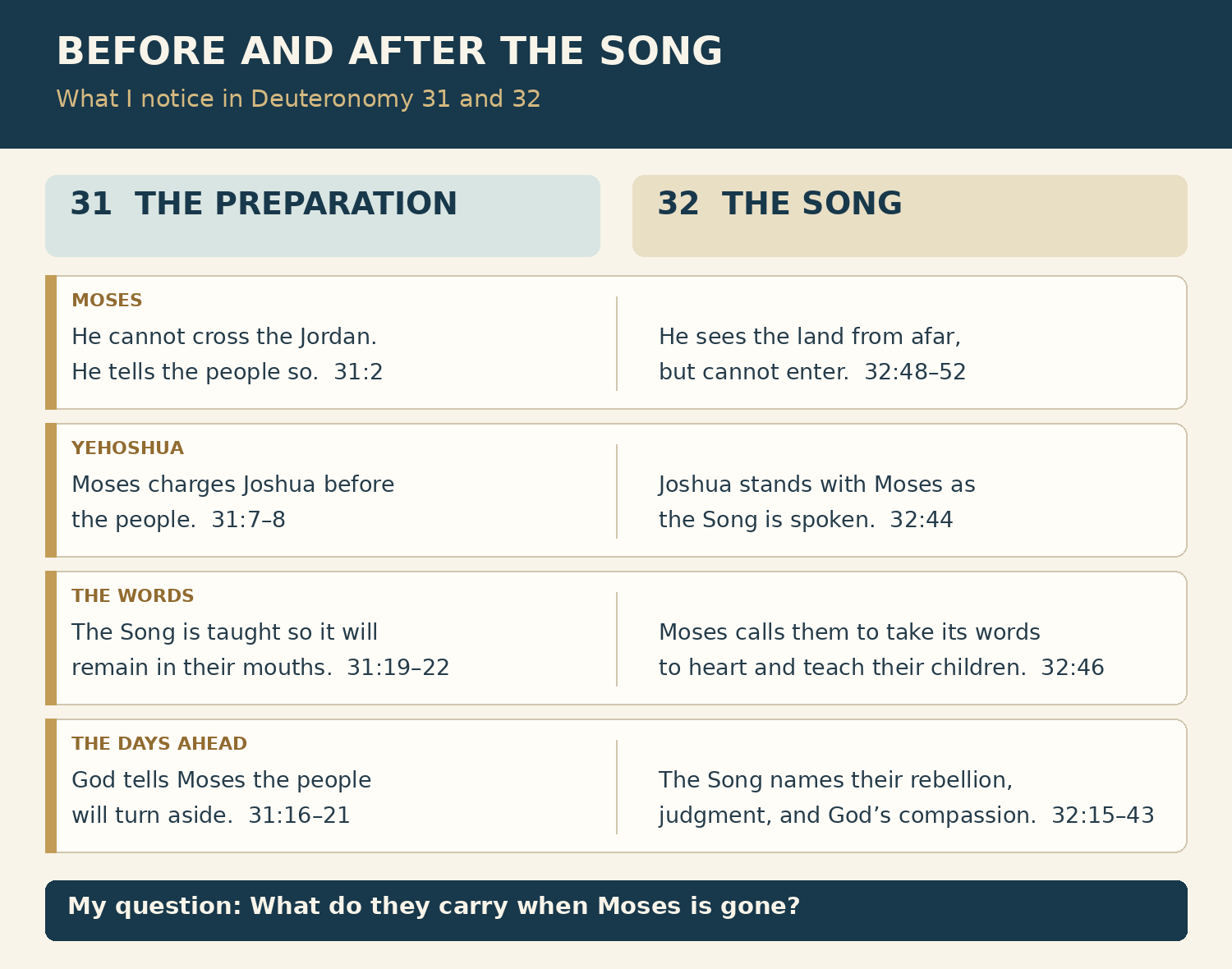
Moses tells the people that he will not cross the Jordan. He tells them to be strong and courageous, and he commissions Joshua before them (Deuteronomy 31:2–8). Then God tells Moses to write the Song and teach it to Israel, so that it will remain in their mouths as a witness when trouble comes (31:19–22).
I keep returning to that phrase: in their mouths. Moses cannot go with them, but his words can. Their children can learn them. When the people forget, they can hear the Song again, perhaps even from their own lips.
Given everything Moses has lived through with them, I do not imagine he expects an easy future. God tells him they will turn aside. The Song recalls God’s care, speaks plainly about Israel’s rebellion, and warns of judgment. Yet it does not end there. It also looks toward God’s compassion for his people (Deuteronomy 32:36). Moses gives them a song honest enough for the years ahead.
When the Song is over, he tells Israel to take its words to heart and teach them to their children: “It is no empty word for you, but your very life” (32:46–47). That sounds to me like more than a final instruction. It sounds like a father making sure his children know what to hold on to when he is gone.
Listening Across the Pages
Deuteronomy 31 tells me why the Song must be taught: Moses is leaving, and Israel will need its words in the years ahead. Deuteronomy 32 gives them those words. I have come to hear the two chapters together. One prepares the people to listen; the other gives them something to carry.
As I read the Gospels, I notice words that bring me back to both chapters. I want to hear each passage in its own setting before considering what they might say to one another.
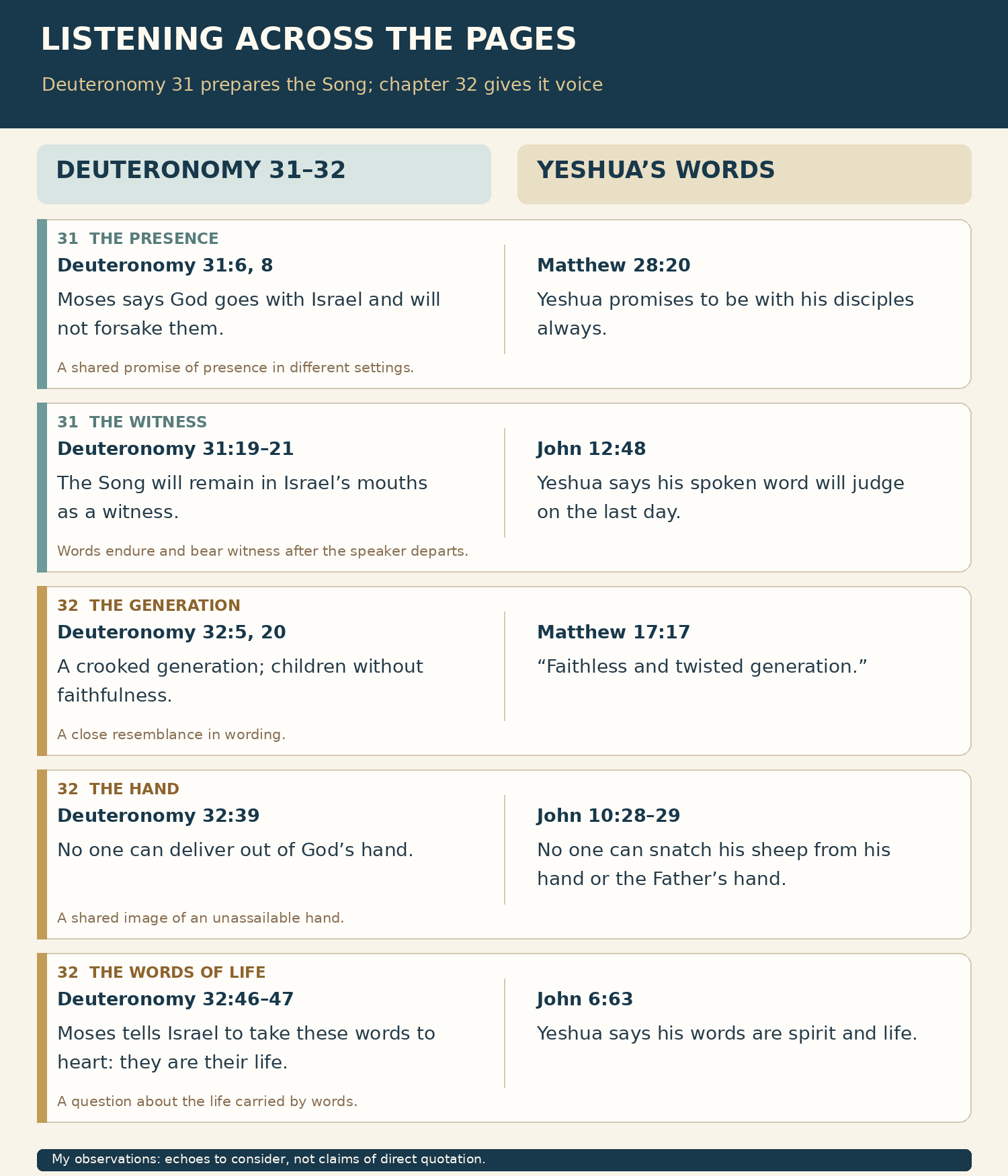
Words from Deuteronomy 31–32 beside words of Yeshua. These are connections I hear across the pages and invite the reader to consider.
Moses assures Israel that God will go with them and will not forsake them (Deuteronomy 31:6, 8). Much later, Yeshua tells his disciples, “I am with you always” (Matthew 28:20). Israel’s crossing and the disciples’ mission are different moments. Still, I hear a promise of presence as each group is sent forward.
God also tells Moses that the Song will remain in Israel’s mouths as a witness after he is gone (Deuteronomy 31:19–21). Yeshua says that the word he has spoken will judge those who reject it on the last day (John 12:48). Their words have different purposes in these passages, but neither is treated as finished when the speaker leaves.
Then there is the language of a generation. Moses’ Song describes a crooked generation and children without faithfulness (Deuteronomy 32:5, 20). Yeshua speaks of a “faithless and twisted generation” (Matthew 17:17). I cannot tell from that resemblance alone whether he intends his listeners to recall Ha’azinu. But it leads me to another saying of his.
When some ask Yeshua for a sign, he speaks of an “evil and adulterous generation” and gives them the sign of Jonah (Matthew 12:38–41; 16:4). Jonah’s story includes both his three days in the great fish and Nineveh’s response to his warning. I wonder whether the Song is somewhere in the background as I read those sayings together. They leave me with a question for myself: when God sends a warning, will I listen?
Near the end of the Song, Moses tells Israel to take its words to heart and teach them to their children: “It is no empty word for you, but your very life” (Deuteronomy 32:46–47). Yeshua says, “The words that I have spoken to you are spirit and life” (John 6:63). Both statements make me think about words meant to be received, remembered, and lived.
The Hand and the Temple
One comparison opens a wider path for me. In the Song, God says that no one can deliver out of his hand (Deuteronomy 32:39). Yeshua says that no one can snatch his sheep from his hand or from the Father’s hand (John 10:28–29). I hear the resemblance. Then I notice where John places Yeshua’s words: at the Feast of Dedication,by in the Temple in Jerusalem (John 10:22–23).
Hanukkah remembers the Temple’s desecration and its dedication again. That setting sends me back to Daniel’s account of an abomination in the sanctuary (Daniel 11:31). It also sends me forward to Yeshua’s warning about the abomination spoken of by Daniel (Matthew 24:15). I do not know how much of that history his listeners had in mind as he spoke, but I cannot overlook the setting John gives us.
Jeremiah speaks of a time of distress for Jacob and, in the same breath, says Jacob will be saved out of it (Jeremiah 30:7). Revelation describes a Temple being measured while the holy city is trampled (Revelation 11:1–2). I find myself wondering whether that vision points toward a Temple standing again in Jerusalem, and what it might mean for the people who face that time of trouble.
I am following a long path through these passages, and I know each step deserves more study. For now, the words that hold the path together for me are the ones about God’s hand. The Song speaks of a hand from which no one can deliver. Hanukkah, the Feast of Dedication, remembers the cleansing and rededication of the Temple in Jerusalem after it had been desecrated. At the Feast of Dedication, Yeshua speaks of hands from which no one can snatch his sheep. In Jeremiah’s vision of Jacob’s distress, the promise is that Jacob will be saved.
When the Song Ends
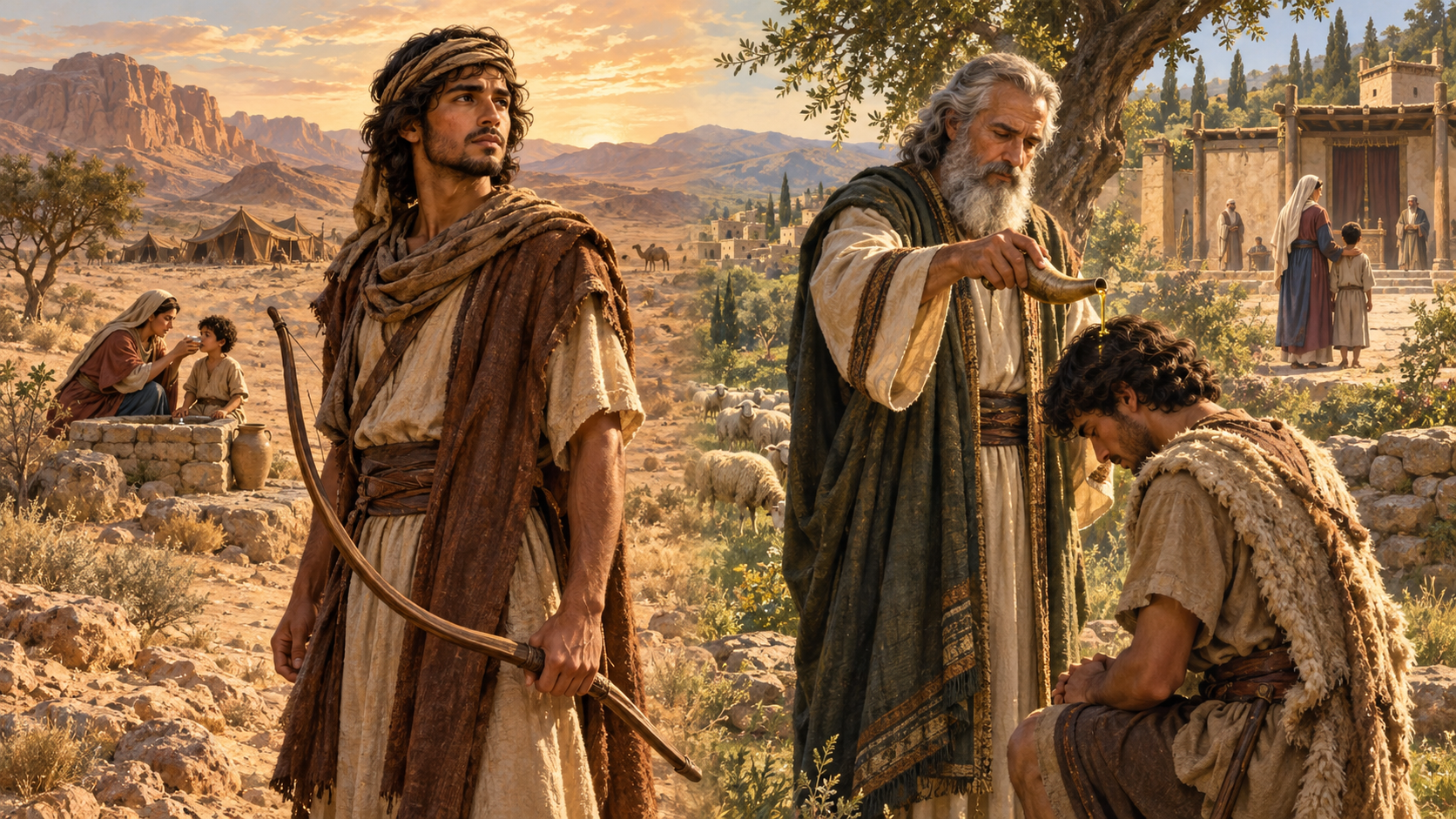
When I return to the end of the Song, I find one detail I nearly missed. Deuteronomy 32:44 says Moses spoke it before the people with Joshua. Moses has already told Israel that Joshua will cross the Jordan with them. Now he stands beside Moses as the Song is spoken.
In Hebrew, Joshua’s name is Yehoshua (יְהוֹשֻׁעַ): “The LORD saves.”
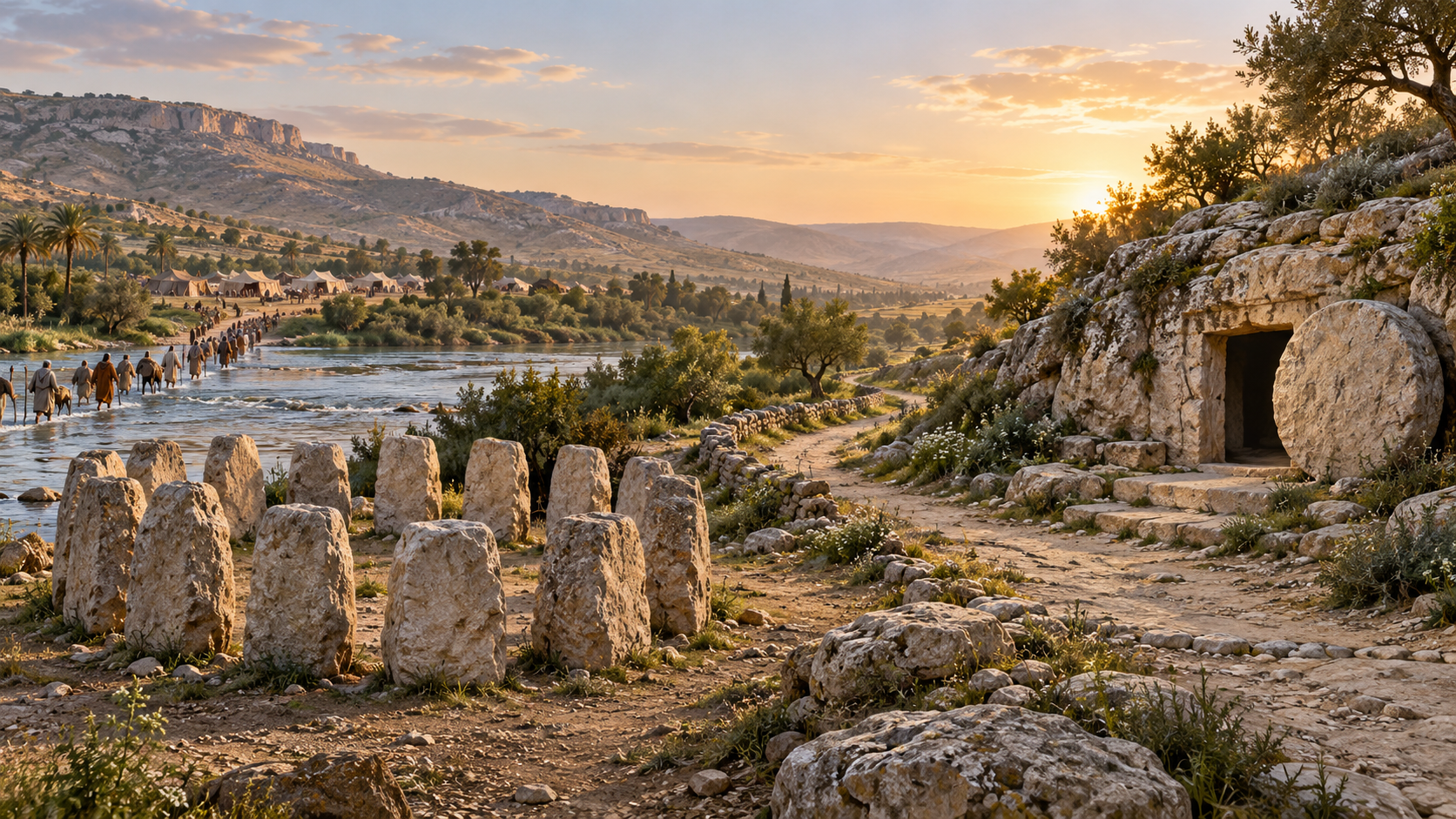
Moses will see the land, but he will not enter it. Israel must carry his words into a future he knows will test them. The Song has been given. The river still lies ahead. And beside Moses stands Yehoshua.