
Let Me Tell You an Old Story About Israel.
By Jonah
It begins in an Italian seaside town, where representatives of the victorious Allied powers gathered after World War I. The Ottoman Empire had collapsed, and the future of much of the Middle East was being decided.
The town was San Remo. The year was 1920.
On April 25, the Allied Supreme Council adopted a resolution assigning Britain responsibility for Palestine and for putting the Balfour Declaration into effect. That declaration supported establishing a national home for the Jewish people in Palestine. France was selected for Syria, and Britain for Mesopotamia, the territory that became Iraq. Boundaries and detailed mandate terms remained to be settled.
This was a consequential moment. A commitment first issued by the British government had become part of an agreement among the principal Allied powers and the framework for an international mandate.
Remember the Year: 1920.
The Holocaust had not happened. The United Nations did not exist. The UN partition proposal was still twenty-seven years away.
The international commitment to a Jewish national home was already there.
A Promise Recognized
Two years later, on July 24, 1922, the Council of the League of Nations approved the Mandate for Palestine. Its preamble expressly recognized “the historical connection of the Jewish people with Palestine” and “the grounds for reconstituting their national home in that country.”
Read that word again: Reconstituting.
It is a word that looks backward as well as forward. Something is being restored. The document grounds that restoration in the Jewish people’s historical connection to “their national home.”
Britain’s responsibilities under the Mandate included creating the conditions for the Jewish national home, facilitating Jewish immigration under appropriate conditions, and encouraging close settlement by Jews on the land. They also included safeguarding the civil and religious rights of all inhabitants. Both commitments belong in an honest account of the Mandate.
Precision matters here. The Mandate did not itself establish an independent Jewish state or determine Israel’s eventual borders. Transjordan was subsequently excluded from the provisions concerning the Jewish national home. And approval came through the League Council, rather than a separate ratification vote by every League member.
Even with those qualifications, the historical point remains substantial: an international legal framework recognized the Jewish connection to Palestine and provided for the restoration of a Jewish national home there.
Even Britain’s 1922 policy statement explained that the Jewish community should understand its presence in Palestine as a matter of right, grounded in an ancient historical connection.
That matters when Israel’s history is reduced to a story beginning in 1948, or when the Jewish return is presented as an idea suddenly invented after the Holocaust.
The Name Changed. The Connection Endured.
But there is another name in these documents that deserves a closer look: Palestine.
How did a land associated with Israel and Judea acquire that name?
Under Emperor Hadrian, the Roman province of Judaea—which included Judea and Samaria—became Syria Palaestina, a change conventionally dated to around 135 CE, following the crushing of the Bar Kokhba revolt. Many historians interpret the renaming as an effort to weaken the province’s explicit association with the Jewish people.
Hadrian did not invent the geographical name Palestine. The connection is an etymological one. Forms of it had appeared in Greek writing centuries earlier. Palaestina is generally traced to the Philistines, Israel’s ancient adversaries along the Mediterranean coast. The name Syria has a deeper linguistic connection to Assyria, another ancient enemy.
There is a striking historical irony. Assyria’s empire had fallen centuries before Rome’s renaming, and the Philistine kingdoms had been destroyed in the Babylonian conquests. Their political powers were long gone. Yet names connected with that ancient world remained in use, while Judaea lost its place as the province’s official name.
An empire could change an administrative name. It could not undo the Jewish people’s historical connection to the land.
And nearly eighteen centuries later, the League of Nations expressly acknowledged that connection in its Mandate for the territory called Palestine.
The name had changed. The connection endured.
Before the Conferences, There Was a Covenant
The documents carry us further back. But how much further? What older story stood behind the resolutions, the meetings, and the signatures?
I told you I was going to tell you an old story about Israel.
You may have thought San Remo was that story.
It was one chapter.
Once upon a time, God made a promise…
“Thy name is Jacob: thy name shall not be called any more Jacob, but Israel shall be thy name.”
— Genesis 35:10, KJV, excerpt
And in that same encounter, God spoke of the land:
“And the land which I gave Abraham and Isaac, to thee I will give it, and to thy seed after thee will I give the land.”
— Genesis 35:12, KJV
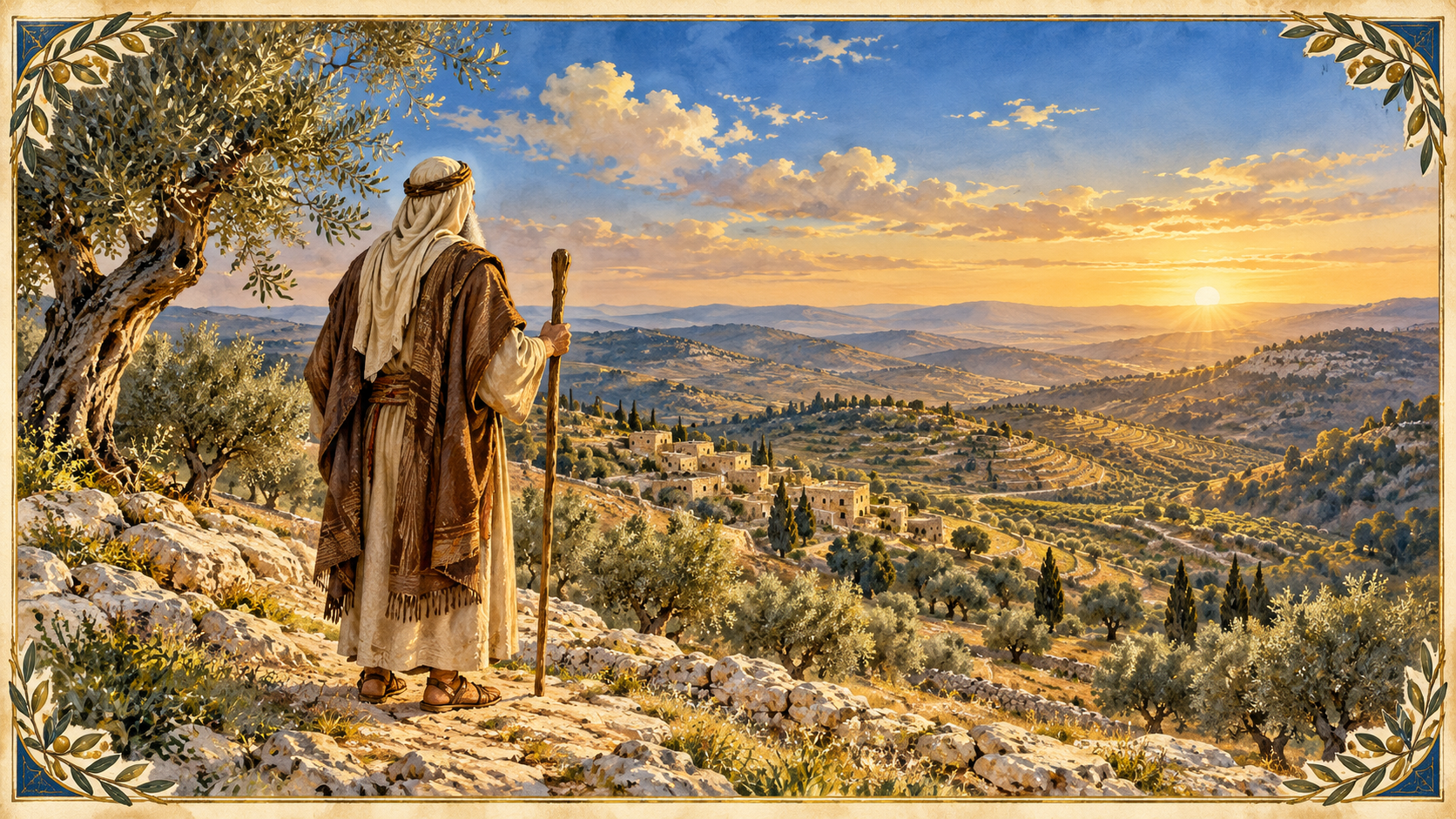
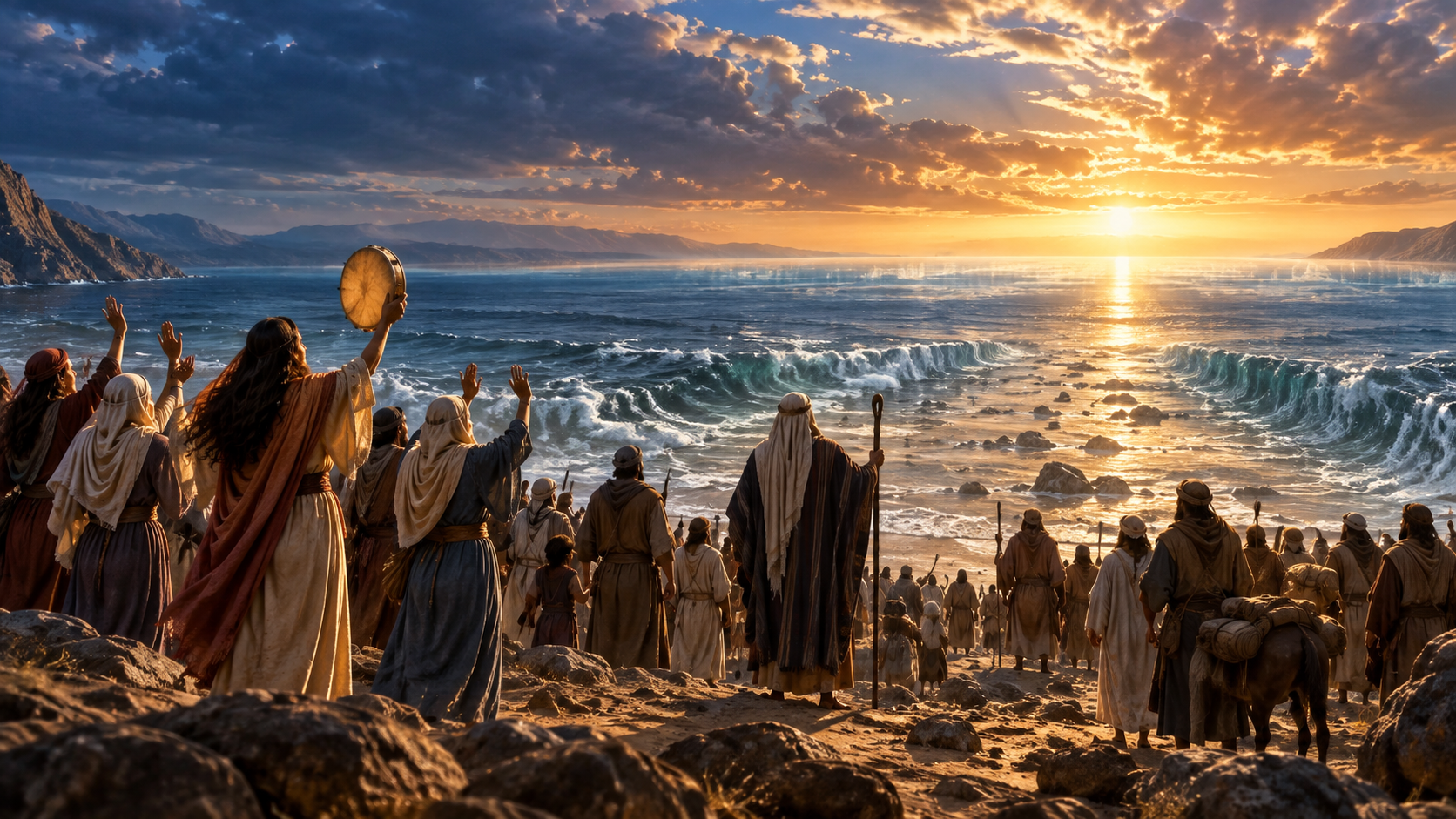
Jacob’s sons became the fathers of Israel’s tribes. The story follows their descendants into Egypt, through slavery and deliverance, and back to the land. In time, it brings us to David and Solomon—to the kings and assemblies remembered in Chronicles.
Before Israel was a subject for international conferences, Israel was the name God gave Jacob. And the land was part of the promise God spoke to him.
Chronicles describes David gathering his people:
“So David gathered all Israel together, from Shihor of Egypt even unto the entering of Hemath, to bring the ark of God from Kirjathjearim.”
— 1 Chronicles 13:5, KJV
And it describes the great assembly gathered with Solomon:
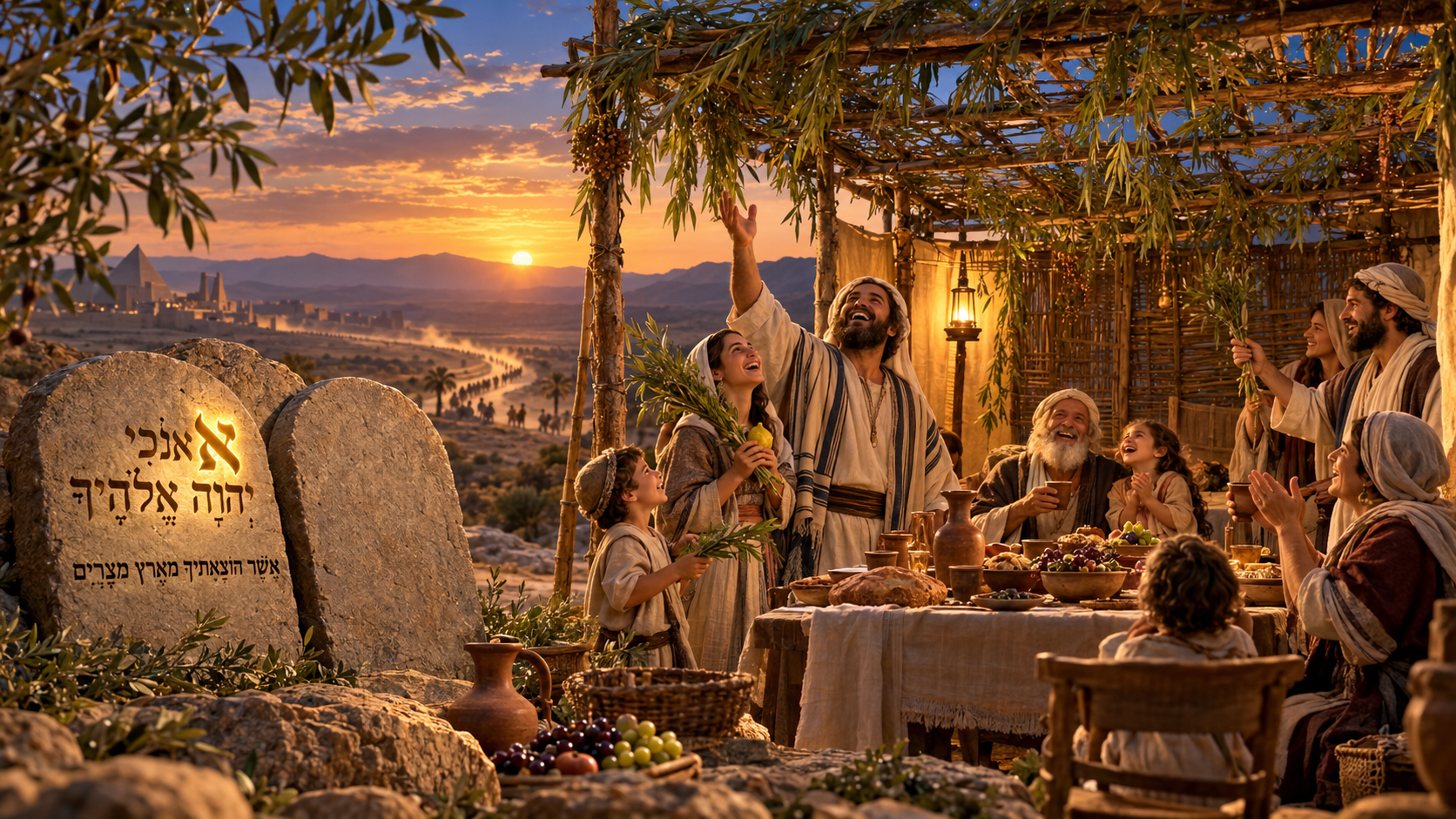
“Also at the same time Solomon kept the feast seven days, and all Israel with him, a very great congregation, from the entering in of Hamath unto the river of Egypt.”
— 2 Chronicles 7:8, KJV
That feast was Sukkot—the Feast of Tabernacles. Israel had gathered in Jerusalem from the entrance of Hamath to the watercourse of Egypt to celebrate before God. These geographical names belong to a living story: a people, a homeland, and a shared covenant. At the dedication of Solomon’s Temple, they celebrated the festival that recalls their wilderness journey, when they lived in temporary shelters and depended upon God’s provision. They went home rejoicing in His goodness (2 Chronicles 7:9–10). The map tells us where they came from. Sukkot tells us what brought them together.
Centuries later, on the last great day of that same feast, Yeshua would stand in Jerusalem and cry out, “If any man thirst, let him come unto me, and drink” (John 7:37, KJV). He would speak of rivers of living water, which John explains as a reference to the Spirit (John 7:38–39). The feast recalling God’s provision in the wilderness would become the setting for His invitation to receive living water.
Jonah and the Restoration of Israel
Before we meet Jonah, one earlier chapter belongs in our modern story. On November 2, 1917, Britain issued the Balfour Declaration, supporting a national home for the Jewish people in Palestine.
Remember that date: November 2.
Balfour did not specify borders. In 1919, the Zionist Delegation proposed boundaries based on the Jewish people’s historical connection to the land and practical needs such as water and agriculture. San Remo adopted the national home commitment in 1920, leaving precise boundaries to later arrangements.
In 1922, the League of Nations approved the Mandate, recognizing that historical connection and the grounds for reconstituting the Jewish national home. Its national home provisions applied west of the Jordan;
Transjordan was excluded that September. Transjordan means “beyond the Jordan.” The territory east of the river became the Emirate of Transjordan in 1921 and an independent kingdom in 1946.
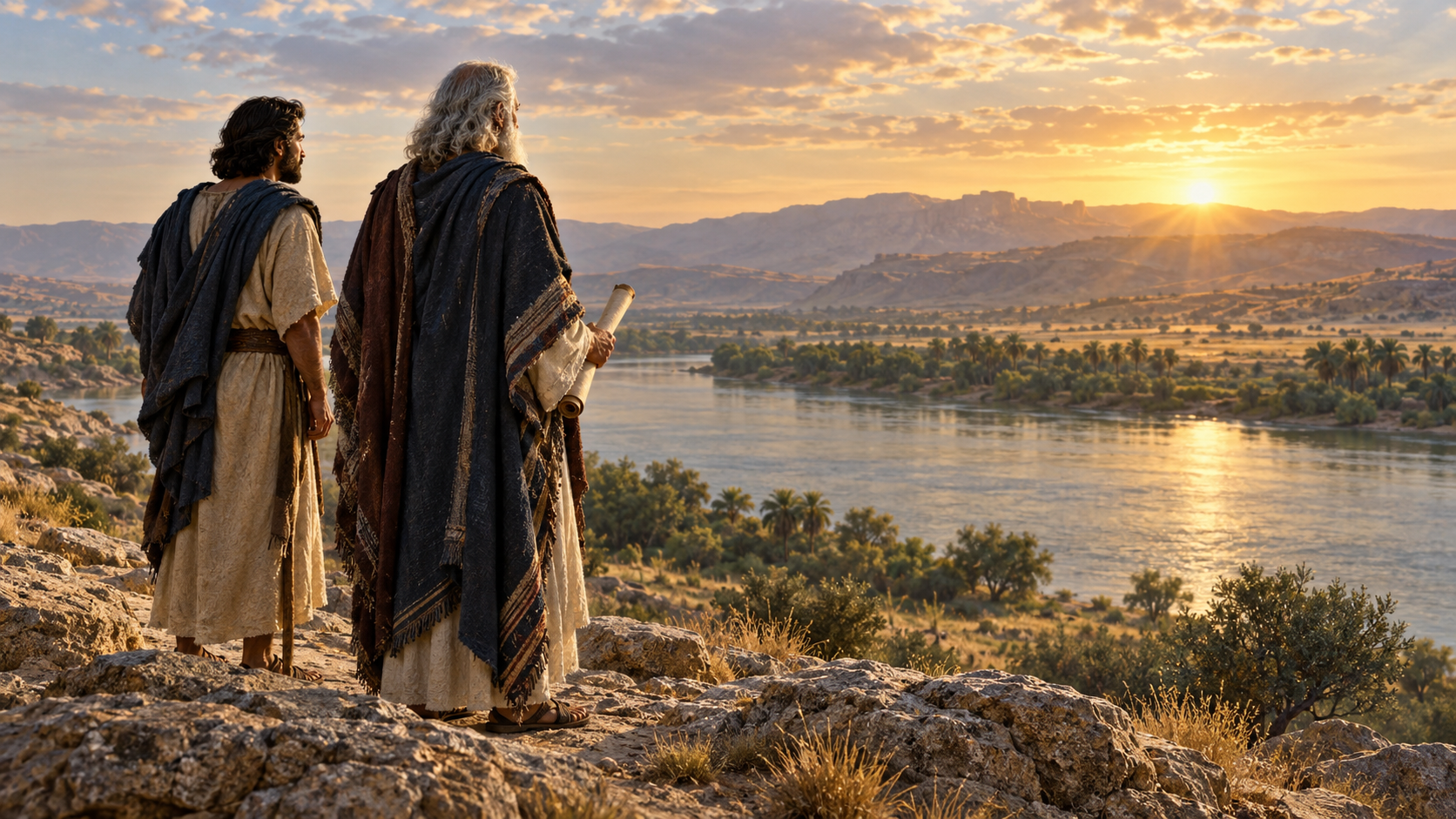
West of the River Jordan
West of the river lay Jerusalem, Hebron, Bethlehem, Shechem, Bethel, and Shiloh. The Mandate territory encompassed Judea and Samaria, Galilee, and Gaza—a larger area than modern Israel, though it excluded the Golan Heights.
Historical connection grounded the homeland’s recognition. Geography, water, transport, and diplomatic negotiations shaped its boundaries.
And what of the expression “West Bank”?
Like Transjordan, it describes geography in relation to a river. The older names—Judea and Samaria—tell us more about the history.
David first reigned in Hebron, then ruled over all Israel from Jerusalem. Shechem connects us to Abraham, Jacob, and Joshua. Samaria became the northern kingdom’s capital after the united kingdom divided into Israel and Judah.
Calling this ancestral land the “West Bank” does not erase those kingdoms or the Jewish connection to them. The name alone settles no modern sovereignty question, but it cannot make the history disappear.
That history brings us to Jonah.
Under Jeroboam II, Scripture records:
“He restored the border of Israel from the entrance of Hamath to the sea of the Arabah, according to Yahweh, the God of Israel’s word, which he spoke by his servant Jonah the son of Amittai, the prophet, who was from Gath Hepher.”
— 2 Kings 14:25, WEB
Restored. Remember the Mandate’s word?
Reconstituting. Both speak of bringing back something that existed before. The modern document recognized an ancestral connection. The ancient passage records a restoration according to God’s word, spoken through Jonah, son of Amittai. ‘Son of truth’ is a fitting reflection on his name. The same Jonah we remember for the great fish and Nineveh.
Jonah’s prophecy concerned the northern kingdom of Israel, from the entrance of Hamath to the Dead Sea. The Mandate territory overlapped parts of that kingdom, including Samaria and Galilee, but did not extend as far north as Hamath.
Different boundaries. Different events. A recurring story of restoration.
Why was Israel’s border restored?
“For Yahweh saw the affliction of Israel, that it was very bitter for all, slave and free; and there was no helper for Israel. Yahweh didn’t say that he would blot out the name of Israel from under the sky; but he saved them by the hand of Jeroboam the son of Joash.”
— 2 Kings 14:26–27, WEB
God saw Israel’s affliction. And when I consider the declaration of November 2, I see another chapter in that story of affliction and restoration.
I told you I was going to tell you an old story about Israel. You may have thought I meant a conference in Italy. I meant the Bible. And there was Jonah, speaking God’s word about Israel’s restoration.
Now comes the personal twist.
Remember November 2—the date of the Balfour Declaration?
That is my birthday. The day my parents named me Jonah. I was born on the anniversary of the declaration that helped shape the modern Jewish national home. For me, that is a remarkable personal thread in this old story.
But Jonah’s place in it holds one more surprise.
The Sign of Jonah
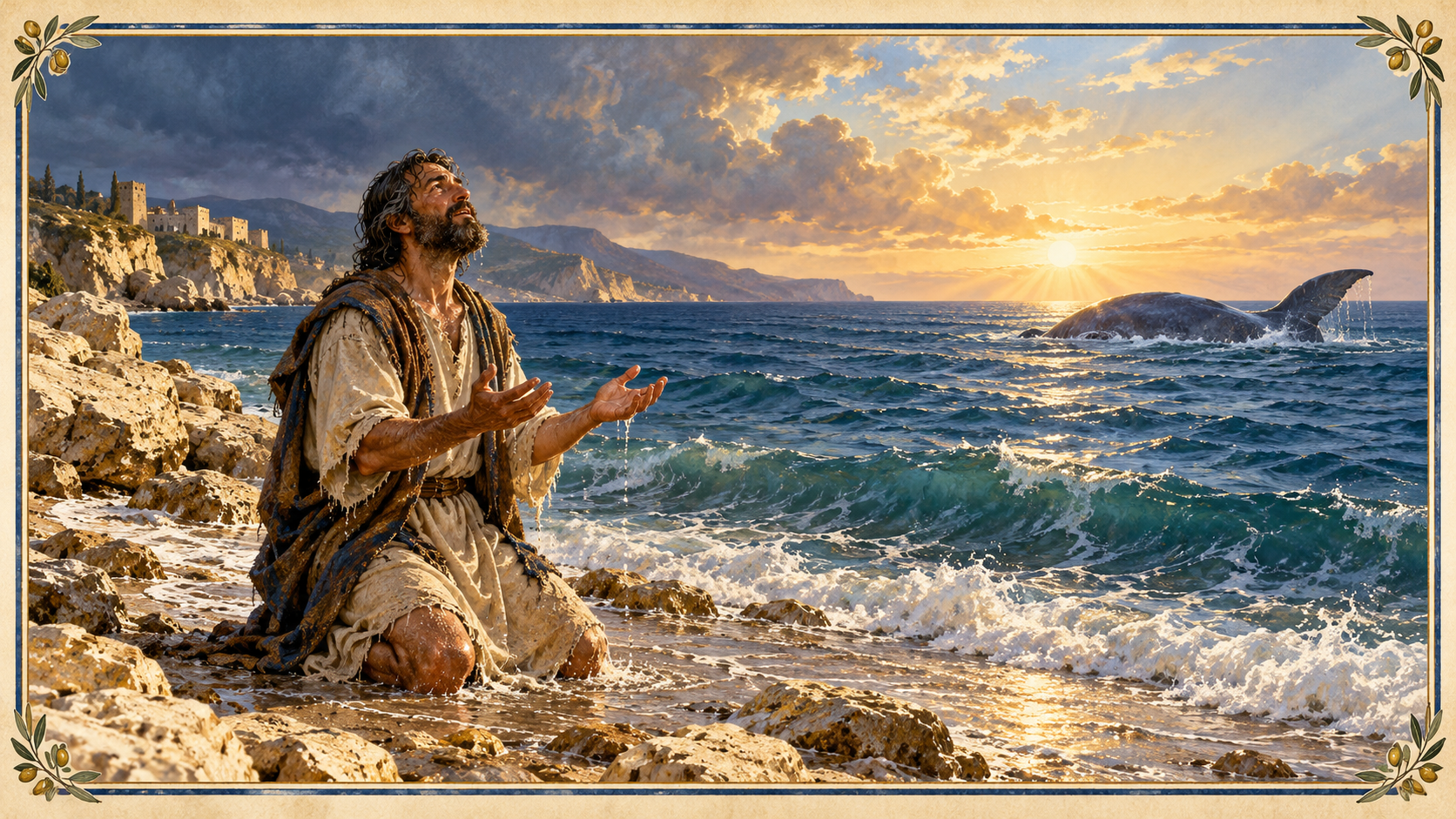
When asked for a sign, Yeshua pointed to this same prophet who prayed from the belly of the great fish.
As Jonah spent three days and three nights in the great fish, Yeshua said the Son of Man would spend three days and three nights in the heart of the earth (Matthew 12:39–40).
The prophet associated with Israel’s restoration became the sign pointing toward Yeshua’s death and resurrection.
Jonah’s story carries restoration, deliverance, repentance, and mercy. And the prophet himself knew affliction.
“I cried by reason of mine affliction unto the LORD, and he heard me” (Jonah 2:2, KJV).
God saw Israel’s affliction. He also heard Jonah’s cry from the depths. The prophet who spoke of restoration for his people experienced deliverance himself—and carried God’s warning to Nineveh, where repentance was met with mercy.
God restored Israel’s border, delivered Jonah from the depths, and spared Nineveh when its people turned from evil.
Israel’s affliction was not the end of Israel. The depths were not the end of Jonah. Nineveh’s wickedness did not have to be its final chapter. And the grave would not be the end of Yeshua.
The God who made the promise has the power to bring life from death—and to bring His people home.
Once upon a time, God made a promise.
God keeps His promise.
Epilogue: Back to the Water
Earlier, we stood with Israel at Solomon’s celebration of Sukkot. Then we heard Yeshua’s invitation on the last great day of that feast:
“If any man thirst, let him come unto me, and drink” (John 7:37, KJV).
There is another thread here.
The Jerusalem Talmud tells us that Jonah came to Jerusalem as a pilgrim and attended the water-drawing celebration. There, the Holy Spirit rested upon him. The sages draw a lesson from his experience: the Spirit rests upon a joyful heart (Sukkah 5:1). The Jewish Encyclopedia places that experience on the last day of Sukkot.
Jonah’s home was Gath-Hepher, in the north. Yet when he fled toward Tarshish, he boarded his ship at Joppa, well south of his hometown. That geography fits the tradition of his pilgrimage to Jerusalem, offering a possible connection between the festival and the journey that followed.
A prophet receives the Spirit amid the rejoicing over water. Later, Yeshua offers living water at that same festival—and John explains that He was speaking of the Spirit (John 7:38–39).
The connection does not require us to supply a chronology the texts leave unstated. The festival, the water, the joy, and the Spirit already bring these stories together.
Jonah would descend into the sea, cry out in affliction, and experience deliverance. Yeshua would point to Jonah as the sign of His own descent into death and resurrection.
And so this old story brings us back to the water—and to the God who hears, delivers, and shows mercy.
Two stories. One Book. One God.
Another Voice Telling the Story
I love the way Yehuda Meitav tells the story in this video. I’m sharing it here as a companion to my own reflection.
Watch Yehuda’s video on Facebook

For a closer look at the land, the maps, and the questions of justice surrounding God’s covenant, read the companion article, Before the Borders.
Sources:
San Remo Resolution, April 25, 1920
Mandate for Palestine, July 24, 1922
British report to the League of Nations concerning Palestine, 1922
Churchill White Paper, 1922
1 Chronicles 13:5, KJV
2 Chronicles 7:8, KJV
2 Kings 14:25–27, World English Bible
Amittai: Hebrew lexicon entries
Lebo-hamath: place study by Detlef Jericke
Syria Palaestina: historical overview and scholarly references
The name Syria: etymology and the Çineköy inscription; see also Robert Rollinger, “The Terms ‘Assyria’ and ‘Syria’ Again,” Journal of Near Eastern Studies 65 (2006): 283–287, https://doi.org/10.1086/511103.
Assyria, 1365–609 B.C., Metropolitan Museum of Art
Dan’el Kahn, “The History Leading Up to the Destruction of Judah”
Genesis 35:10–12, KJV; see Genesis 29–30 and 35:23–26 for Jacob’s sons, and Exodus for their descendants’ deliverance.