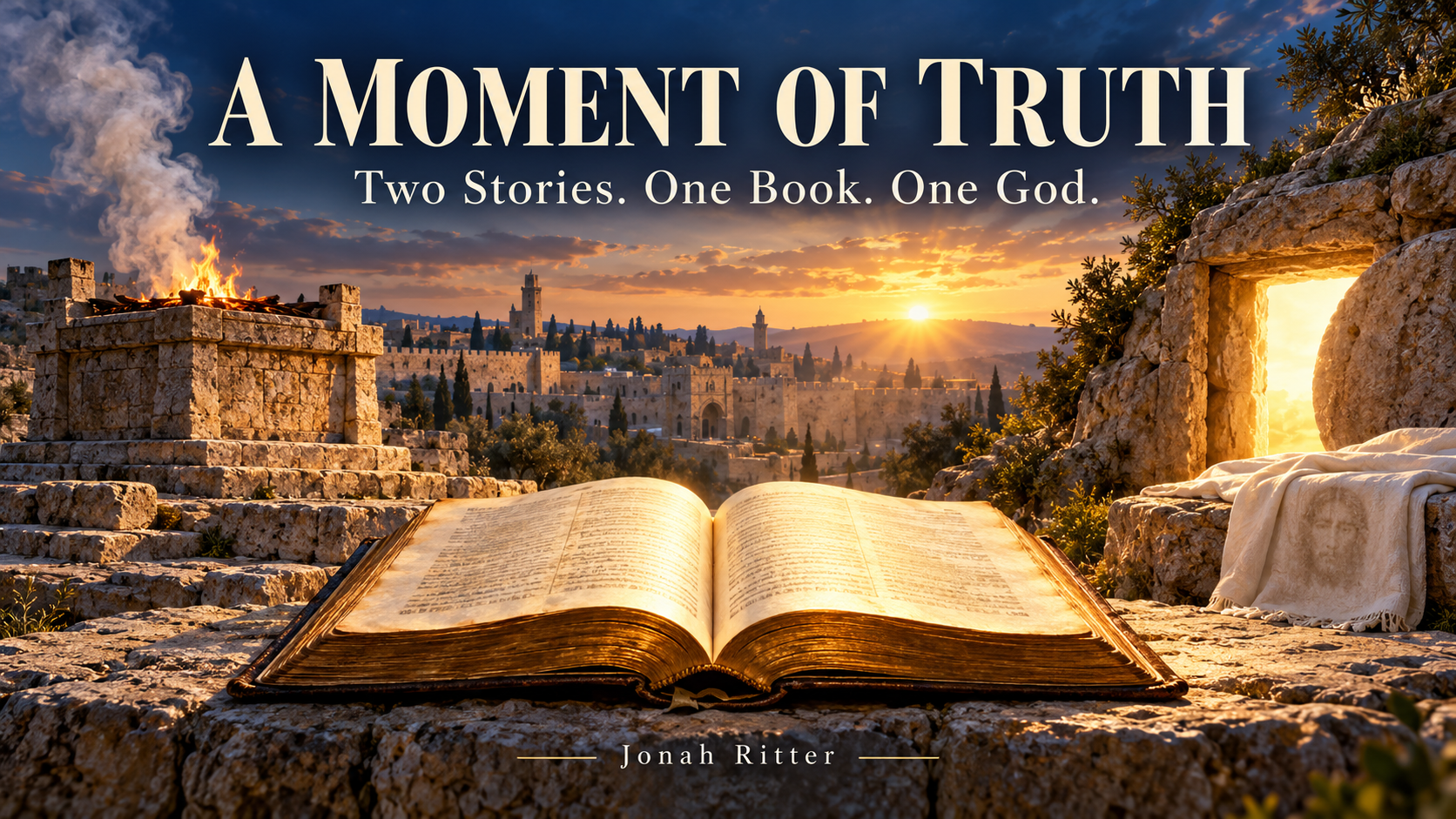
A Moment of Truth
Two Stories, One Book, One God
Finding truth in the Scriptures — Jonah
What would it mean if animal sacrifices began again in Jerusalem? Before considering that question, we must identify the claim at the heart of the New Testament.
Gospel means “good news.” At its heart is a claim that changes how we understand sacrifice and atonement: Yeshua died for our sins, was buried, and rose again.
The four books called the Gospels tell the story of Yeshua’s life, teaching, death, and resurrection. Paul identifies the central message of the gospel: Messiah died for our sins, was buried, and rose on the third day, according to the Scriptures (1 Corinthians 15:1–4).
The resurrection is the pivotal question underlying the New Testament’s claims. Paul states the consequence plainly: if Messiah has not been raised, preaching and faith are empty, and sins remain unforgiven (1 Corinthians 15:14–17).
Did Yeshua truly die for our sins, was He buried, and did He rise again? That is the basis for the “moment-of-truth” that awaits.
If Yeshua (Jesus) did not rise, the Christian claim of fulfillment loses its foundation. If He did, His identity and His once-for-all offering must shape how we understand temple sacrifices, the temple, and what remains to be fulfilled.
The basis of the question is what happened to Yeshua. The moment of decision I am identifying is when sacrifices start again: do we recognize those offerings as still needed for atonement, or recognize His offering as having fulfilled their atoning purpose?
The resurrection is the basis of the question. The restart of sacrifices is the moment of truth.
The question here concerns renewed sacrifices understood as necessary for atonement, since the Torah’s offerings serve several different purposes.
For Jews anticipating a rebuilt temple, the first offering would represent the restoration of a sacred service commanded in the Torah. For Jews who recognize Yeshua as Messiah, that same offering would raise a profound question: What remains to be accomplished through sacrificial blood if Messiah has already offered Himself once for all?
This is an observation drawn by placing the Scriptures alongside one another. The passages speak of sacrifice, a rejected cornerstone, living water, the nations, a desecrated temple, and finally a city whose temple is God Almighty and the Lamb. How do these pieces fit together?
The good news begins with fulfillment
Luke 24 brings the resurrection into the story of Israel. On the road to Emmaus, Yeshua explains, beginning with Moses and the Prophets, the things concerning Himself in the Scriptures (Luke 24:26–27). Later, He connects His suffering and resurrection with the proclamation of repentance for forgiveness to all nations, beginning at Jerusalem (24:44–47).
The good news is presented as the fulfillment of a story already unfolding in Israel’s Scriptures.
Leviticus 17:11 connects blood with life and atonement. Isaiah 53:5–6 describes a servant wounded for the transgressions of others, bearing their iniquity. At His final meal, Yeshua identifies His blood with the new covenant (Luke 22:20).
Hebrews develops the claim: His offering is once for all (Hebrews 10:10–14). Where forgiveness has been accomplished, there is no longer an offering for sin (10:18).
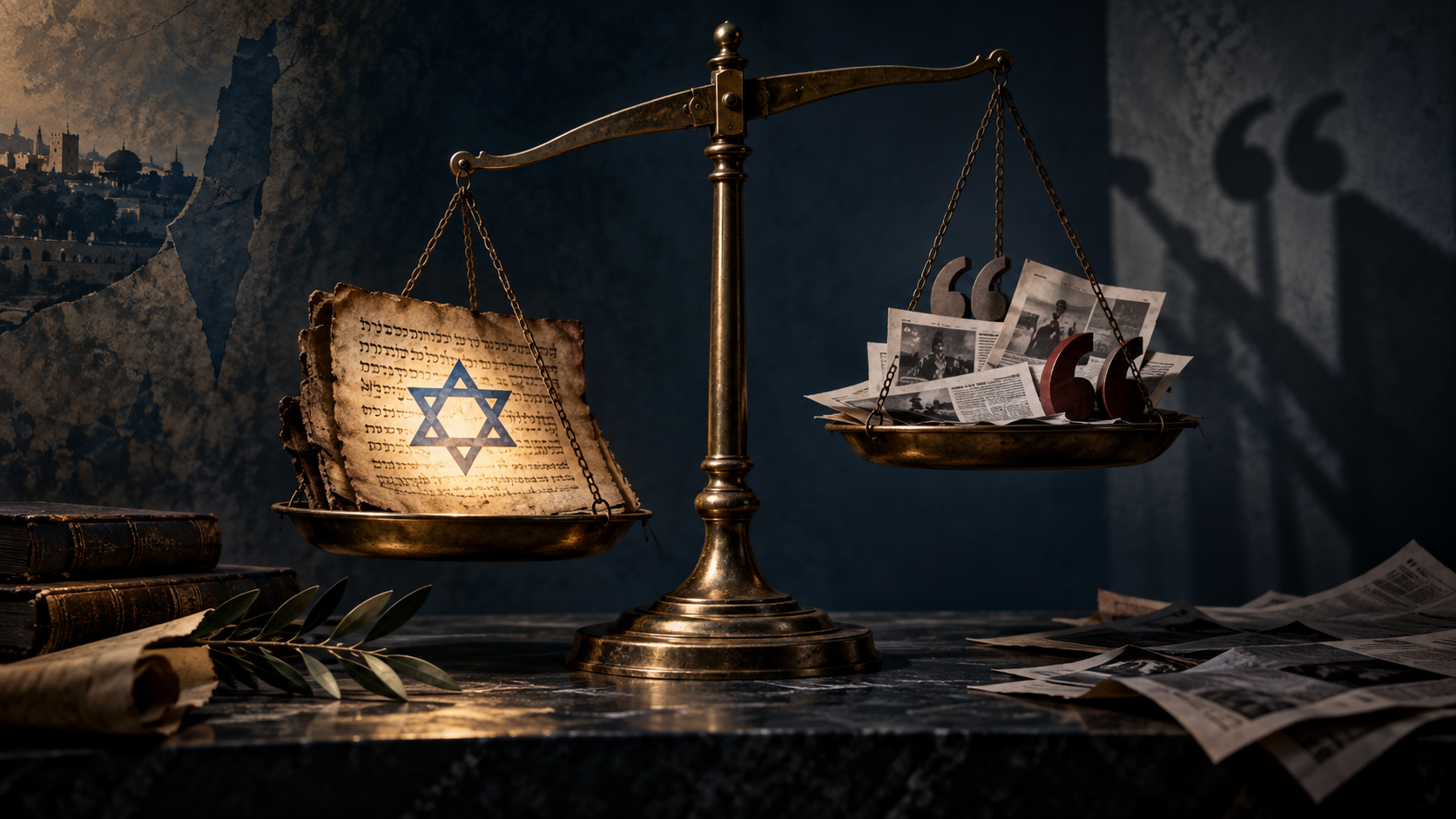
If sacrifices for sin resume, Numbers and Hebrews will stand before the reader together: the prescribed offerings and the claim that Messiah’s offering has fulfilled their atoning purpose.
The cornerstone and the temple
Psalm 118:22 describes the rejected stone becoming the chief cornerstone. Yeshua applies that passage to Himself in Luke 20:17. Ephesians 2:19–22 presents Him as the cornerstone of a holy temple, with His people built together into a dwelling place for God by the Spirit.
Revelation brings the imagery to an extraordinary conclusion. John sees no temple building in the New Jerusalem, because God Almighty and the Lamb are its temple (Revelation 21:22).
The physical laying of a new cornerstone would therefore carry symbolic weight for a believer in Yeshua. Yet the act alone would not settle the theological question. The purpose of the building—and the meaning assigned to its sacrifices—would matter.
Before the Temple Is Completed
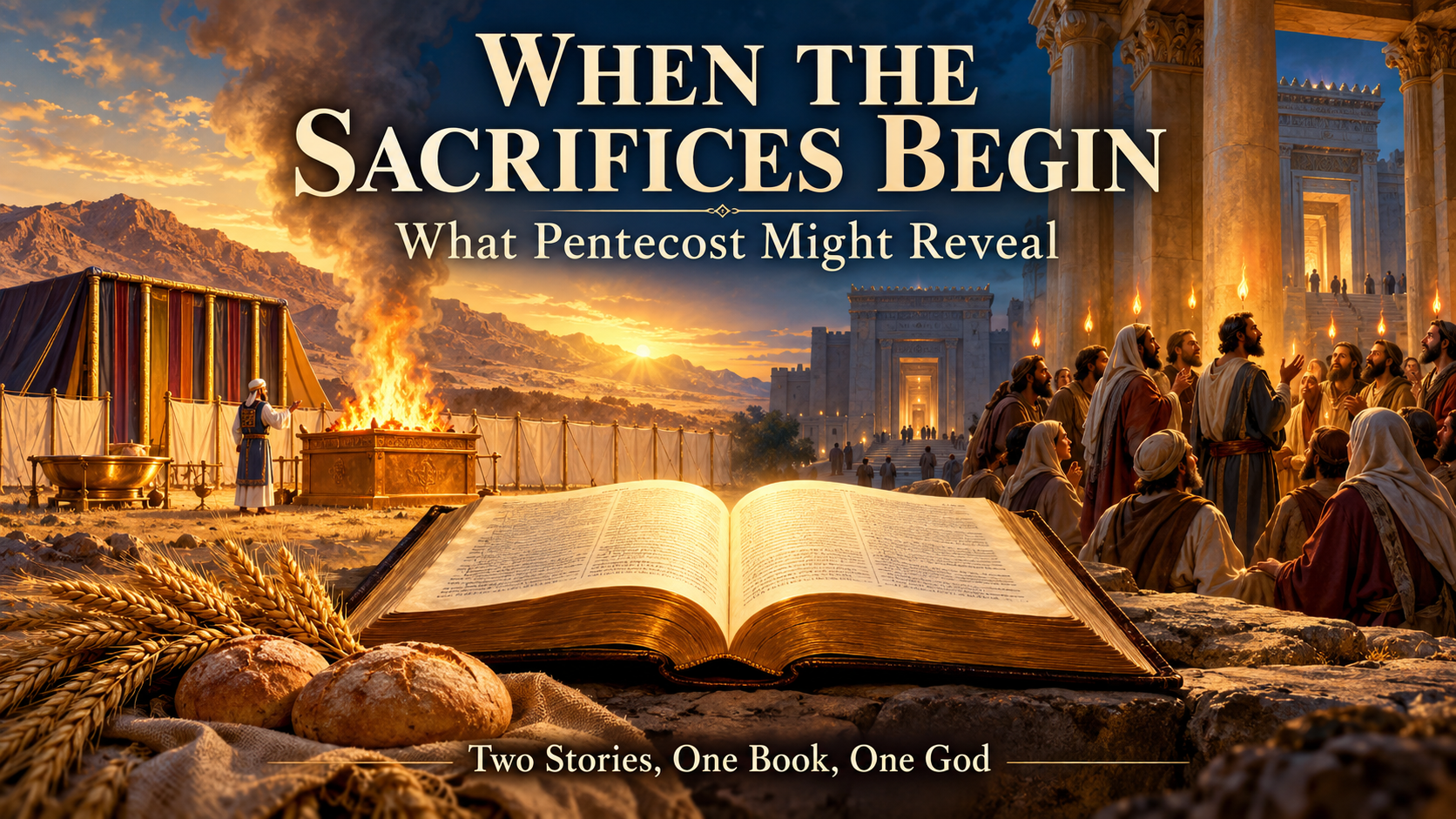
The Temple Institute’s stated goal includes rebuilding the Holy Temple and renewing its sacred service. Its official FAQ says that it is building a stone altar offsite to move to its proper location on the Temple Mount when the opportunity arrives. It explicitly states that offerings can begin before the temple building is constructed, once the altar stands in its proper place.
Placing the altar in its proper location would also anchor the location of the intended temple—even before the building stands.
This matters to the argument: the beginning of sacrifices could precede the completion of the temple. Ezra 3:6 records a similar sequence during the Second Temple’s rebuilding: sacrifices began before the temple’s foundation was laid.
The Institute’s stated condition also raises a question of location. Proceeding would require a determination of where the altar properly belongs. Its FAQ implies confidence that this location can be established; the statement alone does not demonstrate that every detail of the temple’s footprint has been conclusively settled or universally accepted. What evidence establishes the altar’s precise location, and which rabbinic authorities accept that determination? Those remain questions to examine. But the point remains: If the Temple Institute begins sacrifices at that altar, it would indicate that its authorities have determined the sacred location they consider proper for the intended temple.
The FAQ supplies no starting date or construction duration, nor does it announce a coordinated altar-installation and temple-cornerstone ceremony. A reported cornerstone ceremony in 2009 concerned an altar at Mitzpe Yericho, not the foundation of a new temple on the Mount.
Yet the Institute’s position makes the central question concrete. The event to watch would be the resumption of actual sacrificial worship at the intended sacred location. A completed building would not be necessary for that moment to arrive.
For those who recognize Yeshua as Messiah, the first sacrifice would bring the Torah’s prescribed offerings and Hebrews’ claim of fulfillment into immediate focus. That is the moment of truth this article asks us to consider.
Seventy bulls and the nations
Numbers 29:12–34 prescribes seventy bulls across the seven days of Sukkot. Together with fourteen rams, ninety-eight lambs, and seven goats, that makes 189 festival animals, in addition to regular daily offerings and any additional Shabbat offerings. These offerings have different functions; they are not all designated as sin offerings.
Jewish tradition associates the seventy bulls with the seventy nations (Babylonian Talmud, Sukkah 55b). Numbers gives the sacrificial count; the explanation concerning the nations comes from the rabbinic interpretation.
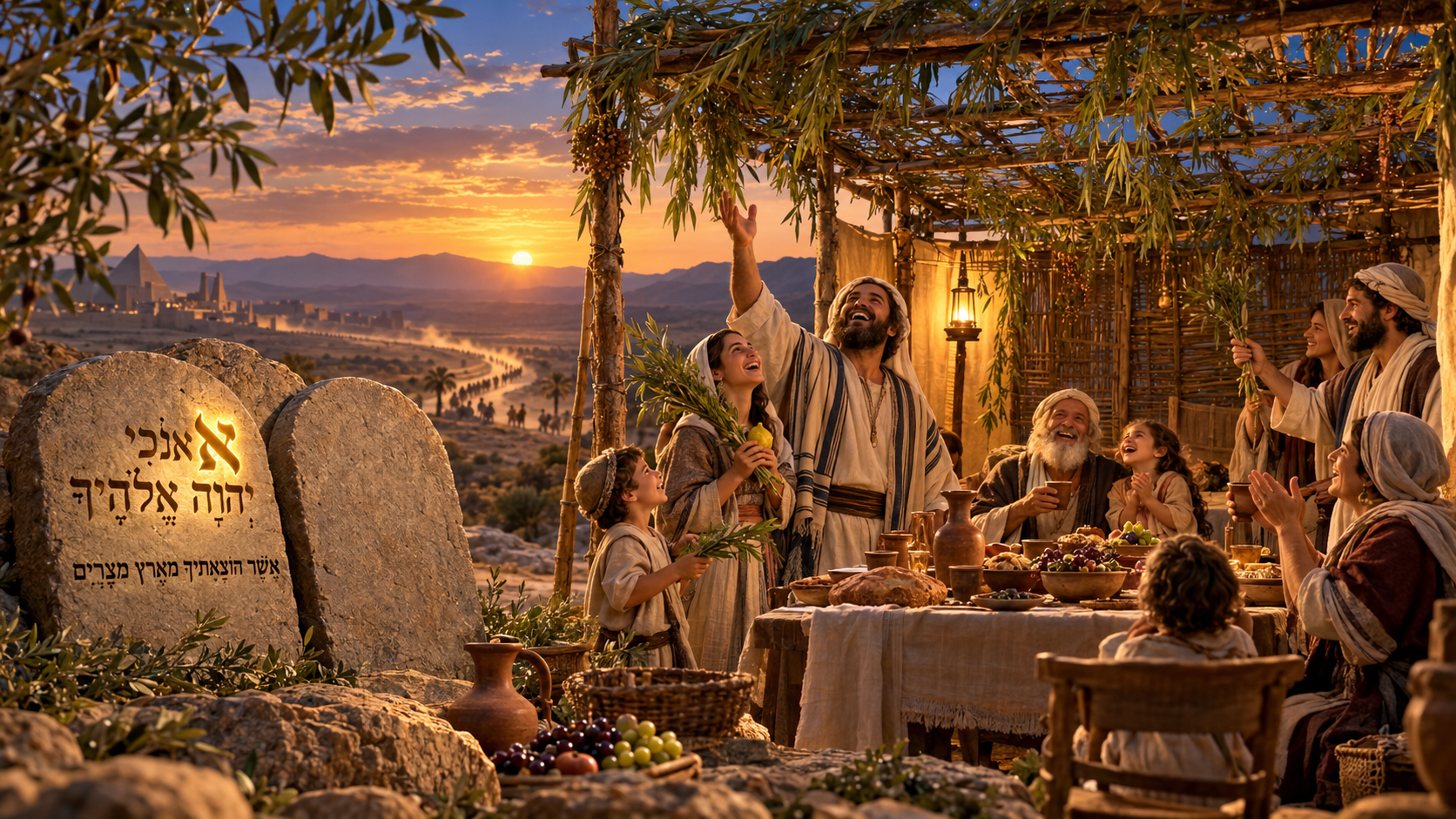
Revelation 7 presents a multitude from every nation, tribe, people, and language standing before God and the Lamb. They hold palm branches and proclaim salvation (7:9–10). Their robes have been washed in the blood of the Lamb (7:14), and God shelters them with His presence (7:15)—language carrying the image of spreading His tent over them.
The shared imagery is striking: the nations, palms, salvation, and divine shelter.
Sukkot brings the nations into view through seventy bulls. Revelation brings the nations before God through the Lamb. Revelation does not explicitly equate the Lamb with those seventy bulls, but the passages invite comparison.
One Bull: Alef, Echad, and Love
Shemini Atzeret follows with one bull, one ram, seven lambs, and one goat: ten additional festival animals (Numbers 29:35–38). Sukkah 55b interprets the single bull in relation to Israel, using the image of a king inviting his beloved companion to a small, intimate meal after a larger gathering.
Seven lambs: Seven often suggests completeness in biblical patterns.
One ram and one goat: The one ram recalls the binding of Isaac: Rashi connects the festival rams with the ram Abraham offered in his son’s place (Genesis 22:13; Rashi on Numbers 28:19). Alongside it, the goat is designated a sin offering (Numbers 29:38), bringing sacrifice, substitution, and atonement into the discussion.
One bull: The single bull invites a further Hebrew meditation. The ancient ancestor of Alef (א) was an ox-head image. Alef is the first letter of the Hebrew alphabet, and its numerical value is one. The festival bull is called par in the Torah; the connection with Alef comes through the letter’s ancient image and numerical value.
One Bull. Alef. One.
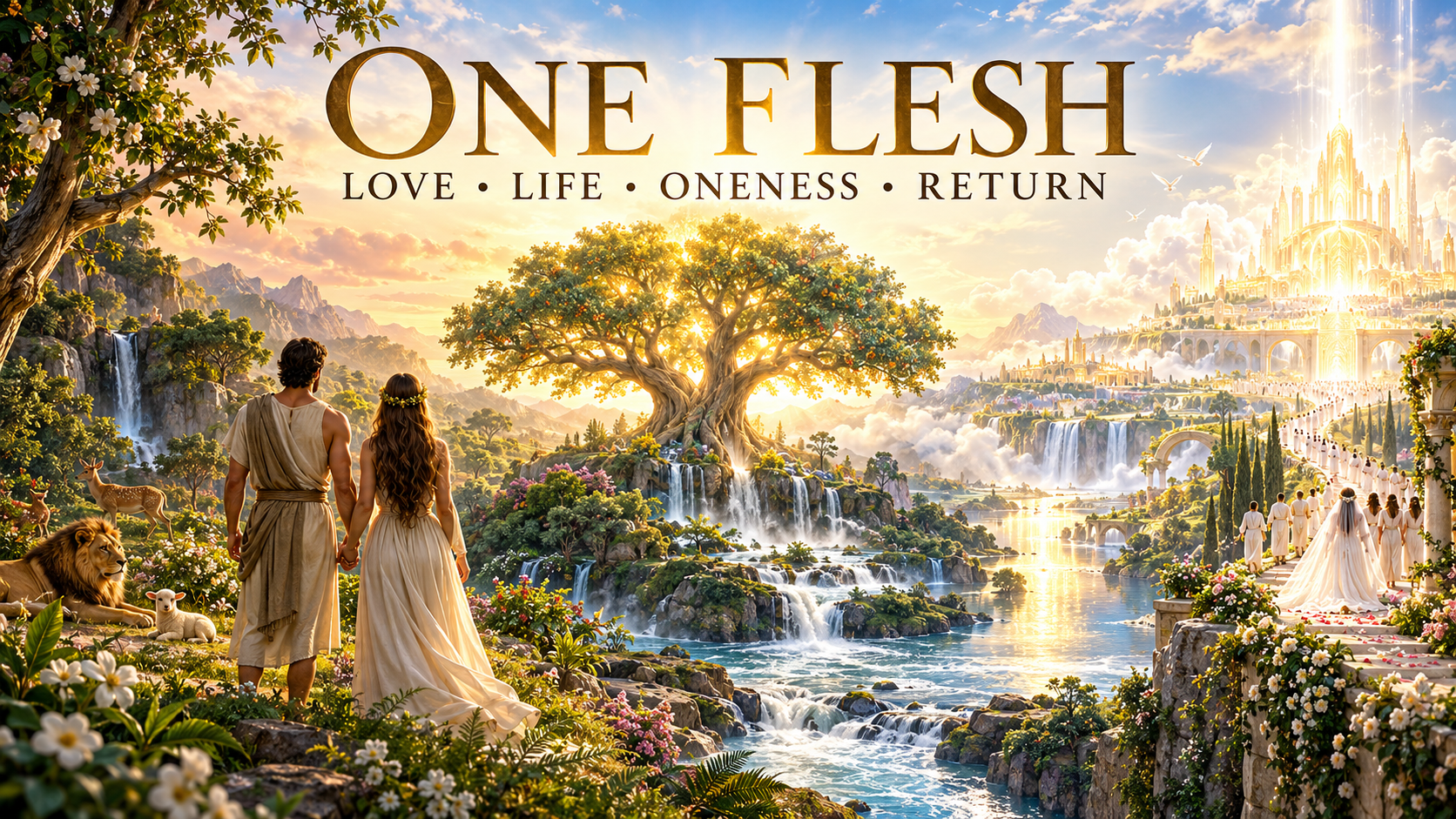
The Hebrew word echad (אחד) means “one.” Its letters total thirteen: Alef, one; Chet, eight; Dalet, four. Ahavah (אהבה), “love,” also totals thirteen: Alef, one; Hey, five; Bet, two; Hey, five. Jewish teaching draws a symbolic connection between the shared values of oneness and love.
The Shema declares that the LORD is echad (Deuteronomy 6:4). The next verse calls us to love Him with all our heart, soul, and strength (6:5). Oneness and love stand together in the Torah itself, before we ever consider their numerical relationship.
Now return to the king and his beloved companion. After the great gathering comes the intimacy of remaining together. The seventy bulls bring the nations into view; the single bull brings Israel’s beloved relationship with God into focus.
One Bull. Alef. Echad. Ahavah. Oneness and Love.
This is the meditation I draw from the letters and the festival imagery, extending the Talmud’s picture of intimate fellowship. It is not an explicit explanation of the offering in Numbers, nor does the shared numerical value by itself establish a doctrine about Messiah.
For a reader who recognizes Yeshua as Messiah, His prayer adds another resonance: that His followers may be one, and that the Father’s love may be in them (John 17:21–26). Here, too, oneness and love belong together. The comparison invites us to consider the relationship toward which the sacred imagery points.
Alongside the sacrifices stands another festival image: water.
The water-drawing and water-pouring ceremony belonged to Sukkot. The prayer for rain associated with Shemini Atzeret is a distinct observance.
On “the last day, that great day of the feast,” Yeshua invites the thirsty to come to Him and drink (John 7:37). Whether this was Sukkot’s seventh day or Shemini Atzeret is debated, but His invitation places Him at the center of the festival’s living-water imagery. John explicitly explains the promised living water in relation to the Spirit whom believers would receive.
Now place three passages together:
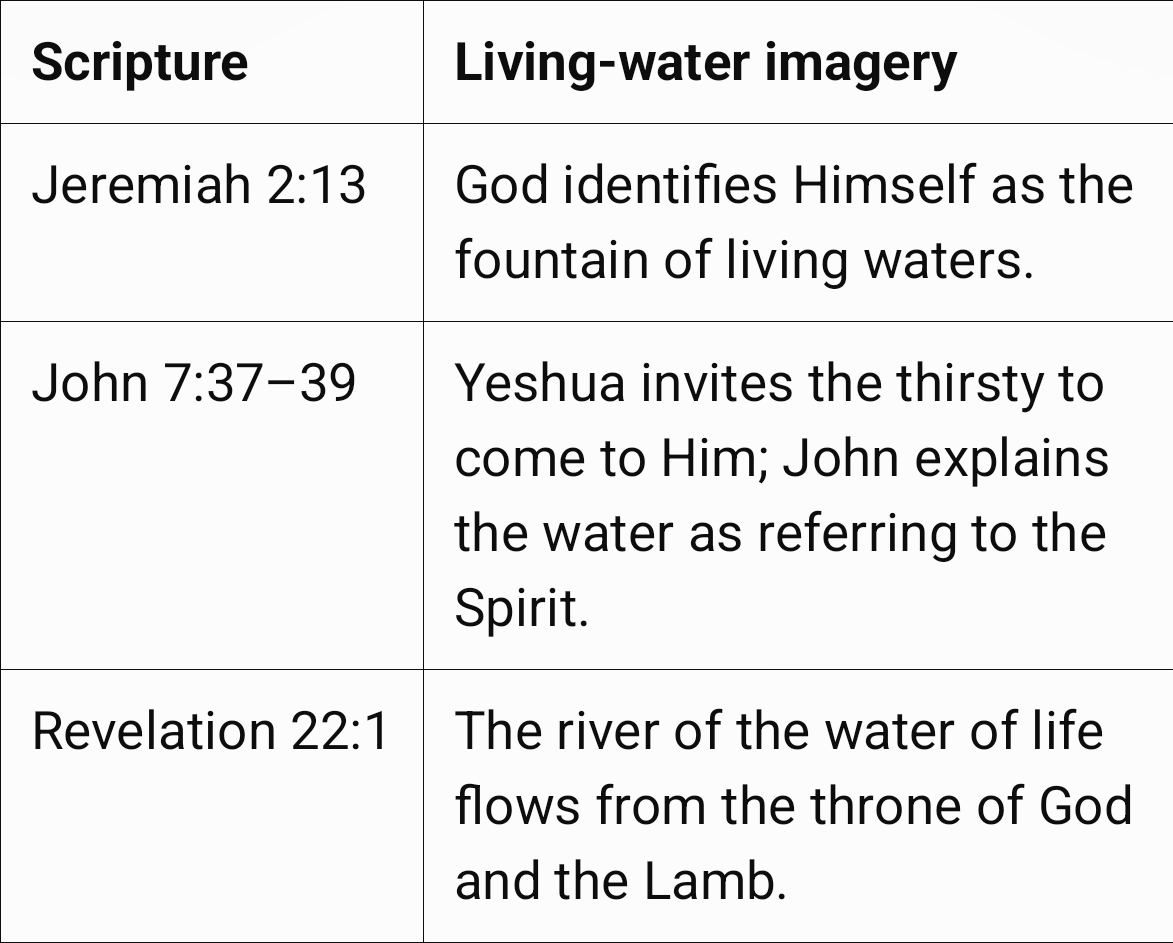
Yeshua presents Himself as the source from whom the thirsty may drink. Revelation places that life-giving river at the throne of God and the Lamb. Connecting Shemini Atzeret’s single bull specifically with Yeshua would be a further symbolic interpretation; the water connection is more directly expressed in the texts.
Fulfillment—or imitation?
Another set of passages introduces tension.
Daniel 9:27 describes sacrifice and offering being brought to an end halfway through a “week.” Many Christians interpret this as a future seven-year period, though the passage’s chronology and the identity of its central figure are disputed.
Paul describes a man of lawlessness taking his seat in the temple of God and proclaiming himself to be God (2 Thessalonians 2:3–4). Paul does not identify him as a high priest. Understanding this as a future rebuilt Jerusalem temple, and connecting this figure with Daniel’s, are interpretive choices rather than details explicitly supplied by both passages.
Yeshua also warns of false messiahs and false prophets capable of profound deception (Matthew 24:24).
Read within that future-temple framework, a possibility emerges: could someone stop the sacrifices and present the act as evidence of his own messianic authority? Could an apparent resemblance to Yeshua’s fulfillment become part of a counterfeit claim?
That is my proposed connection. Scripture does not explicitly say that ending sacrifices is an imitation of Yeshua.
The distinction would lie in what the act means. Yeshua gives Himself for others. The figure Paul describes exalts himself and claims God’s place. Moreover, Yeshua did not physically shut down the altar during His earthly ministry; temple sacrifices continued after His resurrection. Hebrews’ claim concerns the sufficiency of His offering.
An outward resemblance would therefore require careful examination. Who is claiming authority? On what basis? And does the claim agree with the Scriptures?
The Abomination: a turning point
The abomination introduces a question of timing as well as identity. In Matthew 24:15–16, Yeshua refers to Daniel’s abomination of desolation standing in the holy place. His instruction has an unmistakable trigger: when it is seen, those in Judea are to flee.
Paul likewise gives an order of events. Concerning the Day of the Lord, he says the rebellion must occur and the man of lawlessness must be revealed (2 Thessalonians 2:1–4). The resumption of sacrifices is not itself Paul’s stated marker. The revealing of the lawless one is.
Within the future-temple reading, restored sacrifices would set the stage; desecration and the claim to deity would mark a decisive development. That sequence does not supply a calendar date, but neither does it leave the reader without something to recognize.
The setting makes the act almost unbearably ironic. A man claims God’s place in the sanctuary of the God who gave the Torah. The temple’s worship, priesthood, and offerings are governed by that Torah. Yet the lawless one uses this very place to proclaim himself God.
Profound Irony: In a sanctuary governed by “the Law,” the lawless one enthrones himself.
“Lawlessness” describes rebellion and wickedness; the word alone does not establish that he obeys zero individual Torah commandments. His claim nevertheless defies its foundational demand: no other gods before the LORD (Exodus 20:3). Whatever religious appearance he maintains, his self-exaltation betrays the God the temple exists to honor.
The sacred setting could make the claim appear credible. It also makes the hypocrisy more glaring. The appearance of obedience becomes the setting for an extraordinary act of defiance.
The generation seeking a sign
Yeshua speaks of an “evil and adulterous generation” asking for a sign, and points to the sign of Jonah (Matthew 12:39–40). He connects Jonah’s three days in the fish with the Son of Man’s time in the heart of the earth. Luke 11:29–32 also places Jonah and Nineveh before that generation, emphasizing the Ninevites’ response and the presence of someone greater than Jonah.
The word “adulterous” recalls the prophets’ portrayal of covenant unfaithfulness: a people turning from God toward another allegiance. The accusation is directed to the generation addressed in the passage; it is not a blanket description of Jewish people.
Luke 24 brings Yeshua’s death and resurrection into view as the fulfillment of Israel’s Scriptures. The sign points toward the Messiah who gives His life and rises. Paul’s temple figure claims divine status by exalting himself.
Here is the connection I am observing: if a later claimant appears in a sacred setting, stops sacrifices, and claims God’s place, could his apparent authority draw attention away from the sign Yeshua already gave?
Matthew does not explicitly tie the sign of Jonah to the future revealing of the lawless one. That relationship is an interpretation offered for consideration. But placing the texts together sharpens the question of recognition: what distinguishes the Messiah who gives Himself from the claimant who glorifies himself?
The timing tension has two parts: a sign already given, and a rebellion still to be recognized within this reading of prophecy.
A “witness” preserved in linen?
The Shroud of Turin and the Sudarium of Oviedo bring a possible physical witness into this story. John 20:5–7 describes linen burial cloths and a separate head cloth. That passage does not identify the surviving relics, but it gives us a scriptural reason to examine them.
STURP reported blood components and an image of a scourged, crucified man whose image-forming process remained unexplained. Later research has offered evidence supporting antiquity and arguments for authenticity, while the medieval radiocarbon result remains part of the debate. For me, the cumulative evidence is compelling: I understand the Shroud as a miraculous witness to Yeshua’s resurrection. That is my conclusion, rather than a finding shared by every researcher.
I suspect these cloths will receive renewed attention if sacrifices resume in Jerusalem. That is an expectation, not a prediction supplied by Scripture. But the convergence would be striking: fresh sacrificial blood at an altar, alongside cloths that may preserve testimony to the sacrifice Christians believe accomplished atonement once for all.
In my reading, this gives the sign of Jonah another dimension—a possible witness remaining from Yeshua’s burial and resurrection. The central question still concerns the event itself: did He rise, and what would that mean for the offerings beginning again?
The First Offering: a moment of truth
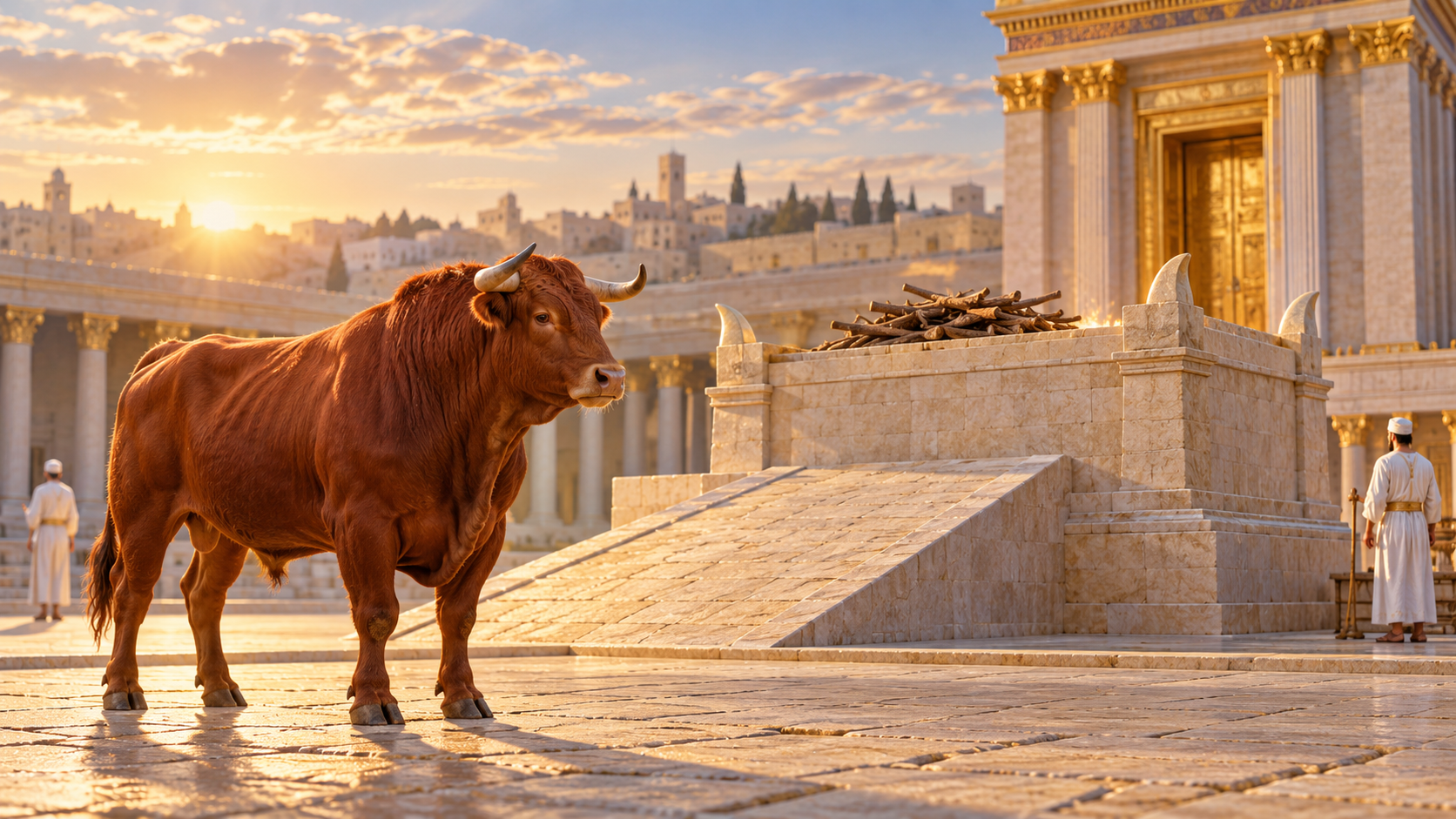
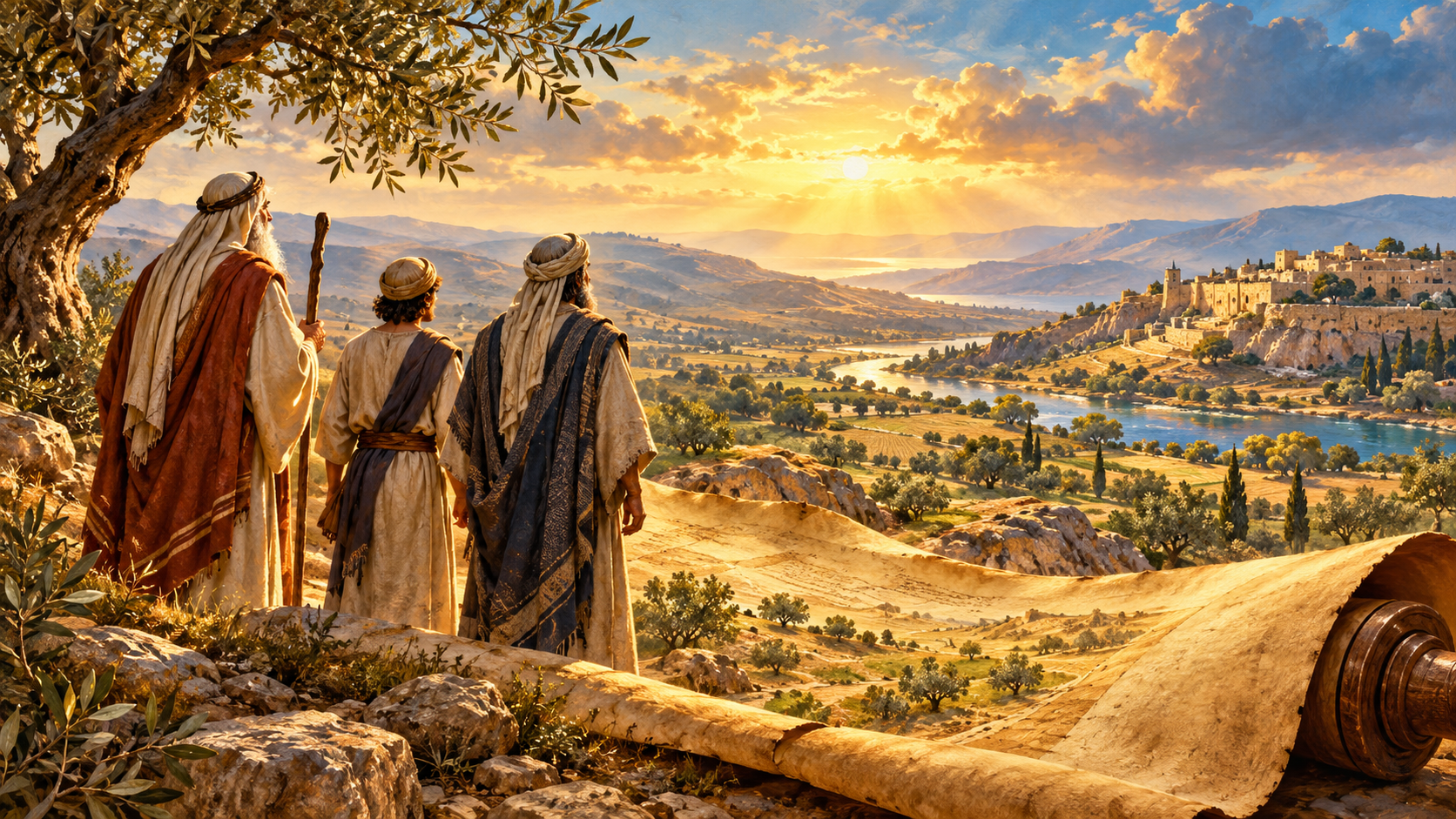
Illustration of an envisioned temple scene.
Yeshua’s warning that no one knows the day or hour concerns His coming (Matthew 24:36). An unknown construction timetable is a different uncertainty. Neither the installation of an altar nor the beginning of sacrifices would, by itself, establish a date for His return.
The Temple Institute’s own stated position brings the question closer: offerings could begin when an altar stands in its proper place, before the temple building is constructed. If sacrifices begin again in Jerusalem, these passages will acquire a startling immediacy. Numbers prescribes the offerings. Hebrews declares Messiah’s offering sufficient, once for all. Daniel describes sacrifices being stopped. Paul describes someone taking his seat in God’s temple and proclaiming himself God.
The seventy bulls bring the nations into view. The single bull invites us to consider the intimacy of the beloved companion. Alef, echad, and ahavah bring oneness and love into that meditation. At Sukkot, Yeshua invited the thirsty to come to Him. In Revelation, the nations stand before the Lamb, and living water flows from the throne of God and the Lamb. There, God and the Lamb are themselves the temple.
Now, consider the first animal brought to a restored altar:
For some, that offering would mark the long-awaited restoration of sacred worship. For those who recognize Yeshua as Messiah, it would raise the question of what remains to be accomplished through sacrificial blood.
That first sacrifice would be a moment of truth: a physical act bringing different understandings of Messiah, sacrifice, and fulfillment into sharp focus. It would not itself establish a scriptural deadline for belief or a date for Yeshua’s return. Its significance would lie in the question it makes unavoidable: what do we believe God has already accomplished, and what do we believe remains to be done?
And if someone later takes his place in that sanctuary and proclaims himself God, the irony would become the crisis: the lawless one claiming supreme authority in the house where obedience to God is supposed to govern everything.
Would the holiness of the setting persuade people to accept the claim? Or would the Torah itself expose it?
The sign of Jonah, the once-for-all offering, the warning of an abomination, and the revealing of the lawless one would stand alongside one another. The question would concern both what is happening and whom people recognize.
Beneath it all remains the claim that makes the news good: Yeshua died for our sins, was buried, and rose again. If He did not rise, Paul says the faith loses its foundation. If He did, His offering and His identity must shape how we understand what is happening at the altar. My reading of the Shroud brings a possible physical witness into that inquiry; the gospel’s central claim remains the event itself.
The resurrection is the basis of the question. The restart of sacrifices is the moment of truth: are offerings still needed for atonement, or has Yeshua fulfilled their purpose through His once-for-all sacrifice?
For my fellow Jews, this is a decision about whom we recognize as Messiah. We do not have to stop being Jews. We do have to examine the Scriptures and decide what we believe God has accomplished through Yeshua.
Two Stories, One Book, One God.
When the sacrifices begin, what will we believe we are witnessing?
A Moment of Truth.
Scripture and source references
Sacrifice and fulfillment: Leviticus 17:11; Isaiah 53:5–6; Luke 22:20; Luke 24:26–27, 44–47; Hebrews 10:10–18.
The gospel and the stakes of resurrection: 1 Corinthians 15:1–4, 14–17.
Burial cloths and the separate head cloth: John 20:5–7.
STURP’s findings: A Summary of STURP’s Conclusions, 1981. These conclusions concern the Shroud’s image and stains, rather than an established identification of Yeshua or proof of resurrection.
Radiocarbon results: Damon and colleagues, “Radiocarbon dating of the Shroud of Turin,” Nature 337 (1989), 611–615.
Later statistical examination: “Statistical and Proactive Analysis of an Inter-Laboratory Comparison: The Radiocarbon Dating of the Shroud of Turin” (2020).
Conditional Bayesian assessment of authenticity: Tristan Casabianca, “Systematic Evaluation of Recent Research on the Shroud of Turin,” Theology and Science, published online December 2024. The 98.78% result assumes equal starting probabilities for authenticity and non-authenticity, assigned evidence weights, and—in one version—independence among eighteen propositions. Casabianca cautions that these choices affect the outcome; a 1% starting probability yields approximately 45% in one version. See the Bayesian analysis and Table 1.
Initially skeptical Jewish participants and Schwortz’s own account: Barrie Schwortz, “Enough!”. Schwortz distinguishes his acceptance of the artifact from conversion to Christianity.
X-ray evidence compatible with antiquity: Liberato De Caro and colleagues, “X-ray Dating of a Turin Shroud’s Linen Sample,” Heritage 5 (2022), 860–870. The approximately 2,000-year interpretation depends on specified historical temperature and humidity assumptions.
Cornerstone and temple: Psalm 118:22; Luke 20:17; Ephesians 2:19–22; Revelation 21:22.
Festival offerings: Numbers 28:9–10; Numbers 29:12–38.
Seventy nations and the single bull: Babylonian Talmud, Sukkah 55b.
Oneness and love: Deuteronomy 6:4–5; John 17:21–26.
Alef’s ancient ox-head image and numerical value: Encyclopaedia Judaica, “Alef,” via Jewish Virtual Library.
Echad and ahavah, each with the numerical value thirteen: Chabad, “Transformation Through Love”.
Nations, palms, shelter, and the Lamb: Revelation 7:9–17.
Living water: Jeremiah 2:13; John 7:37–39; Revelation 22:1–2.
Desecration, deception, and watchfulness: Daniel 9:27; Matthew 24:15, 24, 36, 42–44; 2 Thessalonians 2:3–4.
The sign of Jonah and the generation seeking a sign: Matthew 12:38–42; Luke 11:29–32.
Torah and the claim to deity: Exodus 20:3; 2 Thessalonians 2:1–4.
Sacrifices preceding a temple foundation: Ezra 3:6.
The Institute’s stated position: Temple Institute—Frequently Asked Questions, particularly the question about building the temple offsite. Its published wording is not a dated construction schedule.
Historical altar cornerstone ceremony: “Work Begins on Holy Temple Altar,” Israel National News, July 2009.
This article places biblical texts and Jewish festival traditions alongside one another. The proposed future sequence and the counterfeit-Messiah connection are interpretations offered for consideration.