- A Song Carried Forward
Preface
I write to think. That is why I blog, and it is how this series began. I was reading Ha’azinu, Moses’ final song in the Torah, when I wrote The Song That Saves. Writing it led me to more questions about Moses’ final days, and those thoughts became After the Song. Then, on Shabbat Shuvah, the Sabbath of Return before the Day of Atonement, I found myself thinking about where the song went next. I had not planned a third piece. I wrote my way to it.
In the last book of the bible, Revelation, the people who have overcome the beast stand beside a sea of glass mingled with fire. They hold harps and sing “the song of Moses, the servant of God, and the song of the Lamb” (Revelation 15:2–3).
Hearing about Moses in a scene beside the sea with the survivors singing a song of deliverance carried my mind back to Exodus.
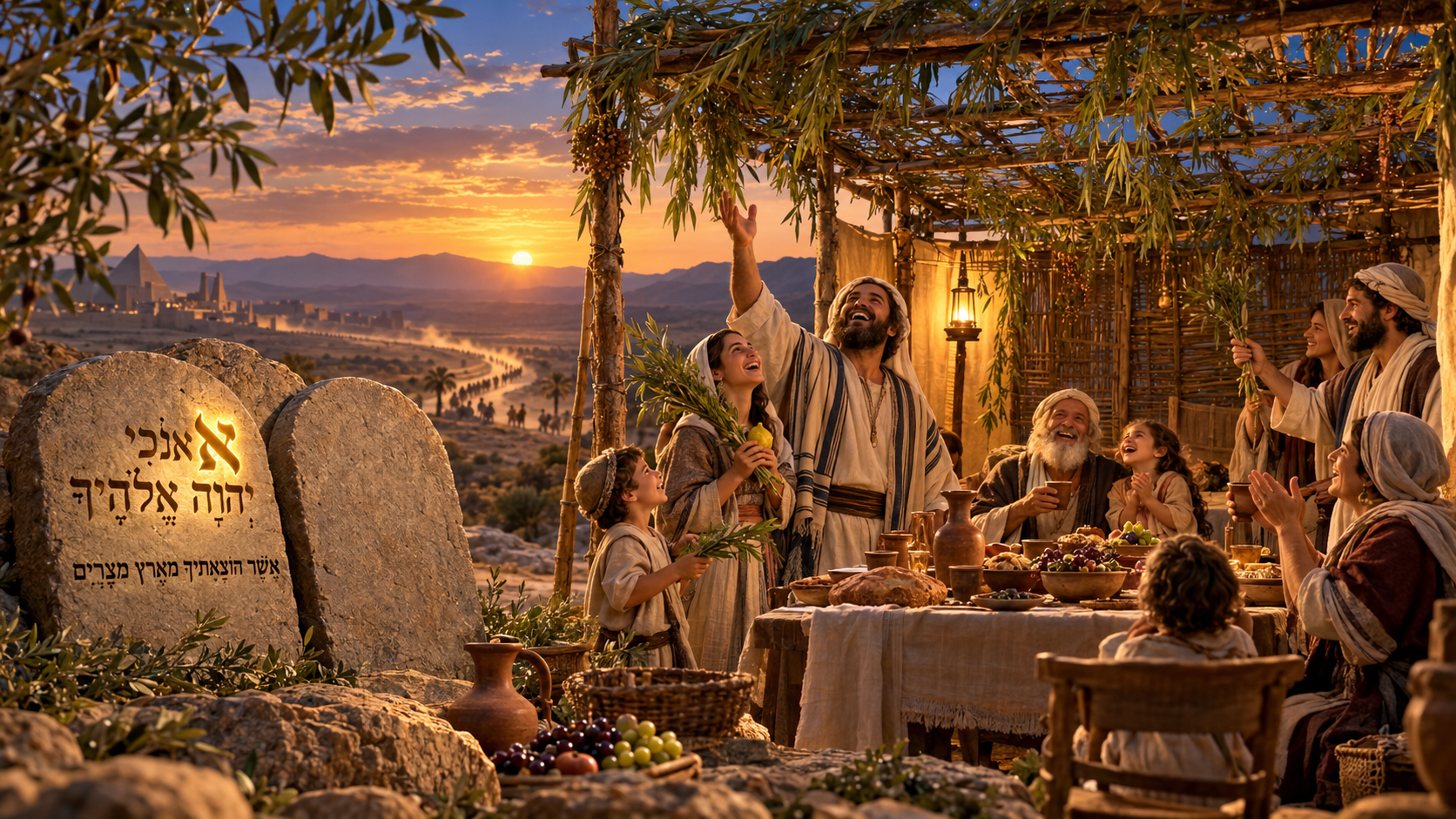
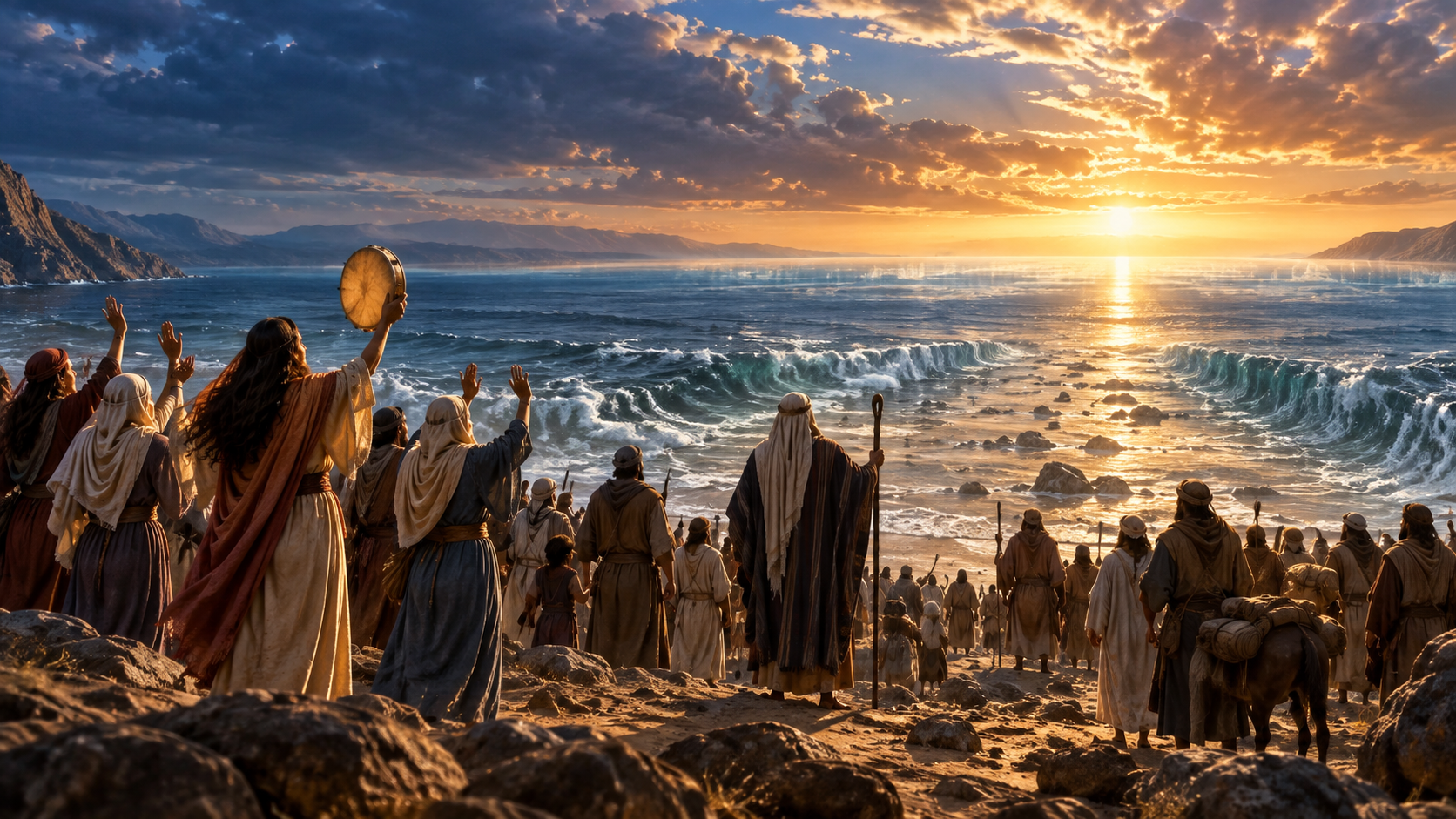
On the night of Passover, Moses told the elders to take the lambs and mark their doorposts with blood. God brought Israel out of Egypt and through the sea. Beside that sea, Moses and the children of Israel sang of their deliverance, and Miriam led the women in song (Exodus 12:21–23; 14–15). Passover Lamb. Deliverance. Sea. Song. When Revelation shows people standing beside another sea and singing of Moses and the Lamb, I hear that earlier story again.
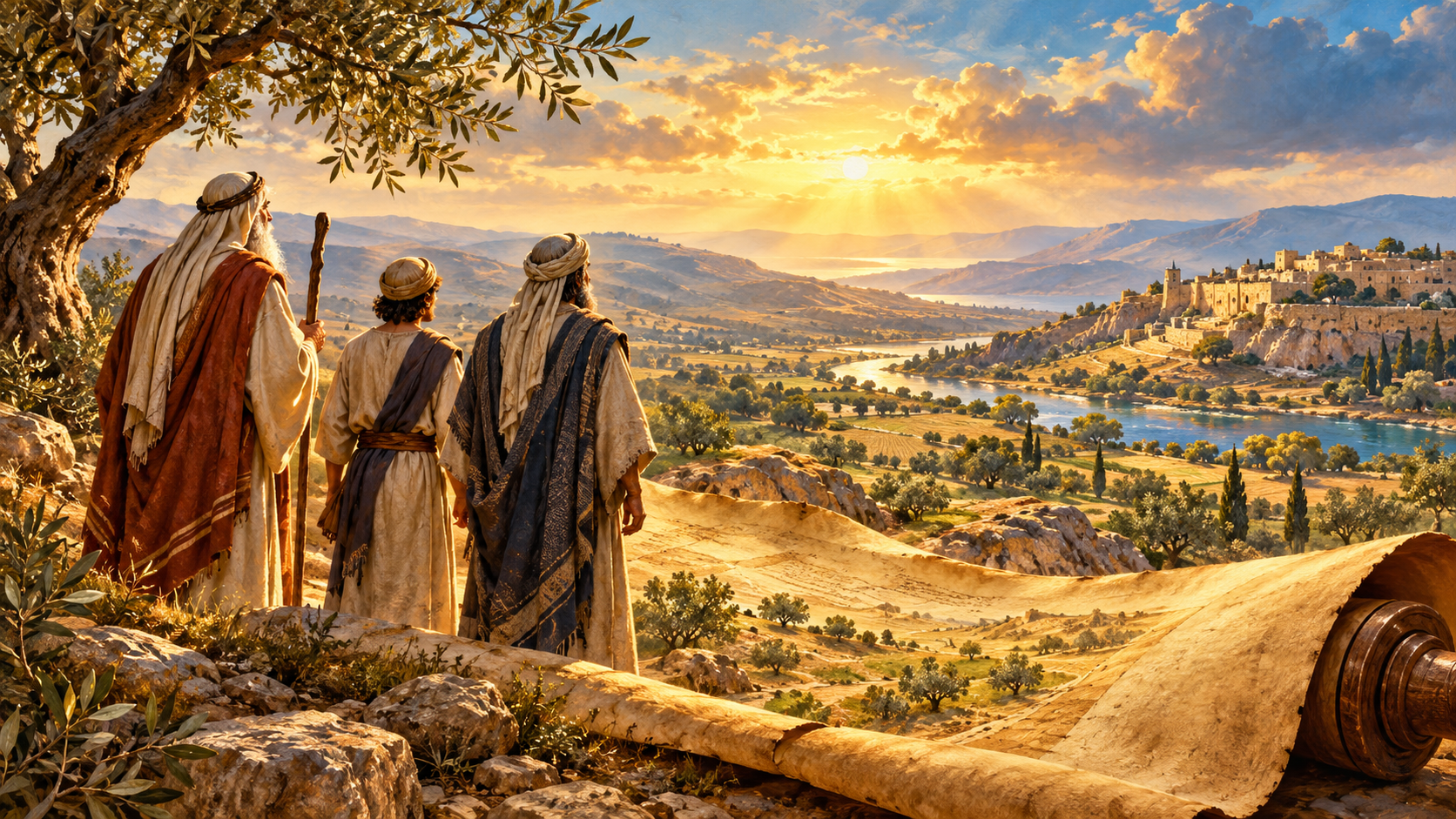
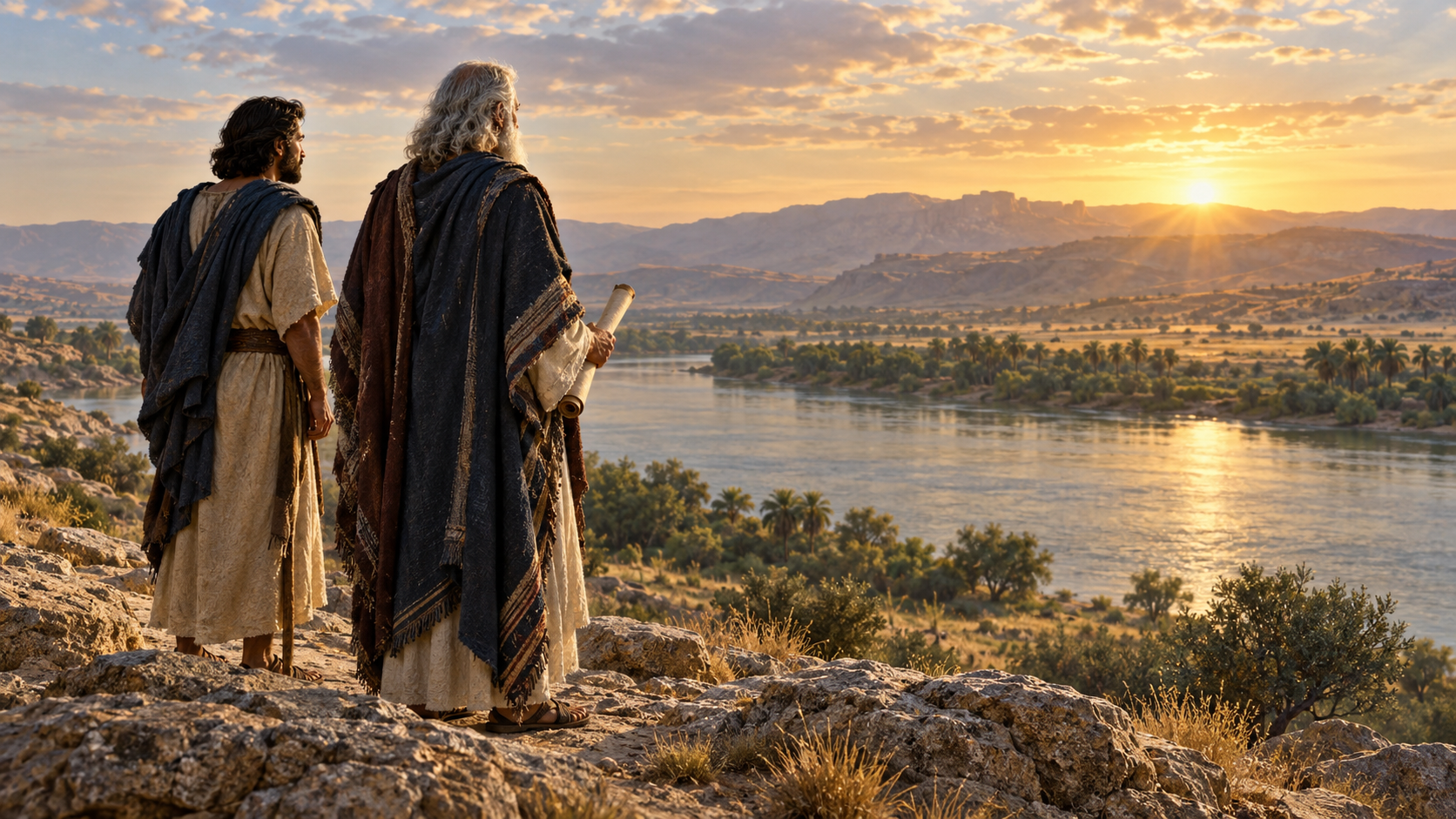
But the “Song at the Sea” was not the last song Moses gave Israel. Forty years later, the people were about to enter the land promised to their ancestors. Moses would see it, but he would not cross over with them. God told him:
“Now therefore write this song and teach it to the people of Israel. Put it in their mouths, that this song may be a witness for me against the people of Israel.” — Deuteronomy 31:19
First God put words in Moses’ mouth. Now God tells Moses to put a song in the mouths of the people of Israel. Moses gives them a song that can speak when he no longer can.
That song is Ha’azinu, in Deuteronomy 32. It tells the truth about Israel’s coming failures and remembers the God who carried them. It holds warning and judgment, but it does not end with Israel forgotten. God will vindicate His people.
Why give them a song? Because you love them, and you want them to remember.
We know how much a song can carry. We can hear a song we listened to long ago and remember more than its words. People and places return. So do old feelings. We recognize how much we did not yet understand. Decades have passed, but the song brings that time close again.
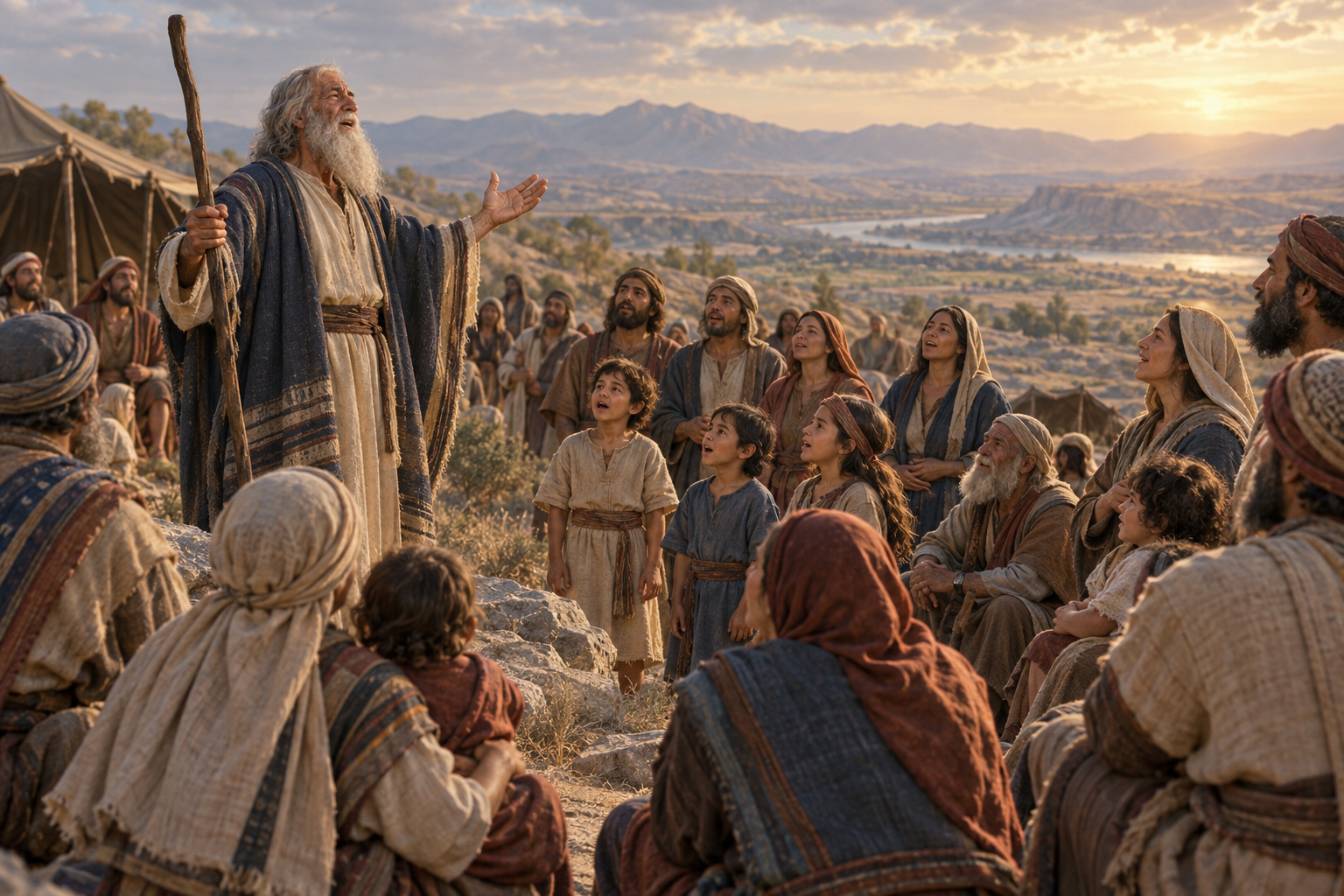
Moses could not walk beside the next generation into the land. So he gave them a song so they would remember the wilderness, and the God who provided for and delivered them. They could teach the song to their children, L’dor v’dor (לְדוֹר וָדוֹר)—From Generation to Generation.
After Ha’azinu, he told Israel to set their hearts on all its words, because those words were their life (Deuteronomy 32:46–47). God had told him to put the song in their mouths; Moses asked them to take it to heart.
Looking back to the burning bush, Moses protested that he was not a man of words. He was “heavy of mouth and heavy of tongue.” God told him, “I will be with your mouth” (Exodus 4:10–12). Moses was eighty when he spoke to Pharaoh (Exodus 7:7).
The Hebrew word for mouth is peh (פֶּה). The seventeenth Hebrew letter peh (פ) means mouth. It has a numerical value of 80. At 80 years old, God put the words in Moses’ mouth.
Here is a numerical echo I had not noticed before. The full Hebrew word for mouth, peh (פה), equals 85. Davar (דבר), “word,” equals 206. Together they equal 291—the value of eretz (ארץ), “land.” Moses would not enter that land, but God had been with his mouth. Now Moses gave Israel words to carry into the land without him. I do not take the numbers as proof of a hidden message. I hear in them an echo of the story the Torah has already told.
Then Joshua takes up the story. Moses has died, and Joshua is about to lead Israel across the Jordan into the land. God tells him that the book of the Torah must not depart from his mouth (Joshua 1:8). Joshua, in turn, tells the people to remember the word Moses commanded them (Joshua 1:13). Moses cannot cross with them, but the words God gave him do. They pass from Moses’ mouth to Joshua’s, and into the land.
For readers of the New Testament, davar may also bring John 1:1 to mind. In John 17:8 and 17:14, Yeshua says He gave His disciples the words the Father had given Him. Then He says, “Your word is truth” (John 17:17). Once again, words are received and passed on. The singing continued, and the Gospels keep returning us to Israel’s songs.
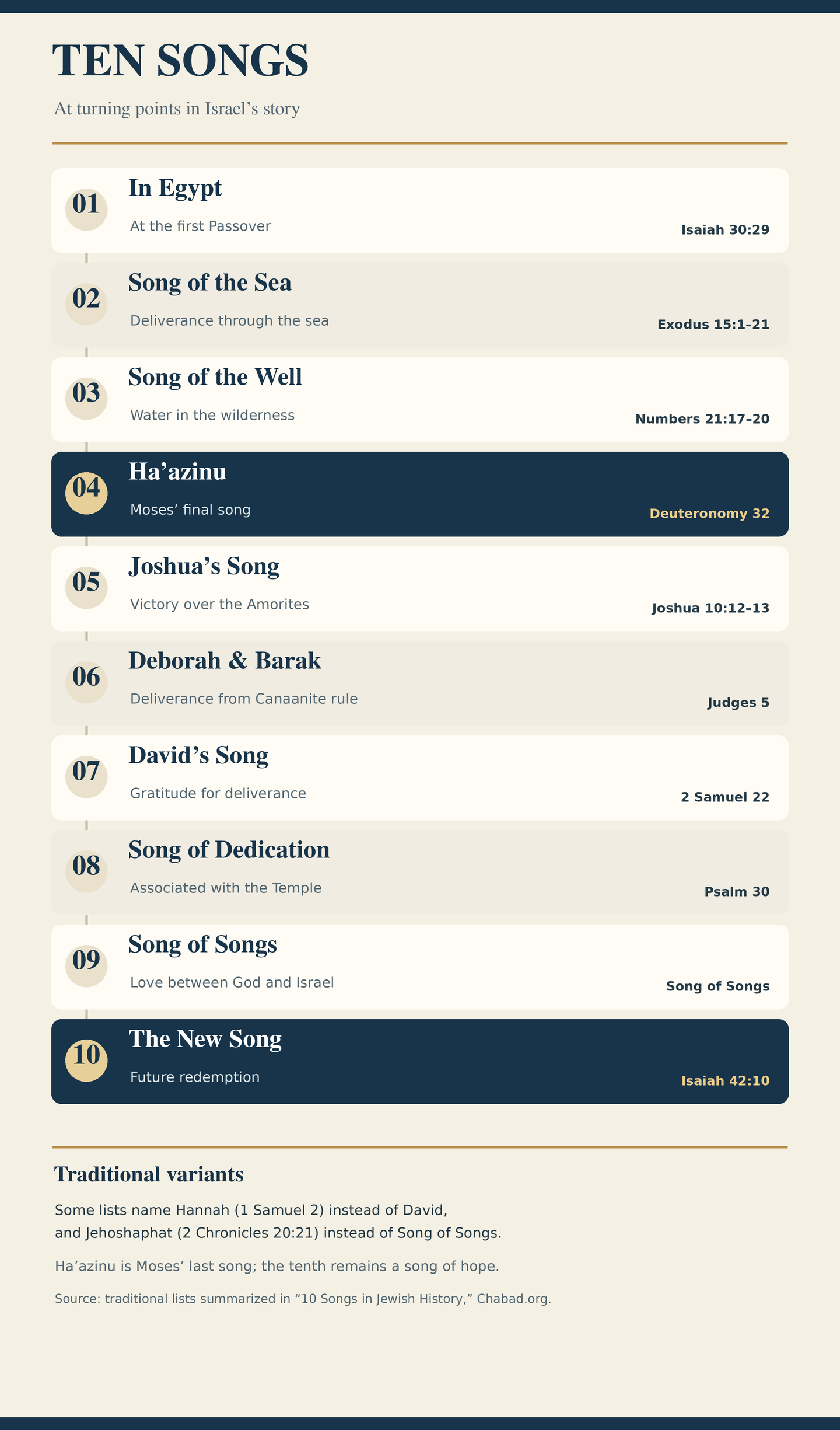
As Yeshua entered Jerusalem, the crowd greeted Him with words from Psalm 118. He later cited that psalm’s rejected stone (Matthew 21:9, 42). On the night before His death, He and His disciples sang a hymn before going out to the Mount of Olives (Matthew 26:30; Mark 14:26). The Gospels do not tell us which hymn they sang. The Passover Hallel, Psalms 113–118, gives us songs they may have sung together. I find myself thinking especially of Psalm 116, with its cry for rescue from death and its cup of salvation (Psalm 116:3–4, 13). Whatever the hymn was, Yeshua sang Israel’s songs with His people before walking into the darkness ahead of Him.
The book of Revelation looks back as it looks ahead. Those who have overcome stand beside the sea and sing of God’s just ways.
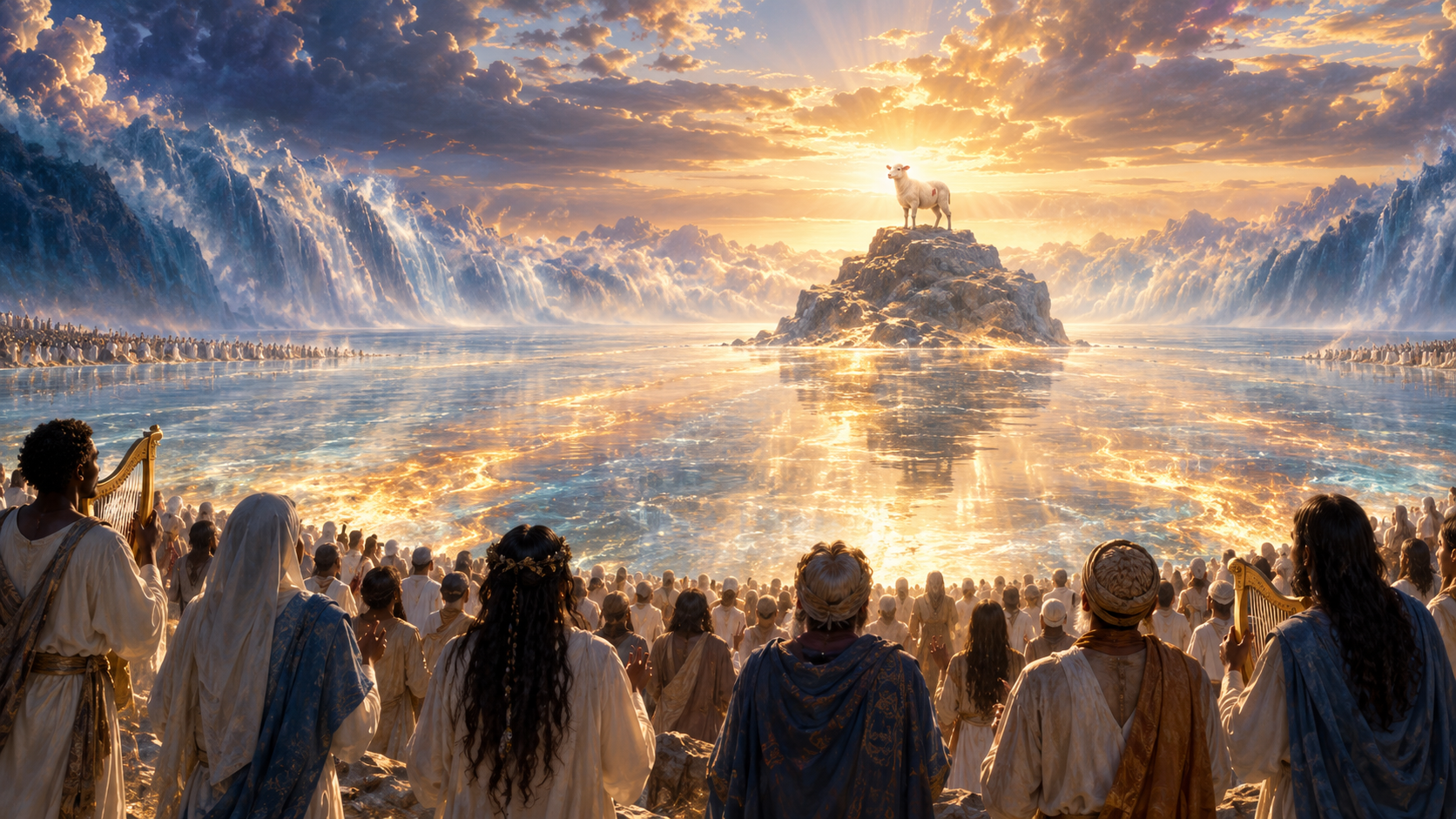
In Revelation 5:6–10, John sees a Lamb standing as though slain. I understand this Lamb to be Yeshua. His seven horns speak of power, and His seven eyes are identified in the vision with the seven spirits of God sent into all the earth. The Lamb who was slain is alive and standing before God.
Then the Lamb takes the “scroll of authority” from God’s hand, showing He alone has the right to open the seals and execute God’s final judgments and plans for the earth.
The Lamb’s death has brought people from every tribe, language, people, and nation to God (Revelation 5:9). The elders and living creatures sing a new song about what the Lamb has done. Yet Israel’s story has not disappeared from this vision. Jeremiah spoke of a time of distress for Jacob and promised that he would be saved out of it (Jeremiah 30:7). I hear that promise in the background as Revelation brings us back to a people who have overcome, standing beside a sea and singing of Moses and the Lamb.
Isaiah had already called for a new song, one that reaches even those who go down to the sea (Isaiah 42:10):
“Sing to the LORD a new song, his praise from the end of the earth, you who go down to the sea, and all that fills it, the coastlands and their inhabitants.”
Moses gave Israel a song to carry beyond his lifetime. Generations later, Yeshua sang with His people on the night before His death. And in Revelation, beside another sea, the people sing of Moses and the Lamb. The song has carried Israel’s memory forward, and now it bears witness to what God has done through Yeshua.
Let the words of my mouth and the meditation of my heart be acceptable in your sight, O Lord, my rock and my redeemer. — Psalm 19.14 (ESV)
Two Stories, One Book, One God.