The Cord of His Inheritance
By Jonah Ritter
Listening to a teaching on the book of Jonah inspired me to write this blog. The teacher mentioned Nineveh’s forty-day warning and the significance of forty as a measure in Scripture.
We often speak about what we inherit from God. But have you considered what God calls His inheritance?
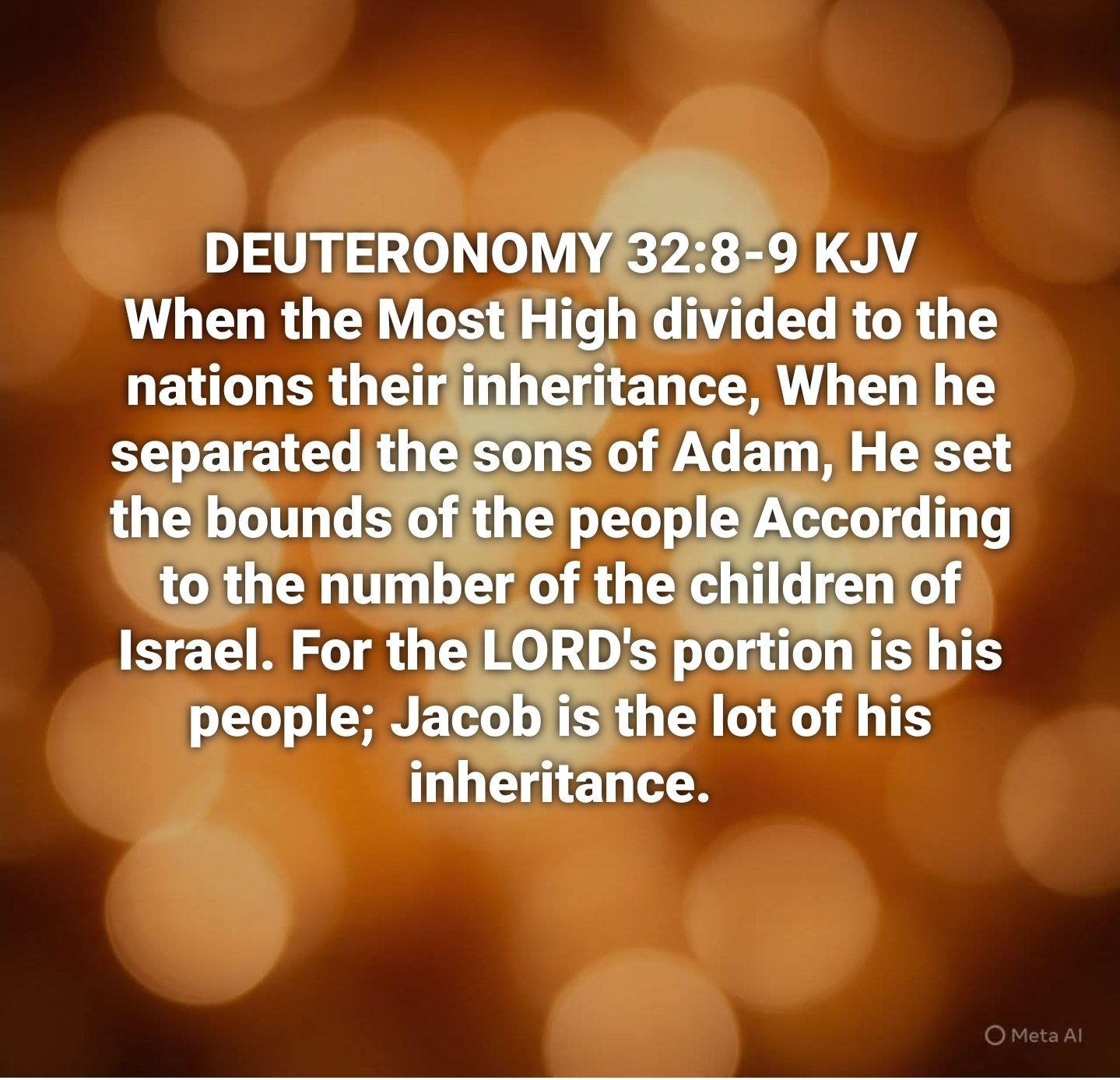
“For the LORD’s portion is his people; Jacob is the lot of his inheritance.” —Deuteronomy 32:9, KJV
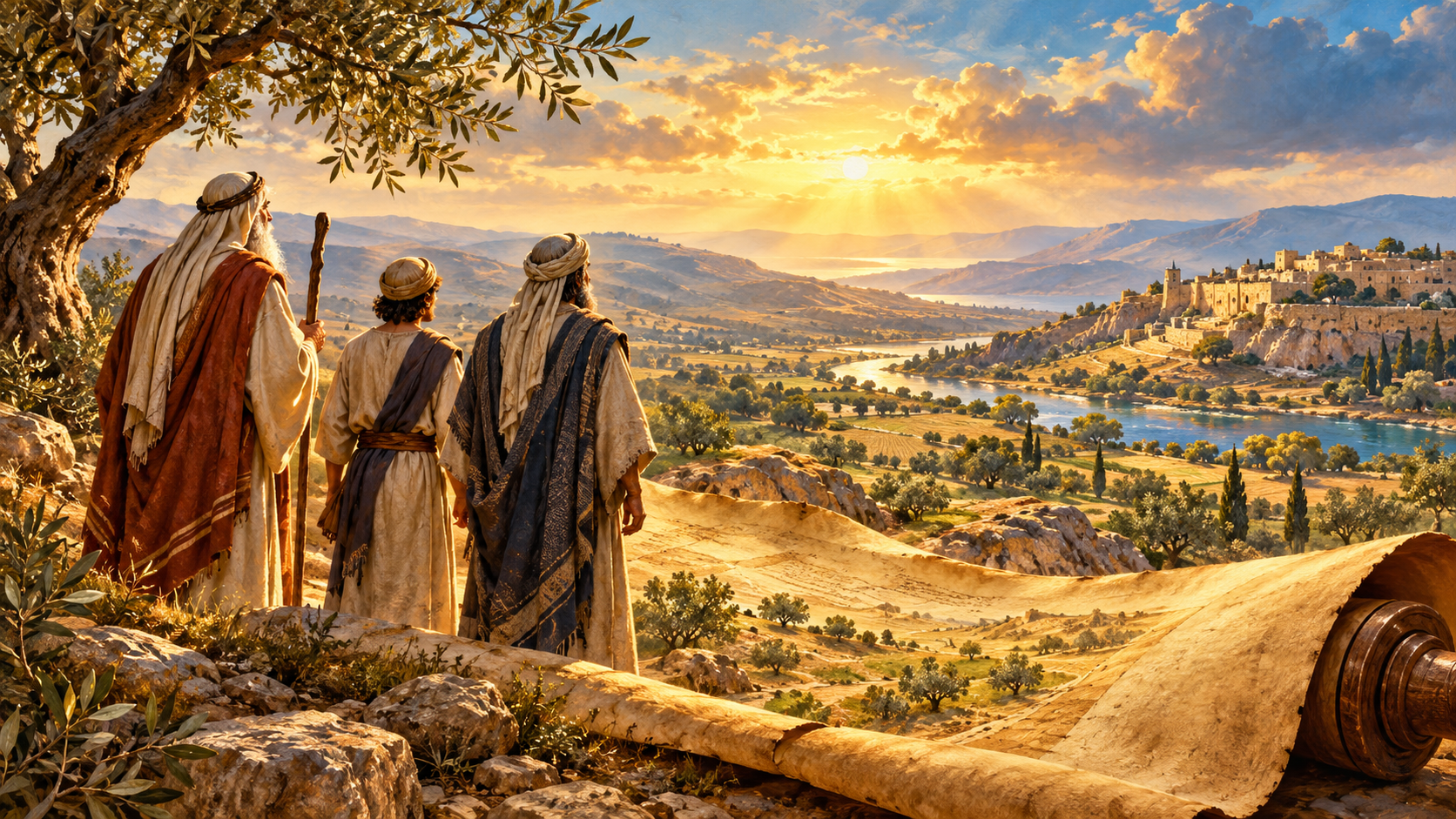
The nations and their boundaries form the backdrop of these verses. Yet when God identifies His own portion, He names a people: Jacob—Israel.
The Hebrew word translated “lot” is חֶבֶל (chevel). It can mean a cord or measuring line, and by extension, the portion of land measured out. Psalm 105:11 uses it for Canaan, “the lot of your inheritance.”
In Zechariah 2:1–2, a man carries a measuring line—chevel—to measure Jerusalem’s width and length.
Interestingly, a cord of wood is a stacked volume of 128 cubic feet, typically 4 feet high × 4 feet wide × 8 feet long. The name comes from the cord once used to measure it.
That echoes the concrete idea behind chevel: a cord used to measure becomes a word for the measured portion.
God gives Israel an inheritance, and He calls Israel His inheritance.
Then the same Hebrew word appears in an unexpected place.
When Rahab helps Israel’s spies escape Jericho, she lowers them through her window by a chevel—a rope (Joshua 2:15). A word associated with an allotted inheritance becomes, in this story, the means of escape from danger.
The spies then instruct her to tie a scarlet cord in that window. Here Scripture uses another word: תִּקְוָה (tikvah), meaning “cord” in this passage—the same Hebrew word also used for “hope” (Joshua 2:18).

Behold, when we come into the land, thou shalt bind this line of scarlet thread in the window which thou didst let us down by: and thou shalt bring thy father, and thy mother, and thy brethren, and all thy father’s household, home unto thee.—Joshua 2:18 (KJV)
The text does not tell us that these were the same cord. But the images invite reflection: a rope of escape, a scarlet sign, and hope for a household facing judgment.
Rahab had confessed, “The LORD your God, he is God in heaven above, and in earth beneath” (Joshua 2:11). When Jericho fell, she and her family were spared. Joshua 6:25 tells us that she then lived among Israel.
Her story moves from danger to deliverance—and from outside Israel to life among God’s people.
These connections do not make every meaning of a Hebrew word apply to every passage. They do, however, give us a beautiful picture to contemplate.
The God who calls Israel His inheritance also makes room for Rahab, a woman of the nations who places her trust in Him.
And Salmon begat Booz of Rachab; and Booz begat Obed of Ruth; and Obed begat Jesse; And Jesse begat David the king; and David the king begat Solomon of her that had been the wife of Urias; —Matthew 1:5-6
Here is another interesting connection: the Hebrew word חֶבֶל (chevel) has a gematria of forty: ח (8) + ב (2) + ל (30) = 40.
In the book of Jonah, God gave Nineveh a forty-day warning. Elsewhere, this same prophet delivered God’s word concerning the restoration of Israel’s boundary. Jonah’s ministry thus touches both a measured span of time and the boundaries of an allotted land.
“He restored the coast (border or territory) of Israel from the entering of Hamath unto the sea of the plain, according to the word of the LORD God of Israel, which he spake by the hand of his servant Jonah…”
—2 Kings 14:25 (KJV)
King Jeroboam II restored Israel’s boundary according to God’s word spoken through Jonah, the son of Amittai.
A cord measures an allotted portion of space. Forty repeatedly marks a span of time in Scripture. Consider these examples:
- Noah: forty days of rain (Genesis 7:12).
- Moses: forty days and nights on Sinai (Exodus 24:18).
- The spies: forty days exploring the promised land (Numbers 13:25).
- Israel: forty years in the wilderness (Numbers 14:33–34).
- Jonah: forty days in Nineveh’s warning (Jonah 3:4).
- Numbers 14:34 makes the relationship explicit: forty days become forty years—one year for each day.
In the Gospels, Yeshua fasted forty days and forty nights in the wilderness, where He was tempted by the devil (Matthew 4:1–2; Luke 4:1–2).
After His resurrection, He appeared to His disciples over forty days, speaking about the kingdom of God (Acts 1:3).
LOT, CHEVEL, LINE AND CORD
What began with a teaching about Jonah’s forty days led me back to the question of inheritance. God measures out land and appoints times, yet He calls a people His own portion. Rahab’s story brings that truth home: a woman facing judgment finds deliverance and a place among Israel—and, ultimately, in the family line of Yeshua.
A chevel can measure an inheritance or become a rope of escape. In Rahab’s window, a scarlet tikvah (cord) marks a household awaiting deliverance. Tikvah also means hope—the word that gives Israel’s national anthem its name, Hatikvah: “The Hope”—the hope of two thousand years to be a free people in their own land.
The hope for the Jewish Messiah.
Two stories. One Book. One God.