The Heart, the Paths of Wisdom, and the Strength of the One
A study by Jonah
A Note on Gematria
The universe is described through mathematics. Its physical laws can be expressed through numbers, proportions, relationships, and geometry. From the movement of the planets to the structure of matter, creation displays an underlying order.
The Hebrew language contains its own relationship between words and numbers. Each Hebrew letter also carries a numerical value. The words of the Torah can therefore be read not only as language, but also as numerical expressions.
This is the basis of gematria.
I do not believe that every numerical resemblance proves an interpretation. Gematria should not replace the plain meaning, historical setting, or spiritual message of Scripture. But when several numerical correspondences appear within related passages and reinforce the same biblical theme, they invite me to look more closely.
For me, finding these correlations is not an attempt to impose mathematics upon the Word. It is a way of exploring an order already contained within it. Numbers can reveal relationships between letters, words, measurements, and events that might otherwise remain unnoticed.
These patterns do not create truth. They help me search for it. I write to think—and gematria gives me another way to listen.
Continuing the Journey
This study continues my previous article:
That study followed the dimensions of the Tabernacle inward:
3:1:1 → 2:1:1 → 1:1:1
Three became two. Two became one.
The journey ended in the Holy of Holies—a perfect cube measuring ten cubits in every direction:
10 × 10 × 10 = 1,000 cubic cubits
In Hebrew, one thousand is elef—אלף. It is spelled with the same Hebrew letters as Aleph—אלף, the first letter of the alphabet, valued at one.
The previous study therefore moved inward:
Three → Two → One—to the Thousand
But perhaps the journey does not end there.
Once we arrive at Aleph—the One—another movement begins. Instead of continuing inward, it moves outward from the One into creation.
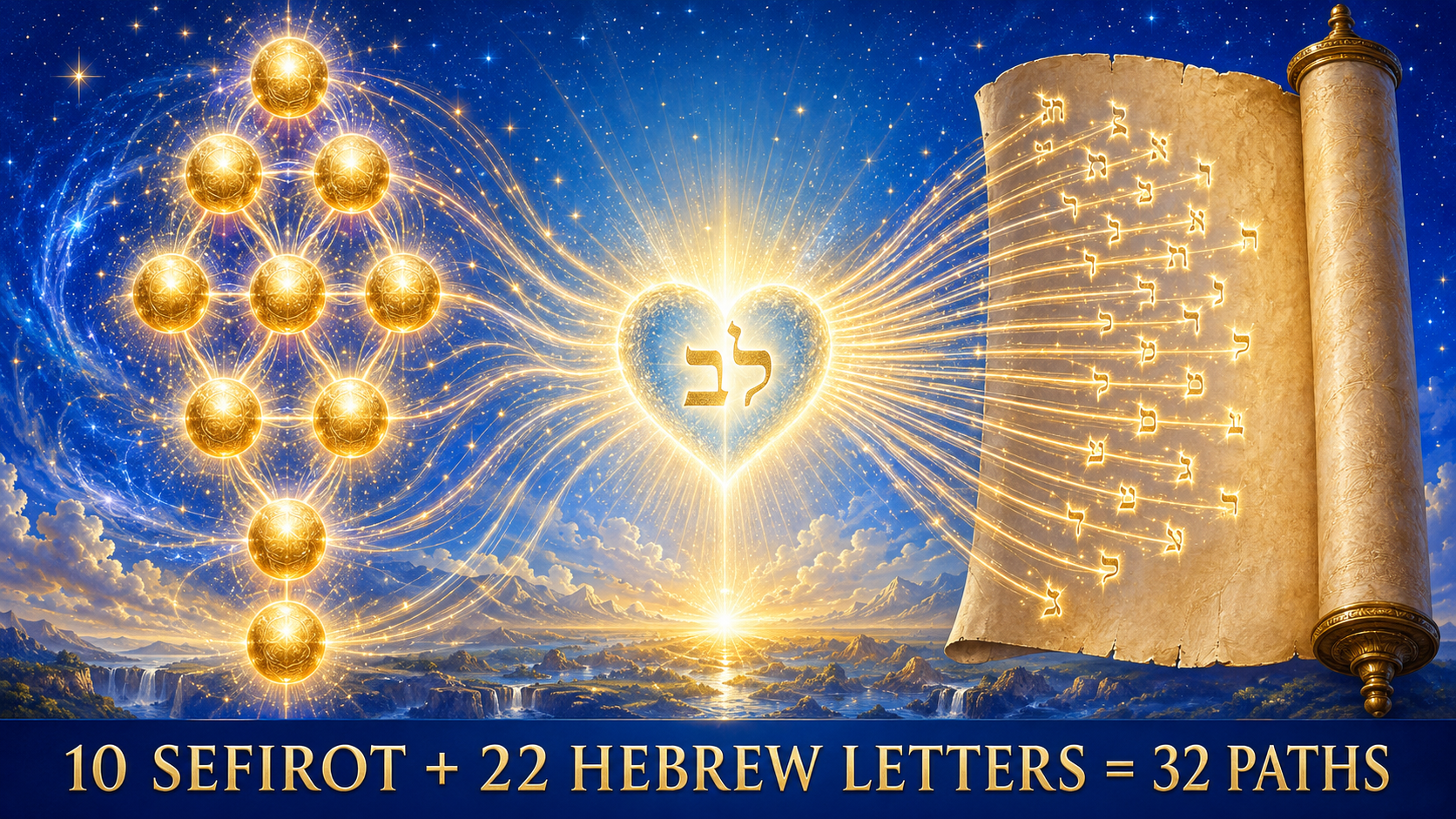
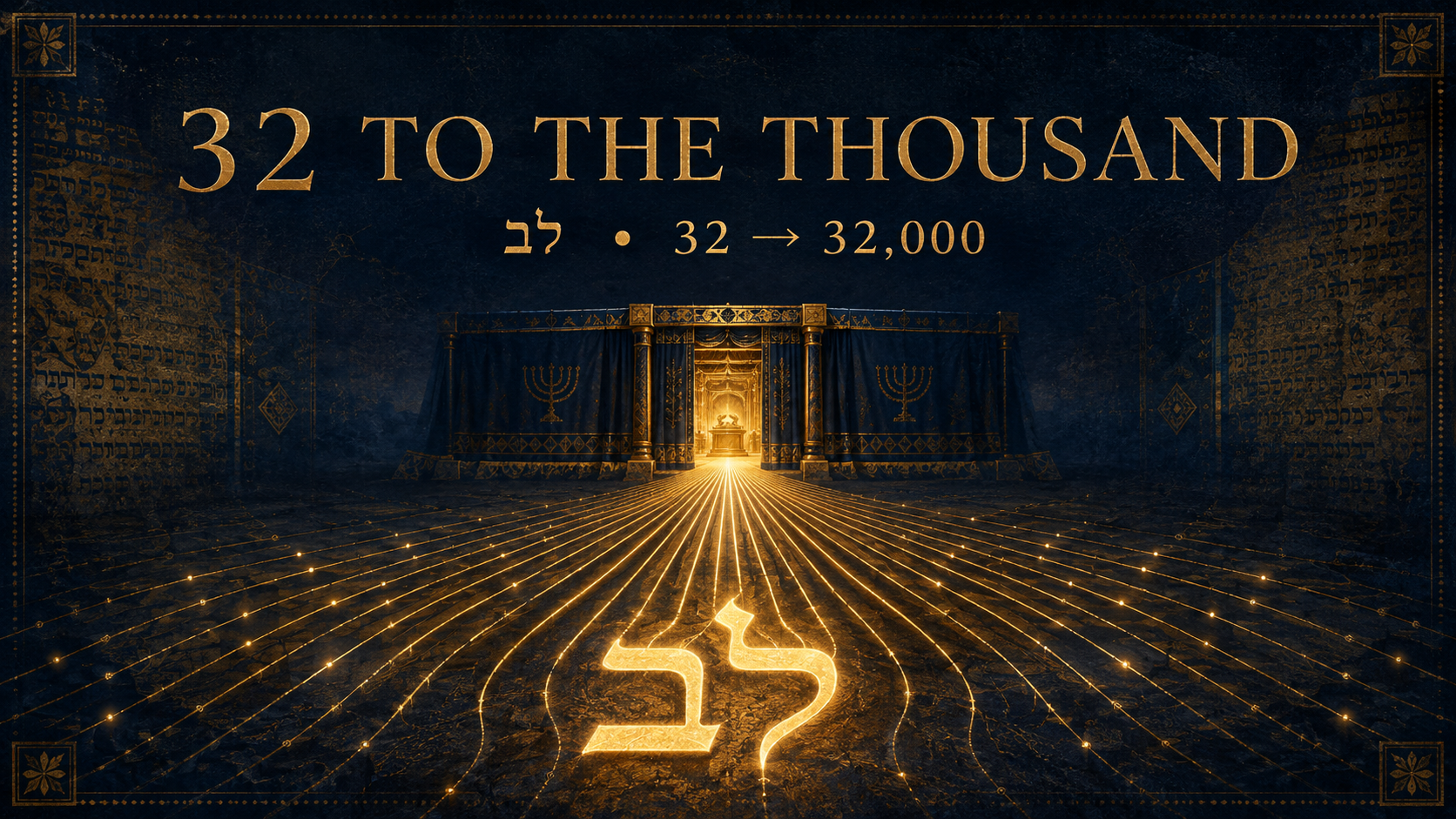
Jewish tradition speaks of thirty-two paths of wisdom through which God created the world. Thirty-two is also the numerical value of lev—לב—the Hebrew word for heart.
The concept of the “Thirty-Two Paths of Wisdom” is famously introduced in the ancient mystical text Sefer Yetzirah. These paths consist of the ten Sefirot and the twenty-two Hebrew letters through which God formed creation.
The Thirty-Two Paths of Wisdom are an important foundation of Jewish mysticism and later Hasidic thought. Although Hasidism does not always emphasize the phrase itself, it dee¹ply embraces the teaching behind it: that God formed the universe through the ten sefirot and the twenty-two Hebrew letters, and that divine speech continues to sustain creation at every moment.
When thirty-two is carried “to the thousand,” it becomes:
32 × 1,000 = 32,000
That number appears in several closely connected biblical accounts.
The first study moved inward to the One. This study begins with the One, enters the heart, and follows thirty-two—to the thousand.
From One to Love
The altar encountered before entering the Tabernacle measured five cubits long, five cubits wide, and three cubits high.
Its three dimensions add to thirteen:
5 + 5 + 3 = 13
Thirteen is the gematria of two important Hebrew words:
Echad—אחד—One = 13
Ahavah—אהבה—Love = 13
The altar therefore brought together two words with the same numerical value:
One and Love
That relationship appears directly in the Shema:
“Adonai our God, Adonai is One. You shall love Adonai your God with all your heart…”
—Deuteronomy 6:4–5
The declaration that God is One leads immediately to the command to love Him.
One leads to love.
But the passage then tells us where that love must reside:
“With all your heart.”
The movement continues:
One → Love → Heart
The Heart Is Thirty-Two
The Hebrew word for heart is lev—לב.
Lamed—ל = 30
Bet—ב = 2
Together:
30 + 2 = 32
The heart is thirty-two.
Lev is not the Hebrew word for love; that word is ahavah. But the heart is the place into which the command to love God is directed.
God is One. We are commanded to love the One. We are to love Him with all our heart.
The heart has the value thirty-two.
The Thirty-Two Paths of Wisdom
Sefer Yetzirah—the ancient Hebrew Book of Creation—begins by describing thirty-two wondrous paths of wisdom through which God created the world.
These are traditionally understood as:
10 Sefirot + 22 Hebrew letters = 32 paths
The twenty-two Hebrew letters are the building blocks of speech. In Genesis, God creates by speaking:
“Then God said…”
The Sefirot are understood in Jewish mysticism as fundamental measures, attributes, or channels through which divine action is expressed within creation.
The thirty-two paths therefore bring together number and letter:
Structure and speech.
Wisdom and word.
The invisible will of God entering the visible world.
All thirty-two are symbolically contained in the Hebrew word for heart.
Creation is not presented merely as an act of power. It proceeds through wisdom—and the number of its paths spells lev: heart.
When Lev Opens to Others
The thirty-two paths are not intended to remain matters of intellectual curiosity. In Hasidic thought, wisdom must descend from the mind into the heart. It must awaken love of God and find expression in the way we love and treat others.
This gives deeper meaning to the relationship between the thirty-two paths and lev—לב—the heart.
A person may study the Sefirot, count the letters, and contemplate the mysteries of creation. But if that wisdom does not produce greater love, compassion, humility, and kindness, it has not yet accomplished its purpose. The value of the Thirty-Two Paths is not proved by how much hidden knowledge someone possesses, but by what that knowledge produces. Does it awaken the lev—the heart? Does it produce love of God, love of one’s neighbor, humility, mercy, and righteous action?
Yeshua’s teaching provides a fitting test for mystical wisdom:
“You will know them by their fruits.”
—Matthew 7:16, 20
“By this everyone will know that you are my disciples, if you love one another.”
—John 13:35
The Torah commands:
“You shall love your neighbor as yourself.”
—Leviticus 19:18
Yeshua placed this command beside the love of God as one of the two great commandments.
“As the Father loved Me, I also have loved you… This is My commandment, that you love one another as I have loved you.”
—John 15:9, 12
Love received from above must travel downward and outward toward others.
The Source of Wisdom
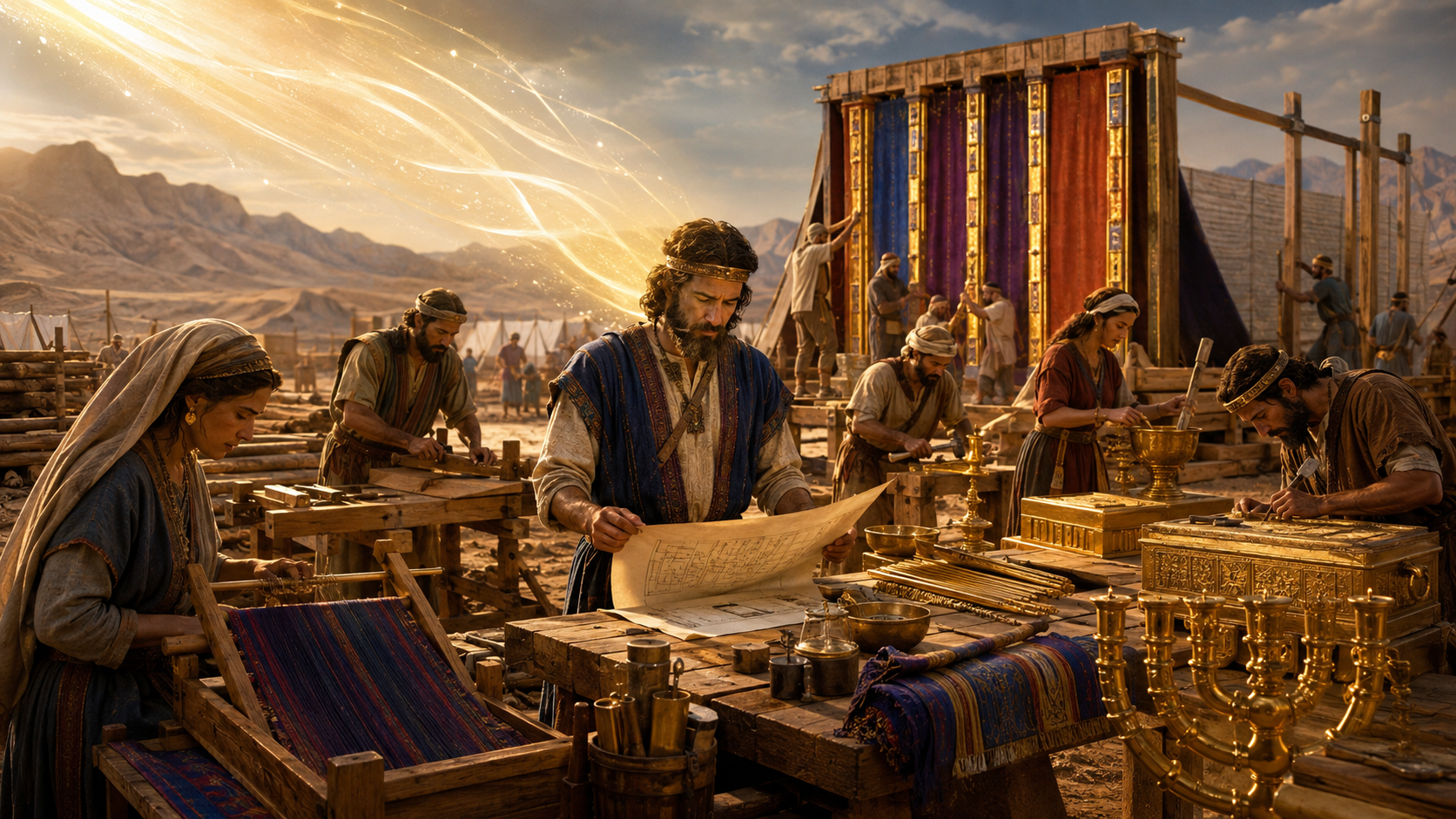 The thirty-two paths should not be understood as wisdom generated independently by the human mind.
In Jewish thought, wisdom comes from God. Ruach HaKodesh—the Holy Spirit or divine inspiration—is one means through which God’s wisdom is imparted.
The Torah makes this especially clear in the account of Bezalel, the man chosen to oversee the construction of the Tabernacle.
God says:
“I have filled him with the Spirit of God, in wisdom, in understanding, in knowledge…”
—Exodus 31:3
The progression is important:
Spirit → Wisdom → Understanding → Knowledge → Creation
Bezalel did not invent the Tabernacle according to his imagination. God gave Moses the pattern, and the Spirit of God gave Bezalel the wisdom necessary to give that pattern physical form.
God then says:
“I have put wisdom in the hearts of all the gifted artisans…”
—Exodus 31:6
The Hebrew expression is:
Chakhmei lev—חכמי לב
Literally:
The wise of heart.
Wisdom is placed in the heart—and lev, heart, has the value thirty-two.
This brings us directly back to the Tabernacle examined in the previous study. The structure whose dimensions move from three, to two, to one, and finally to one thousand was built by people filled with the Spirit of God and made wise in heart.
The Tabernacle joins the two studies:
The Spirit gives wisdom.
Wisdom enters the heart.
The heart has the value thirty-two.
The wise-hearted build the dwelling that leads to One—to the thousand.
What Sefer Yetzirah describes cosmically, Exodus displays physically.
God creates the world through wisdom. God causes the Tabernacle to be built through wisdom.
Creation provides a dwelling for humanity. The Tabernacle provides a dwelling for the divine presence among humanity.
Both begin with God. Both are ordered according to wisdom. Both move from an invisible pattern into visible form.
The thirty-two paths come from God. The wise heart receives them. Through Spirit-filled hands, heavenly wisdom takes form on earth.
Thirty-Two Elohim
The connection becomes even more striking in Genesis 1.
The divine name Elohim—אלהים appears thirty-two times in the chapter.
Thirty-two paths of wisdom.
Thirty-two appearances of Elohim.
Thirty-two as the value of the heart.
The One Creator brings the ordered world into being through wisdom, speech, distinction, and relationship:
Light and darkness. Heaven and earth. Land and water. Sun and moon. Male and female. Work and rest.
The thirty-two paths proceed from the One and fill creation with ordered life.
Thirty-Two Ways of Reading Torah
The number also appears in Jewish interpretation.
Rabbi Eliezer ben Yose HaGelili is traditionally associated with thirty-two rules for interpreting the Torah.
The same number associated with the paths of creation becomes associated with paths for entering Scripture.
God creates through wisdom. The Torah records His acts and words. The interpreter then travels through paths of wisdom to seek their meaning.
There are thirty-two paths into creation and, in this tradition, thirty-two paths into the Torah.
Both require more than intelligence. They require a heart prepared to receive wisdom from God.
Aleph and the Paths of Creation
The letter Aleph—א has the numerical value one.
In Jewish mystical interpretation, Aleph is often pictured as being composed of three smaller letters:
– A Yod above
– A Yod below
– A diagonal Vav connecting them
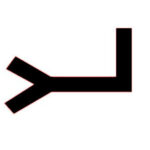 The name Yod—י is related to yad—יד, the Hebrew word for hand. In early pictographic forms, Yod was associated with an arm and hand—the means by which intention becomes action. The outstretched forearm also recalls the ancient cubit, a unit measured from the elbow to the fingertips.
The values in the three letters are:
Yod—10 + Vav—6 + Yod—10 = 26
26 is the gematria of the divine name YHVH
יהוה = 26
Twenty-six is also twice thirteen:
13 + 13 = 26
Because both echad—one—and ahavah—love—equal thirteen, Aleph can symbolically bring together:
One + Love = 26
The One above is joined to the world below. Heaven and earth are connected. The divine name is concealed within the letter of oneness.
The Vav, the Veil, and the Cross
The central letter within Aleph is Vav—ו.
Vav means a hook, peg, or connector. Its function is visible within the Hebrew language itself. When Vav is used as a prefix, it commonly means “and.” It joins one word, phrase, or thought to another.
Within Aleph, the Vav joins the Yod above to the Yod below.
Heaven above.
Earth below.
The Vav between them.
The Torah gives this connecting image a physical expression in the Tabernacle. God instructed Moses concerning the veil:
“You shall hang it upon the four pillars of acacia wood overlaid with gold. Their hooks shall be gold…”
—Exodus 26:32
The Hebrew word translated “their hooks” is vaveihem—וָוֵיהֶם, from Vav. The plural is Vavim—ווים.
Golden Vavim held the veil that separated the Holy Place from the Holy of Holies.
The gematria of Vavim—ווים is 62:
Vav—6 + Vav—6 + Yod—10 + Mem—40 = 62
The divine name El—אל equals 31. Therefore:
Vavim = 62 = El + El
Symbolically, the value of Vavim echoes El above and El below—the same One God joined across both realms.
Joshua repeats the declaration:
“Adonai your God, He is God in heaven above and on earth beneath.”
—Joshua 2:11
The image then travels across the Testaments.
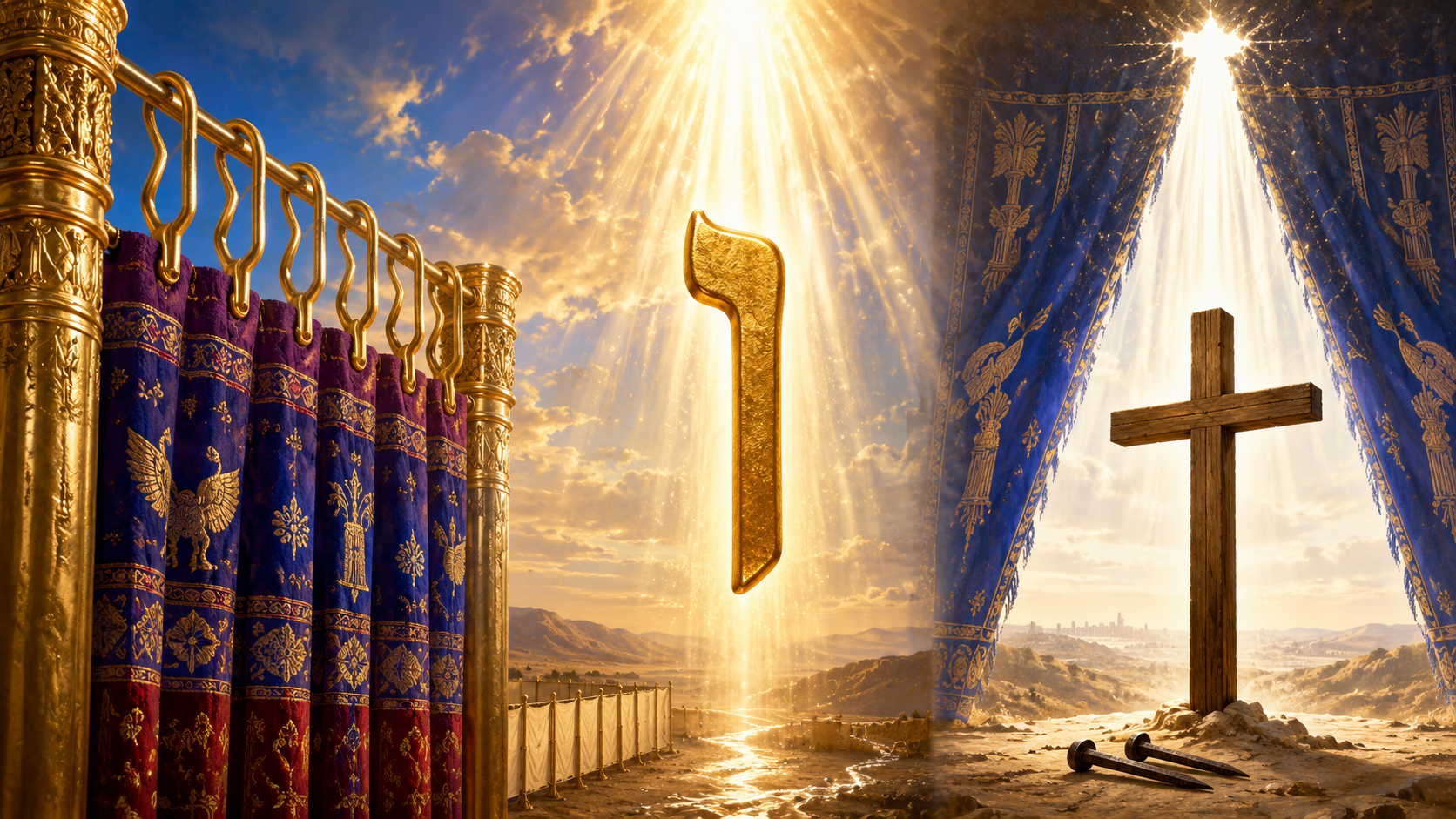
The correspondence is symbolic rather than linguistic. Again, the New Testament does not call the crucifixion nails Vavim, and the Torah describes the hooks of the Tabernacle rather than the later Temple. Yet the arc between the two accounts is difficult to miss.
The New Testament records that nails held Yeshua to the cross. Those nails are not linguistically called Vavim in the Greek, but they recall the ancient image of a Vav—a hook, peg, or fastening nail that joins one thing to another.
At the moment of Yeshua’s death, the veil of the Temple was torn:
“The veil of the Temple was torn in two from top to bottom.”
—Matthew 27:51
The direction matters. The tearing begins above, from the Vavim, and moves downward.
In the Torah, the Vavim hold the veil. In the New Testament, the nails hold Yeshua to the cross. Then the veil is torn from the top.
What had marked the separation between the Holy Place and the Holy of Holies is opened by an action descending from above.
Within Aleph, the Vav joins the upper Yod to the lower Yod. Heaven is connected to earth. Yeshua taught his disciples:
“Your will be done on earth as it is in heaven.”
—Matthew 6:10
The concept of the Lord’s Prayer is therefore pictured within Aleph: the will of heaven brought down to earth through the connecting Vav.
The Vav joins above and below.
The Vavim hold the veil.
The nails hold Yeshua.
The veil opens from the top.
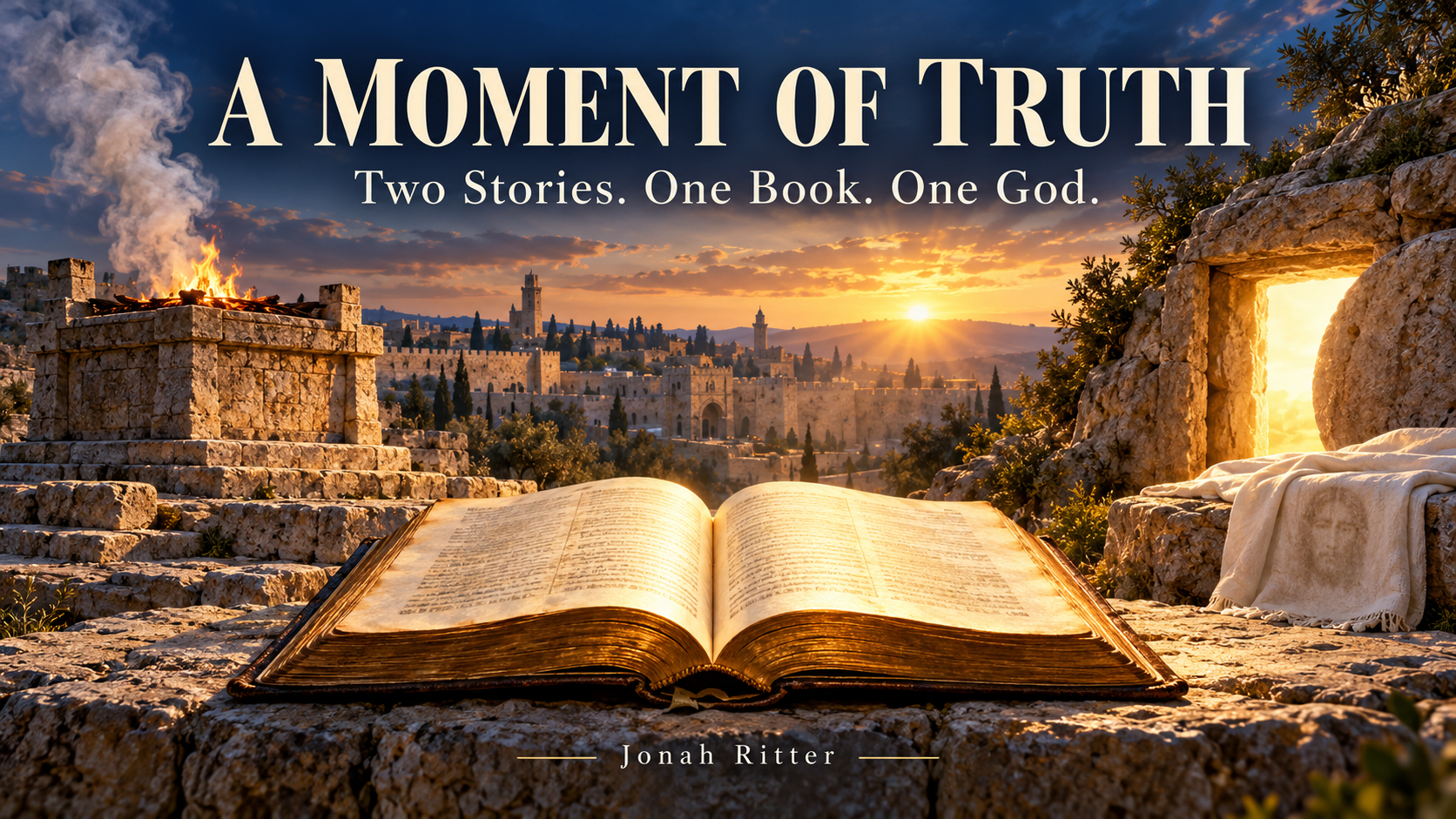
One letter. Two stories, one book, one God.
The Vav has now shown us how Aleph connects above and below. But the letter contains another possible numerical connection. Its customary construction leads us to twenty-six—the value of YHVH—while an alternative symbolic construction brings us back to thirty-two, the value of lev, the heart.
The article “Thirty-Two Lanes of Wisdom” presents another, less familiar symbolic construction of Aleph using two Yods and two Vavs:
10 + 10 + 6 + 6 = 32
This is not the customary construction of Aleph, but it offers an intriguing picture. Aleph, the letter of One, opens into thirty-two—the number of the heart and the paths of wisdom.
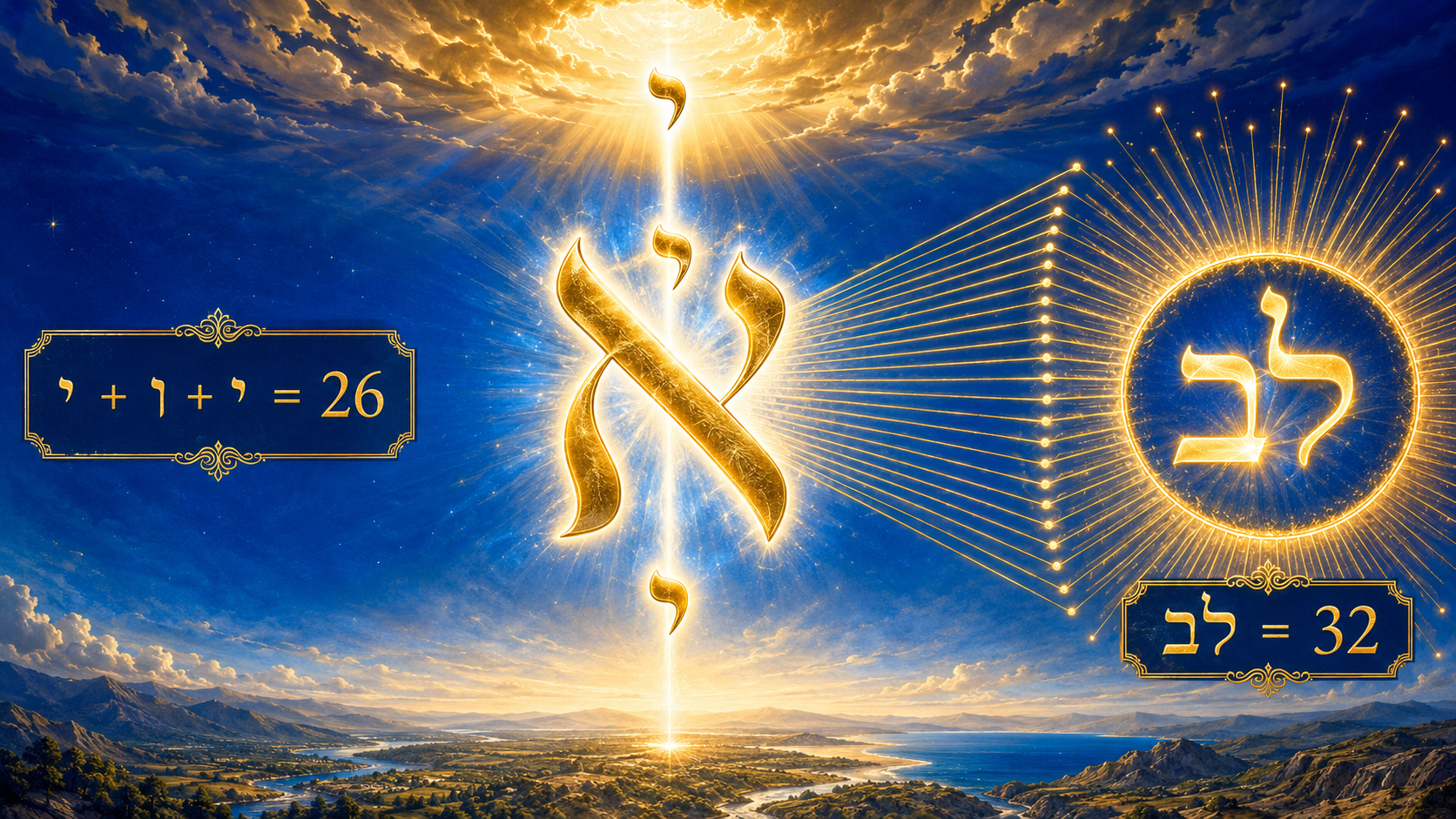
The paths come from the One. The heart receives them. Creation gives them visible expression.
Thirty-Two Within the Human Form
The article also associates the thirty-two paths with the traditional count of thirty-two adult teeth:
16 above + 16 below = 32
It interprets chewing as a physical picture of how human beings process life. Food is received, broken down, and absorbed. In a similar way, experience must be examined, understood, and taken into the heart.
This is a symbolic observation rather than a biological proof of the thirty-two paths. Yet its placement is suggestive.
The Hebrew letters form speech in the mouth. Wisdom is received by the heart. Human beings are given the responsibility to speak, examine, and choose.
The wisdom of God must not merely pass through the mind. It must be processed, internalized, and lived.
Thirty-Two—to the Thousand
The previous study ended with elef—one thousand.
This study has arrived at lev—thirty-two.
When the two are brought together:
Lev × elef
32 × 1,000 = 32,000
Thirty-two is the heart.
One thousand is elef, spelled like Aleph—the One.
Thirty-two to the thousand can therefore be read symbolically as:
The heart—to the One.
It may also be read in the other direction:
The wisdom of the One extending into the multitude.
The paths go out from the One, but the heart must eventually return to the One.
This is where 32,000 enters the biblical story.
Thirty-Two Thousand in Midian
In Numbers 31, Israel goes to war against Midian.
After the battle, the people, animals, and possessions that remained were counted and divided. Among those recorded were 32,000 young women who had survived:
“And thirty-two thousand persons in all…”
—Numbers 31:35
The 32,000 were divided in half.
One half belonged to those who had gone to battle:
32,000 ÷ 2 = 16,000
A tribute was then taken from that half and given to God through Eleazar the priest.
The number of persons given as the LORD’s tribute was: 32
The mathematics travels outward and then returns:
32 → 32,000 → 16,000 → 32
Thirty-two goes to the thousand. Then thirty-two returns to God.
The number associated with the paths proceeding from the Creator comes back as a tribute to the Creator.
What came from the One returns to the One.
Gideon’s Thirty-Two Thousand
The next appearance is especially remarkable because Gideon also goes to war against Midian.
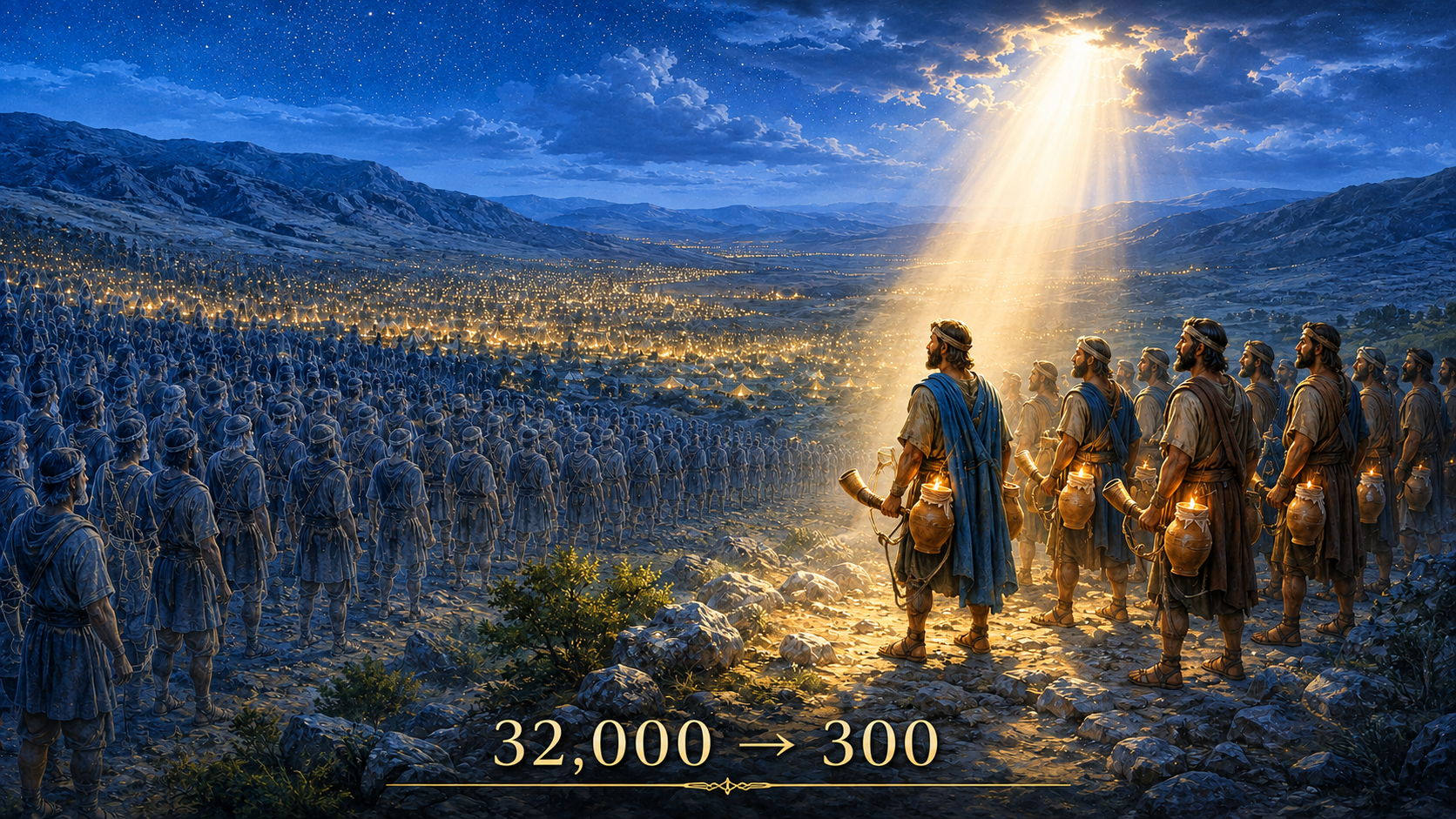
Judges does not state the original size of Gideon’s army in a single number, but it gives us the calculation:
22,000 departed
10,000 remained
Therefore:
22,000 + 10,000 = 32,000
Gideon began with 32,000 men against Midian.
But God told him:
“The people who are with you are too many…”
—Judges 7:2
If Israel won with such a force, the people might claim that their own hand had saved them.
The problem was not merely the size of the army.
The problem was the heart.
Would Israel trust the strength of its numbers, or would Israel trust the One?
God first reduced the army from 32,000 to 10,000. He then reduced it from 10,000 to only 300:
32,000 → 10,000 → 300
The multitude was stripped away until Israel could no longer mistake human strength for divine deliverance.
Thirty-two is lev—the heart. Gideon’s 32,000 had to learn where the heart should place its trust.
The heart could not rest in the visible strength of thirty-two thousand men. It had to return to Aleph—the One.
The Midian Connection
The relationship between Numbers and Judges is difficult to overlook.
In Numbers, Israel goes to war against Midian, and 32,000 are counted after the battle. From those 32,000, a tribute of 32 is returned to God.
In Judges, Israel again faces Midian, beginning with an army of 32,000. God reduces the army so Israel will know that victory does not come from human strength.
The two accounts share:
– The number 32,000
– The enemy Midian
– A division or reduction
– A movement away from human possession
– A return of honor to God
In Numbers, thirty-two is returned as tribute.
In Judges, the 32,000 are reduced so that the glory returns to God.
The number goes out to the thousand, but the heart must come back to the One.
Thirty-Two Thousand Chariots
A third military appearance occurs in 1 Chronicles 19.
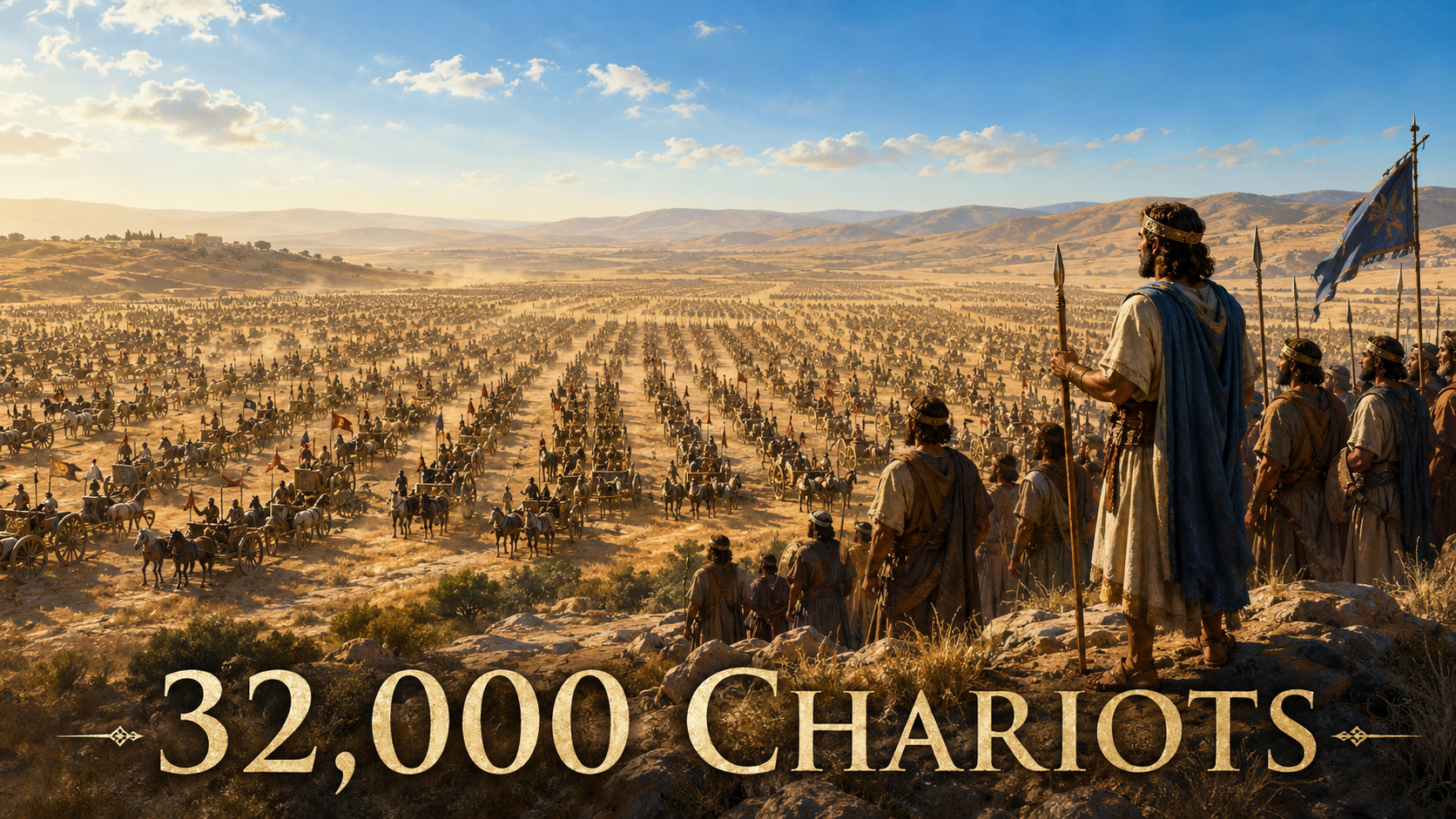
The Ammonites hired an enormous force against David’s kingdom:
“So they hired for themselves thirty-two thousand chariots…”
—1 Chronicles 19:7
Once again, 32,000 represents visible human power.
This time it is not Israel’s strength but the enemy’s. Thirty-two thousand chariots appear as a formidable military threat.
Joab finds himself facing enemies on two sides. He divides his forces and tells his brother Abishai that each will help the other if necessary. Then Joab says:
“Be of good courage… And may the LORD do what is good in His sight.”
—1 Chronicles 19:13
The enemy has 32,000 chariots.
Israel has the One.
The chariots appear overwhelming, but their number does not determine the outcome. Visible strength must again yield before God.
Three Accounts, One Direction
The three biblical accounts form a consistent progression.
Numbers 31:
32,000 are divided, and 32 are returned to God.
Judges 7:
32,000 are reduced so Israel cannot claim the victory for itself.
1 Chronicles 19:
32,000 enemy chariots cannot overcome those who entrust the outcome to God.
In each account, 32,000 represents something that can be counted:
People. Soldiers. Chariots. Visible strength.
Yet the lesson is never that the largest number possesses the greatest power.
The counted multitude must finally answer to the One who cannot be counted.
Wisdom Is a Matter of the Heart
Thirty-two represents the paths of wisdom.
Thirty-two also spells lev—the heart.
This may teach us something about the biblical meaning of wisdom.
Wisdom is not merely the accumulation of information. It is not the ability to count soldiers, chariots, possessions, or advantages.
Wisdom is knowing where to place the heart.
Gideon could count 32,000 soldiers, but God wanted Israel to know who provided the victory.
The Ammonites could hire 32,000 chariots, but their numbers could not overrule the will of God.
Israel could count 32,000 survivors after Midian, but a portion still had to be returned to the One from whom all life comes.
The heart may calculate human strength.
The Ruach gives wisdom.
Wisdom teaches the heart to trust God.
The Heart Returns to the One
The Shema begins with One:
«“Adonai our God, Adonai is One.”»
It then commands love:
«“You shall love Adonai your God…”»
And it locates that love in the heart:
«“With all your heart…”»
The movement is complete:
One → Love → Heart
The heart has the value thirty-two.
The thirty-two paths proceed from the Creator into creation.
Thirty-two then goes to the thousand and becomes 32,000.
But in every biblical appearance, the same lesson emerges:
The multitude cannot replace the One.
The heart may extend into thirty-two paths. Thirty-two may extend to thirty-two thousand. But every path of true wisdom leads the heart back to God.
Returning to the Beginning
The previous study moved through the Tabernacle:
Three → Two → One—to the Thousand
This study continues the movement:
One → Love → Heart → Wisdom → Thirty-Two—to the Thousand
The first journey moved inward toward the presence of God.
The second moves outward through the paths of creation and into the numbered strength of the world.
Yet both arrive at the same destination.
The first finds the One at the center.
The second discovers that every path must return there.
I do not claim that these numerical connections prove a doctrine or that Scripture explicitly explains the number 32,000 in this way. They are observations—patterns that invite us to slow down, look again, and consider whether the numbers may be carrying an echo of the message.
To me, that message is simple:
Wisdom begins when the heart loves the One more than it trusts its own strength.
Jonah gives us the final measure:
“Salvation belongs to Adonai.”
—Jonah 2:9
The heart goes out to the thousand.
And the heart returns to the One.
Two stories, one book, one God.