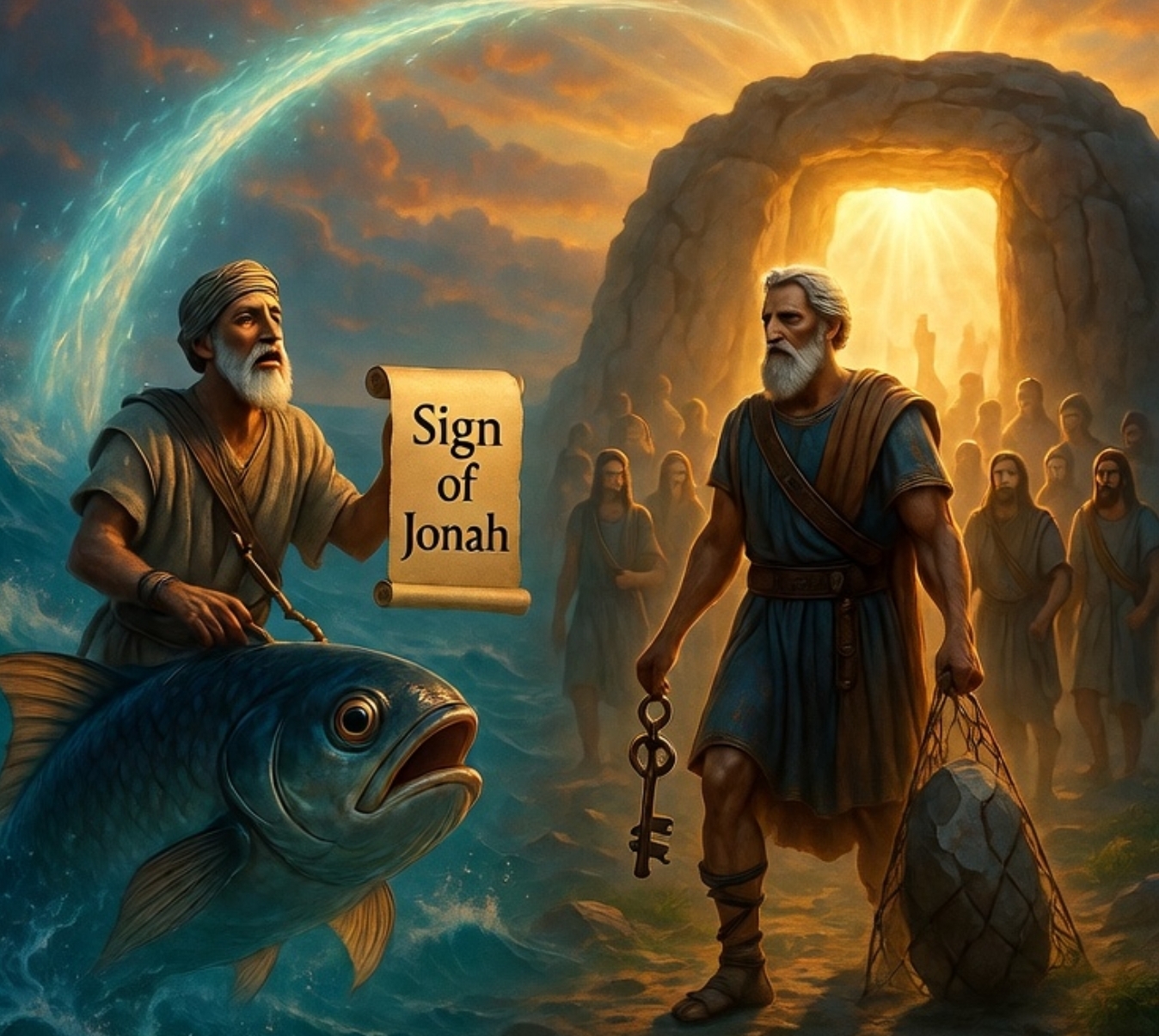
Sons of Truth: Jonah and Peter
I’ve had a personal interest in the prophet Jonah for as long as I can remember.
My name is Jonah, and I grew up Jewish. Every Yom Kippur, we read the book of Jonah aloud. It’s part of the rhythm of the day: fasting, confession, and this short, strange story about a reluctant prophet, a great fish, and a city that repents.
Over time, I began to feel that Jonah’s role was significant in ways my teachers and the commentators I read weren’t really exploring. Jonah felt like more than a moral warning about running from God. There was an arc there that wasn’t being followed through.
Psalm 118:22 – “The stone the builders rejected has become the cornerstone.”
This post is one piece of a larger project I’ve started calling: Two Stories. One God. Many Arcs. I’m looking at pairs of biblical stories—one from the Tanakh, one from the New Testament—and tracing how they run in parallel. Each pair is its own arc. Taken together, these arcs connect into a larger pattern. They’re like color bands in a rainbow: distinct bands, but one light.
One is “the only sign” from the Tenach. The other is the “Rock” of the Church.
In this arc, Jonah and Peter each carry a different kind of weight. Jonah is the “sign” from the Tanakh—the prophet whose three days in the depths and whose mission to a Gentile city become a preview of resurrection and mercy to the nations. Peter is the “rock” of the church—the “son of Jonah” who stands on that fulfilled sign, enters the empty tomb, and then leads the community into the hard work of accepting God’s mercy for Jew and Gentile. One is the sign that points forward in the Hebrew Scriptures. The other is the rock who stands on that sign and helps the early church walk it out.
Two stories: Jonah ben‑Amittai and Simon bar‑Jonah. Same God. Similar locations. Similar commands. Similar struggles. Very different endings.
Jonah ben‑Amittai: Son of “My Truth”
 The book of Jonah opens simply: “The word of the LORD came to Jonah son of Amittai.” The name *Amittai* comes from the same Hebrew root as *emet*, truth. Many readers recognize that Amittai can be heard as “my truth.” In that sense, Jonah is literally “son of My Truth.”
That already tells us something about his role. He’s a prophet whose calling is to carry God’s truth.
The first call is clear: “Arise, go to Nineveh, the great city, and call out against it, for their wickedness has come up before Me.” Nineveh is not just any city. It represents Assyrian power, violence, and deep sin. Jonah is being sent to enemies.
Jonah knows from the word “go,” where thing were heading. Instead of going, Jonah arises to flee. He goes down to Joppa, finds a ship, and heads off toward Tarshish “to flee from the presence of the LORD.” He even goes down into the ship and falls asleep during a storm that’s threatening everyone else. It’s a picture of someone who knows the truth but doesn’t want to live it or share it.
Yet God doesn’t drop him. The storm, the casting of lots, Jonah’s confession, and his three days in the fish are all God’s way of forcing the issue. Jonah eventually prays, is delivered, and is called again: “Arise, go to Nineveh…” This time he goes.
When he finally preaches, his message is minimal: “Forty days, and Nineveh will be overturned.” It’s basically a warning. But the effect is huge. The people of Nineveh believe God, fast, and turn from their evil ways. God relents from the disaster. Jonah’s short sermon becomes the conduit of God’s mercy to a major Gentile city.
Jonah, son of “My Truth,” is a prophet whose message brings mercy to sinners, but he struggles deeply with the truth of who God is. He’s angry that God shows compassion to his enemies. The book ends with God asking Jonah a question about His care for Nineveh and their livestock, and we never hear Jonah’s answer. That question hangs open.
Simon bar‑Jonah: From Son of Jonah to Peter the Rock
 Centuries later, in the New Testament, another “son of Jonah” appears.
In Matthew 16, after Peter confesses that Jesus is “the Messiah, the Son of the living God,” Jesus answers, “Blessed are you, Simon bar‑Jonah…” and then gives him a new name: “You are Peter (rock), and on this rock I will build my church.”
Elsewhere he is called Simon, Peter, or Simon Peter. Many have noticed that “Simon” marks his old, natural identity and “Peter” marks the new role—stability and leadership. The “bar‑Jonah” is easy to skip over, but I don’t think it’s accidental. It ties him to Jonah by name and, I would argue, by story.
Before he becomes “Peter the rock” in any meaningful way, Simon bar‑Jonah looks a lot like Jonah in certain moments:
- He lives around boats, nets, and storms on the Sea of Galilee.
- He starts out bold—walking on water at Jesus’ word—but then fears and begins to sink. Jesus has to pull him up.
- He falls asleep in Gethsemane when he should be watching and praying, just as Jonah sleeps through a storm his disobedience helped cause.
- He acts rashly in the garden, cutting off Malchus’s ear; Jesus rebukes him and heals the damage.
- He denies Jesus three times out of fear, then weeps when he realizes what he’s done.
In other words, the “son of Jonah” pattern—called by God, deeply involved with water and crisis, resistant or confused, in need of mercy—shows up in Simon’s life too.
The risen Jesus meets him in that failure. On the shore of Galilee, three times Jesus asks “Do you love me?” and three times Peter answers. Jesus responds with “Feed my sheep.” It’s a quiet but profound restoration. The son of Jonah is recommissioned as a shepherd. The name Peter begins to make sense.
Storms, Sleep, and Sea
If we put the stories next to each other, some shared motifs stand out.
Jonah:
- Called to go to Nineveh, but chooses to get on a ship at Joppa and flee.
- A storm threatens to break the ship apart; sailors cry out and throw cargo overboard.
- Jonah is asleep below deck until the captain wakes him and tells him to call on his God.
- Jonah is thrown into the sea, swallowed by a great fish, and spends three days in its belly before being delivered.
Peter:
- Called from his boat to follow Jesus, leaving nets behind.
- Present in the boat during a great storm; Jesus calms the sea and questions their faith.
- Steps out of the boat to walk on water, but fear causes him to sink; Jesus rescues him.
- Sleeps in Gethsemane while Jesus agonizes in prayer, needing to be awakened and rebuked.
Both sons of Truth are tested at sea and found wanting. Both need God to intervene and pull them up—literally or figuratively—to keep them from drowning in their own fear or disobedience.
From Jonah’s Sailors to Yeshua’s Salt
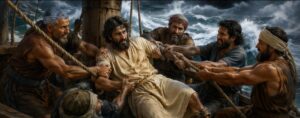 When Yeshua says, “You are the salt of the earth,” He is calling His disciples to carry God’s faithfulness into the world in a way that resists moral decay and keeps life from being treated cheaply.
Read alongside Jonah, His words land in a story that has already shown something like that in the lives of Gentiles.
In Hebrew, “salt” is מֶלַח (*melach*) and “sailor” is מַלָּח (*mallach*).
Jonah’s crew are literally “salt‑men,” and the story makes that more than a cute linguistic detail: they try hard to save Jonah before throwing him overboard, they pray not to be guilty of innocent blood, and they respond to the calming of the sea with fear of the Lord and sacrifice.
Jonah, the prophet, runs from God’s mercy.
The “salt‑men,” Gentile sailors, show moral concern and a real response to the God Jonah serves. That reversal is part of the book’s sting: the one with Torah resists, while the outsiders act with conscience and reverence.
Later, Cornelius in Acts 10 looks similar.
He is a Gentile centurion who fears God, gives generously, and prays continually, and when Peter comes, his household is ready to receive the message and the Spirit. In him, as in Jonah’s sailors, we see the nations already reaching toward Israel’s God before they are fully inside the story.
So when Yeshua tells His followers they are “salt,” it fits an arc we have already seen.
God keeps placing people—even among Gentiles—whose way of living slows harm, honors life, and listens for His voice, and He invites His disciples to stand in that same role with their eyes open and their hearts aligned to His mercy.
Arise and Go: Joppa and the Gentiles
Joppa (modern Jaffa) is a key location in both stories.
Jonah “went down to Joppa” to find a ship and flee from God’s call to Nineveh. He is at Joppa specifically to avoid going to Gentiles.
Peter is living in Joppa at the house of Simon the tanner when Acts 10 begins. From that rooftop, he sees a sheet full of animals—many unclean according to Leviticus 11—and hears a voice:
“Rise, Peter; kill and eat.”
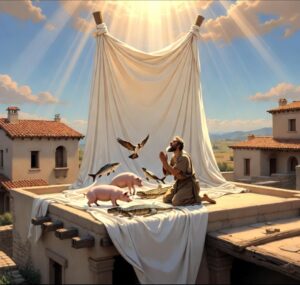 Peter protests: “I have never eaten anything common or unclean.” The voice replies, “What God has cleansed, you must not call common.” This happens three times.
Soon after, the Spirit tells him, “Arise… go with them, doubting nothing, for I have sent them.” Men from Cornelius, a Roman centurion, are at the door. Peter goes.
So we have:
– Jonah: “Arise, go to Nineveh” → Jonah arises to flee from Gentiles.
– Peter: “Rise, Peter; kill and eat… Arise, go with them” → Peter initially resists but ultimately arises to go to Gentiles.
Same city. Same God. Similar command verbs. Different responses. Luke seems to be intentionally echoing Jonah’s story in the way he tells Peter’s vision and journey. Jonah goes to Joppa to say “no.” Peter, son of Jonah, is in Joppa when he finally says “yes.

A Very Long Arc
In fact, “Rise, Peter; kill and eat” throws a long shadow back over the story of Noah and the rainbow. After the flood, God tells Noah that “every living creature that moves” will be food, and then sets the bow in the clouds as a sign of His covenant with all flesh—that He will never again wipe out the earth with a flood. In other words, God links the permission to eat animals with a global promise of preservation and patience toward a sinful world. When Peter hears “Rise… kill and eat” in Acts 10, it’s not just about his lunch. It’s a Noah‑like moment in which God again expands the circle: this time, not only are more creatures declared “food,” but more peoples are declared “clean.” The rainbow once marked a covenant of mercy for every creature after judgment by water. Peter’s vision marks a covenant of mercy for every nation after judgment falls on Yeshua. The command to rise, kill, and eat becomes a new‑covenant echo of Noah’s world‑wide promise, now focused on bringing salvation rather than just survival.
Message and Mercy: Nineveh and Jerusalem
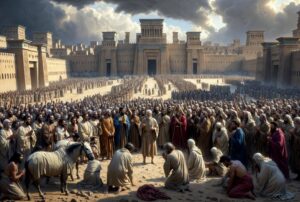 When Jonah finally reaches Nineveh, his warning brings about one of the most remarkable scenes of repentance in Scripture. The people—from king to commoner—believe God, fast, turn and repent. God shows mercy and does not destroy the city. Jonah’s message, even though he didn’t want to give it, becomes a channel of mercy.
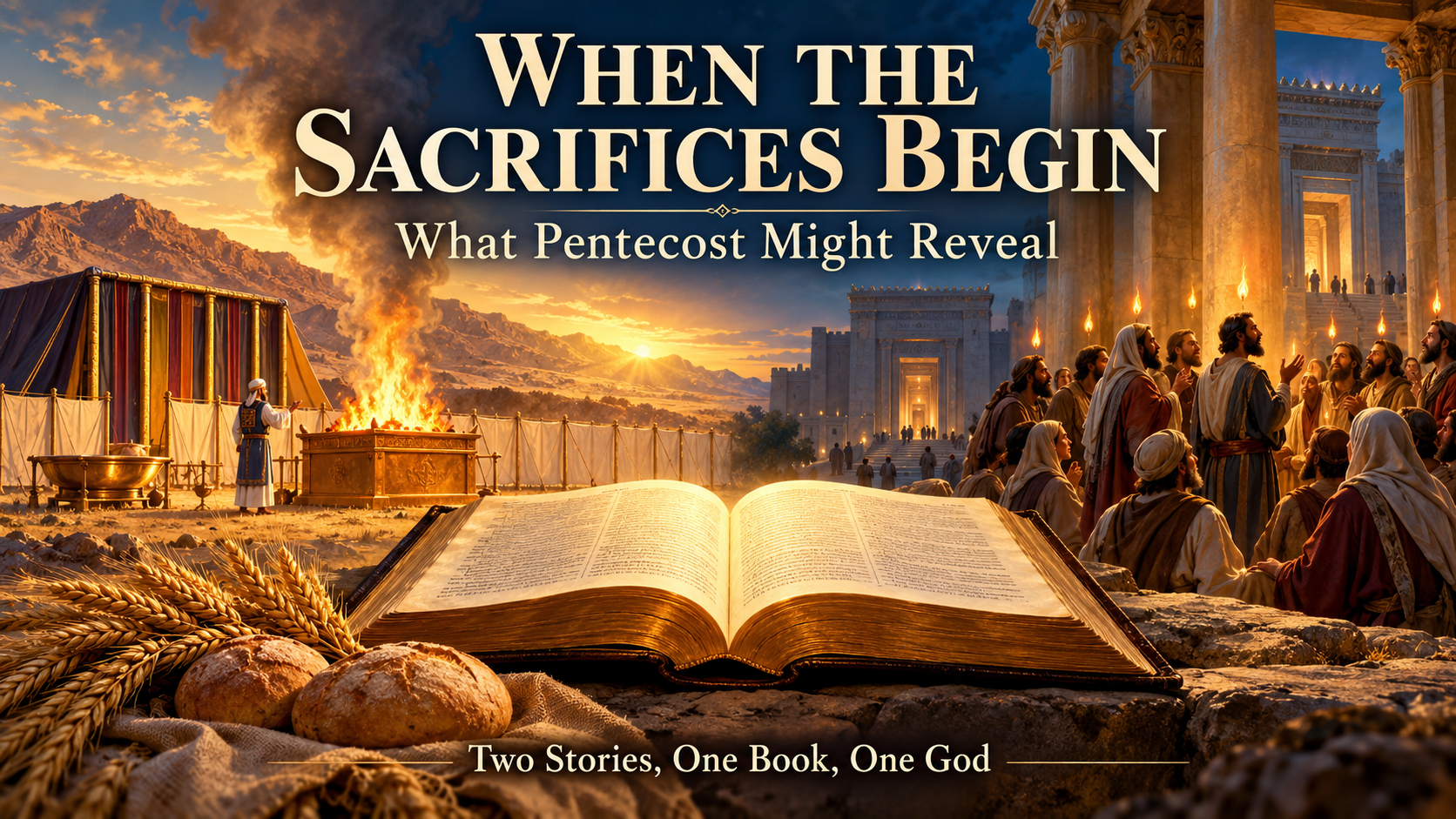
Peter’s first major sermon—at Pentecost in Jerusalem—also centers on repentance and mercy. He proclaims that Jesus, whom they crucified, has been raised and exalted as Lord and Messiah. When the crowd is cut to the heart and asks what to do, Peter answers: “Repent and be baptized… for the forgiveness of your sins, and you will receive the gift of the Holy Spirit.”
Thousands respond. The church is born out of that call to repent and receive mercy in the name of Jesus.
We can see Jonah’s Nineveh and Peter’s Jerusalem as parallel moments: a son of Truth preaches, sinners respond, and God’s mercy moves toward people who, by all accounts, deserve judgment. The difference is that Peter leans into this role far more fully than Jonah ever does. Jonah is angry at mercy. Peter learns to rejoice in it.
Booth and Roof: God’s Question, Church’s Answer
The last chapter of Jonah has always fascinated me.
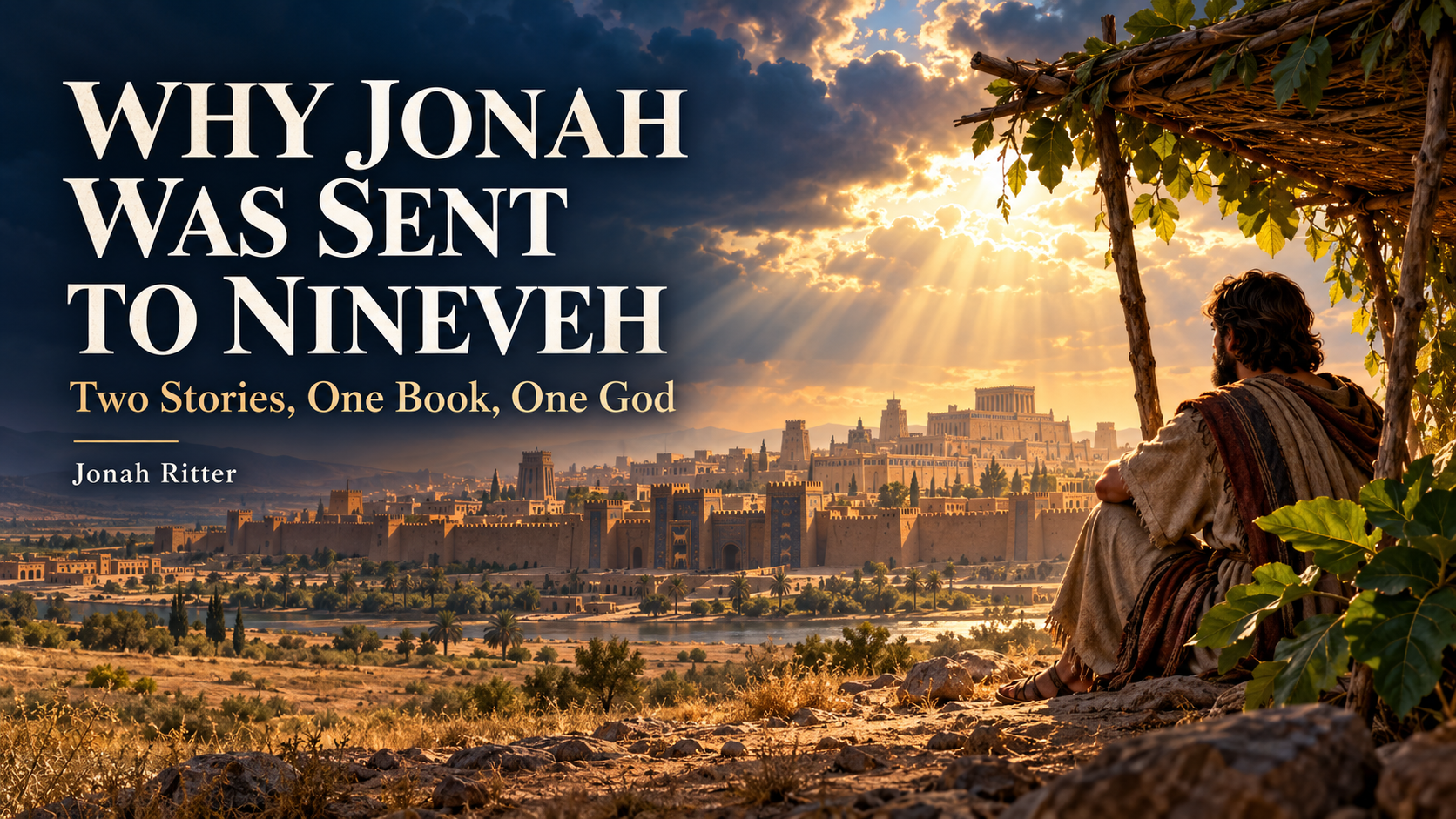
Jonah goes outside the city, east of Nineveh, builds a booth, and sits in its shade to see what will happen to the city. He wants to watch, perhaps hoping judgment will still fall.
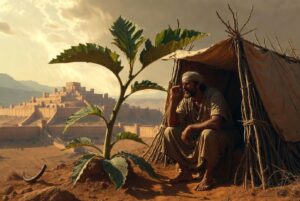 God appoints a plant to shade him, then a worm to wither the plant, and a scorching wind to expose Jonah’s misplaced compassion. Jonah cares more about the plant than the people. God confronts him with a question: “You cared about the plant… Should I not care about Nineveh, that great city, in which there are more than 120,000 persons who do not know their right hand from their left, and also much cattle?”
The book ends there. No answer from Jonah. Just God’s question to Jonah and all of us! The New Testament does not tell us what Jonah said next, but it does show us another “son of Jonah” being drawn back into the same issue. When Jesus calls Simon “bar‑Jonah,” and when Peter later stands on a rooftop in Joppa wrestling with God’s vision and then faces criticism in Jerusalem for eating with Gentiles, he is effectively picking up the unanswered question left hanging over Nineveh: Will God’s people accept His mercy for those they have long viewed as outsiders and enemies? Jonah’s story stops at the question. Peter’s story carries that question forward and, through his obedience and testimony, begins to answer it on behalf of the emerging church.
Peter’s story has a kind of mirror scene, and a reversal.
On the roof in Joppa, Peter’s vision forces him to face a similar question in a different form: Who does God call “clean”? Who belongs? The Spirit then sends him to Cornelius. Peter crosses the threshold, enters a Gentile home, and preaches. The Spirit falls on the Gentiles just as on the Jewish believers.
When Peter returns to Jerusalem, some criticize him for eating with Gentiles. He explains the vision and what happened. His conclusion is simple: “Who was I to think that I could stand in God’s way?” The critics fall silent and say, “Then to the Gentiles also God has granted repentance that leads to life.”
Where Jonah sits in a booth and never answers God’s question about Gentile mercy, Peter stands before the church and answers it—through his actions and his testimony. Yes, God does care about the “great city” world of the Gentiles. Yes, He grants them repentance and life. Yes, they are clean in His sight when He cleanses them.
Torah as Way, Truth, Life and Yeshua’s New Way
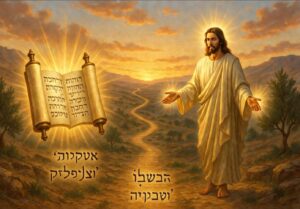 In the Jewish world I grew up in, Torah is experienced as the way, the truth, and the life. It’s the path God gave Israel, the true teaching, and the source of life and blessing. Torah shapes identity and daily practice.
At the same time, in the Gospel of John, Yeshua says: “I am the way, and the truth, and the life. No one comes to the Father except through Me.” This language sits right on top of the Jewish experience of Torah. It’s as if Yeshua is saying: what Torah is for Israel, I am in person. Not against Torah, but fulfilling and embodying its deepest intent.
Jonah’s story already presses on Torah’s intent. Torah sets Israel apart through laws, including dietary and purity laws, but there are also strong currents about God’s compassion and concern for the nations. Jonah is sent to a Gentile city and fights that part of the story.
Peter’s Joppa vision—“Rise, Peter; kill and eat”—lands right at the point where holiness laws and Gentile inclusion collide. The voice says, “What God has cleansed, you must not call common.” Peter later applies that directly to people: “God has shown me that I should not call any man common or unclean.”
This is a major statement about God and about how believers will relate to the Law going forward. It isn’t that Torah was false. It’s that, in Yeshua, God is doing something new with Torah—fulfilling its purpose and opening its mercy to those who were once on the outside.
Fulfillment vs Replacement: Why It Matters Here
There’s a long debate in Christian theology about whether Jesus “fulfills” the Law or “replaces” it.
Fulfillment language comes straight from Jesus: “I did not come to abolish the Law and the Prophets, but to fulfill them.” Fulfillment suggests completion and deepening. Replacement easily suggests setting Torah aside as obsolete.
If we read Jonah and Peter together, the patterns lean toward fulfillment, not simple replacement.
In Jonah, God’s mercy to Gentiles is already part of the story, even though the prophet resists it. The Law and the Prophets have this tension built in: Israel is set apart, but God cares about all peoples. Jonah ends with that unresolved question about Nineveh.
In Peter, Yeshua and the Spirit bring that question to a clear answer. The Law’s boundaries are reinterpreted in light of Messiah’s work. Gentiles are brought in, not by becoming Jews under full Torah, but by repentance and faith in Yeshua and by the gift of the Spirit. That’s a change, but it’s also the completion of what Torah and Jonah were pointing toward: God’s mercy going wide.
Two Stories. One God. One Arc Among Many
So what do we have when we put all this together?
– Jonah ben‑Amittai: son of “My Truth,” reluctant prophet whose message brings mercy to a Gentile city, but whose heart never fully accepts God’s compassion for enemies.
– Simon bar‑Jonah: son of Jonah, impulsive disciple who fails and fears, is restored and renamed Peter, and eventually becomes the “rock” who opens the door of mercy to Jews at Pentecost and to Gentiles in Caesarea.
Same God. Similar storms, sleep, boats, and high vantage points. Same tension about sinners, enemies, and Gentiles. Same core truth about God’s mercy. But very different trajectories.
Jonah’s story ends with a question hanging in the air. Peter’s story continues with a community saying, “Then to the Gentiles also God has granted repentance that leads to life,” and with the gospel moving out toward the wider world.
For me, this Jonah–Peter link is one band of color in the rainbow of Scripture—a clear arc that connects Torah, prophet, Messiah, apostle, Israel, and the nations. It’s also personal. Bearing the name Jonah, hearing his book every Yom Kippur, I’ve long felt that Jonah’s role was bigger than we were often told. Seeing Peter, son of Jonah, step into and complete that arc has helped me see Jonah—and Torah—in a new light.
There are more arcs to trace—other pairs of stories, other colors in the spectrum. But for now, this one feels like a good place to pause: two stories, one God, and a “sons of Truth” arc that carries the mercy of God from the belly of a fish to the heart of the church.
Conclusion
When I say Yeshua came to teach Torah, I also mean that His message of loving‑kindness—chesed—is as Jewish as the Torah gets. In Jewish tradition, chesed isn’t a soft add‑on; it’s central. The sages say the Torah begins and ends with acts of kindness, and some even call gemilut chasadim the purpose of the whole Torah. Loving the stranger, caring for the poor, visiting the sick, forgiving enemies—these are core Torah themes. So when Yeshua blesses the merciful, eats with sinners, heals the broken, and commands His followers to love their enemies, He is not stepping outside Judaism; He is standing inside its deepest stream. His “new way” for Jonah’s son—Peter—is not a move away from Torah but a call to live its chesed all the way out, even toward the Ninevehs and Corneliuses of the world.
Isaiah 28:16 – God lays in Zion a “tested stone, a precious cornerstone for a sure foundation,” promising security to those who trust in Him.