Reflections on boundaries in the universe, society, culture, our lives, and the Bible
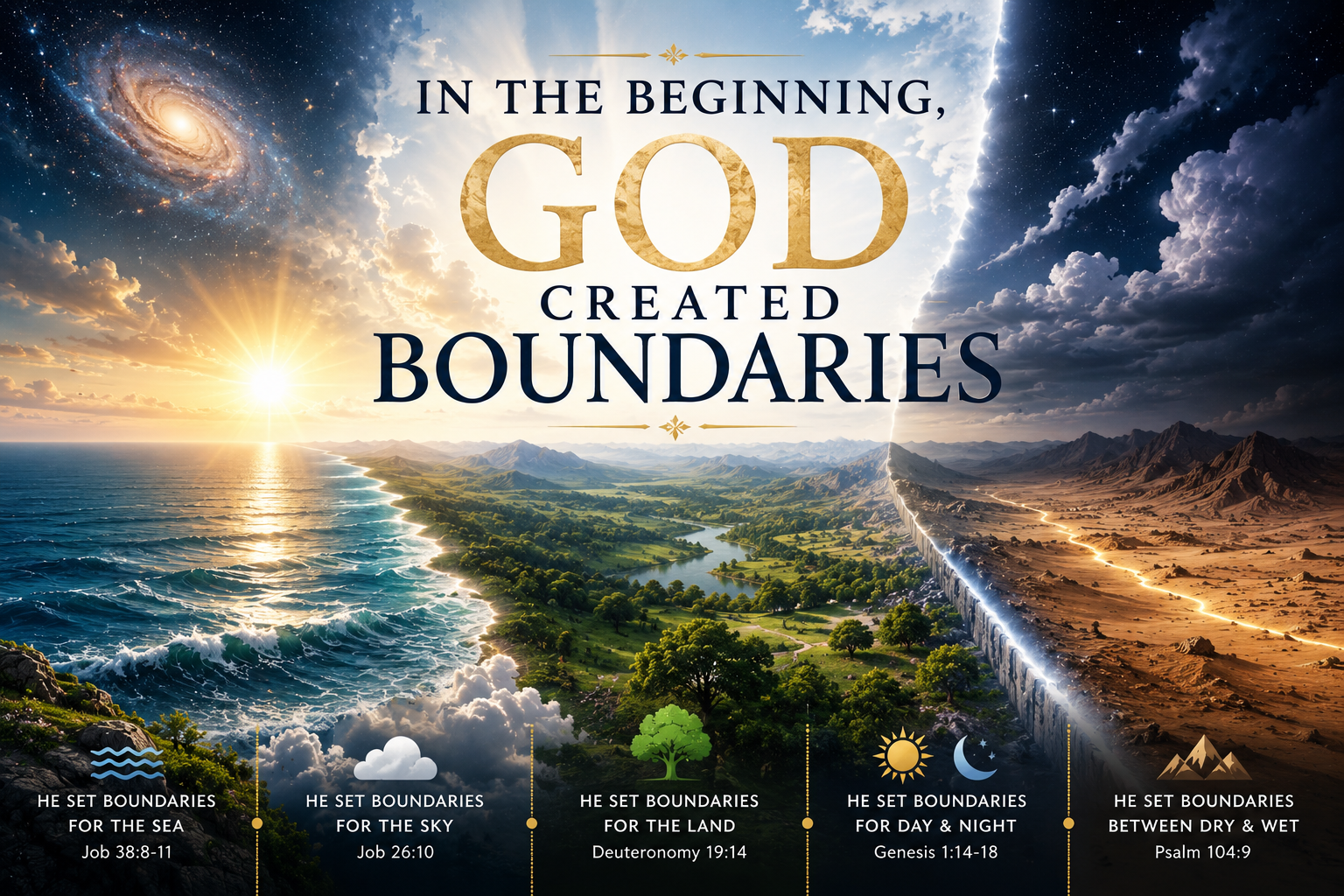
In the beginning, God did not merely create matter. He created order. The opening chapter of Genesis presents creation not simply as the making of things, but as the drawing of lines: “God saw that the light was good, and he separated the light from the darkness.” He separated the waters above from the waters below, gathered the seas so that dry ground could appear, and appointed lights in the heavens “to separate the day from the night” and to mark “days and years.” From the first page of Scripture, creation takes shape through distinction, limit, and placement. God brings order out of chaos, and that order is boundaries. The word cosmos means order. The term encompasses everything that exists—space, time, matter, and energy—governed by consistent physical laws, boundaries.
This way of seeing creation is deeper than the common idea that boundaries are merely restrictive. In Genesis, boundaries are what make the world livable. Without the line between sea and land, there is no place to stand. Without the line between night and day, there is no rhythm for work and rest. Without the distinction between one kind and another, the world dissolves into confusion. God’s world is not a blur. It is an ordered home, and that home is built by the lines He draws.
Among all the boundaries God creates, time may be the most profound. Genesis measures the world through evening and morning, day after day. Time itself is a boundary. We do not step outside it. We do not reverse it. Yesterday does not open again once it has closed. Human life moves in one direction: from before to after, from birth to age, from promise to fulfillment. Death is like time in this respect. It is another one-way boundary. Once crossed, no human being can simply step back over it. These are the lines that define creaturely existence. We live within them.
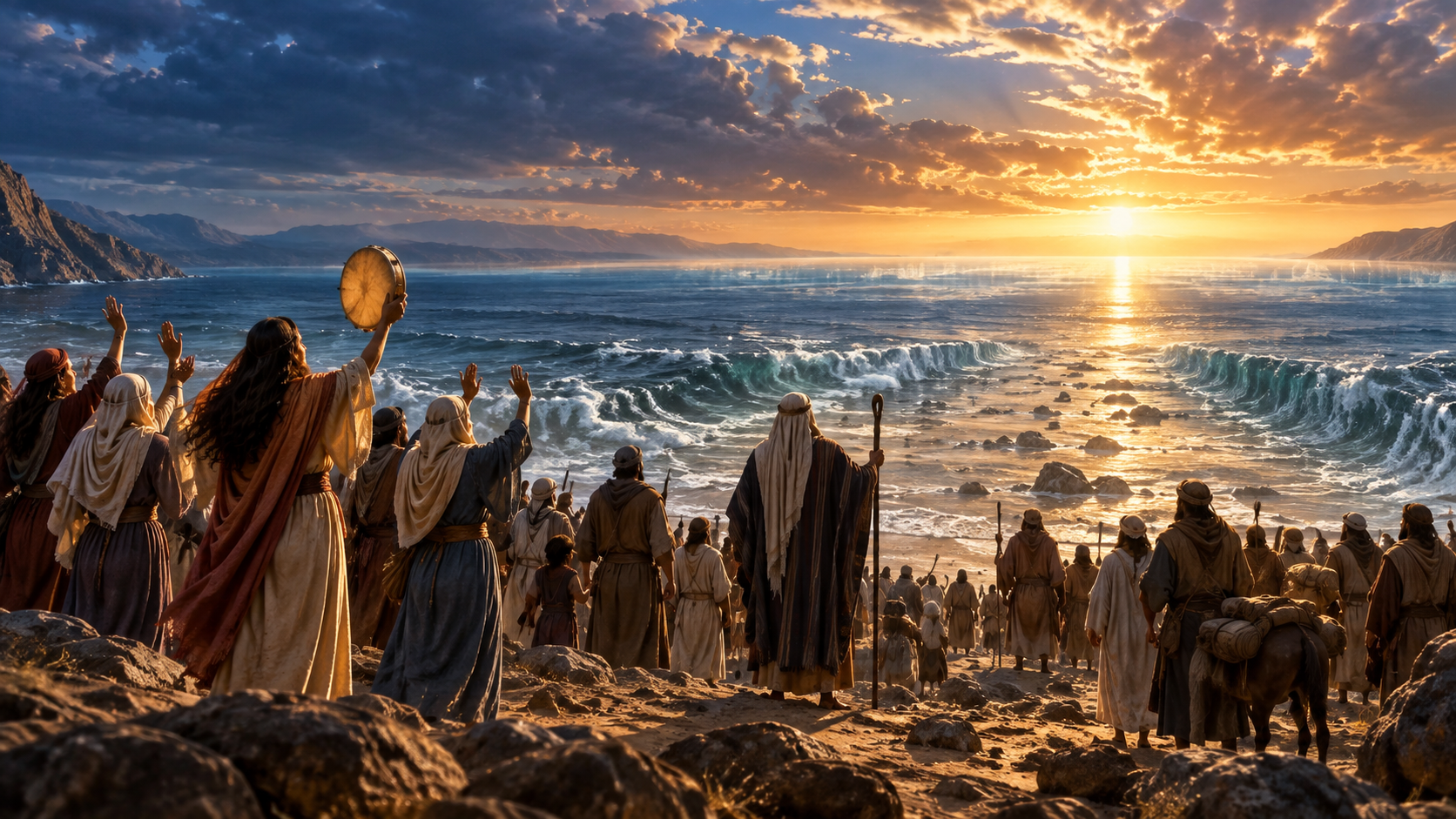
If God creates boundaries, He also marks them. Scripture is filled not only with invisible limits but with visible signs: stones, altars, pillars, and sacred places where God’s action leaves a trace in the earth. When Israel crosses the Jordan, Joshua commands twelve stones to be taken from the riverbed and set up at Gilgal “to serve as a sign among you.” When later generations ask, “What do these stones mean?”, the answer is that the Jordan stopped before the ark and Israel crossed on dry ground. These stones are memorials, but they are more than memorials. They are landmarks. They mark the place where a boundary moved, where wandering ended and inheritance began. They say, in stone, “God acted here. God brought His people across.”
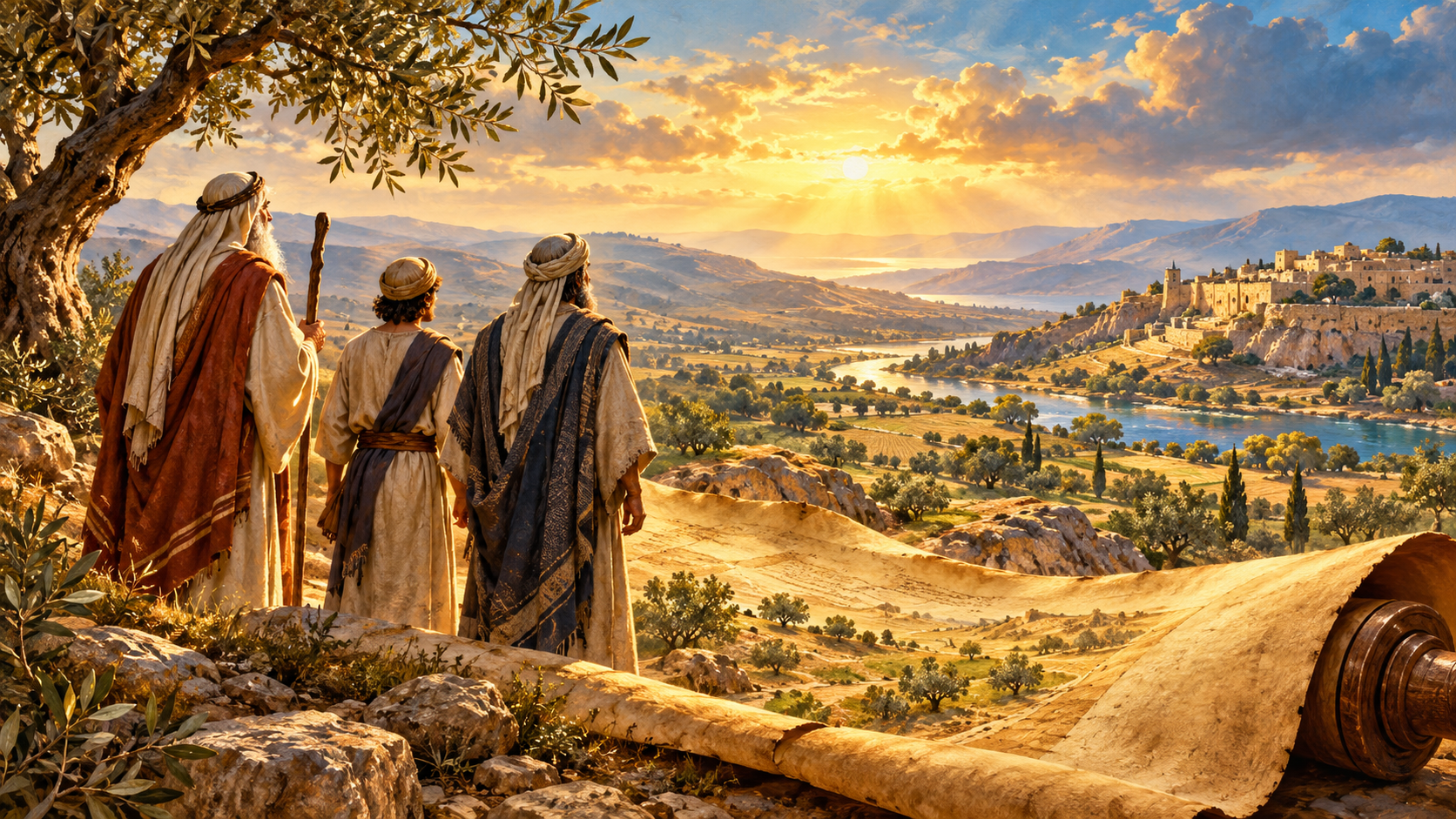
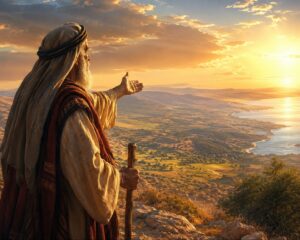 This connection between boundaries and landmarks opens into the story of Israel itself. In Scripture, God uniquely defines Israel’s borders. He shows Abraham a land, promises it to his descendants, and later gives Moses explicit boundary descriptions for the inheritance of the tribes. This is not incidental. No other nation in the Bible is given the same kind of divinely narrated territorial identity. Israel’s land is not merely political space. It is covenant space. Its borders are part of God’s promise, and the division of that land by lot among tribes and families shows that the map itself belongs to His justice and His word. To move a landmark is therefore not a minor offense. It is rebellion against God’s order, an attempt to erase the place He has assigned to another.
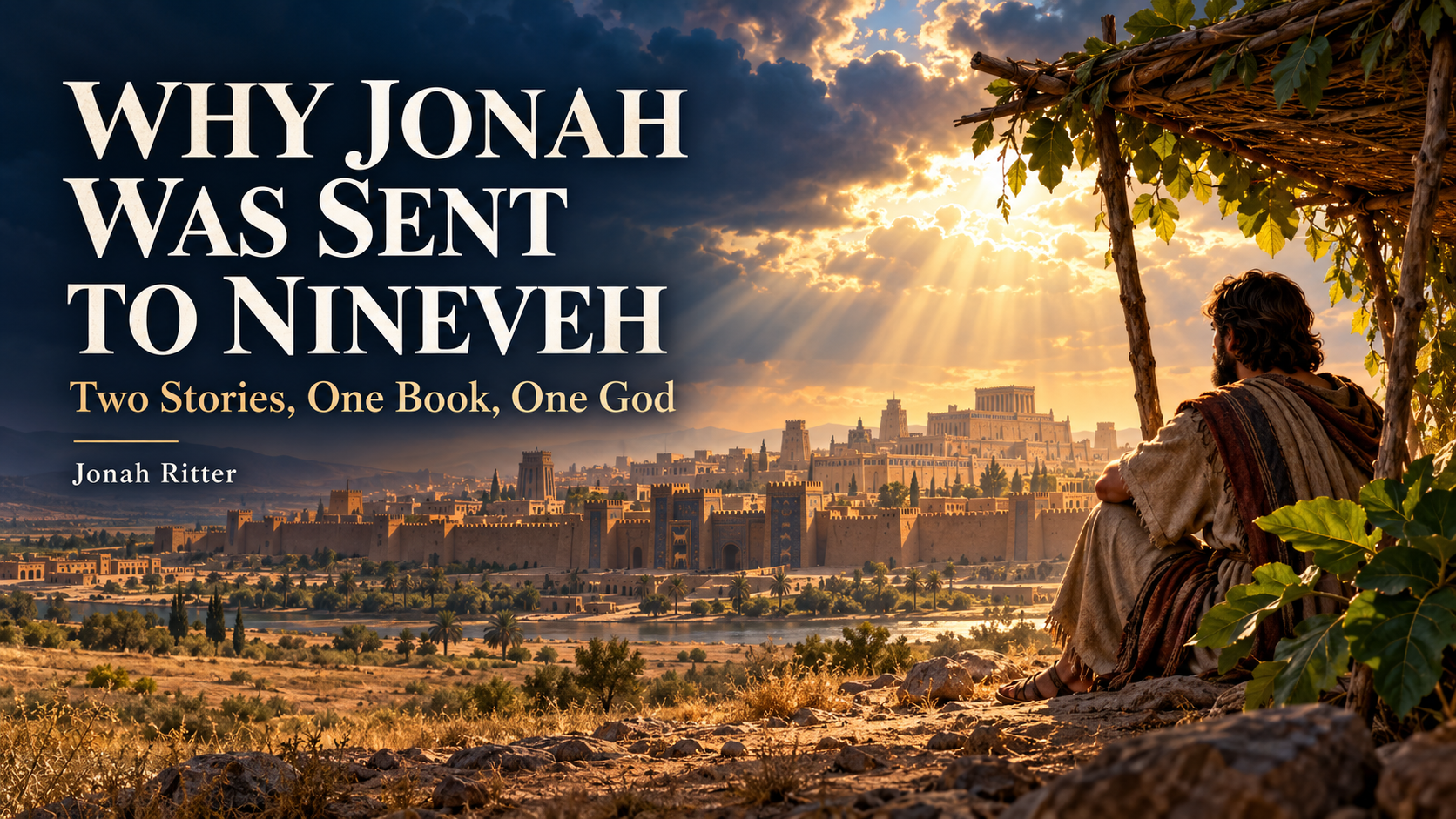
Even the prophets participate in this theme. The prophet Jonah, son of Truth, appears in 2 Kings in connection with the restoration of Israel’s boundaries: “He was the one who restored the boundaries of Israel from Lebo Hamath to the Dead Sea, in accordance with the word of the Lord, the God of Israel, spoken through his servant Jonah.” That detail matters. Jonah is not introduced as a prophet of vague spirituality, but as a prophet tied to Israel’s borders. When the same Jonah is later sent to Nineveh, the movement is startling. The prophet associated with the restoration of Israel’s territorial line is sent beyond that line, into the heart of the foreign city of Israel’s fierce enemy. Already the Bible is suggesting that while God’s covenant boundaries are real, His word is not trapped inside them.
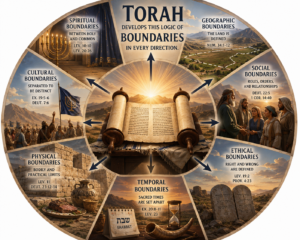 Torah develops this logic of boundaries in every direction. Land boundaries, property lines, tribal inheritances, Sabbath patterns, purity laws, sexual limits, economic justice, and the distinction between holy and common all teach Israel how to live within God’s ordered world. The camp itself is ordered by nearness and distance. The tabernacle is arranged by thresholds and zones. Some may go here, but not there. Some things are clean, others unclean; some times are ordinary, others holy. None of this is random. These distinctions preserve life, justice, memory, and reverence. They protect a people from dissolving into chaos.
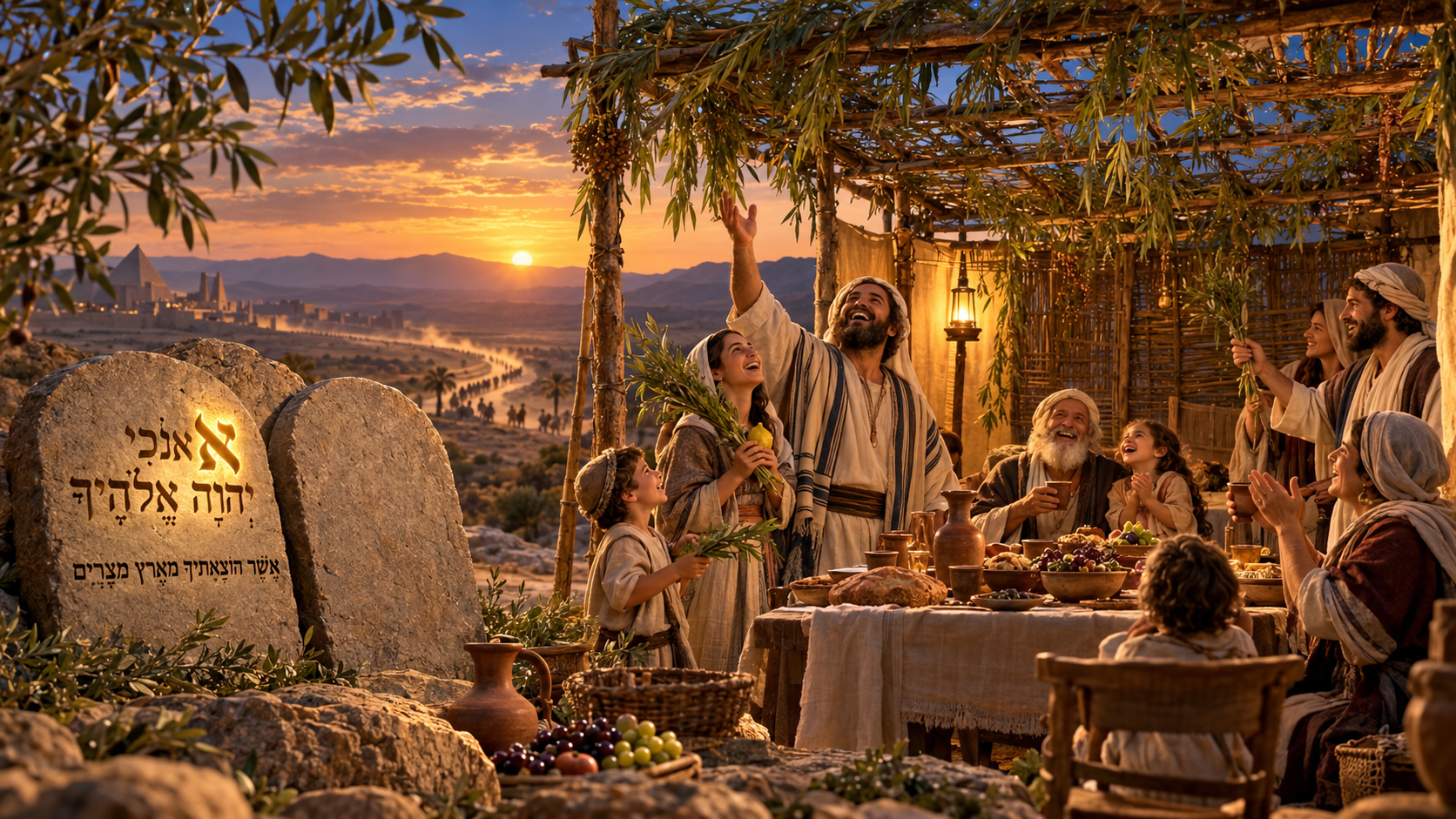
Shabbat is one of the clearest and most beautiful examples of boundaries. If God marks out Israel’s land with borders, He marks out Israel’s week with a sacred boundary in time defined by the very first boundary in the bible, evening and day, and time.
The seventh day is set apart from the other six, blessed and made holy. Shabbat says, “Here you stop.” Work stops. production stops. mastery stops. The week does not belong to the same rhythm all the way through. Even halakhic concepts such as techum Shabbat and the eruv make this sanctified time visible through spatial boundaries as well. Shabbat is therefore not simply a rule. It is a weekly reminder that human life is protected by limits. We are not meant to live in endless expansion. Holiness requires a line.
This truth extends beyond Israel into society and culture more broadly. Human beings are boundary-making creatures because we are made in a world of God-drawn boundaries. Nations have borders. Families have roles. communities define belonging. Laws separate the permitted from the forbidden. Cultures draw lines around language, dress, memory, and custom. Some of these boundaries protect life and identity. Others become corrupt. They harden into tools of fear, exclusion, pride, and domination. The same instinct that, under God, creates order can, under sin, create oppressive walls. The problem is not the existence of boundaries. The problem is that human beings regularly redraw them to protect themselves instead of serving truth, mercy, and justice.
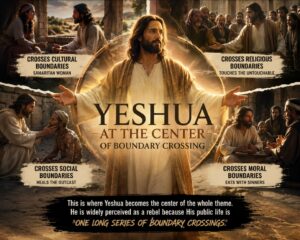 This is where Yeshua becomes the center of the whole theme. He is widely perceived as a rebel because His public life is one long series of boundary crossings. He eats with tax collectors and sinners. He touches lepers. He allows the unclean and the ashamed to come near Him. He speaks across gender, ethnic, and religious lines. He gains a reputation as one who does not respect the accepted fences of His day. Yet this is precisely where the deeper pattern emerges. Yeshua does not abolish God’s boundaries. He exposes the difference between God’s lines and ours. He breaks the boundaries human beings have built to defend pride, privilege, and hardness of heart, while intensifying the boundaries God gave for life, love, fidelity, and truth.
His teaching on Shabbat makes this unmistakable. In the grainfield controversy He says, “The Sabbath was made for man, not man for the Sabbath. So the Son of Man is Lord even of the Sabbath.” In that sentence He does two things at once. First, He insists that Shabbat’s boundary exists for human good. Second, He claims authority over that boundary as its Lord. His healings on Shabbat are therefore not violations of God’s intent, but revelations of it. He redraws the practical line so that mercy, restoration, and human need fall inside the meaning of the holy day, while legalistic hardness falls outside. The issue is not whether Shabbat remains a boundary. The issue is who has authority to say where its true edge lies.
The encounter with the Samaritan woman at the well sharpens this even further. John 4 is a boundary scene from beginning to end. Jew and Samaritan. Man and woman. Purity and the sharing of water. Jerusalem and Gerizim. Insider and outsider. Yeshua crosses every one of those lines without anxiety. He asks for a drink. He offers living water. He speaks truth into the woman’s life without contempt. Then He says that the hour is coming when worship will be centered neither on “this mountain” nor in Jerusalem, but “in Spirit and truth.” This is not the destruction of holiness. It is the relocation of holiness around Himself. The woman becomes a witness to her own people, carrying His word back into Samaria. In that sense, John 4 foreshadows Acts 1:8: “You will be my witnesses in Jerusalem, and in all Judea and Samaria, and to the ends of the earth.” Yeshua is already walking the Samaria step before the apostles are formally sent to it.
This is why His ministry can be seen as the fulfillment of the long arc of Torah rather than a rejection of it. The God who drew Israel’s borders also always intended His word to go out beyond them. Israel’s separateness was not an end in itself. It was a vessel, a witness, a priestly calling. In Yeshua, the holiness of Israel is not discarded; it is fulfilled and sent. The boundary remains meaningful, but it is no longer a prison. It becomes the place from which blessing moves outward.
At the deepest level, Yeshua confronts not only social and religious boundaries, but the final human boundaries of time and death. God alone declares “the end from the beginning.” Human beings cannot do that. We live inside time’s succession. We cannot retrieve what is gone. We cannot leap ahead into what has not yet arrived. And death stands before us as the fixed edge of creaturely life. But in Yeshua, God enters history from within. He takes on flesh, inhabits a particular land, people, and hour, and then moves toward the one line no human being can cross and return from. In the resurrection, that line is crossed. Death is not denied; it is broken open. The final boundary yields to the One who first drew all boundaries in creation.
Seen this way, the whole Bible can be read as a meditation on boundaries. Genesis begins with God dividing light from darkness, sea from land, day from night. Israel’s story unfolds through borders, landmarks, inheritances, purity codes, Sabbaths, and holy spaces. The prophets speak both of restored borders and of God’s word reaching beyond them.And then Yeshua appears, not as the enemy of boundaries, but as their truest interpreter. He preserves what gives life, tears down what blocks mercy, and crosses what imprisons us.
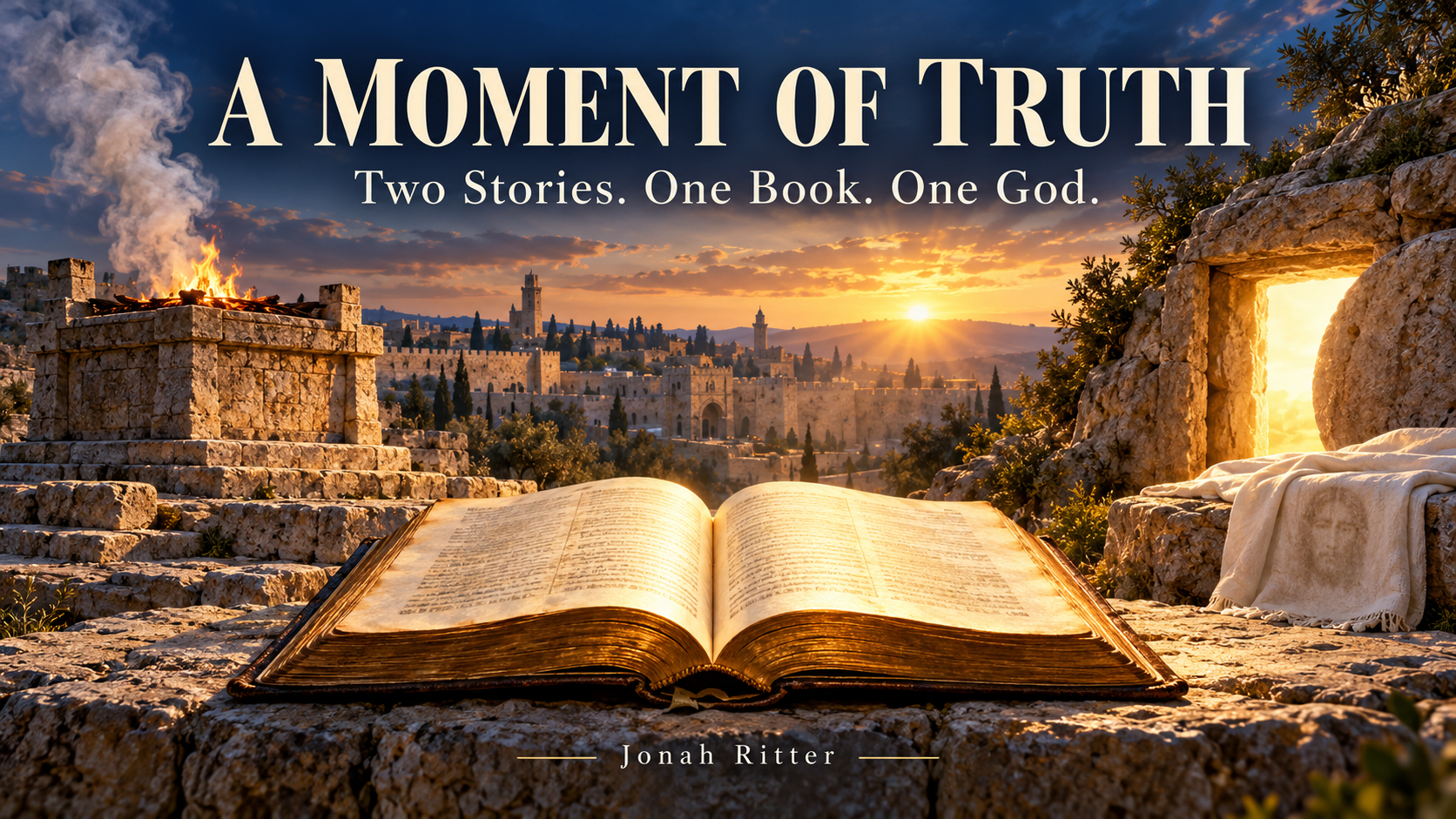
The more one traces this theme, the clearer the pattern becomes. Boundaries are not peripheral to Scripture. They are everywhere. They are in the structure of creation, the shape of Israel, the rhythm of Shabbat, the stones at Gilgal, the line of inheritance, the crossing into Samaria, and the empty tomb. God’s world is an ordered world. God’s covenant is a bounded covenant. God’s holiness creates distinctions. But God’s grace is not trapped by the boundaries He draws. He alone has the authority to establish them, to defend them, to move them, and, in Yeshua, to redeem them.
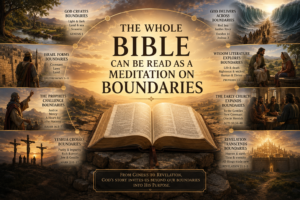 So perhaps one could say that the Bible is, in one profound sense, a book about boundaries. Not boundaries as cold restrictions, but as the structure of a world where life can flourish under God. And Yeshua stands at the center of that world as the one who reveals which boundaries are holy, which are human, and which are destined to be crossed only by God Himself.
Epilogue:
Most of Israel keeps Shabbat. America, not so much. I am intrigued that our “Independence Day” is based on the numbers 7 and 4. And that our very special 250th celebration falls on the 7th day, Shabbat.
Shabbat is largely about “Boundaries.” The primary Hebrew word for “boundaries” is גבולות (gevoulot). The singular form is גבול (gevoul), which translates to boundary, border, or territory. This word represents both physical, geographical borders and interpersonal or personal limits.
A dear friend responded to my post with an observation that I must quote:
“Thank you Jonah… profound insights and an excellent parallel to border issues in the USA as we celebrate our 250th… of course liberals and our modern day socialists don’t believe in any borders except their own… and when they can evolve us to communism there will be borders everywhere… in the imposed restrictions needed for control… common sense dictates borders… therein lies the problem…”
Observation:
Isn’t interesting that the jew says “Shabbat Shalom” (Sabbath Peace) and Christian’s say “Shalom Shalom” (Perfect peace).