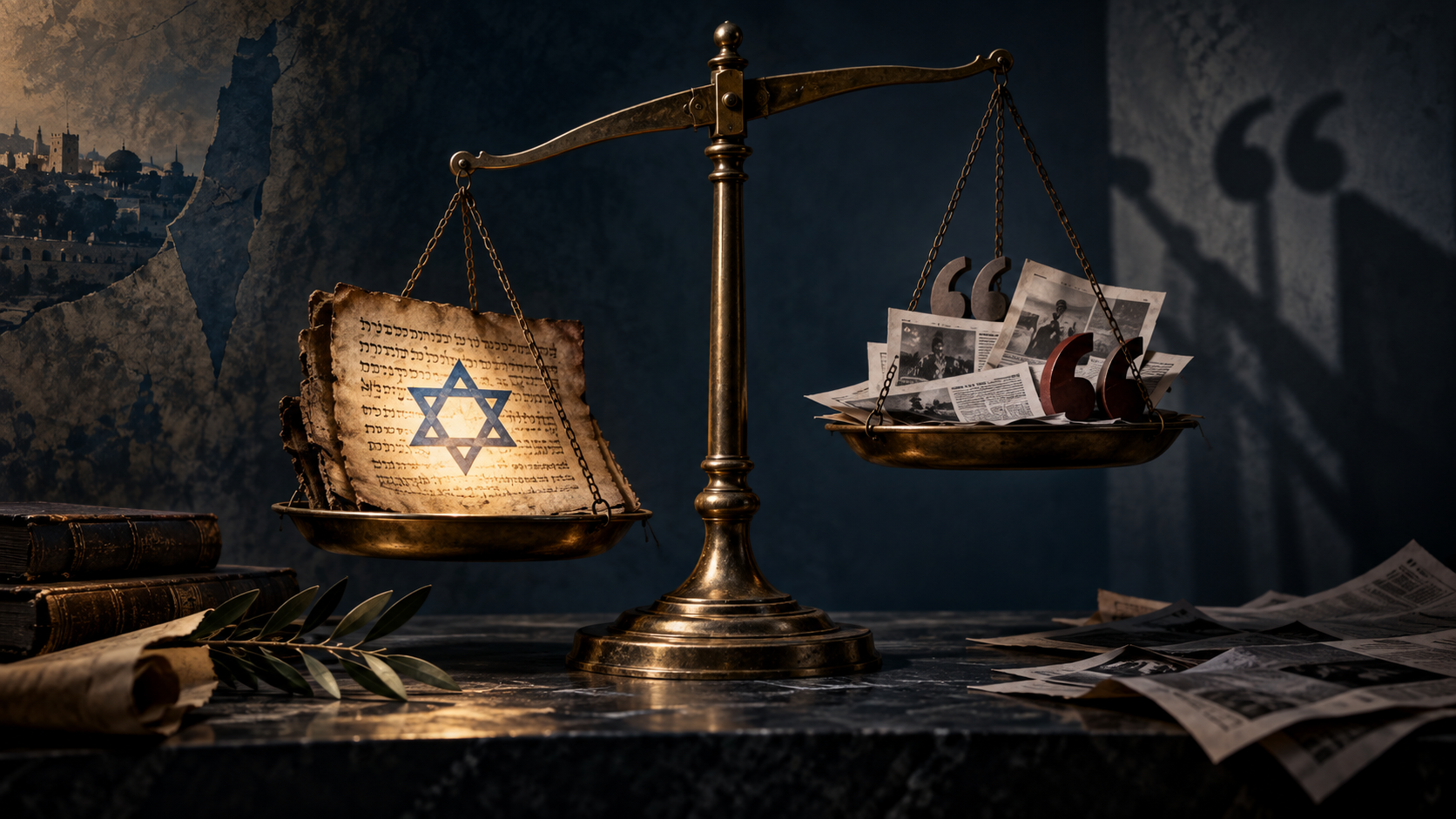
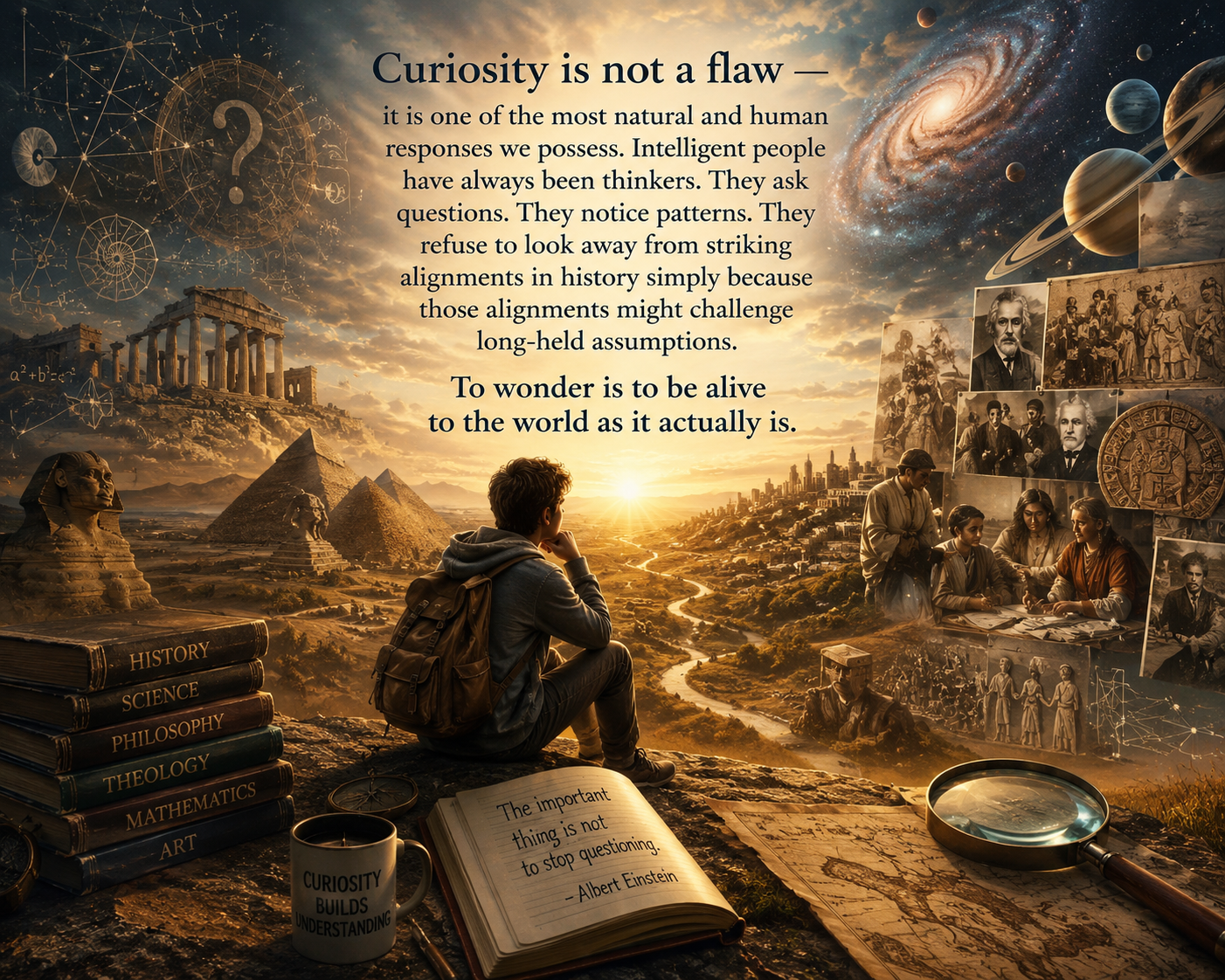
There is nothing wrong with wondering. Curiosity is not a flaw — it is one of the most natural and human responses we possess. Intelligent people have always been thinkers. They ask questions. They notice patterns. They refuse to look away from striking alignments in history simply because those alignments might challenge long-held assumptions. To wonder is to be alive to the world as it actually is.
And yet, when it comes to one particular figure, wondering is often quietly treated as dangerous or off-limits.
Yeshua— the man the world knows as Jesus — is by any honest measure the most famous person who has ever lived. No other individual has shaped language, art, law, ethics, calendars, hospitals, universities, and entire civilizations the way he has. His life and teachings have impacted more lives across more centuries and continents than perhaps anyone else in recorded history. Even those who reject his claims still live in a world profoundly shaped by them.
One would think that a people renowned for intellectual rigor and deep textual study would be intensely curious about such a figure — especially since he was a first-century Galilean Jew, born into a Jewish family, raised in the Torah, speaking Hebrew and Aramaic, debating rabbis in the Temple courts, and executed by Rome, marked as the “King of the Jews.”
The irony runs deeper still.
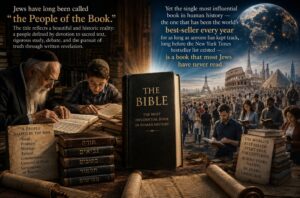
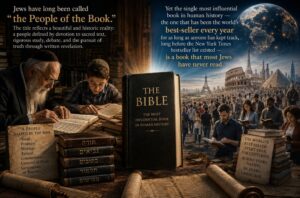 Jews have long been called “the People of the Book.” The title reflects a beautiful and historic reality: a people defined by devotion to sacred text, rigorous study, debate, and the pursuit of truth through written revelation. Yet the single most influential book in human history — the one that has been the world’s best-seller every year for as long as anyone has kept track, long before the New York Times bestseller list existed — is a book that most Jews have never read.
It is a book written almost entirely by Jews, about a Jew, set entirely within the world of Second Temple Judaism, saturated with references to the Hebrew Scriptures, and centered on the question of what the God of Israel was doing in that exact moment of history.
Wondering is not disloyalty. It is not betrayal. It is the same impulse that has kept Jewish learning alive for millennia — the refusal to stop asking “Why?” and “What does this mean?”
There is nothing wrong with wondering about the most impactful Jewish life in history.
The only real question is whether we are still willing to follow honest curiosity wherever the evidence leads.
The Talmud’s Silent Warning: Signs That Stopped in 30 CE
That same honest curiosity leads many to examine an ancient Jewish text that records something remarkable happening right around 30 CE. The Jewish community’s own sacred texts record that certain miraculous signs associated with the Temple in Jerusalem stopped functioning around 30 CE — the approximate year Jesus was crucified according to the Gospels. Those signs, observed for generations, ceased for the final forty years before the Temple’s destruction by the Romans in 70 CE.
This is not a Christian invention. It is documented in the Babylonian Talmud, Tractate Yoma 39b, compiled by rabbis who did not accept Jesus as the Messiah and had no reason to craft details favorable to Christian claims.
The Signs That Once Confirmed Atonement
For centuries, three notable phenomena were tied especially to the Yom Kippur (Day of Atonement) service and daily Temple life:
1. The Scarlet (Crimson) Thread
A scarlet wool thread or strap was tied to the scapegoat (the Azazel goat) and the Temple door. Tradition held that when God accepted the nation’s atonement, the thread would miraculously turn white — a public, visible sign echoing Isaiah 1:18: “Though your sins are like scarlet, they shall be white as snow.”
2. The Western Lamp
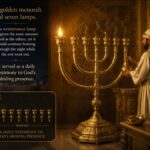 The golden menorah had seven lamps. The westernmost lamp was given the same measure of oil as the others, yet it would continue burning through the night while the rest went out. It served as a daily testimony to God’s abiding presence.
3. The Temple Doors
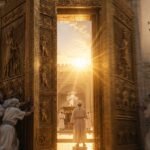 The massive bronze doors of the Sanctuary (Hekal) were so heavy that twenty men were required to open them.
After Yeshua’s crucifixion, according to the Talmud Yoma 39b, during the last forty years before the destruction of the Temple the lot [‘For the Lord’] did not come up in the right hand; nor did the crimson-coloured strap become white; nor did the westernmost menorah light shine; and the doors of the Hekal would open by themselves. Rabban Yohanan ben Zakkai interpreted the doors as an omen of coming destruction, linked to Zechariah 11:1.
Striking 40-Year Parallel
There is another layer that deepens the wonder.
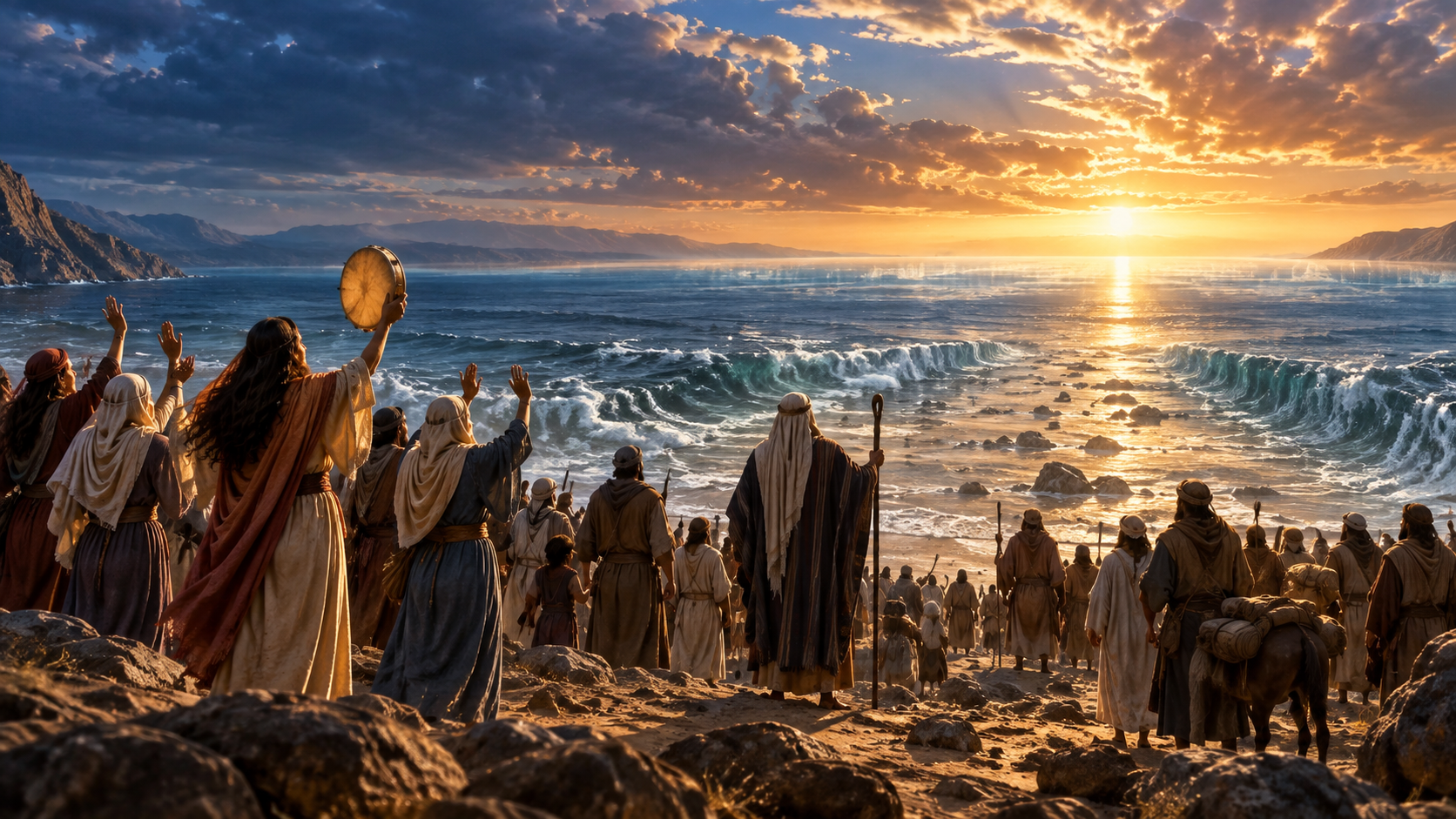
In the Exodus story — the foundational event of Jewish identity — the Passover lamb was slain, the Hebrew people were freed from Egyptian bondage, and the blood on the doorposts brought deliverance. What followed? A forty-year period of wilderness wandering: a time of testing, transition, and preparation before entering the Promised Land.
Fast-forward roughly 1,500 years. Yeshua is repeatedly called the Passover Lamb in the New Testament — the one whose sacrificial death brings ultimate deliverance and salvation. According to the Gospels, he was crucified at Passover. And what followed his death? Another forty-year window — from approximately 30 CE until the destruction of the Second Temple in 70 CE.
The parallel is hard to dismiss. Forty, in Scripture, is often the number of testing, judgment, and preparation before a new chapter begins. The rabbis who recorded the cessation of the signs may not have intended to highlight this connection, but the symmetry remains striking for those willing to consider it.
The system of shadows and rehearsals, as the Epistle to the Hebrews later described the Temple rituals, appears to have reached its conclusion. The forty-year period that followed stands as a window of warning before the physical Temple itself was taken away. Whether one approaches this as a Christian, a Jew, or a seeker of history, the alignment invites reflection. It makes one wonder.
There’s Much More to Wonder About — And Good Reasons to Do So
Once you begin looking with open curiosity, you discover that the first-century Jewish world was saturated with expectations, symbols, and hopes that many readers today never encounter.
The New Testament writings themselves were composed by Jews who saw Yeshua not as the founder of a foreign religion, but as the fulfillment of Israel’s own story. They quote the Hebrew Scriptures constantly. They frame his life, death, and resurrection as the climax of the covenants, the return of God’s presence, and the inauguration of the long-awaited redemption.
And they were not alone in noticing something decisive had shifted around that time.
Jewish sources beyond the Talmud also preserve memories of unusual events in the final decades of the Second Temple: reports of the Sanhedrin losing certain judicial powers, changes in priestly practices, and a growing sense that the Divine Presence had begun to withdraw. These are not Christian inventions — they are Jewish records of a period that felt, even to contemporary observers, like the end of an era.
There are good reasons to wonder.
 Dismissing the alignment without examination is not piety — it is avoidance.
In terms of historical integrity, Yeshua was and remains a profoundly Jewish figure. Understanding him on his own terms — within the world of first-century Judaism — enriches rather than diminishes Jewish identity and heritage.
The New Testament does not replace the Hebrew Scriptures; it claims to complete the story they began. For a people who call themselves “the People of the Book,” refusing to read the most widely read portion of that continuing story is an irony worth reconsidering.
Wondering does not require immediate agreement. It simply requires courage enough to look. Many have done so quietly and found their faith in the God of Israel deepened, not weakened. Others have found historical and textual insights that make the whole biblical narrative more coherent and compelling.
The signs in the Talmud stopped for a reason. The question is whether we are willing to consider what that reason might have been — and what it still means two thousand years later.
Passover Tradition
Curiosity is a gift. In the Jewish tradition, asking questions has always been the pathway to deeper truth. There is nothing wrong with wondering. In fact, for the People of the Book, it may be one of the most faithful things we can do.
This spirit of questioning is not foreign to Jewish tradition — it is at the very heart of it.
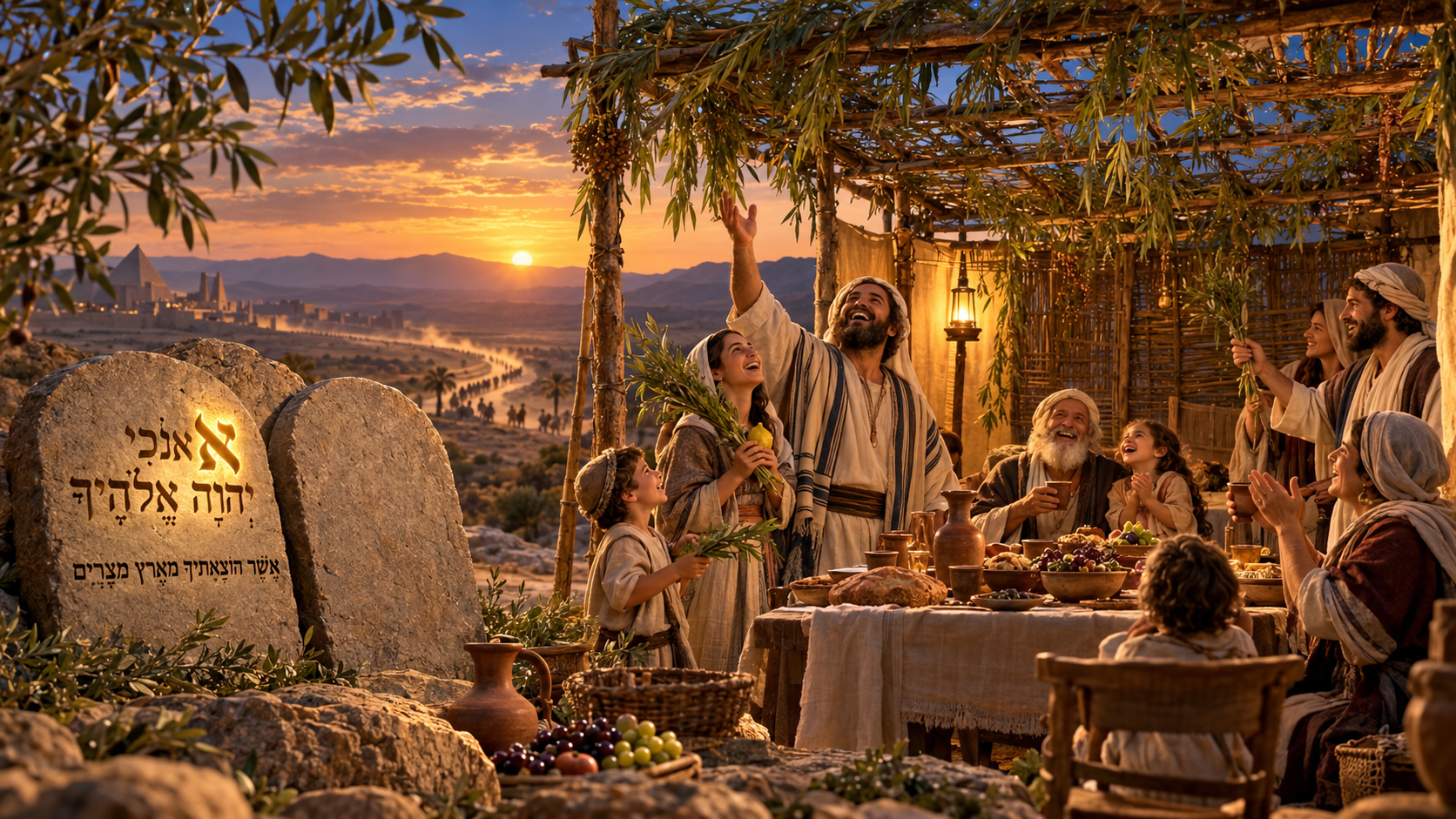
Every year at the Passover Seder, as families gather to retell the story of deliverance from Egypt, the youngest child asks the famous question from the Haggadah: “Why is this night different from all other nights?” The entire evening is structured around questions and answers. Curiosity and inquiry are not just permitted — they are commanded. The Jewish tradition has always celebrated asking, probing, and seeking deeper truth as the pathway to understanding God’s ways.
In that same spirit, it is only natural to ask the bigger question: Could the ancient Passover deliverance have pointed forward to an even greater Passover? Could the lamb whose blood brought freedom from physical bondage foreshadow the ultimate Passover Lamb whose sacrifice would bring freedom from sin and spiritual bondage?
And if that greater Passover occurred in the events of 30 CE, is it not reasonable — even faithful — to wonder why the signs in the Temple ceased at exactly that time, and why a forty-year transition followed, mirroring the wilderness period after the first Exodus?
For Times Such As This
The reasons to wonder have only grown stronger in our own day.
The Hebrew prophets spoke of a time when Israel would be reborn in a single day — a regathering so sudden it would seem impossible. Isaiah 66:8 asks: “Who has ever heard of such things? Who has ever seen things like this? Can a country be born in a day or a nation be brought forth in a moment?” In 1948, against all historical odds and in the shadow of the Holocaust, the modern State of Israel was declared. In the decades that followed, Jews from more than a hundred nations began making aliyah — returning to the land of their ancestors in numbers unprecedented since the days of the ancient exiles. The desert is blooming once again. The Jewish people, against every expectation of history, are sovereign in their ancestral homeland.
But the signs of our times go far beyond national restoration.
We see wars and rumors of wars, plagues and pestilence, increasing natural disasters, and intensifying conflicts across the Middle East — patterns that echo the words of the prophets and of Yeshua himself when describing the season leading to the climax of God’s redemptive plan. In Jerusalem today, the Temple Institute has prepared vessels, priestly garments, and training for a new generation of Kohanim (priests). Most strikingly, they have been actively involved in efforts to raise a red heifer — the biblically required animal whose ashes are necessary for ritual purification before the Temple can be rebuilt (Numbers 19). These developments are not hidden; they are public, documented, and moving forward in real time.
For anyone who takes the Hebrew Scriptures seriously, these converging events are impossible to ignore. The same prophets who foretold the scattering and regathering of Israel also spoke of a coming day when the Temple would again stand in Jerusalem, when the knowledge of the God of Israel would cover the earth as the waters cover the sea, and when the Messiah would bring final atonement, peace, and restoration.
In such a moment, curiosity about Yeshua — the most famous Jew in history — is not peripheral. It is central. The first-century Jewish writers of the New Testament claimed that he was the very fulfillment of those ancient promises: the Lamb who provides permanent atonement, the High Priest who entered the heavenly Holy of Holies, and the One through whom the blessings of Abraham would reach every family on earth.
Living in the days when Israel has been reborn, when aliyah continues, when Temple preparations are advancing, and when the world stage increasingly matches prophetic descriptions, refusing to examine the full story feels less like faithfulness and more like closing one’s eyes at the most decisive chapter.
For the People of the Book, living amid what many see as unfolding prophecy, curiosity may not only be natural. It may be one of the most timely and faithful responses possible.
Conclusion
Perhaps in the midst of all this wondering, you will find the Living Afikoman.
In the Passover Seder, the Afikoman — the broken and hidden piece of matzah — is eagerly sought by the children. For many, it beautifully points to Yeshua: the Passover Lamb who was broken for us, hidden in the tomb, and rose as the true Bread of Life.
Keep asking the ancient question: “Why is this night different from all other nights?”
Epilogue: