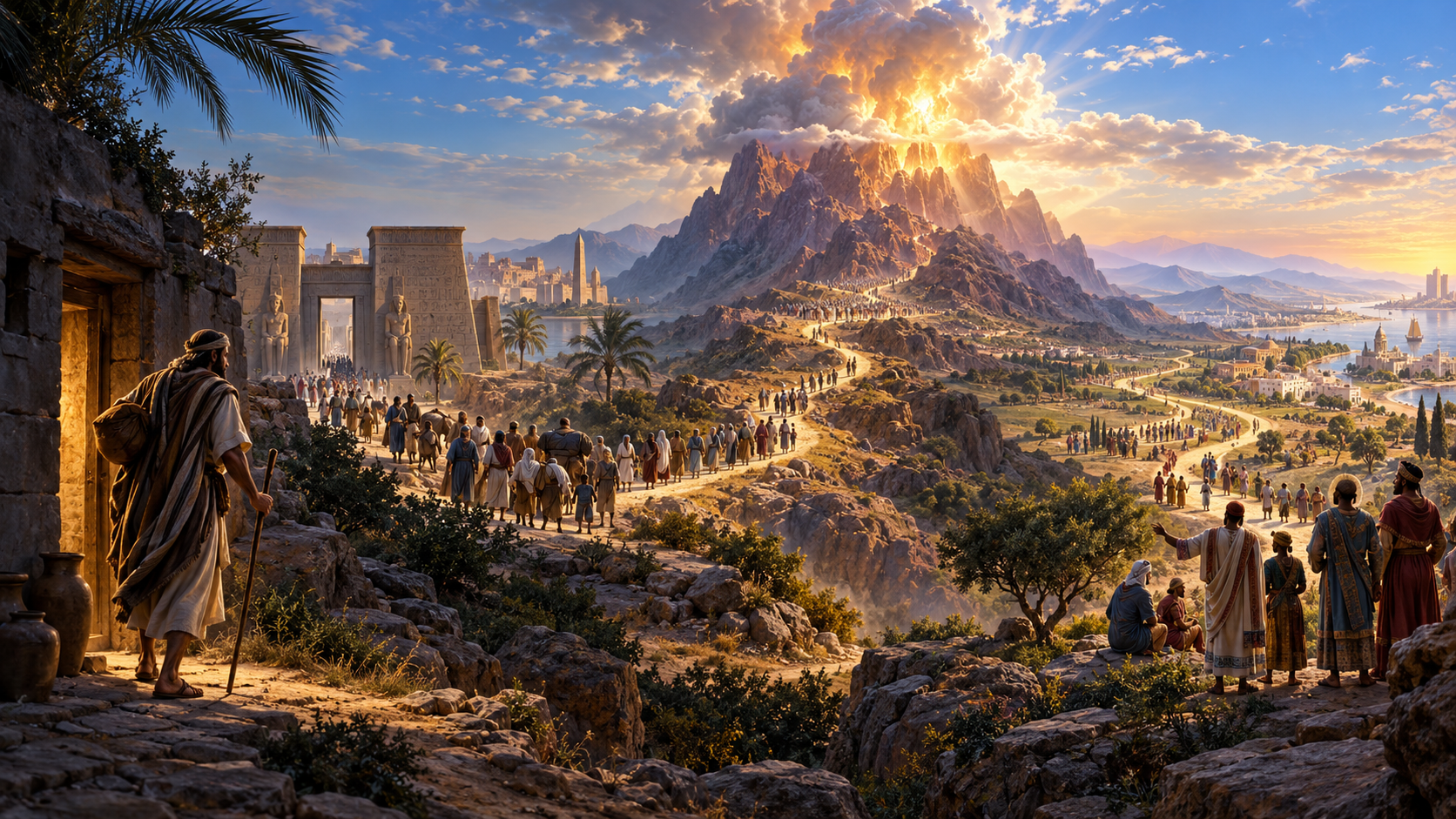
The Long Biblical Arc from Exodus 20:2 to Salvation
Preface
I believe the Bible is one Book containing two stories about one God—the God of Israel. As a Jew, I dared to open the whole Book and read it. All the while, I asked God for Chokhmah and Binah—the wisdom to see and the understanding to discern.
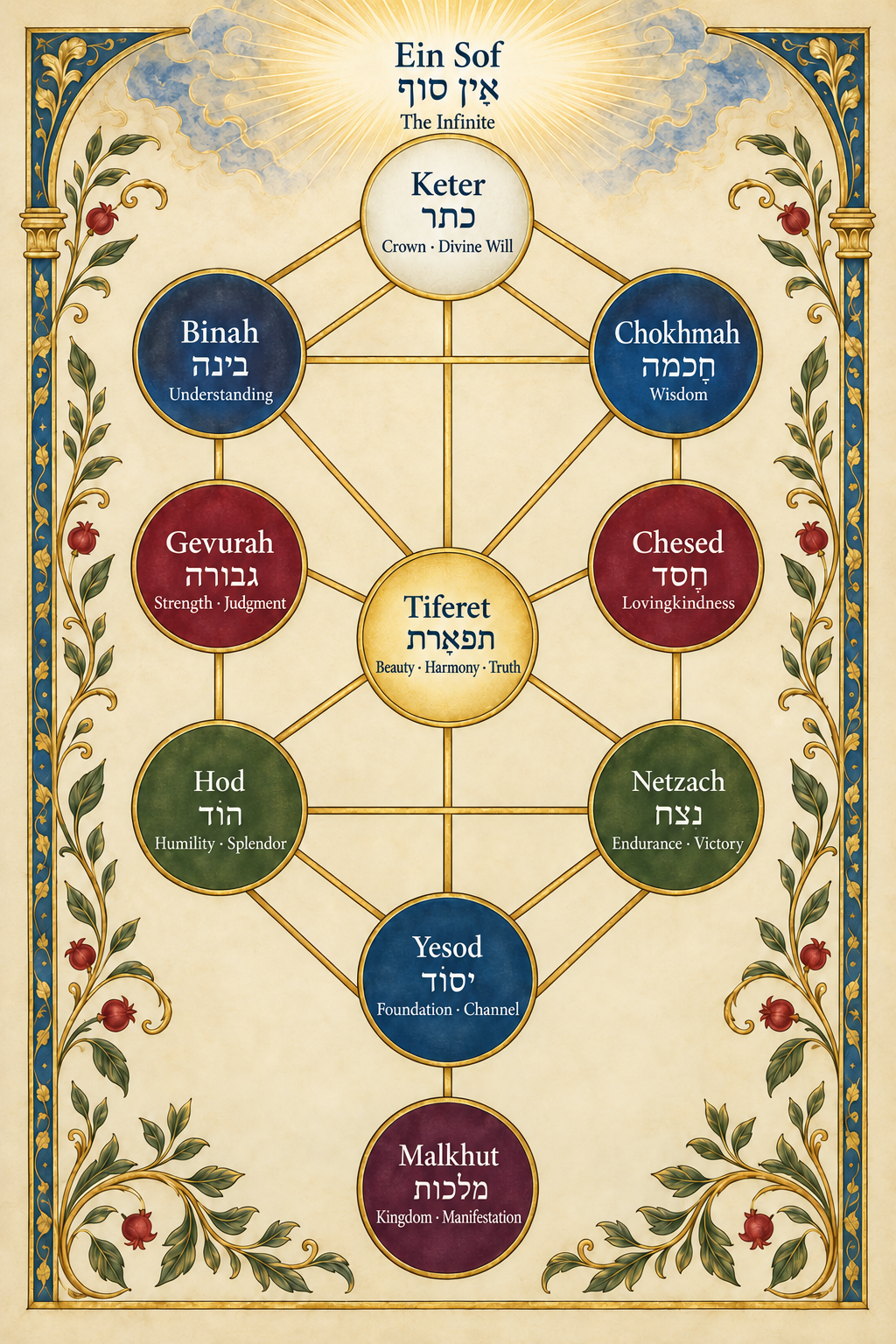
Within its pages, I found Gevurah and Chesed: judgment and lovingkindness, strength and mercy. I began to see their reconciliation in Tiferet—beauty, harmony, and compassionate truth, where Gevurah and Chesed are held in proper balance.
I followed the divine flow described symbolically by Jewish mysticism: from the Ein Sof, the Infinite, through Keter, divine will; into Chokhmah, wisdom, and Binah, understanding; through Chesed, lovingkindness, and Gevurah, judgment, brought into harmony in Tiferet; through Netzach, endurance, and Hod, humility; into Yesod, the foundation—and finally toward Malkhut, the Kingdom, where divine purpose becomes manifest below.
I found a Book about leaving a house filled with false gods and journeying toward the land promised by the one God, the God of Israel. It is about passing from bondage under a false master into willing service to the true God. It is about God’s ways—and those who teach, walk in, and show us those ways.
This is a Book about a God of action. He enters history, confronts false powers, and brings His people out of slavery. But liberation is not the end of His expectations. The God who sets us free expects our fear, faithfulness, service, and love—with all our heart and soul.
I am not a rabbi or a Kabbalist. I am simply a Jewish man who opened the whole Book and read both stories. What I found was one long arc leading out of bondage, up the mountain, and toward the Kingdom of God on earth.
Two Stories, One Book, One God.
From the First House to the House of Slaves
The biblical movement toward freedom begins with Abraham:
“Get thee out of thy country, and from thy kindred, and from thy father’s house, unto a land that I will show thee.”
—Genesis 12:1
The command to leave also contains a promise. Abraham is not merely told what to leave behind. He is directed toward land, covenant, descendants, and blessing.
Genesis does not say here that Abraham was a slave or that Terah’s household worshipped idols. Joshua later tells us that Abraham’s ancestors “served other gods” (Joshua 24:2). The connection to freedom is an observation: God calls Abraham away from a house associated with other gods and toward the land promised by the one God.
Biblical liberation is never only freedom from something. It is freedom toward something.
God later calls Abraham again with the same unusual expression:
לֶךְ־לְךָ — lekh-lekha — “Go forth.”
This time Abraham is sent to the land of Moriah and to a mountain God will identify. Isaac is bound there, released, and replaced by the ram God provides.
What begins with Abraham as one man later happens to Israel as a nation.
The Ten Commandments begin with God identifying Himself through an action:
“I am the LORD thy God, which have brought thee out of the land of Egypt, out of the house of bondage.”
—Exodus 20:2
The Hebrew expression translated “house of bondage” is more concrete:
מִבֵּית עֲבָדִים — mi-beit avadim
“From a house of slaves.”
Before God tells Israel what to do, He reminds Israel what He has done. He brought them out.
Egypt repeats Abraham’s story on a larger scale. Abraham was called out of one household associated with other gods. His descendants were brought out of an entire nation ordered around Pharaoh’s authority and the gods of Egypt. God did not merely improve their position inside that house of slaves. He brought them out.
The pattern is expanding:
God calls one man out of a house, brings one nation out of bondage, and eventually invites many nations up the mountain.
From Pharaoh’s Service to God’s Ways
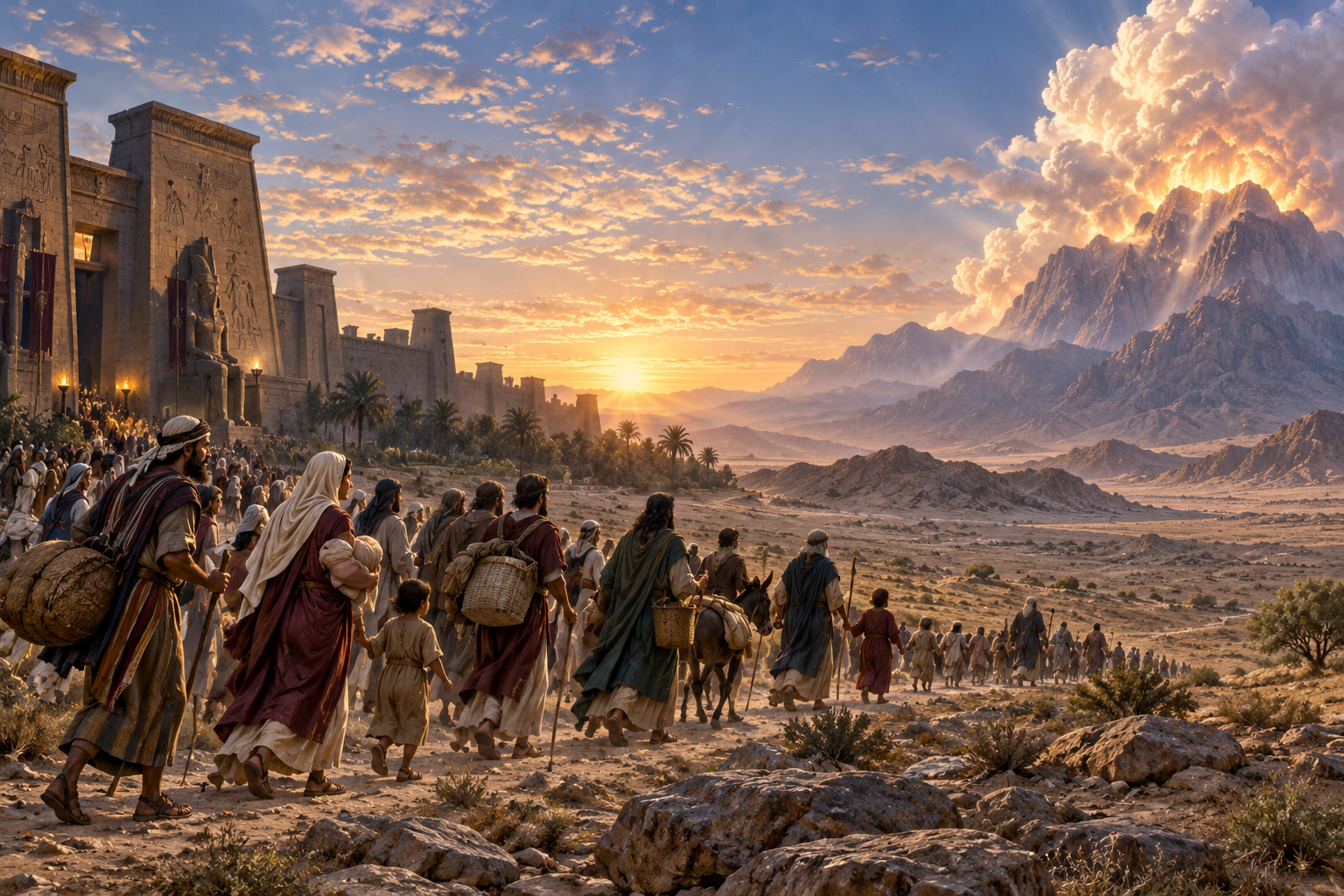
Pharaoh demanded Israel’s service. God told him:
“Let My people go, that they may serve Me.”
—Exodus 8:1
Israel was not released from every form of service. Israel was released from a false master in order to serve the true God.
The Hebrew root ע־ב־ד can describe slavery, work, worship, or service. The question is not simply whether we serve, but whom we serve.
“For unto Me the children of Israel are servants; they are My servants whom I brought forth out of the land of Egypt.”
—Leviticus 25:55
God brings Israel from Pharaoh’s house to Sinai. There, liberation becomes instruction.
The people fear the thunder, fire, and trumpet. Moses tells them:
“Fear not…and that His fear may be before your faces, that ye sin not.”
—Exodus 20:20
The apparent contradiction suggests two kinds of fear. Israel is not to remain trapped in terror, but it is to retain reverence for God. The fear of Pharaoh is replaced by the fear of the LORD.
Deuteronomy summarizes what God expects:
“To fear the LORD thy God, to walk in all His ways, and to love Him, and to serve the LORD thy God with all thy heart and with all thy soul.”
—Deuteronomy 10:12
The opposite of bondage is not freedom from every obligation. It is freedom from false masters and the ability to serve God willingly.
Out of the house. Up the mountain. Into the ways of God.
Jubilee Preserves the Liberation
The Exodus was Israel’s national liberation. Jubilee incorporated that principle into Israel’s life:
“Proclaim liberty throughout all the land unto all the inhabitants thereof.”
—Leviticus 25:10
Jubilee released Israelite servants, reunited families, and restored ancestral holdings. It prevented debt and misfortune from making servitude permanent.
The reason looks back to the Exodus:
“For they are My servants, whom I brought forth out of the land of Egypt.”
—Leviticus 25:42
Jubilee is the Exodus made recurring. The people liberated by God are expected to preserve liberty within their own society.
An Anointed Proclaimer
Isaiah takes the language of liberation and points it forward:
“The Spirit of the Lord GOD is upon me; because the LORD hath anointed me…to proclaim liberty to the captives…to proclaim the acceptable year of the LORD.”
—Isaiah 61:1–2
“The acceptable year of the LORD” describes an appointed season of divine favor. Its language recalls Jubilee: captivity ends and what was lost is restored.
Isaiah 11 describes a figure upon whom rests “the spirit of knowledge and of the fear of the LORD.” Isaiah 53 describes God’s servant suffering and making his life “an offering.”
Together, these passages create an expectation: an anointed servant who fears the LORD, walks in His ways, proclaims liberty, and gives himself in service to God.
Many Nations Approach the Mountain
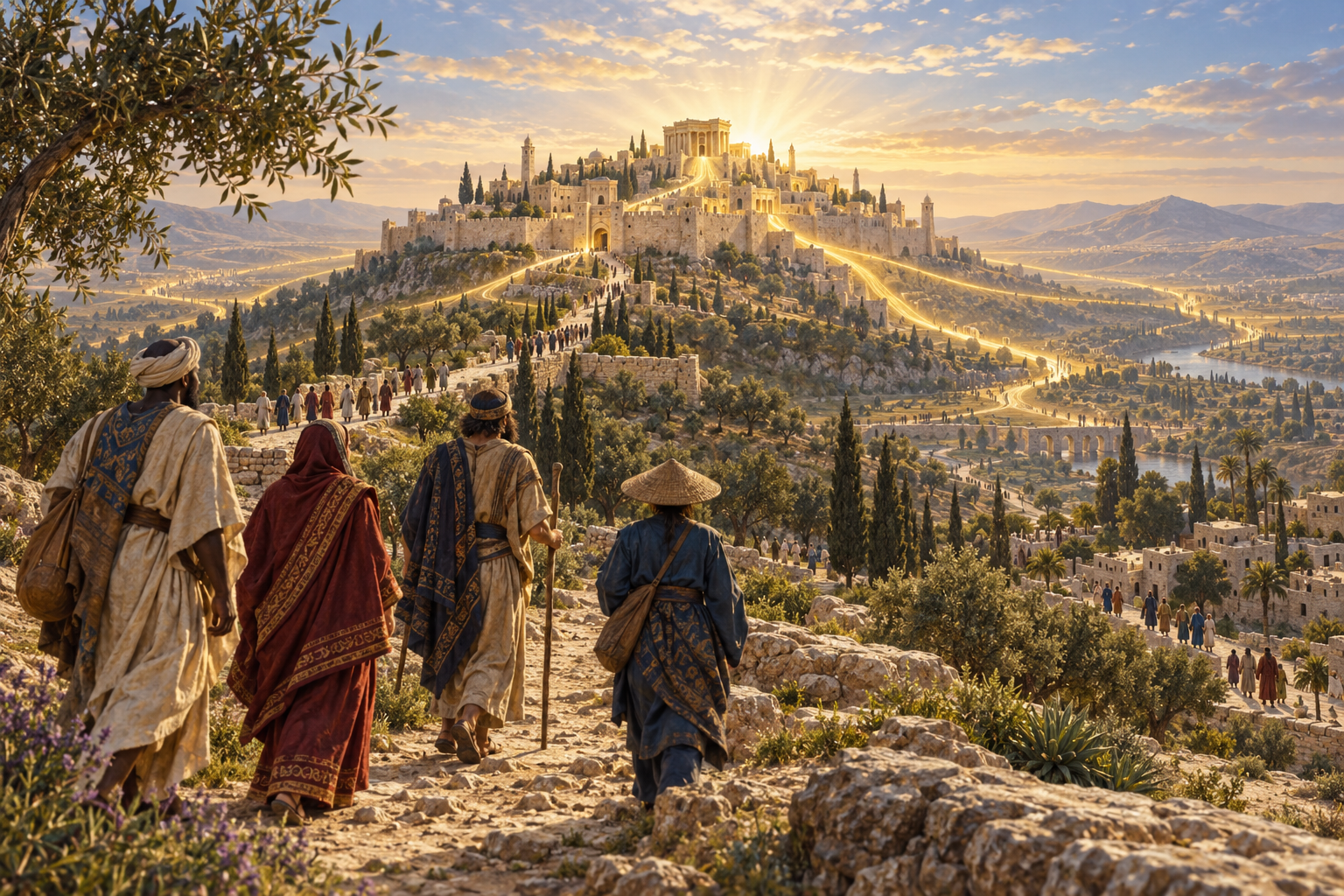
Micah carries the movement outward:
“Many nations shall come, and say: Come, and let us go up to the mountain of the LORD…and He will teach us of His ways, and we will walk in His paths: for the Torah shall go forth of Zion.”
—Micah 4:2
The nations do not replace Israel. They come to the God of Israel. They approach His mountain, learn His ways, and walk in His paths.
The movement has grown from one man toward the world:
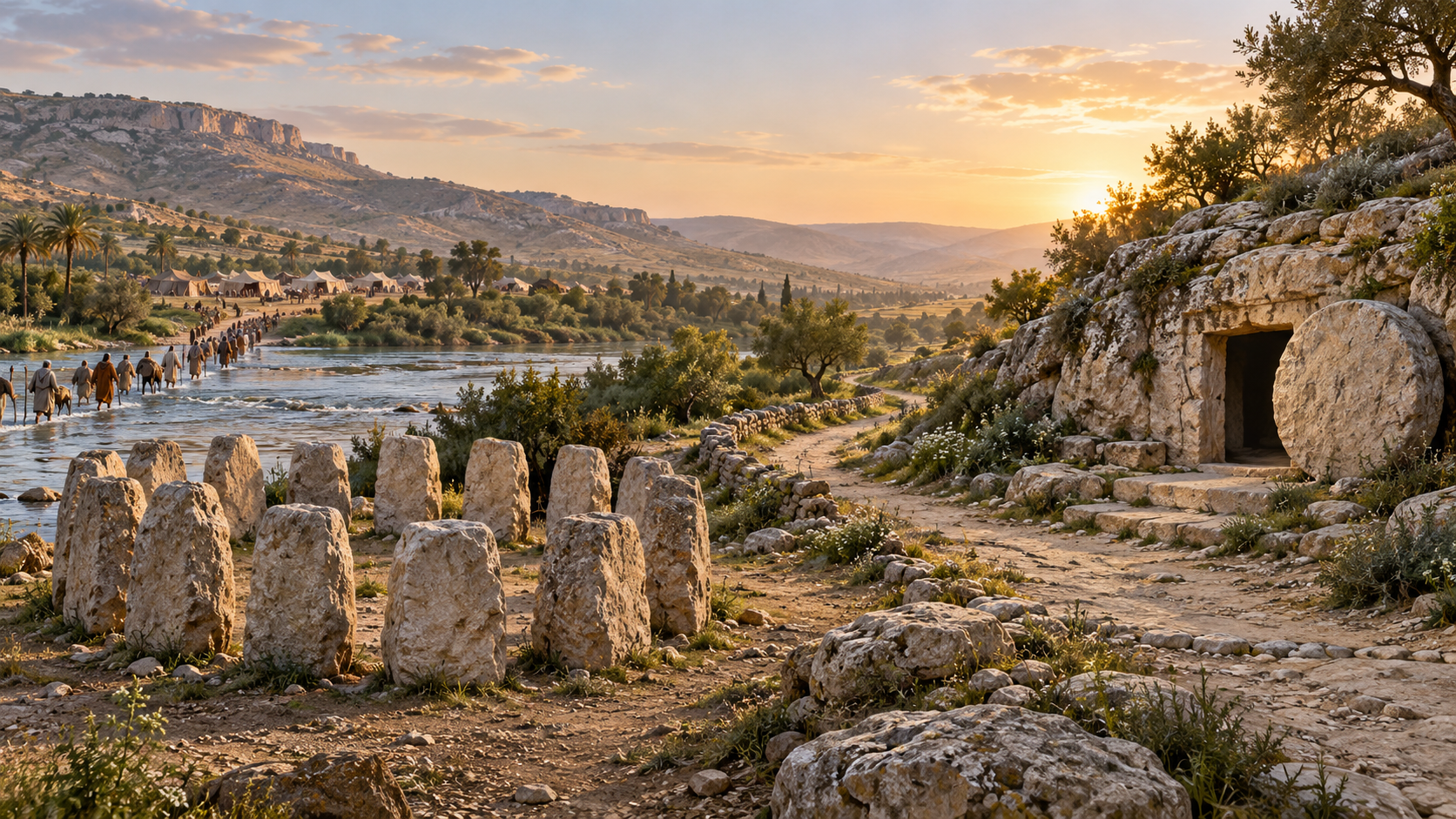
Abraham leaves one house.
Israel leaves a house of slaves.
Many nations approach the mountain of God.
Only now are we ready to open the second story.
His Name Is Salvation
A Jewish man enters a synagogue on the Sabbath. He is handed the scroll of Isaiah and reads:
“The Spirit of the Lord is upon me…to preach deliverance to the captives…to set at liberty them that are bruised, to preach the acceptable year of the Lord.”
—Luke 4:18–19
He then says:
“This day is this scripture fulfilled in your ears.”
—Luke 4:21
His name is Yeshua.
The name is connected with the Hebrew root י־שׁ־ע, expressing salvation, rescue, and deliverance. The word yeshuah does not appear in Exodus 20:2, but the action does: God brings His people out of the house of slaves.
The name arrives only after the Tanakh has established its meaning.
Exodus gives us the action. Jubilee gives it structure. Isaiah gives it an anointed proclaimer. The name Yeshua carries its meaning: Salvation.
Walking and Teaching the Ways
The Gospel accounts present Yeshua not only proclaiming God’s ways, but walking in them. He keeps the Sabbath, attends synagogue, observes the appointed times, makes festival pilgrimages to Jerusalem, and teaches from the Torah and the Prophets.
Matthew describes him ascending a mountain to teach:
“He went up into a mountain: and when he was set, his disciples came unto him.”
—Matthew 5:1
The setting recalls Sinai and resembles Micah’s picture: people approach the mountain to learn God’s ways.
Yeshua’s final journey to Jerusalem occurs in the Passover setting, the festival of liberation. Before his arrest, he expresses his submission to God:
“Nevertheless not my will, but thine, be done.”
—Luke 22:42
Calling his death a sacrifice is the New Testament’s theological interpretation; crucifixion was not a Levitical Temple offering. The observation is that his willing service and death are placed within the season that remembers liberation from Egypt.
Matthew concludes at another mountain. There Yeshua sends his Jewish disciples outward:
“Teach all nations…to observe all things whatsoever I have commanded you.”
—Matthew 28:19–20
On the first mountain, Yeshua teaches the ways. On the final mountain, he sends his disciples to teach those ways to the nations.
Micah does not explicitly identify Yeshua. That is the Messianic interpretation. Yet the correspondence is worth considering: Micah sees the nations learning the ways of Israel’s God; Matthew shows a Jewish teacher sending Jewish disciples to teach them.
It All Comes Together at the Mountain
Abraham leaves his father’s house and goes toward the promised land. Israel leaves Pharaoh’s house and comes to Sinai. Jubilee preserves that liberation. Isaiah anticipates an anointed proclaimer of liberty, and Micah sees the nations coming to God’s mountain to learn His ways.
Then Yeshua reads Isaiah, walks in those ways, ascends the mountain to teach, and sends his disciples outward.
The arc expands from one man, to one family, to one nation, and finally to many nations.
Exodus 20:2 tells us what the God of Israel does: He brings His people out of a house of slaves. The name Yeshua carries the meaning of that action—Salvation.
The name, the action, the proclamation, and the direction form one long biblical arc. It begins with Abraham leaving a house. It reaches the mountain. Then it goes forth from the mountain into the world.
Two Stories, One Book, One God.
Epilogue: The Image, the Word, and the New World

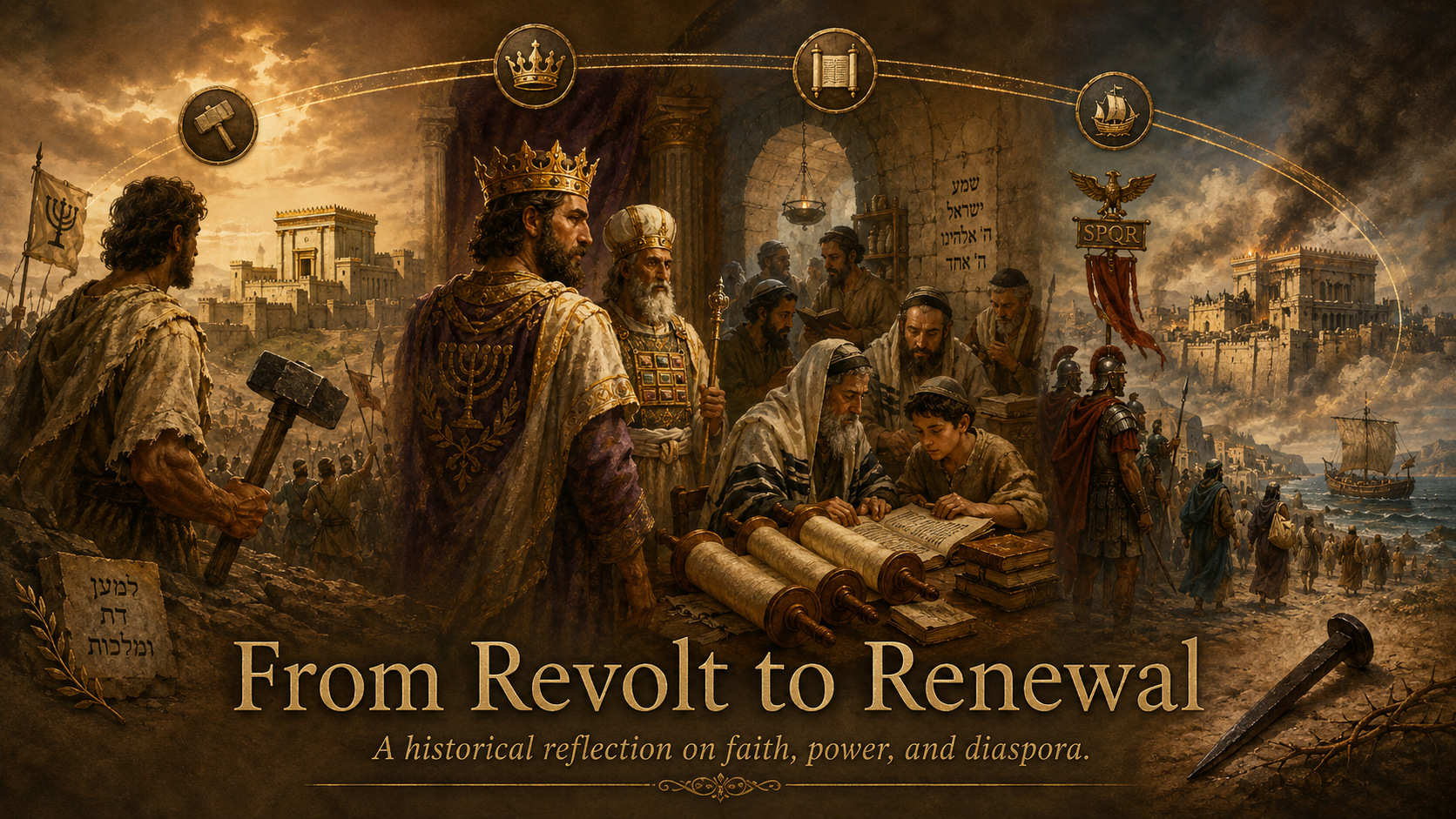
The movement did not end with the Gospel accounts. The Jewish Diaspora, although usually forced and painful, carried Jewish communities, synagogues, and Scripture among the nations. The Great Commission made another outward movement intentional: Jewish disciples were sent to teach the world.
For those of us who believe the Shroud of Turin is authentic, the image also moved outward. What I believe began as a burial cloth in Jerusalem was eventually preserved in Europe and, through photography and scientific examination, displayed to the world. Its history before the fourteenth century remains disputed, so I offer this as my belief rather than settled history.
Europe also gave the outward movement a new instrument: the printing press. The Bible became one of its earliest monumental achievements. Words once copied by hand could now be multiplied and carried across borders, languages, and oceans.
The Bible crossed the Atlantic and helped shape America. America is not another Israel, but its religious liberty, publishing power, missionary activity, and communications technology allowed Scripture to travel farther still.
The mountain was never the endpoint.
First the man moves outward. Then the family. Then the nation. Then the disciples. Then the written Word—and perhaps even the image.
The pattern continued:
The Diaspora carried the people. The disciples carried the teaching. Europe preserved the image and multiplied the Word. America helped carry the Bible throughout the world.
The image moved outward. The Word multiplied. America amplified it.
The means changed, but the direction remained—from Jerusalem toward the nations. The second story states that direction plainly:
Acts 1:8 —But you shall receive power when the Holy Spirit has come upon you; and you shall be witnesses to Me in Jerusalem, and in all Judea and Samaria, and to the end of the earth.”
The arc is still moving. Its final chapters have already been written by God, but they are yet to be revealed.