Before Calvary Was Calvary
Two Stories, One Book, One God
Preface: An Invitation to Look Again
This article does not ask anyone to believe what I believe. It is an invitation to empathy and understanding. Christians should try to understand why many Jews instinctively turn away from Calvary and the cross. Jews should try to understand what Christians see when they look toward Calvary—and why it stands at the center of their faith.
The same historical moment can carry radically different meanings for different peoples. Jews celebrate Israel’s Independence Day as national rebirth, while Palestinians remember that period as the Nakba—the catastrophe. I am not equating the two experiences or trying to settle that political argument. I mention it only to invite introspection: Can the meaning inherited by one people make it difficult to see what another people sees?
For Christians, Calvary represents salvation, forgiveness, and victory over death. For many Jews, the cross recalls accusations, forced conversions, persecution, and centuries of suffering. There are understandable reasons for both reactions. Understanding does not require agreement.
Noticing a biblical connection does not require accepting my theological conclusion. I am not a rabbi or pastor. I am a Jewish man who reads both the Tanakh and the New Testament, sharing something I noticed. I am only asking you to look.
Calvary Was Not Originally Calvary
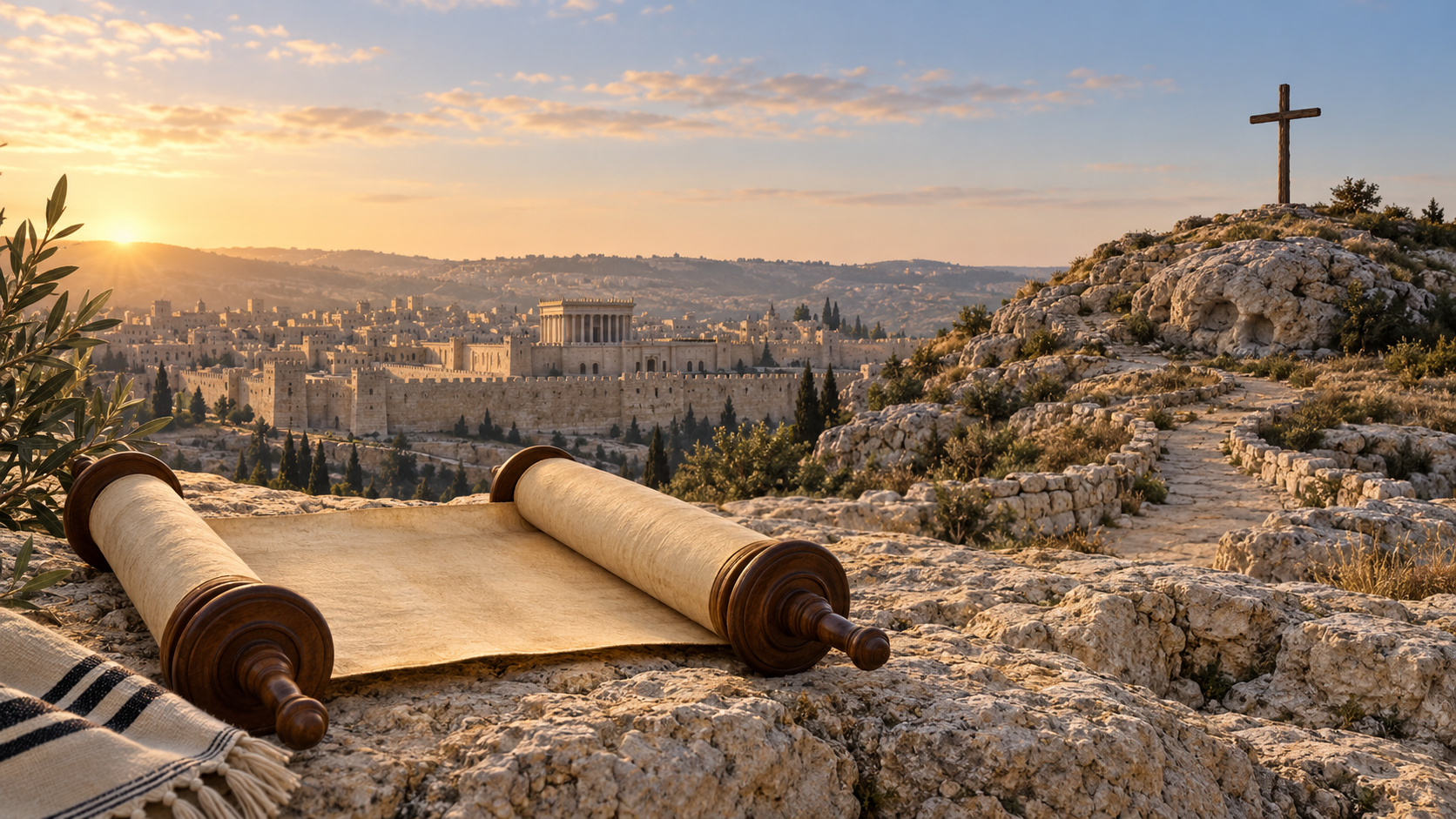
Calvary comes from the Latin calvaria, meaning “skull.” The Greek Gospel text uses kranion, also meaning “skull.” The English word cranium comes from the same Greek word. But Calvary was not the Jewish name of the place.
The place was called Golgotha, an Aramaic name related to the Hebrew word gulgoleth—גֻּלְגֹּלֶת—meaning “skull” or “head.”
Calvary. Golgotha. Gulgoleth.
The basic meaning did not change. The language did. That change matters.
To Christians, Calvary sounds like a word belonging entirely to Christianity. To Jews, gulgoleth is a Hebrew word found in the Torah. Few Christians who hear “Calvary” would think about Moses counting the children of Israel. Few Jews reading gulgoleth in the Torah would think about Golgotha.
Christians know what happened at Calvary but may not recognize the word’s earlier history. Jews know the Torah but generally do not follow gulgoleth forward to Golgotha. It is an arc both sides can miss.
An Omer for Every Person
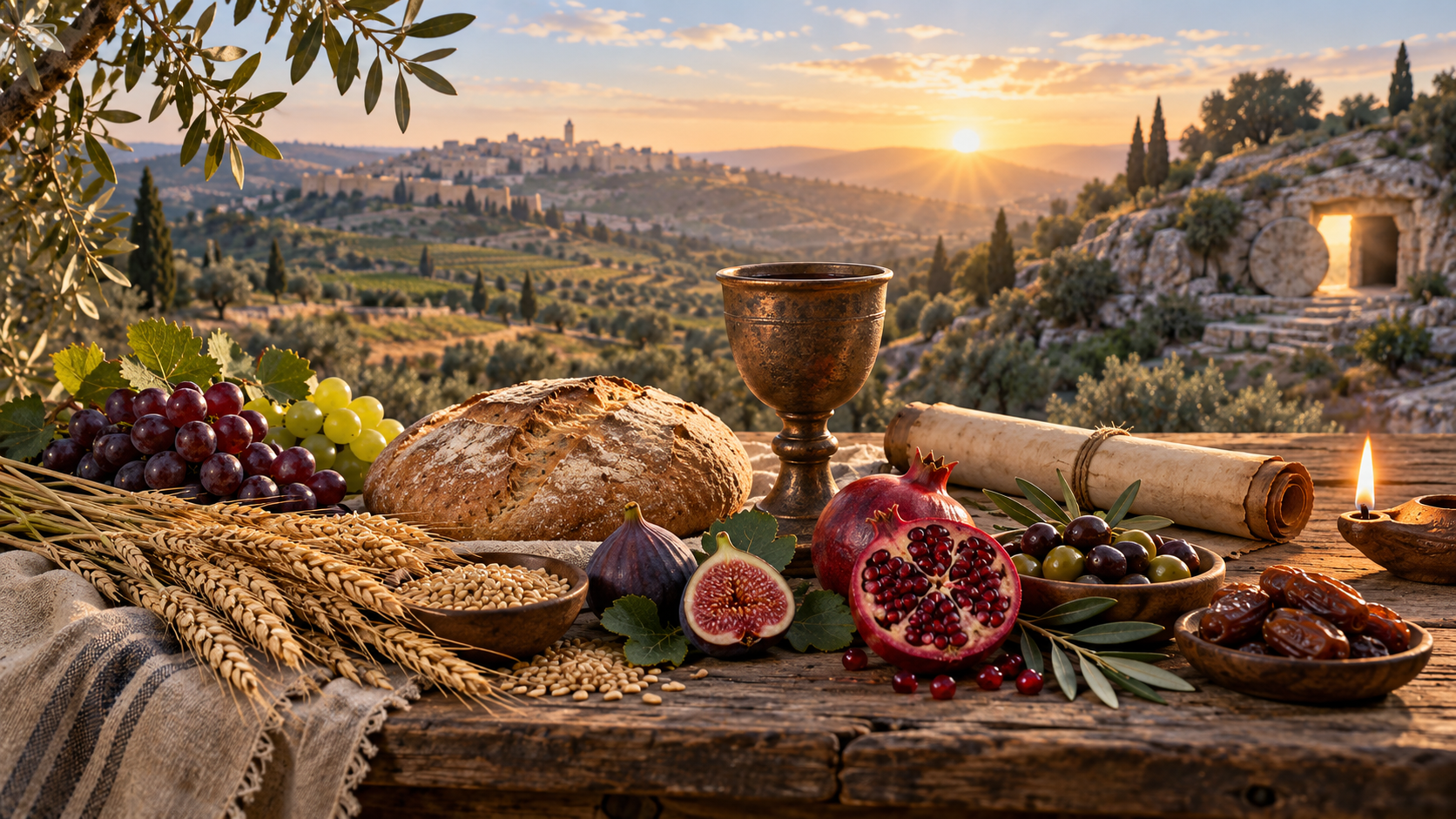
The word gulgoleth does not first appear in a passage about death. It appears in connection with God providing food for Israel.
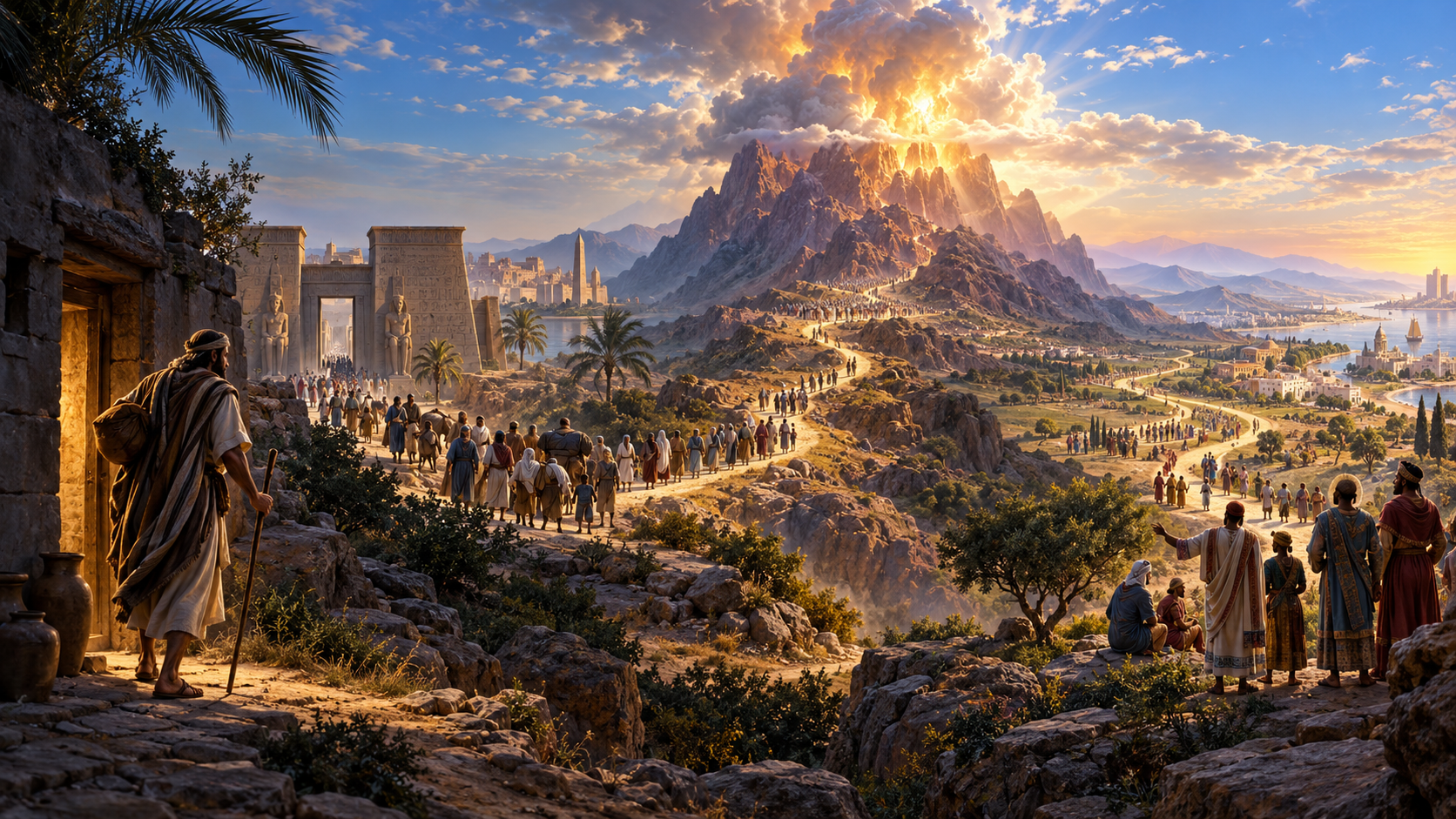
When the children of Israel were hungry in the wilderness, God gave them manna.
Exodus 16:16 says, “Gather of it every man according to his eating, an omer for every man.”
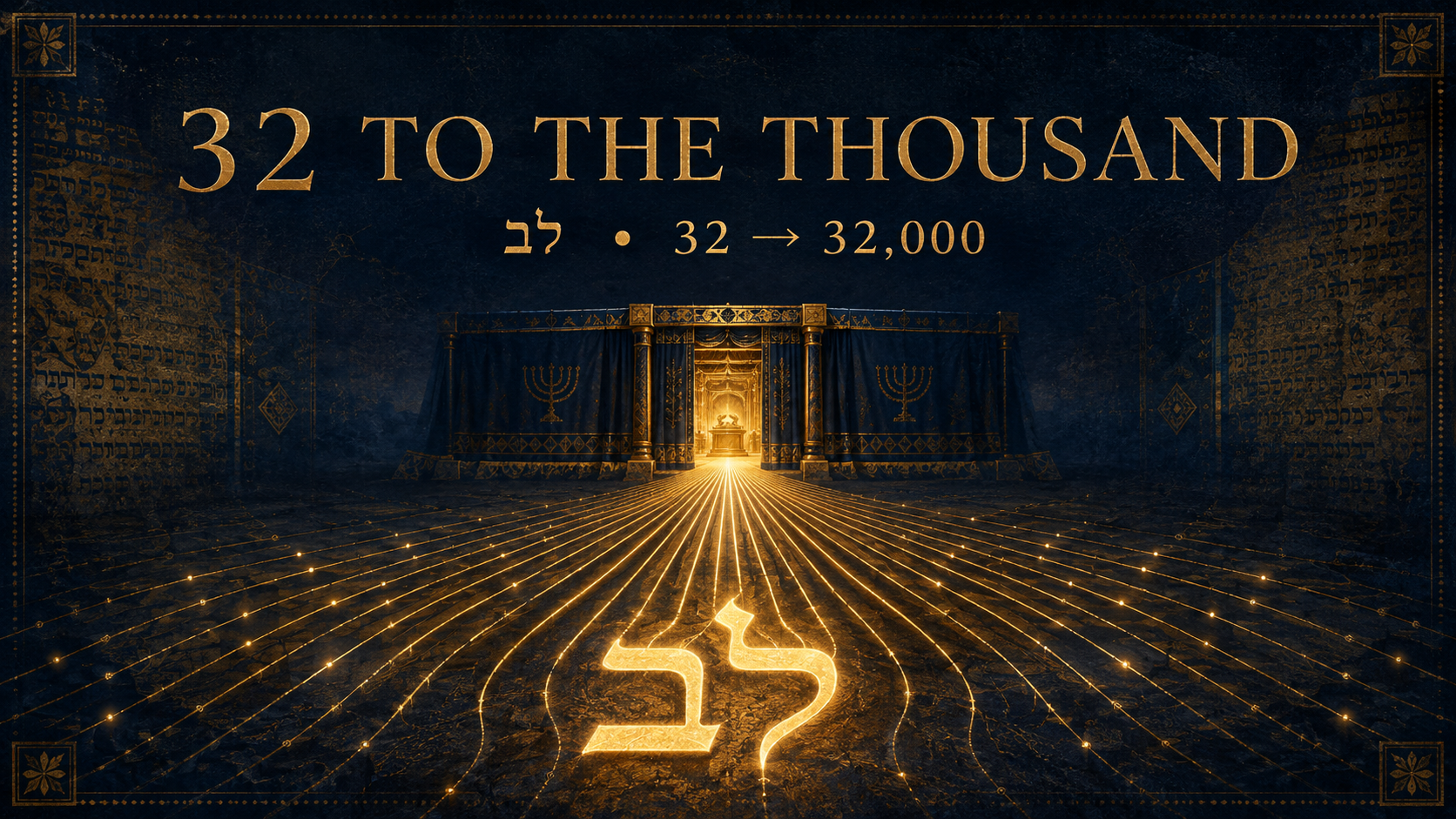
The Hebrew includes the words omer la-gulgoleth—an omer for every skull, meaning an omer for every person. The manna was measured person by person. Every member of the household was included.
Long before the Gospel story arrived at Golgotha, the Torah used gulgoleth while describing bread from heaven given to sustain life. This is not an explicit prediction of Golgotha, but it establishes the word’s earlier Torah history.
Counted Skull by Skull
The word appears again when the children of Israel are counted. Numbers 1:2 says:
“Take ye the sum of all the congregation of the children of Israel, after their families, by the house of their fathers, with the number of their names, every male by their polls.”
“By their polls” is old English for “by their heads.” The underlying Hebrew is le-gulgelotam—according to their skulls.
Israel was counted skull by skull—by family, ancestral house, and name. Each head represented a particular person with a place among the people of Israel.
A Ransom for Every Soul
The census was also connected with ransom and atonement. Exodus 30:12 says:
“When thou takest the sum of the children of Israel after their number, then shall they give every man a ransom for his soul unto the Lord, when thou numberest them.”
Each man who was counted was to give a half-shekel as a ransom for his soul. Exodus 30:15 adds, “The rich shall not give more, and the poor shall not give less…to make an atonement for your souls.”
Exodus 38:26 later records the collection as “a bekah for every man.” The Hebrew is beka la-gulgoleth—a bekah for every skull.
The same word appears in another redemption payment in Numbers 3:47: “And thou shalt take five shekels apiece, by the poll.” Once again, “by the poll” translates la-gulgoleth—for every skull.
Before the New Testament brings the reader to Golgotha, the Torah has already used gulgoleth in connection with bread for each person, counting Israel, ransom for the soul, atonement money, and redemption. Those are not meanings I have imposed upon the word. They are the settings in which the Torah uses it.
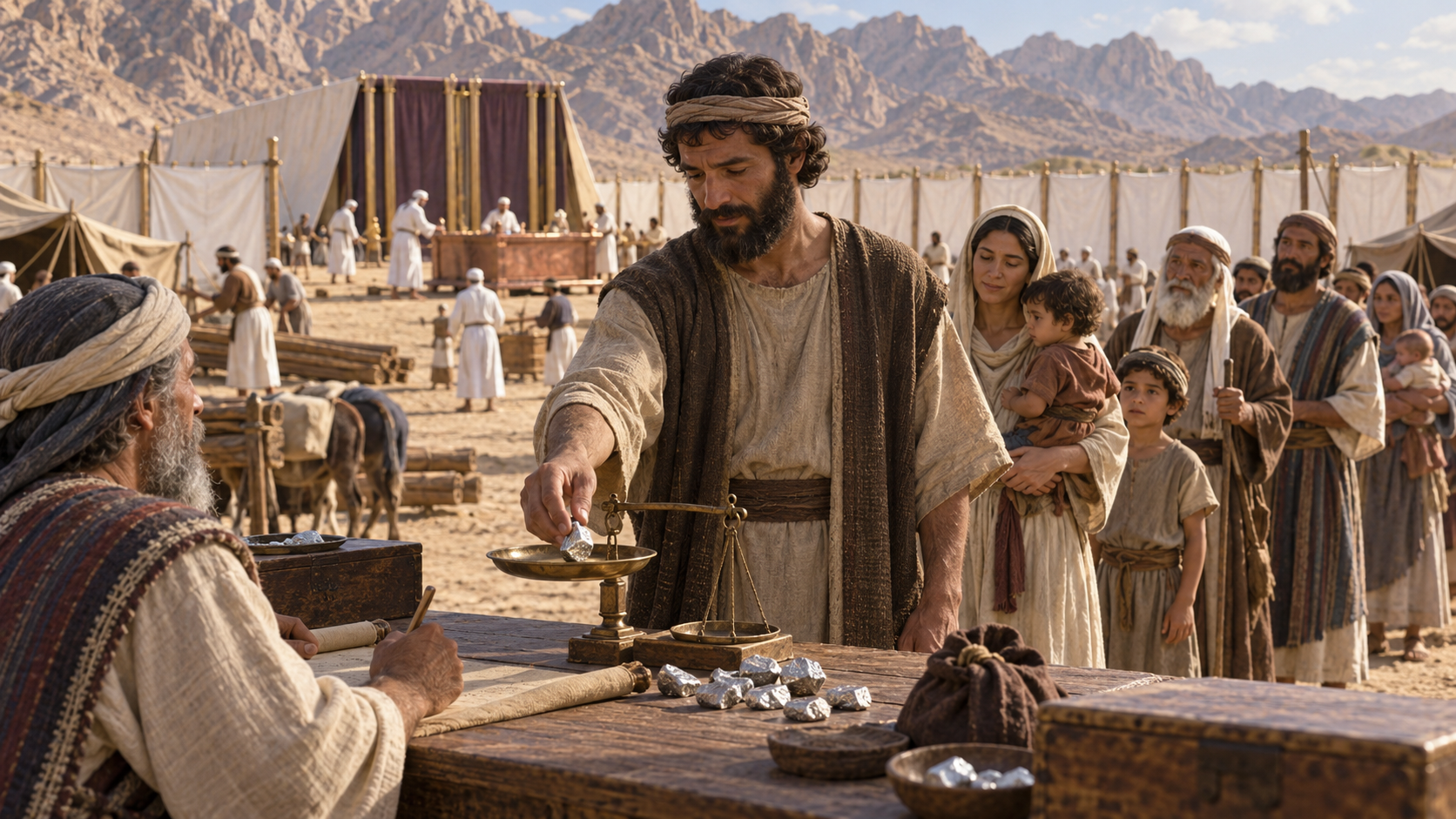
The Tabernacle
The half-shekel was not collected and forgotten. Exodus 38:27–28 says the silver was used to make the sockets supporting the boards and pillars of the Tabernacle.
The Tabernacle was the dwelling place of God among the children of Israel. Part of its foundation was made from silver collected when Israel was counted. Put plainly, the silver collected la-gulgoleth—for every skull—became part of the Tabernacle.
Exodus does not identify this as a prophecy about Golgotha. My observation is that the Torah had already connected gulgoleth with counting, ransom, atonement, redemption, and the Tabernacle.
From Gilgal to Golgotha
There is another word connection that helped lead me to Golgotha.
Gilgal—גִּלְגָּל—and gulgoleth—גֻּלְגֹּלֶת—are not identical words, but they share the repeating gimel-lamed sounds, G-L-G-L, associated with rolling and roundness.
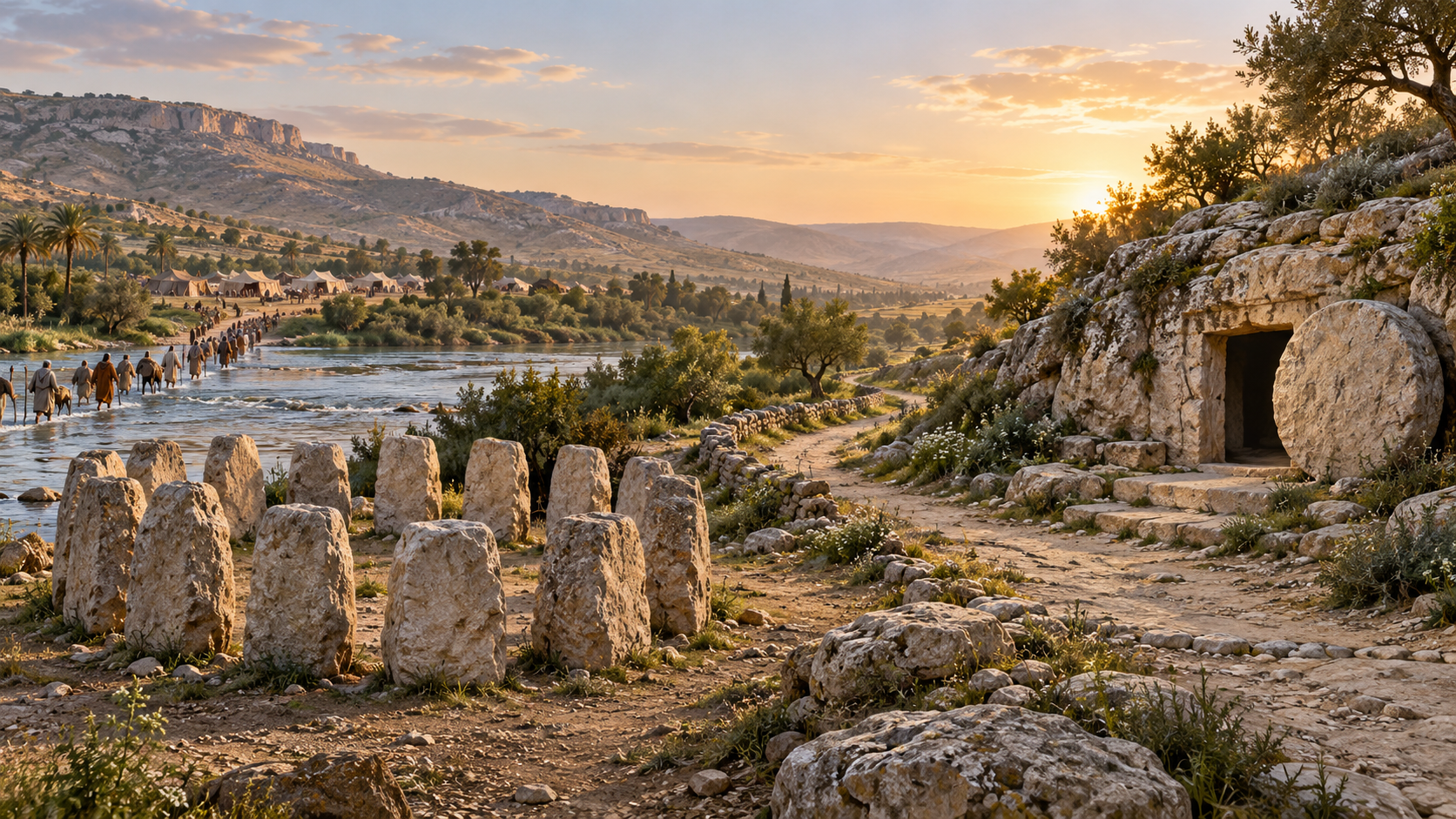
Gilgal was a major turning point. After Israel crossed the Jordan, Joshua set up twelve stones as a memorial. The covenant was renewed through circumcision, Passover was observed, the manna stopped, and Israel began eating from the land.
God explained the name in Joshua 5:9:
“This day have I rolled away the reproach of Egypt from off you. Wherefore the name of the place is called Gilgal unto this day.”
At Gilgal, something was rolled away. Twelve stones marked Israel’s crossing, the covenant was renewed, and the reproach of Egypt was removed.
The related sounds appear again in gulgoleth, the Hebrew word behind Golgotha. After Golgotha, the Gospel account brings us to another large stone—one that had closed a tomb and was found rolled away.
Scripture does not explicitly connect these details, but the repeated words and images are worth noticing: Gilgal, gulgoleth, Golgotha, stones marking a crossing, and a stone rolled away.
Returning to Golgotha
John 19:17 says:
“And he bearing his cross went forth into a place called the place of a skull, which is called in the Hebrew Golgotha.”
The Gospels do not tell us why it was called the Place of the Skull. Some believe the location resembled a skull. That may be true, but Scripture does not say so. What Scripture preserves is the name.
The New Testament brings us to Golgotha, a name related to the Hebrew gulgoleth. The Torah had already used that word when providing bread for every person, counting Israel, collecting ransom, making atonement, calculating redemption, and constructing the Tabernacle.
My purpose is not to explain the Gospel but to notice the connection. A word with an established Torah history appears again at a decisive moment in the New Testament. Whether that is coincidence, literary continuity, or something more is for the reader to consider.
The Sermon From the Cross
Was Yeshua’s cry, “My God, my God, why hast thou forsaken me?” more than an expression of suffering? Was He calling the attention of the Jews present to Psalm 22?
There were no chapter and verse numbers for Him to announce. The opening words identified the Psalm. The Jews standing nearby were the people most likely to recognize it and compare its words with what they were witnessing. Roman soldiers would have had little reason to recognize the reference. Some people nearby apparently misunderstood Yeshua and thought He was calling for Elijah.
That leads to a larger observation. Taken together, Yeshua’s statements from the cross can be read as a final sermon grounded in the Tanakh. Some quote the Tanakh directly. Others refer to its promises, commands, and themes. I examined these statements more fully in The Amazing Part of Jesus’s Crucifixion.
Psalm 22 begins with suffering but moves toward deliverance. At the moment Yeshua called attention to it, the third-day sign of Jonah was still ahead. Was He giving the Jews present a Psalm through which to consider what they were seeing, while pointing toward what they had not yet seen? I cannot prove that this was His intention. I can only observe the connection.
Follow the Stones
I have examined these stones, signs, and related biblical connections more fully in other articles:
– “Large Stones and the Bible’s Long Arc” (https://ijewbelieve.com/large-stones-and-the-bibles-long-arc/) — Follows Gilgal, its twelve memorial stones, the meaning of “rolling away,” and the large stones marking important transitions throughout the Bible.
– “A Miracle Not to Be Missed” (https://ijewbelieve.com/a-miracle-not-to-be-missed-rolledaway/) — Considers the significance of the large stone being rolled away so witnesses could enter the tomb and see what had happened.
– “A Sure Sign” (https://ijewbelieve.com/a-sure-sign/) — Examines Rahab’s scarlet cord, her request for a sure sign, and the biblical relationship between visible signs and deliverance.
– “The Amazing Part of Jesus’s Crucifixion” (https://ijewbelieve.com/the-amazing-part-of-jesuss-crucifixion/) — Looks more closely at Yeshua’s statements from the cross and their connections to the Tanakh.
– “When a Jew Studies the New Testament” (https://ijewbelieve.com/when-a-jew-studies-the-new-testament/) — Considers why reading the New Testament with Jewish knowledge may reveal connections that both Jews and Christians overlook.
Two Stories, One Book, One God
Historical experience has made Calvary difficult for Jews and Christians to see through each other’s eyes. Understanding that difference may help both sides notice what has been missed.
The word Calvary sounds entirely Christian. Follow it backward through Latin, Greek, and Aramaic, however, and we arrive at a Hebrew word used repeatedly in the Torah.
The Torah gave manna la-gulgoleth—for every person. Israel was counted skull by skull. A ransom was given for every soul. Rich and poor gave the same amount. Redemption money was calculated for every skull. The silver became part of the Tabernacle.
At Gilgal, twelve stones marked Israel’s crossing, the covenant was renewed, Passover was observed, and the reproach of Egypt was rolled away. The related sounds appear again in gulgoleth and Golgotha. After Golgotha, another large stone was found rolled away.
From the Place of the Skull, Yeshua called the attention of Jews to Psalm 22. Taken together, His words from the cross formed a final sermon grounded in the Tanakh. The sign of Jonah was still three days away.
I am not telling the reader what conclusion must be reached. I am saying that the connection deserves to be noticed.
Christians may see fulfillment. Jews may see literary continuity. Others may simply appreciate the relationship between the words and stories. Belief is not required to see the arc.
Two Stories. One Book. One God.