Acts 4—What Happened After the Gate Opened?
A study by Jonah
When I finished studying Acts 3, I realized that the chapter was a pivot point.
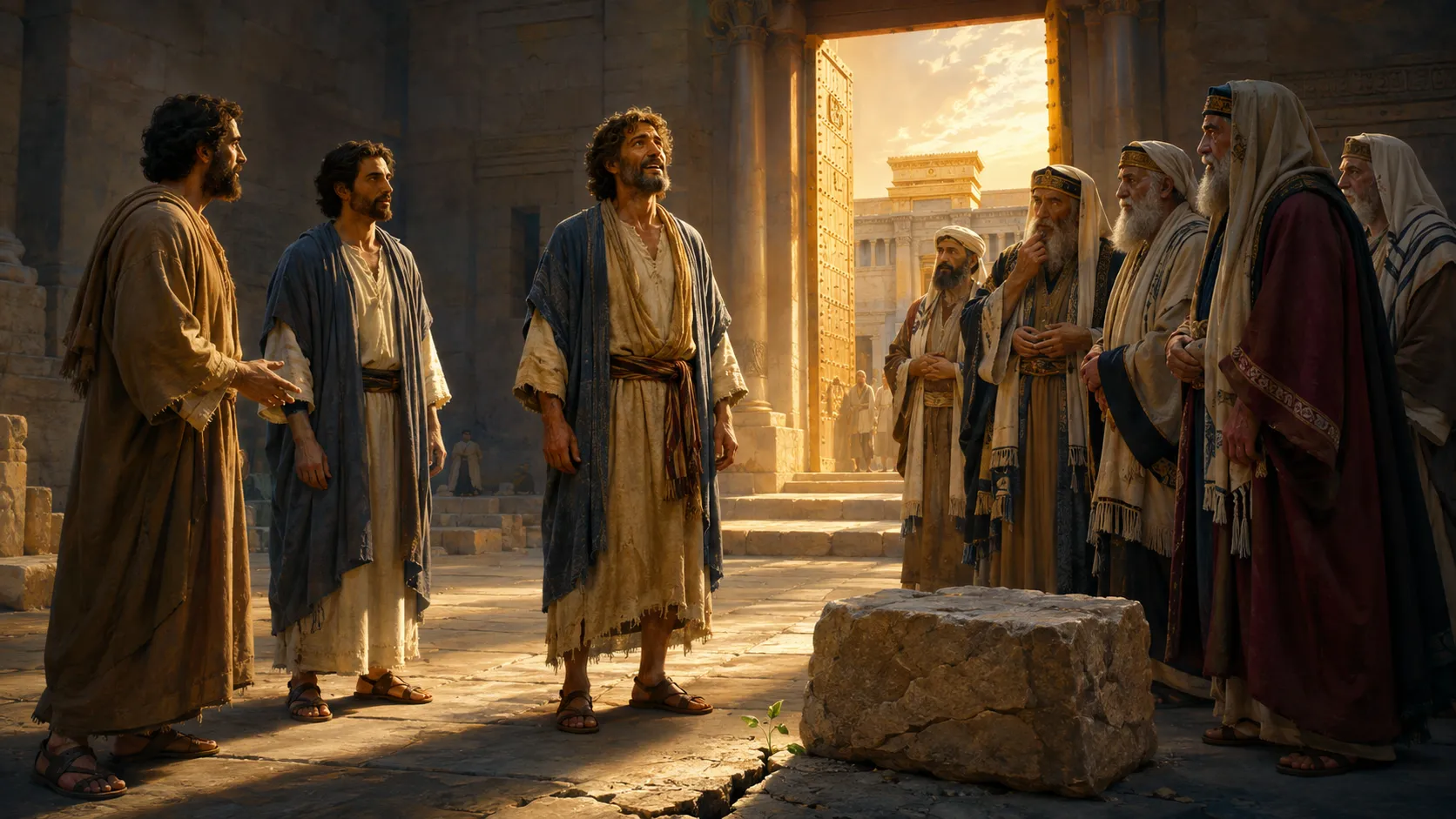
Acts 2 records the outpouring of the Ruach HaKodesh. Acts 3 shows what that power looks like when it reaches one man whom everyone else had learned to pass by. The man who had been lame from birth was carried daily to the Beautiful Gate, but he had never crossed the threshold on his own feet.
Then Peter saw him.
In the name of Yeshua the Messiah of Nazareth, his feet and ankle bones received strength. He stood, walked and leaped. Then he entered the Temple praising God.
“Then shall the lame man leap as an hart.”
—Isaiah 35:6
The healing opened Peter’s message to Israel: repentance, the wiping away of sins, times of refreshing, the restoration of all things, the Prophet like Moses and the promise made to Abraham.
Acts 3 moved from one Jewish man outside the gate to the blessing of all the families of the earth.
That is why I wanted to continue into Acts 4. What happened after the man crossed the threshold? How did the leaders respond? What happened when an undeniable sign was placed in front of them?
Power received. Healing demonstrated. Messiah proclaimed. Opposition encountered. Boldness increased.
Acts 4 is not a separate story. It is what happened because of Acts 3.
Two Stories, One Book, One God.
The Man Was Still Standing
Acts 4 begins while Peter is still speaking. The priests, the captain of the Temple and the Sadducees approach Peter and John. The Sadducees were especially troubled because the apostles were proclaiming the resurrection from the dead through Yeshua.
“Howbeit many of them which heard the word believed; and the number of the men was about five thousand.”
—Acts 4:4
The next day, the rulers, elders, scribes and members of the high-priestly family gathered to question them:
“By what power, or by what name, have ye done this?”
—Acts 4:7
The Name is the central issue.
“And his name through faith in his name hath made this man strong, whom ye see and know.”
—Acts 3:16“By the name of Jesus Christ of Nazareth, whom ye crucified, whom God raised from the dead.”
—Acts 4:10
The council could question Peter and John, but the healed man was standing beside them:
“And beholding the man which was healed standing with them, they could say nothing against it.”
—Acts 4:14
That sentence holds my attention. In Acts 3, the man had to be carried. In Acts 4, he stood with the apostles before the rulers of Israel. He was no longer outside the gate asking for a small gift. He had become the evidence that could not be explained away.
The man whom others had carried was now the evidence they could not carry away.
The Rejected Stone
“This is the stone which was set at nought of you builders, which is become the head of the corner.”
—Acts 4:11“The stone which the builders refused is become the head stone of the corner. This is the LORD’S doing; it is marvellous in our eyes.”
—Psalm 118:22–23
This is an explicit scriptural identification. Peter identifies Yeshua as the rejected Stone. But the larger setting of Psalm 118 also catches my eye:
“Open to me the gates of righteousness: I will go into them, and I will praise the LORD: this gate of the LORD, into which the righteous shall enter.”
—Psalm 118:19–20
In Acts 3, a man entered the Temple gate walking, leaping and praising God. In Acts 4, Peter identifies Yeshua through the same Psalm that speaks of an open gate, praise, salvation and the rejected Stone.
Peter explicitly quotes the Stone. The connection with the gate is a narrative echo that I see in the surrounding story. I cannot prove that Luke intended us to join every one of these details, but I cannot help noticing them.
The gate and the Stone belong in the same Psalm.
This Is a Jewish Story
I do not want to read Acts 4 as good Christians standing against bad Jews. That would place something into the chapter that was not yet there.
Peter and John were Jews. The healed man was a Jew. The thousands who believed were Jews. Yeshua was Israel’s Messiah. The debate took place within Israel, in Jerusalem, around the Temple and through Israel’s Scriptures. Even the leaders who resisted were part of the same wounded family.
“And now, brethren, I wot that through ignorance ye did it, as did also your rulers.”
—Acts 3:17
Peter does not excuse what happened, but neither does he present the rulers as being beyond mercy. He invites them to repent and receive times of refreshing.
“And when he was come near, he beheld the city, and wept over it.”
—Luke 19:41“I have great heaviness and continual sorrow in my heart.… Who are Israelites; to whom pertaineth the adoption, and the glory, and the covenants.”
—Romans 9:2, 4
Truth does not require contempt. Blindness should produce sadness, not pride.
“Boast not against the branches. But if thou boast, thou bearest not the root, but the root thee.”
—Romans 11:18“Hath God cast away his people? God forbid.”
—Romans 11:1
Israel is not outside the story. Israel still has a prophetic role to play, and Israel will face suffering within that role. But we should never treat every Jewish suffering as punishment for rejecting Yeshua. Israel’s suffering in Scripture includes discipline, persecution, the cost of bearing God’s name and mysteries over which the prophets themselves wept.
“For the gifts and calling of God are without repentance.”
—Romans 11:29
What Were the Leaders Afraid Of?
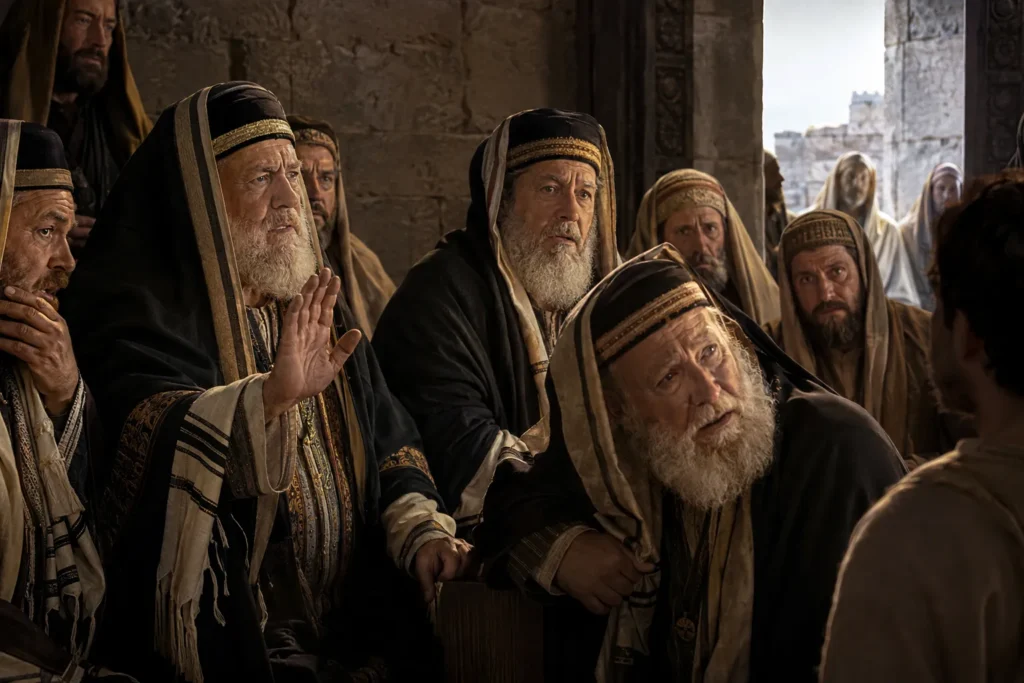
We should avoid flattening every leader into the same character. Acts names priests, Sadducees, rulers, elders and scribes. Later, Acts tells us that many priests believed.
There were probably several motives behind the resistance. The Sadducees rejected the teaching of resurrection. The leaders were also responsible for maintaining order under Roman occupation. John records their fear:
“If we let him thus alone, all men will believe on him: and the Romans shall come and take away both our place and nation.”
—John 11:48“For he knew that for envy they had delivered him.”
—Matthew 27:18
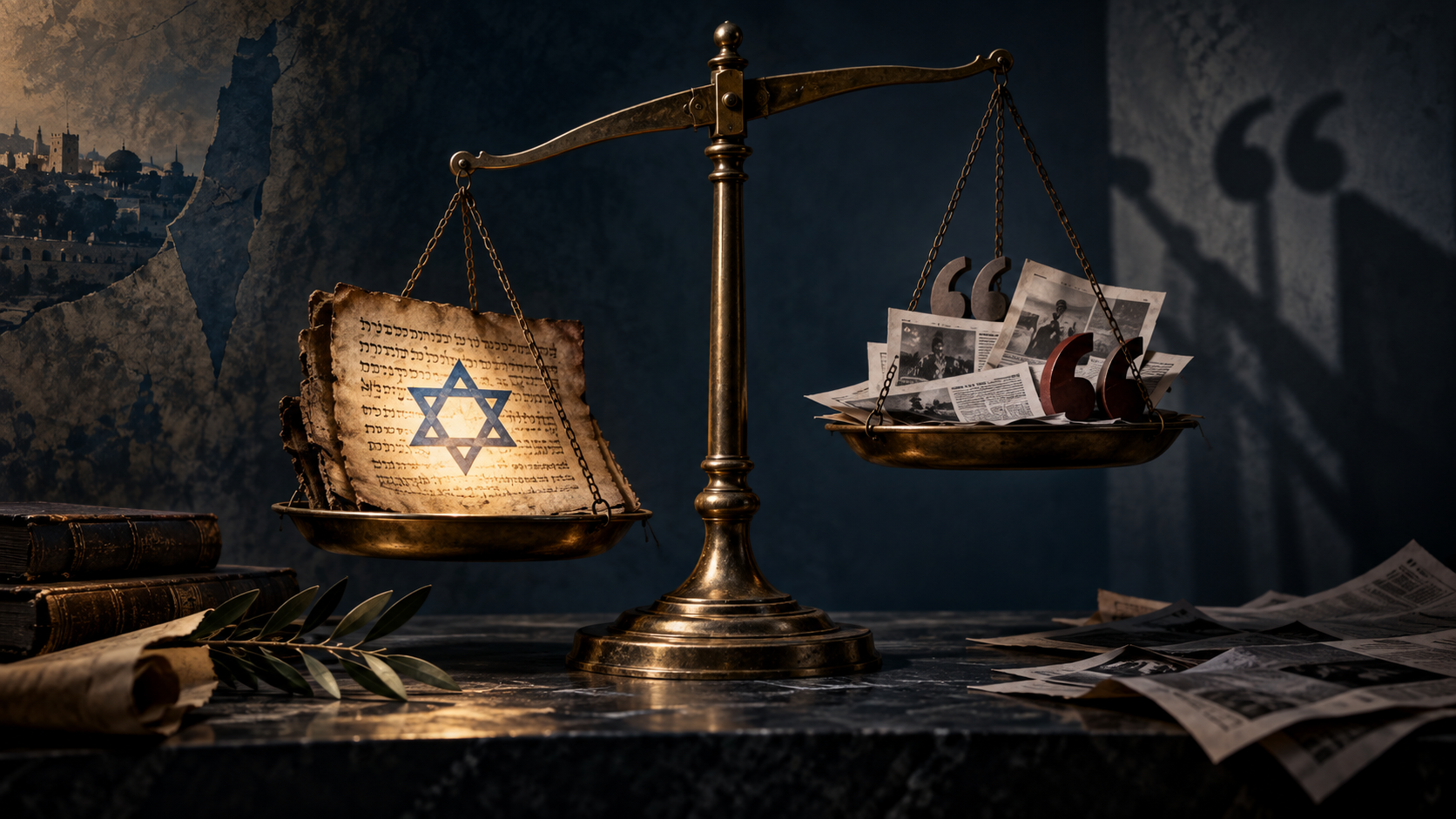
They had much to lose: authority, influence, theological certainty and perhaps the fragile political order they believed protected the nation. People can sincerely believe they are defending God while resisting what God is doing.
“Indeed a notable miracle hath been done by them… and we cannot deny it.”
—Acts 4:16“But that it spread no further among the people, let us straitly threaten them.”
—Acts 4:17
Their words sound fearful: Do not let this spread. Do not speak this Name.
Perhaps they had not yet concluded that the healing was certainly the work of God. Acts does not tell us that. But they knew the sign was undeniable, and they knew the God of Israel could not be controlled. If God was doing this, how could they silence Him?
“If this counsel or this work be of men, it will come to nought: but if it be of God, ye cannot overthrow it.”
—Acts 5:38–39“Whether it be right in the sight of God to hearken unto you more than unto God, judge ye. For we cannot but speak the things which we have seen and heard.”
—Acts 4:19–20
The leaders said, “You must not speak.” The witnesses answered, “We cannot stop speaking.”
Neither councils nor threats can silence God.
The Gate Remains Open
I do not believe the invitation to Israel ended with the resistance of some leaders.
“And they also, if they abide not still in unbelief, shall be graffed in: for God is able to graff them in again.”
—Romans 11:23
The words that hold me are “God is able.”
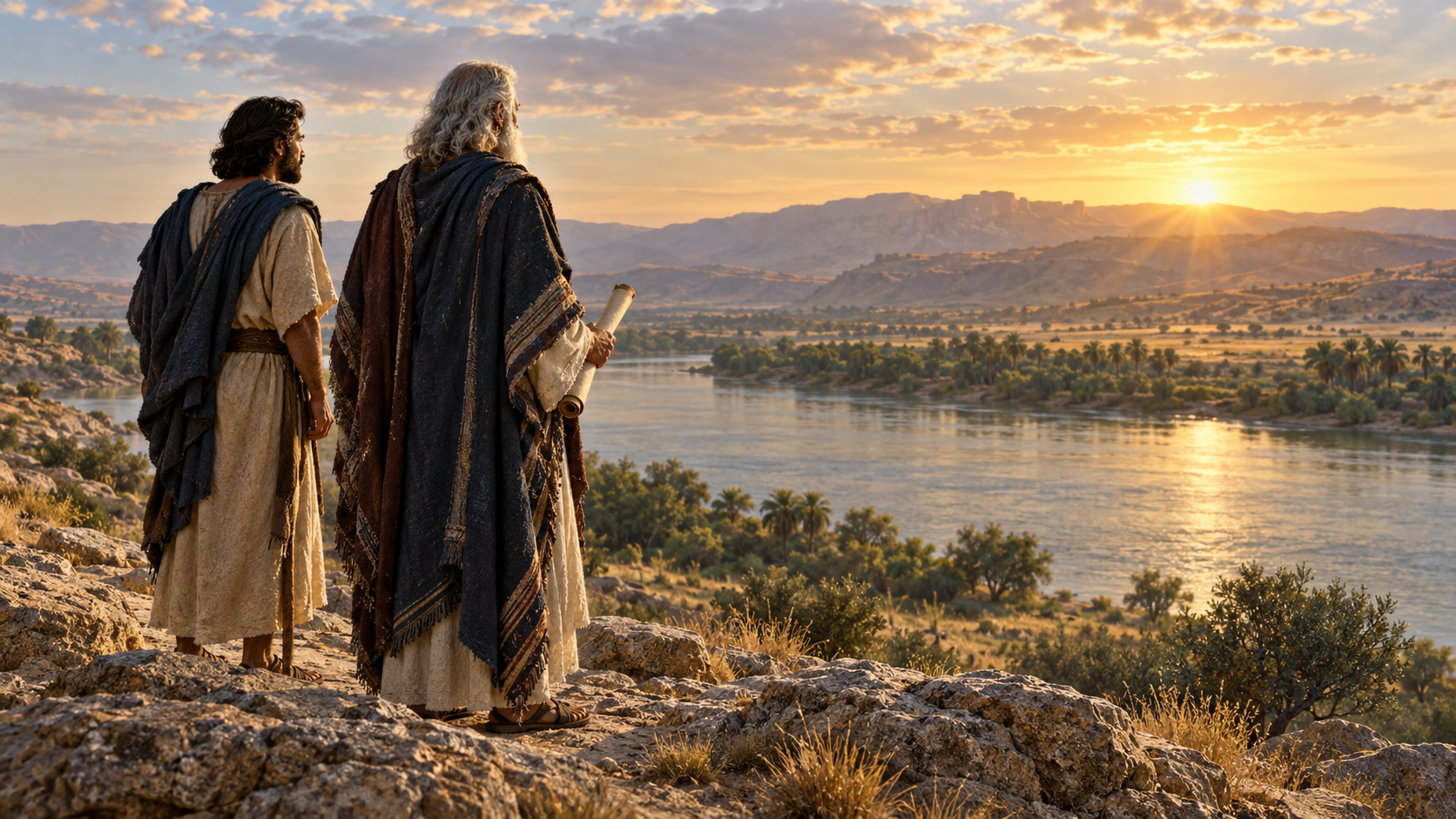
A Jew is always welcome to recognize that Yeshua fulfilled our verses. We do not have to abandon Moses, the Prophets or the Psalms in order to see Him. Those are the very Scriptures Peter, John and Paul used to reveal Him.
Yeshua did not enter the Jewish story from outside. He was born within it. He prayed its prayers, observed its appointed times, entered its Temple and spoke through its prophetic language.
The gate is not opened by Gentile permission. No church owns the entrance. It is God’s gate. The invitation comes from Israel’s God, through Israel’s Messiah, first proclaimed in Jerusalem by Jewish witnesses.
The leaders may have tried to close the apostles’ mouths, but they could not close the gate God had opened.
The Seed of Hope
Perhaps the first step is not having every answer. Perhaps it is simply wanting to believe.
“All things must be fulfilled, which were written in the law of Moses, and in the prophets, and in the psalms, concerning me.”
—Luke 24:44“Then opened he their understanding, that they might understand the scriptures.”
—Luke 24:45
The verses had always been there. What changed was their understanding.
A person does not have to begin with perfect faith. Even the desire to believe can become a call to God: If You are there, show me. If Yeshua fulfilled these verses, open my eyes to see Him.
“Lord, I believe; help thou mine unbelief.”
—Mark 9:24
Belief and unbelief were present in the same sentence, yet Yeshua did not turn him away. God can work with the tiniest bit of hope. That hope is a seed.
“If ye have faith as a grain of mustard seed…”
—Matthew 17:20
The seed is small, but its smallness does not determine what it may become. The desire to believe is already a turning toward God. The question may already be a prayer.
“The LORD is nigh unto all them that call upon him, to all that call upon him in truth.”
—Psalm 145:18
God opens the understanding. God gives the growth. We bring Him the small beginning.
Fear says, “Let it spread no further.” Hope says, “God, open my understanding.”
Fear guards what it may lose. Hope is willing to look again. Fear attempts to close mouths. Hope enters through the open gate.
Why Do the People Rage?
After Peter and John were released, they returned to the believers. The community understood the opposition through Psalm 2:
“Why did the heathen rage, and the people imagine vain things? The kings of the earth stood up, and the rulers were gathered together against the Lord, and against his Christ.”
—Acts 4:25–26“Why do the heathen rage, and the people imagine a vain thing? The kings of the earth set themselves, and the rulers take counsel together, against the LORD, and against his anointed.”
—Psalm 2:1–2
The believers themselves make this connection. This is not merely an echo discovered by a later reader. Acts explicitly interprets the gathering against Yeshua through Psalm 2.
“Yet have I set my king upon my holy hill of Zion.”
—Psalm 2:6
The rulers may gather, but they cannot overturn the purpose of God.
The Place Was Shaken
The believers did not pray that every threat would disappear. They prayed for boldness:
“And now, Lord, behold their threatenings: and grant unto thy servants, that with all boldness they may speak thy word.”
—Acts 4:29“And when they had prayed, the place was shaken where they were assembled together; and they were all filled with the Holy Ghost, and they spake the word of God with boldness.”
—Acts 4:31“And the whole mount quaked greatly.”
—Exodus 19:18
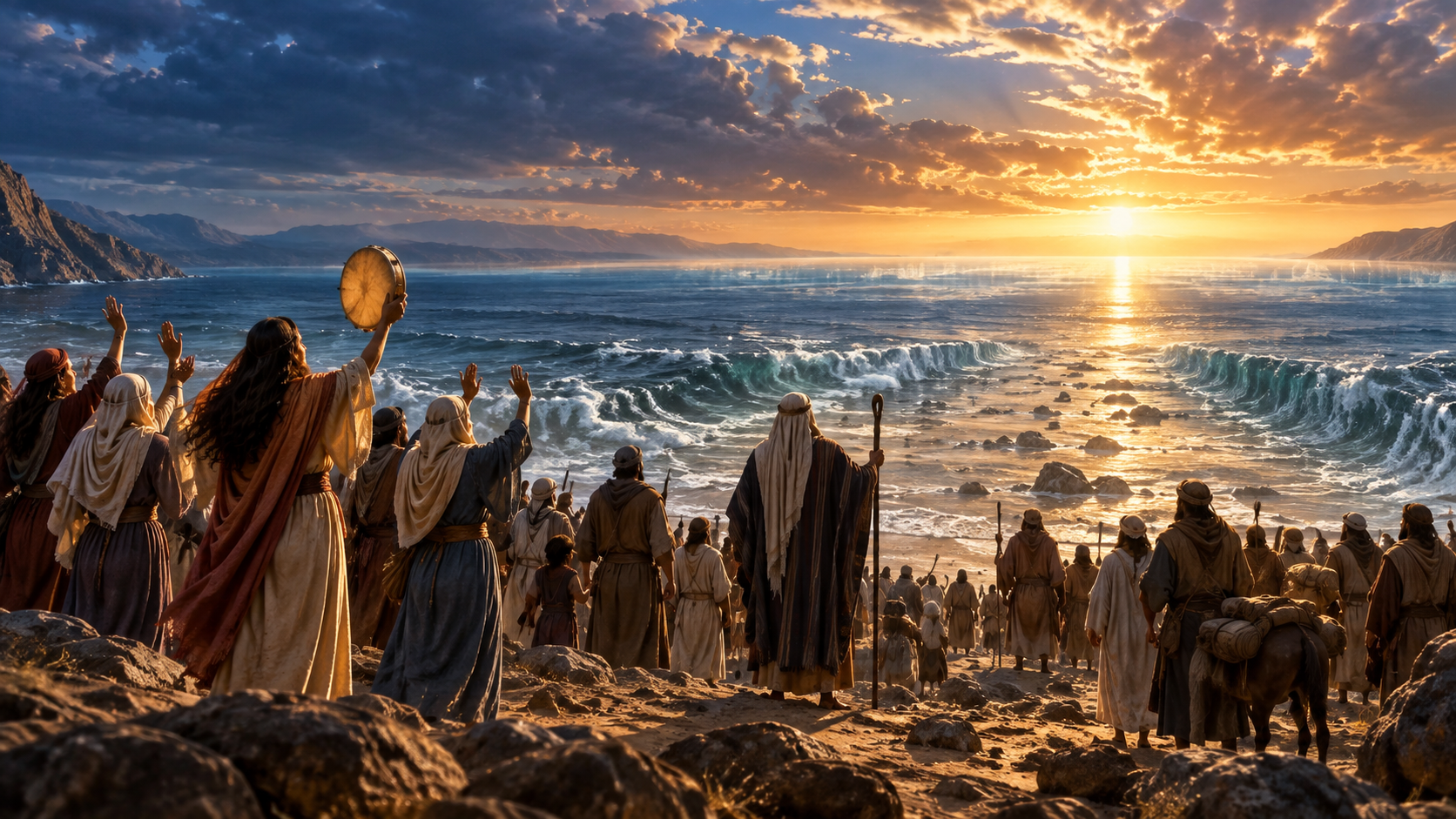
Acts does not call this another Sinai, so I would not call it an explicit fulfillment. But I see a thematic echo. At Sinai, God gathered a people, the mountain shook and God gave His words. In Acts 4, the believers gathered, the place shook and the Ruach HaKodesh gave them boldness to speak God’s word.
The threats did not silence them. The threats drove them to prayer, and prayer made them bolder.
One Heart and One Soul
“And the multitude of them that believed were of one heart and of one soul.”
—Acts 4:32
The Ruach HaKodesh opened their mouths to speak, but He also opened their hands to give.
“Neither was there any among them that lacked.”
—Acts 4:34“There shall be no poor among you.”
—Deuteronomy 15:4“Thou shalt not harden thine heart, nor shut thine hand from thy poor brother: but thou shalt open thine hand wide unto him.”
—Deuteronomy 15:7–8
Luke does not formally introduce Deuteronomy 15 as a quotation. I see it as a strong Torah resonance.
A people filled with the Spirit began to resemble the covenant community envisioned in the Torah: one heart, one soul and no needy person forgotten among them.
The same Spirit who opened their mouths opened their hands.
What Happened After the Gate Opened?
Acts 3 was the pivot. One man was healed, but the message could not remain with one man.
He crossed the threshold. Peter proclaimed Israel’s Messiah. Thousands believed. The leaders became afraid. The witnesses refused to be silent. The community prayed the Psalms. The place shook. Then hearts and hands were opened.
The man was still standing. The Stone was still in place. The Name was still spreading. Israel was still inside the story. And the gate was still open.
Perhaps belief begins with the smallest willingness to look again. God can work with that. He can take the tiniest seed of hope and open the Scriptures, the understanding and the heart.
These are our verses. These are our promises. Yeshua fulfilled them.
God, I want to believe. Take this small hope and show me what You have placed in our Scriptures.
Do you see what I see? Do you want to believe?
Two Stories, One Book, One God.