THEY TOOK HOSTAGES
Amalek, Ziklag, and the War Against the Promise
They did not simply steal David’s possessions. They took the people.
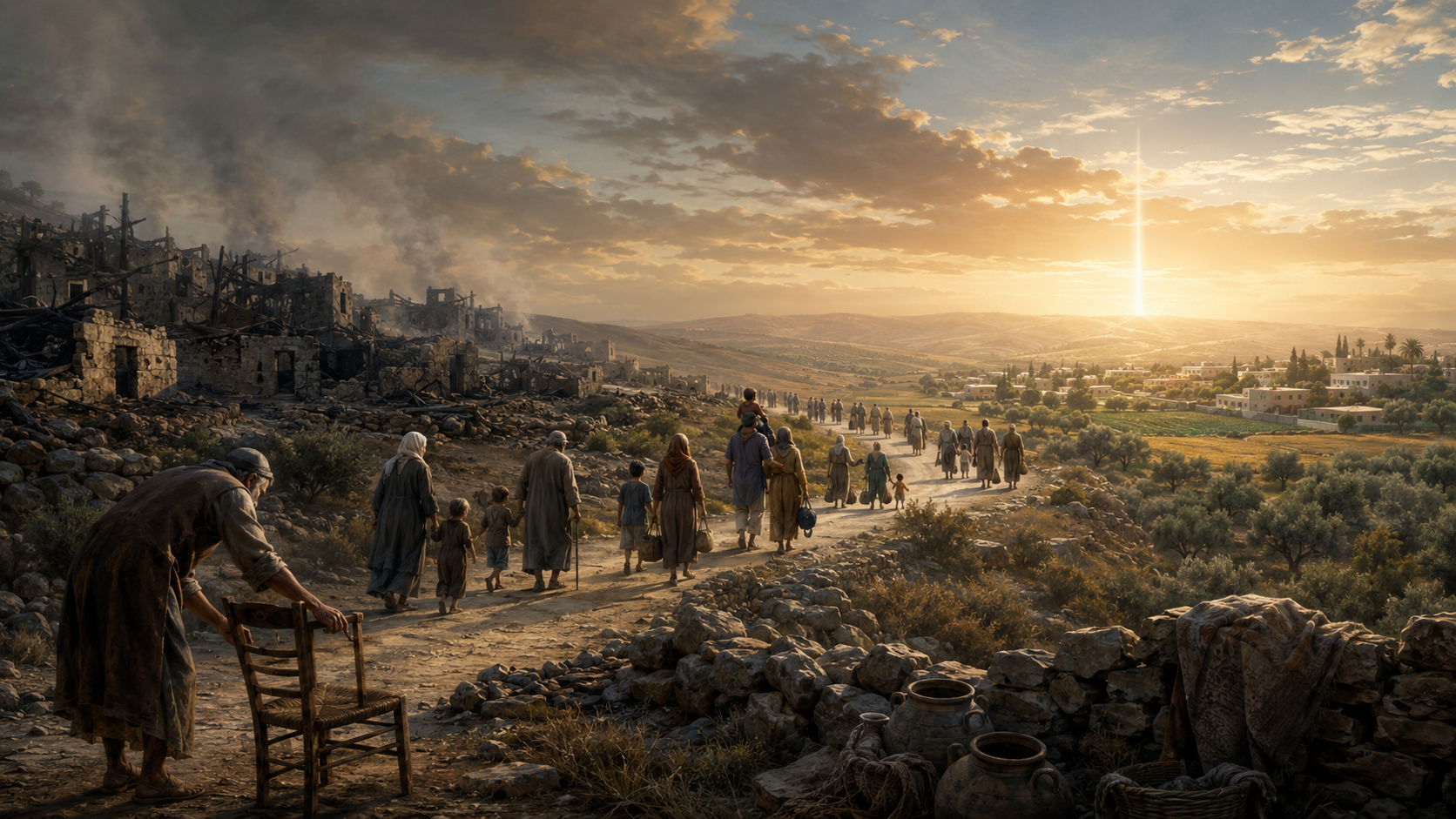
While David and his six hundred men were away, the Amalekites swept into Ziklag, attacked the city, and burned it. They carried away the women and children—young and old—including David’s two wives, Ahinoam and Abigail.
The biblical account emphasizes one remarkable detail: the Amalekites had killed none of the captives. They had taken them away alive.
When David and his men returned, they found smoke, ashes, empty homes, and no families waiting for them. They raised their voices and wept until they had no strength left to weep. Then grief turned into bitterness. The same men who had followed David now spoke of stoning him, because every one of them was grieving for his sons and daughters.
At Ziklag, David appeared to lose everything at once: his home, his wives, the families entrusted to him, the loyalty of his men, and perhaps even his future.
But the story was not over.
The Ancient Enemy
The conflict with Amalek began long before Ziklag.
Amalek was a grandson of Esau, born into the family line that stood outside the covenant given through Jacob. Generations later, after Israel came out of Egypt, the Amalekites launched an infamous attack against the newly liberated nation.
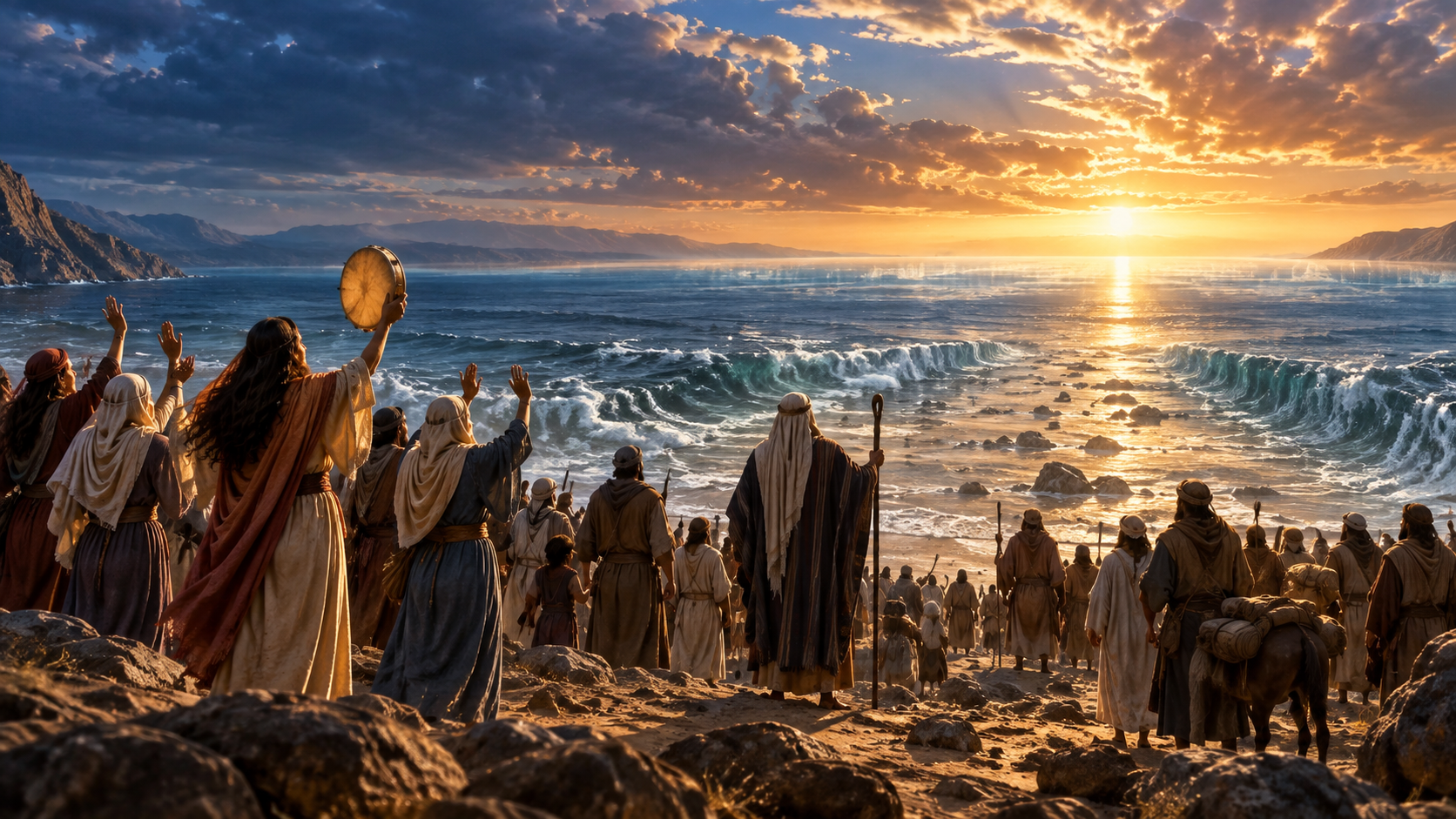
They did not confront Israel only at its strongest point. Moses later recalled that Amalek struck the weary and vulnerable who had fallen behind. Israel had escaped Pharaoh, crossed the sea, and entered the wilderness—but Amalek tried to cut down the weak at the rear of the procession.
At Rephidim, Joshua fought while Moses stood above the battlefield with the staff of God in his hand. When Moses held up his hands, Israel prevailed; when his hands grew tired, Amalek prevailed. Aaron and Hur therefore supported his hands until sunset, and Joshua overcame the attackers.
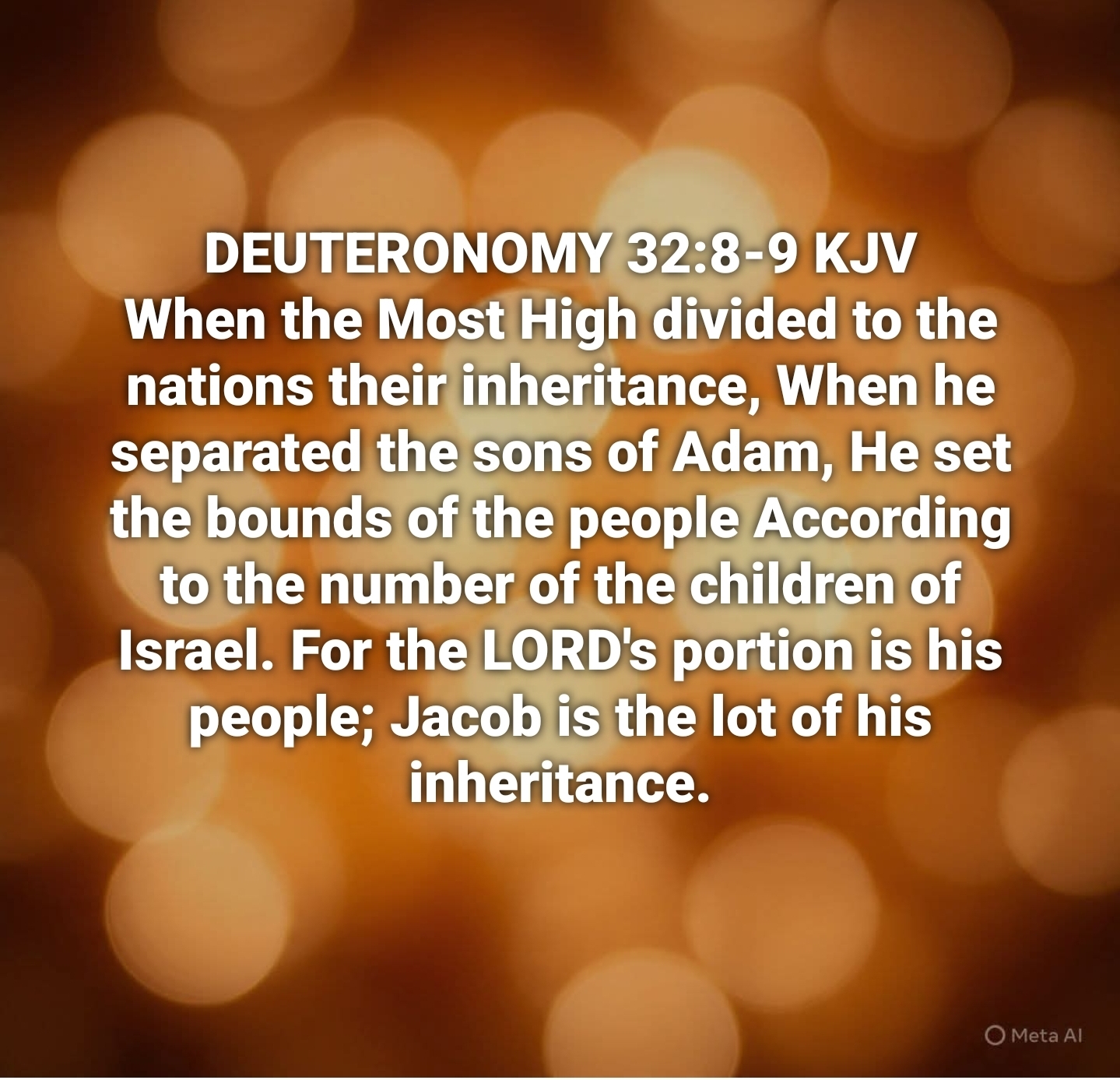
God then declared that there would be conflict with Amalek “from generation to generation” (Exodus 17:16).
Amalek consequently became more than the name of an ancient desert people. Within the biblical story, the name came to represent relentless hostility toward God’s covenant purposes—especially hostility aimed at the weary, the exposed, and the seemingly defenseless.
A War Against the Promise
The larger biblical conflict begins even earlier, in Eden.
After the serpent’s deception, God announced that the seed of the woman would one day crush the serpent’s head (Genesis 3:15). From that point forward, Scripture traces both a promise and a conflict: God preserves a family through whom blessing and redemption will come, while evil repeatedly attempts to corrupt, enslave, or destroy it.
The promise passed through Abraham, Isaac, and Jacob. It continued through Israel and was later focused upon the house of David. God promised David that his throne would be established forever. The prophets would eventually describe the coming Redeemer as a righteous Branch from David’s line.
Ziklag occurred before David securely occupied the throne. The Amalekite raid therefore struck at a terribly vulnerable moment. Scripture does not say that David’s two captive wives carried the future Messianic line; Solomon would later be born to Bathsheba. Nevertheless, the attack threatened David’s household, his men’s families, his leadership, and the future kingdom forming around him.
The enemy had not merely taken livestock and valuables.
They took hostages.
They carried away the people connected to David’s future and left behind a burned city calculated to overwhelm the survivors with grief.
David Strengthened Himself
David wept with everyone else. Faith did not make him untouched by sorrow. The difference appeared in what he did when his own strength was gone.
“But David strengthened himself in the LORD his God” (1 Samuel 30:6).
That sentence is the turning point of the entire chapter.
David did not pretend the loss was insignificant. He did not attack his grieving men or make an impulsive pursuit into the wilderness. He turned first toward God. He asked Abiathar the priest to bring the ephod, and then he inquired of the Lord:
Should I pursue this raiding party? Will I overtake them?
God’s answer was unmistakable: pursue them. David would certainly overtake the raiders and rescue the captives.
The promise did not eliminate the pursuit. God assured David of recovery, and David rose to go after what had been taken.
The Abandoned Egyptian
David began the pursuit with six hundred men, but two hundred were too exhausted to cross the Besor ravine. Four hundred continued with him.
Along the way, David’s men found an Egyptian lying in the open country. He had gone three days and nights without adequate food or water. He was not an Amalekite warrior but the servant of one. When he became ill, his master abandoned him.
The Amalekites had preyed upon the vulnerable at the rear of Israel centuries earlier. Now an Amalekite had discarded a vulnerable servant and left him behind. But the man whom Amalek treated as worthless became the guide who led David to the Amalekite camp.
This is one of the quiet reversals in the story. David did not find the enemy through superior intelligence or desert skill. The road to the captives was revealed through mercy shown to an abandoned stranger.
After receiving food and recovering his strength, the Egyptian agreed to guide David, provided David promised not to kill him or return him to his former master.
The discarded servant knew the way.
David Recovered All
The Egyptian led David to the Amalekite encampment. The raiders were scattered across the ground, eating, drinking, and celebrating the enormous amount of plunder they had taken from Philistine and Judean territory.
They believed the raid was finished. Ziklag was ashes. The captives were theirs. David had arrived too late.
They were wrong.
David struck the raiding force and defeated it. Four hundred young Amalekite men escaped on camels, but their captives and plunder were recovered.
The biblical writer lingers over the completeness of the rescue:
Nothing was missing, whether small or great, sons or daughters, spoil or anything that had been taken. David brought back everything.
The text does not explicitly tell us that no soldier in David’s force died in the fighting. It tells us something central to the chapter’s message: not one of the captives was missing.
The Amalekites took hostages.
David recovered them all.
Not one child was abandoned. Not one family was forgotten. Not one captive was written off as an acceptable loss.
What Became of Amalek?
David’s victory at Ziklag was devastating, but it was not the first—or necessarily the final—biblical conflict with Amalek.
Earlier, God had commanded King Saul to execute judgment against Amalek. Saul defeated them across a wide territory but disobeyed by sparing King Agag and preserving the best livestock. Samuel subsequently put Agag to death, but Amalekite raiding bands continued to appear, demonstrating that Saul’s campaign had not removed every Amalekite group.
After David’s time, 1 Chronicles 4:42–43 records that five hundred Simeonites traveled to Mount Seir, defeated “the remnant of the Amalekites who had escaped,” and settled there during Hezekiah’s reign. This was a major final notice of Amalek’s destruction in the historical books, although Scripture does not provide enough information to prove the extinction of every person of Amalekite descent.
Much later, the book of Esther introduces Haman the Agagite. That title deliberately recalls Agag, Amalek’s king and Saul’s enemy. Haman sought the destruction of the Jewish people throughout the Persian Empire. The Bible does not supply a complete genealogy proving that Haman was Agag’s biological descendant, but the language invites readers to recognize the ancient pattern: once again, an enemy associated with Agag attempts to destroy Israel; once again, God overturns the plot and preserves His people.
The Pattern, Not a Bloodline
We should distinguish what Scripture states from the theological pattern we see within it.
The Bible does not teach that a supernatural “spirit of Amalek” literally passed from one individual to another. Nor should every later enemy of Israel be described as a physical Amalekite. King Herod, for example, was Idumean and therefore associated broadly with Esau, but Scripture never calls him an Amalekite.
Still, Herod’s attempt to destroy the young Messiah echoes Amalek’s ancient method: power turns against the small and vulnerable because God’s promise is advancing through them.
This is the recurring pattern. Pharaoh ordered Israel’s sons killed. Amalek attacked Israel’s weary. Saul’s disobedience left the conflict unresolved. Amalekite raiders carried away the families at Ziklag. Haman plotted against the Jews of Persia. Herod sought the child born King of the Jews.
These were different enemies in different centuries. They need not share one literal genealogy to reveal one continuing truth: the purposes of evil repeatedly oppose the redemptive promise of God.
And repeatedly, God preserves the promise.
Vehi She’amda—In Every Generation

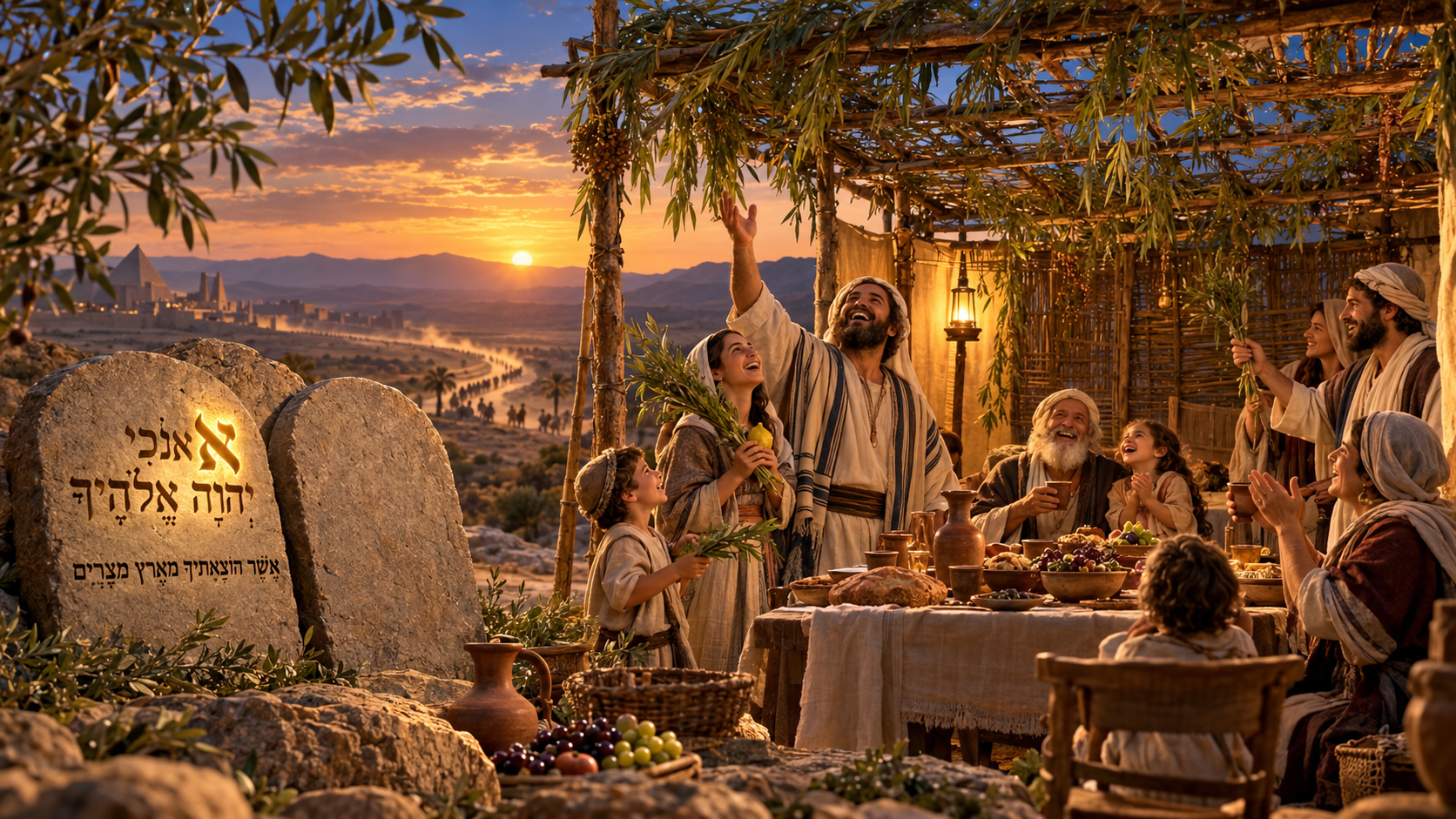
The Jewish people already possess words for this recurring pattern. Every Passover, after telling of deliverance from Egypt, we lift the cup and recite Vehi She’amda:
“In every generation they rise against us to destroy us, but the Holy One, blessed is He, delivers us from their hand.”
Those words do not say that the same nation returns in every age. Pharaoh was not Amalek. Haman was not Pharaoh. Herod was not Haman. Hamas is not the ancient Amalekite nation. The faces, languages, empires, and ideologies change.
But the threat returns.
And so does the Deliverer.
Vehi She’amda prevents the story from becoming a celebration of Israel’s strength alone. Israel remembers its defenders, honors courage, pursues its enemies, and labors to bring its people home—but the final testimony belongs to the Holy One. Israel survives not merely because enemies fail, but because God remains faithful to His covenant.
At the Passover table, history becomes personal: not only our ancestors. In every generation, each Jew is to regard himself as having come out of Egypt. Deliverance is not trapped in the distant past. The God who brought Israel out then is the God upon whom Israel still depends now.
That is the thread running through Rephidim, Ziklag, Persia, and the present age:
They rise. Israel weeps. Israel remembers. Israel pursues. And the Holy One delivers.
A Story Israel Is Still Living
On October 7, 2023, this ancient story became painfully immediate again.
Communities in southern Israel were attacked. Homes were burned, families were torn apart, and 251 people were taken into Gaza. They were children and grandparents, civilians and soldiers, Israelis and foreign nationals. Once again, Israel faced an enemy that did not merely attack.
They took hostages.
For more than two years, the faces of the captives appeared on walls, at vigils, around family tables, and in public squares. The words “Bring Them Home” expressed something deeper than a military objective or political slogan. They expressed Israel’s refusal to forget even one person.
That is where Ziklag speaks so directly to the modern Jewish heart.
David did not return home with most of the captives. He did not accept a calculation in which some could be recovered while others disappeared into the wilderness. First Samuel carefully names the sons and daughters, the young and the old, the great and the small—and then declares that nothing was missing.
Modern Israel carried the same insistence: every hostage must come home. Those who survived captivity must be restored to their families. Those who did not survive must still be returned, named, mourned, and buried with dignity. No one was to be abandoned simply because time had passed or recovery had become difficult.
All the remaining living hostages were returned in October 2025. The final hostage, Ran Gvili, was brought home in January 2026. The recovery could not undo the attack, restore every life, or remove the grief borne by families and the nation. But it fulfilled the promise contained in those words: every hostage would be brought home.
There is a second echo. David not only recovered the captives; he also overtook and defeated the raiding force responsible for Ziklag. After October 7, Israel created a special intelligence mission—known as Nili, recalling the words “the eternity of Israel will not lie” from 1 Samuel 15:29—to identify and pursue every participant in the Hamas-led assault. Israeli forces have found and killed many of the commanders and attackers involved, while the effort to locate every remaining participant continues.
The parallel can be stated carefully:
Every hostage recovered. Every perpetrator pursued.
That is not indiscriminate vengeance. It is the distinction between the guilty and the innocent. Just as David’s account identifies the Amalekite raiders rather than condemning every neighboring people, moral responsibility for October 7 belongs to its planners, commanders, hostage-takers, and willing participants. Justice loses its meaning when guilt is assigned merely by ethnicity or birthplace.
The parallel is not exact. The Bible says David recovered all his captives alive, while modern Israel’s homecoming included the sorrowful return of those who had died. October 7 must not be forced into a simplistic prophecy, and today’s Palestinians should not be indiscriminately labeled “Amalek.” Moral responsibility belongs to those who planned, committed, and supported the taking of hostages—not to an entire people by birth.
Yet the spiritual and emotional connection is unmistakable. Ziklag gives language to a nation that came home to burned communities and empty rooms, wept until strength seemed gone, and then refused to forget those who had been carried away.
It is the same sacred arithmetic:
Not most.
Not nearly all.
Every name. Every family. Every hostage brought home.
From Ziklag to the Messiah
Ziklag is not Calvary, and David’s victory is not the completed redemption. Yet David’s recovery offers a powerful preview of the character of the greater Son of David.
David entered the enemy’s territory to reclaim people who could not free themselves. He did not return with a fraction of the captives and call the mission successful. He recovered everyone who had been taken.
The Messiah would ultimately confront an enemy deeper than Amalek: sin, death, and the spiritual powers holding humanity captive. His decisive victory would not be won by preserving His own life, but by giving it and rising again.
At Ziklag, everything visible told David that he had arrived at the end. The city was burned. The families were gone. His men had turned against him. He had wept until he had no strength remaining.
Then David strengthened himself in the Lord his God.
He asked.
God answered.
He pursued.
And he recovered all.
The enemy’s strategy was captivity. God’s answer was recovery.
That was true at Ziklag. It remained true through the long anguish that followed October 7. And it reaches its deepest meaning in the greater rescue accomplished by the Son of David.
They took hostages—but they could not take the promise. We worship a God who keeps his promises.
Justice, Justice you shall pursue:
Deuteronomy 16:20 That which is altogether just shalt thou follow, that thou mayest live, and inherit the land which the Lord thy God giveth thee.