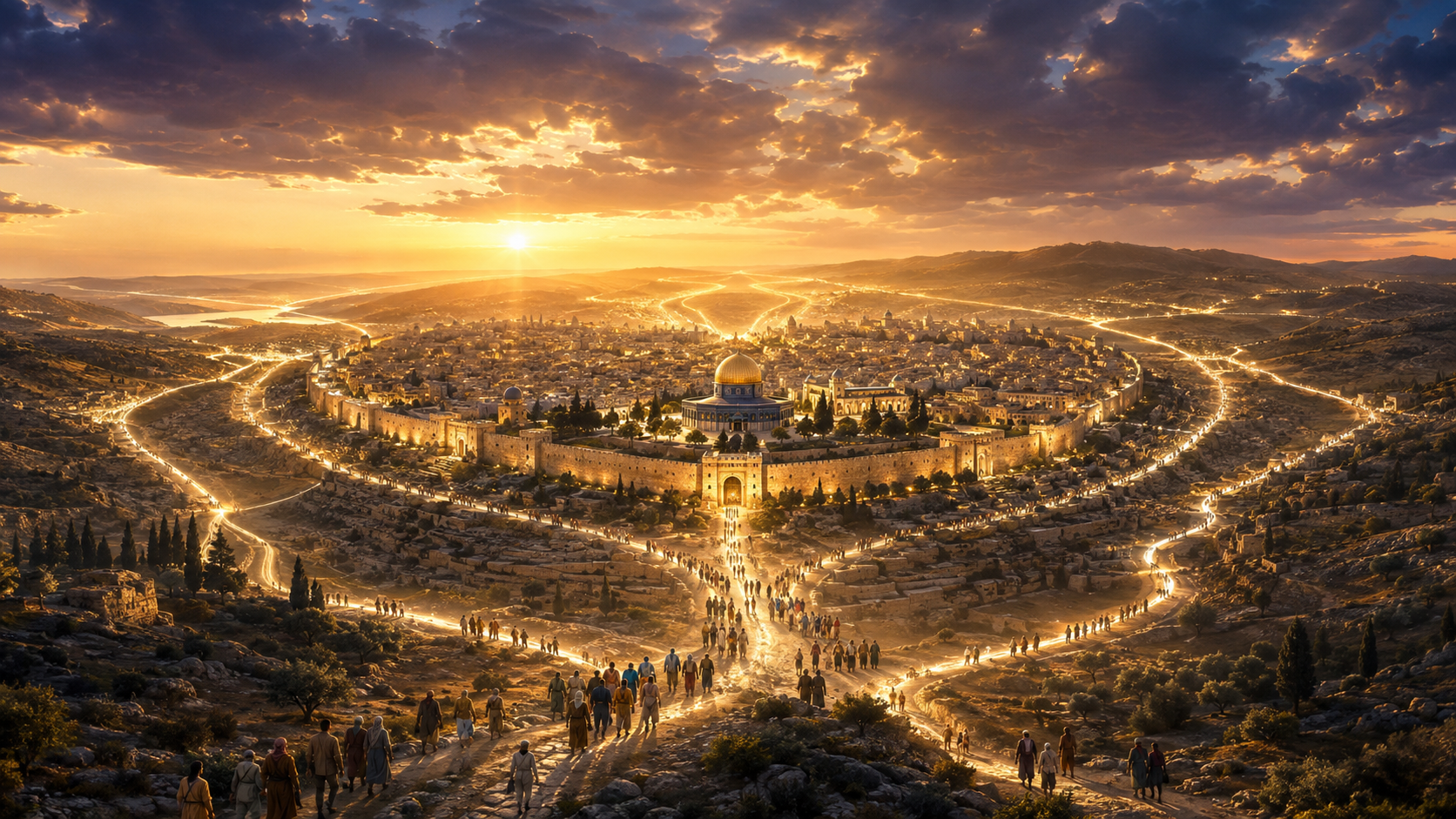
THE HEART OF THE WORLD
A Meditation by Jonah
Tonight at a retirement party, a friend got me thinking about whether Jesus cared more for Jerusalem than Israel. The question remained on my mind and I know what that means. I have to write it out.
At first, the question seems reasonable. Jesus clearly had a special love for Jerusalem. He wept as he approached the city. He lamented over it:
“Jerusalem, Jerusalem… How often I wanted to gather your children together.”
Yet when we follow Jesus through the Gospels, we find that he spent most of his time far from Jerusalem. Much of his preaching, healing, and gathering of disciples took place in Galilee. He traveled through towns, villages, fields, and countryside. He taught beside the Sea of Galilee, entered ordinary homes, touched the sick, ate with the rejected, and called fishermen to follow him.
Jerusalem was not the geographical center of his daily ministry. Galilee was his field, but Jerusalem was his destination.
Still, I wonder whether asking if Jesus loved Jerusalem more than Israel creates a separation that he would never have made. Jerusalem was not something apart from Israel. Jerusalem was—and remains—the heart of Israel.
David made Jerusalem Israel’s capital. Solomon built the Temple there. The tribes traveled there for the appointed feasts. The priests ministered there, the prophets spoke of it, and the exiles longed for it. Jewish prayer faced toward it. Jewish memory would not release it.
“If I forget you, O Jerusalem…”
Jerusalem holds Israel’s worship, history, sorrow, identity, and hope. It was the capital of David’s kingdom, and it is the capital of Israel to this day.
When Jesus wept over Jerusalem, therefore, he was not choosing a city over a people. He was a Jewish man grieving over the heart of his people. His tears were not the tears of an outsider condemning Israel. They were the tears of one who loved Israel so deeply that he grieved over its heart.
The Jewish people understand that love.
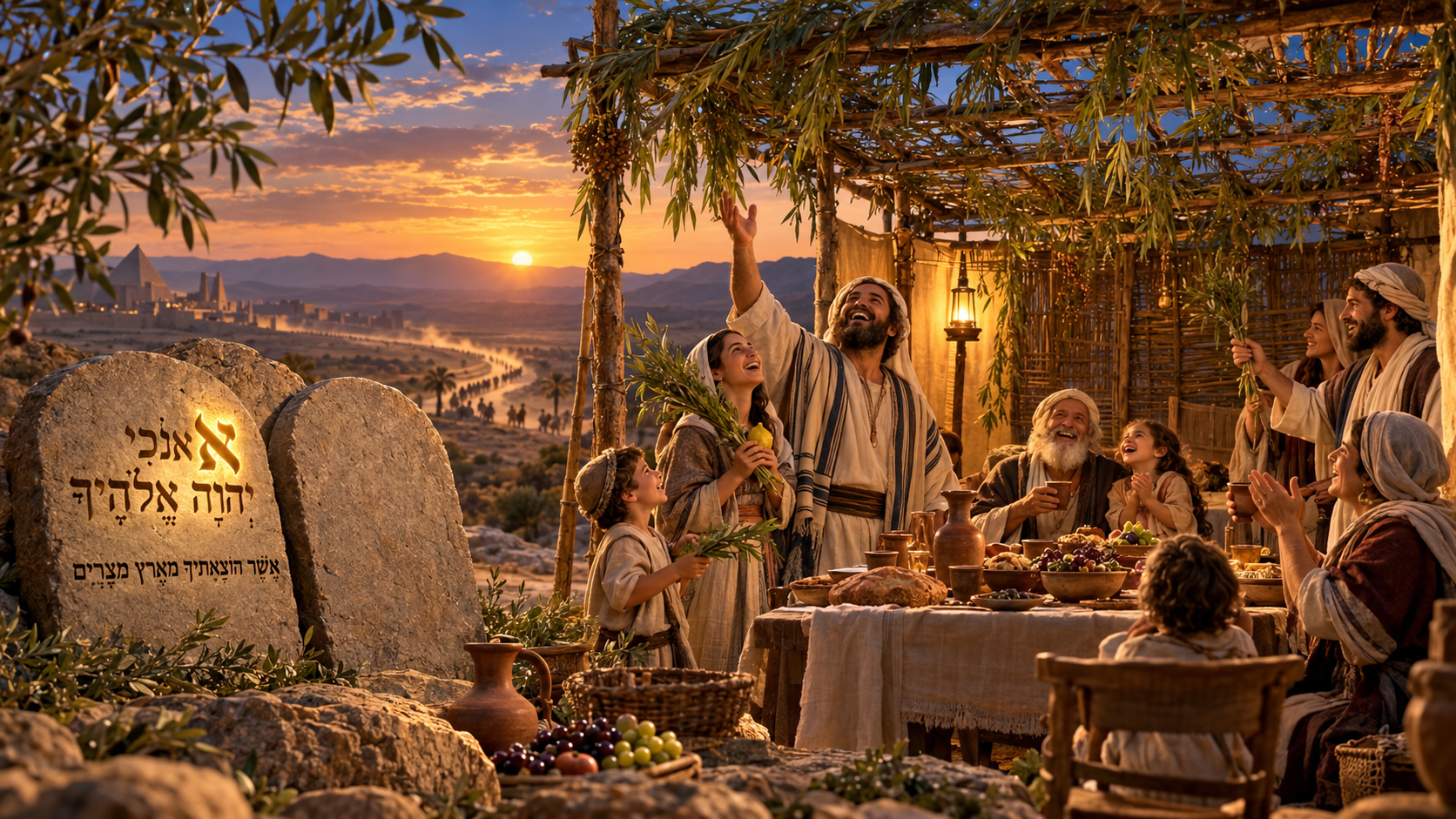
For generations, they have prayed toward Jerusalem. At Passover they have said, “Next year in Jerusalem.” At weddings, even in the midst of joy, they have remembered Jerusalem. During centuries of exile and persecution, Jerusalem remained in their prayers, their Scriptures, their songs, and their imagination.
The people of Israel feel about Jerusalem something of what Jesus felt about Jerusalem. They love it, mourn over it, pray for it, and return to it.
Then another image came to me. If Jerusalem is the heart, what does a heart do?
The heart sends life outward.
From Jerusalem came the worship of the God of Israel. From Jerusalem came the words of the prophets. From Zion, Isaiah said, would go forth God’s instruction. Jesus completed his earthly mission there, and from Jerusalem his disciples carried the good news outward—to Judea, Samaria, and eventually to the ends of the earth.
Life flowed from the heart. But blood does not only flow away from the heart. It also returns to it. That completes the picture.
The prophets did not merely see God’s word flowing outward from Jerusalem. They also saw the nations streaming toward Jerusalem. Isaiah envisioned peoples coming to the mountain of the LORD to learn his ways. Zechariah pictured the nations coming to Jerusalem to worship.
The blessing goes out, and the peoples return. Revelation flows outward; worship flows back. It is a sacred circulation.
Perhaps this is why Jerusalem can be called the center of the world—not necessarily as a statement about lines on a map, but as a statement about God’s purpose. Jerusalem is the heart of Israel, and Israel was chosen to carry blessing to the world. But the heart itself was in need of healing.
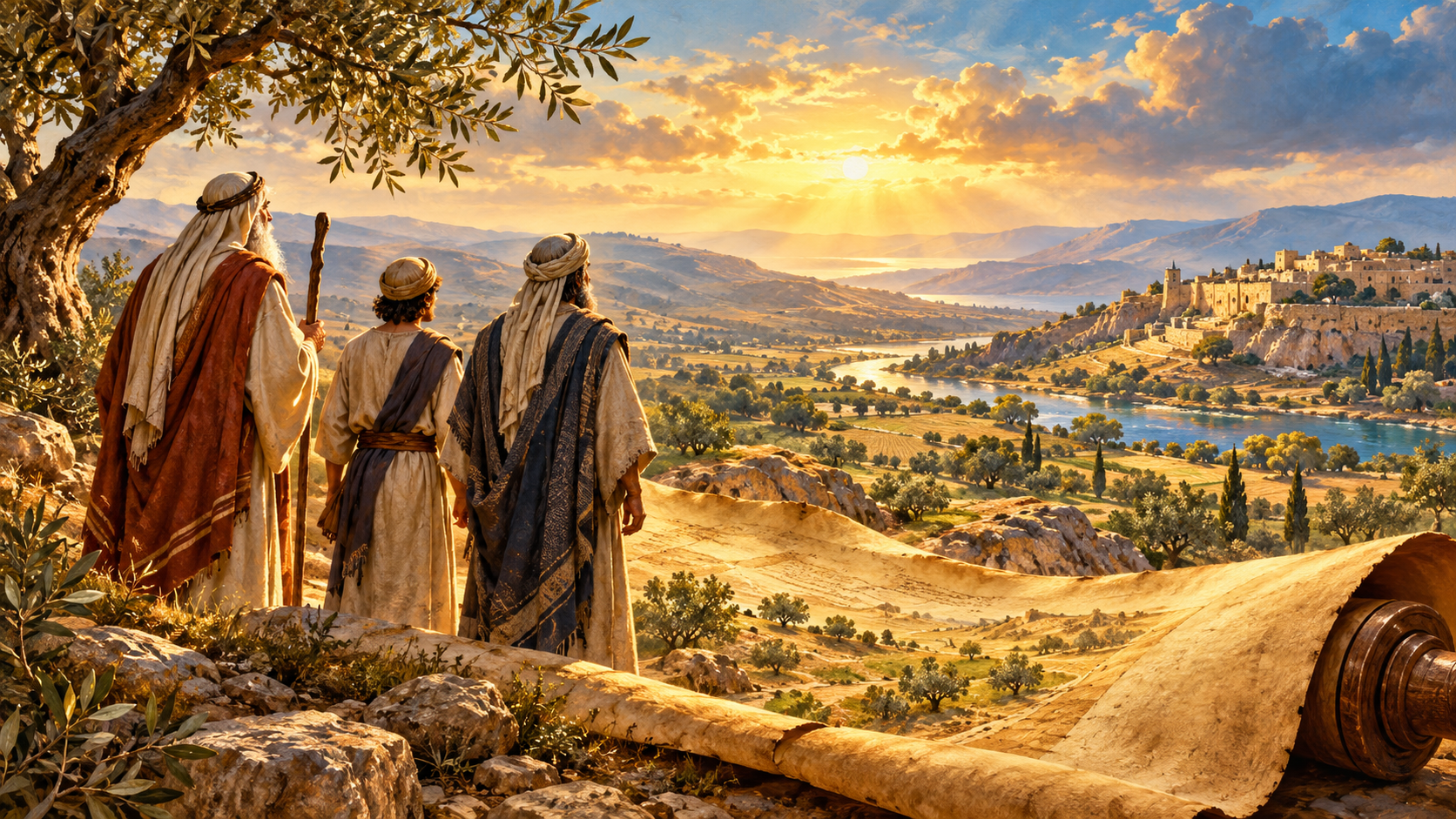
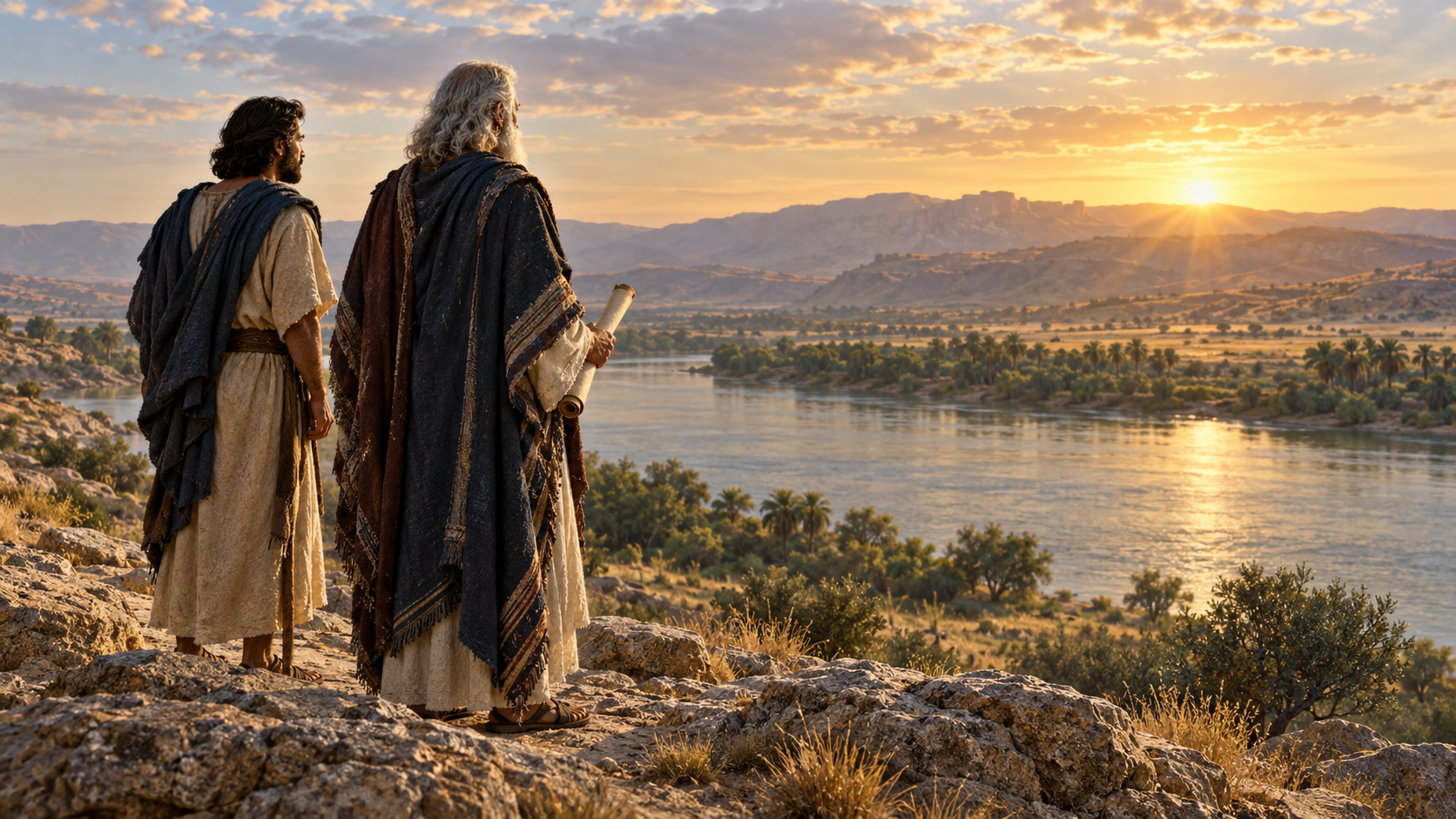
God first showed Abraham the land. “Lift up your eyes,” he told him, and look in every direction. The land was not an abstraction. Abraham walked it, built altars upon it, and received it as a promise—not merely for himself, but for the generations and for the blessing of all nations.
Later, the prophets tried to heal the land. They called Israel back whenever injustice, idolatry, and empty religion made it sick. They warned its kings, pleaded with its people, and spoke of restoration after judgment. They understood that the condition of the land reflected the condition of its people.
Then Jesus came seeking to save it.
He walked the land shown to Abraham. He spoke the words of the prophets. He healed its sick, gathered its lost, confronted its leaders, and called its people back to God. His ministry stretched across Galilee and Judea, through villages and fields, until at last he came to Jerusalem—the heart of the land.
 God showed Abraham the land. The prophets tried to heal the land. Jesus came to save it.
Not the soil without the people, or the people without the soil, but Israel in the fullness of its calling—restored to God and once again carrying blessing to the world.
But restoring Israel did not mean abandoning its heart.
Jesus went through Galilee loving Israel one person at a time. He taught in its synagogues, walked its roads, entered its homes, and healed its people. Then he set his face toward Jerusalem—not because Jerusalem was all that mattered, but because Jerusalem stood at the center of Israel’s calling.
To love Jerusalem rightly is not to ignore the rest of humanity. It is to love the place from which God intended blessing, truth, redemption, and peace to flow outward. It is to pray for the word of the LORD to go forth from Zion and for the nations to learn peace rather than war.
To love Jerusalem is to love Israel. And because Israel was called to bless all the families of the earth, to love Jerusalem is also to love the world.
And so it is with Jerusalem:
The word goes out from Zion. The nations stream toward its light. Blessing flows outward, and worship returns. Jerusalem is the heart of Israel. And life flows from the heart.