TO THOSE WHO CALL THE JEWS COLONIZERS AND IMPOSTORS
A Message About Exile, Memory, and Return
By Jonah
“The Jews did not originate around the world and converge upon a foreign country. They originated in Israel, were scattered around the world, and began coming home.”
There is a charge repeated with growing confidence: that the Jews of Israel are foreign colonizers, impostors who invented an ancient connection to a land that was never truly theirs.
Some who repeat this accusation simply do not know Jewish history. Others know enough to understand what they are denying. They erase that history because, once the Jews are separated from their ancestral land, Israel can be portrayed as having no legitimate reason to exist.
The answer begins with a truth so basic that it is often overlooked: the Jewish people did not originate in Poland, Iraq, Morocco, Yemen, or Ethiopia. Their national story began in the Land of Israel.
ONE PEOPLE, SCATTERED FROM ONE LAND
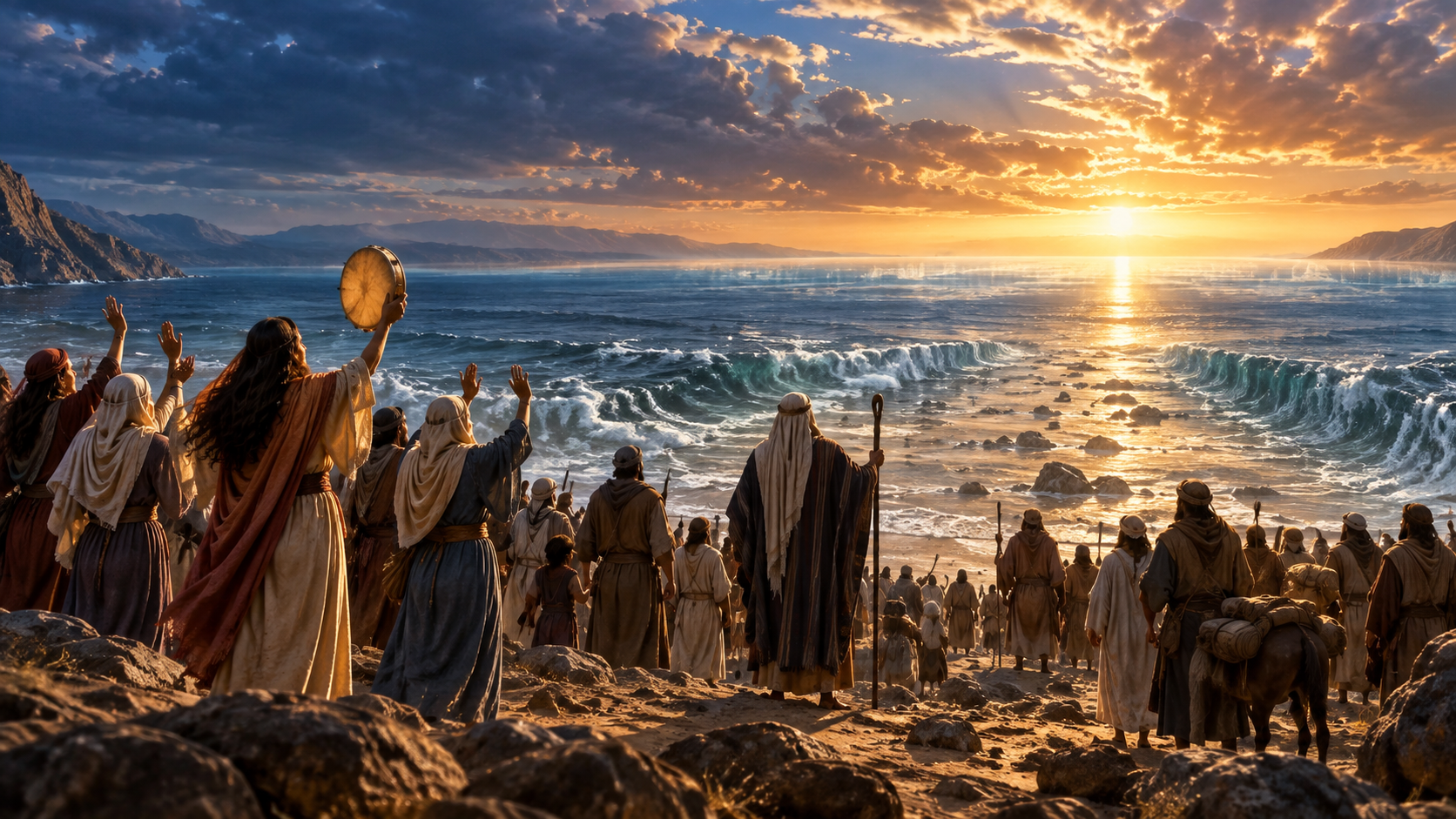
It was in the Land of Israel that the tribes formed a nation, Hebrew kings ruled, the prophets spoke, and the Temple stood in Jerusalem. It was from that land that Jews were scattered through successive conquests, exiles, migrations, and persecutions.
The Assyrians dispersed inhabitants of the northern Kingdom of Israel. The Babylonians carried the people of Judah into exile. Later upheavals under Greek and Roman rule scattered still more Jews through the Mediterranean world and beyond. Jewish communities took root in Babylon, Persia, Arabia, North Africa, Europe, Central Asia, India, and Ethiopia.
The Diaspora was not the birthplace of the Jewish people. It was the result of their scattering.
Those scattered communities naturally developed different languages, foods, clothing, melodies, and customs. Their languages carried a double inheritance. Yiddish joined a Germanic foundation with Hebrew and Aramaic words and later Slavic influences. Ladino preserved medieval Spanish while absorbing Hebrew, Turkish, Greek, and Arabic. Judeo-Arabic and Judeo-Persian blended local speech with Jewish vocabulary and were often written in Hebrew letters. Wherever Jews traveled, the language of the surrounding country entered their mouths, but the language of Torah traveled with them.
Their kitchens told the same story. Jewish families prepared local ingredients according to kashrut and the rhythm of Sabbath and festivals. Ashkenazi Jews slowly cooked cholent with beans, barley, and meat; Moroccan Jews prepared dafina with chickpeas, potatoes, and spices; Iraqi Jews made t’bit, chicken and rice cooked overnight; and Yemenite Jews slowly baked jachnun or kubaneh for Shabbat. The flavors belonged to Poland, Morocco, Iraq, or Yemen—but the sacred timetable belonged to Israel.
Jews in Iraq became culturally Iraqi. Jews in Morocco became culturally Moroccan. Jews in Poland developed Yiddish. Jews expelled from Spain carried Sephardi traditions around the Mediterranean. Adaptation, however, was not abandonment.
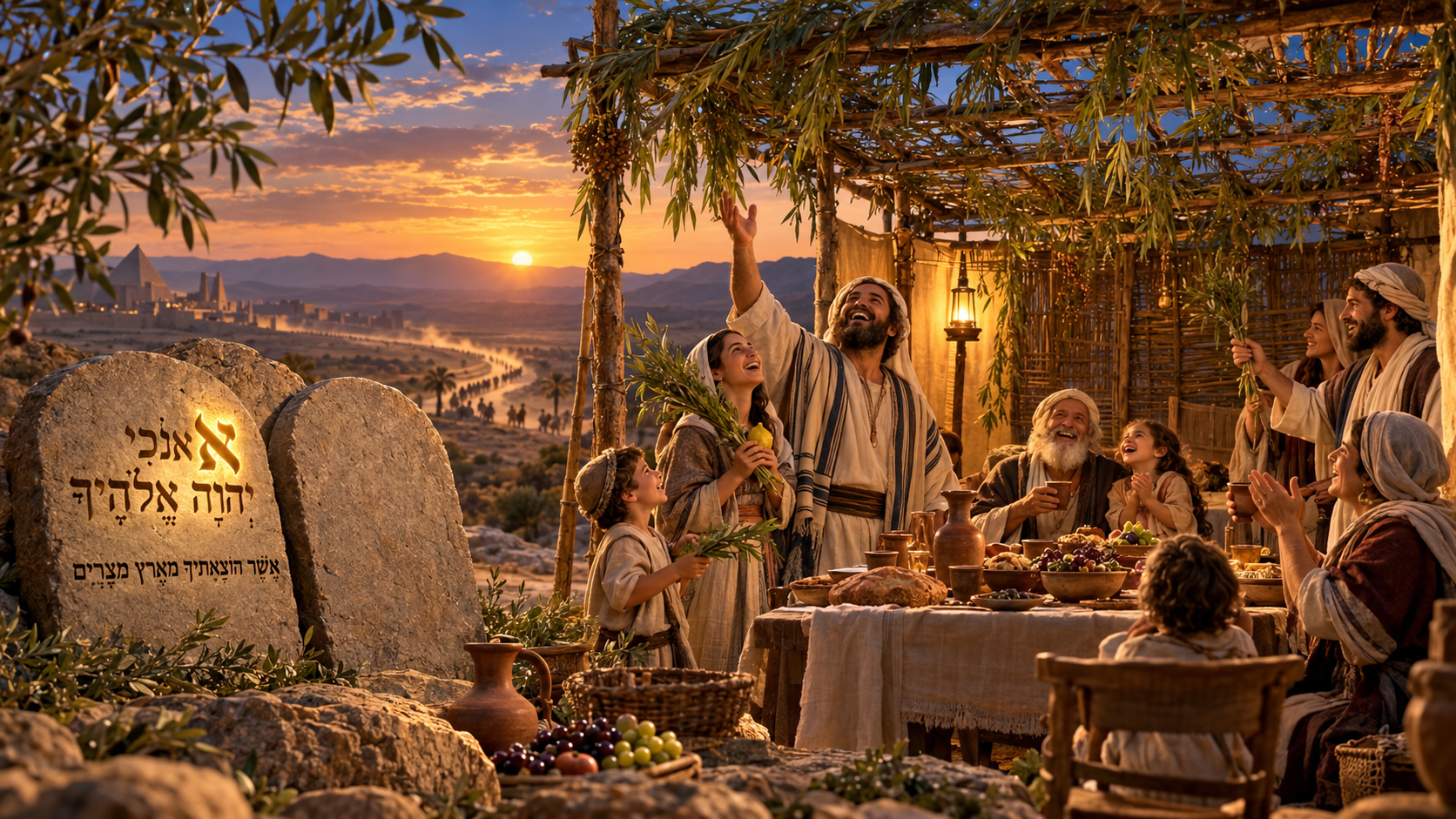
Across continents, they continued reading the Torah, observing Shabbat, celebrating Passover, circumcising their sons, preserving Hebrew in prayer, facing Jerusalem, and remembering the same ancestral land. At weddings they remembered Jerusalem. At Passover they voiced the hope, “Next year in Jerusalem.” The places of exile shaped them, but did not replace the place of their beginning.
IRAQ: CARRYING BABYLON HOME
Consider the Jews of Iraq. By 1948, Iraq was home to approximately 130,000 to 135,000 Jews. Their community traced its presence back roughly 2,600 years, principally to the Babylonian exile. Long before Islam and centuries before the Arab conquest of Mesopotamia, Jews lived, prayed, studied, and raised families beside the Tigris and Euphrates. The Babylonian Talmud, one of Judaism’s foundational works, emerged from that Jewish world.
The Farhud pogrom of 1941 shattered the community’s sense of security. After Iraq entered the 1948 war against the new State of Israel, arrests, restrictions, and persecution intensified. Iraq permitted Jews to depart if they surrendered their citizenship and later froze the property of those leaving.
In 1950 and 1951, nearly 120,000 Iraqi Jews left, most through Operation Ezra and Nehemiah. A Jewish civilization that had survived the rise and fall of empires virtually disappeared from Iraq within a few years. But its people did not disappear. They and their descendants live in Israel.
They did not become Jewish when they boarded the airplanes. They carried Babylon home.
YEMEN, SYRIA, EGYPT, AND LIBYA
The Jews of Yemen also carried an ancient memory. Their community’s precise beginnings are debated, but Jewish life in Yemen unquestionably extended across many centuries. Yemenite Jews preserved Torah manuscripts, distinctive Hebrew pronunciation, religious poetry, Sabbath observance, and a longing for Jerusalem. In 1949 and 1950, Operation Magic Carpet brought approximately 49,000 Jews from Yemen and Aden to Israel.
Jews had lived for centuries in Aleppo and Damascus. Aleppo became renowned for its scholars and for the Aleppo Codex, one of the most authoritative surviving manuscripts of the Hebrew Bible. After 1948, Syrian Jews endured restrictions on travel, property, and emigration. Many escaped gradually; most of the remaining community was finally permitted to leave in the early 1990s.
Egypt once had a flourishing modern Jewish population of approximately 75,000 to 80,000. Following the Arab-Israeli wars, particularly the 1956 Suez Crisis, arrests, expulsions, property seizures, and pressure to leave rapidly dismantled the community. Egyptian Jews scattered to Israel, France, Britain, the Americas, and elsewhere.
Jewish life in Libya reached back to the ancient world. In the twentieth century, Libyan Jews endured Italian racial laws, wartime persecution, and later anti-Jewish violence. Most of the community left for Israel around 1949 to 1951. Following further violence in 1967, almost all who remained departed.
These were not Europeans dispatched to colonize a foreign Middle Eastern country. They were Middle Eastern Jews uprooted from one part of the region and gathering in the ancestral homeland of their people.
MOROCCO AND THE SEPHARDI WORLD
Morocco once contained the largest Jewish population in the Arab world—approximately 250,000 or more when Israel was established. Some families traced their Moroccan roots to antiquity; others descended from Jews expelled from Spain and Portugal. Together they built synagogues, schools, courts, charitable institutions, and a magnificent tradition of scholarship and sacred music.
Large-scale emigration followed Israel’s establishment and accelerated after Moroccan independence. Moroccan Jews went to Israel, France, Canada, and other countries. Hundreds of thousands of Israelis today descend wholly or partly from that community.
The wider Sephardi story reaches back to Jewish life on the Iberian Peninsula. In 1492, Spain ordered practicing Jews to convert or leave. Portugal followed with forced conversions and expulsions. Refugees scattered across North Africa, Italy, the Netherlands, the Balkans, and the Ottoman Empire. Many preserved Ladino, a Jewish language rooted in medieval Spanish, along with Sephardi prayers, names, songs, and legal traditions.
When their descendants later came to Israel from Morocco, Turkey, Greece, Bulgaria, or elsewhere, their passports did not make them unrelated peoples. Exile had produced many addresses, not many origins.
PERSIA, ETHIOPIA, INDIA, AND CENTRAL ASIA
Jewish life in Persia reaches into biblical times. The books of Esther, Daniel, Ezra, and Nehemiah preserve the memory of Jews under Persian rule. Approximately 100,000 Jews lived in Iran when Israel was founded. Many moved to Israel over the following decades, and further emigration followed the 1979 Islamic Revolution. Persian Jews were neither European colonists nor a newly invented people. Their history in Persia stretched back into the biblical age.
The exact ancient origins of Beta Israel, the Ethiopian Jewish community, remain debated. What is not reasonably disputed is that Beta Israel preserved a distinct Jewish identity for many centuries, including Sabbath, circumcision, biblical dietary practices, ritual observances, and a spiritual longing for Jerusalem. Operation Moses brought approximately 8,000 Ethiopian Jews to Israel in 1984 and 1985. Operation Solomon brought more than 14,000 in roughly thirty-six hours in 1991.
India contained several different Jewish communities: the Cochin Jews in the south, the Bene Israel in the west, and Baghdadi Jews who arrived from Iraq and other Middle Eastern lands. Central Asia was home to Bukharan Jews, while the Caucasus contained the ancient community known as the Mountain Jews.
These histories expose the absurdity of reducing Jews to a modern racial category. Jews are not one skin color or one cultural type. They are a people who lived among many nations while carrying an identity older than the nations that surrounded them.
ASHKENAZI JEWS: EUROPEAN RESIDENCE, JEWISH ORIGIN
The effort to dismiss Ashkenazi Jews as Europeans who fabricated Jewish ancestry also collapses under recorded history. Jewish communities existed in Europe many centuries before modern Zionism. They maintained synagogues, rabbinical courts, communal institutions, Hebrew worship, circumcision, Shabbat, Passover, and an unbroken memory of Zion. They developed Yiddish alongside Hebrew and Aramaic, but Europe did not cease to regard them as Jews.
They were repeatedly segregated, expelled, persecuted, and ultimately subjected to genocide precisely because they were not regarded as ordinary Poles, Russians, Germans, or Frenchmen. European residence shaped Ashkenazi culture, just as Iraqi residence shaped Iraqi Jewish culture. It did not erase Jewish identity or the ancestral connection to Israel.
The Holocaust did not create Jewish attachment to Israel. It demonstrated the terrible consequence of a world in which the Jews had no secure refuge.
WHEN EXILE BECAME CONCEALMENT
For some, exile lasted so long that it became more than geographical separation. It became concealment and even forgetfulness.
Some communities preserved their Jewish identity openly for thousands of years. Others were compelled to hide it. Families converted under threat, practiced fragments of Judaism in secret, or passed down customs without explaining their origin. After generations of persecution and assimilation, some descendants no longer knew why their families privately lit candles, avoided particular foods, or guarded unusual names and traditions.
Among them were descendants of the Anusim—Jews in Spain and Portugal forced to accept Christianity. Elsewhere, oppressive governments suppressed Hebrew education, Jewish religious life, and open identification with Israel. Isolated communities preserved pieces of biblical tradition while losing contact with the wider Jewish world.
Not every modern claim of hidden Jewish ancestry can be proved, and ancestry does not automatically settle religious status under Jewish law. But the larger phenomenon is real: Israel’s rebirth awakened Jewish consciousness among people whose identity had been concealed, suppressed, or nearly lost. Some uncovered records. Some heard long-guarded family confessions. Others began investigating customs whose meaning had disappeared.
Israel did more than gather Jews who already knew who they were. Its rebirth helped some of the scattered discover who they had been all along.
THREE VOICES CALLED THEM HOME
After centuries of exile, three voices called the Jewish people home: Israel, the land of their beginning; Jerusalem, the city of their longing; and the Bible, the story that never allowed them to forget who they were.
Israel called through memory. Jerusalem called through prayer. The Bible called through the ancient story of scattering and return.
Wherever Jews lived, they carried that story. They read about Abraham entering the land, Jacob becoming Israel, David establishing Jerusalem, Solomon building the Temple, and the prophets declaring that exile would not be the final chapter.
Then Israel was reborn. The names were no longer only words on ancient pages. Jerusalem, Zion, Judea, Galilee, Hebron, and the Jordan were living places again. Hebrew—the language of the Bible—was being spoken by children in streets and schools.
For some, the call came through faith. For others, through persecution, family memory, or the need for refuge. For still others, it was a pull toward a land they had never seen but had somehow always known.
Israel did not call them to a strange country. Jerusalem did not call them to a foreign city. The Bible did not tell them someone else’s story. The land, the city, and the Book called the scattered children of Israel by name—and called them home.
NOT FOREIGN COLONISTS
Israel was not the overseas colony of an empire sending citizens abroad to extend its power or enrich a mother country. Which empire were the Jews serving—Poland, Russia, Iraq, Yemen, or Morocco? Those countries frequently persecuted, excluded, or expelled them.
The Jews returned speaking many languages because exile had scattered them among many nations—not because those nations had sent them as colonial agents. They did not arrive from one imperial center. They arrived from dozens of places, often as refugees carrying little more than their families, faith, and memories.
This does not require denying that Palestinian Arabs lived in the land, built homes and communities, possessed their own attachments, and experienced profound displacement during the conflict. Their history should also be treated honestly. Two peoples can possess genuine attachments to the same land. Recognizing Palestinian suffering does not require erasing Jewish history, just as recognizing Jewish history does not erase Palestinian suffering.
But the Jewish return cannot honestly be reduced to foreigners selecting an arbitrary territory. The Jews returned to the land where their peoplehood, language, Scripture, and national history began—and where a Jewish presence had never entirely disappeared.
Israel is the home to which a Jew may return even if that individual has never lived there before. A new arrival may be seeing the land for the first time, yet the land has lived within the Jewish story for thousands of years. That is the mystery of exile: home can be inherited without ever having been seen.
IGNORANCE—or SOMETHING WORSE
Those who call the Jews impostors and colonizers either do not know the history of the Jewish people—or, worse, they know it and choose to deny it.
To sustain the accusation, they must ignore the ancient Jewish kingdoms, the Hebrew Scriptures centered on the land, the archaeological record, the continuous Jewish presence, and centuries of prayer directed toward Jerusalem. They must erase the Jews of Iraq, Yemen, Syria, Egypt, Libya, Morocco, Persia, Ethiopia, India, and Central Asia. They must also erase the documented identity, persecution, and longing of European Jews.
Some repeat the claim from ignorance. Others use it for a darker purpose. First redefine Jews as foreigners. Then dismiss their history as mythology. Next recast their return as a crime. Finally, portray their national existence as uniquely illegitimate.
Criticism of Israeli governments and policies is legitimate, just as criticism of any government is legitimate. Israelis themselves argue vigorously about their leaders. But criticism crosses into historical erasure when it declares the Jewish people fraudulent or denies them the peoplehood freely recognized in others.
In the mouths of those who know better, the impostor accusation is an antisemitic weapon: erase Jewish history, brand the Jews as frauds, recast their return as colonization—and prepare the world to accept their dispossession once again.
THEY CAME FROM WHERE THEY HAD BEEN SCATTERED
The Jews did not originate around the world and converge upon a foreign country. They originated in Israel, were scattered around the world, and—after generations of remembering Jerusalem—began coming home.
They came from Baghdad and Sana’a, Aleppo and Damascus, Cairo and Tripoli, Fez and Casablanca, Tehran and Addis Ababa. They came from Warsaw, Vilna, Berlin, Moscow, Istanbul, Salonika, Mumbai, Bukhara, and Cochin.
Those were the lands of their dispersion, not the birthplace of their people.
Their accents differed. Their clothing differed. Their foods and melodies differed. Yet they carried the same foundational story, the same Torah, and the same Jerusalem.
Israel did not manufacture these communities. Israel gathered them.
The Jewish people are not impostors in their own story. A scattered people’s return from exile is not the same thing as foreign colonization. They returned to the place where their story began—and where, even across thousands of years and thousands of miles, their hearts had belonged.
ALL ROADS LEAD HOME
There is an old expression: “All roads lead to Rome.” For the Jews of the Diaspora, there is a profound irony in those words.
Rome helped scatter the Jewish people, carrying captives away and driving others into exile. But the roads of exile did not end in Rome—or in Baghdad, Warsaw, Casablanca, Sana’a, Tehran, or Addis Ababa.
Across centuries, those roads turned back toward Jerusalem.
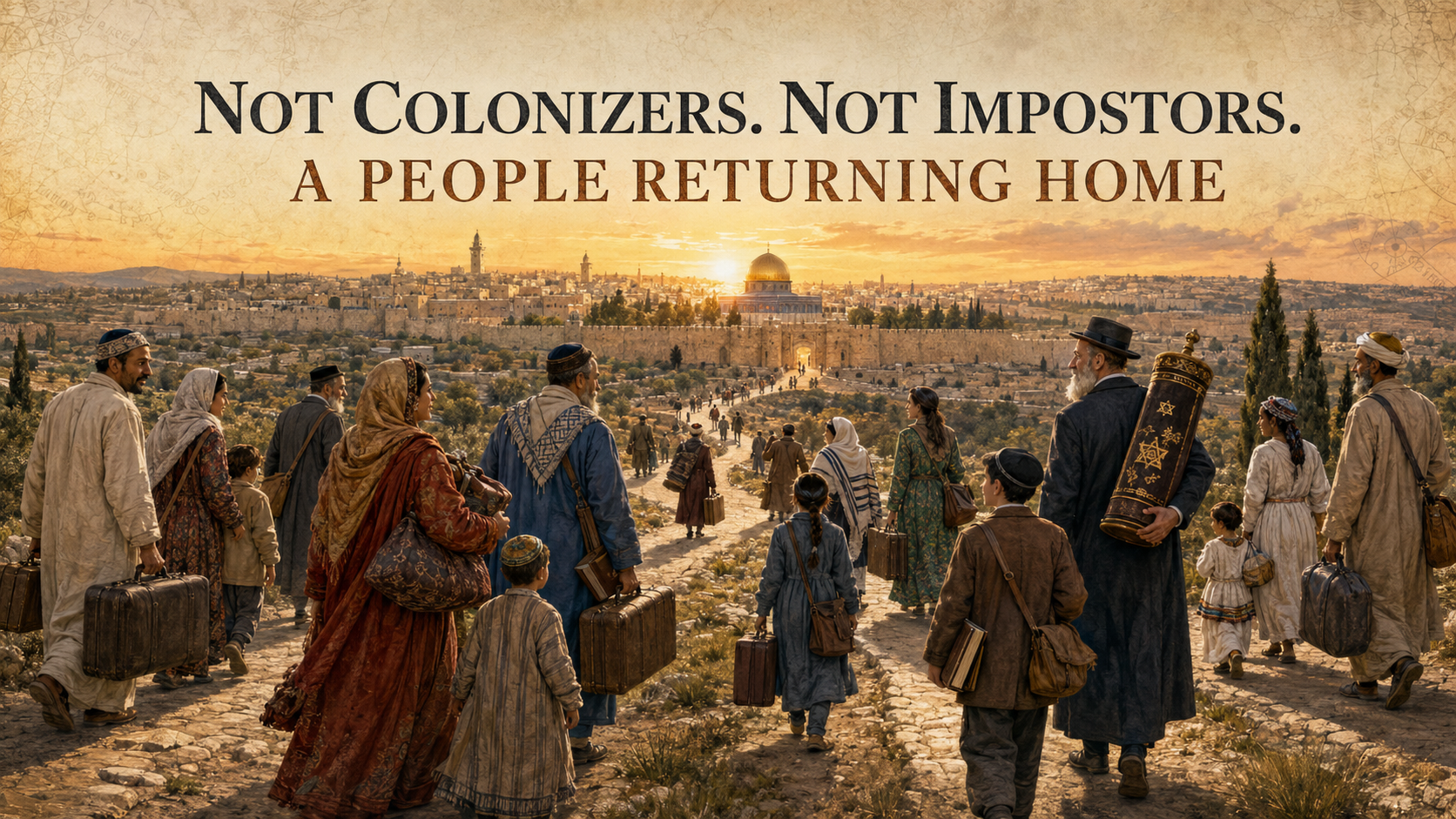
The Jews returned by ship, airplane, train, caravan, and on foot. They came speaking different languages and carrying the customs of many countries. Yet every road converged upon the place where their shared story had begun.
For the scattered children of Israel, all roads lead home.
AFTERSTORY: A JEW OUTSIDE THE GATE
There is one painful afterstory.
Israel was reborn as a home for Jews scattered across the world. Its Law of Return opened the door to Jews who had never seen the land but nevertheless belonged to its story. Yet that door may close against a Jew who comes to believe that Yeshua—Jesus—is Israel’s Messiah.
Israeli law defines a Jew for purposes of return as someone born to a Jewish mother or converted to Judaism “and who is not a member of another religion.” Israeli courts have treated Jewish belief in Yeshua as adherence to another religion. Consequently, a person recognized as Jewish who accepts Yeshua may be regarded as having voluntarily changed religions and may lose eligibility to return as a Jew.
The legal situation is not identical in every case. Eligibility can depend upon family ancestry, prior legal status, and the provision under which an application is made. Some followers of Yeshua have qualified through Jewish family ancestry. Nevertheless, the fundamental exclusion remains painful.
A Jew may question God and still be recognized as a Jew. A Jew may reject the Bible, disregard the Torah, and feel no attachment to Jerusalem—and still return as a Jew. But one who reads the Hebrew prophets, recognizes Yeshua as the promised Messiah, and believes that he died and rose for Israel may be told that this faith has placed him outside the Jewish people.
From a Messianic Jewish perspective, he has not abandoned Israel’s God for a foreign god. He believes he has recognized the One promised within Israel’s own Scriptures—the Jewish Messiah born among the Jewish people, whose first disciples were Jewish and whose earliest followers worshiped in Jerusalem.
The State may change his legal classification. It cannot change his ancestry. It may question his religious place among the Jewish people. It cannot remove the Jewish story from his past—or Israel from his heart.
And so, after the magnificent story of the scattered returning home, one Jew may still stand outside the gate—not because he ceased to be Jewish, not because he ceased to love Israel, but because he came to believe that Israel’s Messiah had already come.
SELECTED SOURCES
United States National Archives, Iraqi Jewish Archive, “After Millennia.” https://www.archives.gov/exhibits/ija/exhibit/after-millenia
United States Holocaust Memorial Museum, “The Farhud.” https://encyclopedia.ushmm.org/content/en/article/the-farhud
Israel Ministry of Foreign Affairs, “Aliya.” https://www.gov.il/en/pages/aliya
The Knesset, Law of Return (Amendment No. 2), 5730-1970. https://main.knesset.gov.il/EN/about/history/documents/kns7_return_eng.pdf