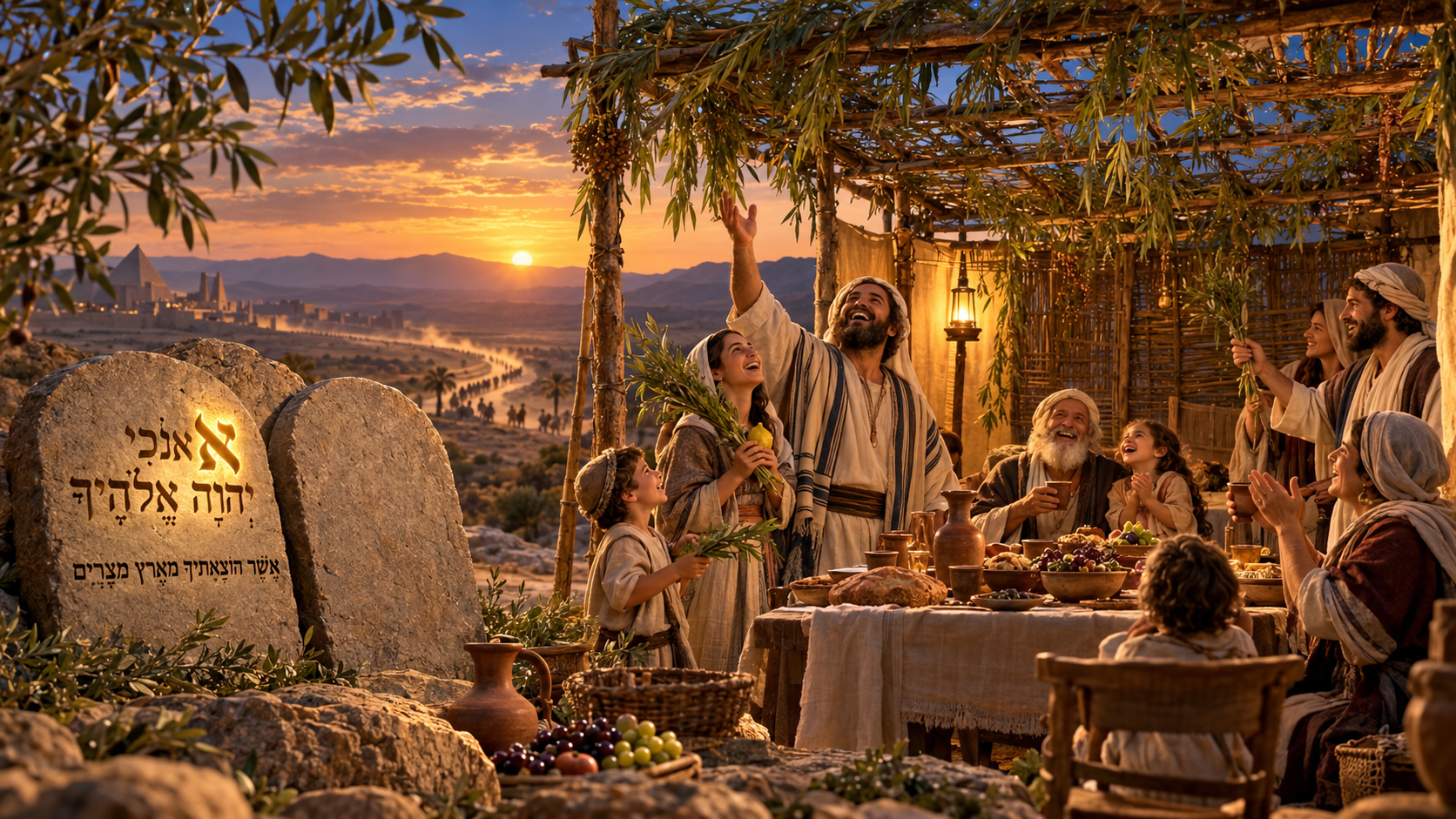
Last night at dinner time I joined up with about 15 men who love God and study the bible. Toward the end of the evening we circled up and spoke our heart. One man, Michael, read a verse from Micah that was on his. It so happens that the names Michael and Micah share a close historical and linguistic connection, as both are Hebrew names built around the same root מִכֹּל (composed of the prefix mi- meaning “from” and kol meaning “all” or “every”).
The evening came to a close and we went home. I took Michael’s verse from Micah home with me and I’ve been thinking about the message in the Book of Micah all night.
Who was Micah
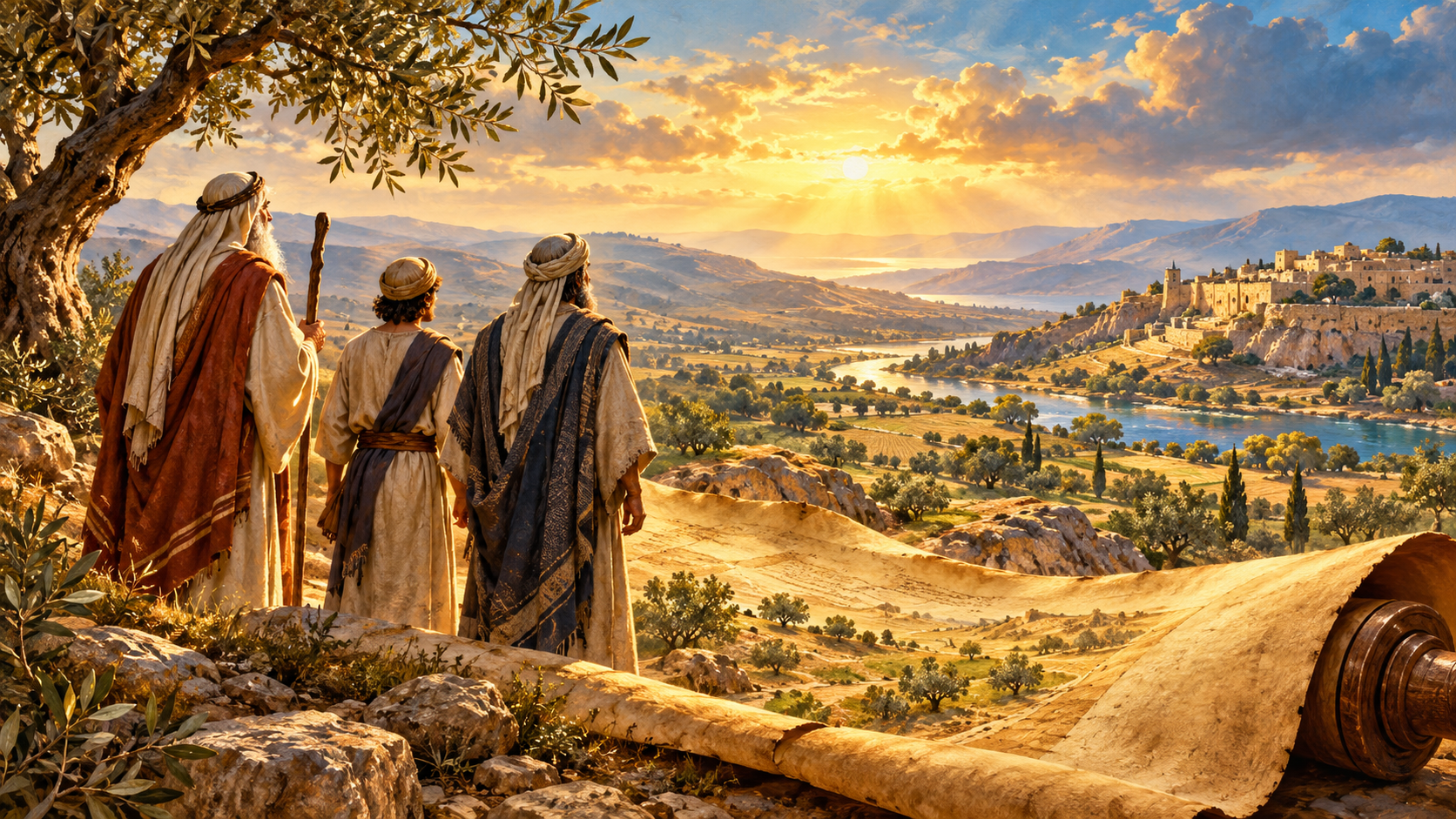
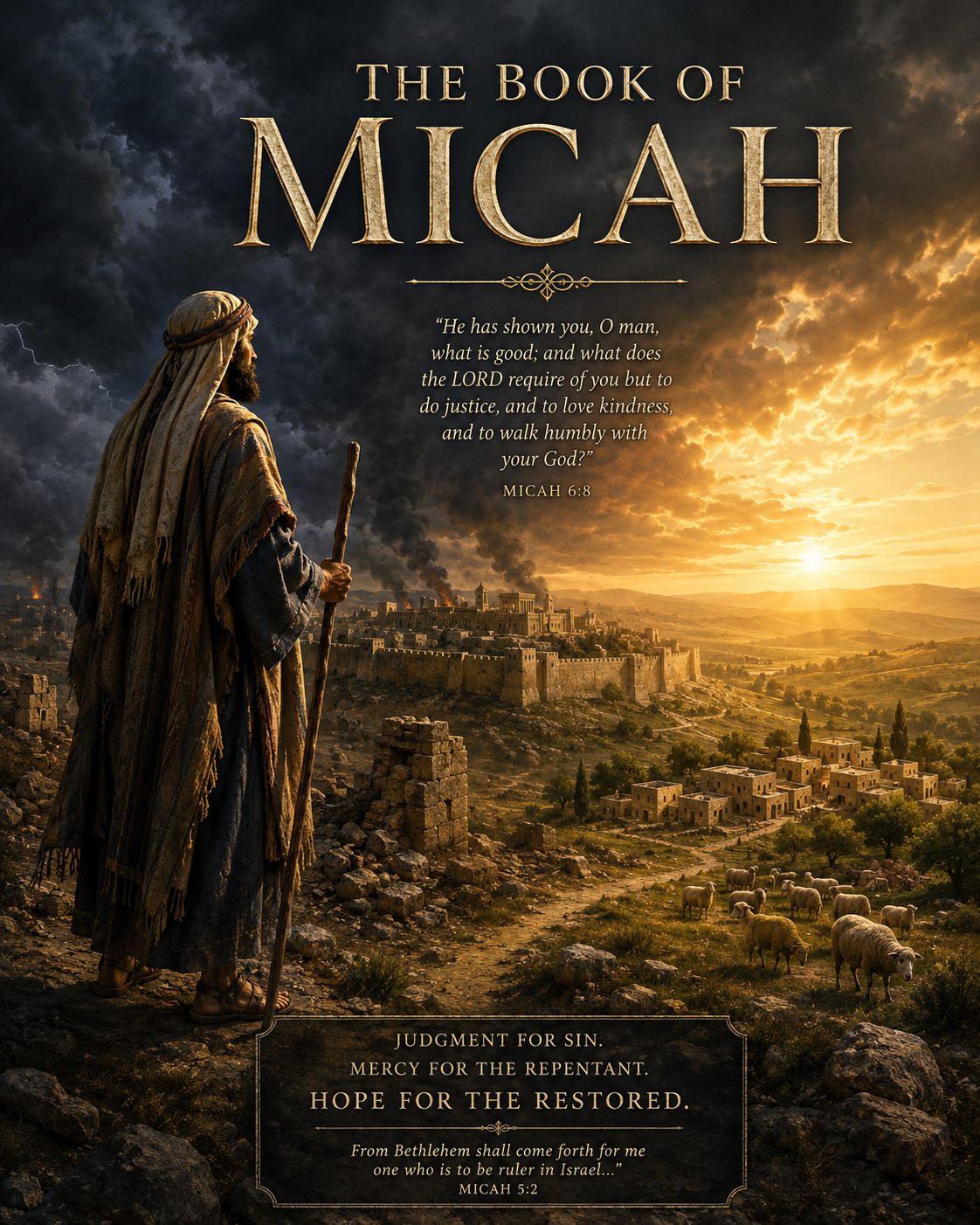
For those who aren’t familiar with Micah, he was a prophet from Moresheth, a small farming town in the Judean lowlands — not a priest, not a court insider, but a man from among the common people who were being crushed by corrupt rulers and false prophets. He ministered in the 8th century BC, the same era as Isaiah, both of them watching the shadow of Assyria fall over Israel and Judah. His book is short, just seven chapters, but it moves through three cycles that each swing the same way: judgment, then hope. First a warning of coming disaster (chapters 1-2). Then a rebuke of Judah’s leaders sitting right alongside a startling promise of a ruler who would come from tiny Bethlehem (chapters 3-5). And finally a courtroom scene between God and his people that, against every expectation, ends in mercy (chapters 6-7).
How low can you go?
It’s that last swing — judgment giving way to mercy — that stayed with me all night. Because underneath Micah’s warnings is a question I don’t think we ask often enough: how low does a stubborn people (or person) have to fall before mercy finally reaches them?
Micah answers it — and in answering it, he sketches a pattern that repeats at every scale Scripture offers: nations, individuals, and finally in the person of Yeshua himself.
The book of Micah fits inside a much larger pattern.
I’ve summed up a theme that I have been exploring: The Bible is two stories, one book, one God. There are “arcs” running between the Tenach and the New Testament inspired by the same devine Author of life.
Micah’s swing from judgment to mercy isn’t just an ancient Israelite concern. It’s a pattern that shows up again in Bethlehem, again at a cross, again in a father running to meet a son who was still “a long way off.” Once you see it in one place, you start seeing it everywhere.
The Low Point Named: Jacob’s Trouble
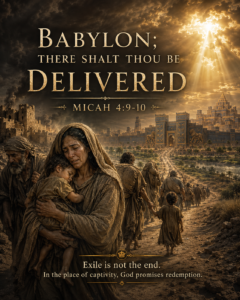 Micah writes to “Jacob” — his own covenant nation — across three cycles of judgment and hope (chapters 1-2, 3-5, 6-7), and Jacob’s name recurs at every stage of the fall: “All this is because of Jacob’s transgression” (1:5); “hear, O heads of Jacob” (3:1, 9); “the remnant of Jacob” (5:7-8); “perform the truth to Jacob” (7:20). It is the same nation, tracked from guilt to rescue.
The lowest point is described in the language of labor: “pangs have taken hold of you as of a woman in travail… you shall come even to Babylon; there shalt thou be delivered” (4:9-10). Then again: “Therefore will he give them up, until the time that she which travaileth hath brought forth: then the remnant of his brethren shall return” (5:3). This is Micah’s version of what Jeremiah would later name outright — “the time of Jacob’s trouble” (Jeremiah 30:7), a season of national anguish that is not a detour from deliverance but its mechanism. Its been said that God “forsakes” for a season specifically so the remnant can be gathered afterward.
Why the Fall Goes as Deep as It Does
Micah’s contemporaries had already been warned repeatedly, and their contempt for correction is what determined how far they would eventually fall. The pattern goes back to Sinai: “I have seen this people, and behold, it is a stiff-necked people” (Exodus 32:9) — the image of an ox refusing the yoke, not out of ignorance but willful resistance.
Amos, prophesying alongside Micah, shows the mechanism in slow motion. God sends five escalating disciplines — famine, drought, blight, pestilence, war — modeled on the covenant curses of Leviticus 26, and after each one the same devastating refrain: “yet have you not returned unto me, saith the Lord” (Amos 4:6-11). Only after all five fail does the final “therefore” of judgment arrive. Proverbs states the law behind this plainly: “A man who remains stiff-necked after many rebukes will suddenly be destroyed” (Proverbs 29:1). Discipline is corrective by design; it only escalates because correction keeps failing.
This is the real answer to “how low can you go”: not a measure of how bad the sin was, but of how long mercy had to keep trying before it worked. You’ll do well to think about that!!
The World Breaks What Will Not Bend
 Aesop told the same truth in a different genre. The Oak, proud of its strength against the wind, is “torn up by the roots” in the storm, while the Reeds, who “bow before them and so we do not break,” are left standing. The fable’s moral could be lifted straight out of Proverbs: “Better to yield when it is folly to resist, than to resist stubbornly and be destroyed.” Pressure is constant and impartial. What decides whether a person survives it is not their strength but their willingness to bend.
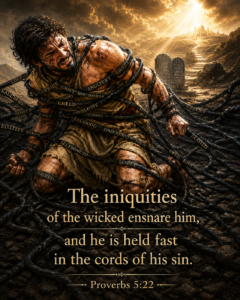
Addiction to sin adds a second layer to this law, because the trap is no longer only external. “The iniquities of the wicked ensnare him, and he is held fast in the cords of his sin” (Proverbs 5:22) — every indulgence adds another strand, self-woven rather than imposed. Paul describes the most severe form of this: God simply “gave them over” to the desires they insisted on chasing (Romans 1:24-28) — judgment not as intervention but as withdrawal, letting the appetite run its course. James lays out the resulting arithmetic: desire conceives, sin is born, and sin, “when it is full-grown, gives birth to death” (James 1:14-15). The clearest narrative picture is the prodigal son, who is stopped only when the money, the friends, and the food are gone — reduced to envying pigs’ slop before, at last, “he came to his senses” (Luke 15:17).
The Pattern in Individual Lives
Scripture keeps returning to this shape in its major characters, almost as if testing it from every angle:
Jacob himself is crippled at Peniel — dislocated hip, new name, blessing, all in the same encounter (Genesis 32:22-32). He walks away permanently weakened and permanently exalted at once.
Moses flees to obscurity in Midian for forty years before the burning bush calls him back.
David spends roughly a decade as a hunted fugitive, hiding in caves and wilderness strongholds before the throne ever comes to him (1 Samuel 19-31). When Saul is defenseless within his reach in the cave at En Gedi, David refuses to strike: “The Lord forbid that I should do this thing to my master, the Lord’s anointed” (1 Samuel 24:6) — sparing the very man hunting him rather than seizing the crown by force.
Manasseh, Judah’s most idolatrous king, is bound in bronze fetters and dragged to Babylon before he finally “humbled himself greatly… and confessed his sins” (2 Chronicles 33:11-17) — restoration only after every lesser correction had failed for decades.
Nebuchadnezzar, boasting over “the great Babylon I have built,” is driven to eat grass like an animal until he acknowledges that “the Most High rules over the kingdoms of men” (Daniel 4) — after which his sanity and throne are restored.
In every case the lowering is not incidental to the story; it is what makes the person who emerges different from the one who fell. Jacob limps. David spares. Manasseh tears down his own altars.
The One Exception, and Why It Matters
Every figure above is broken for their own sin. Yeshua alone descends without any resistance to break — his humiliation is chosen, not forced. Micah supplies the seed of this story before it happens: the ruler comes “out of Bethlehem Ephrathah, though you are small among the clans of Judah” (5:2) — smallness as the credential, not the obstacle. Paul supplies its full shape: “being in the form of God… he humbled himself and became obedient to the point of death, even the death of the cross. Therefore God also has highly exalted him and given him the name which is above every name” (Philippians 2:6-9). The “therefore” is the hinge — exaltation is the direct consequence of the descent, the same causal logic as Israel’s exile-then-return, compressed into one body and completed in days rather than centuries.
This is the difference that resolves the whole pattern: Yeshua’s lowering is not correction for stubbornness but the mechanism that makes correction unnecessary for everyone who is joined to him. The pattern that broke Israel, Manasseh, and the prodigal is, in Yeshua, absorbed rather than repeated.
The Conclusion: Remnant Meets Prodigal
Micah closes his book with the question that makes the whole descent worth it: “Who is a God like you, who pardons sin and forgives the transgression of the remnant of his inheritance? You do not stay angry forever but delight to show mercy… you will tread our sins underfoot and hurl our iniquities into the depths of the sea” (7:18-19). This is grace grounded not in the remnant’s merit but in God’s own character and ancient oath (7:20) — a “remnant,” not “everyone,” a portion that survives and returns while the rest is judged.
Jesus’s parable of the prodigal son reads almost like a dramatized commentary on that verse. The son has forfeited everything, exactly like Micah’s remnant — “the lame,” “the exiles,” “those brought to grief” (4:6-7) — and is restored not because he has earned it but because “while he was still a long way off, his father saw him and was filled with compassion… and ran to his son” (Luke 15:20), cutting off the son’s rehearsed confession before it’s finished. Micah’s “delight to show mercy” becomes, in the parable, a father who calls for the robe, the ring, and the feast before the son has said more than a few words.
My Conclusion: The answer to the question the title poses.
How low can you go? As low as stubbornness will take you — Israel to Babylon, Manasseh to bronze fetters, the prodigal to the pig trough. But the deeper truth Micah insists on, and Jesus dramatizes, is that no depth outruns the mercy waiting on the other side of it. The remnant returns not because it climbed back up on its own, but because the God who let it fall was already running to meet it.
That’s the thread I keep pulling on, article after article — two stories, one book, one God. The Tenach and the New Testament aren’t separate lessons that happen to rhyme; they’re the same divine heart showing up in two testaments, because there was never more than one God writing the stories to begin with.
Epilogue:
The Root Beneath Stubbornness
Peel back the “stiff-necked” language enough and Scripture keeps pointing to the same three-layered root: unbelief that gives way to pride, and pride that gives way to idolatry — a heart that has stopped trusting God and started trusting itself instead.
It begins with unbelief, not defiance
Hebrews 3:12-13 names the condition before it hardens into visible rebellion: “Take heed, brethren, lest there be in any of you an evil heart of unbelief in departing from the living God… lest any of you be hardened through the deceitfulness of sin.” One commentary observes that “unbelief is in itself the fruit of an evil heart… the trust of the heart turning away from God to something else”. This is the crucial move: stubbornness isn’t primarily an act of the will resisting a command — it’s a prior failure of trust. The person no longer believes God’s way is actually good, so obeying it stops feeling reasonable.
Unbelief curdles into pride
Romans 1:21 traces the next step with almost forensic precision: “although they knew God, they did not glorify him as God or give thanks… their foolish hearts were darkened.” Note what’s being refused isn’t information — they “knew God” — it’s honor. The commentary line is sharp: they “worshipped what he found fault with, did what he reproved, and adored that which he blamed”. Once a person withholds glory and gratitude from God, they don’t end up believing nothing — they end up exalting something else instead, usually themselves. That’s the hinge from unbelief to pride: refusing to thank God for your place in the order of things is functionally a claim to a higher place than the one you were given.
And pride is, structurally, idolatry
This is the sharpest verse of the whole set. When Saul disobeys God’s explicit command and rationalizes it, Samuel doesn’t call it merely disobedience — he calls it worship of a false god: “rebellion is like the sin of divination, and arrogance like the evil of idolatry” (1 Samuel 15:23). One commentary draws out why the comparison isn’t rhetorical exaggeration: “in proportion to the excellence of obedience is the wickedness of disobedience… it is seen to be the same in principle”. Stubbornness sets up personal preference — what I want, what makes sense to me — as the final authority in place of God’s word. That is idolatry by definition, whether or not there’s a physical idol involved. It’s the Genesis 3 move exactly: “you will be like God” was the whole temptation, and every stiff neck since has been a smaller echo of reaching for that same self-rule.
Why it can’t simply be willed away
This is why Ezekiel 36:26 doesn’t offer Israel better instructions — it offers a transplant: “I will take away the stony heart out of your flesh, and I will give you a heart of flesh.” Once unbelief has hardened into pride and pride into practical idolatry, the condition isn’t a behavior problem correctable by trying harder; it’s a heart problem, and Ezekiel’s solution is that God has to replace the organ, not retrain it.
Tying it to everything we’ve traced
This gives real depth to the whole arc — Israel’s stiff neck, the addict’s cords of sin, the prodigal’s wasted inheritance are all downstream symptoms of the same upstream failure: a heart that stopped trusting God’s goodness, started crediting itself instead, and ended up serving something smaller than God as though it were God. Which is also why the remedy in every case we discussed wasn’t behavioral correction alone but restored trust — Manasseh’s cry for mercy, the prodigal’s return to a father he’d stopped trusting was safe, Christ’s obedience reversing Adam’s grasp for autonomy. The break is severe because the root is severe; but it also means the cure was never really about willpower — it’s about the heart learning to trust again what it once refused to.
Thank you for speaking your heart Michael!
Key texts referenced: Micah 1:5, 2:12, 3:1-9, 4:6-10, 5:2-3, 5:7-8, 6:8, 7:18-20; Jeremiah 30:7; Exodus 32:9; Amos 4:6-12; Proverbs 5:22, 29:1; Psalm 32:9; Genesis 32:22-32, 45:5; 2 Chronicles 33:11-17; Daniel 4; Romans 1:24-28; James 1:14-15; Luke 15:11-32; Philippians 2:6-11.
Commentary sources consulted: Calvin’s Commentary on Micah; Enduring Word on Amos 4 and Micah 4; Ligonier Ministries on Proverbs 5; Fables of Aesop, The Oak and the Reed; GotQuestions on the Parable of the Prodigal Son; BibleStudyTools/Matthew Henry on 2 Chronicles 33.