Worship Leaders Called By Name
Two Stories, One Book, One God
Exodus 3:2-4—And the Angel of the Lord appeared to him in a flame of fire from the midst of a bush. So he looked, and behold, the bush was burning with fire, but the bush was not consumed. Then Moses said, “I will now turn aside and see this great sight, why the bush does not burn.” So when the Lord saw that he turned aside to look, God called to him from the midst of the bush and said, “Moses, Moses!”
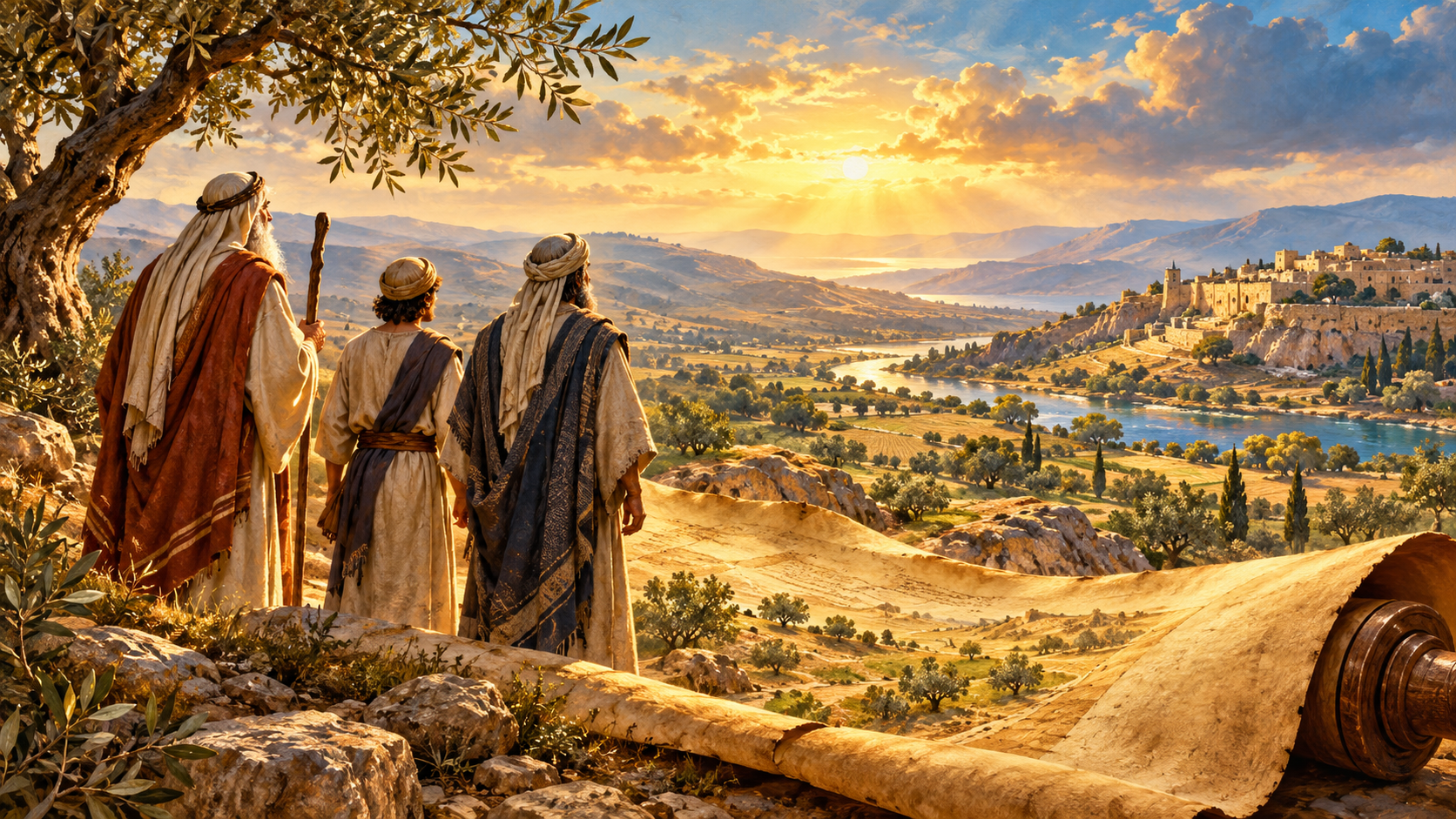
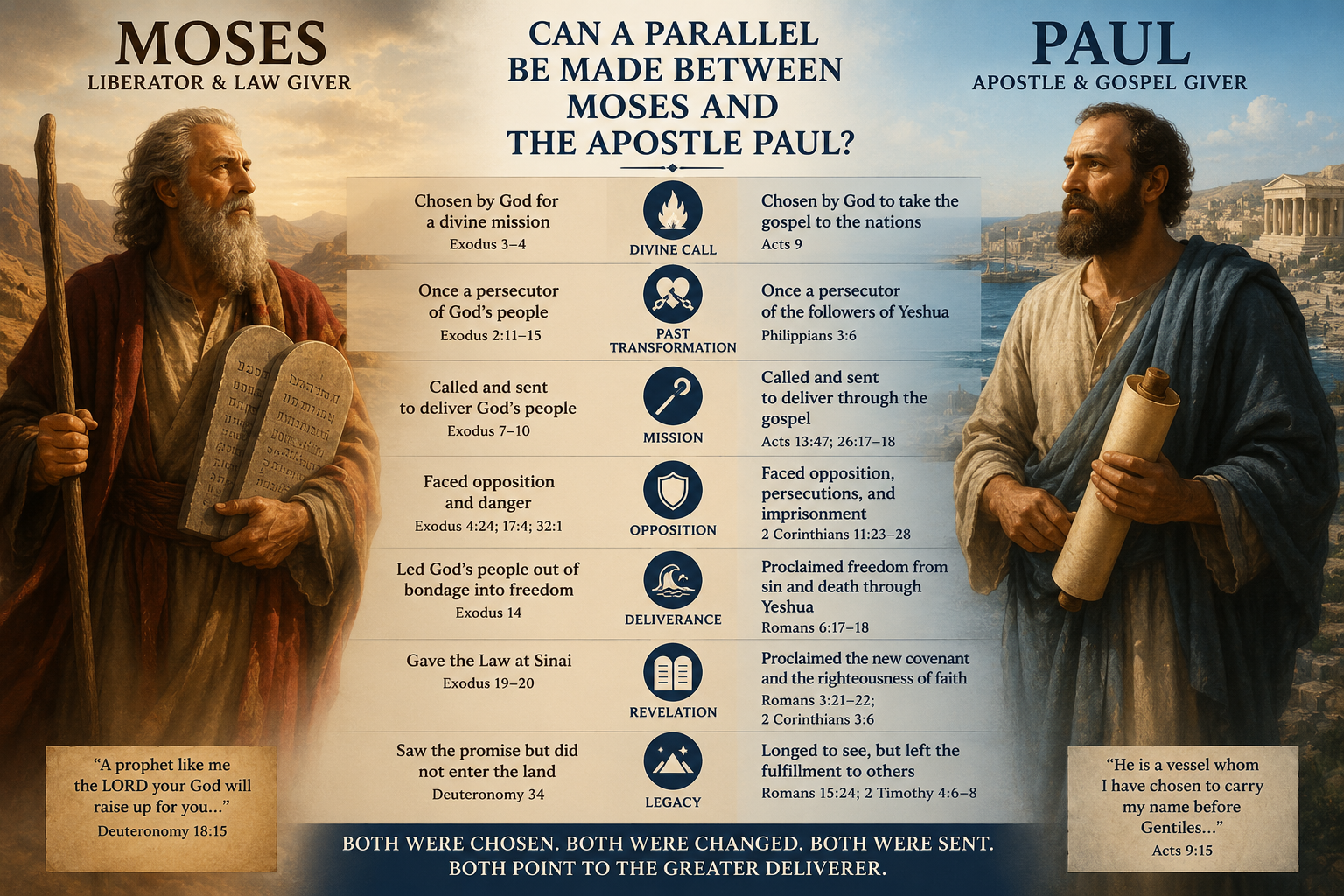
Can a parallel be made between Moses and the Apostle Paul? I see Moses and Paul both as worship leaders called by name. Both speak directly on behalf of God. Both are introducing a new way of walking with God. Both leaders have a destination in mind. Both give strong correction. One is summoned at a burning bush to plant a tabernacle and lead Israel’s worship in the wilderness. The other is stopped by a blinding light to plant houses of worship and shape how scattered assemblies gather around Messiah. Different settings, same God, same kind of call.
Moses is not looking for a new assignment when God calls his name. He is simply tending the flock of his father‑in‑law on the far side of the wilderness when “the angel of the LORD appeared to him in a flame of fire out of the midst of a bush,” and a voice says, “Moses, Moses” (Exodus 3:1–4). He turns aside to look, and that ordinary day changes course.
Acts 9:2-4—As he journeyed he came near Damascus, and suddenly a light shone around him from heaven. Then he fell to the ground, and heard a voice saying to him, “Saul, Saul, why are you persecuting Me?”
Saul of Tarsus is not looking for a new assignment either. He is simply traveling to Damascus “breathing threats and murder against the disciples of the Lord” (Acts 9:1–2) when “a light from heaven” flashes around him and he hears, “Saul, Saul, why are you persecuting Me?” (Acts 9:3–4). He falls to the ground, and that ordinary journey changes course.
For me, these two scenes capture the heart of what I am trying to explore. The Bible hands us two Testaments, two stories told from different sides of history, but only one ongoing story and one God behind it. Moses belongs to the first story and Paul to the second, yet both are stopped in their tracks by the same God, called by name, and sent on a covenant path they did not choose. My claim is simple: two stories, one book, one God. My purpose is to see how the journeys of Moses and the Apostle Paul quietly support that claim.
Their Voices Shape the Book
Moses is remembered as the prophet “whom the LORD knew face to face” (Deuteronomy 34:10–12). His life and words anchor the first half of the Bible: Torah, Exodus, covenant, wilderness, blessing, and warning. When Israel remembers its story, it remembers Moses.
Paul is named a “chosen instrument” to carry the Name of Messiah “before Gentiles, kings, and the children of Israel” (Acts 9:15). His letters shape much of the New Testament, and Peter treats Paul’s writings alongside “the other Scriptures” (2 Peter 3:15–16). When early assemblies remember how they first heard the good news explained, they remember Paul.
When I read them, I am not just listening to two strong personalities from two different eras. I am listening to God speaking to them and through them. Moses stands at Sinai; Paul writes from cities around the Mediterranean. The geography changes; the God who speaks does not.
Called, but Not Qualified
 Once I listen to what each man says back to God, another shared pattern appears. Neither steps forward like a self‑confident hero.
Moses asks, “Who am I, that I should go to Pharaoh and bring the children of Israel out of Egypt?” (Exodus 3:11). Later he says, “Oh, my Lord, I am not eloquent… I am slow of speech and of tongue” (Exodus 4:10), and finally, “Oh, my Lord, please send someone else” (Exodus 4:13). His objections are straightforward: wrong man, wrong gifts, wrong past.
Paul’s struggle sounds different, but it is just as strong. He calls himself “the least of the apostles, unworthy to be called an apostle, because I persecuted the church of God” (1 Corinthians 15:9), and he admits, “Not that we are sufficient in ourselves to claim anything as coming from us, but our sufficiency is from God” (2 Corinthians 3:5). His problem is not a lack of training or rhetoric; it is guilt, history, and the sense that he has disqualified himself.
So Moses and Paul stand in different Testaments, but both begin their journey by telling God why they should not be chosen. God does not deny their weakness. He meets it. To Moses He says, “I will be with you” (Exodus 3:12). To Paul, He later says, “My grace is sufficient for you, for My power is made perfect in weakness” (2 Corinthians 12:9). In each case, the calling rests not on the man’s qualifications but on God’s presence and grace. The same God uses reluctant servants in both stories.
Carrying the Weight of a People
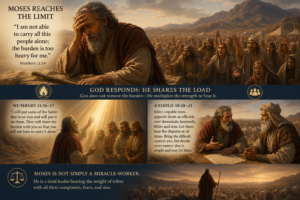 As their journeys unfold, both men discover that calling means carrying a people, not just delivering a message.
Moses reaches the point where he cries, “I am not able to carry all this people alone; the burden is too heavy for me” (Numbers 11:14). God responds by sharing the load through elders (Numbers 11:16–17; Exodus 18:18–21). Moses is not simply a miracle‑worker; he is a tired leader bearing the weight of tribes with all their complaints, fears, and sins.
Paul speaks in a similar tone. After listing hardship, he adds, “And, apart from other things, there is the daily pressure on me of my anxiety for all the churches” (2 Corinthians 11:28). He describes himself as “gentle among you, like a nursing mother taking care of her own children,” and also “like a father with his children” (1 Thessalonians 2:7–8, 11–12). His letters are not abstract essays; they are the voice of a man carrying assemblies in his heart.
Wilderness tribes and scattered house‑churches look like two different worlds. Underneath, I hear one God forming a covenant people and placing the weight of that people on a human servant who feels it deeply. The pattern rhymes.
From Tabernacle to House‑Churches
Moses does not only lead people; he also builds their first house of worship. At Sinai, God gives him detailed instructions for a portable sanctuary—a tabernacle or “tent of meeting”—where He will dwell with Israel and meet them on their journey. This tabernacle becomes the first structured place of worship in Israel’s history, the resting place of the ark of the covenant and the center of sacrifice and prayer in the desert.
Paul, on the other side of the book, does not build a single central sanctuary. Instead, he plants many small houses of worship. As he moves through cities like Corinth, Philippi, Thessalonica, and Ephesus, he gathers believers and forms assemblies that meet in homes. Those homes become new covenant tents of meeting—living tabernacles where people come together around Scripture, prayer, and the Name of Messiah, and where God’s presence is known by His Spirit.
The structures look different, but the parallel is clear. The purpose is similar: the same God is creating places where His people can worship, be taught, and be carried together in His presence.
Idols in the Camp and in the City
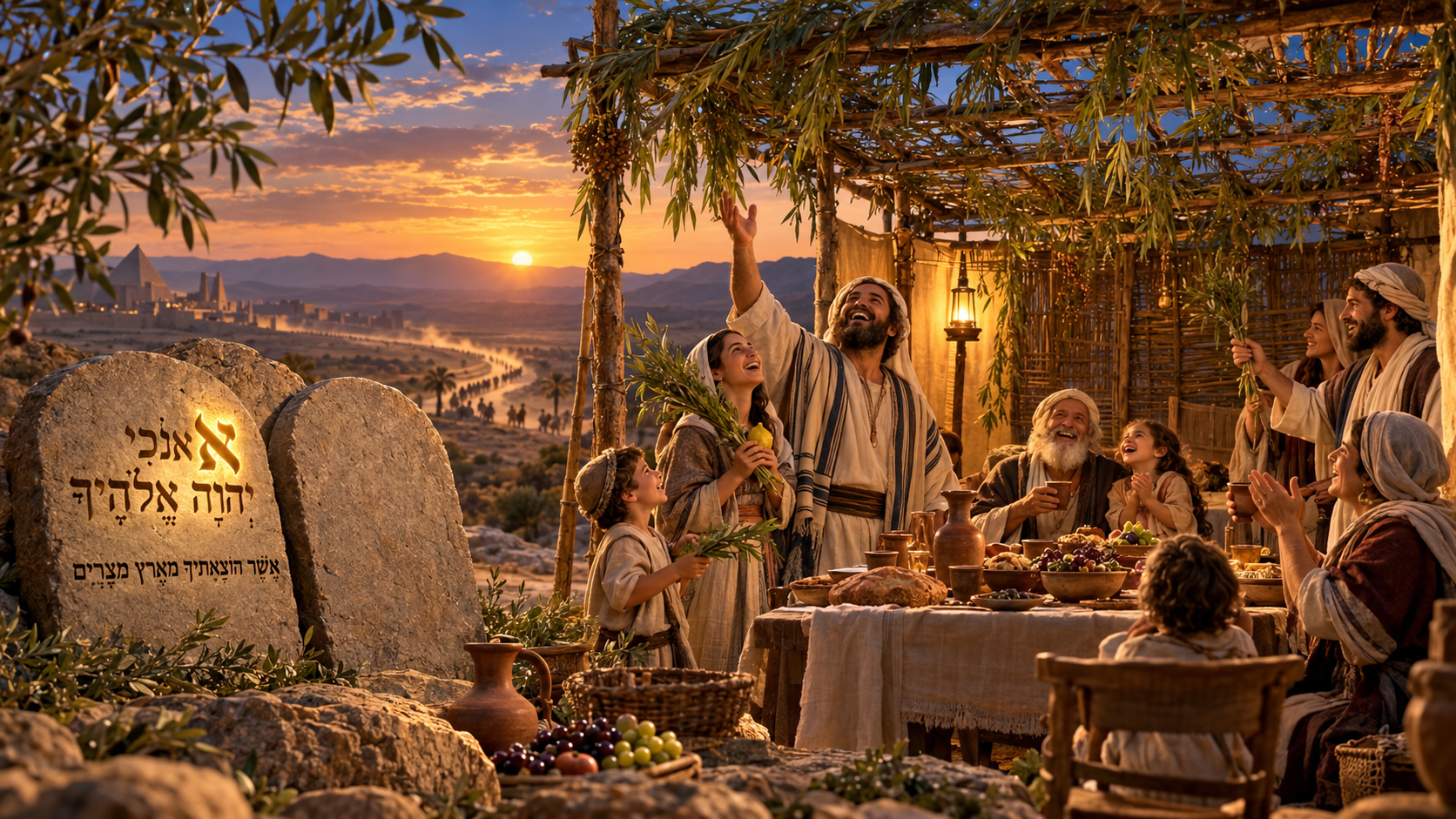
The golden calf incident forces Moses to confront idolatry in its raw form. While he is on the mountain, the people “sat down to eat and drink and rose up to play” around a calf they had made (Exodus 32:6). He comes down, sees it, breaks the tablets, grinds the calf to powder, and makes them drink it (Exodus 32:19–20). It is a bitter lesson in how quickly a rescued people can exchange their God for something they can see and touch.
Paul does not live through a new calf episode, but he carries that story into his teaching. Writing to the Corinthians, he reminds them that “these things took place as examples for us,” and says, “Do not be idolaters as some of them were; as it is written, ‘The people sat down to eat and drink and rose up to play’” (1 Corinthians 10:6–7). He adds, “These things… were written down for our instruction, on whom the end of the ages has come,” and concludes, “Therefore, my beloved, flee from idolatry” (1 Corinthians 10:11, 14).
For me, this is one of the clearest places where “two stories, one book, one God” comes into view. The camp at Sinai and the church at Corinth are not isolated episodes. They are two chapters in the same warning. The same God refuses to be traded for any substitute, whether the idol is a calf, a banquet, or a quiet accommodation with the surrounding culture. Moses lives through the first lesson; Paul teaches the second.
A New Mediator
Moses can say, “I stood between the LORD and you at that time” (Deuteronomy 5:5). He acts as the visible human mediator of the Sinai covenant (Exodus 19:3–6). Paul is careful to place that role elsewhere in the new covenant. Paul sees himself not as a second Moses, but as a servant and witness: “For what we proclaim is not ourselves, but Jesus Messiah as Lord, with ourselves as your servants for Jesus’ sake” (2 Corinthians 4:5). His gospel comes “through a revelation of Jesus Messiah” and not from human invention (Galatians 1:11–12).
So I do not treat Paul as the new mediator. Moses mediates the giving of Torah; Messiah mediates the new covenant; Paul serves that work by preaching, planting, and interpreting.
Hearts for the Children of Israel
Moses does not leave Pharaoh’s house because he is bored with palace life; he leaves because his heart turns toward the children of Israel. When “it came into his heart to visit his brethren” and he saw an Egyptian beating “one of his brethren,” he chose to identify with the abused Hebrew and walked away from Egypt’s privilege (Exodus 2:11; Acts 7:23–24; Hebrews 11:24–25). His heart is already with his people even before God calls him at the bush.
Moses steps into danger to defend “one of his brethren” and later is willing to be blotted out of God’s book if it will spare them (Exodus 2:11; 32:32). Paul retains that same kind of heart for his people. He speaks of “great sorrow and constant anguish” for his kinsmen and says he could almost wish himself “accursed and separated from Christ” for their sake (Romans 9:2–3). Both men carry Israel in their hearts even when Israel resists the God who is calling them.
Paul often gets caricatured as a “break” with Israel, I want to be very clear about how I read him. Paul does not discard his Jewish identity or stop loving his own people.
He writes, “I myself am an Israelite, a descendant of Abraham, a member of the tribe of Benjamin” (Romans 11:1). He calls himself “a Hebrew of Hebrews” (Philippians 3:5) and remembers being “brought up in this city [Jerusalem], educated at the feet of Gamaliel” (Acts 22:3). When he speaks about Israel, the tone is not detached. He says, “I have great sorrow and unceasing anguish in my heart,” and even imagines himself “accursed and cut off from Messiah” for their sake (Romans 9:1–3). He lists Israel’s privileges: “to them belong the adoption, the glory, the covenants, the giving of the law, the worship, and the promises… and from their race, according to the flesh, is the Messiah” (Romans 9:4–5).
I cannot read those lines and say that Paul has turned his back on his ancestry. He values his Jewish identity and loves his people deeply. His long argument in Romans 9–11 turns on the faithfulness of God to Israel’s story, not on its cancellation. In my terms, Paul is a Jewish believer in Messiah standing inside the Tanakh, trying to show how one God is keeping His promises and widening their reach.
Two Stories, One Book, One God
When I stand back from the details and simply listen, I hear Moses protesting “Who am I…?” (Exodus 3:11) and Paul calling himself “least… unworthy” (1 Corinthians 15:9). I see Moses carrying the burden of a people in the wilderness (Numbers 11:14) and Paul carrying “anxiety for all the churches” (2 Corinthians 11:28). I watch Moses face the calf (Exodus 32:6, 19–20) and Paul use that same verse as a warning to a church (1 Corinthians 10:6–7). I remember that both were called by name, by God, in moments they did not plan (Exodus 3:4; Acts 9:4–5).
My claim stays modest but firm: the journeys of Moses and Paul are not identical, but certain milestones do line up. Their common struggles and their shared message point in the same direction. The same God is speaking, calling, correcting, and carrying His people in both stories.
This Moses–Paul parallel is an example of a larger conviction. The New Testament does not stand on its own. It both contains the Tenach, carries its story forward, and fulfills it. New players walk onto the stage and repeat old patterns. Some messages are deepened—covenant moves from tablets to hearts; idolatry is exposed not just in statues but in the inner life. Other messages are brought up to the surface where we can finally see what was always there. Watching Moses and Paul side by side helps me remember that I am not reading two disconnected books, but one continuous story composed by one God, from two sides of history.
Kingdom Purpose
Moses is called to bring Israel out and shape them into a “kingdom of priests and a holy nation” at Sinai (Exodus 19:5–6). Paul is called to carry the good news of Messiah into the nations so that scattered assemblies can live under God’s reign in the Spirit (Romans 14:17; 15:16). One founds the kingdom people; the other helps that kingdom life take root beyond Israel.
Both men have a kingdom purpose: Moses at the beginning, Paul in the middle, each helping God’s people move toward the ultimate kingdom He has in mind.
“So when the Lord saw that he turned aside to look, God called to him from the midst of the bush and said, “Moses, Moses!”
Turn aside to look.