The Crowned Numbers of the Passion: Moses, Jonah, and the Shroud
A numerical, mystical, and forensic journey from Sinai to the Shroud—reader discretion advised.
Before we begin, a gentle warning: this is not a light read. We will move from Hebrew letters and numbers to crowns and nails, from Moses’ veil to Jonah’s fish, from Thomas’ doubt to the Shroud of Turin and the Sudarium of Oviedo. We will linger over wounds, blood, and burial cloths in a level of detail that may feel heavy at times. This is not written to shock anyone, but to share connections that have pressed on the heart through prayerful study and through listening for the quiet voice of the Holy Spirit.
This article is long, and that is intentional. There is no need to finish it in one sitting. It has been purposely broken into ten sections so the reader can pause, pray, and come back as the Spirit leads. Think of it as a journey rather than a quick read.
This article does not claim to have discovered secret codes or new doctrines. It is written as the work of a student of Scripture, paying attention to the way Torah uses numbers, the way Jewish tradition treats letters and crowns, and the way two ancient linen cloths—the Shroud and the Sudarium—seem to echo the Passion in a language of wounds and blood. Through prayer and study, certain patterns have come into view: 7, 50, 70, and 120; Hebrew letters like Vav, Zayin, Nun, and Ayin; the crown of thorns; the sign of Jonah; Moses’ “eyes to see… to this day”; Thomas’ “unless I see.” These do not feel like random threads, but parts of one tapestry.
Tanakh and the Good News are often treated as two stories, but my conviction is that they are one book written by one God, with many arcs and parallels that meet in one crucified Jew.
What follows is offered in humility. Where this is mistaken, may the Lord correct it. Where it is close to the truth, may He deepen understanding. The observations are offered as they have been sensed in study and prayer, always listening for that quiet voice that directs gently rather than loudly.
1. Why Numbers Matter in Torah
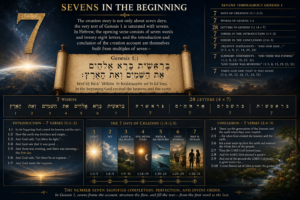
The laws that govern physics, light, and sound are all expressible in mathematics: relationships like frequency and wavelength, energy and mass, motion and force, can be written as equations that describe how the world behaves with precise numerical structure. In a different but deeply related way, Hebrew is also mathematical: its letters carry numerical values, its words can be “weighed” and compared through gematria, and its patterns of sevens, tens, and other key numbers shape the text in ways that mirror the order found in nature. When the same God authors both creation and Scripture, it is not surprising that the universe runs on mathematical laws and that the language of Torah itself has a built‑in numerical grammar—two realms, physical and spiritual, both speaking in numbers.
From a Jewish mystical standpoint, the 22 Hebrew letters are not just human symbols but spiritual building blocks: they are seen as the channels or “paths” through which God’s creative energy flows, the primordial shapes with which He spoke the world into being and with which He continues to inscribe His wisdom into Torah and into the soul.
If God had wanted to give a purely word-only revelation, He could have. But right from the first line of Genesis, He does not. He speaks in numbers as well as in letters. The creation story is not only about seven days; the very text of Genesis 1 is saturated with sevens. In Hebrew, the opening verse consists of seven words and twenty-eight letters, and the introduction and conclusion of the creation account are themselves built from multiples of seven—Genesis 1:1 has 7 words, 1:2 has 14, and the Sabbath conclusion in 2:1–3 has 35—while key words like “earth” and “God” recur 21 and 35 times across the passage.
“In the beginning God created the heaven and the earth.” (Genesis 1:1)
“And God saw every thing that He had made, and, behold, it was very good… Thus the heavens and the earth were finished… And on the seventh day God ended His work which He had made; and He rested on the seventh day…” (Genesis 1:31–2:2)
That does not feel accidental. It reads like a quiet way of saying that God is a God of order and beauty, and that He has woven that order into His Word. Seven days of creation, crowned by the seventh day of rest, become the rhythm of time and worship for Israel. The sevenfold texture of the text echoes that rhythm. The number 7 is doing double duty—shaping reality and shaping Scripture.
In traditional Hebrew scribal practice, certain letters are written with tiny “crowns” on top, called tagin or ketarim. These are small strokes or spikes added above seven specific letters: shin, ayin, tet, nun, zayin, gimel, tzadi. They are considered part of the halakhic requirements for a kosher Torah scroll. Beyond being decorative, rabbinic and mystical tradition treats these crowns as hints of hidden meaning: Moses is said to have seen God placing crowns on the letters and heard that future sages would derive “heaps and heaps” of teaching from each stroke, and some texts describe the crowns as spiritual weapons or thorns guarding the holiness of the text. In that sense, crowned letters mark places in the script where the Torah itself signals that there is more going on above the line than the plain consonants can express.
In Hebrew, the letter Zayin’s numerical value is 7, and in Jewish tradition it is often described as a crowned Vav—a Vav (ו), the sixth letter, topped with a little head and tiny crowns. Vav itself is 6, the letter of man, of connection, of the hook or nail that joins things together; Zayin is that nail lifted and crowned. The God of the Torah is already hinting, in His alphabet and in His creation account, that one day a man would be nailed and crowned, and that through that man His work would move toward completion. Isn’t that incredible?!
This is why numbers in the Bible are so meaningful. They are not games and they are not mere decoration. They are part of the way God writes meaning into the text—from “In the beginning” onward. Seven marks completion and Sabbath; ten marks wholeness and structure; forty marks testing and transition; fifty marks Jubilee and new beginning; seventy marks fullness and the nations. These become a kind of numerical grammar by which Scripture speaks.
2. The Mosaic Frame: 7, 40, 50, 70, and 120
If 7 in Genesis tells us that God cares about structure and completion, Moses’ life shows how God uses numbers to shape a human story. Moses does not just happen to die at 120. The Torah pauses to tell that number.
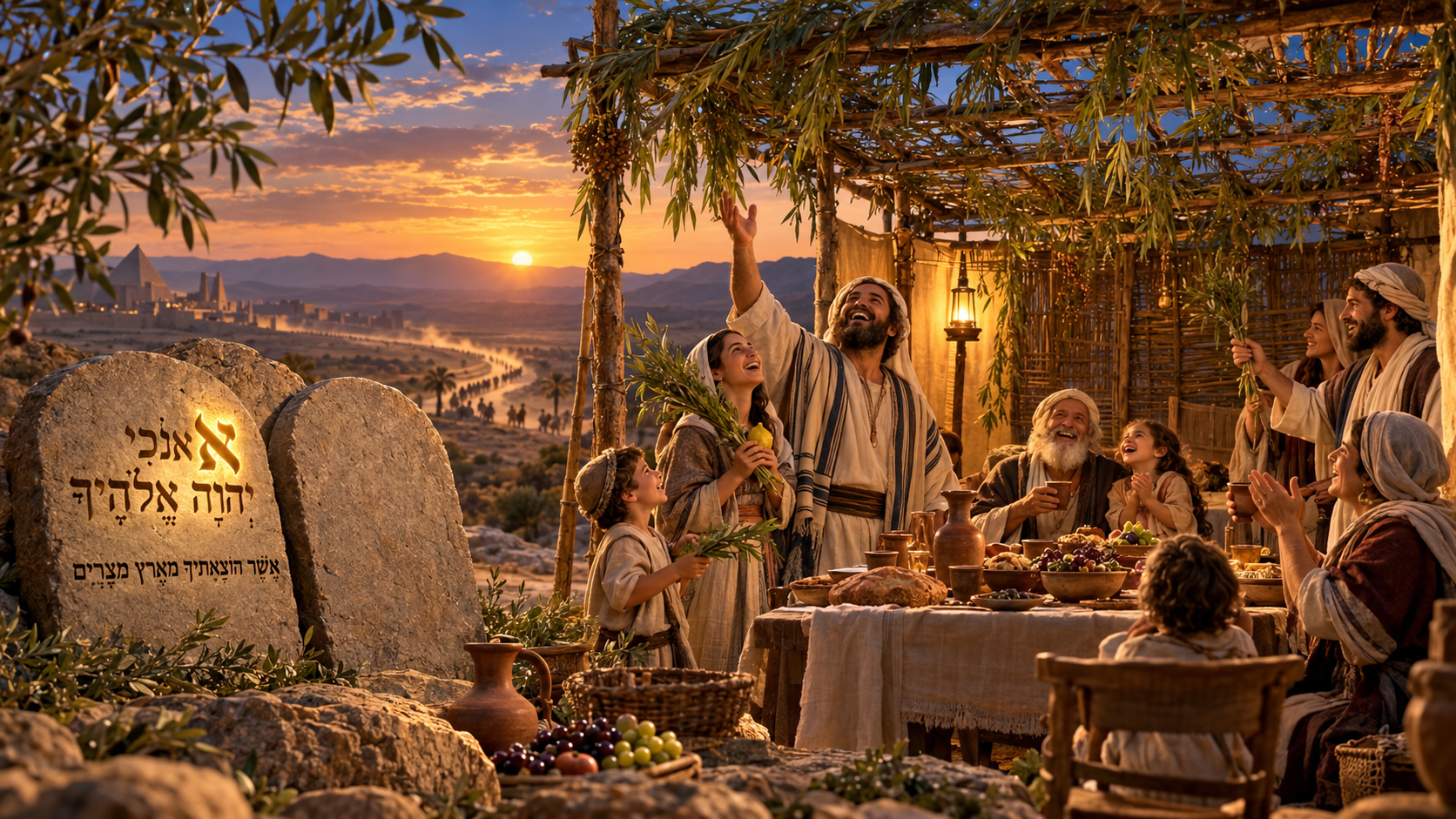
“And Moses was an hundred and twenty years old when he died: his eye was not dim, nor his natural force abated.” (Deuteronomy 34:7)
That feels intentional. Tradition has long noticed that Moses’ 120 years fall naturally into three segments of 40: roughly forty years in Egypt, forty in Midian, and forty leading Israel through the wilderness.
“And the children of Israel wandered forty years in the wilderness…” (Numbers 32:13)
Forty in Scripture is a familiar pattern—flood, wilderness, fasting, testing, transition. But 120 is not only three forties. In the numerical grammar being traced here, it is also 70 + 50.
On one side, 70—Ayin—speaks of the fullness of the nations, the fullness of Israel’s representation, and the need for eyes to see.
“These are the families of the sons of Noah… and by these were the nations divided in the earth after the flood.” (Genesis 10:32)
“All the souls that came with Jacob into Egypt… all the souls were threescore and ten.” (Genesis 46:26–27)
On the other side, 50—Nun—speaks of Jubilee, release, restoration, and the seed of new creation.
“And ye shall hallow the fiftieth year, and proclaim liberty throughout all the land unto all the inhabitants thereof: it shall be a jubilee unto you…” (Leviticus 25:10)
When those two stand together as 120 in Moses, a story begins to emerge: the mediator of Torah lives out a full, measured span that holds together the fullness of the nations and the seed of Jubilee, but cannot yet bring that fullness and Jubilee to completion. Moses sees the land, but does not enter. He carries the people to the border of promise; someone else must bring the story over the threshold.
As this has unfolded in study, 120 has come to feel like a bridge number between Sinai and Golgotha. It belongs to Moses, but points beyond him. It says there is a measured age of Torah, and there is something coming after—something that will gather the 70 nations and release the Jubilee of 50 in a way Moses could only foreshadow.
3. The Passion, the Cross, and the Cloths
When Christians talk about “the Passion,” they are talking about the sufferings of Yeshua from Gethsemane to the tomb. In the language of the New Testament, it is the concentrated stretch of betrayal, arrest, trial, torture, crucifixion, death, and burial.
“For Christ also hath once suffered for sins, the just for the unjust, that He might bring us to God…” (1 Peter 3:18)
The Gospels give astonishing detail. They tell of the blows and mockery, the scourging, the crown of thorns, the carrying of the cross, the nails, the darkness, the cry of forsakenness, the spear in the side, the blood and water, the hurried burial before Sabbath, and the linen wrapping. These are not vague references to suffering. They read like a witness account determined to preserve every wound.
On the cross, Yeshua speaks seven sayings. The one who is the Word does not fall silent. Seven statements, all from the cross: forgiveness, paradise, care, forsakenness, thirst, completion, entrusting His spirit.
Those seven sayings are His voice testimony. They tell what is happening spiritually. But the Passion leaves another testimony too—a testimony in blood.
The Gospels are also careful to speak about burial cloths.
“Then took they the body of Jesus, and wound it in linen cloths with the spices, as the manner of the Jews is to bury.” (John 19:40)
“Peter… seeth the linen cloths lie, and the napkin, that was about His head, not lying with the linen cloths, but wrapped together in a place by itself.” (John 20:6–7)
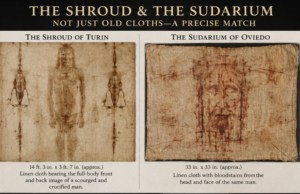
That detail matters. Scripture wants the reader to know there was a body cloth and a separate head cloth. It quietly creates room for a body shroud and a face cloth—kept apart, yet connected. In fact, the two linens believed to match these descriptions, the Shroud of Turin and the Sudarium of Oviedo, have literally been kept apart for nearly two thousand years, preserved in different places and traditions. Only in our time have they “come together,” not physically, but digitally and forensically, as investigators overlay their blood patterns and discover how closely they correspond.
The Shroud of Turin and the Sudarium of Oviedo fit that pattern in a striking way. One is a full-body linen bearing front and back image and blood. The other is a face cloth bearing complex bloodstains from the head. Together they invite the reader to look again at the Passion narratives and ask whether the wounds described in the text correspond to the wounds preserved in linen.
4. Forensic Richness: 50 and 70 Points of Coincidence
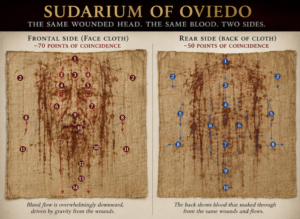 What makes the Shroud and Sudarium so remarkable is not simply that they are old cloths with blood on them. It is how specific the comparison has become. Investigators have not merely said, “These look similar.” They have mapped blood flows, wound sources, and anatomical positions.
“He that saw it bare record, and his record is true: and he knoweth that he saith true, that ye might believe.” (John 19:35)
“At the mouth of two witnesses, or three witnesses, shall the matter be established.” (Deuteronomy 19:15)
In simple terms, a point of coincidence is a matching source of blood or fluid—the place a flow begins, its direction, and its anatomical location. When the Sudarium’s blood patterns are compared with the Shroud’s head area, the matches become difficult to dismiss.
When the Shroud and Sudarium were digitally overlaid with one another they essentially came together for the very first time! The comparison identified 70 exact frontal matches side and 50 exact rear matches.
From a forensic and statistical standpoint, having this many independent points of coincidence—around seventy on the front and fifty on the back—on two separate cloths, preserved in different places for centuries, is far beyond what chance would reasonably allow. The more details that match (sources of blood, angles and directions of flow, anatomical locations on the face and scalp), the more the probability of random agreement collapses.
And there is a quiet numerical echo here as well: the same two numbers counted on the cloths—70 and 50—add up to 120, the age given for Moses’ death. That sum is not proof in itself, but for readers attuned to Torah’s number‑grammar it is striking that the Passion head is being “numbered” in the very pair that together form Moses’ 120‑year frame..
This is what makes the Shroud and Sudarium feel like extraordinary forensic evidence. There is eyewitness written testimony in the Gospels, and then there is physical testimony in the linens. The victim appears to have left a testimony written in His own blood, and that testimony matches the written testimony.
And then the numbers rise into view: 70 on the front, 50 on the back. Ayin and Nun. Fullness and Jubilee. Nations and seed. Moses’ 120 written, in effect, on the head of a crucified Jew.
5. Ayin and Nun with Crowns, and the Crown of Thorns
 Ayin (70) and Nun (50) are not only numbers. In Jewish scribal tradition, they are among the seven crowned letters. In a kosher Torah scroll, certain letters receive tiny strokes on top called tagin or ketarim—crowns. The remembered group is shatnez gatz: shin, ayin, tet, nun, zayin, gimel, and tzadi.
The sages never treated those crowns as meaningless decoration. They are part of the Torah’s hidden layer.
The tradition that Moses saw God placing crowns on the letters and was told that later generations would draw “heaps and heaps” of meaning from them is deeply suggestive. The crowns indicate that revelation has depth above the surface line of the script.
Ayin and Nun, then, are crowned letters. That matters because the numbers 70 and 50 on the Shroud and Sudarium are created by wounds associated with the crown of thorns.
“And when they had platted a crown of thorns, they put it upon His head…” (Matthew 27:29)
“And the soldiers platted a crown of thorns, and put it on His head…” (John 19:2)
The crown of thorns becomes, in a sense, a field of living tagin. What is hinted above the letters in ink is now pressed into flesh. The head of the living Torah is crowned with thorns, and the blood from those thorn wounds writes itself onto linen. Those blood flows become countable. And when they are counted, they yield Ayin and Nun—70 and 50—front and back, on both cloths.
This is where the symbolism grows difficult to ignore. The crowned letters of the written Torah and the crown of thorns on the living Torah meet in the same place: the suffering head of Yeshua.
6. Eyes to See: Moses, Thomas, and the Shroud
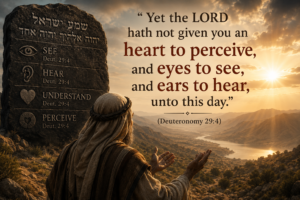 Ayin is not only 70. It is also the word for “eye.” That matters because Torah itself speaks of eyes that see and yet do not perceive.
“Yet the LORD hath not given you an heart to perceive, and eyes to see, and ears to hear, unto this day.” (Deuteronomy 29:4)
Israel had seen the plagues, the sea, the manna, the fire, the cloud. Yet Moses says there is still a veil. Physical sight has happened, but inner sight has not fully opened.
That phrase—“unto this day”—has deep weight. It raises the question of what God might use to give eyes to see in a later day.
Thomas becomes the New Testament figure who most openly expresses the human need for visible evidence.
“Except I shall see in His hands the print of the nails, and put my finger into the print of the nails, and thrust my hand into His side, I will not believe.” (John 20:25)
“Reach hither thy finger, and behold My hands; and reach hither thy hand, and thrust it into My side: and be not faithless, but believing.” (John 20:27)
“Thomas answered and said unto Him, My Lord and my God.” (John 20:28)
Thomas wanted wound-level evidence. He wanted to see and touch. In a different way, the Shroud and Sudarium become a Thomas-sign in linen. They preserve what the living body once bore: nails, bloodflows, crown wounds, side wound, and a body no longer present in the tomb.
For Jews especially, these cloths may function as a sign that speaks in Jewish categories: suffering, burial, Scripture, witness, and the longing for eyes to see. They do not present a foreign savior detached from Jewish life. They present a Jewish body, a Jewish burial, a Jewish set of wounds, and a story that must be considered.
7. Jonah, Yom Kippur, and the Only Sign
From Jonah to Shroud: Here the arc from Jonah’s fish to Yeshua’s tomb becomes visible in linen.
In Jewish practice, Jonah is read on Yom Kippur. It is the book of repentance, mercy, and a God who cares not only for Israel but also for the nations.
“And God saw their works, that they turned from their evil way; and God repented of the evil… and He did it not.” (Jonah 3:10)
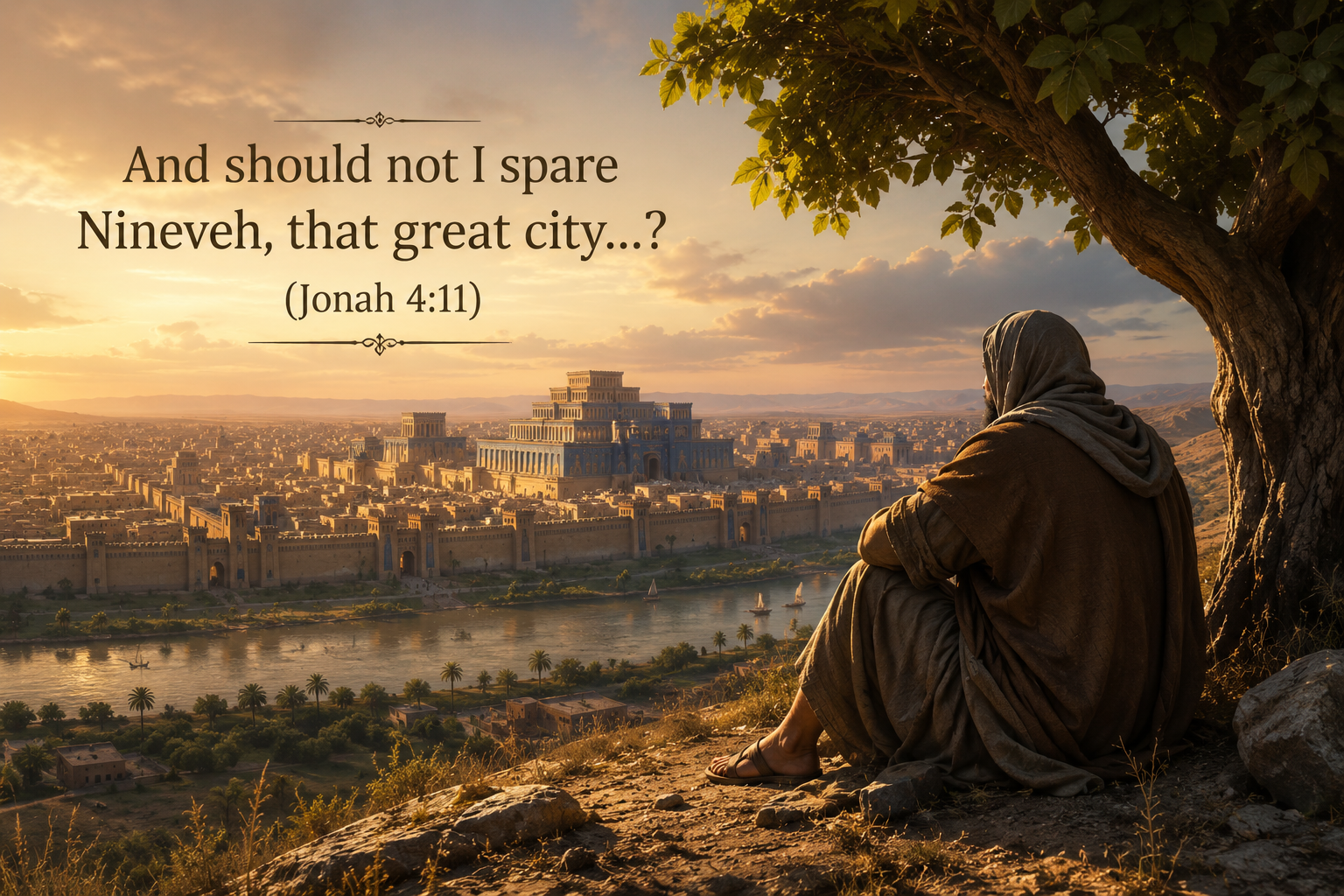
“And should not I spare Nineveh, that great city…?” (Jonah 4:11)
That is why Yeshua’s appeal to Jonah is so striking.
“An evil and adulterous generation seeketh after a sign; and there shall no sign be given to it, but the sign of the prophet Jonah. For as Jonah was three days and three nights in the belly of the great fish; so shall the Son of Man be three days and three nights in the heart of the earth.” (Matthew 12:39–40)
The only sign given is a three-day descent and return. Death, hiddenness, and emergence. The Shroud and Sudarium belong to that hidden phase. They are linked to the moment when the Son of Man is “in the heart of the earth.”
Seen this way, the Shroud becomes a Jonah-shaped sign in linen. It silently testifies to the descent into death and to the mystery of a missing body. For Jewish readers who know Jonah as the Yom Kippur prophet of repentance and mercy, that is no small thing. The sign Yeshua chose is the very sign bound up with atonement and the nations.
8. The Gospel Written in Linen: This Is My Body, My Blood
At the Last Supper, Yeshua interprets His coming death in covenant language.
“And He took bread, and gave thanks, and brake it, and gave unto them, saying, This is My body which is given for you… Likewise also the cup after supper, saying, This cup is the new covenant in My blood, which is shed for you.” (Luke 22:19–20)
On the cross, these words become brutally concrete. His body is given. His blood is poured out. The Shroud and Sudarium are not replacements for the Gospels. They are material witnesses that echo what the Gospels say happened.
The written Gospels give words for the wounds. The cloths give wounds that validate the words. The side wound, the crown of thorns, the scourging, the nails, the burial, the separate head cloth—all of it seems to line up.
Then the numbers preach as well. Seven stands behind the seven sayings from the cross and the completion of the work. Fifty stands behind Jubilee, hidden seed, and release. Seventy stands behind the nations and fullness. Their sum, 120, frames Moses and quietly bridges the age of Torah to the suffering and risen Messiah.
The gospel that emerges is not a different gospel. It is the old, apostolic one.
“For I delivered unto you first of all that which I also received, how that Christ died for our sins according to the scriptures; and that He was buried, and that He rose again the third day according to the scriptures.” (1 Corinthians 15:3–4)
What is striking is how the numbers, the letters, the blood, and the cloths all seem to gather around that same center.
9. Hillel, Love of Neighbor, and Standing on One Foot
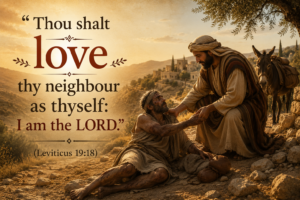 There is a famous Jewish story about Rabbi Hillel. He was asked to teach the whole Torah while standing on one foot. Hillel replied: “What is hateful to you, do not do to your fellow. That is the whole Torah; the rest is commentary. Go and learn.”
That answer is not invented from nowhere. It is drawn from Torah itself.
“Thou shalt love thy neighbour as thyself: I am the LORD.” (Leviticus 19:18)
That creates another arc. Torah says, “Love your fellow as yourself; I am YHVH.” Hillel distills it to a one-foot summary. The rest is commentary.
And then comes one of the most sobering images of all: Yeshua’s feet were nailed together. He was, in effect, standing on one foot. The living Torah, nailed and crowned, embodies the whole command under the weight of the cross. Love of God. Love of fellow. “I am YHVH.” The teacher standing on one foot is no longer only Hillel in a story, but Yeshua on Golgotha.
The rest is commentary—and the Shroud becomes part of that commentary. The blood on linen is commentary. The numbers 50 and 70 are commentary. Moses, Jonah, Thomas, Ayin, Nun, Vav, and Zayin—all commentary around the center where God’s love is displayed in a suffering Jew.
10. Conclusion: An Act of Grace in Prophetic Times
Many biblical scholars, rabbis, pastors, and ordinary believers feel that these are prophetic times. Whether that sense is understood strongly or cautiously, it is hard to deny that many people today are searching urgently for clarity, for evidence, and for signs of God’s hand in history.
If so, then perhaps the Shroud and Sudarium are an act of grace for such a time.
In an age that demands evidence and distrusts nearly everything, God has allowed burial linens associated with the Passion of His Son to survive long enough to be examined in extraordinary detail. He has allowed them to be studied through photography, serology, anatomy, and forensic comparison. And He has allowed them to speak in a way that reaches both Jewish and Christian readers: through wounds, through witness, through Jonah, through numbers, through blood.
One story that illustrates this bridge is that of Barrie M. Schwortz, the Official Documenting Photographer for the 1978 Shroud of Turin Research Project. Raised in an Orthodox Jewish home, he approached the project as a skeptic and later became one of the strongest public voices affirming the Shroud’s authenticity based on the evidence he encountered. He stated plainly that he was still Jewish while believing the Shroud was the cloth that wrapped the man Jesus after crucifixion, and he emphasized that this conviction was grounded in facts rather than hype.
That testimony matters. It shows that being a Jew and taking the Shroud seriously are not opposites. Jewish identity is not erased by facts. If anything, a Jew may be especially equipped to hear what these cloths are saying because the language they speak—Torah, suffering, blood, burial, Jonah, numbers, witness—is already a Jewish language.
If this article has done anything worthwhile, perhaps it is simply this: it has tried to trace how Tanakh and the Good News are not two disconnected books, but one story written by one God. Moses and Jonah, Hillel and Thomas, the crowned letters and the crown of thorns, the seven sayings and the seventy nations, the fifty of Jubilee and the one hundred twenty of Moses—all seem to converge in Yeshua.
And if anything here helps the reader love a fellow human being more, recognize YHVH more clearly, and see Yeshua with clearer eyes, then perhaps that is enough.
This whole journey has been about arcs and parallels: Moses and Yeshua, Jonah and the sign of Jonah, Hillel’s one‑foot Torah and Yeshua’s nailed feet, Torah’s numbers and the Shroud’s forensic counts. Two stories, one book, one God, one crowned nail.
“Thou shalt love thy neighbour as thyself: I am the LORD.” (Leviticus 19:18)
The rest is commentary. Go and learn.