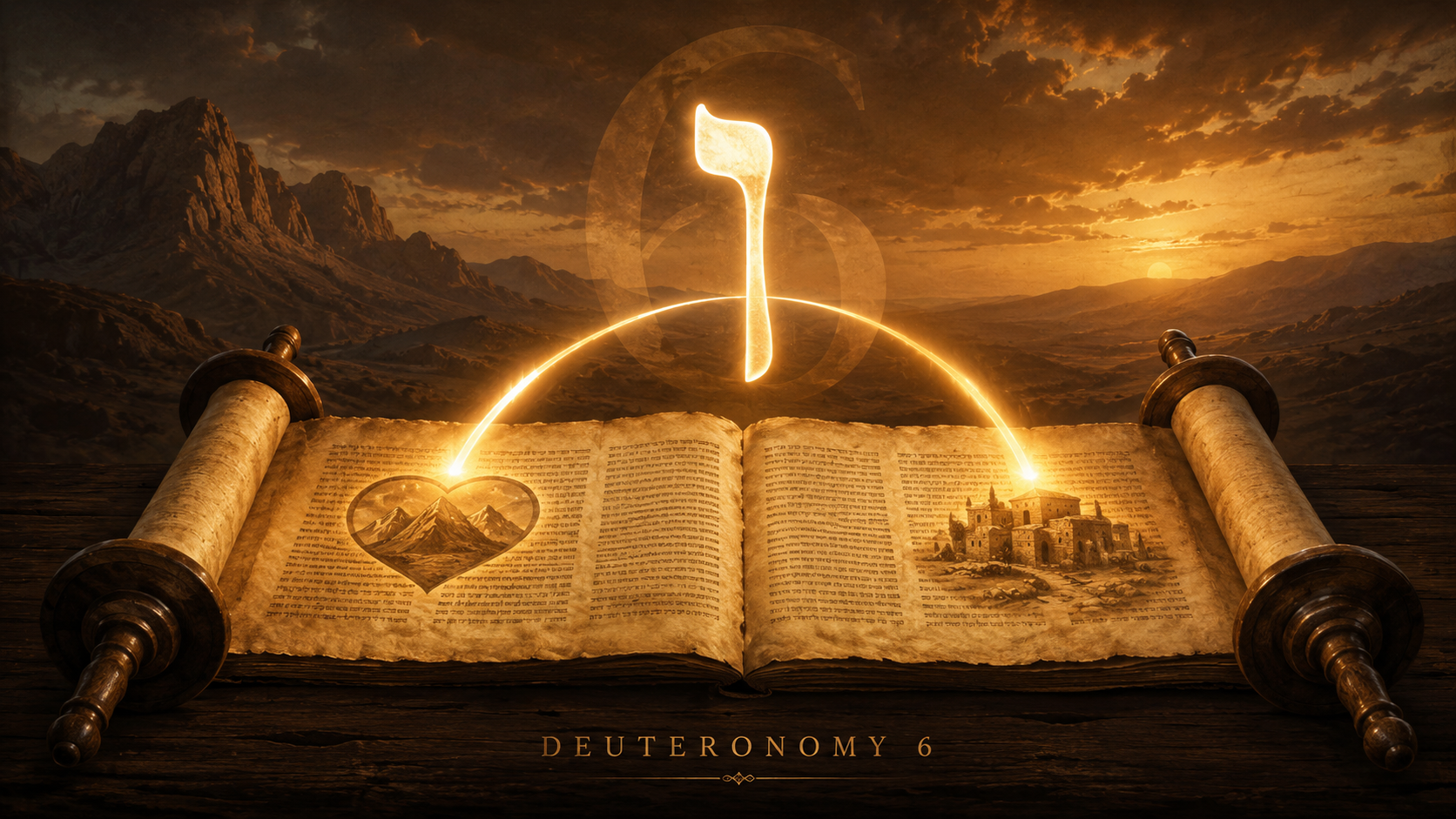
THE GREATEST COMMANDMENT
Deuteronomy 6 is an amazing chapter in the Torah. It is fair to say that the world was literally changed by it.
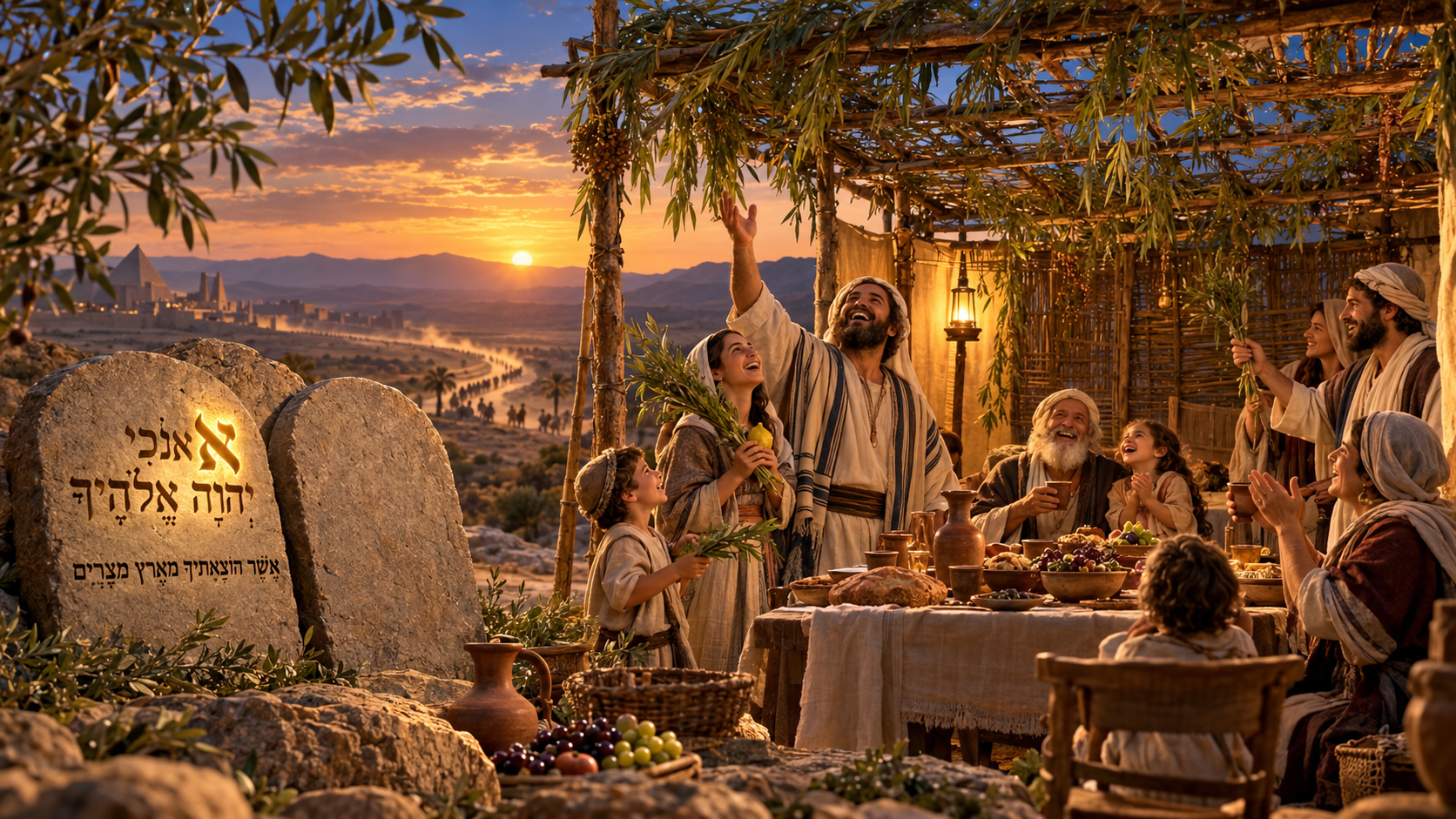
These verses form the opening and foundation of the Shema, the central declaration of Jewish faith. Its name comes from the first Hebrew word of Deuteronomy 6:4, Shema—“Hear,” or more fully, “listen and respond”: “Hear, O Israel: The LORD our God is one LORD.” Observant Jews recite the Shema morning and evening, declaring both the oneness of God and the command to love him with all the heart, soul, and might. Its words are taught to our children, bound upon the arm and forehead in tefillin, and placed upon our doorposts in the mezuzah. Deuteronomy 6 did not remain words upon a page. It shaped the daily rhythm of Jewish life.
Here is the KJV translation.
1 Now these are the commandments, the statutes, and the judgments, which the LORD your God commanded to teach you, that ye might do them in the land whither ye go to possess it:
2 That thou mightest fear the LORD thy God, to keep all his statutes and his commandments, which I command thee, thou, and thy son, and thy son’s son, all the days of thy life; and that thy days may be prolonged.
3 Hear therefore, O Israel, and observe to do it; that it may be well with thee, and that ye may increase mightily, as the LORD God of thy fathers hath promised thee, in the land that floweth with milk and honey.
4 Hear, O Israel: The LORD our God is one LORD:
5 And thou shalt love the LORD thy God with all thine heart, and with all thy soul, and with all thy might.
6 And these words, which I command thee this day, shall be in thine heart:
7 And thou shalt teach them diligently unto thy children, and shalt talk of them when thou sittest in thine house, and when thou walkest by the way, and when thou liest down, and when thou risest up.
8 And thou shalt bind them for a sign upon thine hand, and they shall be as frontlets between thine eyes.
9 And thou shalt write them upon the posts of thy house, and on thy gates.
THE LETTER VAV = 6
A note about the number: Deuteronomy is numbered as chapter 6 in both modern Jewish and Christian Bibles. The numbered chapter system originated in medieval Christianity and was later adopted in printed Hebrew Bibles. The number was not part of the original Torah, but the resonance remains striking.
There may even be a small Hebrew resonance in the number assigned to this chapter. Six is Vav (ו)—the letter whose name means a hook and whose ancient form is often associated with a peg or nail. It is also the connecting letter, commonly translated as “and.” Christianity’s chapter numbering placed a six upon Deuteronomy 6, and Yeshua placed an “and” beside its greatest commandment: love the LORD your God and love your neighbor as yourself. He did not replace the commandment; he connected another Torah commandment to it. Like the Vav, Yeshua joined the two together—love of God and love of neighbor. Two commandments, connected as one.
Summary of verses 10-25. See “Epilogue” at the end for the full verses.
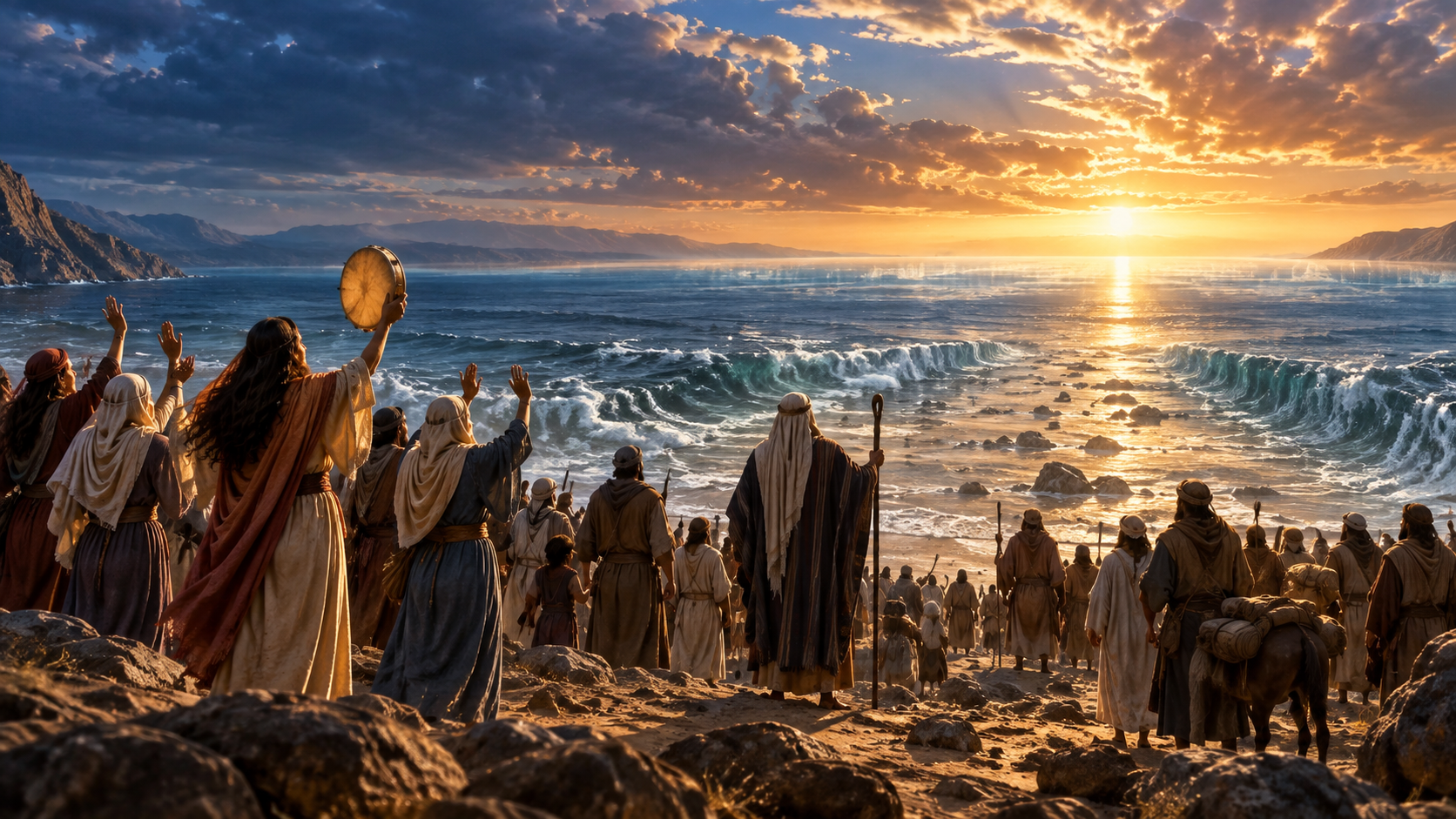
The remainder of Deuteronomy 6 warns Israel not to forget the LORD after entering the Promised Land and enjoying blessings they did not produce for themselves. They must reject other gods, keep God’s commandments, and do what is right and good in his sight. When their children ask what these commandments mean, they are to answer by telling the story: “We were Pharaoh’s bondmen in Egypt; and the LORD brought us out.” Their obedience is therefore not separated from their deliverance. God brought them out of bondage so that he might bring them into the land, preserve them, and teach them how to live.
YESHUA ADDED AN “AND”
Christianity did not discard this great commandment or replace it with something foreign to the Torah. Yeshua began exactly where Moses began: love the LORD your God with everything you have. He then joined it to one more: “Thou shalt love thy neighbour as thyself.” Even that command came from the Torah, in Leviticus 19:18. Christianity added no different foundation; Yeshua simply brought these two ancient commandments together. Love God, and let that love be revealed in how you love others. Two stories, one Book, one God.
“AS I HAVE LOVED YOU”
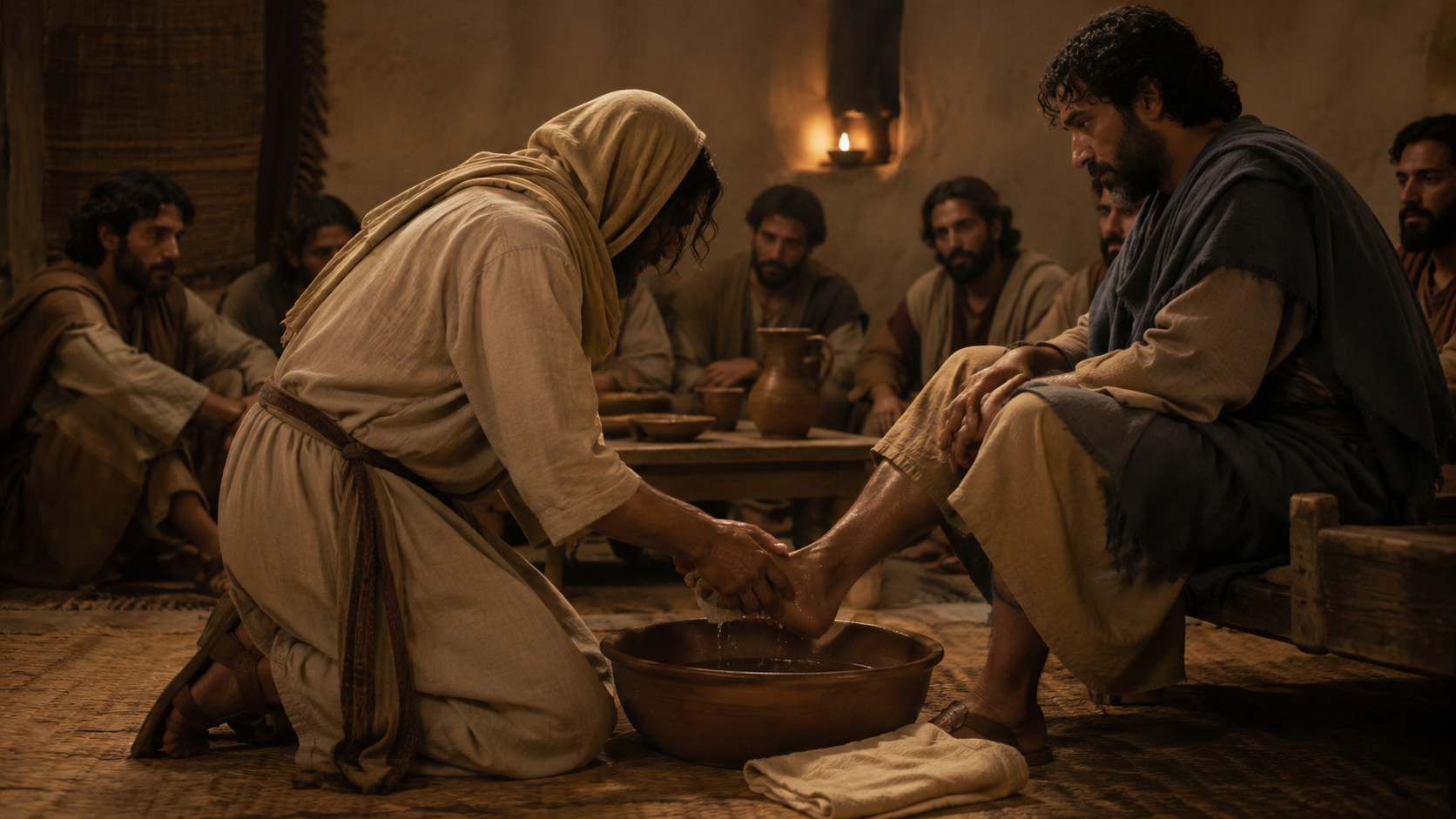
Yeshua later gave the commandment another dimension: “That ye love one another; as I have loved you” (John 13:34). The command to love was not new; it was already written in the Torah. What Yeshua added was himself as its visible measure. He did not merely tell people to love. He showed what love looked like by drawing near to the rejected, serving others, forgiving those who wronged him, and placing their needs before his own.
“As I have loved you” therefore turns love from an idea into an example to be followed. Love of God is not meant to remain hidden in the heart; it becomes visible in how we treat one another. Yeshua connected the two Torah commandments and then lived out that connection before his disciples. The Vav joined the words, but Yeshua’s life showed what the “and” required.
EPILOGUE:
Below are verses 10-25.
10 And it shall be, when the LORD thy God shall have brought thee into the land which he sware unto thy fathers, to Abraham, to Isaac, and to Jacob, to give thee great and goodly cities, which thou buildedst not,
11 And houses full of all good things, which thou filledst not, and wells digged, which thou diggedst not, vineyards and olive trees, which thou plantedst not; when thou shalt have eaten and be full;
12 Then beware lest thou forget the LORD, which brought thee forth out of the land of Egypt, from the house of bondage.
13 Thou shalt fear the LORD thy God, and serve him, and shalt swear by his name.
14 Ye shall not go after other gods, of the gods of the people which are round about you;
15 (For the LORD thy God is a jealous God among you) lest the anger of the LORD thy God be kindled against thee, and destroy thee from off the face of the earth.
16 Ye shall not tempt the LORD your God, as ye tempted him in Massah.
17 Ye shall diligently keep the commandments of the LORD your God, and his testimonies, and his statutes, which he hath commanded thee.
18 And thou shalt do that which is right and good in the sight of the LORD: that it may be well with thee, and that thou mayest go in and possess the good land which the LORD sware unto thy fathers,
19 To cast out all thine enemies from before thee, as the LORD hath spoken.
20 And when thy son asketh thee in time to come, saying, What mean the testimonies, and the statutes, and the judgments, which the LORD our God hath commanded you?
21 Then thou shalt say unto thy son, We were Pharaoh’s bondmen in Egypt; and the LORD brought us out of Egypt with a mighty hand:
22 And the LORD shewed signs and wonders, great and sore, upon Egypt, upon Pharaoh, and upon all his household, before our eyes:
23 And he brought us out from thence, that he might bring us in, to give us the land which he sware unto our fathers.
24 And the LORD commanded us to do all these statutes, to fear the LORD our God, for our good always, that he might preserve us alive, as it is at this day.
25 And it shall be our righteousness, if we observe to do all these commandments before the LORD our God, as he hath commanded us.