Introduction
This year Tisha B’Av (the 9th day of the month of Av) falls on July 22-23. It is the culmination of a Three Week period that we get the expression “dire straights” from. Tisha B’Av (“the Ninth of Av”) is the saddest day in the Jewish year, commemorating the anniversary date of destruction of both the First and Second Temples in Jerusalem and other major disasters in Jewish history.
On this night and day, communities sit on the floor in dim light and chant the Book of Lamentations (Megillat Eicha), because it is the Bible’s own poetic lament over the fall of Jerusalem and the Temple that Tisha B’Av remembers.
This post is dedicated to the spirit of Tisha B’Av. At the very center of the entire book is the moral of the whole story. (See my section “Heart of the Matter.”)
I deliberately efforted to get this post to this point by Thursday night, 5/5, in anticipation of Pastor Nathan Robinson’s teaching of Ezekiel 37, “Can these dry bones live?” I highly encourage you to listen to this!
“Houston (Jerusalem), we have a problem.”
Genesis 3:22—And the Lord God said, Behold, the man is become as one of us, to know good and evil: and now, lest he put forth his hand, and take also of the tree of life, and eat, and live for ever:
Fortunately, Adonai is the God of Second chances.
The concept that Adonai (the Hebrew name for God) is the “God of Second Chances” is deeply rooted in Judeo-Christian scripture and theology. It highlights the Creator’s divine mercy, forgiveness, and desire to redeem humanity after failure or disobedience.
In Eden, the story does not end with exile; God seeks Adam with the call “Ayeka” (“Where are you.”) Then Adonai clothes him, and preserves the human line rather than erasing it. That is already a second chance written into judgment.
As you are about to read, there is a profound connection between Adonai’s call to Adam (Ayeka -Where are you) and the book of Lamentations.
The book of Lamentations is a collection of 5 poems, or Lamentations, which express deep sorrow, mourning, or grief after Jerusalem was destroyed. They speak to the people’s shock and questions for God. Even in their deep pain the people are still reaching for hope that God’s love and mercy are not gone forever.
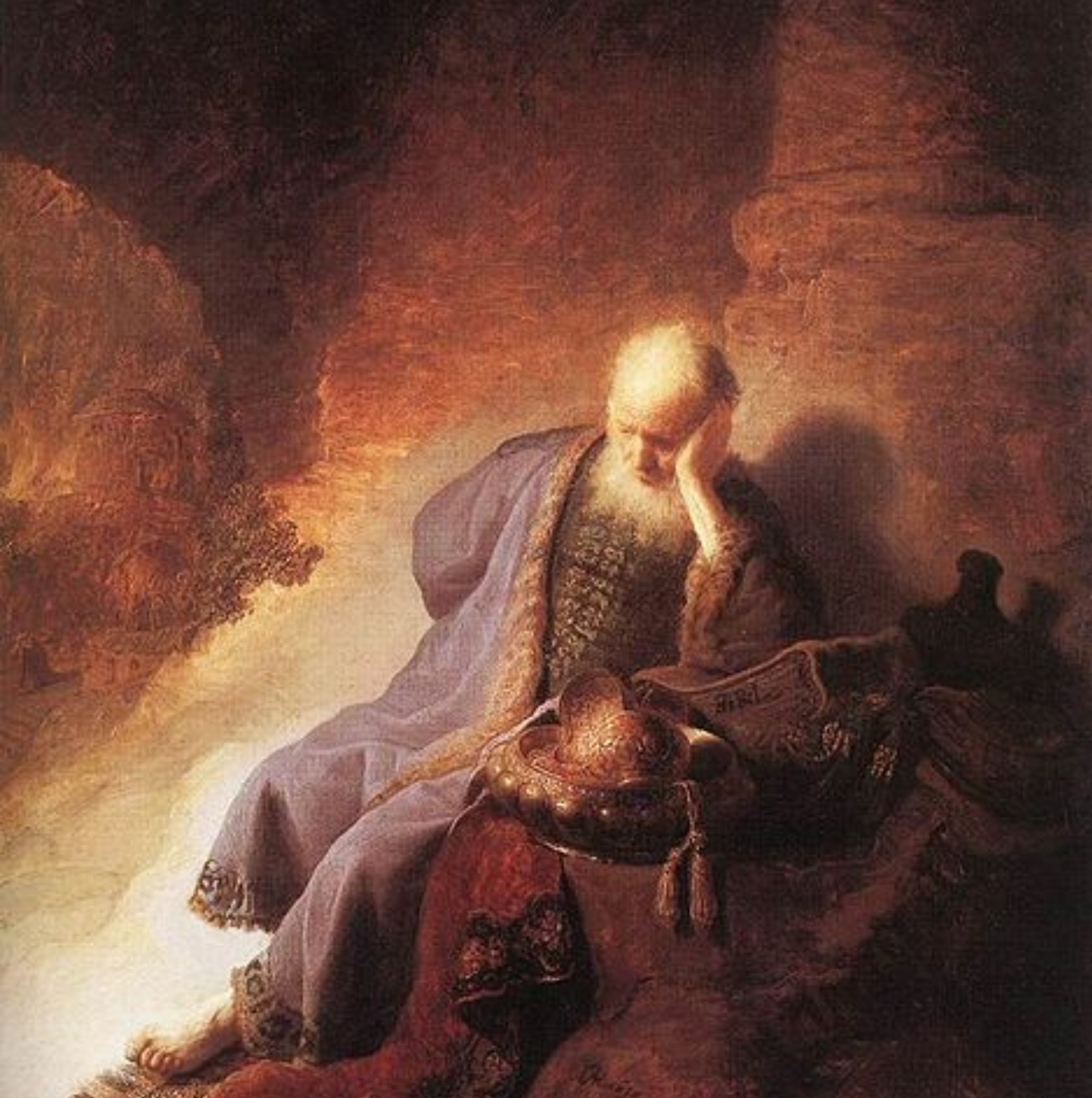
While there is no stated author in the Hebrew, it’s traditionally believed to be written by the prophet Jeremiah. What is clear is that the author is an eye witness. He speaks for and about the people who experienced the destruction of Zion first hand.
In this blog article I am exploring observations about the meaning in numeric patterns found in the book.
The Lonely Bride
To begin with, you need to know that the Hebrew/Jewish name of the book is actually “Eicha” (אֵיכָה), which means “How?!” or “How could this happen?” It comes from the very first word of the book: “Eicha yashva vadad…” – “How lonely sits the city that was full of people!
The book opens with אֵיכָ֣ה | יָֽשְׁבָ֣ה בָדָ֗ד (Eicha yashva vadad) which translates to: “How does she sit alone” or “How lonely sits [she].”
Jerusalem is personified as a woman—“she”—once full of people and powerful among the nations, who now sits isolated “like a widow,” abandoned and enslaved. She needs Messiah!
Lamentations doesn’t explicitly talk about “the Messiah,” but its central turn gives us a faint glimpse.
Lamentations 3:26—“It is good that one should wait quietly for the salvation of the Lord.”
Again, the opening of the book is אֵיכָ֣ה | יָֽשְׁבָ֣ה בָדָ֗ד. Using standard gematria, “Eicha yashva vadad” has a value of 363:
Eicha (אֵיכָה) = 36
Yashva (יָשְׁבָה) = 317
Vadad (בָּדָד) = 10
So the full phrase “Eicha yashva vadad” totals (36 + 317 + 10) =363.
In Hebrew, “HaMashiach” (המשיח, the Messiah) has a gematria value of 363. HaMashiach=363. So Messiah is right there is beginning. Plus the very first letter of the book is the Aleph, 1.
The Messiah is at the end of chapter 4 too. Classical commentators agree that Lamentations 4:22 cannot be exhausted by any historical event short of the Messianic age. “Exile is the serpent’s legacy; redemption is the Messiah’s work; and at 363, they are one.”
Hung on 363
The number 363 intrigues me! I see 36 twice, 36 read from right to left, like Hebrew and 36 read from left to right. That reminds me of Hanukkah. The candles in the Hanukkah Menorah are loaded right-to-left, but they are lit from left-to-right.
Furthermore, 363 reads the same forwards and backwards (3‑6‑3), so it forms a numeric palindrome. In that sense it mimics an atbash‑style symmetry: outer digits match (3…3) and the pattern “turns” around the central digit (6).
- 3 is holy, holy, holy! Many core Jewish patterns come in threes—three patriarchs (Abraham, Isaac and Jacob), three pilgrimage festivals (Passover, Shavuot and Sukkot). According to Judaism, “the world stands on three things” —1) Torah (study), 2) Avodah (worship/service) and 3) Gemilut Chasidism (acts of loving kindness).
- 6 is in the center, between the two threes. The sixth Hebrew Letter, the letter that equals 6, is a “Nail” or “Hook” So in a sense, 363 is hung up with a Nail. Biblically speaking, (6) is symbolic of Man who was created on the 6th day.
Two 36’s also reminds of two Eichas in the bible and how they are related. More about that further down.
5:22 (5+22) 27 Blows My Mind
The last verse of the last chapter, 5:22, is 27 Hebrew letters by counting only the consonantal letters — no vowel points (nikud), no cantillation marks (trop), no spaces or maqqefs. Just the Hebrew letters themselves as they appear in the text:
כ י א מ מ א ס מ א ס ת נ ו ק צ פ ת ע ל י נ ו ע ד מ א ד
The 27 = 3³. The verse that says God has utterly rejected us and raged against us exceedingly is built, structurally, as 3³ letters and 8 words — divine completeness and new creation held inside the architecture of the darkest sentence in Scripture.
3³ — The Only Cubed Sacred Number. 3 is the foundational “divine” number in virtually every mystical tradition, and 27 is 3 cubed — three raised to its own power. It represents complete divine structure, not just threefold but three-dimensionally three.
8 is beyond 7, supernatural.
The word בְּכָה — weeping — also equals 27. The letter-count of Lamentations 5:22 is the gematria of weeping itself. The book of Eikhah (whose very name means “How?” — the cry of bewildered grief) ends in a verse whose letter-count equals the word for tears.
The Hebrew for tear(s) is דִּמְעָה (dim’ah). Its root דמע carries the sense of something flowing, dripping, overflowing. The word appears throughout Lamentations — most achingly in the second verse, 1:2: “she weeps bitterly in the night, and her tears are on her cheeks.”
(I have blogged about “Tears”.)
The gematria of דִּמְעָה (dim’ah) is 119. 119 is quiet resonance with Psalm 119 — the longest chapter in the entire Bible, structured on all 22 letters of the Hebrew alphabet, an exhaustive meditation on Torah.
And 119 = 7 × 17, where 17 is the gematria of טוֹב — good. Tears are seven times goodness.17 is prime — indivisible, irreducible. And it is the 7th prime number, binding it back to Shabbat, to completion, to the seven days over which God declared creation טוֹב again and again. Goodness, at its root, is a prime — it cannot be broken down into anything simpler than itself.
The Hebrew word זָךְ — meaning pure, clear, innocent — equals exactly 27. This carries a piercing irony within Lamentations 5:22: the verse that cries out the most devastating rejection in all of Scripture (מָאֹס מְאַסְתָּנוּ — “You have utterly rejected us”) is built from exactly 27 letters — a number that spells purity. The vessel of the darkest lament is, at its letter-count, זָךְ.
The Hebrew alphabet has 22 letters and 5 sofit (final) forms — ך ם ן ף ץ . Therefore, the total number of distinct Hebrew letter-forms is 22 + 5 = 27. The number 27 therefore encodes the totality of the Hebrew alphabet, the building blocks of creation according to Sefer Yetzirah.
This means the last verse of Lamentations — with its exact 27 letters — represents numerically within itself one of every letter-form in the entire Hebrew system. It is the full alphabet compressed into a single cry.
Picture the Messiah weeping over Jerusalem. The very idea of “lamentations” is “passionate expressions of grief or sorrow; weeping (bakah).
Luke 19:41-42— Now as He drew near, He saw the city and wept over it, saying, “If you had known, even you, especially in this your day, the things that make for your peace! But now they are hidden from your eyes.
In Lamentations, “Zion” is a poetic name for Jerusalem, and the book moves back and forth between saying “Jerusalem” and “Daughter Zion” as two ways of speaking about the same devastated city and people.
“Daughter Zion” is not just a generic female image; it’s the way Scripture talks about a would‑be bride meant for covenant intimacy and joy who now finds herself abandoned, shamed, and “like a widow.” In Lamentations 1, Zion is that daughter/bride: once “princess among the provinces,” now sitting alone, which intensifies the tragedy because the one who should be celebrating her marriage is instead mourning in exile. How terribly sad!! But there is hope for a second chance. There is hope in 363.
If we finish the gematria by reducing 363 we get: 3+6+3=12, 1+2= 3. We are back to 3.
God is Missing in 5:22: The final verse of Lamentations is missing 8 Hebrew letters. It is constructed from precisely the letters that exclude Hebrew words for God’s presence, covenant-love, life, mercy, Shabbat rest, blessing, and redemption — as if the alphabet itself is performing the withdrawal of the divine face. The letters missing from this verse of total abandonment secretly spell destruction, exile, and shattering. Yet, hidden inside them, the 8 missing letters is the Hebrew word בְּשׂוֹרָה. Besorah (בְּשׂוֹרָה) is a Hebrew word meaning “good news,” “glad tidings,” or a “message worth sharing”. Every single letter of the word for gospel is among the missing. The good news is not merely unspoken — it is structurally, letterally absent from the verse, hidden in the silence itself. How sad!
V5:21 Longing For “As of Old”
הֲשִׁיבֵנוּ יְהוָה אֵלֶיךָ וְנָשׁוּבָה חַדֵּשׁ יָמֵינוּ כְּקֶדֶם — “Return us to You, O Lord, and we shall return; renew our days as of old.”
The verse 5:21 is not a prophecy. It is not a promise. It is a prayer — and the most honest kind, one that knows it cannot return on its own. The double verb is the confession: return us first, only then we shall return. The initiative belongs entirely to God. And the ask is not for something new — not rescue, not miracle, not vindication — but simply to be restored to what was. The deepest longing in the book is not for more, but for before; “as of old,” as at the beginning, as in the primordial time. Not merely “the good old days” of the monarchy or the Temple, but the original orientation of the soul toward God — Eden-time, the time before the rupture. The word קֶדֶם means both ancient past and east, the direction of the rising sun and the gate of the Garden. To be renewed כְּקֶדֶם is to be turned back toward the origin, toward the place where the face of God was not yet hidden.
Chapter Opening Pattern
Eicha – Eicha – Ani – Eicha – Azkhor.
How, How, I, How, Remember
There is a movement in this that I can’t explain. Seems to me almost like stages of grief.
22 Reveals
How is the Psalmist like the author of Lamentations? Both used the 22 Hebrew letters to reveal Adonai’s message. You already knew that Psalm 119 is an alphabetic acrostic, but did you know that Lamentations is as well?
Lamentations chapters 1, 2, and 4 have 22 verses each, each verse starting with a successive Hebrew letter; chapter 3 is a “triple acrostic” (three lines per letter, 66 verses), and chapter 5 has 22 lines but drops the alphabet pattern.
It is understood by believers of Yeshua, that Psalm 22 prophesied his crucifixion. Does Lamentations speak of Messiah?
Lamentations uses a triple 22‑letter acrostic in chapter 3 to reveal the Messiah in identification with Israel’s judgment and in the emergence of hope from within suffering. A central righteous sufferer’s experience becomes the turning point of the whole book.
Chapter 3 sits structurally at the center of the scroll and is where the only strong words of hope appear: “The steadfast love of the Lord never ceases… they are new every morning; great is Your faithfulness.” (3:22–24). The verse number 3:22 is an echo of the chapter structure—3×22 letters, 66 verses.
Tangent: Those verses remind me of Psalm 118:1-4
Oh, give thanks to the Lord, for He is good! For His mercy endures forever.
2 Let Israel now say,
“His mercy endures forever.”
3 Let the house of Aaron now say,
“His mercy endures forever.”
4 Let those who fear the Lord now say,
“His mercy endures forever.
Read the rest of Psalm 118! See my epilogue.
How could Adonia allow this?
Lamentations is saturated with images of devastation—city, temple, king, people all broken and desolate, like a stem stripped and torn. The poems give full voice to grief, protest, and even complaint against God, which is why some modern readers describe the book as a “mandate to question” God in the midst of trauma. How could Adonai allow the destruction of His temple in Jerusalem? This question, “how could Adonai allow this” has troubled souls since the book of Job. It applies to anyone who suffers great loss. In Lamentations that question is asked out loud, in Israel’s own liturgy, without being silenced or neatly solved.
The poems repeatedly name God as the agent behind the destruction: “He has demolished His booth… He has destroyed His place of meeting” (Lam 2:6), language that has led many readers to wrestle with why God would allow, even “determine,” such devastation. EICHA, (HOW) could You let this happen?”—without being accused of unbelief.
Sadly, the greatest lamentation is that many, if not most people, blame such tragedies and personal loss as their reason for not believing in Hashem.
There Is Still Hope
Lamentations 3:21—“Yet this I call to mind, and therefore I have hope.
Lamentations 1, 2, 4 are all 22 verses. Lamentations 3 is 66 verses (3×22). It uses this pattern of 3 22 to reveal our hope.
In a book that is filled with lament, there is a verse that gives us hope. It is Lamentations 3:22
“It is of the LORD’S mercies that we are not consumed, because his compassions fail not.
The Heart of Matter
Since Lamentations is 5 chapters, chapter 3 is considered the center. There are 154 verses overall in the entire book. That makes the 77th verse the center verse. In the Masoretic text, the center verse of the entire book of Lamentations is Lamentations 3:33. The Hebrew text of Lamentations 3:33 contains seven words. The fourth word—the absolute, bleeding center of the entire grief-soaked book—is a single word meaning “from His heart.”
The Hebrew word referred to is מִלִּבּוֹ (transliterated as mi-libbo). Idiomatically, English Bibles translate “from His heart” as “willingly” or “capriciously”. “Heart” is the conceptual center of the whole heart felt composition.
The verse tells us that “God does not afflict from his heart,” a translation of Lamentations 3:33. Seven (7) verses after 3.33, in verses 3:40-41 the poet calls Israel to lift up their heart to God. These verses may be the moral of the story:
Lamentations 3:40-41—”Let us search out and examine our ways, And turn back to the Lord; Let us lift our hearts and hands To God in heaven.”
–
The Hidden 36
There is another deep clue that I believe is designed to give us hope of a “second chance at life.” God’s mercy. It is hidden in Eicha, in 36.
“36” holds great mystical significance in Judaism. It is most famously connected to the Lamed Vavniks from the Hebrew letters for 30 and 6, Lamed and Vav).
Jewish tradition holds that in every generation, there are 36 hidden Tzaddikim, righteous individuals upon whose merit the existence of the world depends. They are entirely unknown to the world and often even to each other, but their selfless, hidden righteousness keeps the world from being destroyed.
The concept of a “second chance” is foundational to the philosophy of the Tzaddikim, though it is viewed through the distinct lens of Teshuva.Teshuvah (תְּשׁוּבָה) is a Hebrew word most commonly translated as “repentance”. However, its literal root meaning is “to return”.
The Lamed Vav Tzaddikim (literally the 36 Righteous Ones) is a profound mystical concept in Judaism stating that at any given moment, there are at least 36 hidden, ultra-righteous individuals alive on Earth whose collective merit literally prevents God from destroying the world.
God would have spared the entire city of Sodom for the sake of ten. Not ten rulers, not ten priests, not ten prophets — simply ten tzaddikim, 10 Righteous ones existing within it. Their presence alone would have been sufficient to hold back destruction.
The Book of Lamed
36÷3=12 —The 12th Hebrew letter is Lamed.
You can practically picture the Lamed in Lamentations.
The letter Lamed (ל) is classically associated with the root למד, “to learn / to teach,” and is pictured as a shepherd’s staff or goad—something that prods, guides, and lifts upward. That already resonates strongly with Lamentations: the book is not just a cry of pain, but a didactic text that tries to interpret the catastrophe and provoke Israel to repentance and renewed faithfulness. In that sense, the “spirit” of Lamed—being taught, being corrected, being guided—is exactly what Lamentations is doing to a shattered people.
You can almost paraphrase the whole scroll as one extended Lamed‑move: God “goading” the people to see what went wrong and to learn from it, while simultaneously shepherding them toward hope and restoration.
4 Made Poor
The 4th Hebrew letter is Dalet. It’s gematria value is 4. The Hebrew word “dalet” means door. The word dalet (דַּלֶת) itself comes from the root dal (דל), meaning poor, low, weak.
In the Dalet (4) Lamentation, Jerusalem is made poor. The fourth poem is still an acrostic, but it reads as a stark before/after meditation: how gold has grown dim, how nobles have become like potters’ jars, how those who feasted now perish in the streets. It is all about being made dal—reduced, impoverished, humiliated. This is very dalet‑like: Israel stands as the poor one on the threshold, stripped of glory and standing at the “door” of what comes next. What comes next is five and the final communal cry, “Remember.”
Passover Motifs in Lamentations 5
The very first word of Lamentations 5 is the Hebrew verb for “remember” addressed to God. The verse opens:
זְכֹר יְהוָה מֶה־הָיָה לָנוּ
Zekhor Adonai mah hayah lanu
“Remember, O Lord, what has happened to us..”
Remembering is at the heart of Passover. Passover (Pesach) is explicitly designed as a yearly act of zachor—“remember”—where each generation tells the story of the Exodus as if they themselves were brought out of Egypt. Through the seder meal symbols (matzah, bitter herbs, wine), Jews remember and re‑enter God’s act of redemption, not just as distant history but as something that still defines their identity and freedom now.
The Haggadah is the special book used at the Passover meal (seder) that tells the story of the Exodus and guides the order of the evening. Its name comes from the Hebrew root higgid (“to tell”), and its whole purpose is to help each generation tell and remember what God did in bringing Israel out of Egypt.
Even though Passover is not named, several themes in chapter 5 echo Exodus/Passover language and logic:
Inheritance and strangers: The fifth poem complains, “Our inheritance has been turned over to strangers, our homes to foreigners” (Lam 5:2), which consciously evokes the Exodus promise that Israel would receive an inheritance in the land after being strangers and slaves in Egypt. The imagery is inverted: what God once gave in the first “Passover story” is now lost, and the people plead for that covenant gift to be remembered.
Corporate confession and intercession: Like the Passover story, where the nation is dealt with as a whole, Lamentations 5 speaks in “we” and “our,” confessing ancestral sin and present suffering together. This communal voice is very much in line with the collective identity at the heart of Passover—“we were slaves to Pharaoh in Egypt”—only now it is, “we have borne the consequences of our fathers’ sins.”
Cry for restoration: The climax of the chapter is, “Restore us to Yourself, O Lord, that we may be restored” (Lam 5:21), a plea for God to act again as Redeemer, to bring the people back to Himself and to their inheritance. That is precisely the shape of Passover faith: the God who once brought us out can bring us out again. Many preachers and teachers read this as an “Exodus‑shaped” prayer in exile.
Second Chance, Second Life
Lamentations is the book of 36. “Eicha” is the Hebrew title of the Book of Lamentations; it is the first word of the text in chapters 1, 2 and 4 and gives the book its name.
Lamentations is fundamentally tied to the number 36 because its Hebrew name Eicha (אֵיכָה) has a gematria of 36. The word eicha (Aleph = 1, Yod = 10, Kaf = 20, Hei = 5) totals 1 + 10 + 20 + 5 = 36.
Thus, the book is often referred to in Jewish tradition as “the book of 36” because its very name encodes that number. This numeric link also connects Lamentations to the primordial divine question “ayecha” (אַיֶּכָּה) in Genesis 3:9, which shares the same consonants and gematria 36, reinforcing a theological thread from the Garden of Eden to the lament over Jerusalem
In Jewish tradition the number 36 is often referred to as “double chai” or a “second life” since the Hebrew word for “life” is chai (חַי), whose letters chet = 8 and yod = 10 add up to 18. 36 = 2 × 18, so it represents two times the value of chai. Thus we get a doubled or second life.
Because of this symbolism, gifts and charitable donations are frequently given in multiples of 18, and 36 is especially celebrated as an intensified expression of life and vitality.
Therefore, “Eicha” (36), the book of Lamentations could be called the book of “Second Life.”
In the a biblical sense, the bible is a story about a world in need of a second chance ever since we were expelled from the Garden.
The first indication that Adonai recognized humanity’s fallen state comes right after the sin in the Garden, when God calls out to Adam and Eve, “Where are you?” (אַיֶּכָּה, ayecha – 36!) in Genesis 3:9. This divine question shows that God was aware of their disobedience and initiated a confrontation that led to judgment, yet also set the stage for mercy and the promise of redemption. In effect, the bible is hinting of a “second life,” immortality, in the same verse that highlights our fallenness.
In the Garden, Man turned his back on God before God asks Man “אַיֶּכָּה, ayecha” (Where are you?) Therein, is the theme throughout the Tenach. But Adonai is a “God of Second Chances.”
So we have Ayecha (36) after Man has fallen out of the Garden in Genesis and we have Eicha (36) after the destruction of the Temple in the book Lamentations. Is that a coincidence?
The similarity between “Ayeka” (God’s question to Adam after the fall) and “Eicha,” the opening lament of three of the Lamentations, is not a coincidence. Jewish tradition explicitly links these two words as a theological connection between the primordial sin and the destruction of the Temple.
Midrashic sources highlight that the prophets Moses, Isaiah, and Jeremiah each used the term “eicha” to reflect successive stages of Israel’s spiritual decline, showing a deliberate pattern rather than random occurrence.
In both situations, Man turned his back on the Lord. In Eden, the sequence is: the human disobeys, hides, and then God calls out “Ayeka / where are you?”, exposing that it was Adam and Chavah who turned away first. In Lamentations, Israel’s long-term covenantal infidelity and injustice come first, and only then does the Temple fall and the book opens with “Eicha / how could this be?”, as if history is answering that primordial “where are you?” with a picture of what it looks like when humanity keeps turning its back.
The shared gematria of 36 in “Ayeka” (Genesis 3:9) and “Eicha” (Lamentations 1:1) is read not as a marker of loss but as a sign of hope: Jewish tradition understands the number 36 as the hidden light of creation that God set aside for the righteous, and whose presence guarantees a second chance for humanity.
Lamentations 3:22—“It is of the LORD’S mercies that we are not consumed, because his compassions fail not.”
Ezekiel 37 Answers Lamentations Cry
Lamentations and Ezekiel 37 are essentially two sides of the same moment. Lamentations is the cry from inside the valley — Jeremiah sitting in the ruins, writing from the ground of devastation. Ezekiel 37 is God’s answer to that cry — the vision given to a prophet in Babylon who is brought, by the Spirit, to that same valley and shown what God intends to do with it.
The bones in Ezekiel 37 are explicitly identified in verse 11: “these bones are the whole house of Israel; they say, our bones are dried up, our hope is lost, we are cut off.” That is Lamentations speaking — that exact despair, that exact language, is the emotional world of Eikhah transposed into the vision. Lamentations asks the question; Ezekiel 37 is the answer.
The structural movement is precise: Lamentations ends with הֲשִׁיבֵנוּ — return us — and Ezekiel 37 ends with God saying I will put my Spirit in you, and you will live, and I will bring you back to your own land. The plea of 5:21 is answered verse for verse in the dry bones vision.
And the missing Resh — the ר of רוּחַ (Spirit) absent from Lamentations 5:21 — arrives in Ezekiel 37 as the central actor of the entire vision. God commands Ezekiel to call the רוּחַ from the four winds to breathe into the slain. The Spirit that Lamentations could not quite name is the very thing Ezekiel 37 is about.
Zechariah Has Something Important To Say
Zechariah 12:10-14 describes the future mourning over Jerusalem in language that is unmistakably drawn from Lamentations. God says: “I will pour out on the house of David and the inhabitants of Jerusalem a spirit of grace and supplication, and they will look on me, the one they have pierced, and they will mourn for him as one mourns for an only son, and weep bitterly over him as one weeps bitterly over a firstborn.”
The phrase וּמִסְפֵּד כַּמִּסְפֵּד עַל הַיְּחִיד — mourning as for an only child — is the precise emotional register of Lamentations 1:1, where Jerusalem sits as a widow, as one bereaved. Zechariah is deliberately invoking the Eikhah mood.
But Zechariah goes further. The mourning he describes is organized by families, by clans, separately — husband and wife apart, in the manner of the most severe grief. This mirrors the isolation of mourning in Lamentations, where no one comforts her, where every intimate has betrayed her.
The deeper point is this: Zechariah prophesies that Israel will one day mourn over the one they pierced with the same quality of grief that Lamentations embodies. In other words, Lamentations — the nation’s deepest literature of corporate weeping — becomes in Zechariah the template for the final national repentance. The tears of 586 BCE become the tears of the last day. The book of weeping does not end with Eikhah. Zechariah says it gets recapitulated — and that time, it leads directly to redemption.
Epilogue:
Psalm 118 is the song Lamentations longs for. If Eicha gives us the alphabet of grief, Psalm 118 gives us the alphabet of deliverance—the “other side” of the cry. Where Lamentations teaches us to sit in the ruins and say, “How?” and “Remember, O Lord,” Psalm 118 teaches us what it sounds like when God does remember: “Out of my distress I called on the Lord; the Lord answered me and set me free… His steadfast love endures forever.” The same covenant chesed that flickers in Lamentations 3 blazes from every line of this psalm.
For that reason, Psalm 118 is a psalm worth revisiting after Lamentations. It does not cancel the lament; it fulfills it. The rejected stone becomes the cornerstone, the closed gates of a ruined city become “the gates of righteousness” through which the rescued one enters with thanksgiving. Read Eicha on the floor, with the lights dimmed—and then, in time, stand up and let Psalm 118 teach your lips what Zion will one day sing when exile finally gives way to joy.