
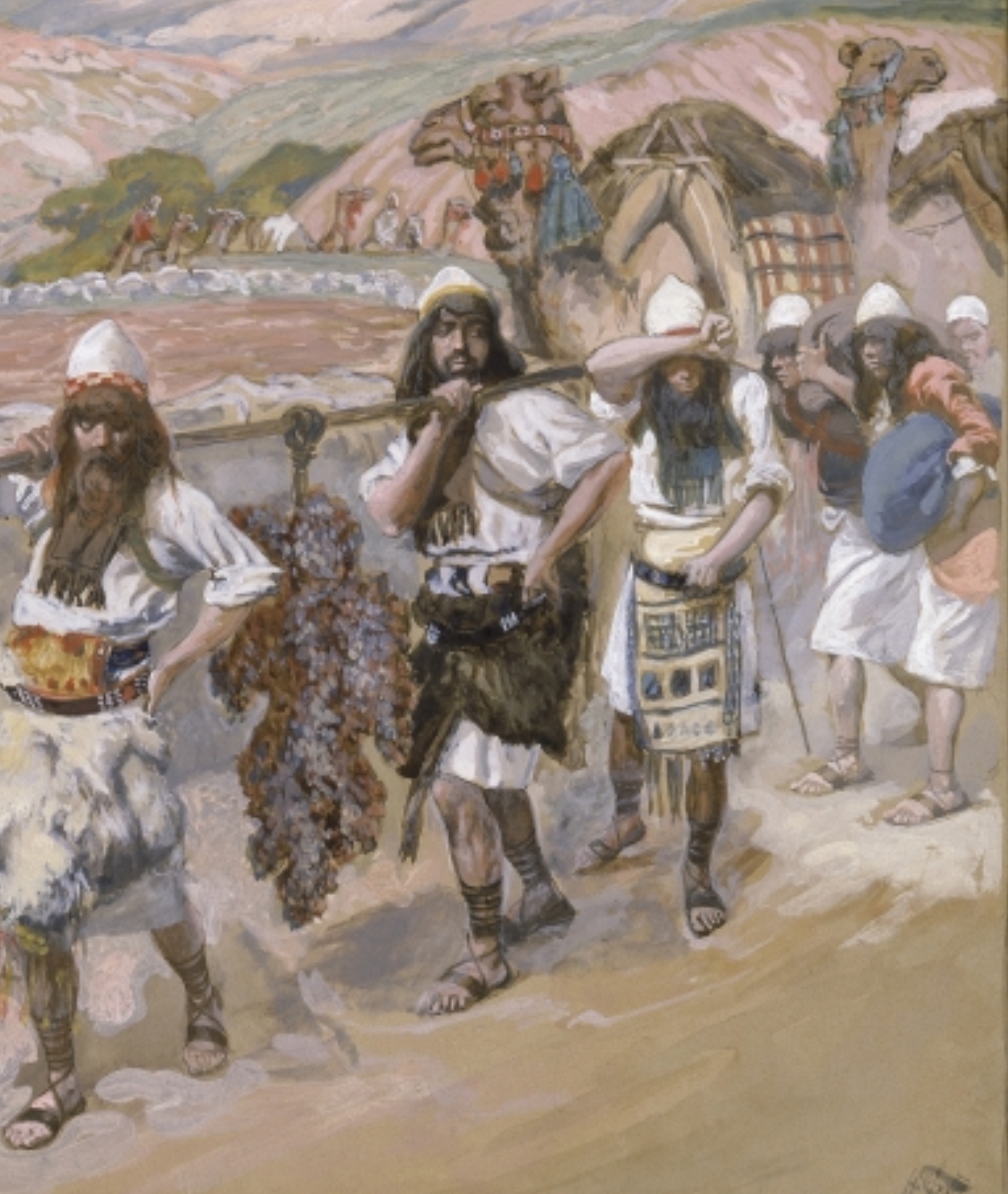
Numbers 13:32— “And they brought up an evil report (דִּבָּה -dibbāh) of the land which they had searched unto the children of Israel…”
Preface
In Hebrew the Bible uses several different words that can be translated as “report,” and they do not all carry the same weight. More common terms, such as שְׁמוּעָה (shemu‘ah, “news, report, tidings”) or simple verbs of “telling” and “declaring,” can describe anything from ordinary news to the announcement of God’s mighty acts. By contrast, the noun דִּבָּה (dibbāh) is rare and pointed. It appears only a few times in the entire Tanakh and just twice in the Torah, both in highly charged narratives: (Joseph’s “evil report” in Genesis 37 and the spies’ “evil report” in Numbers 13–14).
This rarity suggests that dibbāh does not name a “report” in general, but a specific, exceptional kind of report—speech that has become slanderous and harmful, a report whose very form and intention turn it into a weapon. Perhaps even carrying a prophetic implication.
These different “report” words also sit on opposite sides of a larger moral and spiritual contrast. On one side, dibbāh belongs with what later tradition calls לָשׁוֹן הָרָע (lashon hara), the “evil tongue”: speech that may contain facts but is framed or shared in a way that damages trust, reputation, or obedience. It is report as weapon. On the other side, is words for report that are rooted in “hearing” words—שׁמע (shema, “hear”)—and point to the proper use of speech and report: Such reports are received in order to trust and obey. In that frame, a “report” like שְׁמוּעָה (shemu‘ah) can either be heard as an occasion for fear and unbelief, or as an invitation to Shema‑hearing that responds to God’s voice.
In this blog I want to explore certain “reporting” events in Scripture and look for a deeper pattern as these words move through the Torah and the Prophets and then surface again in the Gospels.
“Gospel” is, at its root, good news—a good report. It stands as a spiritual opposite to the evil report. Where dibbāh names report as slander or meant to harm, the gospel announces report as blessing.
From Report to Report to Report — To Hearing the Good News
We live surrounded by reports: news, updates, briefings, test results. A report is usually more than bare information; it carries weight and often shapes what comes next. As I read Scripture, I notice the same pattern. The biblical story quietly turns on reports—what is said, how it is framed, and how it is heard. Not all reports are the same. Most are simple narratives of what happened. But a rare kind of report, marked by the Hebrew word דִּבָּה (dibbāh), is different.
Not All Reports Are Created Equal
The Torah contains many “reports” in the ordinary sense. Servants tell their masters what has happened. Moses reports the Lord’s words to the people. Messengers bring news of battles or encounters. These are not neutral in their effects, but the text does not single them out as morally charged. They belong in the realm of regular speech and narrative.
By contrast, dibbāh is rare and concentrated. It appears only a few times in the whole Hebrew Bible and only twice in the Torah. Lexically it carries the sense of “evil report, slander, defamation, whispering” but is not simply negative news. The report is shaped to produce fear, mistrust, or rebellion. The reports moves from describing reality to weaponizing it.
Joseph: A Family Not Ready
The first use of dibbah is in Genesis 37: “Joseph brought their evil report to their father.” The text does not unpack his motive. We only know that what he brings is called dibbāh. The narrative around it shows how volatile the situation is: his brothers already resent him for his favored status and his dreams. This report deepens their hostility.
What follows is a sequence of actions where intention becomes more explicit. The brothers conspire against Joseph, seize him, strip him, throw him into a pit, and finally sell him. They then construct another report for Jacob, presenting Joseph as dead. Here we see speech and action working together: an initial report, a violent response, and then a false narrative to cover it.
If we unpack those elements it is clear that this scene and events is a shadow of the Gospels.
Joseph’s closing interpretation in Genesis 50 is almost a key to the whole pattern: “You meant evil against me, but God meant it for good, to bring it about that many people should be kept alive.” He names their intention as evil. At the same time, he recognizes that God’s intention has been at work through the same events. The report and the plot that were meant to remove him end up positioning him to preserve the very family that rejected him.
Let’s Not Lose Sight
It is Jacob/Israel who initiates the whole scene in Genesis 37 by sending Joseph out as a messenger. He does not wander into trouble on his own. Jacob explicitly commissions him: go, “see how your brothers and the flocks are doing, and bring me word again.” In other words, the father of Israel asks for a report, and Joseph goes in obedience to that request. The initial “report” is meant to be an honest account brought back to the one who sent him.
This sets Joseph apart from his brothers. Jacob seeks a truthful report; the brothers later construct a deceptive one. Joseph is first sent to speak back what he has seen at his father’s command; his brothers will speak back what they want their father to believe. The same basic action—“bring a report”—is present in both cases, but the intentions behind the reports are very different. Jacob’s sending frames reporting as service and care; the brothers’ answer turns reporting into concealment and harm.
Jacob Hears Something Joseph’s Brothers’ Miss
Later in the chapter, when Joseph relates his dreams, his brothers hate him for his words, but Jacob’s response is more complex. He rebukes Joseph, yet the text adds that he “kept the saying in mind.” He does not fully understand or embrace what Joseph has said, but he does not throw it away either. He stores the report; he holds it in reserve. In that sense, Jacob models a kind of hearing that is closer to Shema: he lets the word sit, and waits over it, even though it troubles him.
Taken together, these details form a shadow of a larger pattern. The father sends a beloved son to bring a report; the son obeys; the brothers reject both the son and the truth of what he brings; yet the father quietly keeps the son’s words in his heart. Later Scripture will trace this shape again: in how Israel hears or refuses God’s reports, in how leaders weaponize reports against Yeshua, and in how the Father still receives and remembers the words of the Son.
The Spies: A Nation Not Ready
In Numbers 13–14 Moses sends twelve men to spy out Canaan. After forty days they return with a dibbah. Ten spies bring “a bad/evil report of the land,” emphasizing danger and insisting “we are not able to go up,” which leads Israel into fear, rebellion, and a forty‑year sentence in the wilderness.
Joshua and Caleb offer a minority, trust‑shaped report, but their words are not heeded.
Even though the spies return from Canaan carrying impressive fruit and confirm that the land does flow with milk and honey, the people hear, and emphasize, the strength of the inhabitants, the fortified cities, and their own sense of smallness. The text labels this package an “evil report” of the land.
Again, the issue seems to be not just the facts, but the way they are framed and their effect. The “bad report” discourages the people and undermines trust in the God who promised the land.
The ten speak as if obedience is unrealistic; the two speak as if God’s word defines what is possible.
The consequences of which report the nation choses to hear, shows how serious this is. The community cries out, considers appointing a new leader, and talks about returning to Egypt. They even discuss stoning Moses, Aaron, Joshua, and Caleb. God responds by declaring that this generation will not enter the land. Their bodies will fall in the wilderness. The men who brought up the evil report die by a plague. Here, the bad report functions almost like a death sentence. A report that was meant to protect them from perceived danger becomes part of the judicial outcome by which they never see the inheritance.
At the same time, there is a guarding element. The land itself is good, but the people as they are are not ready to receive it. Canaan becomes, for that generation, a guarded garden. Entry is withheld until a different kind of people, formed in the wilderness, will go in under Joshua.
Speech weaponized, hearing redirected
In both Joseph and the spies, we see speech that has moved beyond simple reporting. It is speech weaponized. The tongue and the narrative, meant in God’s design for faithful witness and for sustaining Shema‑hearing, are turned toward harm. When report becomes dibbāh, speech is no longer serving obedience; it is actively turning listening into doubt and resistance.
On the other side stands the Shema: “Hear, O Israel.” Hearing, in that frame, is not passive. It includes trust and obedience. Ordinary reports, and faithful reports like those of Joshua and Caleb, can support that kind of hearing. Dibbāh, by contrast, trains the ear to attend to fear rather than to promise.
Joshua: The Faithful Report that Waits
When that forty‑year period is over, “Joshua son of Nun secretly sent two spies from Shittim” to Jericho. After their encounter with Rahab and three days hiding in the hills, the two men “came to Joshua son of Nun and told him everything that had happened to them.” Their report explicitly echoes God’s promise and Rahab’s faith, and it strengthens Joshua and the people to enter the land.
Their summary is the crucial line: “The Lord has surely given the whole land into our hands; all the people are melting in fear because of us.”
Commentators note that the spies in Joshua 2 essentially repeat Rahab’s confession back to Joshua: she had said she knows “that the Lord has given you this land” and that the inhabitants’ hearts melt. The report Joshua receives, then, is:
– God‑centered (“the Lord has surely given the whole land into our hands”).
– Courage‑giving (the Canaanites are the ones whose hearts are melting, not Israel’s).
Joshua’s role in Numbers is to offer a report that aligns with God’s word. He does not deny the challenges, but he interprets them under the larger reality that the Lord is with them. His report is not taken up by that generation.
In the long arc, Joshua is the one who eventually leads the next generation into the land. The faithful report is delayed, but not lost. It waits until there is a people ready to act on it.
Forty years after the “evil report” of Numbers 13–14, Joshua hears another report from spies—and this time it is the opposite kind of report, almost a deliberate narrative reversal.
God Uses An Evil Report For Good
When we move into the Gospel of John, we meet another environment filled with reports about a chosen figure. Some say Jesus is a prophet, some say He is a deceiver, some say He has a demon, some say no one has ever spoken like Him. Reports about Him are varied and contested.
In John 10, at the Feast of Dedication, Jesus shifts the focus from other people’s reports about Him to His own voice. “My sheep hear my voice, and I know them, and they follow me… I give them eternal life, and they will never perish… I and the Father are one.” Here the Shema‑theme returns quietly: the decisive question is who hears, and whose voice defines reality.
In this light, the problem is not the absence of information, but the posture of hearing. Those who belong to Him are defined as those who listen and follow, even when surrounding reports are mixed or hostile.
Caiaphas: A Bad Report the Delivers Good News
After the raising of Lazarus in John 11, some witnesses believe and others go and tell the Pharisees what Jesus has done. The chief priests and Pharisees gather a council. Their concern is that if Jesus continues, “everyone will believe in Him, and the Romans will come and take away our place and our nation.” The fear here is loss of position and security.
Caiaphas speaks into this concern: “It is better for you that one man should die for the people, and not that the whole nation perish.” This is a report of sorts—a guided interpretation of the situation, intended to move the council toward a particular action. His intention seems clear enough: remove Jesus to preserve the status quo.
On the basis of this, the leadership gives a public order: if anyone knows where Jesus is, he should report it so that they can seize Him. The report they seek is not neutral. It is the kind of report that serves a plan to arrest and kill. In function, this sits very near to dibbāh: speech and reporting harnessed to a destructive purpose.
John then adds an important note. Caiaphas, being high priest that year, “did not say this of his own accord,” but as high priest he prophesied that Jesus would die for the nation and to gather into one the scattered children of God. Once again, there are two intentions. At the human level: “we will kill Him so that we will not be destroyed.” At the divine level: His death will actually be the means by which many are gathered and given life.
John himself ties the “report” theme directly into the threshold of the passion. After summarizing Jesus’ public ministry, he writes: “Even after Jesus had performed so many signs in their presence, they still would not believe in him” (John 12:37). That is his narrative statement of stubborn unbelief. Immediately, in verse 38, he reaches for Isaiah 53:1: “Lord, who has believed our report?” In other words, John understands Israel’s response to Jesus as the fulfillment of Isaiah’s unanswered question. The Servant’s true report has gone out, accompanied by signs, yet it is still not believed.
This means that by the time we reach John 12, the two sides of “report” have come together: there are evil reports about Jesus, crafted to discredit and destroy Him, and there is the prophetic report of Him, which is faithful and life‑giving. John 12:37–38 names the tragedy that much of Israel remains on the wrong side of that divide. The issue is no longer lack of information but a refusal to believe the report, which, in Isaiah’s terms, is a refusal of the arm of the Lord revealed in the Servant.
From bad report to good news
When Jesus is arrested and crucified at Passover, it is the success of this final bad report. The order to report His whereabouts, the hearing before the council, the accusations—all of this fits the pattern of speech and listening that has gone wrong. Yet, as with Joseph, God is at work in and under these intentions. What is meant for evil becomes the path by which something good is brought about.
In New Testament terms, that “good” is not only the preservation of a family or the eventual entry into a land, but the atonement and gathering of God’s people. The bad report about Jesus, and the intention to remove Him, end up giving rise to the good report about Jesus—what we call the gospel.
Genesis 50:20—”As for you, you meant evil against me, but God meant it for good, to bring it about that many people should be kept alive, as they are today.” (ESV)