AN OPINION BY JONAH
Will the Real Israel Please Stand Up?
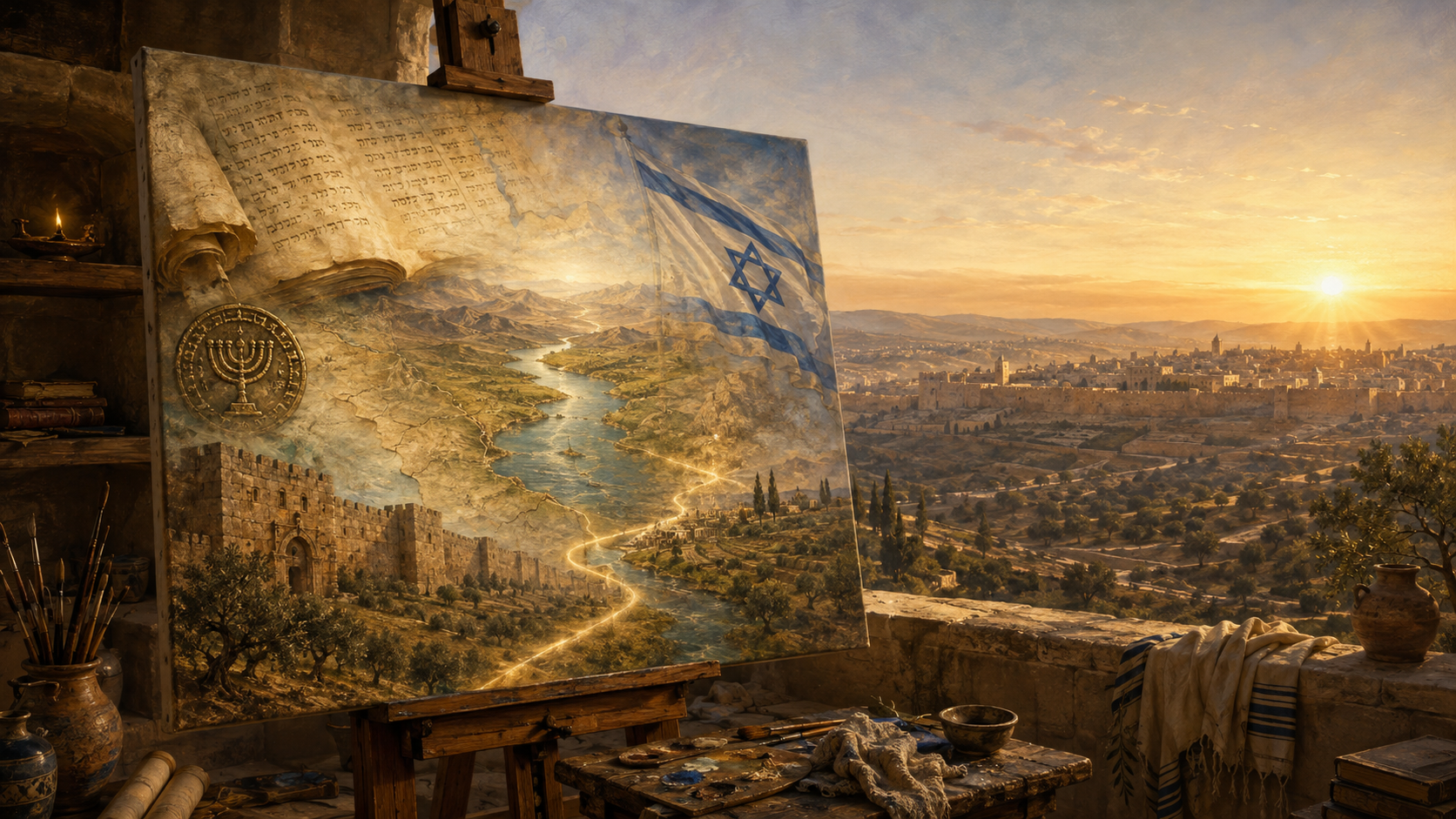
Before we can paint a picture of Israel, we have have to define Israel.
Grounded in Bible and History
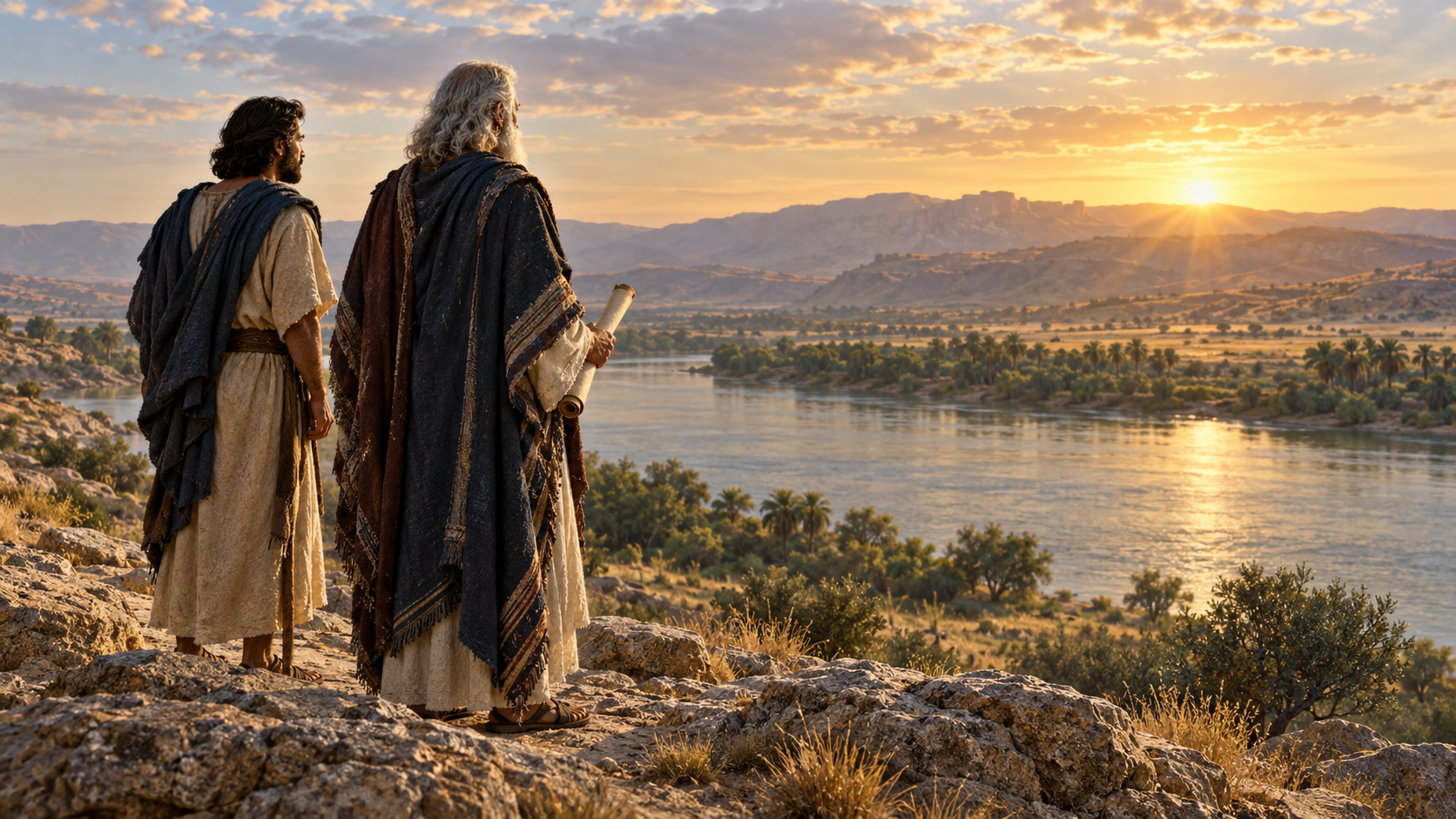
Now the LORD had said unto Abram, Get thee out of thy country, and from thy kindred, and from thy father’s house, unto a land that I will shew thee: And I will make of thee a great nation … and in thee shall all families of the earth be blessed. – Genesis 12:1-3, KJV
Unto thy seed have I given this land, from the river of Egypt unto the great river, the river Euphrates. – Genesis 15:18, KJV
Before We Paint, We Need an Outline
Before we can paint a picture of Israel, we must first ask Israel to stand up.
But which Israel?
Is it the Israel promised to Abraham? The land entered by Joshua and settled by the tribes? The kingdom associated with David and Solomon? The Hasmonean Jewish state born from the Maccabean revolt? The territory contemplated by Britain? The state proposed by the United Nations? Or the modern Israel that emerged from its War of Independence?
Each map is different. Each has been called Israel. That raises the unavoidable question:
WILL THE “TRUE” ISRAEL PLEASE STAND UP?
As far as I am concerned, the Bible is truth. Therefore, any honest attempt to define Israel must begin where Israel itself begins: in the promises of God.
Israel did not begin with the Balfour Declaration. It did not begin with the British Mandate, the Peel Commission, the United Nations or David Ben-Gurion’s declaration of independence.
Israel began when God called Abraham and promised land to his descendants through Isaac and Jacob. Jacob was given the name Israel, and his sons became the fathers of Israel’s tribes. Without that promise there would have been no Exodus. Without the Exodus there would have been no crossing of the Jordan. Without that crossing there would have been no tribal inheritance, no Jerusalem, no kingdom of David and no Temple.
The Bible did not merely give Israel its religion. It gave Israel its name, ancestry, national story and geographic center.
What I Mean by the True Israel
The broad promise in Genesis 15:18 stretches from the River of Egypt to the Euphrates. Other passages describe the land the Children of Israel entered, divided and settled. Those descriptions are related, but they are not identical modern surveys.
For me, two ancient pictures provide reasonable biblical and historical reference points.
The first is the broad covenantal promise given to Abraham. It supplies the theological horizon: Israel exists because God first spoke Israel into the story.
The second is the Hasmonean kingdom at its greatest extent. It supplies a historical picture of restored Jewish sovereignty after the Maccabean revolt. It was not merely a hope or a memory. It was an actual Jewish commonwealth governed from Jerusalem.
David’s Kingdom
 Between the tribal inheritance and the later Hasmonean restoration stands the kingdom of David. David united the tribes, made Jerusalem Israel’s capital and extended Israel’s authority beyond its earlier boundaries. Second Samuel records his victories over the Philistines, Moab, Edom and the Aramean kingdoms, while neighboring peoples paid tribute. Under David—and then Solomon—Israel reached the height of its biblical power and influence. We may call it an empire, although some territories were tributary kingdoms rather than provinces directly governed from Jerusalem. Still, this was no vague spiritual idea. Israel possessed a king, a capital, an army, laws and recognizable territory. Jerusalem became the political and spiritual heart of the nation, while God’s covenant with David joined Israel’s land and people to a royal promise. Long before Rome, Islam, Britain or the United Nations, Israel was already an established nation in its ancestral homeland.
What Jonah Had To Say
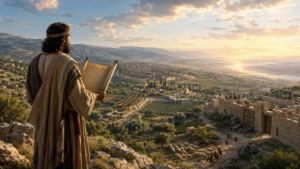 Scripture also records an earlier restoration of Israel’s territory under Jeroboam II, and it attaches that restoration to a prophet with name has special meaning to me:
He restored the coast of Israel from the entering of Hamath unto the sea of the plain, according to the word of the LORD God of Israel, which he spake by the hand of his servant Jonah, the son of Amittai, the prophet, which was of Gath-hepher. – 2 Kings 14:25, KJV
Before the Jonah we remember was sent to Nineveh, God used Jonah son of Amittai (TRUTH) to speak of the restoration of Israel’s boundaries. The land was not created by Rome, Britain or the United Nations. Its story was already being spoken through the prophets of Israel.
Ancient borders moved, and the Bible does not provide latitude and longitude. Therefore, any modern square-mile calculation is necessarily a reconstruction. I will not pretend that an estimate is an inspired measurement. The figures below are tools for comparison.
Hanukkah Was Also a National Restoration
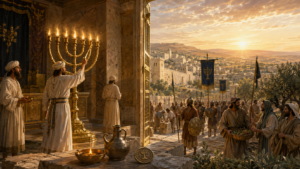 We usually remember the Maccabees through Hanukkah: persecution, resistance, the cleansing of the Temple and its rededication. But the revolt eventually produced much more. The Hasmonean dynasty established an independent Jewish state.
The original Maccabean-held core was relatively small. Later rulers expanded it. John Hyrcanus extended control into Samaria and Idumea. Aristobulus added Galilee. Under Alexander Jannaeus, the kingdom reached its greatest extent, including Judea, Samaria, Galilee, Idumea and territories east of the Jordan.
A cautious working estimate places the maximum kingdom at roughly 35,000 to 40,000 square kilometers. That number is approximate, but the historical fact is not: before Rome intervened, a substantial Jewish state again existed in the ancestral land.
Rome – Not Islam – Ended Jewish Sovereignty
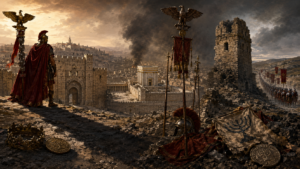 Pompey intervened in Judea in 63 BC. Roman power brought the Hasmonean state under domination. Rome later destroyed Jerusalem and the Second Temple in AD 70 and crushed the Bar Kokhba revolt in AD 135.
Islam did not yet exist. Muslim armies entered Jerusalem around AD 637-638: about seven centuries after Pompey, nearly 570 years after the Temple’s destruction and roughly five centuries after Bar Kokhba.
Arabs and Muslims are not interchangeable. Arab peoples lived in and around the region before Islam, and Jewish communities remained in the land after Rome. But the historical chronology is plain: Muslims did not destroy the independent Hasmonean kingdom. Rome did.
Jewish sovereignty disappeared for centuries, but Jewish connection did not. Communities endured through Roman, Byzantine, Muslim, Crusader, Mamluk and Ottoman rule. The people were scattered, but the story was never severed from the land.
Britain Did Not Create the Connection
Britain did not invent Jewish attachment to Israel. Britain encountered a people already carrying an ancient national memory.
The 1917 Balfour Declaration supported the establishment in Palestine of a national home for the Jewish people. It did not draw final borders. The later Mandate framework included territory on both sides of the Jordan, after which Britain administered Transjordan separately. Then the Peel Commission proposed partitioning what remained west of the river.
That chronology matters. Balfour, the Mandate, the separation of Transjordan and Peel were successive stages. They were not one agreement or one map.
How Small a State Would the Jews Accept?
Here the pattern becomes difficult to ignore. Jewish leaders did not insist upon receiving the whole biblical promise. They did not demand the entire Hasmonean kingdom. They repeatedly considered much smaller pieces if those pieces could secure recognized Jewish sovereignty.
1937: Peel
The Peel Commission proposed a Jewish state of roughly 4,000 square kilometers along parts of the coast and Galilee. Against an illustrative 155,000-square-kilometer reconstruction of the broad Genesis promise, that was about 2.6%. Against a 35,000-40,000-square-kilometer Hasmonean reference, it was about 10%-11%.
The Zionist Congress did not approve every provision, but it accepted partition in principle as a basis for further negotiation. The Arab leadership rejected partition and a Jewish state.
1947: The United Nations
The United Nations proposed Jewish and Arab states west of the Jordan, with Jerusalem under international administration. The Jewish allocation was approximately 15,300 square kilometers, much of it in the Negev.
That represented about 9.9% of the broad Genesis reconstruction, or about 38%-44% of the maximum Hasmonean reference. Jewish leaders accepted it. The Arab Higher Committee and the Arab League rejected it.
1949: What Israel Actually Held
Israel declared independence and survived the war that followed. The 1949 armistice lines left Israel controlling approximately 20,800 square kilometers – about 13.4% of the broad Genesis reconstruction or roughly 52%-59% of the estimated maximum Hasmonean kingdom.
These were armistice lines, not originally negotiated permanent borders. Yet they became the familiar pre-1967 outline of modern Israel.
Later Offers
Later negotiations used a different practical denominator: Israel within the pre-1967 lines, Gaza and the West Bank. Their details involved much more than acreage – Jerusalem, refugees, settlements, security, sovereignty and recognition were inseparable from borders.
At Camp David in 2000, the territorial discussions envisioned a Palestinian state in Gaza and most of the West Bank. Arafat did not accept the terms, but there was no single completed written Israeli offer and final agreed map. The Clinton Parameters later proposed 94%-96% of the West Bank, Gaza and compensating swaps. Both sides accepted those parameters with significant reservations.
In 2001, the Taba talks came closer but ended without a treaty. The parties themselves said they had never been closer. That episode should be described as an unfinished negotiation, not a simple one-word rejection.
In 2008, Ehud Olmert proposed a Palestinian state in Gaza and approximately 93.7% of the West Bank, with a land exchange of about 5.8%. Mahmoud Abbas did not accept or sign the proposal. Olmert left office before the process produced a treaty.
In 2020, the Trump plan envisioned Gaza and roughly 70% of the West Bank, together with additional exchanged territory and substantial conditions. Israel accepted it as a basis for negotiation. Palestinian leadership rejected it without negotiating over its map.
The Comparative Picture
The table uses two ancient baselines. The Genesis percentages use an illustrative 155,000-square-kilometer reconstruction; the Hasmonean percentages use an estimated 35,000-40,000-square-kilometer range. ‘Arab side’ means the remainder of the selected ancient denominator outside the proposed Jewish or Israeli share. It does not mean every surrounding Arab country was newly offered land in each negotiation.
| Event | Israel: Genesis basis | Arab side: Genesis basis | Israel: Hasmonean basis | Arab side: Hasmonean basis |
|---|---|---|---|---|
| 1937 Peel | 2.6% | 97.4% | 10%-11% | 89%-90% |
| 1947 UN plan | 9.9% | 90.1% | 38%-44% | 56%-62% |
| 1949 outcome | 13.4% | 86.6% | 52%-59% | 41%-48% |
| 2000 Camp David | about 13.7% | about 86.3% | 53%-61% | 39%-47% |
| 2008 Olmert | about 13.4% | about 86.6% | 52%-59% | 41%-48% |
| 2020 Trump plan | about 14%-15% | about 85%-86% | 56%-64% | 36%-44% |
Why Accept Less?
This history leaves me with a question. Why were Jewish leaders willing to accept less than the land God promised and less than the homeland their ancestors possessed?
I believe the answer is that the first priority was restoration and survival, not possession of every ancient boundary. After centuries without sovereignty – and after persecution, expulsions and the Holocaust – a small state capable of receiving and defending Jewish people was better than a perfect map that existed only as a hope.
Accept less land if doing so makes Jewish sovereignty, recognition and peace possible.
That explains why Zionist leaders considered Peel. It explains why they accepted the difficult UN partition. It explains why later Israeli governments discussed surrendering most of Judea and Samaria despite the land’s biblical and historical importance.
This willingness was never universal. Israelis have always disagreed about borders and whether withdrawals produce peace or invite attack. But the mainstream Zionist record repeatedly placed practical Jewish survival above possession of every portion of the ancestral land.
Why Does Rejectionism Persist?
The rejectionist calculation was different. For early Arab nationalist leaders, partition was rejected because they regarded Zionism as a foreign colonial movement and believed the Arab majority should govern all Palestine. For Islamist movements such as Hamas, the objection became explicitly religious: the land was treated as permanently Islamic, and legitimate Jewish sovereignty on any portion was denied.
Hamas’s 1988 covenant anticipated Israel’s elimination. Its 2017 document moderated some language and accepted a Palestinian state along the 1967 lines as an interim national consensus, but it still refused to recognize Israel and continued to claim all Palestine.
If Israel’s existence is itself the offense, another percentage cannot settle the conflict. An Israel reduced to 14%, 10% or even 3% of its ancient homeland remains unacceptable to a movement committed to eliminating Jewish sovereignty.
But I will not attribute that position to all Arabs or all Muslims. Egypt and Jordan made peace with Israel. The United Arab Emirates, Bahrain and Morocco normalized relations. The Arab League’s 2002 initiative offered collective normalization under conditions Israel did not accept as presented.
The true divide is not simply Jews against Muslims. It is between those prepared to accept Jewish sovereignty and negotiate its borders, and those who believe no sovereign Jewish state should exist at all.
Painting the Final Picture
The percentages do not prove that every Israeli proposal was perfect or that every failure belonged entirely to one side. Palestinians have their own history, losses and understanding of justice. Borders were never the only issue.
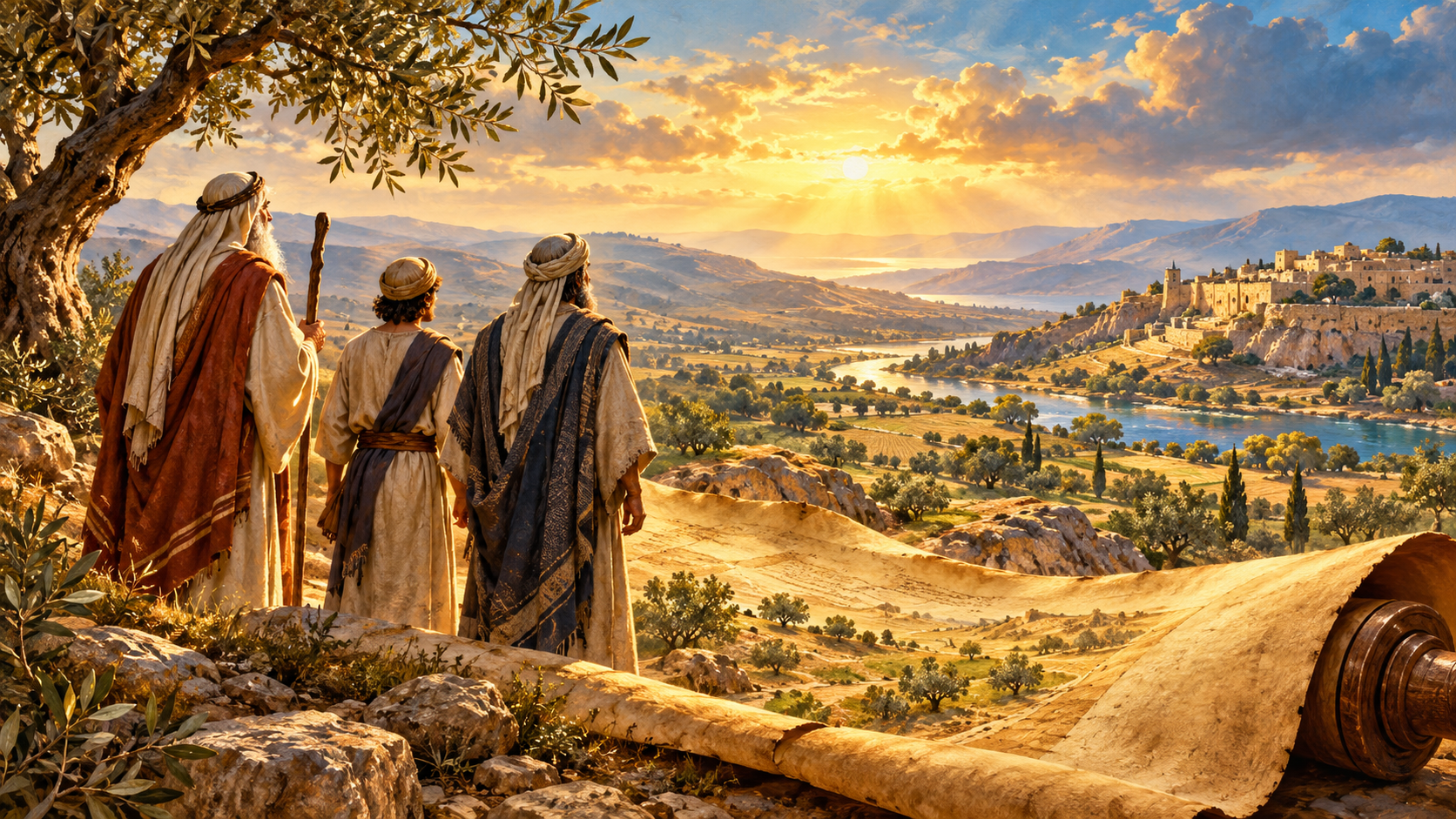
But I began this article by asking what Israel I would paint if I could place the real Israel upon the canvas. After all the commissions, partitions, percentages, wars and negotiations, I find myself returning to the place where Israel began.
Not Balfour. Not Peel. Not the United Nations. Not an armistice line or a peace proposal.
Source of Truth
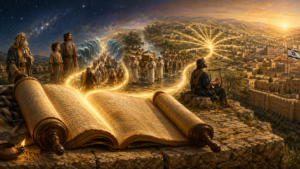 As far as I am concerned, the Bible is the source of truth. Israel exists because God made promises: to Abraham, to Isaac, to Jacob and to the Children of Israel. Without those promises there is no Exodus, no crossing of the Jordan, no tribal inheritance, no Jerusalem, no David and no Israel to debate today.
Governments can draw lines. Commissions can divide maps. Politicians can offer percentages and diplomats can negotiate them. History shows that Jewish leaders repeatedly accepted less in the hope of sovereignty, survival and peace. But politics did not create Israel. God did.
So if I am asked to paint a picture of Israel, I will not begin with Britain’s map, Rome’s map, the United Nations’ map or today’s political map. I will begin with the picture given in Scripture: the people, the promise and the land joined together by the word of God.
I stand with Israel. The true Israel. Anything less is politics!
Am Yisrael Chai!
Disclaimer: A Note About the Numbers
Ancient borders were fluid, and neither Genesis nor Hasmonean records provide a modern surveyed polygon. The 155,000-square-kilometer Genesis model and 35,000-40,000-square-kilometer Hasmonean estimate are illustrative working reconstructions. Different defensible maps will produce different percentages. Modern proposals also treated Jerusalem, no-man’s-land, the Dead Sea, corridors and land swaps differently. The calculations should therefore be read as approximate comparisons, not exact legal measurements.
Selected Sources
- Genesis 12:1-7; 15:18-21; Numbers 32; Joshua 1:1-6; Joshua 13-21.
- The Balfour Declaration (1917), UNISPAL: https://www.un.org/unispal/document/auto-insert-193242/
- Report of the Palestine Royal Commission / Peel Commission (1937).
- UN General Assembly Resolution 181 (1947): https://www.un.org/unispal/document/auto-insert-185393/
- Clinton Parameters (December 2000): https://fmep.org/resource/clinton-parameters/
- Joint statement at the end of the Taba negotiations (January 2001): https://www.un.org/unispal/document/auto-insert-206700/
- Peace to Prosperity plan (2020): https://trumpwhitehouse.archives.gov/wp-content/uploads/2020/01/Peace-to-Prosperity-0120.pdf
- Hamas Covenant (1988), Yale Avalon Project: https://avalon.law.yale.edu/20th_century/hamas.asp
- Arab Peace Initiative (2002), full text: https://www.theguardian.com/world/2002/mar/28/israel7