The Turtle and a Signature
An overlooked story of liberty connecting John Wilkes, John Hancock, two turtles—and America’s 45th and 47th president.
By Jonah Ritter
Preface: My Grandfather’s Turtle
My grandfather, Philip Ritter, was a dentist. In his day, he was the youngest graduate of Columbia University’s dental school. He died in his early sixties, when I was only two years old—about sixty-five years ago.
My grandfather made jewelry from the gold he used in his dental practice. I have turtle tie tack with ruby eyes that he made. For decades, I have worn it on Yom Kippur.
Recently, I came across a remarkable account of actual events from the 1760s, shortly before the American Revolution that reminded me of my grandfather’s tie tack. It is the story of the Glorious 92.
When I heard Eric Metaxas tell the story, I felt as though I had discovered something prophetic. It connected the numbers 45, 47 and 92 with liberty, America—and, quite unexpectedly, turtles.
I will explain what I discovered. Then you can decide for yourself.
The Number That Became a Cry for Liberty
The story begins in England with John Wilkes, a journalist and member of Parliament who openly challenged the government of King George III.
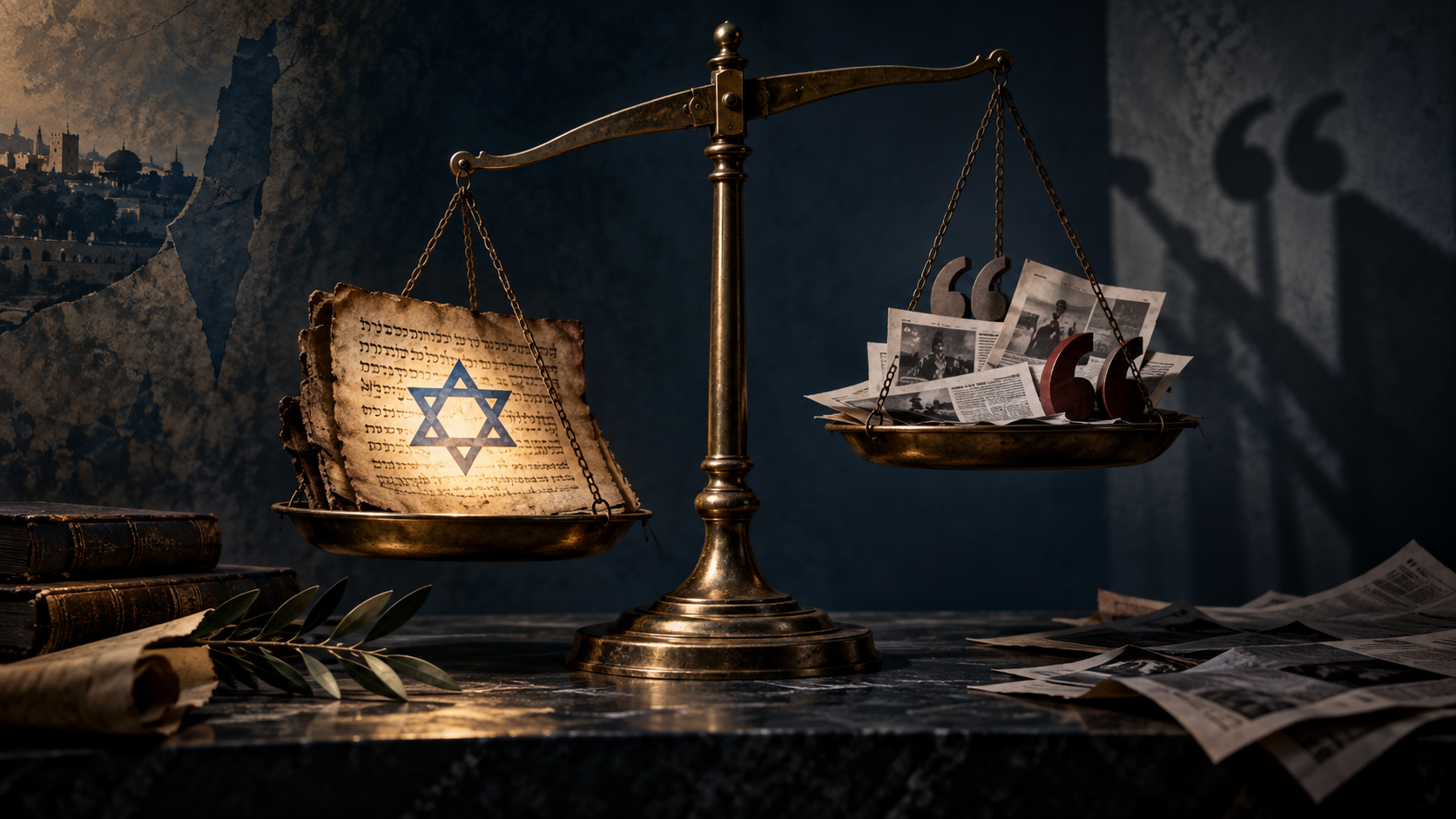
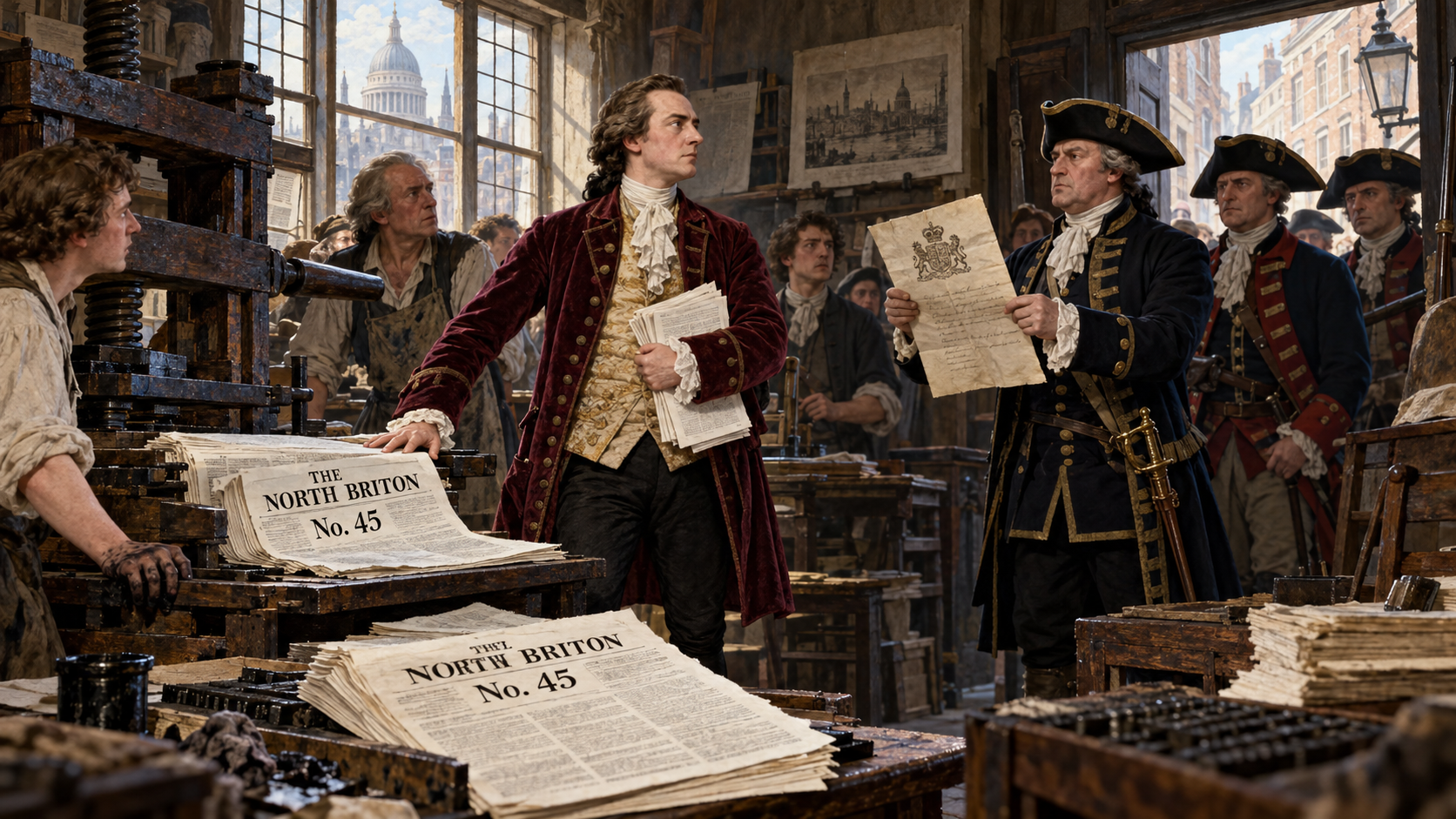
On April 23, 1763, Wilkes published issue No. 45 of his newspaper, The North Briton. In it, he sharply criticized a speech delivered by the king. The government retaliated with a sweeping general warrant authorizing the arrest of those responsible for writing, printing and publishing the paper. Wilkes and dozens of others were arrested.
Wilkes fought back in court, challenging both his arrest and the search and seizure of his private papers. His cause became a major test of freedom of speech, freedom of the press and protection against arbitrary government power. Across Britain and the American colonies, supporters rallied around the cry “Wilkes and Liberty!” The number 45 became its own political symbol.
Colonists toasted the number. They marked objects with it. A minister reportedly preached from Psalm 119:45: “And I will walk at liberty: for I seek thy precepts.” Long before Donald Trump entered politics, 45 already had a place in the history of liberty.
A Tree Called Liberty
The same spirit was growing in Boston.
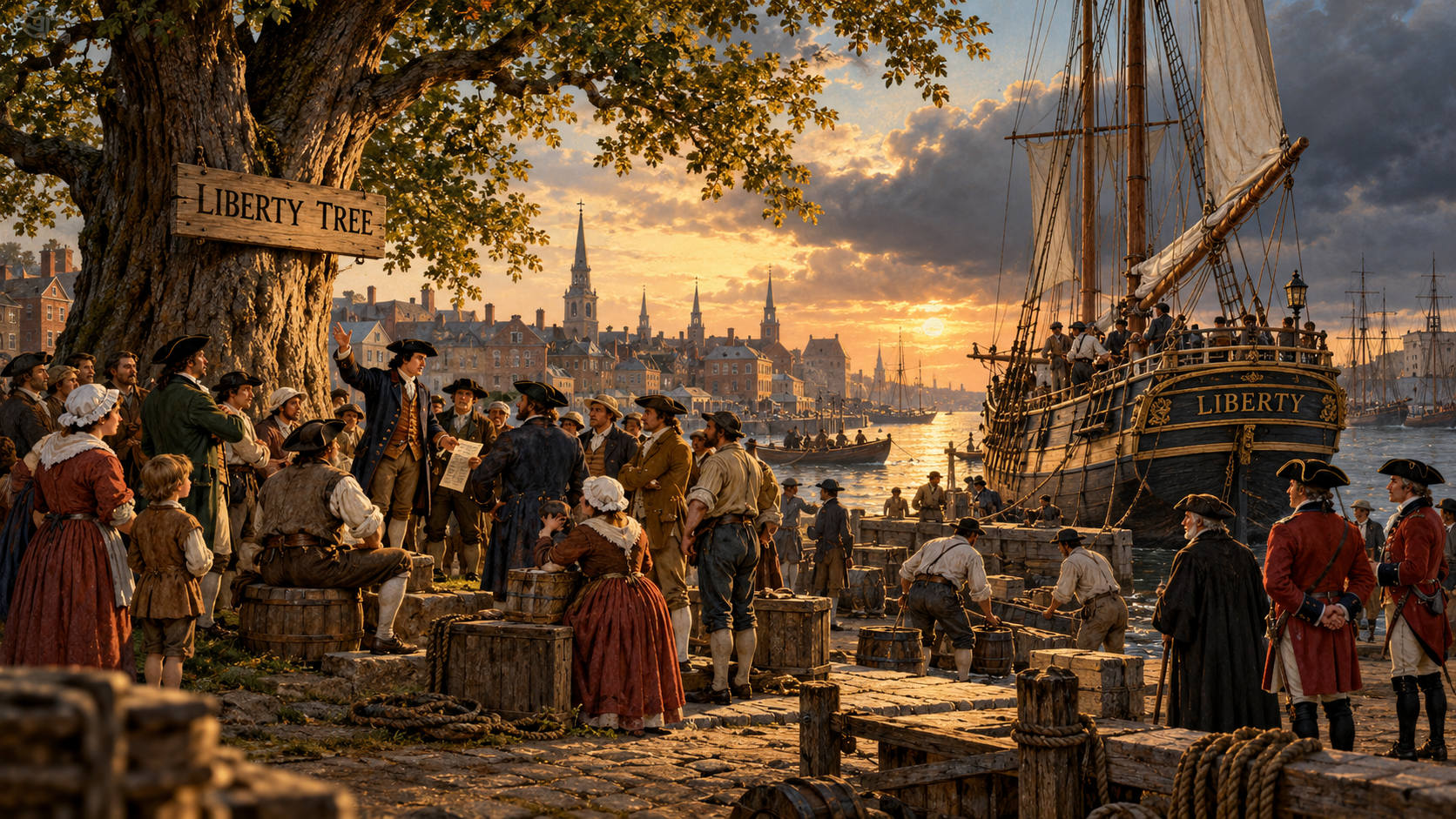
In 1765, colonists gathered beneath a great elm to protest the Stamp Act. The tree became known as the Liberty Tree, and the ground around it as Liberty Hall. It was a meeting place, a signal post and a visible reminder that resistance was taking root.
The British could tax paper, seize property and dissolve assemblies, but liberty had acquired a gathering place.
A Ship Called Liberty
Then there was John Hancock.
Hancock was a wealthy Boston merchant and an increasingly important voice in the resistance movement. One of his ships was appropriately named the Liberty.
On June 10, 1768, British customs officials seized the vessel over allegations involving undeclared Madeira wine. The seizure provoked public outrage and became known as the Liberty Affair. During the protest that followed, colonists dragged a customs official’s boat to the Liberty Tree, placed it on mock trial and later burned it.
A tree called Liberty. A ship called Liberty. A people beginning to understand that liberty would survive only if someone was willing to defend it.
The Vote That Created the Glorious 92
Earlier that year, the Massachusetts House of Representatives had approved a Circular Letter written principally by Samuel Adams and James Otis. It challenged Parliament’s attempt to tax colonists who had no elected representation there and encouraged the other colonial assemblies to stand together.
The British government ordered Massachusetts to rescind the letter. Governor Francis Bernard warned the representatives that if they refused, he would dissolve their assembly.
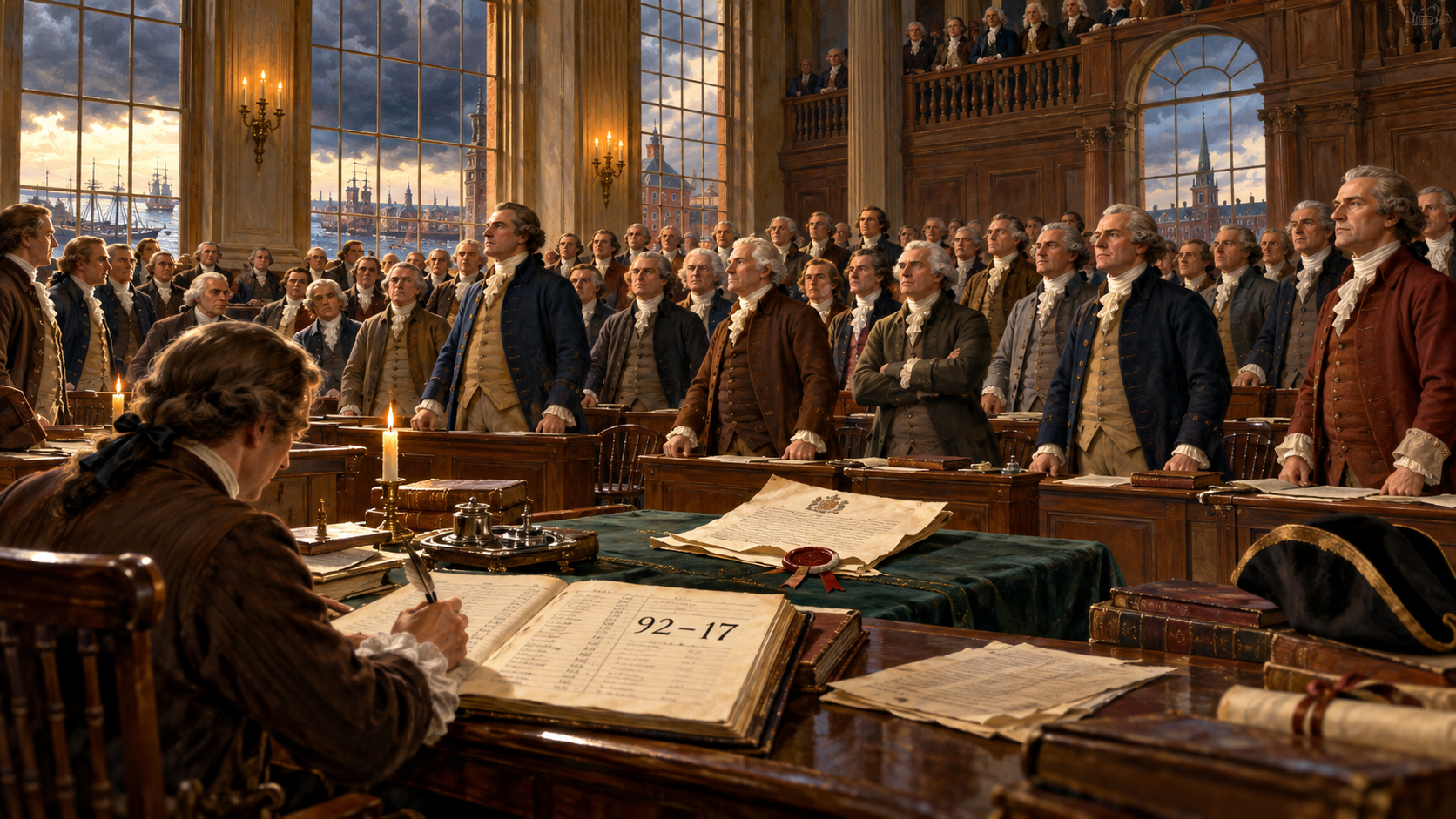
They refused. The vote was 92–17.
Those ninety-two representatives became celebrated as the Glorious 92. Bernard carried out the threat and dissolved the legislature, but dissolving the assembly did not dissolve the principle for which its members stood.
Their message was simple: lawful government could not require free men to abandon their rights merely because resistance had become costly.
The Song of Liberty
The stand of the Glorious 92 and the seizure of Hancock’s Liberty inspired another expression of resistance. John Dickinson—later remembered as the “Penman of the Revolution”—wrote “The Liberty Song” and sent it to James Otis in Boston. Benjamin Edes and John Gill published it in the Boston Gazette on July 18, 1768.
The song helped turn political argument into something ordinary people could remember, sing and share. One verse contained words that still sound unmistakably American:
John Dickinson’s “The Liberty Song” was published in Boston after the seizure of John Hancock’s ship, the Liberty, and the stand of the Glorious 92. Its call to unity gave America one of its earliest patriotic songs—and an early form of the enduring maxim, “United we stand, divided we fall.”
Dickinson’s song did more than celebrate a moment. It explained what the moment required. Liberty would not be preserved by isolated individuals protecting their own interests. Americans would have to join hand in hand. They would have to recognize a common cause and accept a common risk.
That is why the Glorious 92 mattered. Their power was not found in the number alone, but in the unity the number represented.
Why They Were Called Glorious
They were not remembered merely as the Ninety-Two. They became the Glorious 92.
That word elevates their vote beyond ordinary politics. Their glory did not come from wealth, office or military conquest. It came from standing together for a liberty they believed was higher than the government attempting to take it from them.
The two turtles would express that unity perfectly. One carried the number 45. The other carried 47. Neither represented the Glorious 92 alone. Only when joined did they carry the complete message.
John Dickinson had already given that principle words:
“By uniting we stand, by dividing we fall.”
America’s Founders studied the ancient republics of Greece and Rome, but Rome was not the ultimate source of their belief in liberty. Rome showed them forms of republican government—and warned them how republics could decay into corruption and tyranny. Their deeper conviction was that human rights came from God.
The Declaration of Independence does not say government generously grants our rights. It declares that we are “endowed by [our] Creator” with rights that are “unalienable.” It appeals to “the Supreme Judge of the world” and rests upon “a firm reliance on the protection of divine Providence.”
That distinction is foundational. If government creates our rights, government can revoke them. But if our rights come from God, the proper purpose of government is to secure them.
The Glorious 92 were therefore defending more than the authority of one colonial legislature. They were defending a truth that would soon stand at the center of the American founding:
Liberty is not a gift from the state. It is an inheritance from God.
Two Turtles: 45 and 47
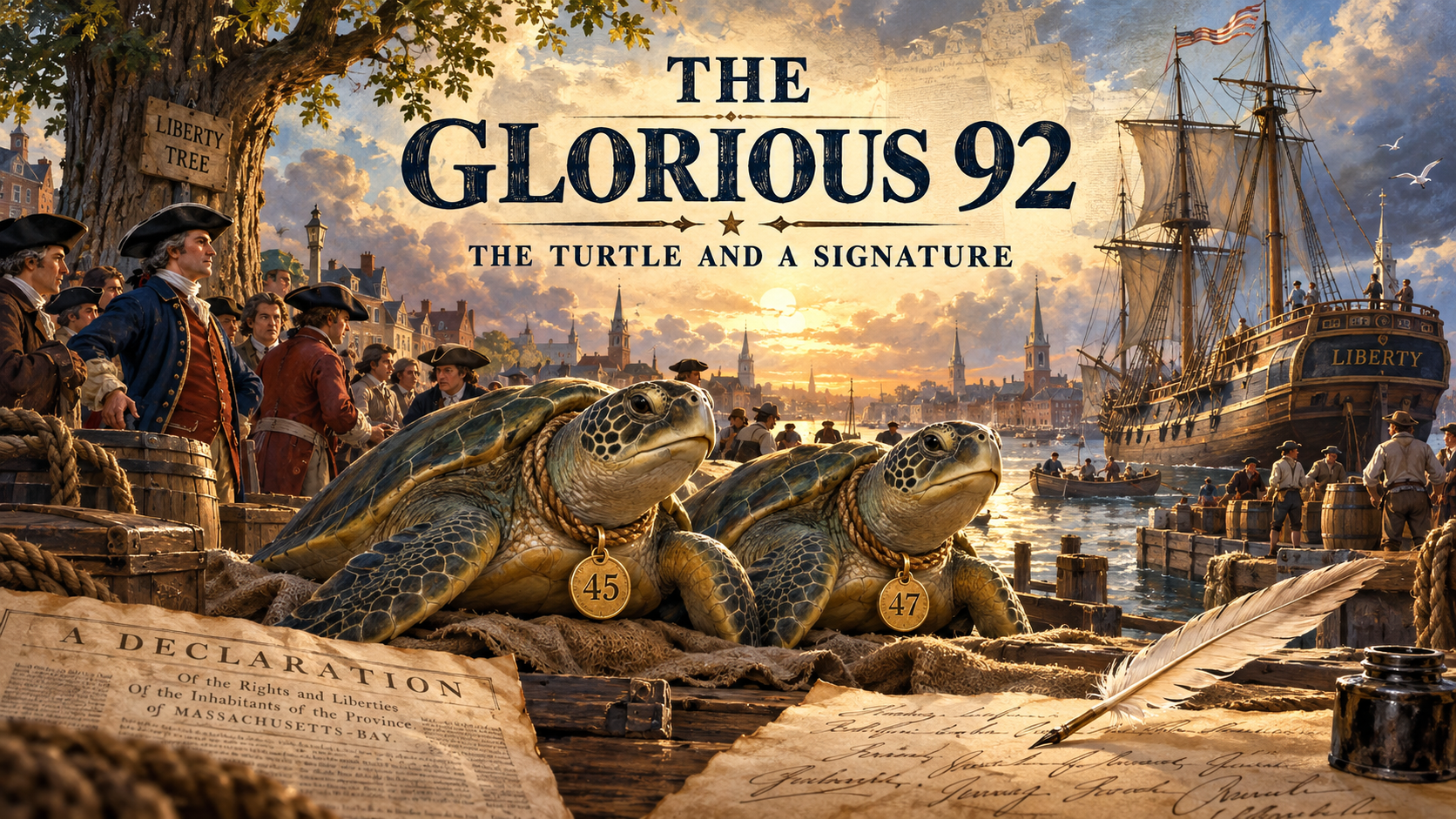
The Sons of Liberty found an ingenious way to connect the Massachusetts stand with John Wilkes’s struggle in England. They sent Wilkes two turtles. One weighed 45 pounds. The other weighed 47 pounds.
Together, they weighed 92 pounds—a living tribute to the Glorious 92.
The 45-pound turtle clearly recalled The North Briton No. 45, the publication that had transformed Wilkes into a symbol of resistance. The 47-pound turtle completed the number of Massachusetts representatives who refused to retreat.
The gesture joined the two struggles across the Atlantic: Wilkes’s defense of speech and due process in Britain, and the colonists’ defense of representation and self-government in America.
At the time, turtles were considered a delicacy in England, and Wilkes was reportedly known to enjoy them. The gift therefore carried humor as well as political meaning.
But there is another numerical detail the Sons of Liberty almost certainly did not know.
The Hebrew Turtle
The modern Hebrew word for turtle is צָב—tzav.
Hebrew letters also carry numerical values:
צ — Tzadi = 90
ב — Bet = 2
צָב — Turtle = 92
The two turtles weighed a total of 92 pounds. They honored the Glorious 92. And the Hebrew word for the creature they selected also equals 92.
The number also leads to Psalm 92, “A Psalm, a Song for the Sabbath day.” It praises God’s faithfulness and declares that the righteous will flourish like the palm tree, planted in the house of the LORD. Even in old age, they will continue to bear fruit and proclaim that the LORD is upright.
Psalm 92 does not mention a turtle, and I do not present it as a prediction of these events. But its themes deepen the convergence: faithfulness across generations, endurance over time and a life that continues bearing fruit. Those words carry special meaning when I think of my grandfather, the small turtle he left me and the unexpected purpose that inheritance has found so many years later.
Is that proof of divine design? I cannot prove that, and I do not need to. It is enough to observe the convergence honestly. The Hebrew connection is real. The history is real. The numbers are real. What they mean is something each reader must decide.
For me, the connection became personal when I thought of the tiny gold turtle inherited from my grandfather—the turtle I have worn on Yom Kippur for decades without ever knowing this story.
The Turtle and the Signature
John Hancock is now remembered above all for his signature. It was so bold and unmistakable that “put your John Hancock here” became an American expression meaning “sign your name.”
But before that famous signature appeared on the Declaration of Independence, Hancock’s name was already attached to this earlier struggle. His ship was the Liberty. Its seizure helped inspire “The Liberty Song.” The song celebrated the same spirit of unity demonstrated by the Glorious 92.
Donald Trump also has one of the most distinctive signatures in modern American politics. He frequently holds signed executive orders before the cameras, visibly presenting the moment when words become action.
That gives this story two “John Hancocks”: John Hancock the patriot, whose ship Liberty became a symbol of resistance; and Donald Trump’s unmistakable “John Hancock,” belonging to the only president numbered both 45 and 47.
Once again the same numbers appear—not in an invented code, but in documented history.
The Right to Choose Our Representatives
There is another connection running through this story: the right of the people to choose who represents them.
The Massachusetts Circular Letter challenged taxation imposed upon colonists who had no elected representation in Parliament. The Glorious 92 refused to withdraw that protest, even when threatened with the dissolution of their assembly.
John Wilkes soon confronted an even more direct violation of representative government. The voters of Middlesex elected him to Parliament repeatedly. Parliament repeatedly expelled him. In 1769, after Wilkes decisively defeated Henry Luttrell, the House of Commons declared Luttrell the winner and seated the candidate the voters had rejected.
The issue was no longer merely whether Wilkes had written something offensive. The question was whether the government could disregard an election and substitute its own choice for the choice of the people.
That history makes the numbers 45 and 47 even more striking. Donald Trump’s political life has been shaped by disputes over elections, voter confidence, representation and the power of unelected institutions. His return as the 47th president occurred because Americans were given another opportunity to render their judgment at the ballot box.
The connection is therefore larger than two turtles and three numbers. It reaches the central principle of representative government:
The people must be free to choose—and their choice must be honored.
The Establishment Versus the People
The struggle of the Glorious 92 was not simply a disagreement over one tax. It was a confrontation between representative government and a distant political establishment that believed it knew better than the people it governed.
British ministers imposed policies from across the Atlantic. Royal governors enforced them. Customs commissioners searched ships and seized property. Parliament demanded that elected representatives reverse their own decision. When they refused, their assembly was dissolved.
John Wilkes confronted the same machinery in Britain. The government prosecuted his writing, searched his private papers and repeatedly rejected the expressed choice of the Middlesex electorate. Those in power claimed to be defending order. Wilkes and his supporters believed they were defending liberty from an establishment that had become insulated from the people.
The language has changed, but the tension remains familiar. Today, Donald Trump and his supporters call the modern version “the Swamp”—the permanent alliance of bureaucracy, political influence, media power, corporate interests and unelected institutions that can continue exercising authority regardless of whom the people elect.
The globalist dimension adds another parallel. The American colonists objected to decisions being imposed by a governing center across the ocean, one whose priorities were increasingly detached from their own communities. Today’s sovereignty movement objects when international institutions, multinational interests and unelected organizations appear to override the interests and decisions of individual nations.
The historical circumstances are not identical. But the underlying question is remarkably similar:
Who ultimately governs—the people and their elected representatives, or an entrenched establishment that believes itself entitled to overrule them?
That question united John Wilkes, John Hancock and the Glorious 92. It also explains much of Donald Trump’s appeal as both the 45th and 47th president.
Where the Paths Meet
The command of Jubilee was to “proclaim liberty throughout all the land unto all the inhabitants thereof.” Those words from Leviticus 25:10 would eventually be engraved upon America’s Liberty Bell.
Jubilee came in the fiftieth year. It meant more than freedom from government restraint. It meant release from bondage, the return of inheritance and the restoration of what had been lost. It reminded rulers, creditors and institutions that their authority was never absolute. The land and the people ultimately belonged to God.
That gives the Glorious 92 even greater significance. They stood against a government that demanded that elected representatives withdraw their defense of the people’s rights. They refused. Their stand belonged to the same understanding of liberty proclaimed in Jubilee: human authority must remain beneath the authority of God.
Then came the two turtles—one weighing 45 pounds and the other 47. Neither represented the Glorious 92 alone. Only together did they become 92. Only together did they carry the complete message.
John Dickinson had already given that principle words:
“By uniting we stand, by dividing we fall.”
Now consider where America stands today.
The biblical Jubilee comes at fifty years. In 2026, America celebrates 250 years since the Declaration of Independence:
50 × 5 = 250
Five symbolic Jubilees of American liberty
And at this precise anniversary, America is led by the only president numbered both 45 and 47—the same two numbers carried by the turtles that together honored the Glorious 92.
A newspaper numbered 45. A ship called Liberty. A song calling Americans to unite. Ninety-two representatives defending the people’s right to be represented. Two turtles weighing 45 and 47 pounds. The Hebrew word צָב—tzav, turtle—equaling 92. And one president bearing both numbers as America reaches its 250th year—five times fifty.
Jubilee is the language of liberty, return and restoration. Those are also the defining themes of this moment.
Perhaps this is what a prophetic pattern looks like—not a direct prediction, but separate pieces of history whose relationship becomes visible only when the appointed moment arrives.
I began this story with the one possession I have from the grandfather I never had the opportunity to know: a tiny gold turtle with emerald eyes, handmade from the gold he used in his dental practice. I have worn it on Yom Kippur for decades without knowing where its image might someday lead me.
Now it reminds me of Jubilee, the Glorious 92 and the truth at the foundation of America:
Liberty is not a gift from the state.
It is an inheritance from God.
I cannot prove that this convergence is prophetic. I can only show you what I discovered.
Now you can decide for yourself.
Sources and Further Reading
- Massachusetts Commonwealth Museum, “The Circular Letter and the ‘Glorious 92.’”
- Massachusetts Historical Society, The Coming of the American Revolution, 1764–1776.
- Museum of Fine Arts Boston, “Sons of Liberty Bowl.”
- Dickinson College Archives & Special Collections, “The Liberty Song (1768).”
- Library of Congress, materials on John Wilkes, the colonial press and the American founding.
- National Park Service, “John Hancock.”