
A PERSONAL ESSAY
MESSIANIC JEWS
ARE NOT TO BE FEARED
Messianic Jews who love Israel, Torah and the Jewish people are not enemies of Judaism. Other Jews may reject their beliefs, but disagreement is not danger.
By Jonah
A BILLBOARD AND AN UNEXPECTED FEAR
I have close Jewish friends who recently noticed billboards along a highway placed by a Messianic Jewish organization. Their reaction stirred my heart and became the reason I wanted to write this essay.
They felt threatened – not physically threatened, but threatened as Jews. The very suggestion that a Jew could believe in Yeshua seemed to challenge Jewish identity itself. I understand that this reaction did not arise from nowhere. Jews carry centuries of painful memories involving forced conversions, persecution and terrible acts committed beneath Christian symbols. Those wounds cannot simply be dismissed.
But a billboard is not a forced conversion. Knowing that Messianic Jews exist does not endanger Judaism. Reading a statement with which we disagree does not erase our identity. A confident Jewish identity should be able to encounter an idea without fearing that the encounter itself will take something away from us.
My purpose is not to demand agreement. It is to ask why Jewish belief in Yeshua must be treated as a threat before the Jewish believer is even heard.
MESSIANIC JEWS HAVE NOT STOPPED BEING JEWS
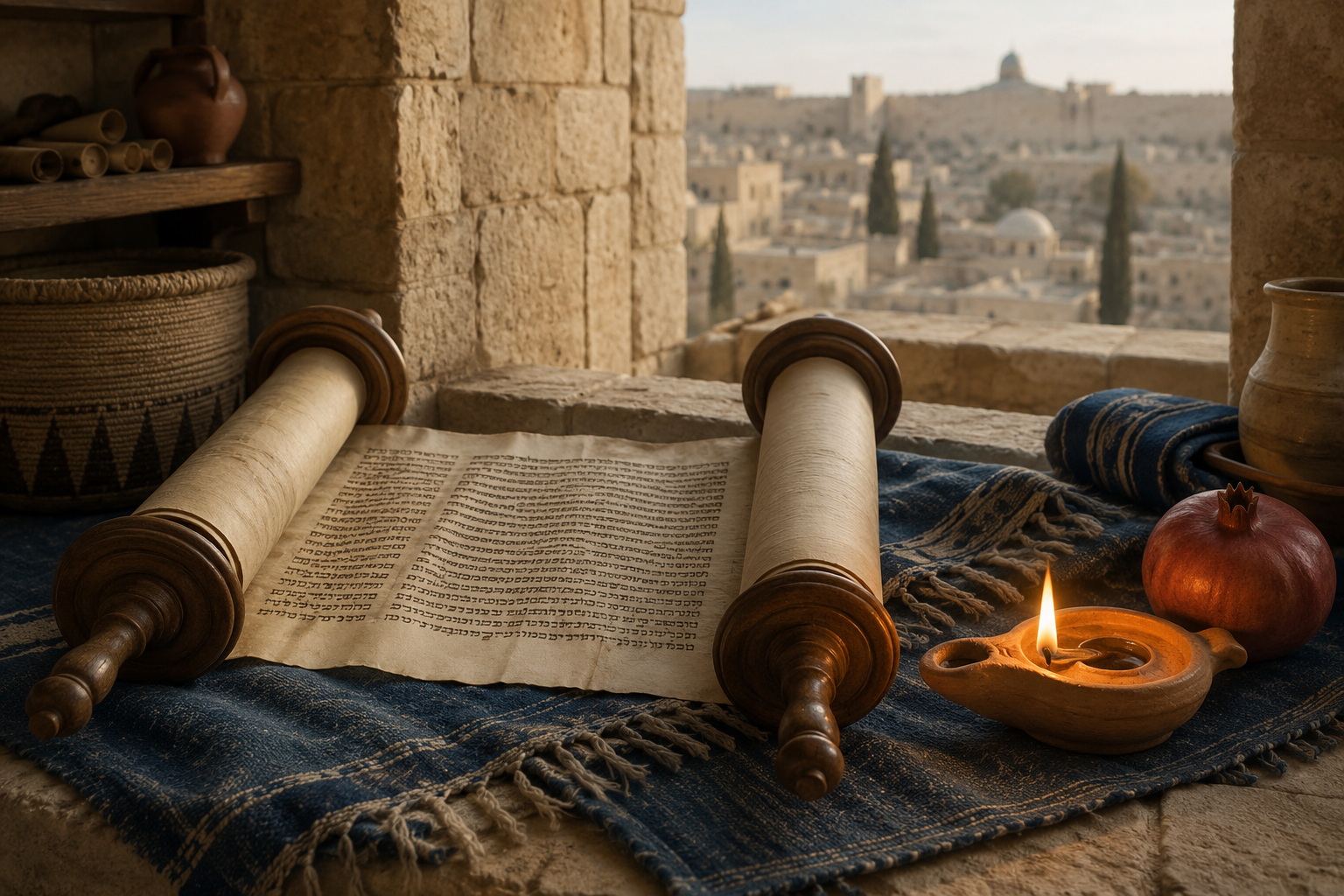 Messianic Jews are Jewish men and women who believe that Yeshua – Jesus – is the Messiah promised in Israel’s Scriptures. Most do not believe this conclusion means that they have stopped being Jewish. They continue to identify with the Jewish people, remember Jewish history, celebrate Jewish holidays, study the Torah and stand with Israel.
There is no single Messianic Jewish personality or background. Some came from secular or liberal Jewish homes. Others came from Reform, Conservative, Orthodox or Hasidic backgrounds. Some Messianic congregations are highly observant; others resemble evangelical churches while retaining Jewish language and customs. They do not all agree about how Torah should be practiced.
That diversity matters. It would be unfair to define every Messianic Jew by the least Jewish-looking congregation, just as it would be unfair to define all Judaism by one synagogue or one denomination. The belief they share is not that the Jewish story should disappear. It is that the Jewish story points to Yeshua.
Reliable numbers are difficult to establish because definitions differ. Frequently cited estimates have ranged from tens of thousands to roughly 350,000 Jewish believers in Yeshua worldwide. Some recent Messianic sources claim higher totals, but there is no authoritative global census. The precise number is less important than the reality: these Jews exist, they have not vanished, and many continue to love both Israel and the Jewish people.
YESHUA DID NOT COME TO MAKE JEWS UN-JEWISH
The fear of Messianic Judaism often begins with a false picture of Yeshua. Jesus is imagined as the founder of a foreign Gentile religion who came to pull Jews away from Torah. That is not how he appears in the Gospel accounts.
Yeshua was born a Jew. He was circumcised, taught in synagogues, worshipped at the Temple, observed the biblical festivals and argued from Torah and the Prophets. His earliest followers were Jews. The first great debate among his followers was not whether Jews could remain Jews. It was whether Gentiles had to become Jews in the flesh before they could enter the movement.
Yeshua said plainly, ‘Think not that I am come to destroy the law, or the prophets: I am not come to destroy, but to fulfil’ (Matthew 5:17). He then spoke of the permanence of even the smallest letter. Whatever a person concludes about his claims, it is difficult to make him the enemy of the Torah from which he continually taught.
He did not come to convert Jews out of Judaism into a religion called Christianity. That later religious division did not yet exist. His call to Israel was teshuvah – repentance and return to God. His Jewish followers believed that recognizing Israel’s Messiah brought them further into Israel’s story, not out of it.
THE JEWISH FOLLOWERS WHO TOOK TORAH TO THE WORLD
The first followers of Yeshua did something extraordinary: Jewish witnesses carried the God and Scriptures of Israel throughout the Roman world. Their Bible was the Torah, the Prophets and the Writings. They explained Yeshua through Moses, David, Isaiah and the other prophets.
Through them, Gentiles learned that there is one Creator; that humanity bears moral responsibility before Him; that idolatry, murder, adultery and theft are wrong; that we must love God and our neighbor; and that the history of Abraham, Israel and Jerusalem concerns the nations as well as the Jewish people.
The Gentiles were not required to become ethnic Jews. They were invited to worship Israel’s God through Israel’s Messiah. In that sense, the Jewish followers of Yeshua helped fulfill the promise to Abraham that all families of the earth would be blessed through him, and Isaiah’s vision that Torah would go forth from Zion.
Christianity did not originally erase the Jewish story. Jewish followers of Yeshua carried that story to the nations.
THE MESSIAH IS NOT A FOREIGN IDEA
Belief in a Messiah is not foreign to Judaism. Jewish hopes for a Davidic deliverer were especially intense under Roman occupation. Those expectations helped shape the world in which Yeshua appeared and later became attached to Simon bar Kokhba during the revolt of 132-136 CE.
The Jewish-Roman wars were not caused solely by messianic belief. Roman taxation, corrupt administration, religious provocation and the longing for national sovereignty were fundamental causes. Yet messianic expectation helped convince some Jews that divine deliverance might come through military resistance. The first great revolt ended with Rome’s destruction of the Temple in 70 CE and the cessation of its sacrificial service.
There is a tragic irony in what followed. The final great Jewish revolt against Rome gathered around Simon bar Kokhba, whom Rabbi Akiva and others apparently regarded as the Messiah. Its defeat devastated Judea, intensified the scattering of the Jewish people and widened the separation between rabbinic Jews and Jewish followers of Yeshua. But the messianic leader associated with that final catastrophe was not Yeshua. It was Bar Kokhba. Yeshua raised no army. He taught people to pay what belonged to Caesar, to go the extra mile when compelled, and to reject the sword as the means by which his kingdom would come.
The Gospels place Barabbas and Yeshua side by side. Barabbas had participated in insurrection; Yeshua had not. Certain chief priests persuaded the crowd to request Barabbas, while Pilate repeatedly said that he found no fault in Yeshua. Rome nevertheless authorized and carried out the crucifixion.
This history should never become an accusation against ‘the Jews.’ Yeshua, his apostles and his earliest followers were Jews. Joseph of Arimathea, a member of the council, did not consent to the decision against him. Nicodemus demanded that he receive a fair hearing. After the resurrection, Gamaliel warned the council that if the movement came from God, they would not be able to overthrow it.
THE ROAD THAT HISTORY DID TAKE
We cannot prove what would have happened if more of Israel had received Yeshua. Counterfactual history can never reveal the road not taken. Yet Yeshua wept over Jerusalem because it had not recognized ‘the things which belong unto thy peace’ and warned that destruction was coming.
He did not destroy the Temple. Rome destroyed it in 70 CE after the revolt. Yeshua worshipped there, called it his Father’s house, defended its holiness and foretold what would happen to it. His issue was not the existence of the Temple but the corruption and misuse of sacred authority.
It is at least possible that if his way of repentance, restraint and peace had prevailed, the revolt and destruction might have been avoided. That is a theological possibility, not a provable historical fact. What is certain is that the peaceful Jewish teacher was not the one who raised the army that brought Rome against Jerusalem.
JUDAISM ALSO CHANGED
There is another misunderstanding worth confronting. Messianic belief is often described as a new departure from an otherwise unchanged Judaism. But Judaism itself changed dramatically after the Temple was destroyed.
Second Temple Judaism centered upon the Temple, its priesthood, sacrifices, pilgrimage festivals and laws of purity connected with the sanctuary. It also contained several competing Jewish movements. After 70 CE, the sacrificial system ceased, the Sadducean priestly leadership disappeared and Jewish life had to be reorganized without its central sanctuary.
Prayer, Torah study, repentance and mitzvot were already important before 70. They did not suddenly appear after the destruction. But the rabbinic Judaism that gradually became dominant developed in a world without the Temple. The Mishnah was compiled around 200 CE, followed later by the Jerusalem and Babylonian Talmuds.
Christianity also developed dramatically, especially as Gentiles became the majority. Neither modern rabbinic Judaism nor later institutional Christianity existed in its present form during Yeshua’s lifetime. Both claimed continuity with Israel’s Scriptures while developing different answers to the loss of the Temple.
This does not prove the claims of Messianic Judaism. It does, however, challenge the idea that Messianic Jews have abandoned an entirely unchanged first-century faith for something invented by Yeshua. The actual history is far more complicated.
HOW THE DIVIDE BECAME A WALL
 The separation between Jews and followers of Yeshua did not happen in a single moment. It developed gradually as Gentiles entered the movement, Jerusalem and the Temple were destroyed, rabbinic Judaism took shape, and Jewish believers in Yeshua became a smaller part of an increasingly Gentile church.
The Bar Kokhba revolt widened the division. Jewish followers of Yeshua could not easily recognize another Messiah, and Christian sources report that some were punished for refusing to support the revolt or deny Yeshua. By the fourth century, Christianity was already largely Gentile.
Constantine did not invent Christianity or create the Catholic Church from nothing. But imperial Christianity widened and institutionalized the separation. Christian observance of the resurrection was deliberately separated from dependence upon the Jewish calendar, and contemptuous language about Jews entered imperial religious policy. In later centuries, Jews often encountered the name of Jesus through coercion and persecution rather than through his own words.
That history explains why some Jews recoil at his name. The reaction deserves compassion. But understanding the origin of a fear does not require us to preserve every conclusion produced by it. The conduct of Christian societies should not be projected automatically onto Jewish believers in Yeshua today.
READ THE RABBI BEFORE REJECTING THE JEW
Messianic belief does not inherently require Jews to reject Torah. After all, Yeshua taught Torah.
Many Messianic Jews say that faith in him led them to study Torah, Hebrew, the prophets and the biblical festivals more seriously than before.
They ultimately make a greater claim than calling Yeshua an admirable rabbi: they believe he is Israel’s promised Messiah. Other Jews are free to reject that conclusion. But honest disagreement should begin with an accurate understanding of both Yeshua and the Jewish people who believe in him.
At the very least, Jews should be able to learn what this first-century Jewish teacher said without being told that the act of reading him is a betrayal. And they should be able to acknowledge Messianic Jews without assuming that those Jews are trying to destroy Israel or erase Jewish identity.
NOT A THREAT
Messianic Jews are not a threat to the Jewish people. They are Jews who have reached a different conclusion about Yeshua. Many love Torah, remain devoted to their Jewish identity and stand firmly with Israel. Their existence does not prevent any other Jew from practicing Judaism or rejecting their beliefs.
No Jew should be coerced into faith, and painful Jewish memories of Christian coercion must be respected. But coercion is not the same as peaceful witness. A public statement of belief is not an attack. A conversation is not an erasure. A Jewish person who believes in Yeshua is not automatically an enemy of the Jewish people.
We may disagree strongly about the Messiah. Jews have disagreed about profound questions throughout our history. But disagreement does not justify fear, and belief in Yeshua should not automatically be treated as Jewish betrayal.
Messianic Jews are not asking the Jewish people to disappear. They believe that the Jewish Messiah has appeared. One may reject that belief. One may argue against it. But Jews who love Israel and the Jewish people are not to be feared merely because they believe that Yeshua is the Messiah.
NOTES
1. Scripture references are quoted from the King James Version.
2. Estimates of Messianic Jews vary with definitions. The frequently repeated worldwide figure of about 350,000 is approximate, not a census.
3. Rabbi Akiva’s identification of Bar Kokhba as Messiah is preserved in later rabbinic tradition. The separation of Judaism and Christianity is likewise understood as a long, uneven process, not a single event created by Constantine.