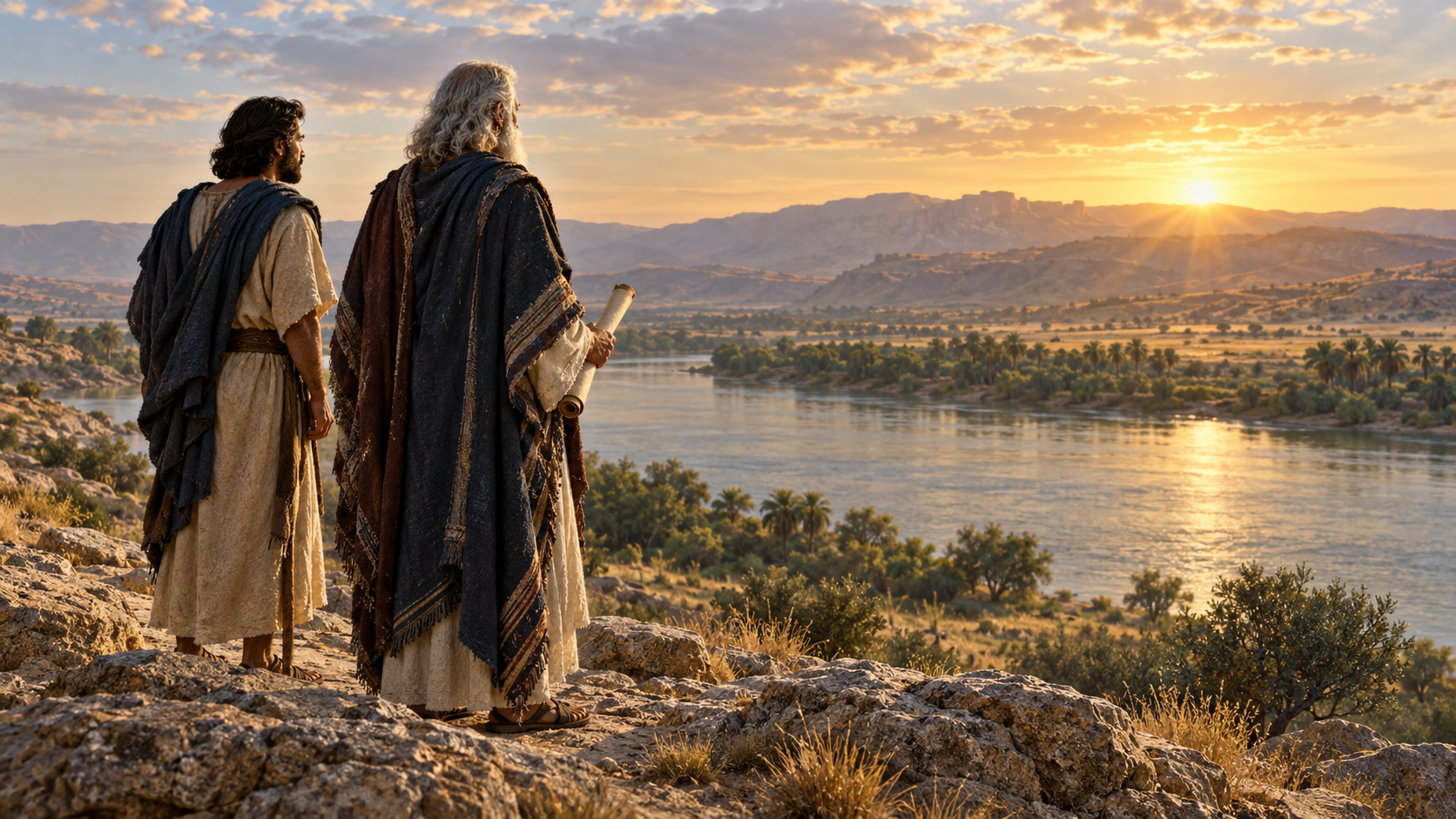
In the biblical story, there are primary parallels between the Tenach and the Gospels where an earlier saving act or promise is taken up, intensified, and fulfilled in a later, decisive event centered on the Messiah. These are not preacher’s curiosities or casual echoes. They are structural hinges in the canon where life‑and‑death stakes reappear in a new key, demanding a fresh, decisive response. Here are three such parallels:
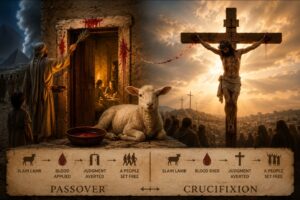
1. Passover ↔ Crucifixion
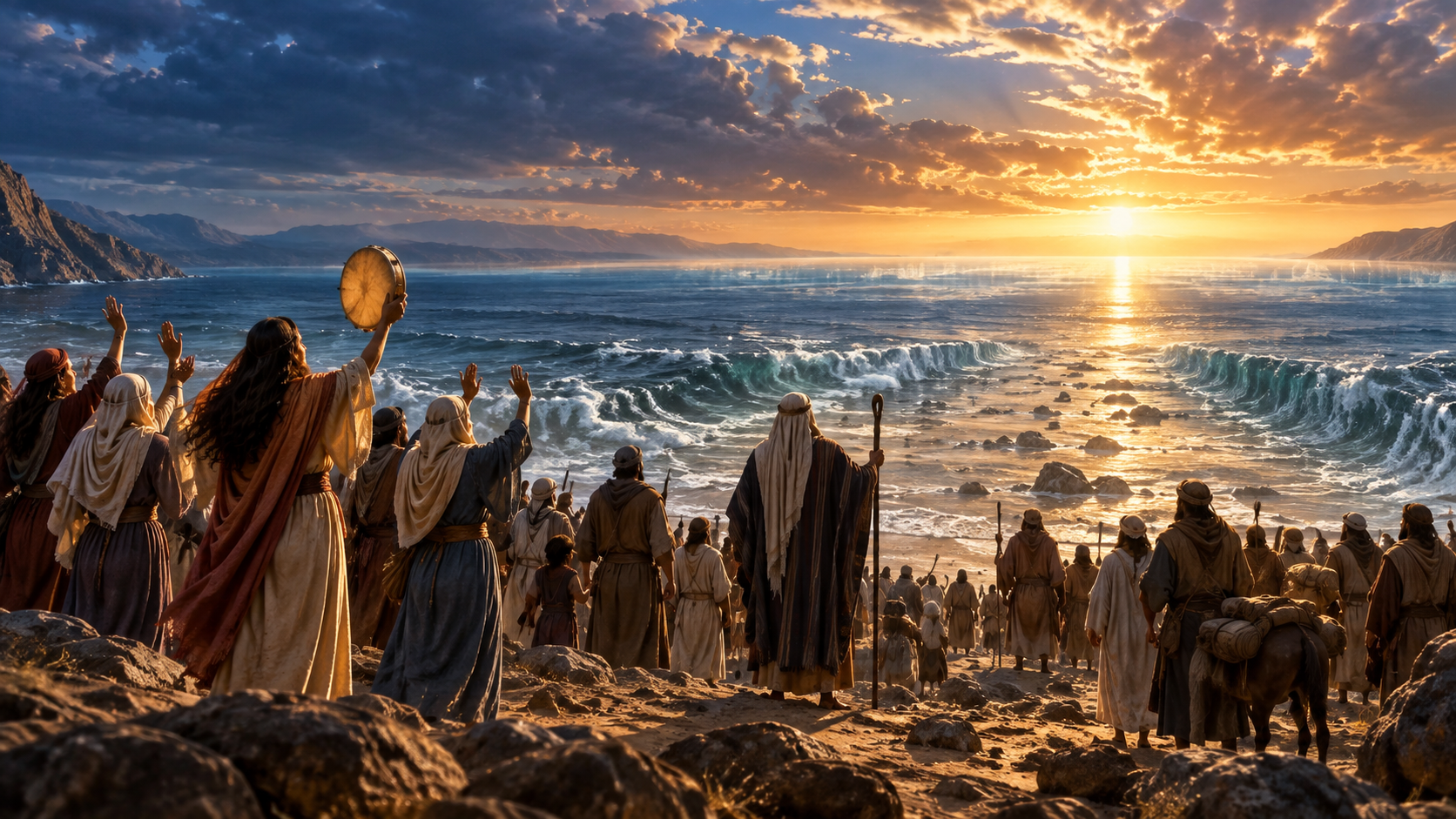
At the first Passover, Israel is delivered from slavery by the blood of a spotless lamb. Judgment passes over every house marked by that blood, and the people are launched into an exodus out of Egypt. Centuries later, at the cross, the new Passover Lamb gives His own blood, inaugurating a new covenant and a greater exodus from sin and death. The pattern is the same: salvation through a slain lamb, blood applied, judgment averted, a people set free. The second moment does not just resemble the first; it climactically fulfills it.
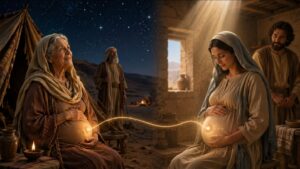
2. Birth of Isaac ↔ Birth of Yeshua
The womb of Sarah, closed by age, and the womb of Mary, closed by virginity, both lay beyond natural hope of pregnancy; in each case, conception could only be attributed to God’s initiative. Abraham and Joseph both stand as men who could, in principle, father a child; yet in each case the son in question must be received by faith as God’s child rather than simply theirs—Isaac as the promised seed, Yeshua as the Spirit‑conceived Son.
These combined parallels show Isaac and Yeshua as uniquely promise‑sons whose role is to carry and concentrate the covenant future: Isaac as the heir through whom Abraham’s line and land‑promise continue, and Yeshua as the singular Seed in whom the Abrahamic blessing for all nations comes to its fulfillment.
3. Deuteronomy 30 ↔ Matthew 23:39
In Deuteronomy 30, at the edge of the Promised Land, God sets “life and death, blessing and curse” before Israel, tying their entire corporate future—land, prosperity, longevity, exile, restoration—to a heart‑turn of repentance and obedience.
Over a thousand years later, in Matthew 23:39, Jesus stands in Jerusalem and again sets Israel’s future—desolation or restoration, absence or renewed sight of the Lord—on the hinge of a heart‑turn and a specific confession: “Blessed is he who comes in the name of the Lord.” Here too, the later moment does not merely echo the earlier; it takes the entire Deuteronomic pattern and re‑speaks it in the mouth of the incarnate Lord.
Of these three parallel pairs, it is this third pair I want to linger over in this blog.
 Deuteronomy 30:6—And the Lord your God will circumcise your heart and the heart of your descendants, to love the Lord your God with all your heart and with all your soul, that you may live.
Two Ends of One Covenant Line
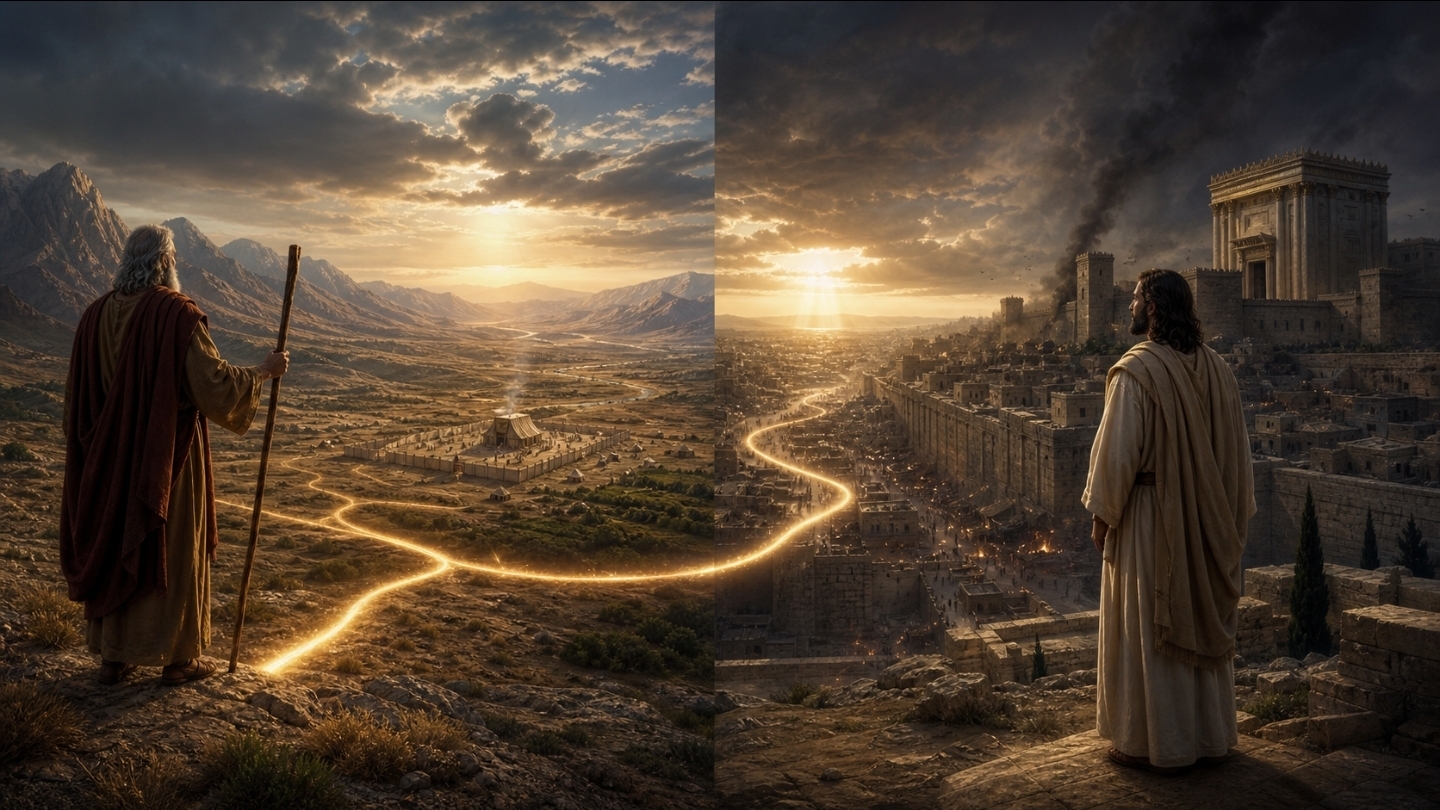
Deuteronomy 30 and Matthew 23:39 lie at opposite extremes of the same covenant line, and both are positioned at the culmination of a journey—Moses’ and Yeshua’s. Deuteronomy 30 gathers Moses’ final words at the end of his long path with Israel, from call, through Egypt, wilderness, and repeated rebellion, to the brink of the land; at precisely that point, he sets life and death, blessing and curse before the people. Matthew 23:39 gathers Yeshua’s final public words at the end of His earthly ministry, from baptism, through teaching, signs, rejection, and conflict, to the brink of His passion; at precisely that point, He declares the house desolate and ties any future sight of Him to Israel’s confessing, “Blessed is he who comes in the name of the Lord.” In each case, the covenant line reaches a critical summit in the mouth of a leader who has walked the whole way with the people, and from that summit the future of Israel’s story is set.
Deuteronomy 30 is spoken by Moses to “all Israel” on the plains of Moab. Israel stands at the threshold of the land. Moses has just laid out blessings and curses. Now he looks far ahead: Israel will experience both blessing and curse; she will be scattered among the nations; then, in exile, she will “call these things to mind,” “return to the Lord,” and be gathered and restored. Crucially, the Lord Himself will “circumcise your heart and the heart of your offspring, so that you will love the Lord your God… that you may live.” The chapter climaxes with the explicit polarity: “I have set before you life and death, blessing and curse. Therefore choose life.”
Matthew 23:37–39 is spoken by Jesus at the end of His public ministry, in or near the temple courts. After a series of woes on the scribes and Pharisees, He laments: “Jerusalem, Jerusalem, who kills the prophets and stones those sent to her.” He pronounces, “See, your house is left to you desolate,” and then adds a future‑conditioned promise: “For I tell you, you will not see me again until you say, ‘Blessed is he who comes in the name of the Lord.’” This word stands on the brink of the cross and the looming destruction of Jerusalem in 70 CE, while still opening a door into an eschatological future.
Deuteronomy looks forward from the beginning of Israel’s story. Matthew speaks from the far side of that story, after the pattern of disobedience, curse, and prophetic rejection has been played out. Both moments articulate the same divine economy—the same pattern of God’s dealings with Israel.
Causality: Downstream from Israel’s Actual History
Neither text arrives in a vacuum. Each is a causal result of Israel’s actual choices.
Deuteronomy 30 presupposes that “all these things”—the blessings and the curses—have come upon Israel. Moses’ prophecy anticipates disobedience, idolatry, exile, and then, only then, a Spirit‑wrought return and restoration. The promise comes as a word on the far side of anticipated failure. It is grace speaking into the wreckage that the covenant itself has predicted.
Matthew 23:39 presupposes a different but related history: generations of killing the prophets, persecuting the righteous, and now rejecting the very One who has come in the name of God promised Salvation. When Yeshua says “your house is left to you desolate” it is not arbitrary; it is the judicial consequence of that history. And the “until you say…” assumes that this judged people may, by a miracle of grace, one day arrive at a different confession.
In both cases, “so much” has preceded the moment. Israel has been given time, experience, revelation, signs and wonders—an over‑abundance of reasons to trust. Yet the decisive requirement in both texts is still faith, not bare experience.
The Heart‑Reversal: Circumcision and Confession
At the center of both passages lies a demanded reversal, a fundamental shift of heart.
Deuteronomy 30 describes Israel in exile “calling to mind” the covenant blessings and curses and “returning to the Lord” with all heart and soul. But that return is grounded in God’s own action: “the Lord your God will circumcise your heart… so that you will love the Lord your God with all your heart and with all your soul, that you may live.” The hinge is a God‑given change at the core of Israel’s being.
Matthew 23:39 envisages a future when the same Jerusalem that now refuses to be gathered will instead say, “Blessed is he who comes in the name of the Lord.” The hinge there is also a heart‑reversal: from rejecting the Messiah to recognizing and blessing Him, from deafness to doxology. The language is different, but the logic is the same. Deuteronomy names the inner surgery (“circumcise your heart”); Matthew shows its fruit (a confession of the One who bears the divine Name).
Primary Pivotal Parallels always turn on this kind of Spirit‑given reversal. God acts, the heart is changed, and everything downstream from that change looks different.
Repentance, Worship, and the Axis of Life and Death
In both texts, repentance is fundamentally a matter of worship, and worship is the axis of life and death.
Deuteronomy 30 frames the alternatives this way: if Israel’s heart turns away and is drawn to bow down to other gods and serve them, the end is death and loss of the land. If she loves the Lord, listens to His voice, and clings to Him, the result is life, fruitfulness, and long dwelling in the land promised to the fathers. Life is defined as rightly ordered love and loyal obedience to the true God; death is defined as misdirected worship.
Matthew 23 exposes a more religious form of idolatry. The leaders cherish the status of sitting in “Moses’ seat,” the prestige of the temple and its gold, and the applause of the crowds, while refusing to honor the prophets and the Prophet to whom they all pointed. The verdict “your house is left to you desolate” falls on this misdirected worship. And the only way out is a future repentance that is explicitly doxological: “Blessed is he who comes in the name of the Lord.” The axis again is worship—away from a self‑serving religious system, toward the true King.
Deuteronomy calls this “choosing life.” Matthew calls it finally blessing the One who comes in the Lord’s Name. The reality is the same.
Deuteronomy calls this “choosing life.” Matthew calls it finally blessing the One who comes in the Lord’s Name. The reality is the same.
Deuteronomy calls this “choosing life.” Matthew calls it finally blessing the One who comes in the Lord’s Name. The reality is the same.
Having traced the shape of repentance in this way, we can now see how God himself bridges the gap between repeated failures and the future he has spoken. He does this not only by calling Israel to turn, but by sending prophets to stand at the hinge points of history and utter his own decisive word.
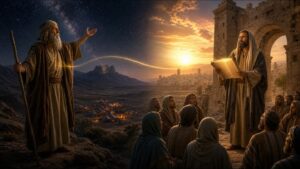
Prophets Bridge the “Say It” Parallel Arc
Between the long arcs of repeated, parallel moments in Israel’s story, God does not leave the ends of those parallels dangling; he spans them with prophets. At each crucial juncture, God raises up a human voice to re‑utter his own word, to interpret the past, and to announce the shape of the future.
Ezekiel and the Promise of a New Heart
This prophetic bridging is especially clear in Ezekiel’s oracles of renewal. Where the Torah sets life and death before Israel and demands obedience, Ezekiel speaks of God placing new life within a people who have proven incapable of faithfulness. In Ezekiel 18:31, the call is still framed as an imperative—“Make yourselves a new heart and a new spirit”—exposing the impossibility of self‑generated righteousness. In Ezekiel 36:26, that tension resolves in sheer grace: God himself promises, “I will give you a new heart and a new spirit,” shifting the covenant’s fulfillment from human effort to divine initiative. The prophet thus stands as a bridge between the older covenant summons and the future reality in which the conditions of the covenant are met by God’s own transforming action.
Jacob’s Trouble and the End of Self-Reliance
This divine initiative is not abstract; it is historically and corporately embodied in what Scripture names as Jacob’s trouble. Just as Jacob the patriarch only receives his blessing at the point where he is wounded, emptied, and forced to give up his schemes, so corporate “Jacob”—the nation—must be brought to the end of its own strength. The time of Jacob’s trouble marks the moment when Israel, as a people, can no longer secure its future through political maneuvering, military power, or religious performance. It is precisely in that extremity, in the exhaustion of self‑reliance, that the prophetic word about a new heart and spirit moves from promise to reality. The end of Jacob is the beginning of grace.
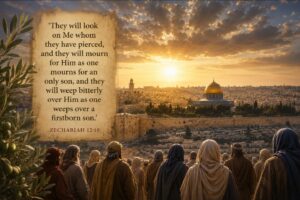 Zechariah 12:10—And I will pour on the house of David and on the inhabitants of Jerusalem the Spirit of grace and supplication; then they will look on Me whom they pierced. Yes, they will mourn for Him as one mourns for his only son, and grieve for Him as one grieves for a firstborn.
Zechariah 12:10 carries this trajectory forward into a national, eschatological awakening. The prophetic voice declares that God will pour out “a spirit of grace and supplication,” and the people will look upon the One they have pierced and mourn. Here the “Say It” arc reaches a climactic moment: God’s self‑giving is recognized, and Israel’s grief becomes the gateway to restoration. What Ezekiel foretells as inward renewal—a new heart and a new spirit—is here accompanied by a new sight: the capacity to see the pierced One rightly, to name their own history truthfully, and to cry out in dependence. In this sense, Zechariah 12:10 is the national counterpart to Jacob’s night of wrestling; it is the collective recognition that blessing can only come through surrender to the wounded, gracious God.
With this prophetic bridge in view—from Moses to Ezekiel, from Jacob’s trouble to Zechariah’s national mourning—we are prepared to see how God’s spoken promises open into a shared kingdom: a reality in which his covenant word does not merely confront Israel, but gathers Jew and Gentile alike into the life of the King himself.
Shared Thresholds: Land and Kingdom
These two moments stand at thresholds into promised domains.With this prophetic bridge in view, we can now turn to the way God’s promises open into a shared kingdom. These two moments stand at thresholds into promised domains.
Deuteronomy 30 is positioned at the threshold of the land, and also foreshadows a later re‑entry. Israel is about to cross the Jordan; Moses’ words anticipate that they will one day be restored to that same land after exile. The promised sphere is concrete: the land sworn to Abraham, Isaac, and Jacob, where covenant life will be lived out.
Matthew 23:39 stands at the threshold of something greater. Jesus has already accused the leaders of shutting the “kingdom of heaven” in people’s faces and not entering themselves. Now He declares the present “house” desolate, and hints that only when Israel blesses the Coming One will there be renewed sight of Him and participation in His reign. The promised sphere here is not simply the old order regathered, but the consummated kingdom of God with the Messiah visibly present.
In both cases, Israel is poised to go into a place God has promised. First, the Promised Land. Finally, the fully manifested Kingdom. In both cases, entry and enjoyment are conditioned on responsive faith.
A Voice from the Highest Authority
Part of what makes this parallel “primary” is who is speaking.
In Deuteronomy 30, it is YHWH’s own covenant voice, mediated through Moses—the prophet “whom the Lord knew face to face,” the man through whom God did all the signs and wonders in Egypt. Moses is not offering suggestions; he is delivering the Suzerain’s binding word, setting life and death before the people on God’s behalf.In Deuteronomy 30, it is YHWH’s own covenant voice, mediated through Moses—the prophet “whom the Lord knew face to face,” the man through whom God did all the signs and wonders in Egypt. Moses is not offering suggestions; he is delivering the Lord’s binding covenant word, setting life and death before the people on God’s behalf.
In Matthew 23, the authority is even more concentrated. Jesus has been teaching “as one having authority, and not as their scribes.” He forgives sins, reinterprets Torah, claims lordship over the Sabbath, and now pronounces woes on Israel’s recognized leaders. When He says, “you will not see me again until…,” He speaks not merely as a prophet but as the Lord of the covenant Himself—the One whose withdrawal and return will determine Israel’s fate.
The same God who once set life and death before Israel in Moses’ mouth now sets life and death before Israel again in His own incarnate voice. That is what makes this one of the most consequential parallels in Scripture.
So Much at Stake
The fall of the temple functions as the marker of a fresh exile, announcing that Israel’s worship and life have been driven out of their proper center until God Himself reverses the sentence. By now the stakes should be clear.
In Deuteronomy 30, what is at stake is Israel’s life in the land: blessing or curse, fruitfulness or barrenness, long days or sudden loss, for them and their children after them. The entire shape of Israel’s history under the Mosaic covenant is gathered into Moses’ “choose life.”
In Matthew 23:39, what is at stake is the fate of the “house” (Jerusalem and the temple), the visibility of the Messiah to His own people, and Israel’s place in the consummated kingdom. The destruction of Jerusalem in 70 CE is only the historical edge of the “desolation” Jesus announces. Behind it stands the deeper question: will this people ever come to see Him as the One who comes in the Name of the Lord?
Put simply: in both texts, the future of Israel’s story with God hangs in the balance.
“Say It!” – What Will It Take?
Which brings us to the closing question that almost leaps from Matthew 23:39: What is it going to take for Israel to “Say It”?
What will it take for the same people who once cried “Crucify Him” to say, instead and at last, “Blessed is He who comes in the Name of the Lord”? What will move Israel from Deuteronomy’s predicted exile and hardness, through Matthew’s desolation, into the promised Deuteronomic heart‑circumcision and the Matthean confession of the Messiah?
According to these very texts, it will not be a mere increase of information. Israel has already had centuries of signs and wonders, Torah and prophets, exile and return, and finally the incarnate Word in her midst. The pattern is clear: evidence can expose unbelief and render it inexcusable, but it cannot replace faith.
What it will take is the same thing Deuteronomy foresaw and Jesus implicitly assumes:
– A divine act that cuts away the hardness of the heart.
– A repentance that turns from idols and from idol‑shaped religion back to the living God.
– A Spirit‑given faith that finally speaks the truth about Yeshua, not only with lips but from the deepest place of the heart.
Until that day, Matthew 23:39 does not just hover abstractly over “Israel.” It presses the question onto every reader, Jew and Gentile alike:
In light of all that God has already done and said, what will it take for you to, Say It?
Conclusion
At the core of this whole reflection is the claim that Deuteronomy 30 and Matthew 23:39 form A Primary Pivotal Parallel: two climactic moments where God re‑speaks the same covenant logic on a new stage, so that an earlier pattern of life, death, exile, and restoration is taken up and intensified around Yeshua.
In Deuteronomy 30, Moses stands at the end of his journey with Israel—Egypt, wilderness, rebellion, and now the brink of the land—and sets “life and death, blessing and curse” before a people who will pass through both temple and exile. He foresees disobedience, scattering among the nations, partial return, and, on the far side, a divinely wrought heart‑circumcision and regathering. In Matthew 23:39, Yeshua stands at the end of His public ministry—after teaching, signs, rejection, and conflict—and again addresses Israel at a temple threshold: “Your house is left to you desolate… you will not see me again until you say, ‘Blessed is he who comes in the name of the Lord.’” His word marks a new phase of exile (the fall of the Second Temple, dispersion, a “house” without center) and hints at a future regathering that will be more than geographical: a return that includes a changed heart and a true recognition of the Messiah.
So when we finally ask, “What will it take for Israel to “Say It?”, we are not asking in a vacuum. We ask in the shadow of past destructions and exiles, of the Babylonian captivity and of 70 CE, and, in our own time, of a Shoah whose horror framed a modern regathering in the Land. That history makes us tremble to imagine what kind of further extremity might precede a final, eschatological turning; we rightly refuse to wish for another calamity simply to satisfy a prophetic scheme. Instead, we cling to Yeshua’s word to Thomas: “Blessed are those who have not seen and yet have believed.” There is a blessing for those—Jew and Gentile—who respond to the already‑given witnesses of God: Torah and prophets, the risen Messiah, the quiet work of the Spirit, and perhaps merciful signs in our age, whether subtle reminders like the Shroud or simply the living testimony of the Body of Christ.
If Deuteronomy 30 and Matthew 23:39 together trace one line—election, disobedience, curse, exile, partial return, deeper exile, and at last heart‑circumcision and true regathering—then part of our prayer must be that the final movement along that line comes, for many, not under a tribulation worse than the Holocaust, but under the pressure of grace. Blessed are those who, in light of all that God has already done and said in Israel’s exiles and returns, respond to the signs He has already given and Say It now: “Blessed is He who comes in the Name of the Lord,” before the story is forced to bend through yet another valley of unimaginable sorrow.
God is the unifying center. Every major thread—covenant, kingdom, temple, sacrifice, wisdom, exile, return—finds its center of gravity in God’s own self-disclosure rather than in human heroes or institutions.
God is to the universe what laminin is to our cells—not a symbol hidden in a molecule, but the living scaffold who “holds all things together” and keeps every story, every covenant, every moment from flying apart.