
From Passover to Pentecost to the Wedding: A Parallels-Themed Reading of Tanakh and New Testament Fulfillment
The Tanakh moves forward into the Gospels and the Apostolic writings as one continuous story rather than a closed narrative left behind by a later religion. The New Testament presents itself as the fulfillment, climax, and interpretive unveiling of Israel’s Scriptures, so that earlier events retain their original historical meaning while also receiving a deeper, messianic, pneumatic, and eschatological significance. What follows is a case study in that hermeneutic: Passover and Sinai are re-read through the Crucifixion and Pentecost, and both are ultimately ordered toward the return of Messiah and the final wedding feast.
The Hermeneutical Thesis
The biblical story advances in a linear way from Torah, Prophets, and Writings into the Gospels and Acts, but it also loops back to the beginning and retraces its own foundational patterns. In that recursive movement, the New Testament does not erase the older events; it adds a layer of unveiled purpose by showing that the same God who acted in creation, exodus, covenant, and prophecy has now acted climactically in Messiah and the gift of the Spirit. The old events therefore become both historical realities and typological seeds whose full range of meaning becomes visible only in light of later revelation.
This method can be seen clearly in the way early Christian interpreters handle Passover, Sinai, and Joel. Passover remains Israel’s redemption from Egypt, Sinai remains the covenantal revelation of Torah, and Joel remains a prophetic promise of eschatological outpouring; yet the New Testament re-reads these moments through the Cross, Pentecost, and the dawning of the last days. The result is neither simple repetition nor replacement, but fulfillment.
Passover and the Crucifixion
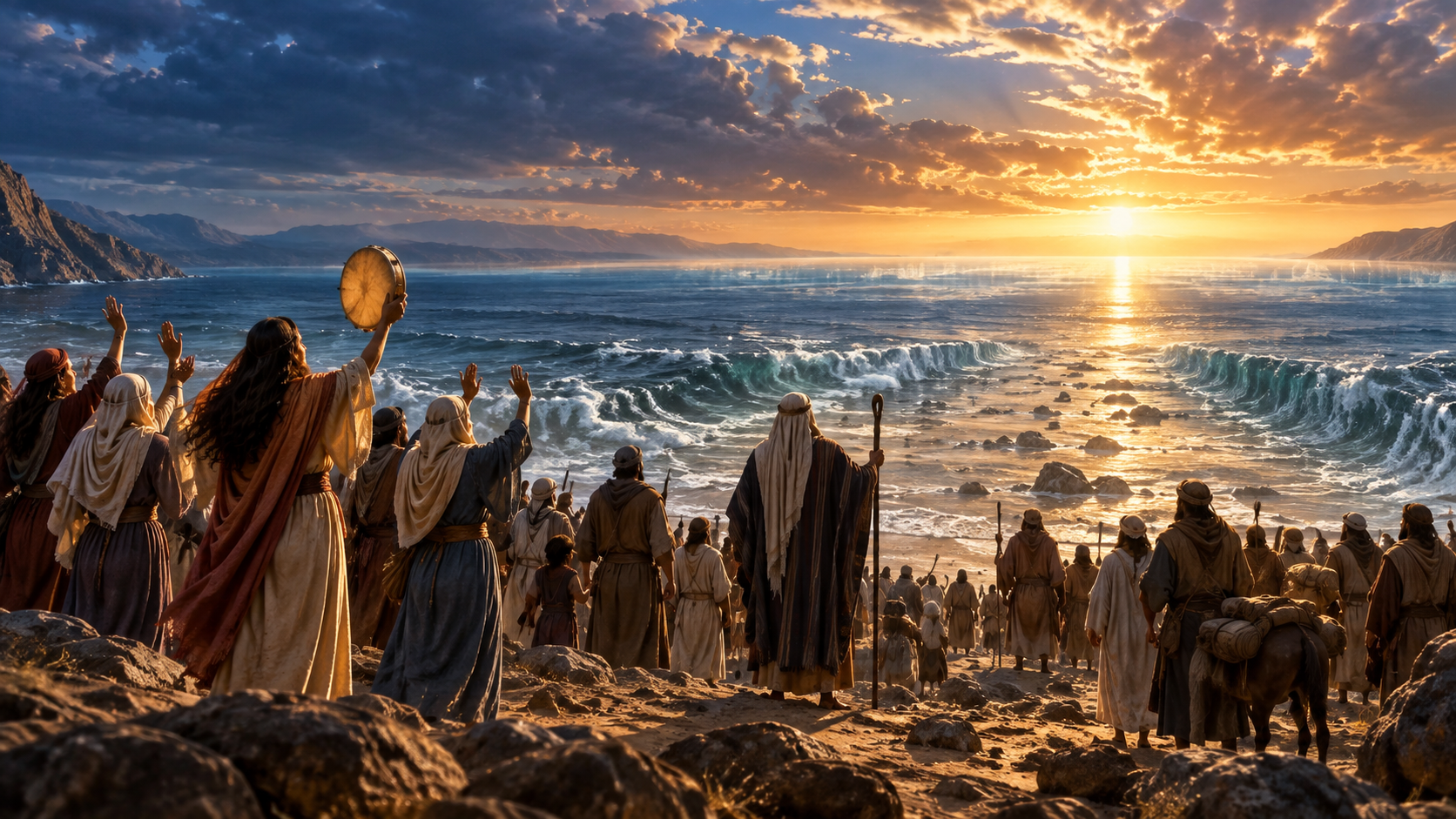
In the Torah, Passover marks Israel’s deliverance from Egypt through the blood of the lamb, establishing the foundational pattern of redemption before the nation ever reaches Sinai. In the New Testament, Jesus’ death occurs in Passover context and is widely interpreted as the climactic redemptive act to which the feast pointed, so that the Crucifixion is read as the fulfilled Passover.
This gives rise to a governing analogy: Passover is to the Crucifixion as Sinai is to Pentecost. In both cases, the pattern is the same. First comes redemption by blood; then comes covenantal formation and divine indwelling. Israel is redeemed from Egypt and then brought to Sinai; the disciples are redeemed through Messiah’s death and resurrection and then brought to Pentecost, where the Spirit descends.
Sinai and Pentecost
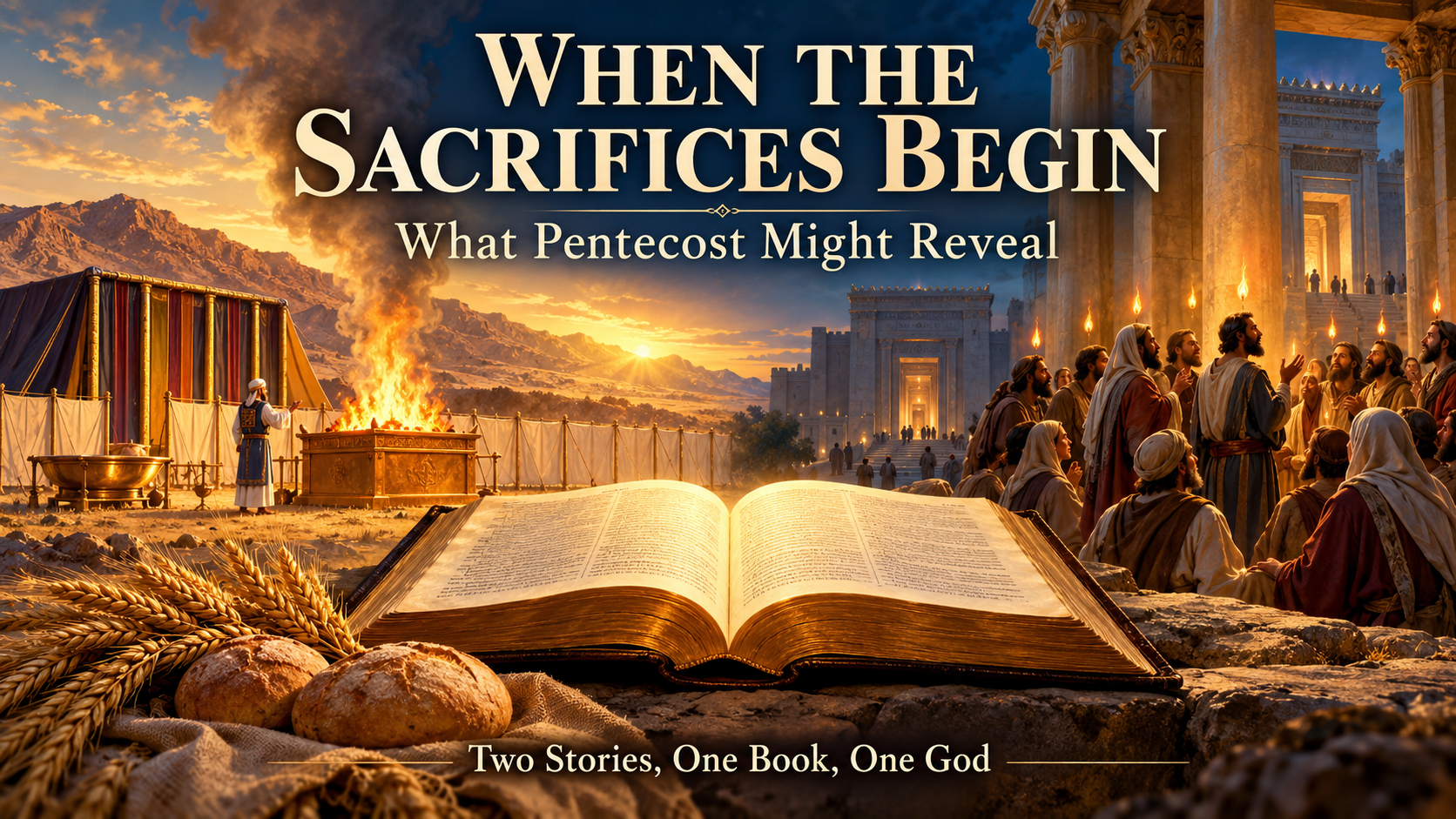
A broad stream of Christian interpretation describes Pentecost as a “new Sinai” because Acts 2 is narrated with theophanic features that echo Exodus 19–24. At Sinai, the LORD descends in fire amid overwhelming sound and trembling; at Pentecost, there comes a sound from heaven like a mighty wind, and tongues as of fire rest on each believer. The same covenant God who once descended upon the mountain now descends upon the gathered community.
The relationship is not mere resemblance but fulfillment. Sinai gives Torah externally on stone and forms Israel as a covenant people. Pentecost gives the Spirit internally, creating a heart-level obedience associated with the promises of a new heart and a new covenant. Thus many interpreters say that Pentecost finishes what was started at Sinai, not by abolishing Sinai, but by bringing its covenantal logic to its intended telos.
Sinai as Marriage and Israel’s “I Do”
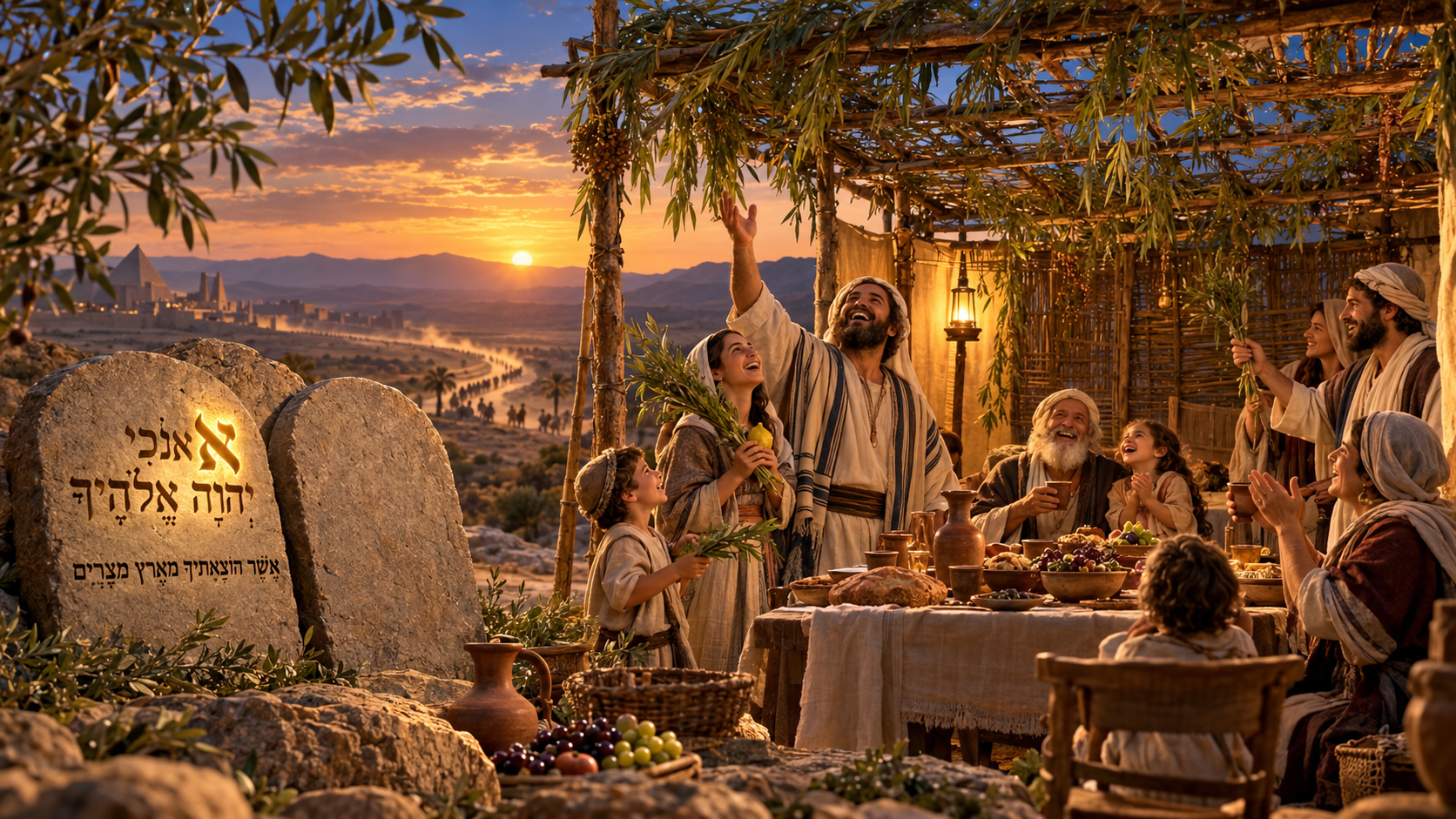
Within Jewish tradition, Sinai is often read as a marriage between God and Israel. This nuptial reading draws on the preparation of the people, the cloud-canopy over the mountain, the covenant document, and the people’s spoken acceptance of the covenant terms. In this framework, the Ten Commandments or Ten Words function analogously to covenant vows or a ketubah-like charter of the relationship.
Exodus 24:3 and 24:7 are especially important because the people respond corporately, “All the words that the LORD has spoken we will do,” a response many Jewish and Christian teachers compare to a wedding “I do.” This does not mean the Ten Commandments are literally a marriage ceremony in halakhic terms, but it does mean that Sinai can be fruitfully read as covenantal betrothal language within biblical and post-biblical reflection.
That nuptial interpretation enriches the Sinai–Pentecost parallel. If Sinai is a covenant wedding or betrothal moment, then Pentecost can be understood as the renewal, deepening, and internalization of that bond through the Spirit. The same covenant relationship is carried forward, but now in transformed form.
The Shattered Tablets and the Unconsummated Covenant
Having traced how Pentecost replays and fulfills the Sinai theophany, we must now look more closely at what happens when that first covenant is broken at the very moment it is about to be engraved among the people.
Three Thousand at Sinai and Pentecost: From Shattered Tablets to Welcomed Spirit
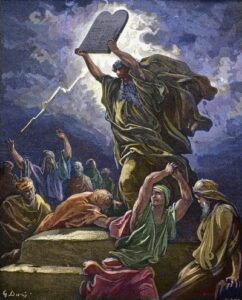
The number “about three thousand” stands like a hinge between Sinai and Pentecost. At Sinai, Moses descends with the covenant tablets in his hands, sees the golden calf and the dancing, and shatters the tablets at the foot of the mountain before they ever enter the camp. The first God‑inscribed form of the covenant never rests among a faithful people; the marriage document is torn up on the threshold. When Moses cries, “Who is on the LORD’s side? Come to me,” the sons of Levi gather to him, take up their swords, and go “from gate to gate” through the camp. “About three thousand” fall under judgment—those who align themselves with the calf and refuse the LORD even when confronted with a clear choice. In nuptial terms, this is lethal infidelity at the moment the relationship is about to be formalized: the tablets are broken because the people, in practice, are breaking the covenant they are about to receive.
At Pentecost, the same number reappears as a deliberate reversal. In Jerusalem, a feast day already associated in Jewish memory with Sinai, a crowd hears Peter’s proclamation of the crucified and risen Messiah. They are “cut to the heart” and ask, “What shall we do?”; Peter calls them to repent, be baptized in Jesus’ name, and receive the gift of the Holy Spirit. This time the response is not calf‑worship but glad obedience: “those who received his word were baptized, and there were added that day about three thousand souls.” Where three thousand at Sinai die beneath shattered stone, three thousand at Pentecost live under poured‑out Spirit. Multiple interpreters summarize it this way: at the giving of the Law, about three thousand die; at the giving of the Spirit, about three thousand live, marking a shift from condemnation under the letter to new life in the Spirit.
The parallel is therefore both numerical and covenantal. The Sinai three thousand meet the covenant at the point of refusal and perish before the tablets can dwell among them. The Pentecost three thousand meet the new‑covenant word at the point of repentance and are gathered in as the Spirit comes to dwell within them. The first group never sees the covenant fully established in their midst; the second not only sees but becomes its living embodiment. In this way, the shared number functions as a narrative signpost: the story has come back to the same crossroads, but this time the people hear, receive, and accept the Holy Spirit, and the covenant that once ended in death begins again in life.
The First and Sixth Commandments: Idolatry as Covenant Murder
The golden calf episode is an obvious violation of the first commandment—“You shall have no other gods before me”—but its outcome shows that this idolatry does not remain an abstract, “spiritual only” sin. When Israel bows before the calf, the covenant with the LORD is not merely ignored; it is actively rejected and replaced, and the result is blood in the camp as about three thousand fall under judgment. The breach of the first word of the covenant thus runs straight into the domain of the sixth: the people’s false worship produces real deaths among those made in the image of God.
In that sense, idolatry at Sinai is a kind of covenant murder. To prefer the calf to the LORD is to “kill” the relationship, to dethrone the true God in favor of a rival, and to trample his image within the community. The Levites’ swords simply make visible what has already happened in the heart: the bride has turned from her Husband, broken the first commandment, and unleashed the life‑destroying logic of the sixth. Pentecost stands as the deliberate reversal. There the people turn from their idols, repent, and receive the Holy Spirit, so that the same number—about three thousand—now embodies the opposite pattern: where idolatry once ended in death, repentance and faith now end in life.
Joel 2 and the Prophetic Frame
Acts 2 does not rely on Sinai imagery alone. Peter explicitly interprets Pentecost through Joel 2:28–32, declaring, “This is what was spoken by the prophet Joel,” and then quoting the promise of the Spirit being poured out in the last days. Joel therefore provides the formal prophetic script for Pentecost, while Sinai provides much of the event’s typological architecture.
Scholarly discussion commonly distinguishes between the inaugurated and consummated dimensions of this fulfillment. Pentecost is a genuine fulfillment of Joel because the Spirit is poured out and prophetic speech erupts among the people of God. At the same time, many interpreters argue that Joel’s full cosmic and eschatological scope extends beyond Acts 2 toward the final Day of the Lord, so Pentecost is both fulfillment and beginning.
This matters for the larger thesis. The old covenant event at Sinai is fulfilled in the new covenant event at Pentecost, but Pentecost itself remains ordered toward a still-future consummation. Fulfillment in Scripture is often real without being final.
Specific Sinai–Acts 2 Parallels
| Sinai text | Pentecost text | Parallel |
| Exodus 19:16–19 | Acts 2:1–3 | Divine manifestation through overwhelming sound and visible fire. |
| Exodus 19:18 | Acts 2:3 | God descends in fire, first on the mountain and then on each gathered believer. |
| Exodus 19:12–13 | Acts 2:2–4, 21 | Sinai restricts access to holiness; Pentecost opens access through the Spirit and the universal saving call. |
| Exodus 24:3–8 | Acts 2:14–41 | Covenant word is proclaimed through a mediator and answered by the people. |
| Exodus 24:8–11 | Acts 2:41–42 | A covenant community is formed and marked by worship, shared life, and table fellowship. |
| Exodus 32:28 | Acts 2:41| About 3,000 die at the broken covenant; about 3,000 live at the new covenant’s public inauguration.
These correspondences show how Acts 2 functions as a replay and escalation of Sinai. Fire once localized on a mountain is distributed among persons. Holiness once held at a boundary now indwells the covenant people themselves. Torah once engraved on stone is now associated with the Spirit’s transforming presence in the heart.
Pentecost and Heart Transformation
Pentecost does more than repeat Sinai’s fire; it begins the inner transformation needed for covenant fidelity. Christian teaching commonly links the gift of the Spirit with prophetic promises of a new heart and a new spirit, especially the movement from a heart of stone to a heart of flesh and from external law to internal obedience. In that sense, the Holy Spirit is not simply an empowering force for mission but the divine agent who prepares the covenant people inwardly for union with their Lord.
This is why Pentecost may be described as bridal preparation. If Sinai is the initial betrothal pattern, Pentecost is the stage at which the Bride is inwardly remade. The Spirit sanctifies, seals, and reshapes the people of God so that covenant loyalty is no longer merely spoken with the lips but inscribed within the heart.
The 120 Day Parallel
On Pentecost (New Testament) about 120 people gathered in the upper room before the Spirit is poured out (Acts 1:15)
- In the Torah the time Moses spent on the mountain (Sinai) is three periods of 40 days = 120 days in God’s presence.
- Moses’ lifespan is 120 years.
- Moses’ total Sinai timeline = 122 days (including 2 days on the ground). From Pentecost in the Torah to Yom Kippur—when judgment is sealed—is 122 days.
From Pentecost to the Ultimate Wedding
The biblical story does not end with Pentecost any more than it ends with Sinai. Eschatological banquet and wedding imagery in both biblical scholarship and Christian theology point forward to the consummation of covenant in the final union of Messiah and his people. Revelation’s “marriage supper of the Lamb” gathers together earlier covenantal, festal, and nuptial motifs into a final vision of perfected communion.
This creates a coherent three-part arc. Sinai begins the covenant in a marriage-like key. Pentecost renews and internalizes that covenant through the outpouring of the Spirit, preparing the Bride inwardly. The return of Messiah and the final wedding feast bring that covenant relationship to consummation.
Some Messianic and Christian teachers also frame this progression through the festal calendar, arguing that Messiah’s first coming fulfills Passover, Firstfruits, and Shavuot, while the remaining festal patterns point ahead to his return and final reign. Whether or not every detail of that scheme is adopted, it captures the narrative logic at work in this article: redemption, covenant, indwelling, sanctification, and consummation belong to one continuous divine drama.
Conclusion: The Parallels Gathered
The Tanakh reaches into the New Testament, and the New Testament reaches back into the Tanakh, drawing older events into a fuller horizon of meaning. Passover, Sinai, Pentecost, and the wedding of the Lamb are not isolated motifs; they are stages in a single covenantal story whose end reveals the deeper purpose of its beginning. Seen in this light, reading from “in the beginning” to the end—and then back again through the same events—becomes a way of watching one Bridegroom patiently bring his covenant to completion.
Epilogue:
I have been focusing in on this theme of biblical parallels. Here are some other blog posts that do so:
SEEING BIBLE PARALLELS ADDS UNDERSTANDING