“Blessed Be the One Who Brings Forth Bread.”
בָּרוּךְ אַתָּה, יְיָ אֱלֹהֵינוּ, מֶלֶךְ הָעוֹלָם הַמּוֹצִיא לֶחֶם מִן הָאָרֶץ
Blessed are You, Adonai our God, Sovereign of all, who brings forth bread from the earth.
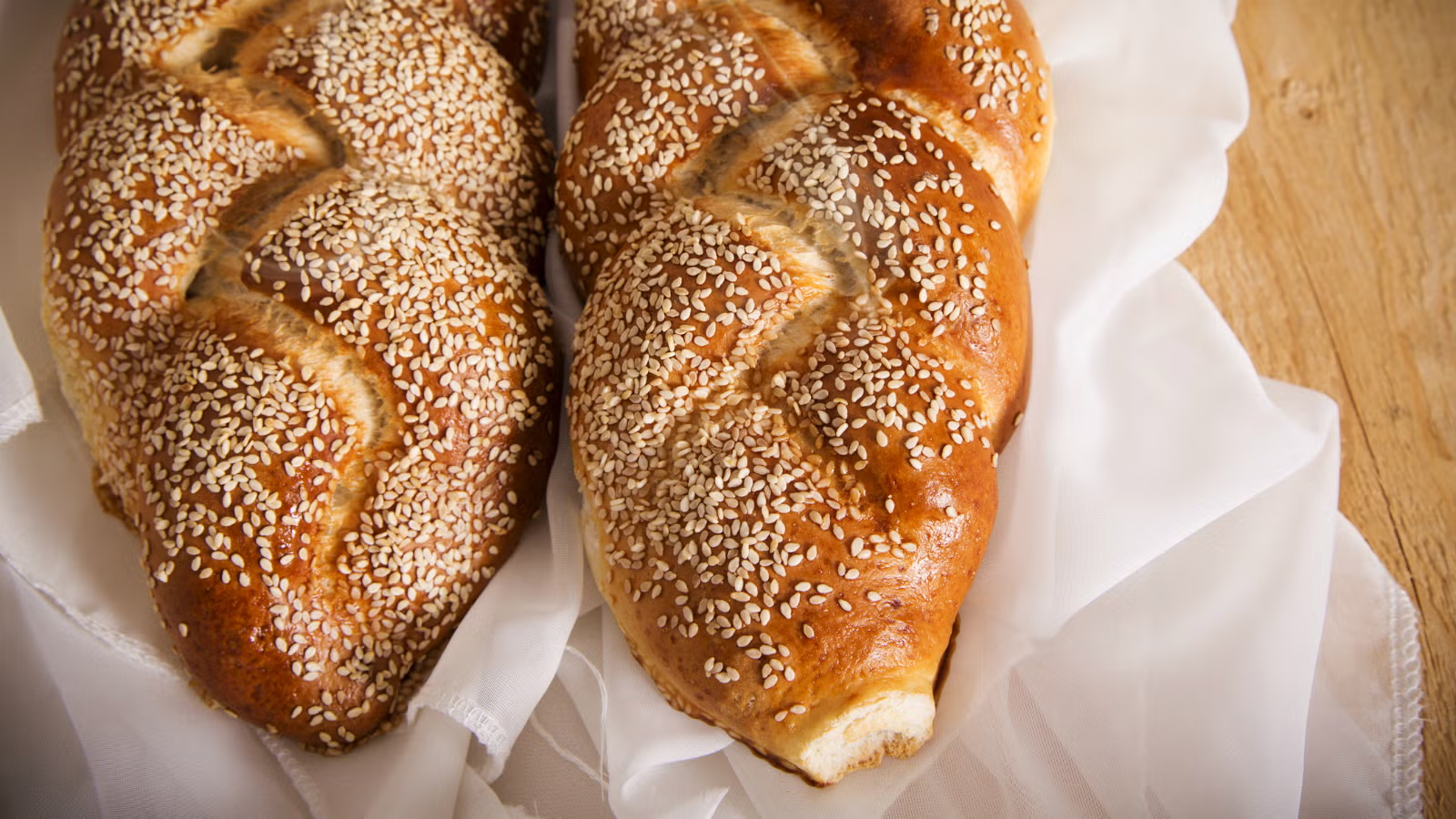
HaMotzi (הַמּוֹצִיא) is the Hebrew blessing recited over bread in Judaism before a meal. It translates to “Who brings forth.” It is customary to bake/serve two loaves of challah bread on Friday night for Shabbat. This is associated with the “double portion of manna in the wilderness.” Two loaves of leven bread are also a shadow of Shavuot (Pentacost). Two loave of leven bread are waved on this holiday which happens 50 days after the Passover.
Bread is one of the simplest foods in the world, yet it carries remarkable weight in human life and Scripture. In Jewish practice, that weight gathers into a single blessing, Hamotzi, which praises God as the One who “brings forth bread from the earth.” The earth grows grain, not loaves, so that phrase quietly collapses field, mill, kneading bowl, oven, and table into one act of divine provision. Bread becomes the place where nature and culture, gift and labor, meet.
 The Temple rising from a “threshing floor” pulls the whole bread story back to its source. The place where the wheat or barley is separated from chaff and turned into usable grain that sustains us becomes the place where God’s presence dwells and Israel’s offerings ascend. It is as if the site itself says that worship begins at the threshing floor: where what is weighty is kept, what is empty is blown away, and the raw material of bread is made ready. When the house of God (Beth El) is built there, the movement from field to loaf, from labor to liturgy, is inscribed in stone in the place that King David purchased for 50 shekels of silver. Silver is symbolic of purity. David paid 600 shekels of gold for the broader “place” that became the Temple Mount.
Bread is astonishing because of its process. A dry seed is buried and disappears, then rises as a stalk. Those stalks of grains are cut down, crushed into flour, mixed with water, and transformed again by time, fermentation, and fire into something fragrant, nourishing, and shareable. The arc is always the same: death and breaking, quiet inner transformation, shaping, fire, and then life given to others. Bread carries a built-in parable of death, transformation, union, and distribution.
It is also one of the most social foods humans ever made. Bread is easy to tear and pass, and its aroma reaches people before the meal begins, turning a bare room into a place of welcome. The smell of baking bread is strongly tied to comfort, memory, and good mood; it announces care before anyone says a word. Bread does not merely feed; it gathers. To “break bread” is a simple way of saying: you are welcome.
Its history is ancient and wide. Bread-like foods appear very early in the archaeological record, and bread becomes tied to agriculture, storage, grinding stones, ovens, and coordinated labor. Across cultures, people discovered local versions of the same basic miracle: starch, water, heat, and skill becoming daily sustenance. Flatbreads, risen loaves, steamed buns, and dense cakes all belong to the same family. Bread is nearly universal in function, even when it differs radically in form.
In Scripture, bread often stands in for life itself. Prophets can speak of the “staff of bread,” as if bread were a walking stick life leans on. Manna becomes bread from heaven, given daily so that Israel learns dependence rather than self-sufficiency. They are forbidden to hoard it; it spoils when stockpiled and arrives new each morning. Later, the simple prayer for “daily bread” gathers all ordinary provision into one small petition. Bread is how the Bible talks about the most basic level of being kept alive.
Bread also belongs to worship. Grain offerings bring cultivated food back before God, acknowledging that the harvest is not simply the result of human effort. The bread of the Presence stands continually before Adonai in the sanctuary as a sign of covenantal nearness and of Israel’s life set out in His house. The Bread of the Presence (also known as the Showbread or in Hebrew Lechem ha-Panim, meaning “bread of the face/presence”) refers to the 12 loaves of consecrated bread continually placed on a golden table in the Tabernacle and the Jerusalem Temple. In that frame, bread is never only food. It is also a sign that life is received, lifted up, and returned in gratitude. The same loaf can be breakfast and liturgy.
 Passover sharpens the symbol. There Israel eats unleavened bread, the matzah that Torah calls “the bread of affliction.” Its flatness and haste recall bondage, poverty, and the urgency of a night when there was no time to let dough rise. It is bread reduced to essentials, bread without expansion, bread marked by crisis and memory. The yearly removal of leaven from Jewish homes turns this into a lived symbol.
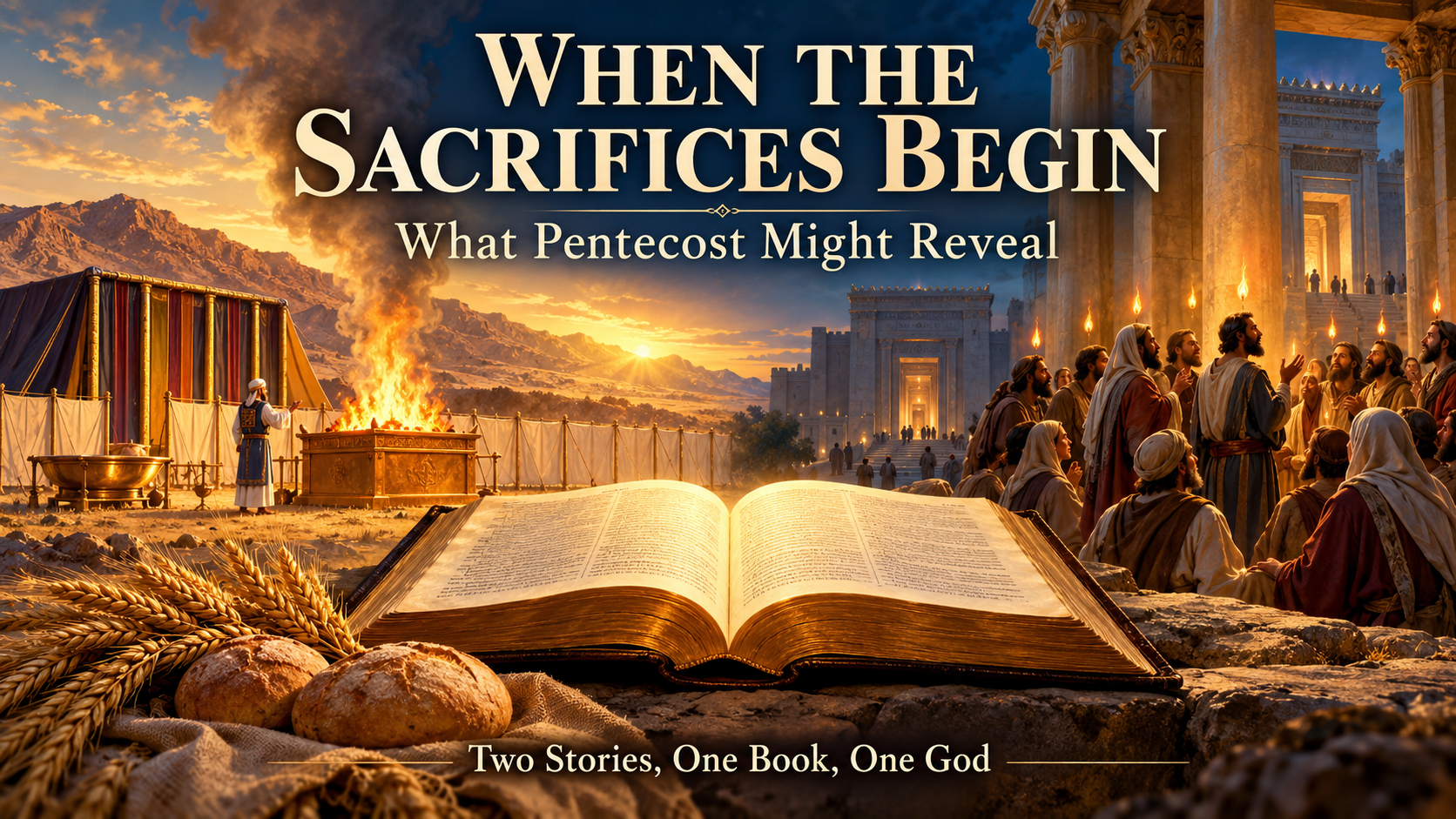
Pentecost presents another face of bread. At Shavuot, two leavened loaves are brought as firstfruits from the new wheat harvest and waved before God together with peace offerings. These are not breads of affliction but breads of fullness, harvest, fellowship, and accepted abundance. They are intentionally risen, worked, and festive. The movement from Passover to Pentecost can be read as a journey expressed in the bread. Read more.
The period between the bondage of Egypt and recieiving the Word at Sinai is intentially counted by waving of the Omer, a unit of grain from the first she⁷⁷aves of the harvest, that is is lifted before Adonai to consecrate the season and open the counted path from Passover to Shavuot. The peace offering presents specific portions to God and then receives them back for a shared meal. In both cases, bread and grain are lifted, offered, and returned as shared life. The gesture says: this comes from You, returns to You, and sustains our relationship with the Source.
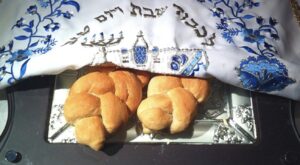 Shabbat challah brings many of these themes into the home. Two loaves on the table recall the double portion of manna and echo the paired loaves of sacred festivals. The braided form suggests unity, intertwined lives, and community woven together. The small act of separating a piece of dough keeps a firstfruits pattern alive in domestic space. What the sanctuary dramatizes with altars and tables, the family repeats with a cloth, a knife, and a blessing.
Bread is often paired with oil, which adds its own resonance. In the dough, oil softens and enriches. On the table, bread dipped in oil joins grain and olive, field and grove, sustenance and gladness. It is a small, edible picture of anointing: ordinary nourishment lightly touched with delight. Even here, bread shows how basic necessity can be crowned with the language of blessing.
The symbolism deepens when Bethlehem enters the scene. The Messiah is born in Bethlehem, the “house of bread,” so His story is marked by bread language from the beginning. The one who will later call describe himself as the “Bread of Life” arrives through the house of bread, as though the place itself is already preaching. Field, house, and table converge in Him: sown in Israel’s history, born in the house of bread, broken and given as living bread.
This becomes especially vivid at the “Last Supper.” Yeshua chooses the Passover setting and takes the bread of affliction into His hands. In identifying that bread with His own body, He sets His self-offering inside Israel’s Exodus memory. The matzah of Egypt becomes, in His hands, the sign of affliction borne for deliverance. The bread of affliction becomes the bread of given life.
When He later speaks of Himself as the bread of life, the entire field of bread imagery converges. Manna, daily bread, temple bread, Passover bread, and harvest bread all find a focal point. The one loaf becomes the sign of a people made one through shared participation in Him. Bread is no longer only what He provides; bread becomes a language for who He is.
Yet Scripture does not let bread remain only mystical or liturgical. It also ties bread to justice. Bread language marks hunger, scarcity, exploitation, and the obligations of neighbor to neighbor. To withhold bread is to wound; to share bread is to begin repair. To pray for daily bread is therefore also to admit dependence and to accept a summons: as far as possible, to become part of the answer for someone else’s hunger. The table becomes a testing ground of generosity or neglect.
Bread works inwardly as well. Leven can symbolize sin, corruption and hypocrisy, or it can symbolize quiet, pervasive growth. The counting of the Omer later becomes an intentional period of inner refinement, suggesting that bread imagery belongs not only to agriculture and community but also to the soul. What rises unseen in dough can also describe what slowly takes shape in a life.
Rest Yourselves Under the Tree, While I Bring a Morsel of Bread
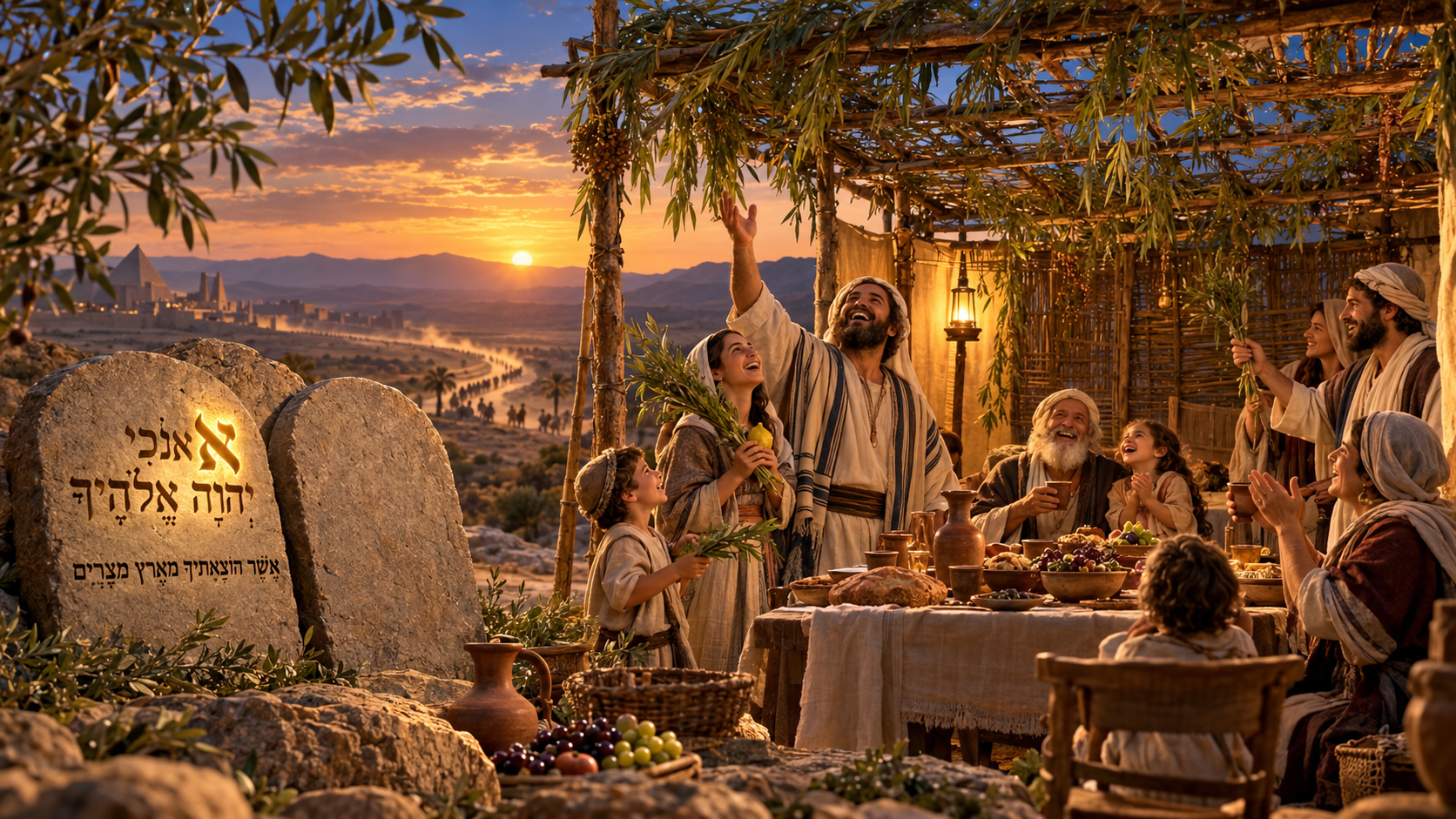
Genesis 18:1-8 esv – And the Lord appeared to him by the oaks of Mamre, as he sat at the door of his tent in the heat of the day. He lifted up his eyes and looked, and behold, three men were standing in front of him. When he saw them, he ran from the tent door to meet them and bowed himself to the earth and said, “O Lord, if I have found favor in your sight, do not pass by your servant. Let a little water be brought, and wash your feet, and rest yourselves under the tree, while I bring a morsel of bread, that you may refresh yourselves, and after that you may pass on—since you have come to your servant.” So they said, “Do as you have said.” And Abraham went quickly into the tent to Sarah and said, “Quick! Three seahs of fine flour! Knead it, and make cakes.” And Abraham ran to the herd and took a calf, tender and good, and gave it to a young man, who prepared it quickly. Then he took curds and milk and the calf that he had prepared, and set it before them. And he stood by them under the tree while they ate.
Finally, biblical bread points forward. The themes of bread in Scripture do not end with bare survival; they open toward banquet, peace, and the hope of a final shared table. The breaking of bread in the new covenant looks backward to Exodus and forward to completion, where hunger and estrangement are ended. Every loaf blessed at the table can be read as a rehearsal for that greater feast.
Hamotzi is a fitting frame for all of this. To bless the One who brings forth bread from the earth is to confess that bread is never merely manufactured; it is received. In one loaf gather seed and soil, labor and fire, affliction and peace, memory and hope, house and sanctuary, Bethlehem and the bread of life.
Epilogue:
This post is follow-up to my last post.