Forty: A Cord, a Line, a Lot
By Jonah Ritter
Listening to a teaching on the book of Jonah inspired me to write this blog. The teacher mentioned Nineveh’s forty-day warning and the significance of forty as a measure in Scripture.
Consider the Hebrew word חֶבֶל (chevel). It can mean a cord, a measuring line, or an allotted portion. Its letters also have a numerical value—a gematria—of forty: ח (8) + ב (2) + ל (30) = 40.
A cord measures a portion of space. Forty repeatedly marks a span of time. That numerical connection invites reflection on how Scripture speaks about measurement, boundaries, and inheritance.
Forty: A Measure of Time
Forty appears throughout the biblical story:
- Noah: forty days of rain (Genesis 7:12).
- Moses: forty days and nights on Sinai (Exodus 24:18).
- The spies: forty days exploring the promised land (Numbers 13:25).
- Israel: forty years in the wilderness (Numbers 14:33–34).
- Jonah: forty days in Nineveh’s warning (Jonah 3:4).
- Yeshua: forty days and nights fasting in the wilderness, where He was tempted by the devil (Matthew 4:1–2).
- After His resurrection: forty days of appearances to His disciples, speaking about the kingdom of God (Acts 1:3).
These periods encompass judgment, warning, testing, instruction, and preparation. In Numbers 14:34, the relationship between two measurements is explicit: the spies’ forty days become Israel’s forty years—one year for each day.
The Hebrew word chevel is not used to describe these periods. Its numerical value offers a point of reflection alongside them: a word associated with measuring and allotment totals a number that repeatedly measures significant periods in Scripture.
Chevel: A Measure of Space and Inheritance
In Zechariah 2:1–2, a man carries a measuring line—chevel—to measure Jerusalem’s width and length.
A cord can mark the extent of a territory. From that concrete use comes the meaning of an allotted portion. Psalm 105:11 uses chevel when God promises Canaan:
“Unto thee will I give the land of Canaan, the lot of your inheritance.”
Even English preserves a similar association: a “cord” of firewood names a measured quantity.
But Scripture takes the language of allotment beyond land:
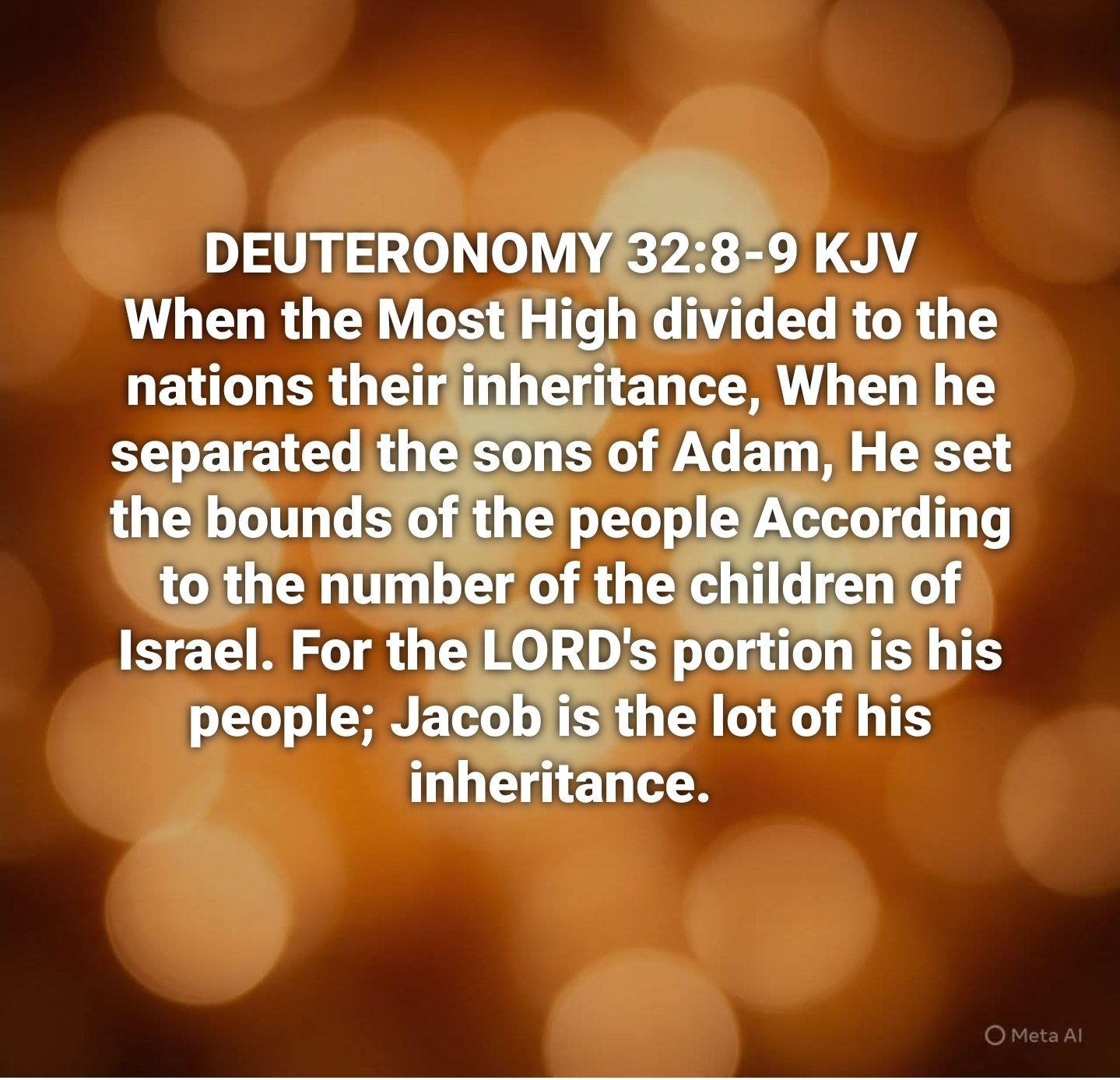
“For the LORD’s portion is his people; Jacob is the lot of his inheritance.” —Deuteronomy 32:9, KJV
Here again is chevel, translated “lot.”
We often speak about what we inherit from God. But have you considered what God calls His inheritance?
The nations and their boundaries form the backdrop of Deuteronomy 32:8–9. Yet when God identifies His own portion, He names a people: Jacob—Israel.
God gives Israel an inheritance, and He calls Israel His inheritance.
Jonah: Time and Territory
Jonah’s ministry touches both a measured span of time and the boundaries of Israel’s land.
In the book bearing his name, Jonah announces Nineveh’s forty-day warning. In Kings, he delivers God’s word concerning the restoration of Israel’s boundary:
“He restored the coast of Israel from the entering of Hamath unto the sea of the plain, according to the word of the LORD God of Israel, which he spake by the hand of his servant Jonah…” —2 Kings 14:25, KJV
“Coast” here means border or territory. King Jeroboam II restored that boundary according to God’s word spoken through Jonah, the son of Amittai.
The Hebrew word for boundary in this passage is gevul, rather than chevel. The connection is thematic: the same prophet speaks God’s word about the extent of a territory and the time remaining before a threatened judgment.
Land and time. A boundary and a warning.
Rahab: A Cord and a Place Among His People
Then chevel appears in another setting.
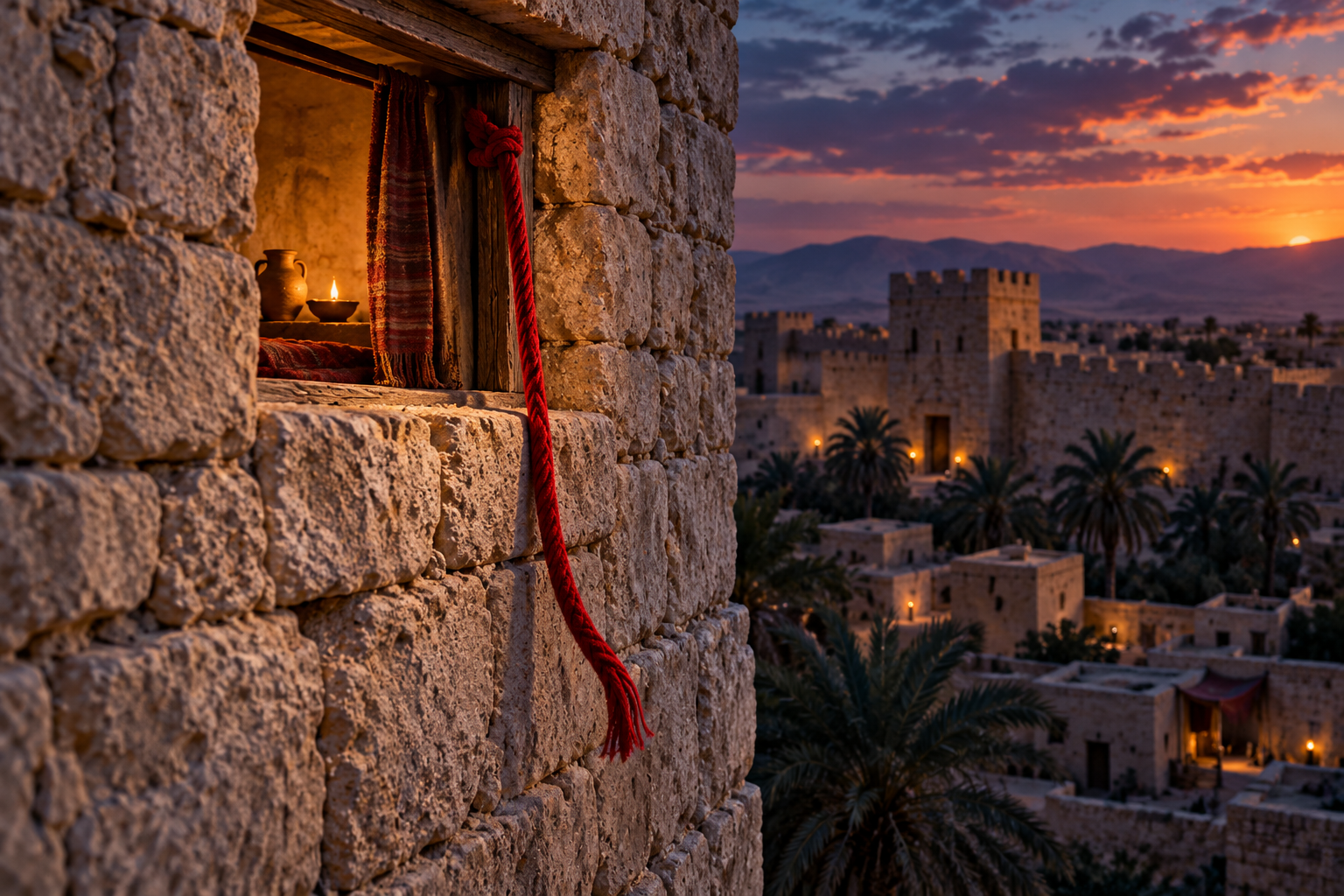
When Rahab helps Israel’s spies escape Jericho, she lowers them through her window by a chevel—a rope (Joshua 2:15). The word associated elsewhere with measuring and inheritance becomes, in this story, the means of escape from danger.
The spies instruct her to tie a scarlet cord in that window as the identifying sign for her household to be spared (Joshua 2:18). Here Scripture uses another word: תִּקְוָה (tikvah), meaning “cord” in this passage—the same Hebrew word also used for “hope.”
The text does not tell us that these were the same cord. But the images invite reflection: a rope of escape, a scarlet sign, and hope for a household facing judgment.
Rahab had confessed:
“The LORD your God, he is God in heaven above, and in earth beneath.” —Joshua 2:11, KJV
When Jericho fell, she and her family were spared. Joshua 6:25 tells us that she then lived among Israel.
Her story moves from danger to deliverance—and from outside Israel to life among God’s people. Matthew 1:5–6 places Rahab in the family line of Boaz, David, and ultimately Yeshua.
A Cord, a Line, a Lot
What began with a teaching about Jonah’s forty days brings these reflections together: measured time, measured territory, and a people God calls His own.
Chevel: a cord, a measuring line, an allotted lot. Its letters total forty. Its uses lead us from the boundaries of land to the language of inheritance—and to a rope through Rahab’s window.
These connections do not make every meaning apply to every passage. They offer a way to contemplate the stories together.
In Rahab’s window hangs a scarlet tikvah—a cord whose Hebrew name also means hope. That same word gives Israel’s national anthem its name, Hatikvah: “The Hope”—the hope of two thousand years to be a free people in their own land.
The hope for the Jewish Messiah.
Two stories. One Book. One God.