
Parallels Across the Testaments
God’s plan and the need for story
God’s plan begins at creation and culminates in His kingdom. The Bible is the story of that plan. God created a universe—heavens and one earth—as a house for life, a בית. Then He created the characters in His plan, ordering them so that one would beget the next. There was always a Messiah in God’s plan, and that Messiah would be a man. God did not drop the Messiah into history without context; He prepared the way through generations, covenants, and promises, so that when Yeshua arrived He would stand inside a long, intelligible story. God gave us this story in the form of the Bible so that we could know His purposes, recognize His Messiah, and be sure that He is with us. He did this as story because we need stories: we learn who God is and what He is doing by watching people and events unfold in time, not just by reading abstract statements.
Core thesis: parallels across the Testaments
The Bible tells one linear story from creation to new creation, but that line is woven out of parallels. Movements in the New Testament fulfill, intensify, or invert movements that began in the Old. To understand the New, I have to see these structured correspondences—parallels, “hyperlinks,” and “pointers”—between earlier and later events, people, and institutions.
I can describe this with a simple pattern: an Old Testament seed (A) or prototype stands in proportion to a New Testament fulfillment or intensification (B). Each A→B pair is a concrete instance of the same logic: The New brings an Old Testament movement to its intended end (“It is finished”) rather than replacing it with something unrelated.
Within that structure, I can name five headline movements:
Five headline movements, in the same style:
- A. Creation light / B. Revelation glory
- A. Birth of Isaac / B. Birth of Yeshua
- A. Joseph–Tribes / B. Yeshua–Apostles
- A. Passover / B. Crucifixion
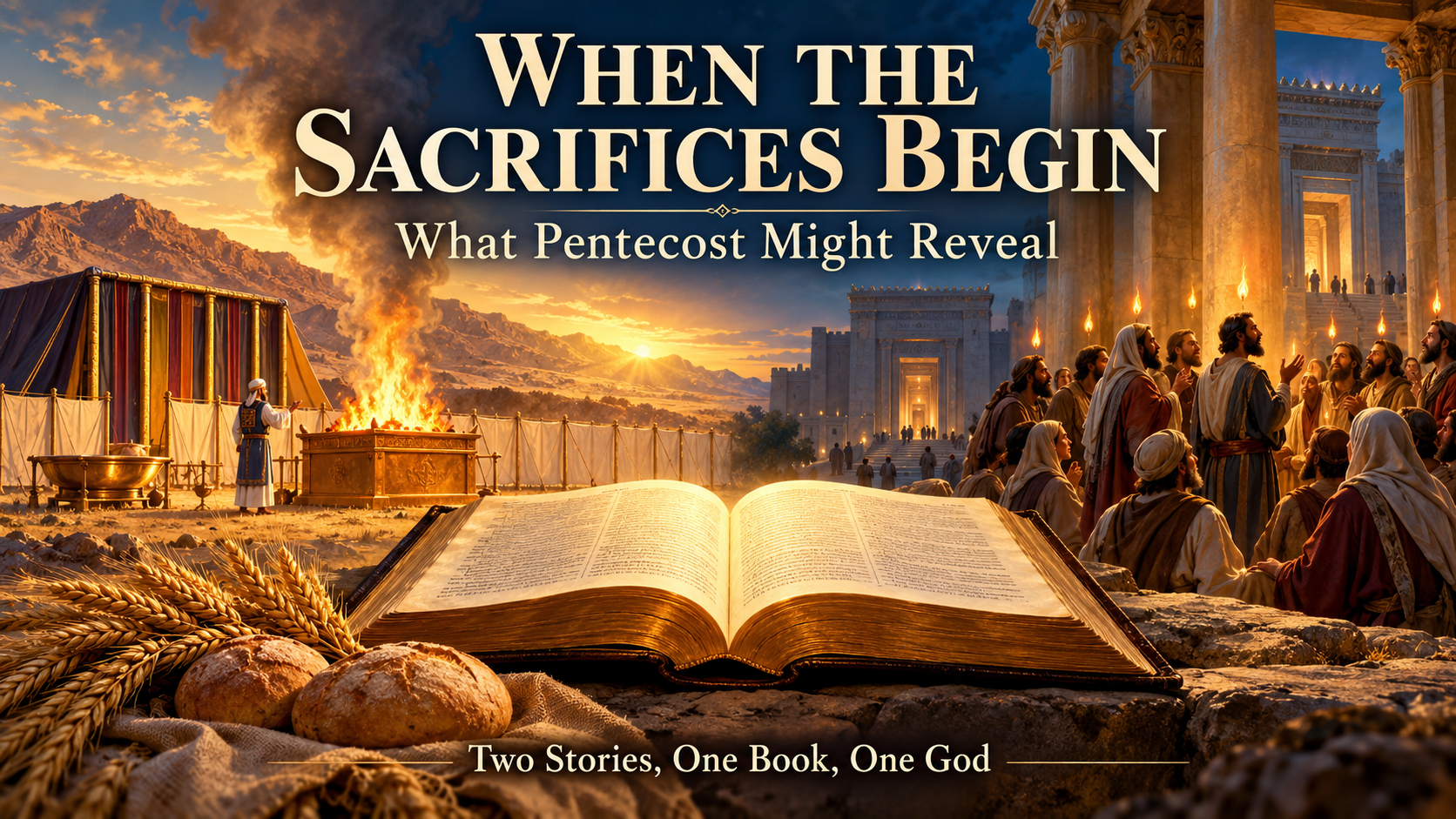
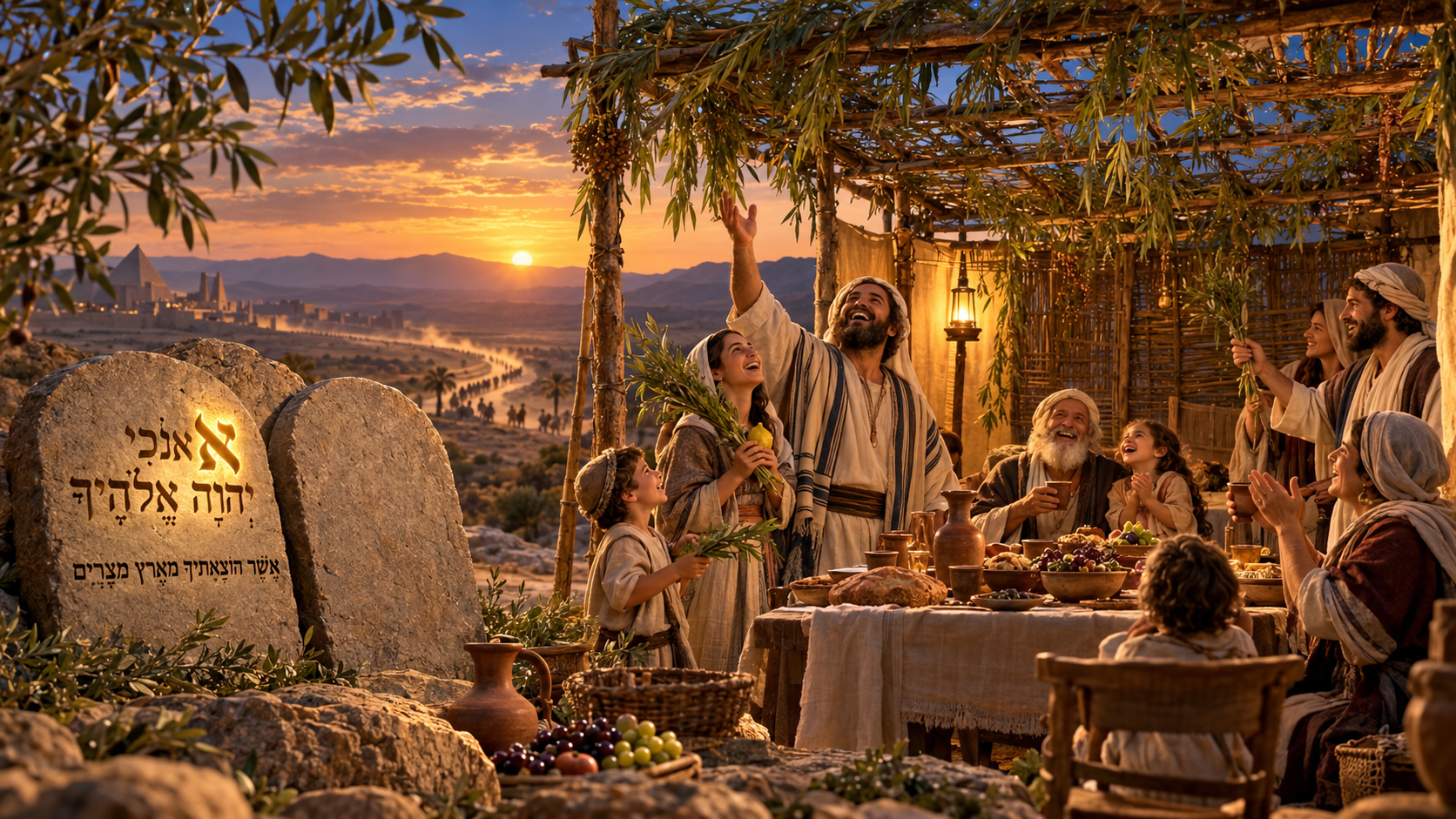
- A. Sinai / B. Pentecost
Each of these movements can be unpacked into internal parallels—details, images, numbers, roles, and outcomes that line up across the Testaments—but they all share the same basic A→B shape.
I am not claiming that this way of reading the Bible is my invention, or that I have discovered something no one has seen before. I am not that brilliant, and I do not want to give that impression. Many teachers, scholars, and ordinary readers have noticed these kinds of Old Testament–New Testament correspondences and have used them to explain the work of God and the shape of the canon. What I am trying to do here is much simpler: to name this pattern clearly, to gather several of the major movements in one place, and to encourage careful study and meditation on them.
Yeshua is a living example
Yeshua’s parables themselves apply this same principle. Many of His parables come to greater light once I recognize their Old Testament background and patterns. The images He uses—seed and field, vineyard and tenants, fig tree, wedding feast, shepherd and sheep, sowing and harvest, king and kingdom—are not new pictures dropped out of nowhere. They are drawn from Israel’s Scriptures and history, then intensified and redirected around Himself.
When I hear a parable, I am meant to ask not only, “What does this mean on the surface?” but also, “Where have I seen this image before in the Law, the Prophets, and the Writings?” The parables often stand on top of older texts the way the New Testament movements stand on top of Old Testament movements. Once I see that, the parables become another place where the same parallels pattern is at work: Yeshua takes familiar Old Testament themes and stories, and through the parables He shows how they reach their deeper meaning in the kingdom of God that He is announcing and embodying.
An example can be seen in Yeshua’s parable of the mustard seed. This parable comes into greater light when read against Old Testament passages that picture the kingdom as great trees, with birds nesting in their branches. When Yeshua says the kingdom begins like a tiny seed and grows large enough for the birds of the air to nest in it, He is not using a random image. He is drawing on familiar scriptural kingdom imagery and applying it to the kingdom He is announcing. Once that background is seen, the parable reads as more than a lesson about growth; it becomes another example of an older biblical image being taken up and brought into sharper focus in His teaching.
Existing instincts for finding parallels
Once this basic pattern is on the table, it is clear that the instinct to look for connections in Scripture is not new. Judaism already has a mechanism for identifying hidden or coded links called gematria. In gematria, words or phrases that share the same numerical value are treated as connected, so that the number itself becomes a bridge between texts. A simple example is the way teachers point out that the Hebrew word for “life” (*chai*, חַי) has the value 18, and 18 becomes associated with life and blessing in Jewish practice.
Another common method for finding connections is the use of word concordances. By tracking where and how a particular word or phrase appears across the Bible, concordances expose repeated patterns of usage. For example, following all the occurrences of “lamb,” “forty,” or “covenant” quickly shows that these are not casual repetitions but recurring motifs. In addition, there are passages where the parallels are obvious on the surface: creation language reused in John’s prologue, exodus language reused in the prophets and in the Gospels, and direct quotations and clear allusions that tie one scene to another.
All of these tools—gematria, concordances, and noticing explicit scriptural echoes—show that readers have long sensed that there are deeper lines running through the text. I am building on that same instinct with the claim that the Bible also contains larger, structural movements: not just isolated word- or number-parallels, but big narrative arcs in the Old Testament that find their fulfillment, intensification, or inversion in the New. My parallels thesis is an attempt to describe those larger movements and to show how they hold the many stories together as one story.
Example: Passover and the crucifixion
One clear and widely accepted example of this parallels pattern is the relationship between the first Passover in Exodus and the crucifixion of Yeshua in the Gospels. Here I am not introducing anything controversial; I am simply naming a set of connections many believers already recognize.
– At Passover, a lamb without blemish is chosen and killed; at the cross, Yeshua is presented as the sinless Lamb of God who is crucified.
– At Passover, the lamb’s blood is applied to the doorposts so that judgment passes over the house; at the cross, Yeshua’s blood is the means by which judgment passes over those who are in Him.
– At Passover, the lamb is examined and found without defect; in the Passion, Yeshua is questioned by Jewish and Roman authorities and is repeatedly declared innocent.
– The bones of the Passover lamb are not to be broken; at the crucifixion, Yeshua’s legs are not broken.
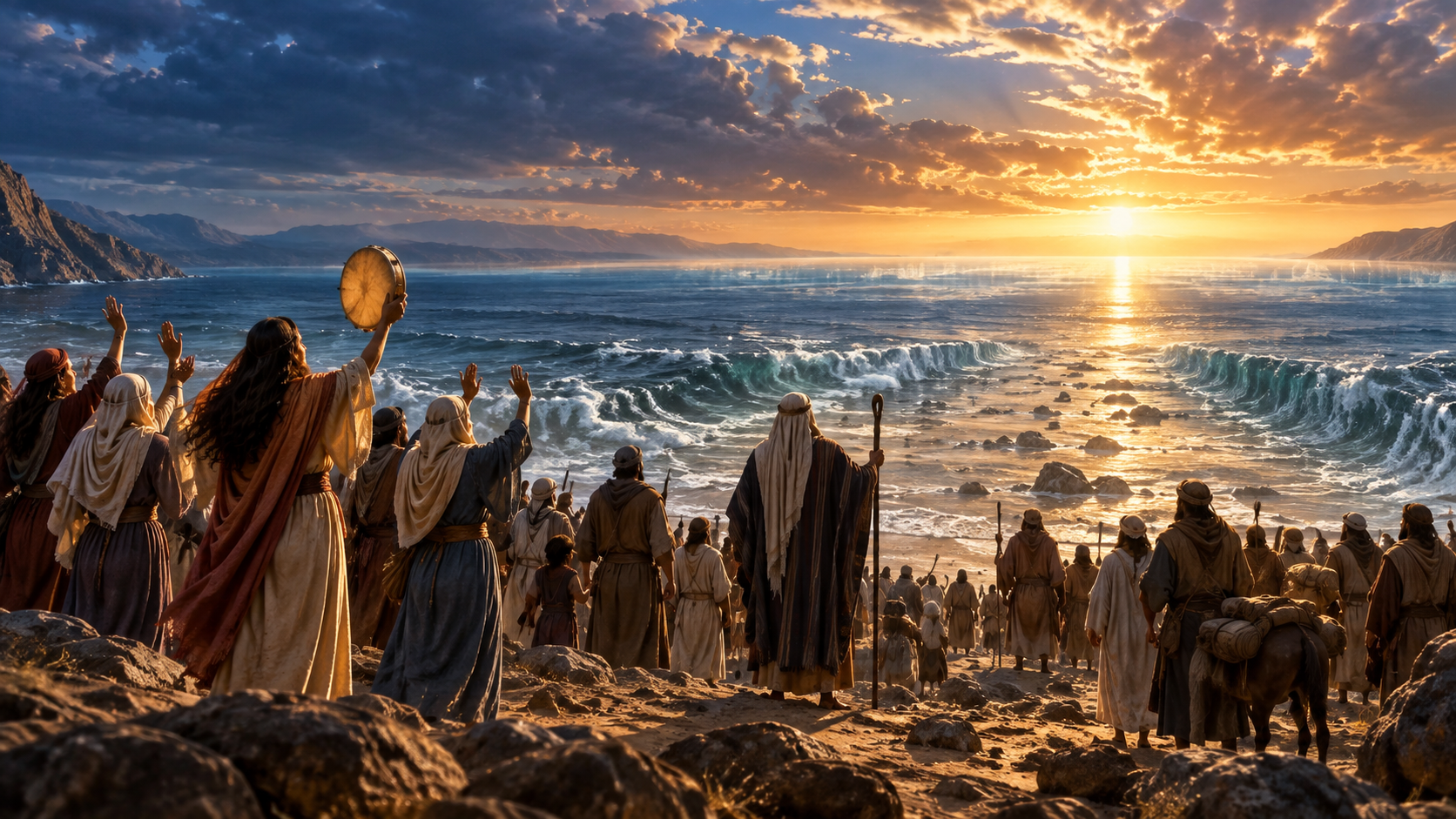
– Passover marks the beginning of Israel’s exodus from slavery in Egypt; the crucifixion marks the beginning of a greater exodus from slavery to sin and death.
– Passover is remembered in a meal that interprets the meaning of the lamb and the exodus; Yeshua takes the Passover meal and redefines the bread and cup around His own body and blood as the new covenant meal.
New Testament students and teachers already understand that a great deal of insight comes from this Passover–crucifixion movement. Seeing Yeshua as the true Passover Lamb and His death as the greater exodus has become standard teaching. Where I am going is to say that this is not a one-off. There is more understanding to be gained by naming, studying, and meditating on other such movements in the same way. Creation light and Revelation glory, the birth of Isaac and the birth of Yeshua, Joseph and the tribes and Yeshua and the apostles, Sinai and Pentecost—each of these pairs works like Passover and the cross. Each one is a large movement from Old to New that, once recognized, opens up a deeper view of the whole story.
Yeshua as the composite figure
Seen this way, the Old Testament lays down multiple portrait studies: Adam, Noah, Abraham, Isaac, Joseph, Moses, David, the priest, the prophet, the suffering servant, the wise righteous man. Each one captures a real feature of God’s intention, but only in part. In the Gospels, Yeshua stands at the center as the composite figure in whom all those partial portraits come together. He is the true and better Adam, Isaac, Joseph, Moses, David, and so on—not by copying them, but by fulfilling and surpassing what each one sketched in advance.
Painting metaphor: the effect of these parallels
I picture the whole story as a single supernatural oil painting produced by God. There is one canvas, one image, but it is built up in layers and laid out with deliberate composition. The Old Testament lays down the underdrawing and underpainting: creation, Israel, exodus, law, kingdom, exile, return. The New Testament is not a new canvas; it consists of later layers and glazes on that same work. The parallels are the places where the upper layers line up with the lower ones so that I can see through.
This painting has composition as well as layers. Certain scenes are placed and weighted as focal points—exodus, cross, resurrection, Pentecost—while other scenes support them from the margins. Yeshua and His saving work form the focal point of the image. The Bible’s parallels and pointers function like leading lines and repeated shapes that draw the eye toward Him. Some texts stand in the foreground (for example, the Gospels), some in the middle ground (prophets, Acts, letters), and some in the background (patriarchal narratives, Torah structures), but all belong to one visual space. Repeated numbers, patterns, and symbols are the rhythmic elements that hold the composition together. The painting is only an analogy; the actual medium God chose is story, because that is what humans need. The metaphor simply helps me describe the effect that the parallels create; it does not replace the parallels thesis itself.
Why this matters for studying and understanding
Because God chose to reveal His plan in this way, deeper understanding of the Bible comes from studying it with this parallels pattern in mind. When I trace the A→B movements, I can better appreciate how the many stories belong to one story, and how the New Testament grows out of the Old rather than standing apart from it.
This approach changes how I study Scripture. I am not only asking what a passage means in isolation, but also where it stands in the larger pattern of correspondences that runs through the canon. As I identify those parallels—those hyperlinks and pointers between earlier and later persons, events, and institutions—the Bible begins to read less like a collection of separate materials and more like a single, coherent work. In that sense, I believe a deeper understanding of the Bible is gained when it is approached with an appreciation of this parallels structure already in view. The more of these correspondences I see, the more the single image comes into focus: the whole Bible as one multi-layered, carefully arranged narrative through which God shows His plan, reveals His Messiah, and assures us that He is with us.
Conclusion
My point of writing this is that we can benefit from deeper study and meditation on these movements, not just from mentioning them in passing. Sinai to Pentecost is one such movement. The birth of Isaac to the birth of Yeshua is another. Each of these pairs rewards slow, careful work: reading the Old and New Testament passages side by side, tracing the detailed parallels, and asking what it shows about God’s plan and the way the Bible holds together.
Speaking of the birth of Isaac, consider Laughter.
Luke 22:37— For I say to you that this which is written must still be accomplished in Me: ‘And He was numbered with the transgressors.’ For the things concerning Me have an end.”
Epilogue
Try out my thesis for yourself. Apply it to this Orthodox Jew’s explanation of Moses’s death. See if you can see the parallels to the New Testament and how a deeper understanding is gained. Keep in mind that Moses passes to Joshua (Yeshua).