A Letter Look at “Hallelujah”
If there is one Hebrew word that almost everyone already knows—and that usually is not even translated—it is “Hallelujah.” The word has traveled through languages, songs, liturgies, and everyday speech almost intact, as if translation would somehow reduce it.
Theologians and Hebrew scholars most widely identify Psalm 150 as “the Hallelujah Psalm”. It gets this title because it is framed by the command to “praise the Lord” (in Hebrew, Hallel-u-Jah) at the beginning and end, and packs 13 instances of the word into its six verses. Scholars also point out that “Hallelujah” is used to describe an entire group of psalms.The Hallelujah Psalms (Psalms 146–150): This sequence of five psalms at the end of the Book of Psalms each begins and ends with “Hallelujah” and forms a grand, climactic crescendo of praise.
The first verse in Hebrew reads:
הַ֥לְלוּיָ֨הּ | הַֽלְלוּ־אֵ֥ל בְּקָדְשׁ֑וֹ הַֽ֜לְ֗לוּהוּ בִּרְקִ֥יעַ עֻזּֽוֹ
The Hebrew translation on Chabad is:
Hallelujah! Praise God in His holy place, praise Him in the firmament of His might.
The NKJ translation is:
Praise the Lord! Praise God in His sanctuary; Praise Him in His mighty firmament!
According to Hebrew scholars, “Hallelujah” (הַלְּלוּיָהּ) literally translates to “Praise Yah” or “Praise the Lord”. It is a compound word composed of two distinct parts: Hallelu (הַלְּלוּ): The second-person masculine plural imperative form of the verb halal, which means to praise, shine, boast, or celebrate enthusiastically. Because of the plural ending, it acts as a direct, energetic command to a group, translating roughly to “Y’all praise” or “Praise ye”.Yah (יָהּ): A shortened form of YHWH (Yahweh), the sacred, covenantal personal name of God
Psalm 117 is the shortest chapter in the Bible. It is only two verses long. There is a distinction that you only notice in the Hebrew. This is the Hebrew:
הַֽלְל֣וּ אֶת־יְ֖הֹוָה כָּל־גּוֹיִ֑ם שַׁ֜בְּח֗וּהוּ כָּל־הָֽאֻמִּֽים:
כִּ֥י גָ֘בַ֚ר עָלֵ֨ינוּ | חַסְדּ֗וֹ וֶֽאֱמֶת־יְהֹ֘וָ֥ה לְ֜עוֹלָ֗ם הַֽלְלוּיָֽהּ:
This is the translation on Chabad:
The Huge Small Difference
Notice the first and last words:
Hebrew: הַֽלְל֣וּ versus הַֽלְלוּיָֽהּ
English: “Praise the Lord” versus “Hallelujah.”
But then in the Hebrew is אֶת־יְ֖הֹוָה
The Shema, in the narrow liturgical sense, is the declaration of Deuteronomy 6:4:
שְׁמַע יִשְׂרָאֵל יְהוָה אֱלֹהֵינוּ יְהוָה אֶחָד
“Hear, O Israel: YHWH our God, YHWH is one.”
Immediately following that, verse 5 continues:
וְאָהַבְתָּ אֵת יְהוָה אֱלֹהֶיךָ…
“And you shall love the LORD your God…”
Here אֵת יְהוָה is the direct object phrase “the LORD,” where אֵת marks a definite direct object and the object is יְהוָה, the Tetragrammaton.
KJV translation:
O praise the Lord, all ye nations: praise him, all ye people.
For his merciful kindness is great toward us: and the truth of the Lord endureth for ever. Praise ye the Lord.
NKJ translation:
Praise the Lord, all you Gentiles! Laud Him, all you peoples! For His merciful kindness is great toward us, And the truth of the Lord endures forever.
Praise the Lord!
NKJ translation:
Praise the Lord, all you nations; extol him, all you peoples. For great is his love toward us, and the faithfulness of the Lord endures forever. Praise the Lord
NIV translation:
Praise the Lord, all you nations; extol him, all you peoples. For great is his love toward us, and the faithfulness of the Lord endures forever.
Praise the Lord.
Do you notice it? That is part of what makes it worth slowing down over. In the english, the translator makes no distinction between “Praise the Lord” in the beginning and end of Psalm. But the Hebrew writers do. In the the Hebrew, “Praise the Lord” is not the same as “Hallelujah”
הַֽלְל֣וּ (hal·lû), the first Hebrew word is the second person masculine plural imperative of הלל, so the natural translation is “praise!” or “praise [you all]!” (i.e., “all of you, praise”).
The Hebrew Root is: הלל (H‑L‑L), “to praise, boast, celebrate, shine forth.” To which the letter Vav is added. (I encourage you to read my blog on Vav.
The huge small difference between הַֽלְל֣וּ versus הַֽלְלוּיָֽהּ is יָֽהּ Yah. The first “I Am” of the Tetragrammaton. The classic “I am” revelation comes from אֶהְיֶה אֲשֶׁר אֶהְיֶה in Exodus 3:14, where יָהּ is best understood as the short form of the Yah. (אֶהְ in אֶהְיֶה is not a word.)
These bible verses may offer some insights;
1. In Exodus 3:14 God reveals himself to Moses as אֶהְיֶה אֲשֶׁר אֶהְיֶה, usually rendered “I AM WHO I AM” or “I will be what I will be.”
2. In John 8:58, Yeshua says, “before Abraham was, I am” and in John 20:28, Thomas addresses him as “My Lord and my God” without correction.
3. The Shema, in the narrow liturgical sense, is the declaration of Deuteronomy 6:4:
שְׁמַע יִשְׂרָאֵל יְהוָה אֱלֹהֵינוּ יְהוָה אֶחָד
“Hear, O Israel: YHWH our God, YHWH is one.
וְאָהַבְתָּ אֵת יְהוָה אֱלֹהֶיךָ…
“And you shall love the LORD your God…”
Lord, God, it gets confusing. Let’s see if the Hebrew letters give us more clues.
Hallelujah
We say it so easily that it can start to feel like pure sound, but in Hebrew Hallelujah is a very specific word with specific letters, shapes, and numbers. I want to stay with those details and see what they suggest.
In Hebrew, “hallelujah” is הַלְלוּ־יָהּ, often written together as הללויה. It is made of two parts: hallelu and Yah. The first part is the plural imperative of praise—“you all praise”—and the second is the short form of the divine Name. So the basic sense is direct and public: “Praise Yah.”
The letters in הללויה are:
– ה
– ל
– ל
– ו
– י
– ה
Double Lamed
The letter that keeps drawing attention is lamed, and there are two of them right in the middle of the word. Lamed is the 12th letter of the Hebrew alphabet, and its standard numeric value is 30. Its verbal root, למד (lamad), means “to learn” or “to teach,” so the letter already carries associations of instruction, training, and guidance. It is also visually distinctive: lamed is the tallest Hebrew letter, rising above the line.
What stands out most is its shape. Lamed is often described as a shepherd’s staff or crook. Once that image is seen, it becomes difficult not to read the letter in concrete rather than abstract terms. A shepherd’s crook suggests guidance, authority, discipline, protection, and by implication, a flock and a lamb. That naturally calls to mind David the shepherd-king, whose voice dominates the Psalms, and also the Passover lamb, which stands near the center of Israel’s memory of deliverance.
What is striking in hallelujah is not just that lamed appears, but where it appears. The two lameds stand side by side in the core of hallel, the praise element of the word. Structurally, the word is held upright by a doubled shepherd’s crook. That is not being offered here as a secret code. It is just a plain visual and literary observation: the spine of this praise-word is two shepherd letters.
The placement matters in sound as well as in sight. Hebrew hallelu-Yah breaks roughly as hal-le-lu-Yah. One lamed closes the first syllabic movement of hallel, and the next lamed opens the following one. In that sense, lamed is not only at the visual center of the word; it is the syllabic hinge of it. The word turns on lamed. The sound of praise bends around the shepherd’s crook.
That seems worth saying plainly: in this word, the shepherd letter stands in both syllables of the praise. Both halves of the sound pass through it. If lamed carries the ideas of learning, guiding, and shepherding, then those ideas are not sitting at the edge of hallelujah; they are embedded in the movement of the word itself.
 From there the number patterns begin to matter. In one common biblical spelling of hallelu-Yah, the standard gematria total is 86. That number is already well known in Hebrew because Elohim—one of the primary biblical names of God—also totals 86. So does ha-teva, “nature.” That means the word of praise, the divine name Elohim, and the word for nature all sit on the same number.
That alignment fits the Bible’s own instinct. Scripture repeatedly speaks as if creation itself praises God. “Let heaven and earth praise him, the seas and everything that moves in them.” “Let the heavens be glad, and let the earth rejoice; let the sea roar, and all that fills it; let the field exult, and everything in it! Then shall all the trees of the forest sing for joy.” Psalm 148 opens with “Hallelujah” and then summons heaven, heights, angels, sun, moon, sea creatures, animals, and birds into the same act of praise. If hallelujah shares its number with Elohim and nature, that does not prove a doctrine, but it does make the biblical imagery feel numerically coherent. The praise is directed to the God who is present in, and known through, the created order.
There is a second numerical layer as well: ordinal value. If each letter is counted by its position in the alphabet—he as 5, lamed as 12, vav as 6, yod as 10—then הללויה totals 50. That is a different kind of reading from standard gematria, but it still produces a meaningful biblical number. Fifty is the number of jubilee, the year of release and restoration. It is also the number reached after seven complete weeks, the threshold marked by Shavuot/Pentecost. In later Jewish thought, fifty also suggests the “fifty gates” of understanding, a limit beyond ordinary completion.So if the ordinal sum of hallelujah lands at 50, the resonance is not hard to hear: praise is linked with release, overflow, and a step beyond a completed cycle.
There is one more nearby number that belongs in the picture: 60. The Hebrew letter samekh has the value 60 and is associated with support, upholding, and leaning upon. Jewish teachers have long noticed that the priestly blessing in Numbers 6:24–26 is made up of 15 words and 60 letters in Hebrew, matching samekh’s ordinal place and value. That blessing—“The Lord bless you and keep you…”—is one of Scripture’s clearest expressions of divine favor and protection. The connection matters here because it adds another nearby number-field around praise: 50 as release and threshold, 60 as sustaining blessing and support.
Taken together, the word begins to look less generic than it first appears. It starts with a command to praise and then, at its center, places two lameds: two shepherd’s crooks, two letters of learning and guidance, one closing and one opening the syllables. Its standard numerical value aligns it with Elohim and with nature. Its ordinal value reaches 50, with its biblical overtones of jubilee and crossing beyond completion. Beside it stands the 60-letter priestly blessing, the language of God’s upholding favor.
The Hidden Name in “Hallelujah”
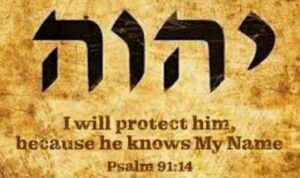
One more layer sits at the end of the word. In הַלְלוּ־יָהּ (*hallelu‑Yah*), the final part, *Yah*, is not just a generic divine label; it is a known short form of the four‑letter Name YHVH (יהוה), the Tetragrammaton. In other words, the Name that is usually written with four letters and guarded in speech appears here in a two‑letter contraction.
That means the word hallelujah does two things at once. On the surface, it says “you all praise Yah.” Underneath, it holds a compressed form of the unpronounced Name. The four letters י‑ה‑ו‑ה become, in this word, י‑ה at the end. The longer Name is not spelled out, but it is present in seed form.
Looked at this way, “hallelujah” is like a frame:
– The front half, hallel‑, is our side: an imperative to praise.
– The back half, ‑Yah, is God’s side: a shortened echo of YHVH, the One who simply is.
The meeting point of those two halves is exactly where the two lameds stand. The doubled shepherd’s crook sits between the human call to praise and the contracted divine Name. So the shepherd letter is not only central to the sound of the word; it also stands right on the threshold between our praise and the hidden Name that the word carries.
Closing
There is much more that could be examined here. In Hebrew, every letter carries its own history, shape, number, and set of associations, so each one inside “hallelujah” could be its own study. What I have done is only a small sampling—just enough to show that this one familiar word is built from letters that each tell a story, and that those stories meet in a surprisingly rich way inside this single call to praise.
None of that needs to be overstated. The word does not need help being holy. But a close look at its letters suggests that hallelujah is more than a familiar religious sound. It is a compact Hebrew word in which praise, shepherding, creation, blessing, and release all seem to meet.
A fitting place to end is with the Bible’s own close:
Psalm 96:11–12 – “Let the heavens be glad, and let the earth rejoice; let the sea roar, and all that fills it; let the field exult, and everything in it. Then shall all the trees of the forest sing for joy.”