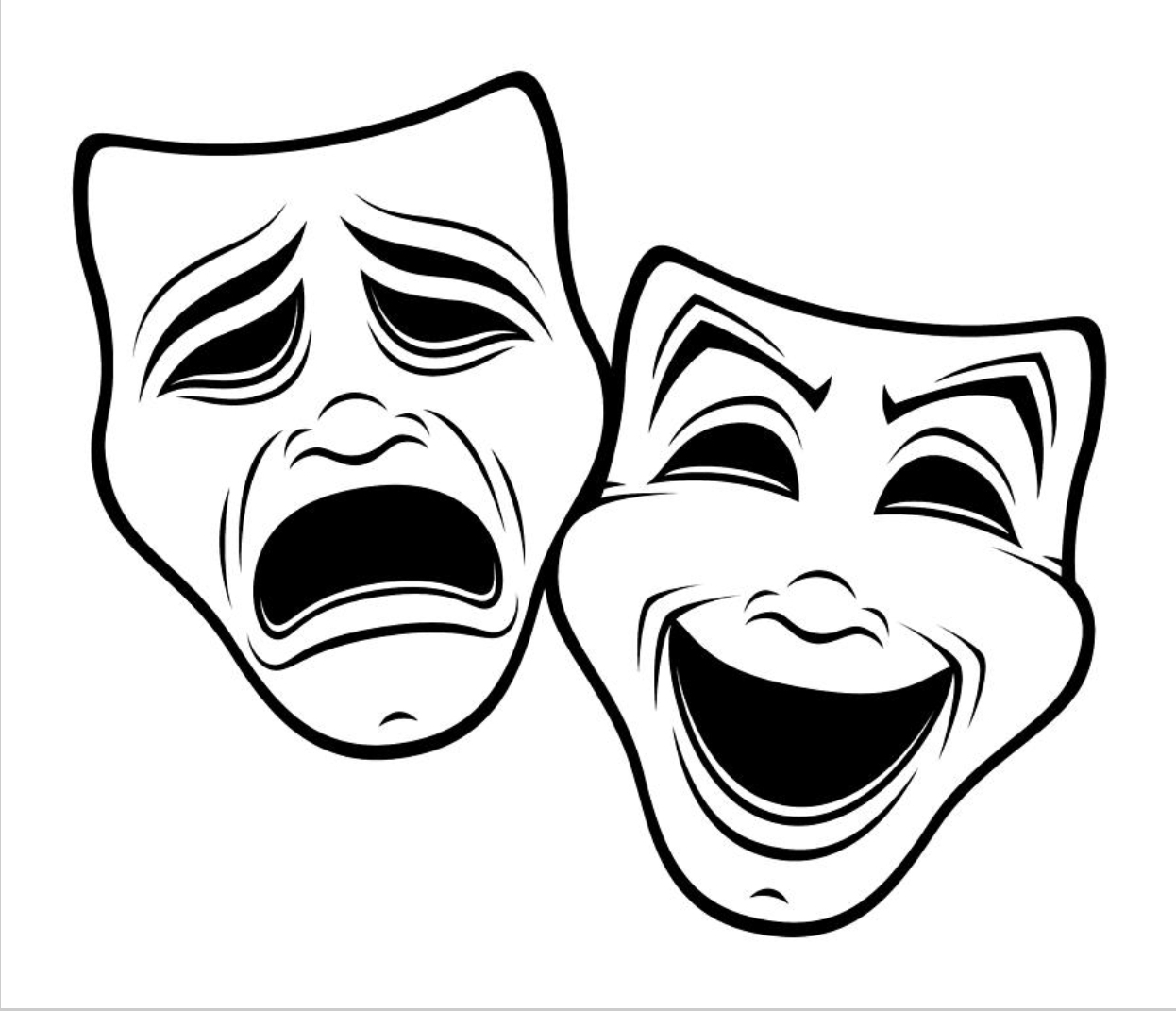
“Laughter is the language of the soul.” Poet Pablo Neruda
Suprise: Didn’t See That Coming
At the most basic level, we laugh because we are built to respond to surprise, connection, and relief in a very particular way—physically, emotionally, and spiritually.
Many researchers note that humor usually involves a “violation” that turns out to be harmless: something unexpected happens, or a meaning flips suddenly, but we realize we are safe. Our brain anticipates one outcome, then gets a different one, and that abrupt reversal produces the felt jolt that often erupts as laughter.
God’s Gift of Laughter
Abraham’s wife Sarah, barren and old, gives birth and says, “God has made me laugh, and everyone who hears will laugh with me.” We are first told that Yitzchak’s (Isaac) very name means “he laughs,” and that name is itself God’s commentary on what this child is: God’s gift of laughter embodied in a person.
God Himself chooses that name. Laughter is the response to God doing what is humanly impossible. It marks the reversal from hopelessness to fulfillment, from barrenness to inheritance. This anchors a biblical pattern: when God overturns expectations in mercy, the fitting response is laughter.
Psalms 2:4 “He who sits in the heavens laughs”
Deep Down: What Laughter Reveals
Laughter is the moment the soul, the true self, recognizes that reality is held in hands far wiser and gentler than our fear.
Laughter is the soul’s way of confessing that the world is not chaos, but providence—that beneath what we feared, a Father’s kindness was quietly at work all along.
Psalm 126:1-2 —When the Lord brought back the captivity of Zion, We were like those who dream. Then our mouth was filled with laughter, And our tongue with singing.Then they said among the nations, “The Lord has done great things for them.”
Not all laughter is the same.
Some laughter works like armor—nervous, sarcastic, or mocking bursts that deflect pain and keep others from getting too close. But there is another kind of laughter that doesn’t protect the false self; it exposes it. That deeper laughter erupts when reality suddenly overturns our expectations and self‑image, revealing that what we trusted or feared was never the full truth. In that moment, the soul is caught acknowledging a larger, more honest reality than the “imposter” was willing to admit.
This Blog Post Is PREPARATION
 The small private book club I belong to, recently started a book called “Abbas Child.” We meet monthly. Tomorrow night we’re covering chapter two, “The Imposter.” In preparation for tomorrow night’s session, I decided to do a short study on laughter with Rabbi Tatz.
Laughter, as I have come to understand it through Rabbi Akiva Tatz, is far more than a pleasant emotional release or a social lubricant. It is a spiritual signal, an x‑ray of reality that briefly exposes what is usually hidden from view. At its core, laughter arises when a process moves decisively in one direction and then suddenly and unexpectedly flips into its opposite. The more intense the buildup and the more improbable the reversal, the greater the laughter that follows. This simple observation about human psychology becomes, in Rabbi Tatz’s hands, a window into the structure of the soul and the inner architecture of history.
The first thing I learned is that real, spiritual laughter is not just a reaction to something “funny,” but the “cosmic response” to a genuine change from ordeal to redemption. We laugh in the deepest sense when what looked like a dead end suddenly reveals itself as a doorway, when what we experienced as sheer crisis discloses itself as the very mechanism of our deliverance. Rabbi Tatz roots this in verses like “Then our mouths shall be filled with laughter” from Psalms and “She laughs at the last day” from Proverbs, emphasizing that the fullness of laughter belongs to the “then” of redemption, not the “now” of exile. Halacha reflects this by restricting unbounded laughter in our current historical state; only when the story’s end is revealed will unrestrained laughter be fully appropriate. The biblical promise is that when the exile’s contradictions resolve, history itself will break into laughter.
Yitzḥak’s very name embeds this theology. “God has made laughter for me,” says Sarah, and “everyone who hears will laugh for me” (Genesis 21). The child of impossible reversal—the barren, aged couple suddenly entrusted with a covenantal future—is literally called “he will laugh.” On the surface, Sarah’s initial laughter at the promise of a child is tinged with incredulity; it is the nervous reaction of someone for whom the gap between promise and plausibility is too wide. But the birth of Yitzḥak transforms that earlier, ambiguous laughter into redeemed laughter: the same absurdity that once provoked doubt becomes the ground of joy. The narrative thus dramatizes Rabbi Tatz’s point: when crisis or impossibility swings into fulfillment, the human response is not merely relief but a sense of reality’s ironic, almost playful structure. Yitzḥak becomes a living emblem of the soul’s discovery that what looked like a cruel joke was, in truth, a carefully timed kindness.
From this perspective, laughter reveals something profound about the soul and the true self. The soul is not satisfied with surface narratives; it is tuned to the underlying pattern where apparent contradictions resolve into higher unity. When I laugh at a sharp reversal, I am, for a moment, aligning with that soul‑perspective: I see that what I assumed was fixed and threatening was in fact contingent and hollow. Divine laughter—“He who sits in Heaven shall laugh”—is directed at the irony that evil, as it intensifies, generates its own annihilation; evil digs its own grave. History is arranged so that the plans of the wicked recoil on their own heads, and what looks like the triumph of darkness becomes the cause of its collapse. Human spiritual laughter is a miniature participation in that same vision, an echo of Heaven’s awareness that the mask has been hollow all along. Yitzḥak’s existence is exactly that: the apparent finality of barrenness exposed as a mask for a deeper, covenantal fertility.
This leads directly to a second lesson: laughter sits at the fault line between the true self and the imposter self. Rabbi Tatz emphasizes that the “change” which generates spiritual laughter includes the collapse of “one’s false image, one’s dearly‑held but wrong convictions, one’s imperfect personality structure.” When reality suddenly contradicts my self‑story, something in me is unmasked. The Megillat Esther narrative provides the paradigm: Haman’s elaborate construction of status and power is turned inside‑out. The very gallows he builds for Mordechai become the instrument of his own demise. The royal procession he imagines for himself is given to the man he despises. Purim is therefore the festival of laughter, not because it sanctions frivolity, but because it reveals the exquisite irony of providence: the mask of chance and political intrigue conceals a meticulous divine choreography. The imposter self—embodied in Haman’s ego and in the Jews’ own sense of vulnerability to fate—is stripped away as events reverse in a way no human could have scripted.
Yet Rabbi Tatz is careful to distinguish the vantage point of the onlooker from that of the person undergoing the reversal. To observers, a well‑executed practical joke is hilarious; to the subject, the immediate experience is often shock, embarrassment, even humiliation. In biblical terms, when Yosef reveals himself to his brothers, the text records their stunned silence rather than their laughter, despite the enormous reversal from dread to reconciliation. The same likely applies on Purim: in real time, the Jews’ experience was terror and uncertainty; the laughter belongs to the moment when the pattern becomes clear, when the decree is overturned and the story can be reread from the end. This teaches that the stripping away of the imposter self is a sober, even searing event. The laughter belongs more to the higher vantage point—from Heaven’s perspective, or from a later, integrated stage of consciousness—than to the ego in the moment of exposure.
A third dimension I’ve absorbed is that laughter is uniquely and distinctly human, marking it as a signature of the soul. Genuine human laughter, in the sense of an articulated response to paradox and reversal, depends on self‑awareness, memory, and the capacity to hold opposites at once. It presupposes that I had an expectation, that I built a mental line of causality, and that I can register, in an instant, the collapse of that line into a completely different outcome. Animals may show pleasure, but this structured, cognitive laughter is bound up with the human capacity for da’at, the inner mind that can see patterns, ironies, and meta‑levels. That means laughter is not a distraction from seriousness; it is one of the clearest expressions of how the human soul processes the world.
Finally, Rabbi Tatz’s treatment of laughter locates it at the heart of redemption and spiritual growth. Yitzḥak’s birth and Purim’s reversals are not peripheral anecdotes; they are the Torah’s chosen theaters for staging divine irony. In both cases, what appears as the end—Sarah’s barrenness, the genocidal decree—turns out to be the mid‑point of a larger story whose resolution could never have been predicted from within the crisis. The laughter that emerges from these stories is not cynical; it is the soul’s recognition that reality is stranger and kinder than the imposter self believed. To cultivate such laughter is not to trivialize life, but to stand closer to the perspective from which Yitzḥak’s name and Purim’s joy both declare: the last word belongs to a reversal so deep that the only honest response is to laugh.
Conclusion: Death Is the Ultimate Lead-up to a Punchline
In the end, everything I have been circling around comes into focus in the question of death. If reality really is structured as a movement in one direction and then a sudden reversal, then death is the most radical “punchline” of all. From here, it looks like the full‑stop, the collapse of everything; yet if there is an afterlife, the soul will one day discover that what it called “the end” was only a doorway. Even the strange “rally” that sometimes comes just before a person dies—a brief surge of clarity or strength that feels like recovery—embodies this pattern: apparent return to life on the very threshold of leaving it. We read that rally as a sign the story is turning back toward health, when in fact it is the last bend in the road before stepping into another world. In that sense, the ultimate irony—and the deepest laughter—is the soul’s realization that its greatest fear, and even its last flicker of misplaced hope, were both aimed at the threshold of a larger, more vivid life. Not because suffering or grief are funny, but because, from the other side, the very thing we dreaded most turns out to be the passage into the Father’s house. At that moment, the soul finally knows in its own experience what it dimly sensed all along: that the story was never chaos, never random, never truly ending in darkness—and that is where its laughter, quiet and astonished, truly begins.
— The End —
If you’d like more in depth analysis on this subject by Rabbi Tatz, here is a podcast you can listen to: